A game that fits around your attention
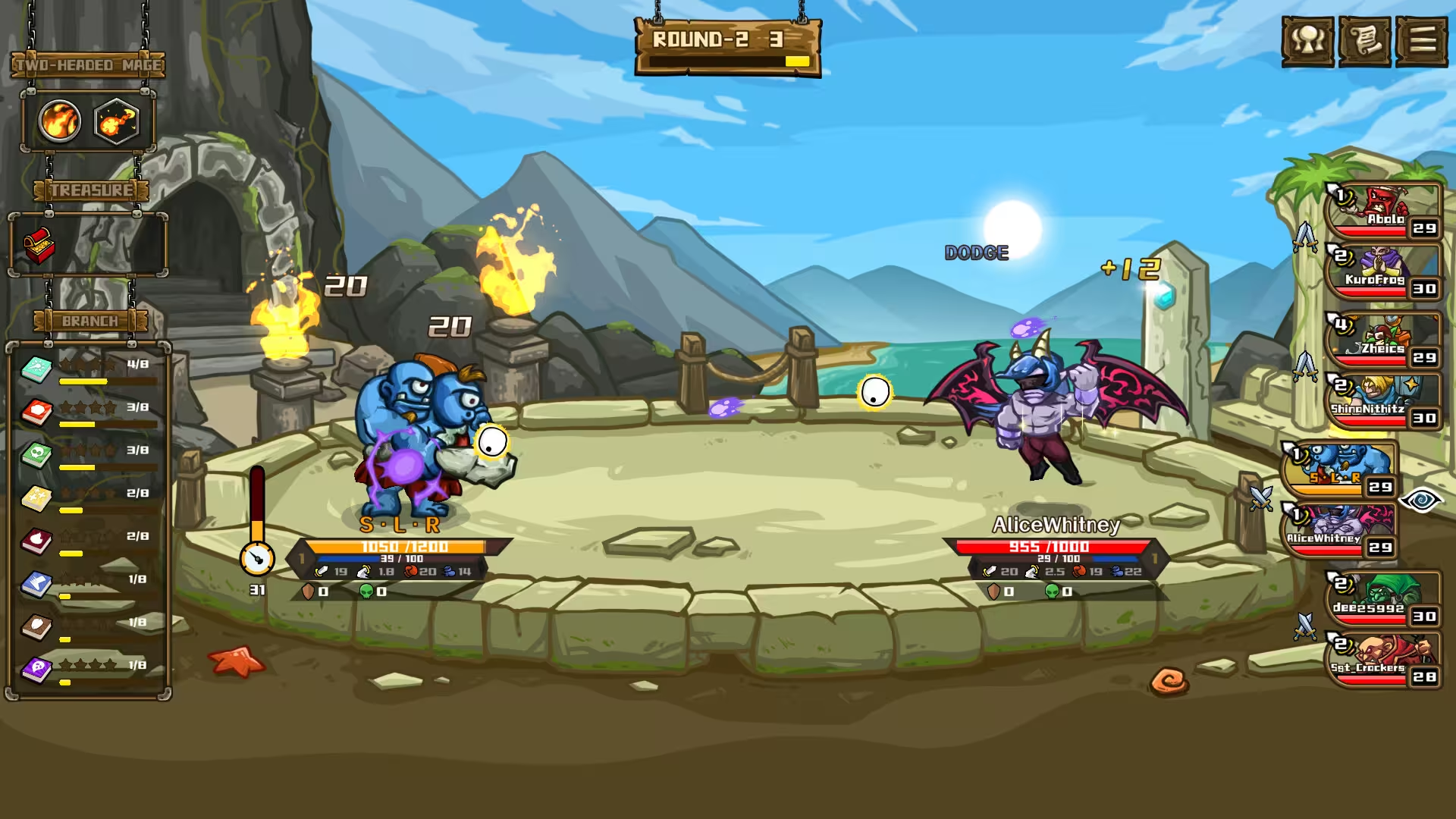
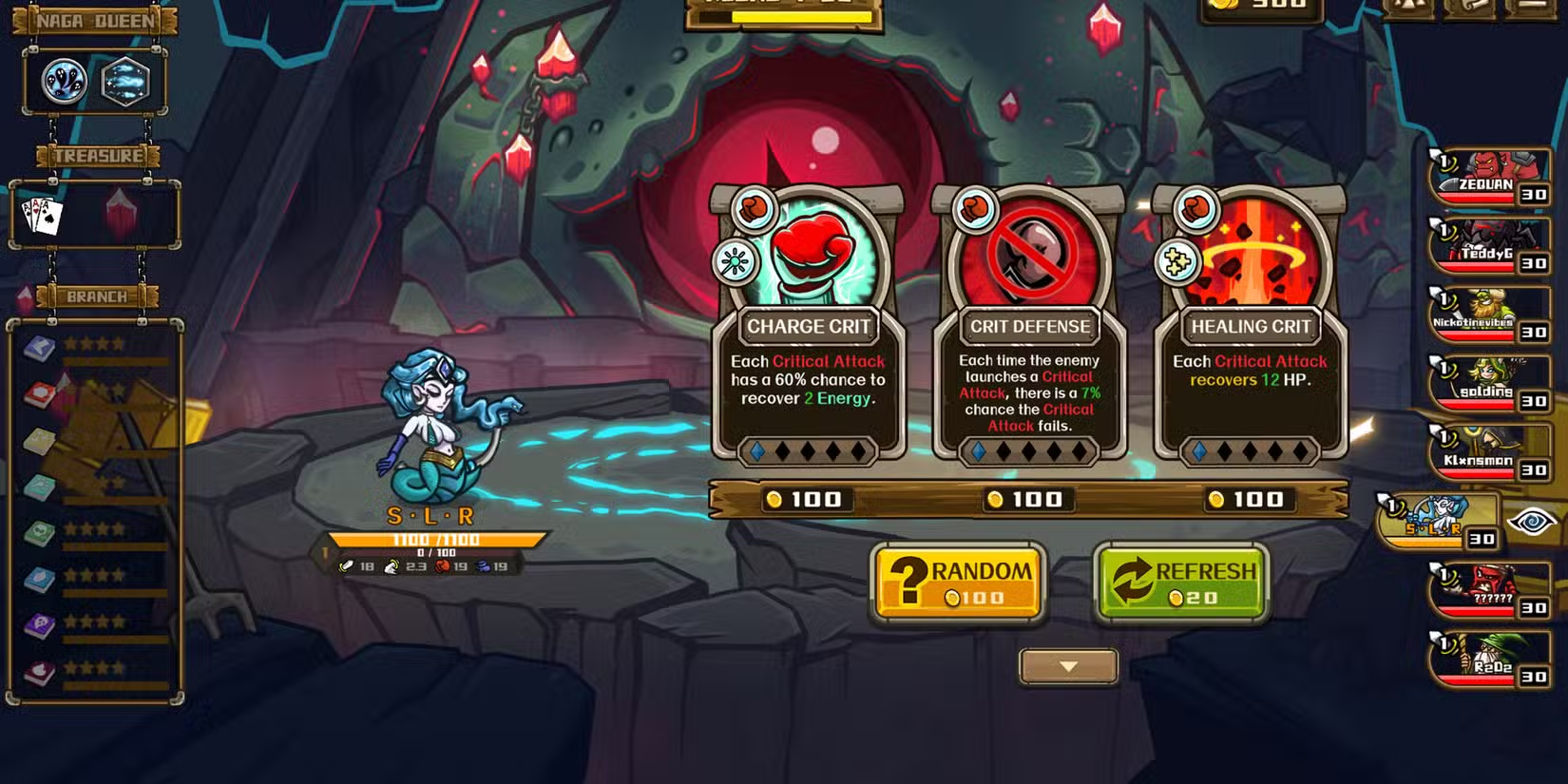
One of the strongest qualities of Skills Legends Royale is how little continuous attention it demands. Combat plays out automatically, leaving me responsible only for choosing upgrades, items, and long-term decisions during the match.
That makes it an ideal game to play alongside something else. I often found myself coding or watching a video while progressing through matches. Every minute or so, the game asked me for a meaningful decision before letting my mind at rest.
That doesn’t mean it’s shallow.
Players who enjoy optimizing builds can spend plenty of time studying combat statistics, damage sources, attack speed, critical hit rates, and status effects. The game works surprisingly well at both ends of the spectrum. It can be a relaxing second-screen experience or a surprisingly analytical strategy game depending on how much attention you want to invest.
Complexity that reveals itself slowly
What impressed me most was not the amount of content, but how gradually the game exposes its systems.
After more than fifteen hours, I noticed something that had been visible on my screen the entire time. Before each match, the available skill paths are displayed at the bottom of the interface.
That seemingly minor detail changes the starting hero selection entirely, because a hero whose abilities revolve around critical hits becomes significantly weaker if the critical skill tree isn’t available. Likewise, removing the attack branch indirectly reduces attack speed, which also lowers the number of critical strikes generated over time. Suddenly, choosing a hero is no longer about picking a favorite character but about reading the draft and adapting to the available progression paths.
I genuinely appreciate games that allow discoveries like this. Rather than overwhelming players with systems from the beginning, Skills Legends Royale lets strategic depth emerge naturally over dozens of hours.
Asymmetry over perfect balance
Modern multiplayer games often chase perfect balance, sanding away anything that might feel unfair. Skills Legends Royale takes a different approach, and I think it benefits from it.
Some heroes are clearly stronger under certain conditions, while others rely on very specific combinations to shine. Certain legendary skills can completely transform a mediocre build into something unstoppable. Instead of trying to eliminate every imbalance, the developers seem more interested in creating opportunities for clever interactions.
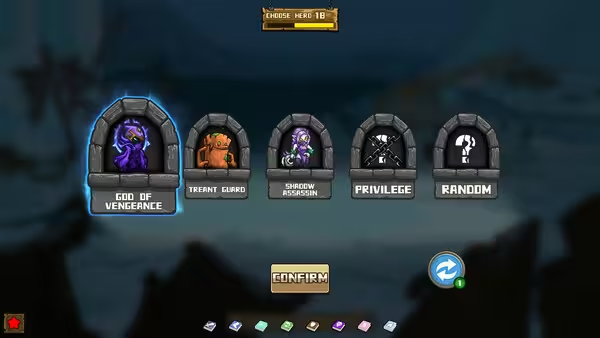
My favorite hero quickly became the Berserker because of his direct, aggressive playstyle. He constantly encouraged me to commit instead of playing cautiously, making victories feel earned rather than calculated, but other heroes would satisfy different desires.
The roster itself is impressively large. Inevitably, some heroes overlap mechanically, but many introduce genuinely unique concepts. The Treasurer, for example, scales his damage based on accumulated gold, creating a completely different relationship with the economy than most characters. Those kinds of ideas keep experimentation fresh long after the initial novelty fades.
Fantasy with enough personality
The game’s world initially appears very conventional. Dwarves, elves, knights and familiar fantasy classes dominate the roster. Fortunately, it doesn’t stop there.
Pirates carrying firearms, goblins launching catapults, and characters dressed in ridiculous fish costumes all contribute to a setting that refuses to take itself too seriously. Ironically, that sense of humor makes the world feel more believable than many fantasy games desperately trying to appear epic.
There is a consistent visual identity, but enough absurdity sprinkled throughout to prevent everything from blending together.
Free to play done better than expected
Given the game’s appearance, I fully expected an aggressive gacha economy.
Most monetization revolves around cosmetics or unlocking additional heroes and items that encourage different playstyles instead of simply being stronger than existing options. At no point during my twenty-one hours did I feel blocked by paywalls or pressured into opening my wallet.
In many ways, this feels like the ideal free-to-play compromise. Dedicated spenders fund the game’s development while free players still receive a complete and enjoyable experience.
You can’t have everything for free, and Skills Legends Royale doesn’t pretend otherwise, but you just don’t feel punished as a free player.
The problem I couldn’t ignore
For all the praise I’ve given the game, one issue ultimately stopped me from wanting to continue.
The localization is genuinely poor. Awkward translations constantly undermine the otherwise solid design, making some mechanics harder to understand than they should be. It never completely breaks the experience, but it regularly reminds you that the production values fall short of the gameplay.
More concerning is the matchmaking.
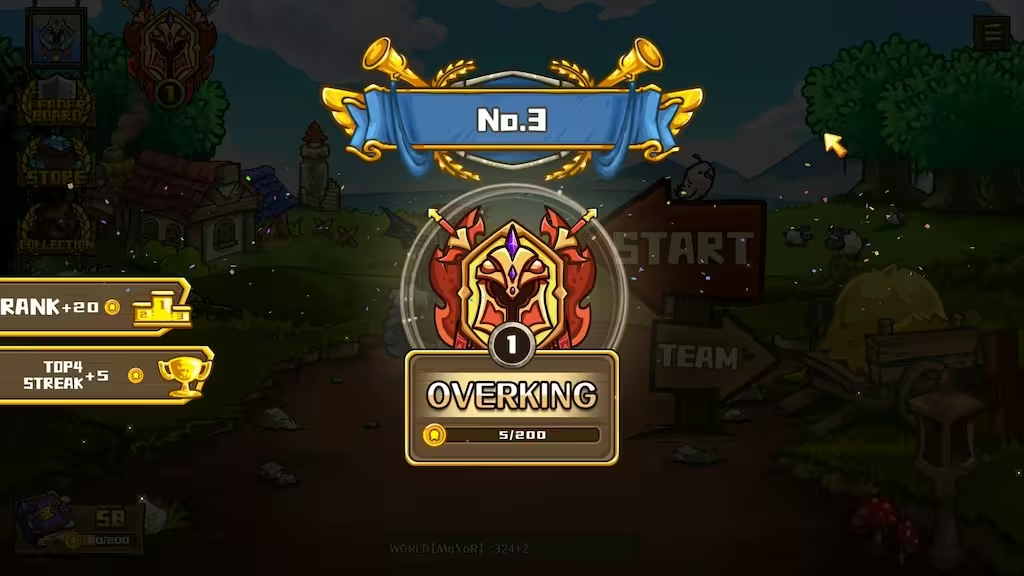
At the time of writing, roughly 650 players were online, yet the early ranked experience strongly suggests that many opponents are bots. This isn’t unusual in modern multiplayer games, especially to reduce queue times for newcomers, but the game never communicates this openly.
That lack of transparency bothered me far more than the bots themselves. Competitive games depend on trust, and quietly filling matches with AI opponents weakens the satisfaction of climbing the ladder. Ironically, that’s the one issue likely to keep me from returning despite everything else the game does well.
Final thoughts!
Skills Legends Royale constantly exceeded my expectations.
Its presentation is rough, its localization needs serious work, and I remain skeptical about how matchmaking is handled for newer players. Yet underneath those rough edges lies an auto battler with surprising mechanical depth, memorable hero design, satisfying build experimentation, and one of the more reasonable free-to-play models I’ve encountered recently.
It isn’t polished enough for me to recommend without reservations, but it is clever enough that I kept overlooking its imperfections for twenty-one hours.
Sometimes that’s the highest compliment I can give a game. Not that it impressed me immediately, but that it quietly earned my time until I realized I was still clicking “Play Again.”