Sim Companies similar games & best alternatives
Should you play it?
Become a Business Tycoon. Build your own company from the ground up. Do business in a virtual economy with players all around the world! Gain valuable business skills for free. An advanced, proprietary, Economy simulation model is used to deliver the best gaming experience.
What works
- Deep and realistic economic simulation
- Player-driven market and community
- Free-to-play with fair monetization
- Flexible playstyle and pacing
- Active and supportive player base
Things to keep in mind
- Slow pace and long wait times
- Steep learning curve for new players
- Some server performance issues
- Limited visual and sensory stimulation
- Potential grind and repetitive tasks
What to play next
Similar games, hidden gems, and fresh directions from this game.
Top picks
Games that feel the closest overall


Hidden Gems
Less popular games with surprisingly high similarity
If you liked…
Recommendations by what you enjoyed most
Similarity map
Explore nearby similar games and see why they’re close.
Sim Companies: Less representative of its motivational profile, with noticeable differences. Motivations that often define this kind of title include Violence, Fantasy, Story, Thrill. Here, the score leans higher than usual among comparable games on Cooperation, Fellowship, Competition.
Why this game works
A motivational profile of the game, with the closest similar game for each player motivation.
-
Autonomy
Game with the same Autonomy vibe
4"Players have significant control over their production choices, base planning, and market strategies, with freedom to direct their own actions and decisions."
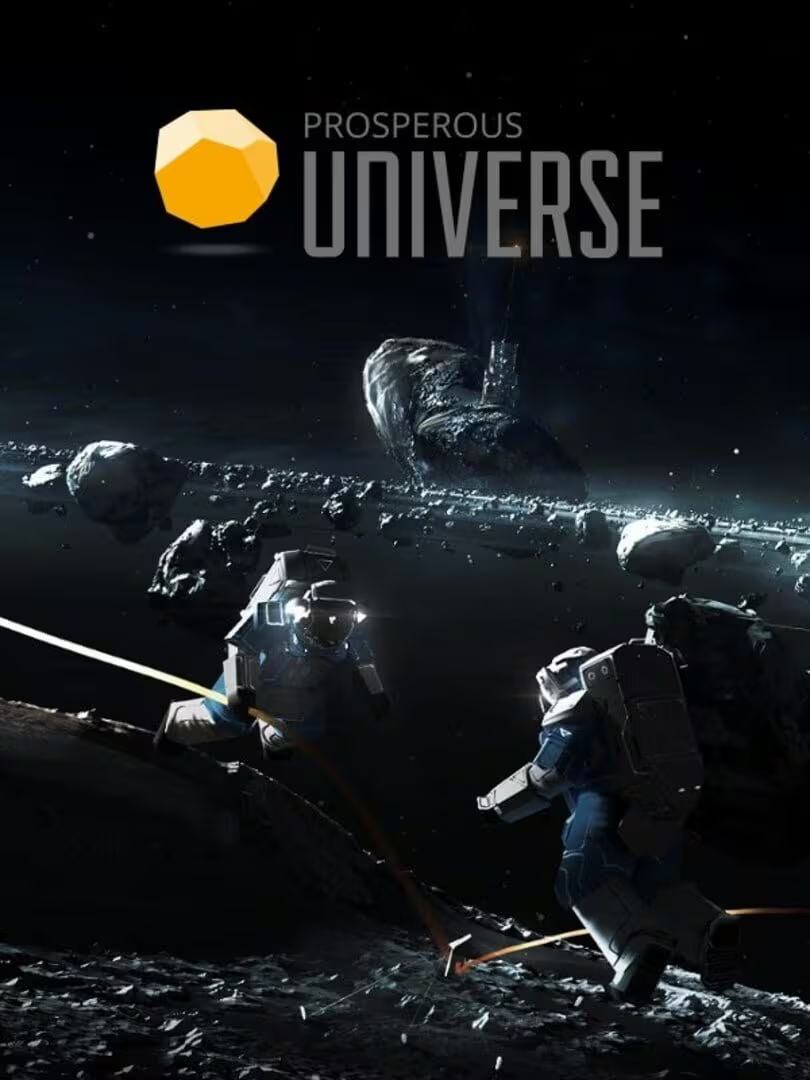 Prosperous Universe
"Players have freedom to choose industries, production lines, trade partners, and business strategies, allowing significant control over their actions."
-
Competence
Game with the same Competence vibe
4"The game involves complex strategic planning, skillful management of trades, scouting, and tactics, providing challenging and varied gameplay."
 Eastside Hockey Manager
"The game involves complex economic calculations, strategic planning, and skillful market manipulation, providing meaningful challenges and feedback."
-
Competition
Game with the same Competition vibe
3"There is competition with rival studios, buying out competitors, and competing for market share, but not heavily focused on ranked or leaderboard competition."
 Game Dev Studio
"There is a player-driven market and rankings, but competition is more about economic positioning than direct confrontation."
-
Continuation
Game with the same Continuation vibe
4"Long-term engagement with habitual play, daily check-ins, and multi-year progression reported by players."
 Firestone – Idle Clicker Online RPG
"Many players report habitual daily check-ins and long-term engagement, though the slow pace encourages intermittent play rather than continuous sessions."
-
Cooperation
Game with the same Cooperation vibe
3"Strong emphasis on player cooperation through corporations, trading, contracts, and community support; collaboration is beneficial and common."
Prosperous Universe
"Players engage in contracts, trade, and loans with others, fostering cooperative economic relationships within the community."
-
Creativity
Game with the same Creativity vibe
2"Some crafting and base building allow for player customization and strategic choices, but within predefined structures and limited scope."
 Siege Survival: Gloria Victis Prologue
"Players can design their business approach and product mix, but production and market structures are predefined."
-
Domination
Game with the same Domination vibe
-3"Interactions emphasize mutual relationships and community rather than exerting control or superiority over others."
 My Time at Portia
"Interactions emphasize mutual benefit and community support rather than exerting control or superiority over others."
-
Escapism
Game with the same Escapism vibe
3"Players use the game as a relaxing, slow-paced distraction and stress relief, engaging in thoughtful planning and economic simulation."
Prosperous Universe
"Players use the game as a relaxing, strategic distraction from real life, enjoying a slow-paced economic simulation."
-
Expectation
Game with the same Expectation vibe
-4"Players engage voluntarily out of interest and enjoyment, with no pressure or obligation reported."
 Dead Space™ 2
"Players engage voluntarily out of interest and enjoyment, with no pressure or obligation reported."
-
Experimenting
Game with the same Experimenting vibe
3"Game encourages trying different production lines, logistics, and pricing strategies."
 Industry Giant 2
"The game encourages trying different industries, strategies, and market tactics to find profitable niches."
-
Exploration
Game with the same Exploration vibe
-2"Game world is fixed with limited discovery; focus is on strategic management rather than exploration."
 Sigma Theory: Global Cold War
"The game world is stable and known; exploration is limited to economic experimentation rather than discovering new areas."
-
Expression
Game with the same Expression vibe
2"Some customization of team names, logos, and player identities exists, allowing moderate self-expression."
 Teamfight Manager
"Players can customize their company logos and business models, allowing some self-expression."
-
Fantasy
Game with the same Fantasy vibe
-3"Game simulates realistic economic and life scenarios; no strong fantasy or fictional elements."
 Money Simulator: Brokeville (Free Prologue)
"The game simulates realistic economic and business processes without fictional or fantastical elements."
-
Fellowship
Game with the same Fellowship vibe
3"Active community on Discord and Steam; players share tips and support each other."
 Galaxy Idle Clicker
"The community is active and supportive, with players sharing tips and collaborating in trade and contracts."
-
Growth
Game with the same Growth vibe
4"Players learn business management, logistics, and strategy, developing skills and knowledge over time."
 Big Ambitions
"Players develop their business skills and knowledge through ongoing learning and strategic refinement."
-
Health
Game with the same Health vibe
-5"The game is sedentary with no physical activity or health-related features."
 The Political Process
"The game is sedentary with no physical activity or health-related features."
-
Idle
Game with the same Idle vibe
4"Gameplay involves waiting for timers, logging in periodically, and managing tasks in short sessions."
 Zoo 2: Animal Park
"Gameplay involves waiting for production and sales, with players often logging in briefly multiple times a day."
-
Intimacy
Game with the same Intimacy vibe
1"Some social interaction through community and friends, but limited evidence of close personal relationships formed."
 Rushdown Revolt
"Social interactions occur mainly around business and trade, with limited evidence of close personal relationships."
-
Leadership
Game with the same Leadership vibe
2"Players manage their own trading company and make strategic decisions, but no group leadership."
 Gazillionaire
"Players lead their own companies and can influence others through investments and contracts, but no formal group leadership roles."
-
Progression
Game with the same Progression vibe
5"Strong focus on accumulating resources, upgrading technology, and expanding the company."
 Game Dev Tycoon
"Strong focus on accumulating resources, upgrading buildings, expanding production, and increasing company value."
-
Relaxation
Game with the same Relaxation vibe
3"Game offers a balance of challenge and flow, with some players finding it relaxing and others noting slow pacing."
 Final Theory
"The slow pace and strategic depth provide a relaxing and thoughtful experience for many players."
-
Sensation
Game with the same Sensation vibe
-2"The game has minimal sensory stimulation; graphics and sound are simple and retro, focusing on text and imagination."
 Avernum 2: Crystal Souls
"Visuals and audio are minimal and functional; the game emphasizes intellectual engagement over sensory stimulation."
-
Status
Game with the same Status vibe
2"Leaderboards and rankings offer some recognition, but social status is not a primary focus."
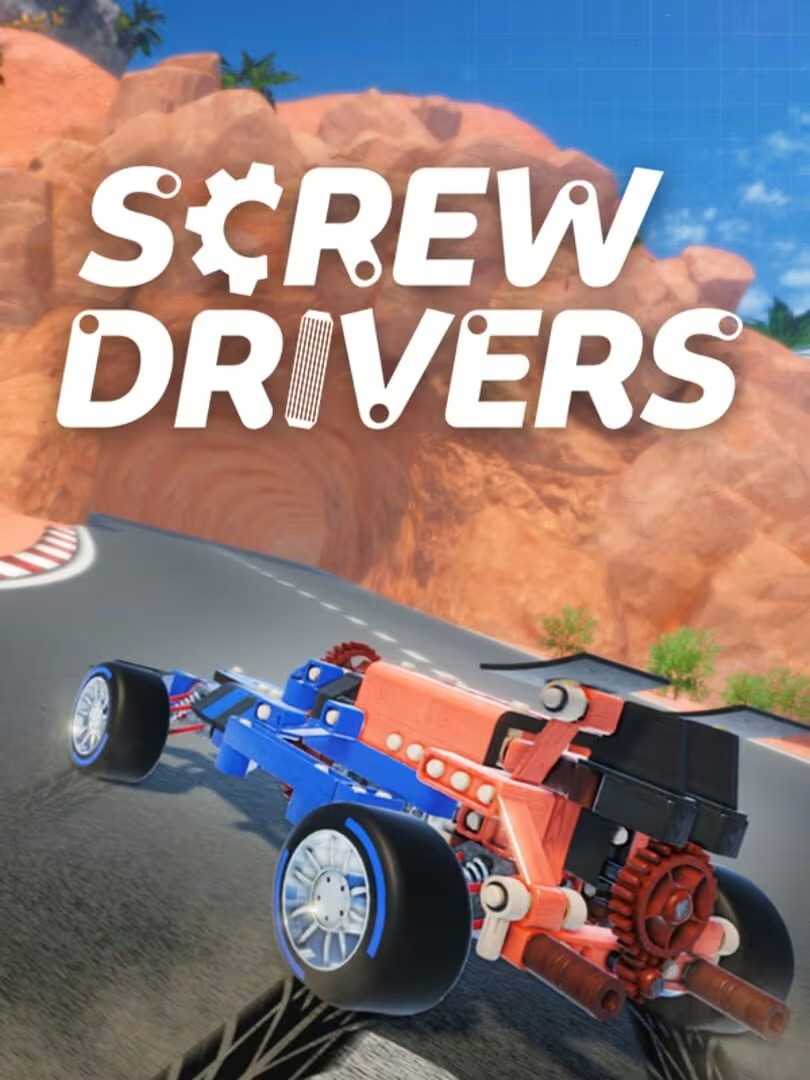 Screw Drivers
"Rankings and leaderboards provide recognition, though social status is not aggressively pursued."
-
Story
Game with the same Story vibe
-4"The game lacks a narrative focus; gameplay centers on economic simulation without overarching plot."
 Rise of Industry
"The game lacks narrative or plot, focusing instead on open-ended economic simulation."
-
Strategy
Game with the same Strategy vibe
5"Heavy emphasis on strategic planning, problem solving, market analysis, and long-term decision making."
Prosperous Universe
"High emphasis on strategic planning, market analysis, and problem solving in business management."
-
Thrill
Game with the same Thrill vibe
-3"Gameplay is calm and slow-paced with minimal risk or suspense."
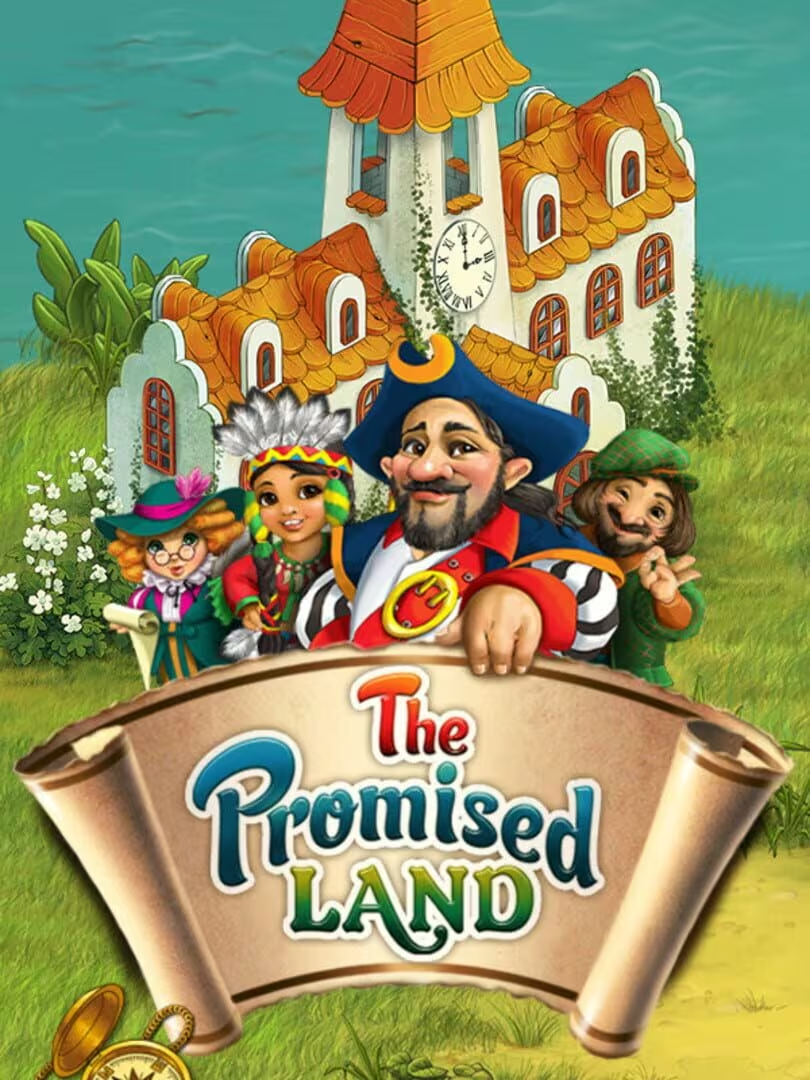 The Promised Land
"The game is slow-paced and low-risk, with minimal suspense or excitement."
-
Value
Game with the same Value vibe
4"Players appreciate the free-to-play model without pay-to-win elements, perceiving good value for time invested."
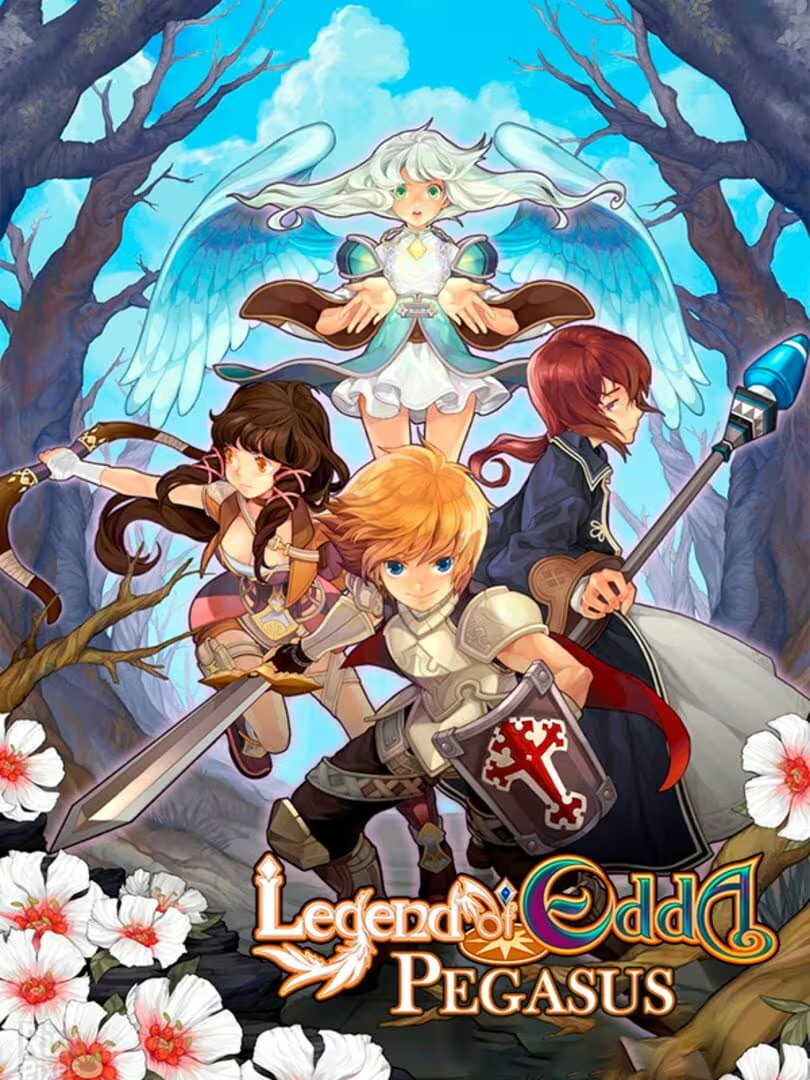 Legend of Edda: Pegasus
"Players perceive good value from the free-to-play model and the depth of gameplay relative to time invested."
-
Violence
Game with the same Violence vibe
-5"No combat or destruction; gameplay centers on constructive economic activities."
Industry Giant 2
"No combat or destructive elements; gameplay centers on constructive economic activities."
-
Survival
Game with the same Survival vibe
2"Players manage risks like bankruptcy and market changes, requiring strategic defense of their company."
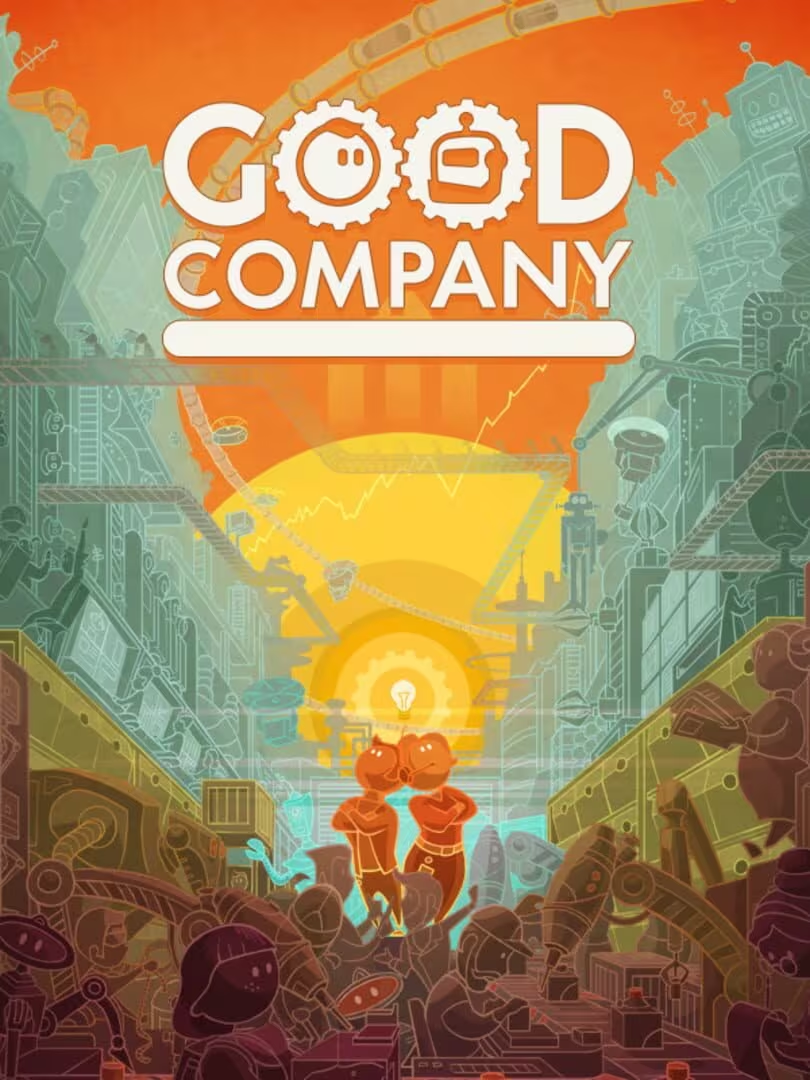 Good Company
"Players must manage risks like market fluctuations and administrative costs to keep their business viable."
Last update: 01/06/2026