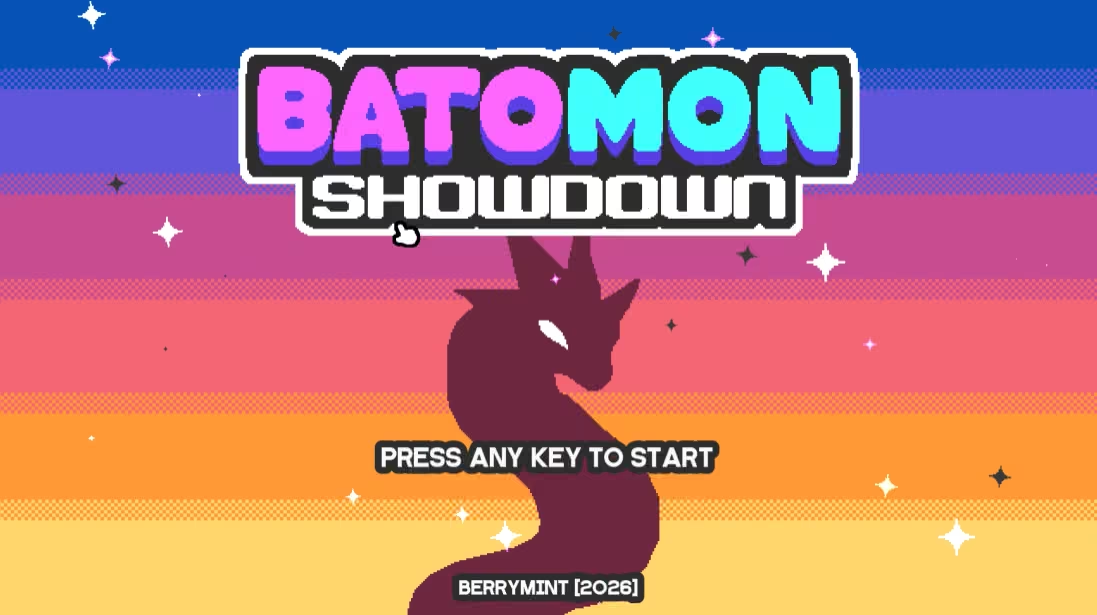
When I first looked at Batomon, the comparison that immediately came to mind was Pokémon crossed with Super Auto Pets. It is an asynchronous creature-collecting and team-building game built around merging creatures, managing an economy, and sending a team into automated battles. It is an easy combination to understand on paper, but Batomon does enough with that formula to make it more interesting than I initially expected.
The Pokémon influence is not exactly subtle. Some of the Batomon are remarkably reminiscent of familiar creatures, to the point that I immediately recognized designs that reminded me of Beedrill or Vaporeon. Yet there is something oddly rea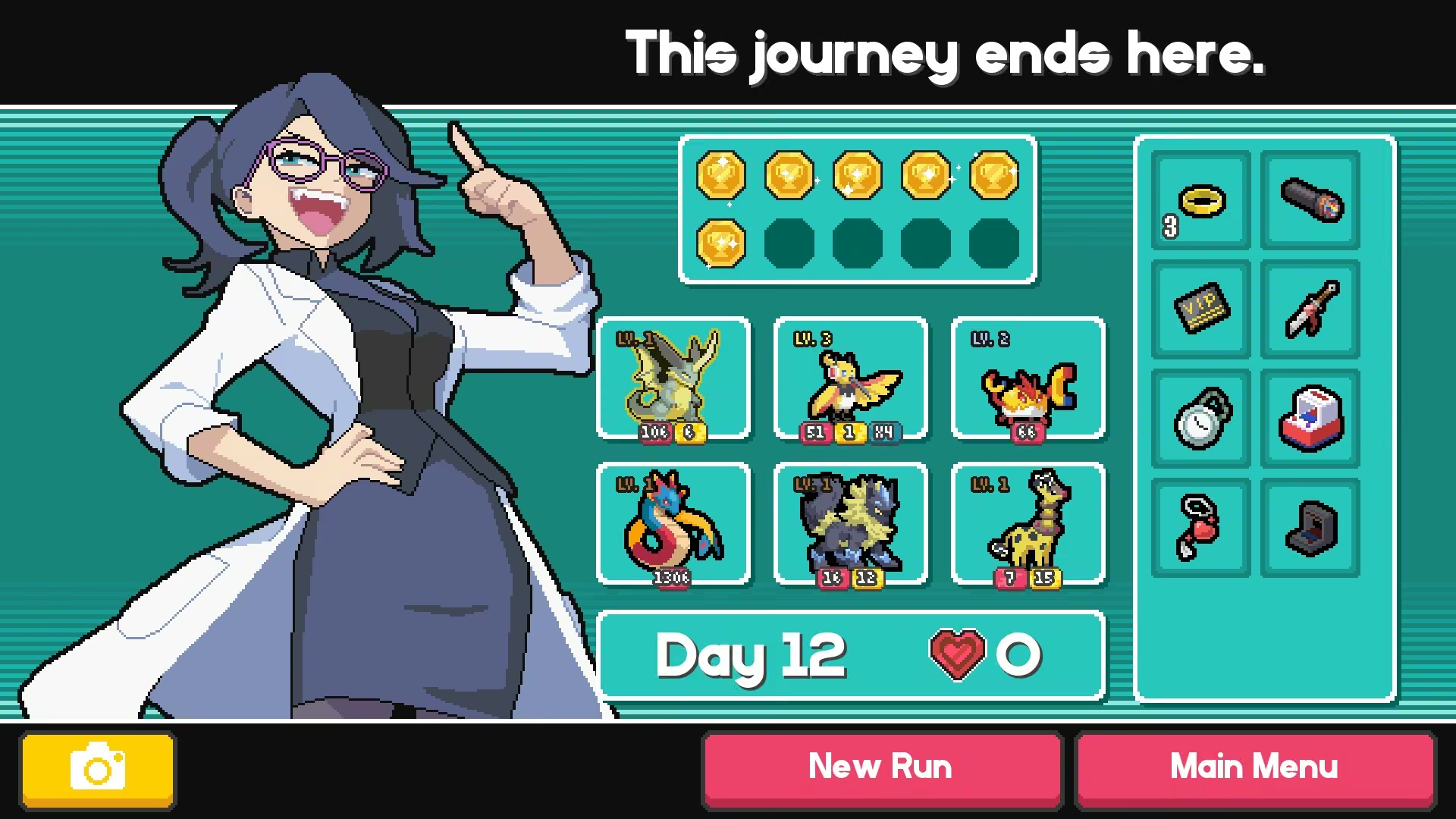
ssuring about that consistency. Even when the designs feel derivative, the creatures belong to a coherent visual universe, and the sheer variety of Batomon gives the game much of its appeal.
What surprised me more was how much thought goes into the underlying systems.
A merge system with an economy that matters
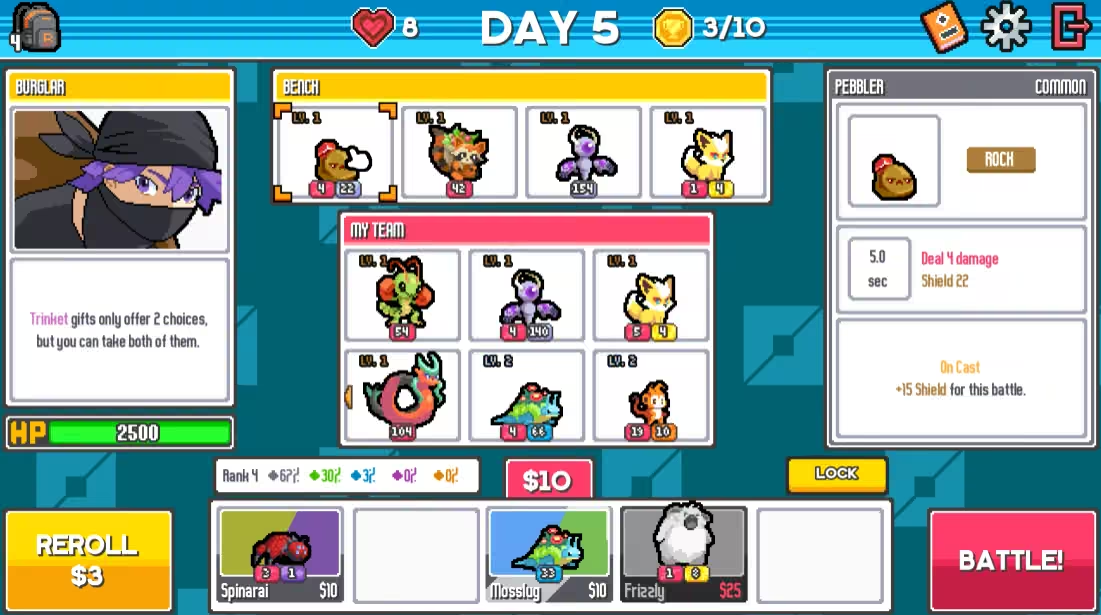
At its core, Batomon revolves around merging creatures to create stronger versions of them. Three level-one Batomon combine into a level-two creature, while only two level-two creatures are needed to create a level-three one. The resulting pyramid structure works well, although the changing numbers can initially feel counterintuitive.
The economy adds an important wrinkle. Batomon cannot simply be bought and resold without consequence, because selling one gives you less money than you spent on it. That sounds like a small detail, but it fundamentally changes the way I approached the merge system.
In some merge games, I can afford to be aggressive about upgrading because I know that the creatures I buy remain relatively liquid assets. Here, I have to think about whether a purchase is actually going to contribute to my team, rather than treating every creature as a temporary stepping stone toward a higher level.
This creates a pleasant tension between short-term power and long-term economy. Sometimes holding onto an apparently mediocre Batomon makes more sense than immediately chasing the next upgrade.
The game also introduces additional complexity through two different islands, each populated by different species. This helps prevent the system from feeling like a single linear progression and gives the roster a broader strategic dimension.
Asynchronous competition makes sense here
The asynchronous league system is one of the aspects I found particularly appealing. Rather than requiring everyone to be online at the same time, Batomon lets me compete against teams in a way that fits the structure of the game naturally.
It is a good match for an experience where the preparation of the team matters more than direct mechanical execution. I can focus on building my lineup and understanding the interactions between my Batomon without having to worry about real-time matchmaking or reaction speed.
There is an unfortunate irony, then, in the fact that an otherwise asynchronous game requires a permanent internet connection. The problem became particularly noticeable because the servers experienced an outage on launch day. For a game whose fundamental structure seems perfectly suited to asynchronous play, being unable to play because of a server issue feels unnecessarily restrictive.
I also found myself wishing the game went further with its persistence. It would be interesting to be able to pit teams I have previously created against each other, or perhaps maintain a global ranking of every team ever assembled. That would obviously be a much larger system than what Batomon currently offers, but the idea fits surprisingly well with the game’s premise.
The Pokémon resemblance is both a strength and a weakness
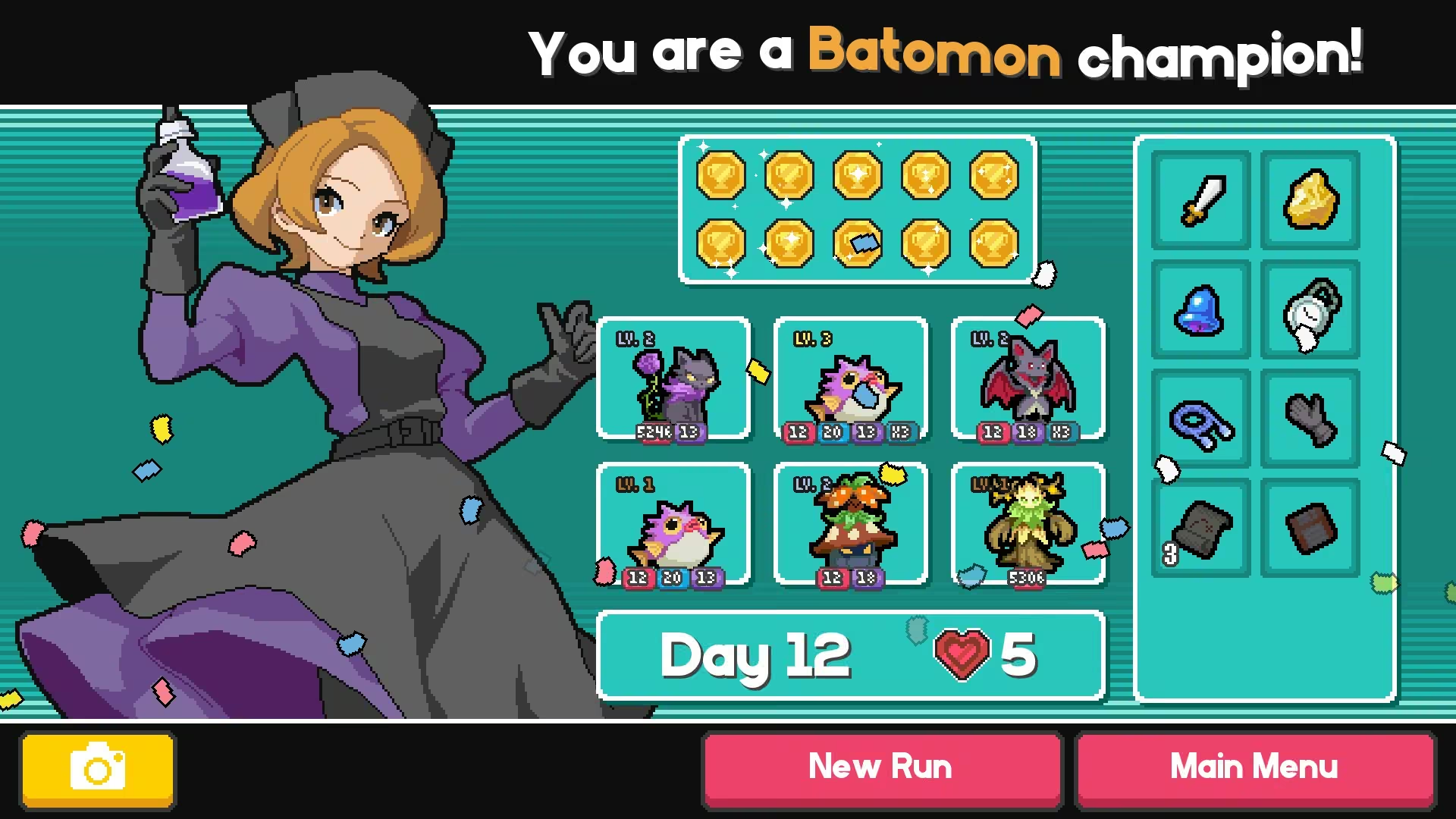
The Batomon themselves are probably the most immediately recognizable part of the experience. Their resemblance to Pokémon is sometimes so strong that I found myself trying to identify the inspiration behind individual creatures.
That familiarity makes the game accessible. I immediately understood the broad idea of collecting a large roster of colorful creatures and building a team around them.
At the same time, the presentation can feel a little too smooth and restrained. This is particularly noticeable with the human characters. Although the pixel art is generally detailed and the environments and creatures receive a fair amount of attention, many of the characters have faces that feel interchangeable.
I never found the visuals unpleasant, but I often wanted a little more personality. The game has the ingredients for a distinctive visual identity, yet it sometimes feels as though it stops just short of giving that identity enough punch.
It reminded me slightly of Everything Is Crab in the sense of combining a large collection of creatures with pixel-art aesthetics, although the actual gameplay could hardly be more different. In Batomon, the creatures are primarily components of a strategic system rather than the protagonists of a more traditional action-oriented experience.
The battle system takes some time getting used to
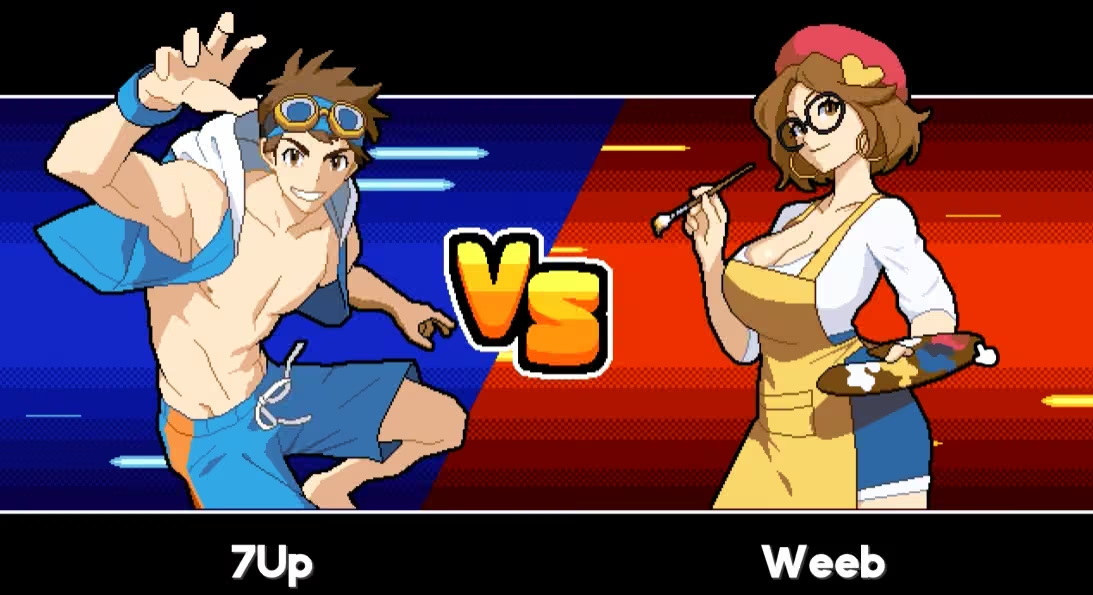
Some of Batomon’s mechanics are considerably less intuitive than its basic merge loop.
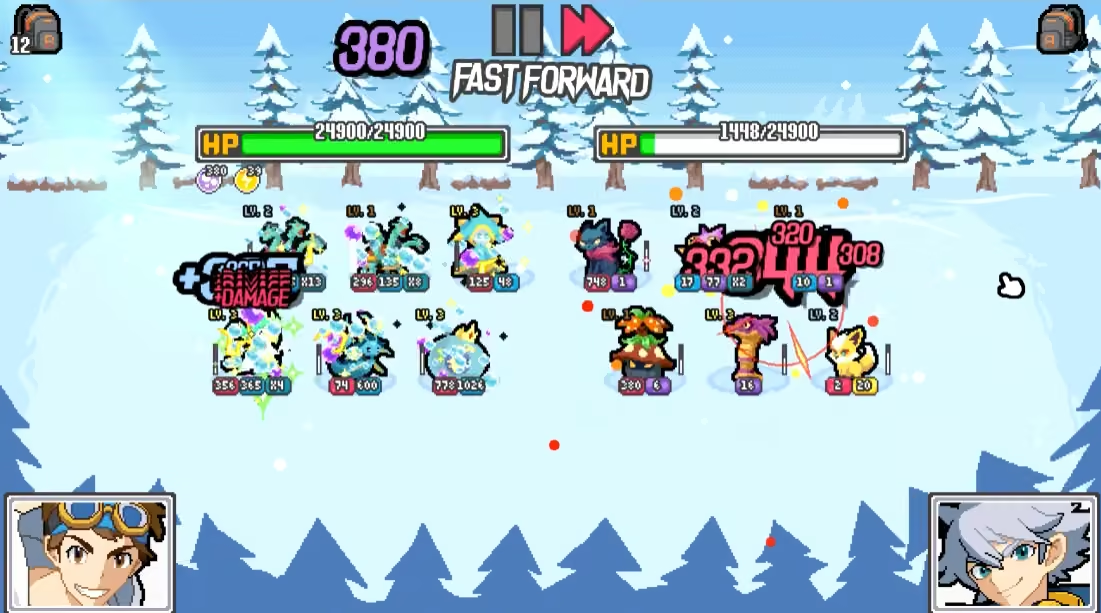
The KO system was one of the biggest examples for me. Batomon visually attack other Batomon, which naturally leads me to expect that an attack will eventually knock that specific creature out. Instead, the team’s shared HP system means that the visual representation of combat does not always correspond to the mechanical outcome I expect.
A Batomon only directly causes a KO when this is explicitly specified on its card.
Once I understand the rule, there is a logic to it. But the first few encounters can be confusing because the presentation encourages a different mental model. I think the game would benefit from making this distinction more explicit, particularly for new players.
There is another important detail that initially surprised me: there are no traditional type advantages. Fire does not beat Grass, and Water does not beat Fire. Given how strongly the game evokes Pokémon, I naturally expected some version of the familiar elemental triangle. Instead, the strategic relationships between Batomon come from their individual abilities and team composition.
I ultimately think this gives Batomon more room to develop its own identity, but it also means that players arriving with Pokémon instincts need to unlearn some assumptions.
There is still some balancing work to do
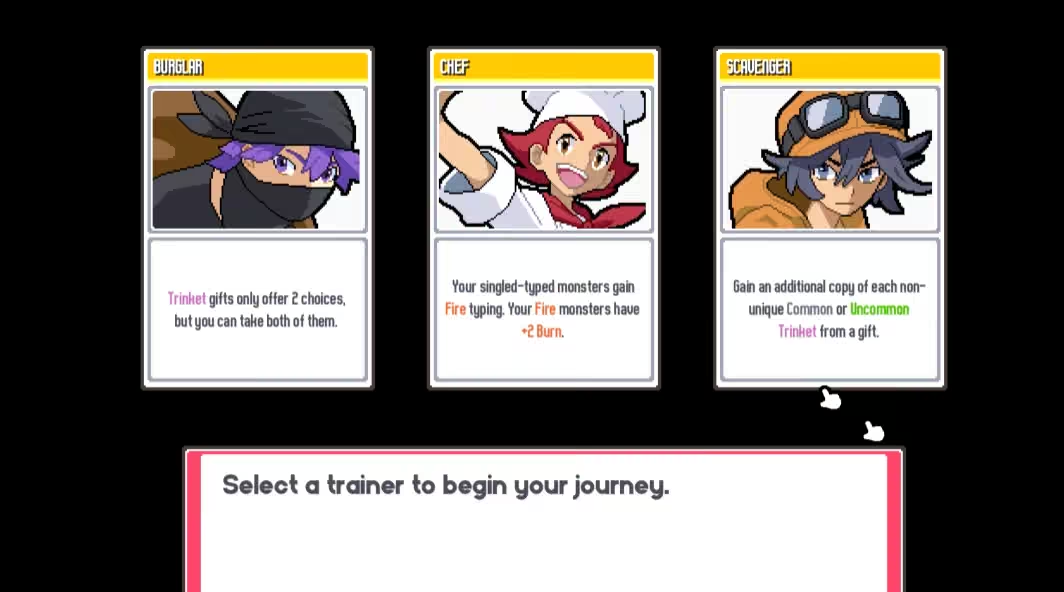
My biggest gameplay reservation is balance.
Trainers with affinities toward particular types of Batomon seem to have an advantage, and because the Trainer selection at the beginning of a ranked game is random, I sometimes felt that the starting conditions could have a significant influence on the competitiveness of a run.
Randomness is obviously part of this kind of game, and I do not think every starting situation needs to be equally favorable. But when the available Trainer affinity interacts strongly with the creatures I can access, the initial roll can sometimes feel more consequential than I would like.
This is an area where some additional balancing could make the competitive experience more satisfying without necessarily removing the game’s randomness.
A pleasant experience with room to grow
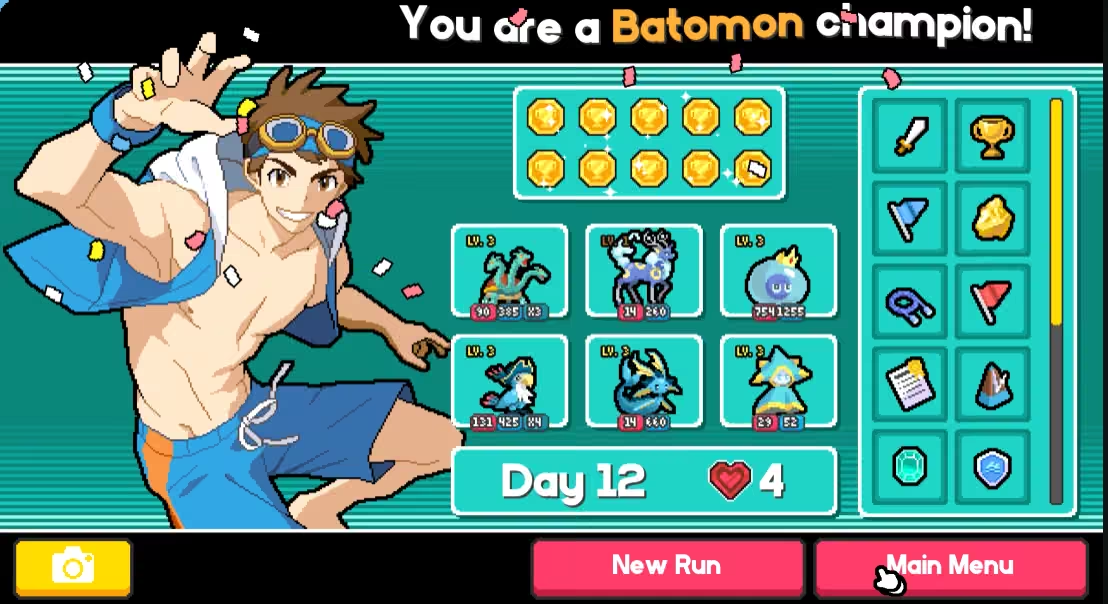
Despite these criticisms, I came away from Batomon with a very positive impression.
What I like most is that beneath its approachable Pokémon-like exterior lies a game that asks me to think carefully about resources, merges, team composition, and timing. The mechanics are not always immediately intuitive, but there is enough substance underneath them to reward learning how the systems actually work.
The asynchronous structure is particularly well suited to the concept, and the growing roster of Batomon gives the game plenty of room for experimentation. I also appreciate that the lack of traditional type strengths prevents the game from simply becoming a Pokémon battle system disguised as a merge game.
There are rough edges. The visual identity could use more personality, some combat mechanics need clearer communication, the Trainer system appears to need further balancing, and requiring an internet connection is difficult to justify for an asynchronous experience, especially after a launch-day server outage.
I also encountered an annoying controller issue where phantom inputs would cause the game to switch back to keyboard and mouse controls, even after I had disconnected those peripherals. It did not fundamentally change my opinion of the game, but it certainly got in the way of an otherwise comfortable experience with a controller.
Still, Batomon has something I value in this kind of game: it gives me reasons to reconsider decisions that initially seem obvious. It looks like a simple creature-merging game, but its economy, progression structure, asynchronous competition, and team-building mechanics gradually reveal a more thoughtful design underneath.
And now that it is also available on Android, the format arguably makes even more sense. Batomon feels like the kind of game I can pick up for a short session, make a few decisions, and put down again without feeling that I have missed an entire competitive match.
It may not yet have the polish or personality of the games it clearly draws inspiration from, but there is a solid strategic foundation here. For me, that makes Batomon less interesting as a Pokémon-like curiosity than as a merge game that has the potential to carve out its own little niche.
