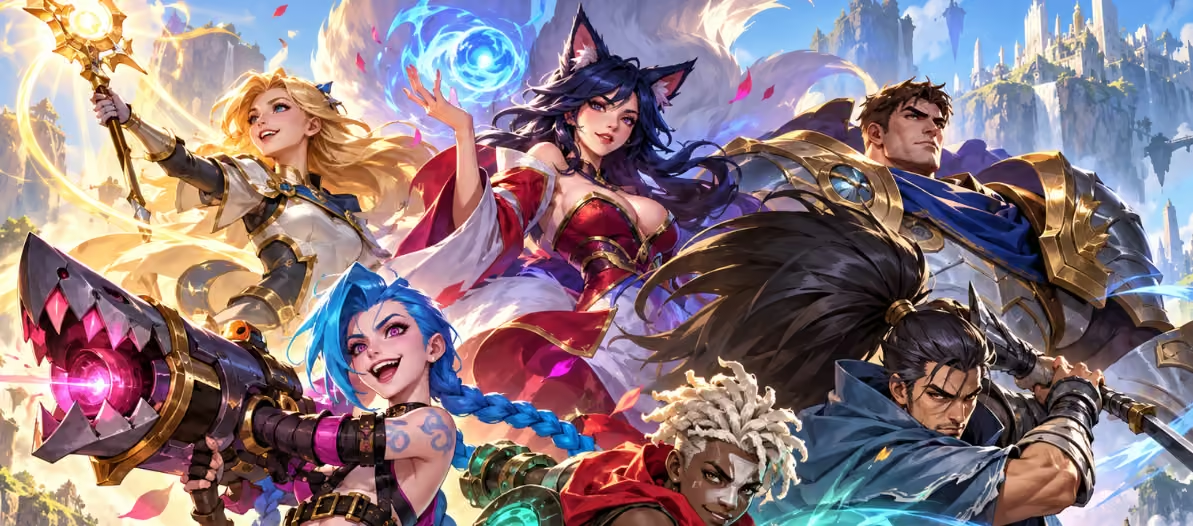
I’ve been playing League of Legends for over a decade, and I’m still impressed by how much its universe has grown beyond the original MOBA.
League of Legends started as a competitive team-based game, but today its characters and world appear in fighting games, strategy games, card games, and even story-driven adventures. If you add to that e-sports and the animated serie Arcane… It’s becoming a cultural phenomenon.
League of Legends: Where It All Started
At its core, League of Legends appeals to several powerful player motivations: Competition, Cooperation, Competence, and Strategy.
Winning matters, but so does mastering a champion, coordinating with teammates, and understanding an ever-changing meta.
One of its greatest strengths is the sheer variety of playstyles. With so many champions, each offering different abilities and strategic possibilities, two players can spend thousands of hours in League while experiencing the game in completely different ways.
Its competitive scene has also become an experience of its own. You don’t even need to play League anymore to enjoy watching professional teams compete at the Worlds, following rivalries, or supporting your favorite players.
But what if you love the League universe without necessarily enjoying the MOBA itself?
A Different Game for Every Type of Player
This is where Riot’s expanding universe gets interesting.
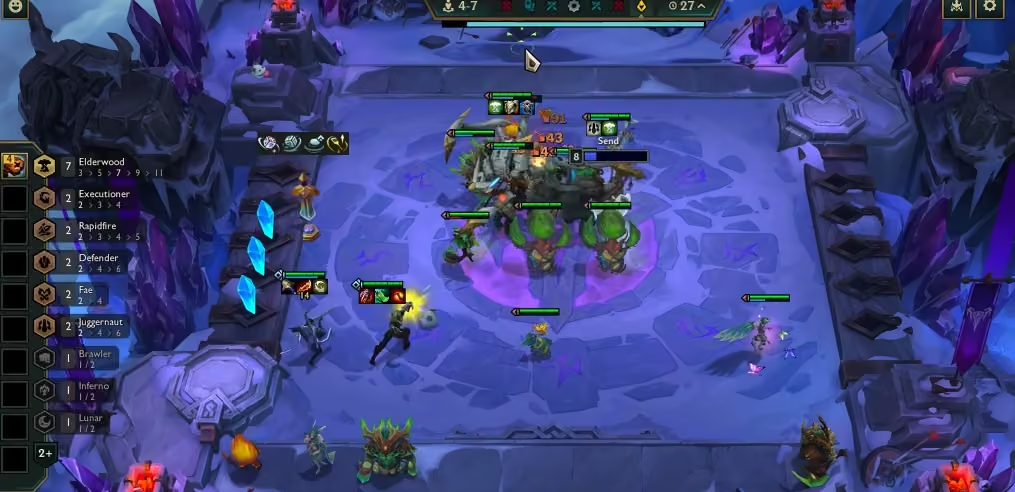
Teamfight Tactics (TFT) emphasizes Strategy and Experimenting. Rather than controlling champions directly, players assemble teams that fight automatically. The challenge lies in managing resources, equipping items, positioning units, and discovering powerful synergies between champions.
What makes TFT particularly engaging is its unpredictability. You might start a match with a specific composition in mind, only to completely change your strategy depending on the champions and items you receive. Regularly rotating sets also introduce new mechanics and combinations, constantly rewarding players who enjoy adapting and experimenting.
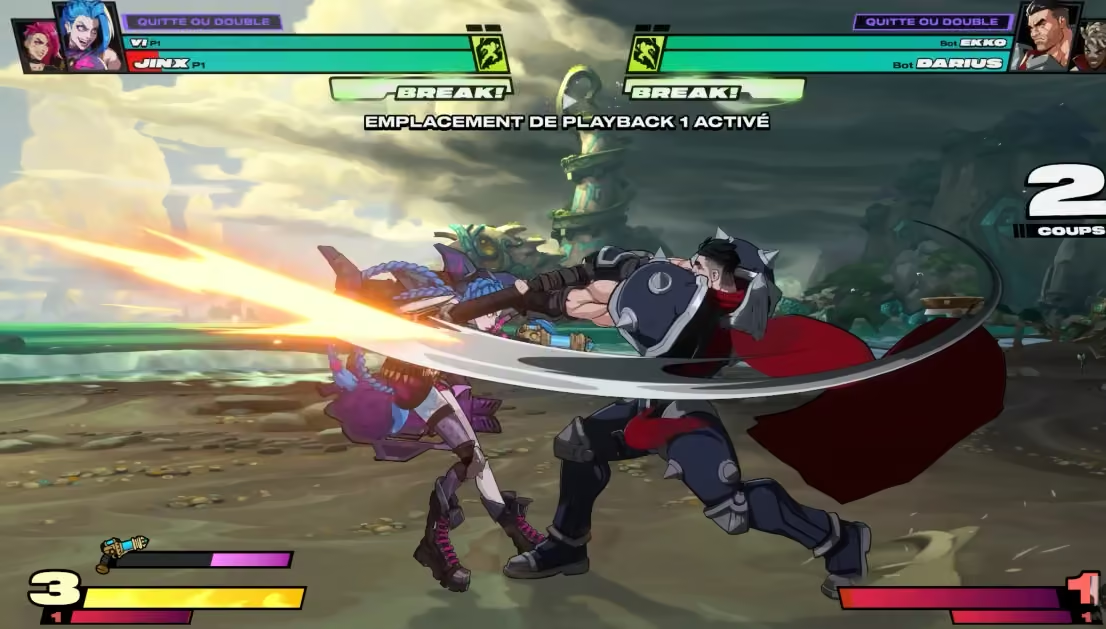
2XKO focuses on Competence, Competition, and Thrill. Its fighting-game mechanics offer a more direct form of confrontation, where timing, execution, and reading your opponent take center stage.
What sets it apart is its 2v2 tag-team system. Players select two champions and can switch between them or combine their abilities into elaborate combos. It’s even possible for two friends to control one champion each, bringing an unusual cooperative dimension to the fighting-game genre. The accessible controls make it relatively easy to get started, while its combo system offers plenty of room for mechanical mastery.
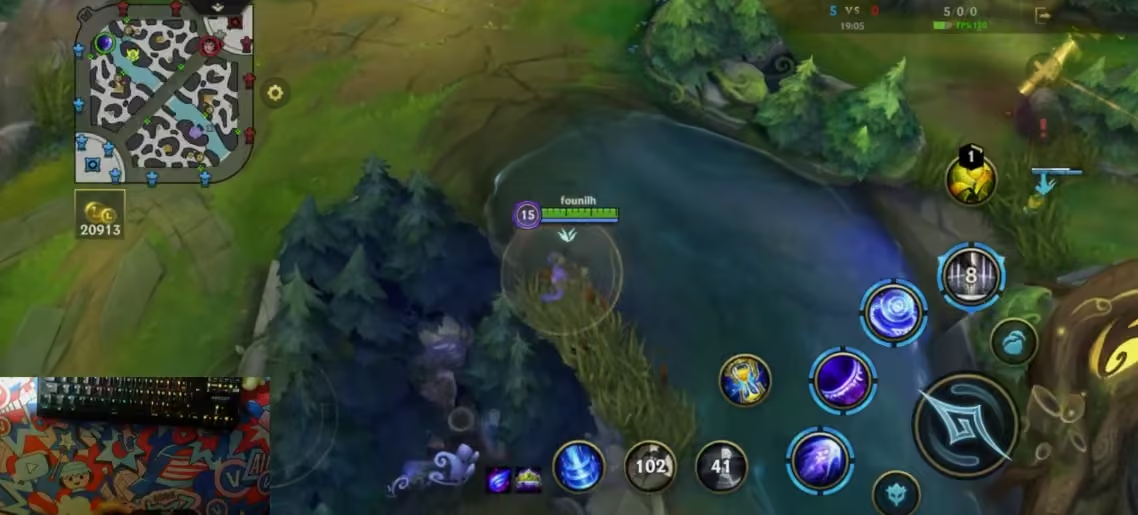
Wild Rift brings the classic League experience to mobile devices, preserving its emphasis on Competition and Cooperation while offering a different way to play.
It’s more than a simple mobile port. The controls, map, and pacing have been adapted to touchscreen gameplay, making matches generally faster and more accessible. It’s an interesting option for players who enjoy League’s champion abilities, team fights, and strategic depth but prefer shorter sessions without being tied to a computer.
Riftbound translates the universe into a physical trading card game, appealing particularly to Strategy and Creativity through deck building and experimentation.
Players build decks around familiar champions and compete to control battlefields, combining cards and abilities to develop their own strategies. One of its strengths is how it translates League’s identity into a completely different format: champion synergies, tactical decisions, and competition remain central, but everything happens around a table rather than on a screen.
I find the creative aspect of deck building especially interesting. Discovering an unusual combination and making it work can be just as satisfying as mastering a champion in League. I’ve actually explored this adaptation in a previous Gameaton article.
And there are even more alternatives.
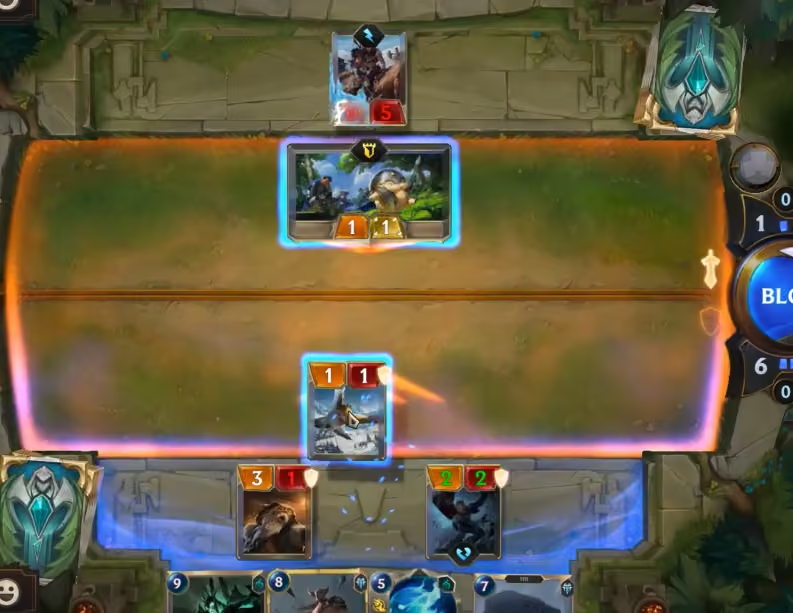
Legends of Runeterra brings card-based strategy to digital screens, particularly through its Path of Champions mode, where players progressively build powerful decks during PvE adventures. It offers a different kind of satisfaction, focused on progression and finding increasingly effective combinations.
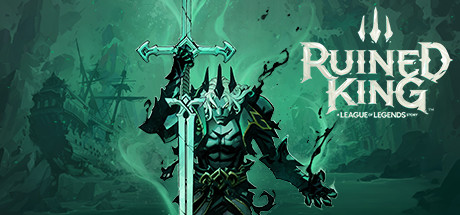
For players who prefer traditional single-player adventures, Ruined King offers a turn-based RPG with an engaging story, strategic combat, and a party of familiar champions exploring Bilgewater and the Shadow Isles.
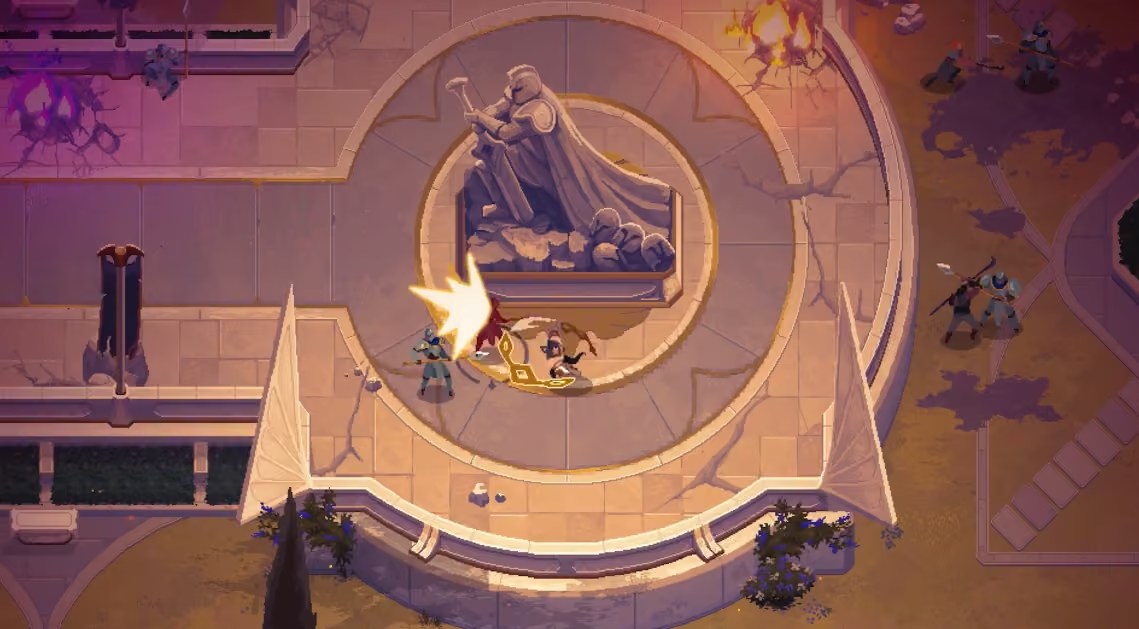
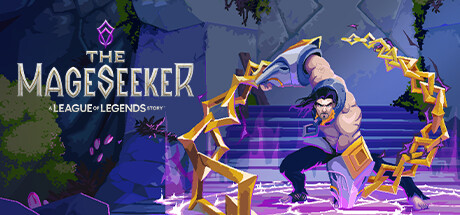
The Mageseeker takes a more action-oriented approach, following Sylas in his rebellion against Demacia. Its fast-paced combat, spell-stealing mechanics, and distinctive pixel art give it an identity of its own.
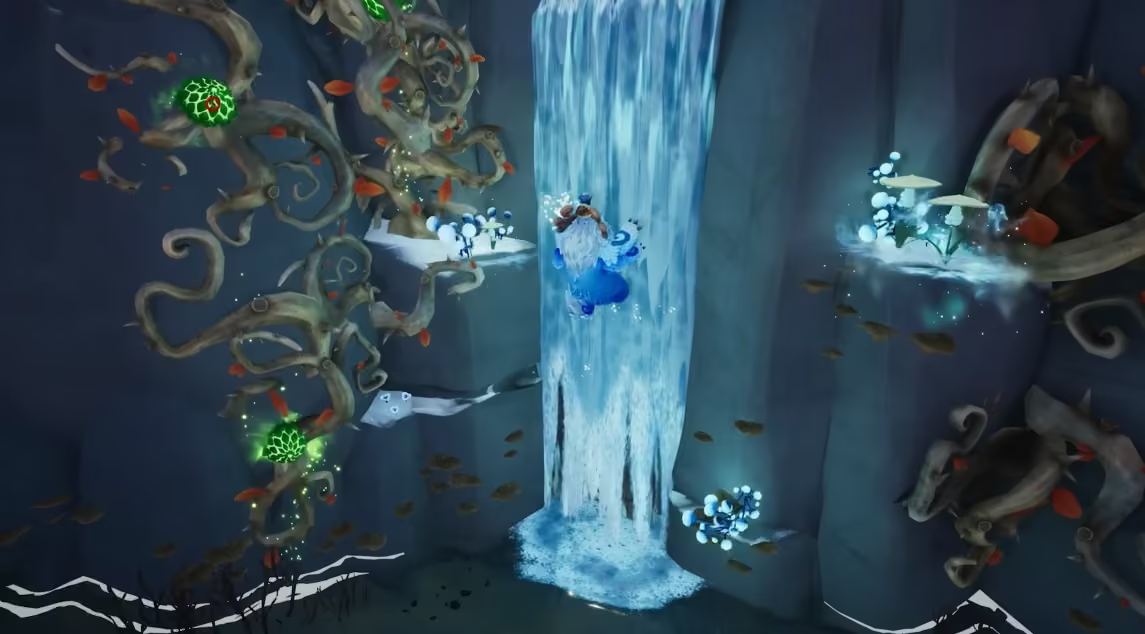
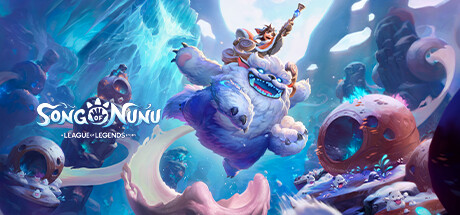
Finally, Song of Nunu offers a gentler adventure, centered on the friendship between Nunu and Willump. Exploration, environmental puzzles, and storytelling take priority over challenging combat.
These last games appeal to another set of motivations: Story, Exploration, and Escapism. They’re for players who want to experience Runeterra without worrying about rankings or competitive performance.
Keeping Up With the League Universe
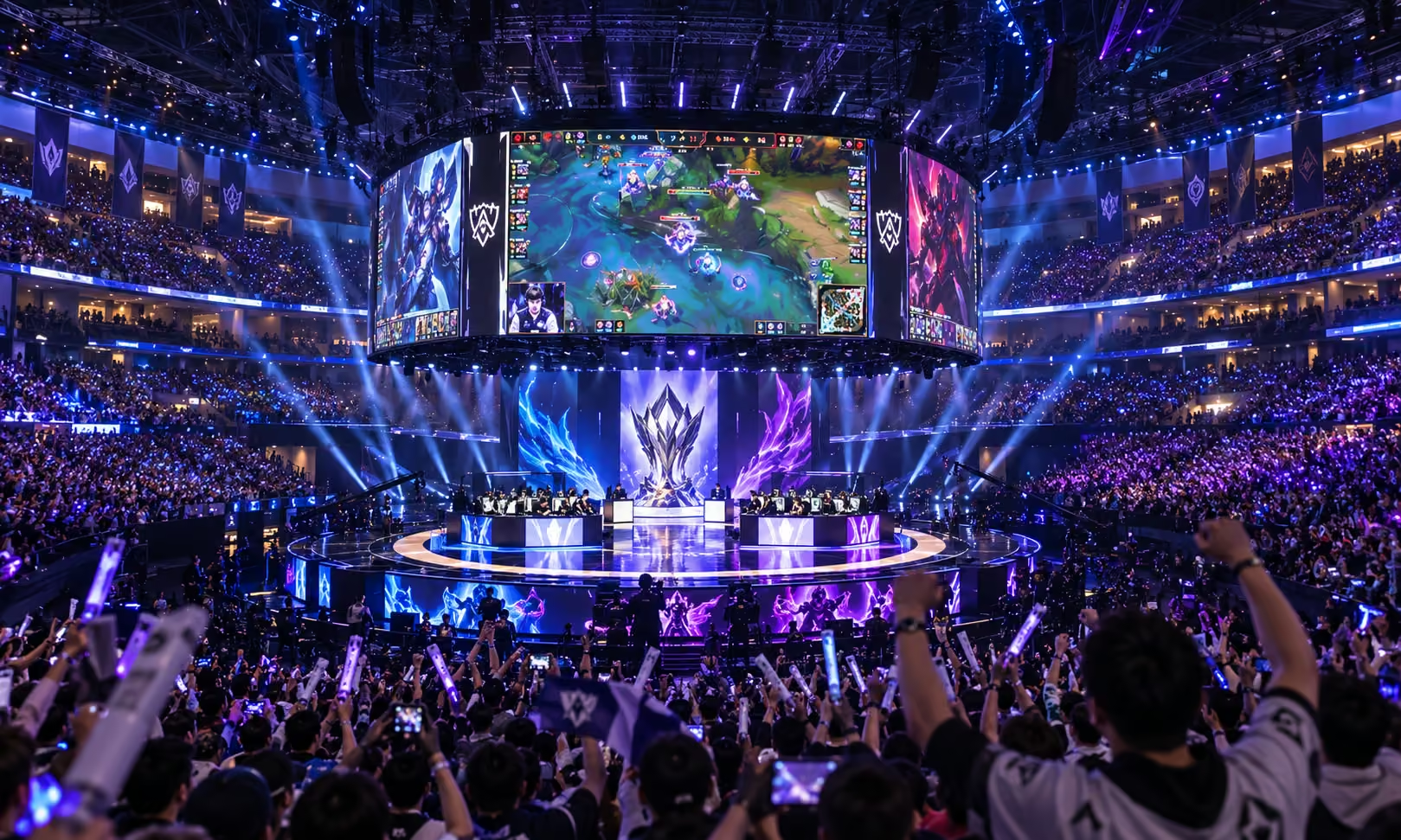
Beyond its growing collection of games, League of Legends has also become one of the biggest names in esports.
In fact, arguably the most famous esports player of all time comes from League of Legends. Lee “Faker” Sang-hyeok, the legendary mid-laner of T1 (formerly SK Telecom T1), has built an extraordinary career with the same organization since 2013. With six World Championship titles, two Mid-Season Invitational (MSI) victories, and numerous Korean league titles, he’s become an icon whose reputation extends far beyond the League community.
But Faker is only one part of a much larger competitive ecosystem. Today, professional League revolves around major regional competitions such as the LCK in Korea, LPL in China, LEC in Europe, and LCS in North America. The best teams compete internationally at events like MSI and the World Championship, better known as Worlds.
Between regional leagues, international tournaments, roster changes, rivalries, and constant gameplay updates, there’s a lot to follow. And that’s without even considering Riot’s other games.
Fortunately, there are specialized websites that bring much of this information together. I recently came across RiftDaily, and I thought it was worth sharing.
The site primarily focuses on League of Legends, with news, guides, patch updates, and particularly extensive coverage of the professional esports scene. It follows major competitions like Worlds and MSI, as well as regional leagues, with articles about teams, players, match results, and upcoming events. It also covers TFT, Wild Rift, 2XKO, and Riftbound.
If you’re interested in keeping up with competitive League of Legends or what’s happening across Riot’s other games, I’d recommend checking it out.
One Universe, Many Motivations
What makes this expansion interesting is that you no longer need to enjoy League of Legends to appreciate its universe.
Whether you’re driven by competition, strategic thinking, experimentation, or simply discovering a good story, there’s probably a Runeterra game that fits your preferences.
And that’s something I find particularly remarkable: the same characters and world can deliver entirely different gaming experiences depending on what motivates you to play.