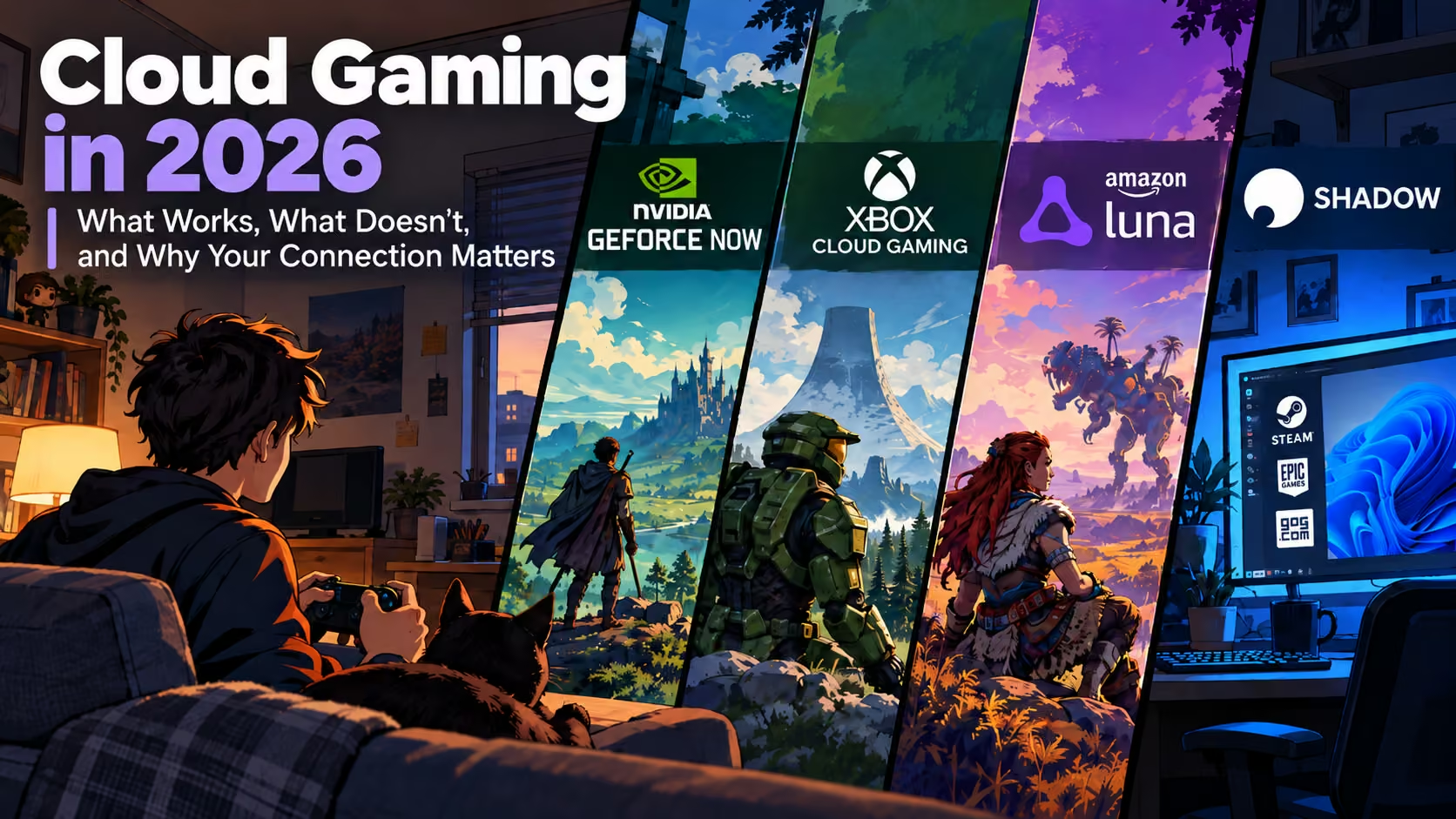
Each takes a slightly different approach. GeForce NOW primarily streams supported games from your existing Steam, Epic, or GOG libraries. Xbox Cloud Gaming offers access to games through Game Pass and supports streaming selected purchased titles. Amazon Luna provides a selection of games through Prime and additional subscriptions.
Shadow PC takes a different route, providing a complete Windows PC in the cloud rather than access to a predefined game catalogue. This allows players to install their own games, applications, and compatible mods, much like on a local computer.
But choosing a service is only part of the equation. The games you play and the quality of your internet connection can make just as much difference.
How does cloud gaming relate to Gameaton?
Finding a game that matches your preferences doesn’t necessarily mean your computer can run it.
Gameaton helps players discover games through motivational dimensions such as exploration, storytelling, competition, and relaxation. Cloud gaming can make some of those discoveries accessible without requiring a hardware upgrade.
For example, someone with an older laptop might discover a demanding RPG through Gameaton and play it using GeForce NOW, provided the title is supported.
Alternatively, services like Shadow PC give players access to a remote Windows computer, allowing them to install games from their own libraries without depending on a predefined streaming catalogue. Some titles may still be incompatible, particularly those with restrictive anti-cheat systems.
Cloud gaming expands your options, but doesn’t guarantee access to every game you discover.
Which games work best with cloud gaming?
The main technical limitation is input latency: the delay between pressing a button and seeing the game respond. Cloud gaming adds a journey to a remote server, making some genres more sensitive than others.
Story-driven games, RPGs, puzzles, and turn-based strategy generally work well. A little additional latency rarely matters when exploring environments, choosing dialogue options, or planning your next move.
Cooperative survival and building games are usually comfortable to play, although combat-heavy sequences may reveal occasional delays.
Competitive shooters, fighting games, and rhythm games are more demanding. Precise timing and fast reactions matter, so even relatively small delays can affect the experience.
Cloud gaming isn’t necessarily unsuitable for competitive games, but players who prioritise responsiveness should test their connection before committing.
How much does your home network matter?
A fast internet connection doesn’t automatically guarantee smooth cloud gaming.
Unlike Netflix, which can buffer video ahead of time, cloud gaming needs to respond continuously to player inputs. Three factors are particularly important:
- Latency: How quickly data travels between your device and the server.
- Jitter: How much that delay fluctuates.
- Packet loss: Whether information gets lost during transmission.
NVIDIA recommends around 25 Mbps for GeForce NOW at 1080p and 60 FPS, a speed many broadband connections can provide. Maintaining a stable connection, however, can be more challenging when multiple devices share the network.
This is where your router can make a difference.
Wi-Fi 6 introduces technologies such as OFDMA, which helps compatible devices share wireless resources more efficiently. In busy households, this can reduce congestion and improve connection consistency.
Some routers also offer Quality of Service (QoS) settings to manage competing traffic. If your current equipment struggles with multiple connected devices, a Wi-Fi 6 router may be worth considering.
That said, a wired Ethernet connection remains one of the simplest ways to improve stability. Upgrading your router won’t solve latency caused by distant servers or issues outside your home network.
What are the limitations of cloud gaming?
Cloud gaming comes with a few compromises beyond network performance.
Game availability can change as publishers and platforms update their catalogues. Subscription costs and playtime restrictions also vary, and some services limit monthly usage.
Image compression can become noticeable during fast movement or visually complex scenes. Streaming at high resolutions also consumes significant amounts of data, which matters for users with capped internet plans.
Finally, unlike locally installed single-player games, cloud gaming depends on maintaining an internet connection.
Is cloud gaming worth trying?
For players without powerful hardware, cloud gaming offers a practical way to access games that might otherwise be out of reach.
It’s particularly appealing for exploration, storytelling, and strategy-focused experiences, although its usefulness ultimately depends on game availability and connection quality.
Before investing in new equipment or a subscription, try a service using your existing setup and see how it performs.
Cloud gaming won’t replace local gaming for everyone. But combined with discovery platforms like Gameaton, it offers another way to turn an interesting recommendation into something you can actually play.