I have never really been a retro gamer. The nostalgia surrounding huge pixels, old sound effects, and memories of brutally difficult games has never been enough to bring me back. I do not have fond memories of spending hours dying on games that seemed designed to test patience rather than entertain. When I was seven years old, I was still learning where the buttons were on my controller, so some of those legendary childhood challenges felt more like obstacles than adventures.
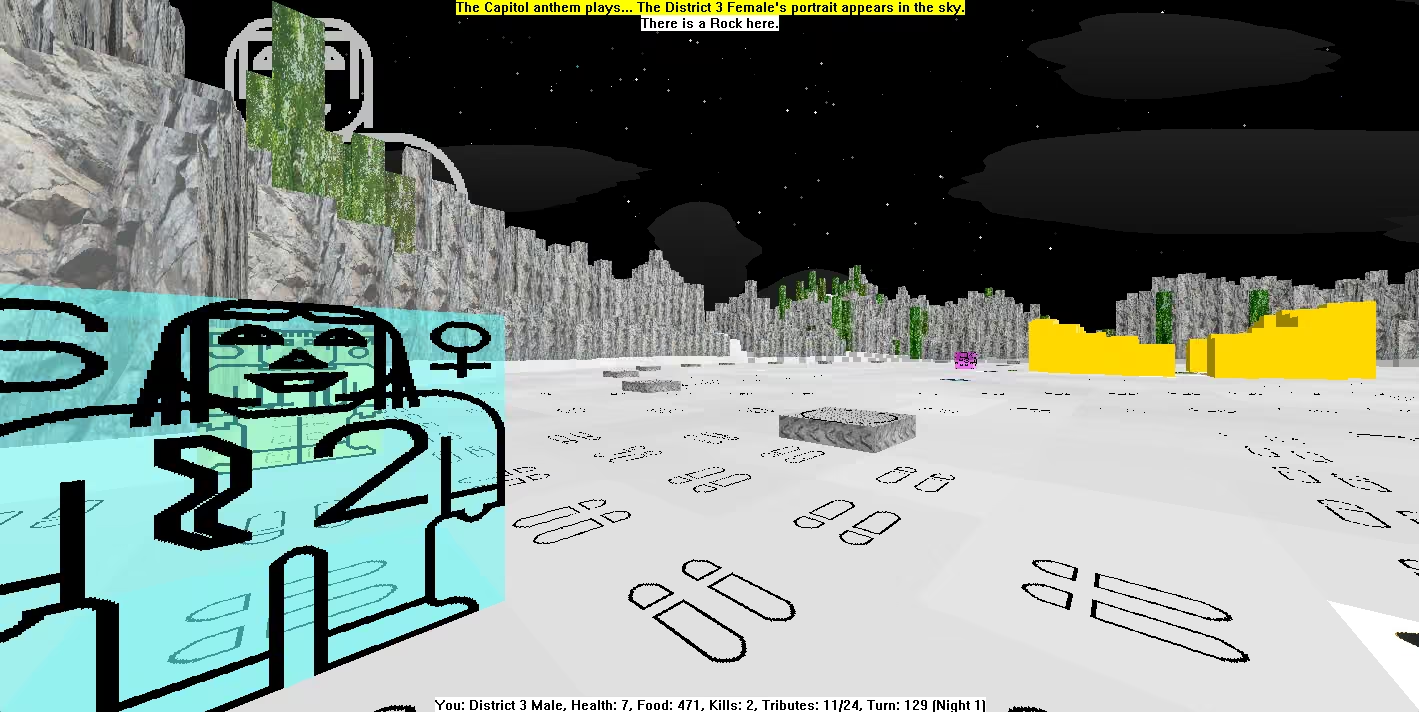
And yet, Daedalus Hunger Games Simulation managed to surprise me precisely because it does not try to appeal to nostalgia. Its outdated visuals are not a deliberate artistic choice meant to recreate the past. They are simply the result of a very limited framework. But instead of destroying the experience, these limitations reveal something important about game design: immersion does not necessarily come from realism. Sometimes, it comes from making the player fill the gaps.
Originally created as a project using Daedalus, a 3D maze creation engine, Daedalus Hunger Games Simulation is a strange and unique survival experiment. The game is also available for free on itch.io, where it can still be discovered today. It takes the core idea of a battle royale competition and transforms it into something very different: a first-person, turn-based survival simulation where every decision feels like a desperate attempt to stay alive.
A perspective that makes survival personal
The most interesting design decision in Daedalus Hunger Games Simulation is undoubtedly its first-person perspective.
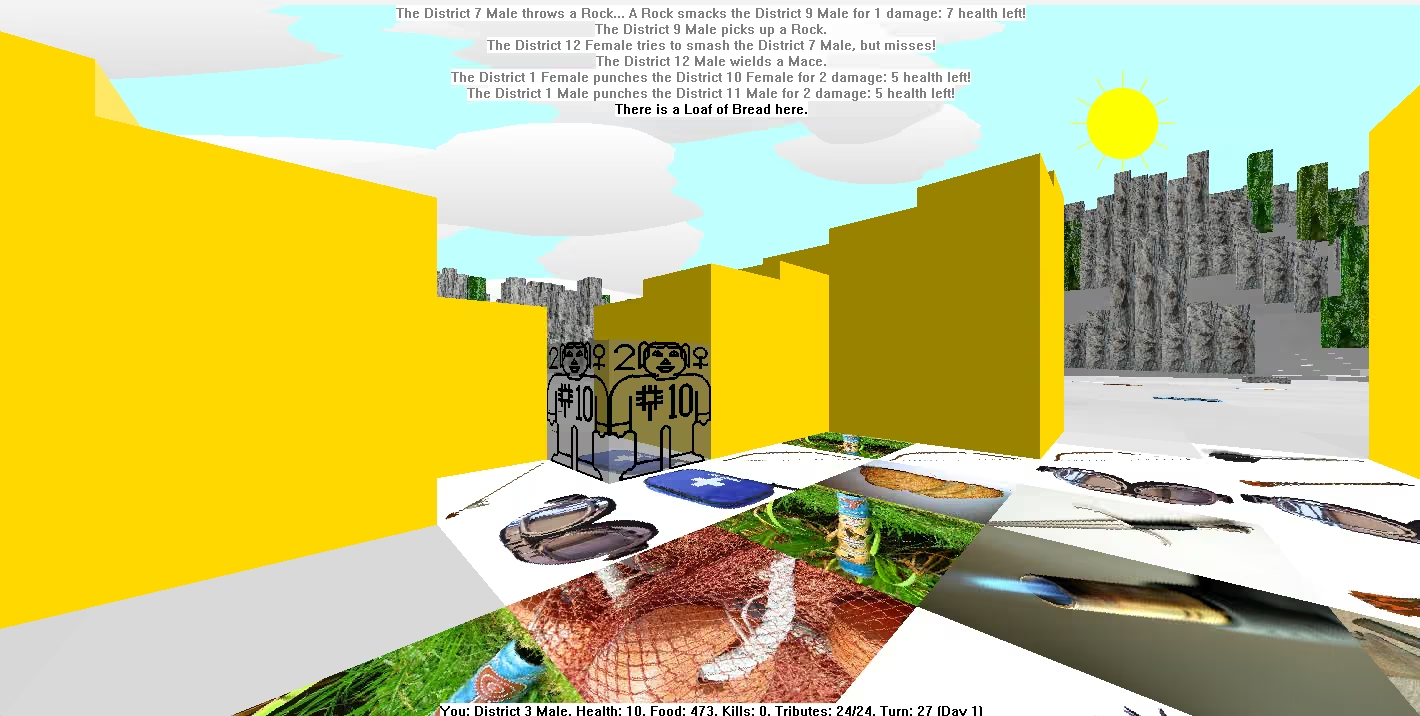
Many survival games give players a large amount of information. They show the entire battlefield, enemy positions, objectives, and resources. Here, my understanding of the arena is deliberately limited. Trees can hide opponents. The Cornucopia can become a dangerous blind spot. Another tribute may be close without me realizing it.
That lack of information creates vulnerability.
I never feel like a commander controlling a simulation. I feel like one of the participants thrown into an unknown environment, trying to understand what surrounds me before it is too late.
The visual presentation, which would normally be considered one of the game’s biggest weaknesses, sometimes reinforces this feeling. Items scattered across the arena are represented by simple flat images that look closer to placeholders than polished assets. Yet because I cannot instantly recognize everything from a distance, exploration becomes a risk. I have to approach objects, commit to decisions, and accept that curiosity can get me killed.
A more detailed graphical presentation might actually reduce some of this tension. The uncertainty created by these limitations becomes part of the experience.
The fear of being powerless
After around three or four hours, my experience with the game was surprisingly varied. Some runs ended almost immediately. Others allowed me to survive long enough to reach the final stages. Eventually, I managed to win a run, and that victory felt genuinely rewarding.
The difficulty comes from the situation rather than artificial punishment. At the beginning of each game, I am just another tribute dropped into the arena. I have no guarantee of good equipment, no special advantage, and no protection against stronger opponents.
The Career tributes represent an obvious threat, but even they are not untouchable. One of my most memorable situations was seeing powerful fighters surrounded around the Cornucopia, forced to defend themselves while being attacked from multiple directions. There is something satisfying about watching the strongest players become vulnerable when the entire arena turns against them.
The simultaneous turn system is essential to creating this atmosphere. Every tribute acts during the same phase, meaning that each decision happens inside a constantly evolving situation. The result is a strange feeling of slow motion: the game is turn-based, but the emotional intensity resembles a chaotic real-time battle.
Every movement matters because I know that while I am making plans, everyone else is doing the same.
Mechanics that reward experimentation
One of the strongest aspects of Daedalus Hunger Games Simulation is how little it explains.
Modern games often introduce every mechanic through tutorials and detailed interfaces. Here, I am left to experiment. The absence of complete explanations encourages curiosity and creates the feeling of discovering the rules of an unfamiliar environment.
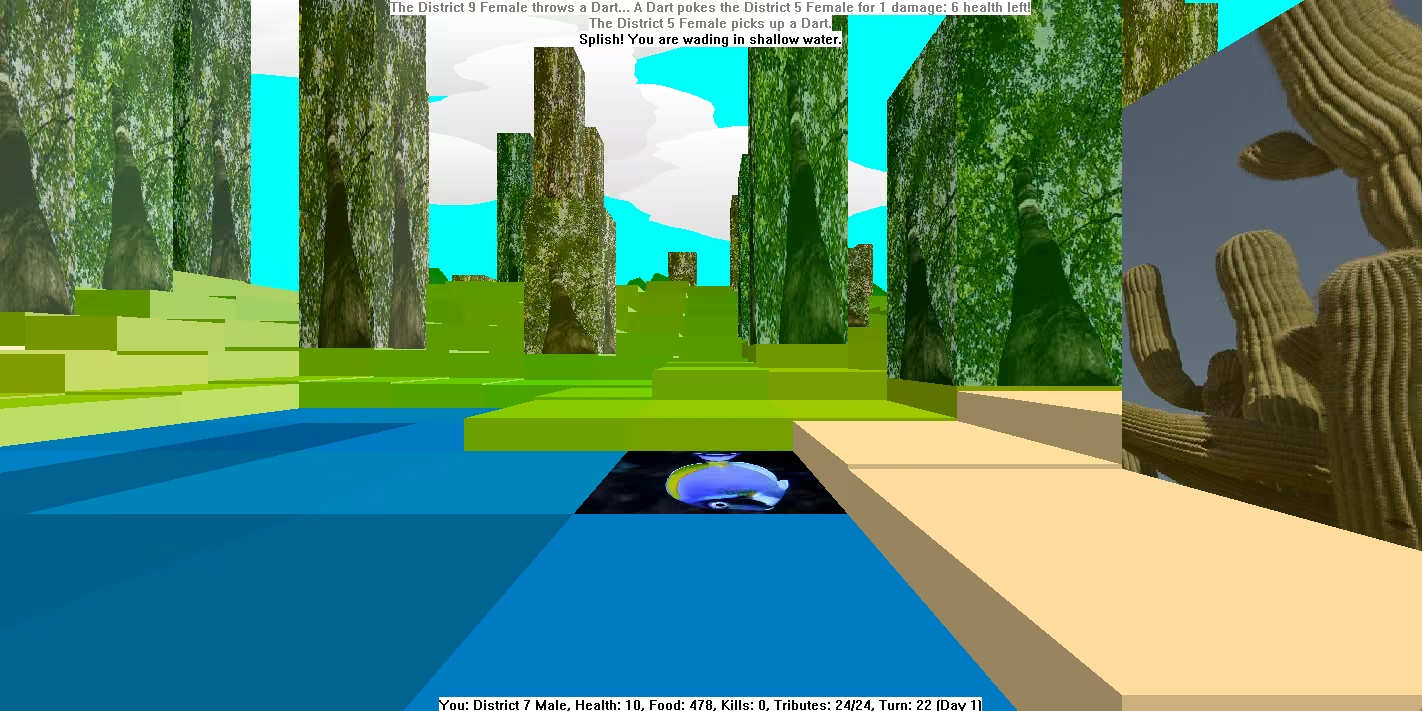
Some mechanics are surprisingly clever. Objects can be thrown to damage opponents or kept as equipment, forcing interesting decisions about how resources should be used. A weapon is not always just a weapon; it can have different purposes depending on the situation.
The trident became my favorite example. It is a powerful weapon thanks to its high damage, but it also has another practical use because it can be used for fishing. Finding one does not simply mean gaining more attack power. It changes how I approach survival.
The same idea applies to poisoned berries, which can be offered to allies. Cooperation becomes dangerous because every relationship contains the possibility of betrayal. An ally today could become an enemy tomorrow.
The randomness also feels carefully balanced. There is obviously a luck factor, but it never overwhelms the strategy. It feels appropriate for this kind of competition, where uncertainty and pressure are supposed to influence every decision. Survival is not only about being skilled; it is about adapting to circumstances.
A game that deserves a modern remake
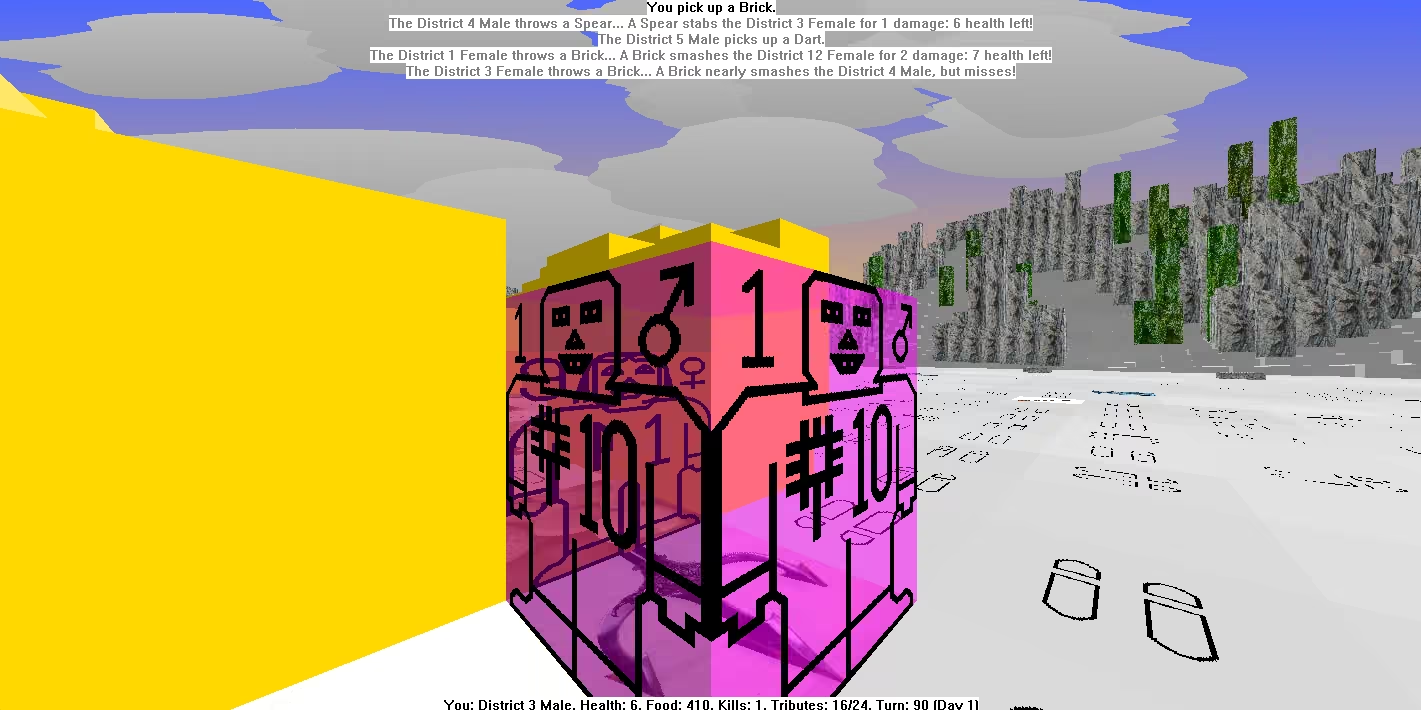
The biggest weakness of Daedalus Hunger Games Simulation is obvious: its presentation.
The interface feels old, the visuals are extremely basic, and many aspects could benefit from modern technology. A remake with a contemporary engine, improved UI, more advanced AI, and better environmental design could transform this concept into something remarkable.
Yet the fascinating part is that the foundation is already there.
The game proves that immersion is not simply a question of graphical quality. It comes from creating meaningful limitations and forcing the player to engage with the world. Despite its rough appearance, I genuinely felt like I was inside an arena, searching for resources, avoiding danger, and wondering whether another tribute would help me or betray me.
The AI-controlled tribes also contribute to this feeling. They appear to have objectives and priorities rather than simply existing as enemies waiting to be defeated. The arena feels alive because every participant seems to be trying to survive.
I would recommend Daedalus Hunger Games Simulation to anyone capable of looking past its interface and graphics. Not because those flaws do not matter, but because the experience hidden underneath them is rare.
Play a couple of runs. Rush toward the supplies at the Cornucopia. Search for healing items. Hope to find a powerful weapon. Wonder if the next tribute you encounter will become an ally or your downfall.
This is a game that accidentally demonstrates an important lesson about design: sometimes the strongest immersion comes not from showing players everything, but from making them feel lost.