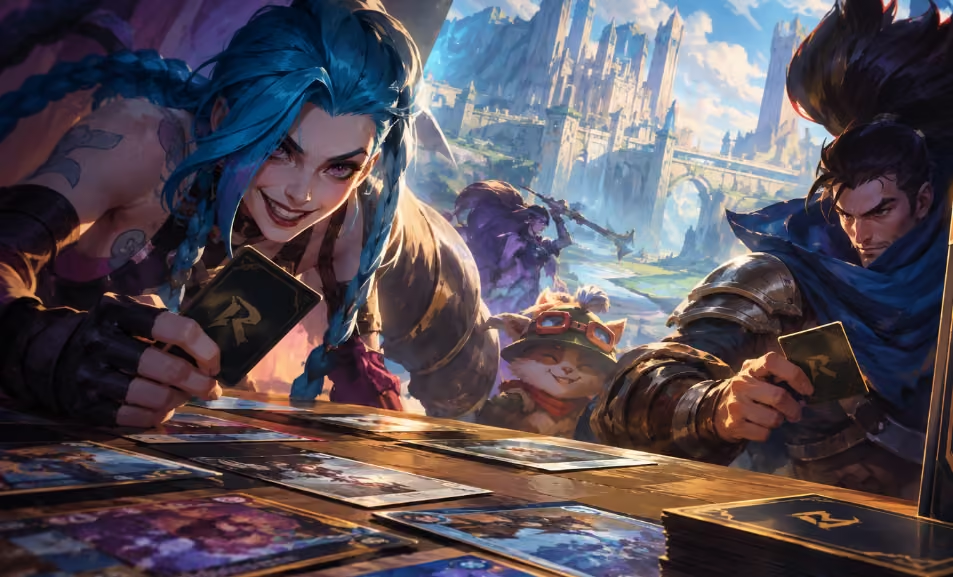
I have been playing League of Legends for more than a decade, so I have watched its universe grow far beyond the original MOBA. Champions, lore and visual identity have become recognisable far outside the game itself. That makes Riftbound an interesting adaptation to look at, even though I have not spent the same amount of time playing it as I have with League.
I am, however, very familiar with trading card games. I have played plenty of Magic: The Gathering and Horus Heresy, and I know how difficult it is for a licensed card game to become more than a collection of familiar characters printed on cards.
Riftbound seems to understand that distinction.
Keeping the identity of League
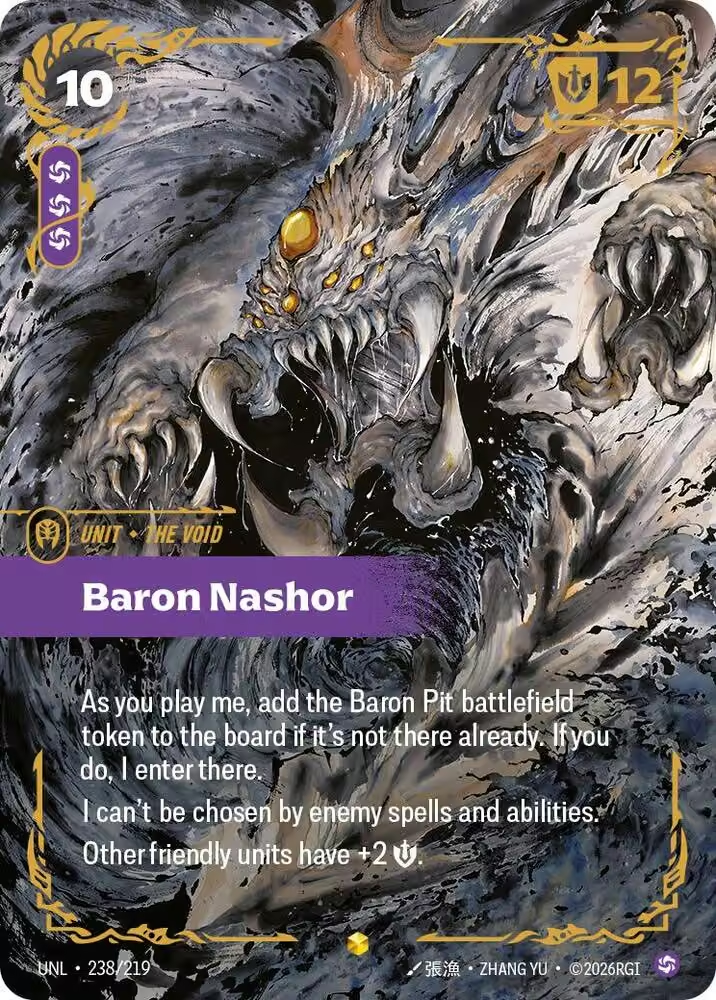
The most convincing aspect of Riftbound is that it remains recognisably League of Legends while functioning as its own card game.
That sounds obvious, but it is one of the hardest things to achieve in a licensed adaptation. League is fundamentally built around real-time movement, positioning, abilities and team compositions. A TCG has to translate those ideas into cards, resources and turn-based decisions without simply reproducing the original game in an awkward format.
The visual side of the adaptation is particularly successful. The quality of the cards and illustrations makes the connection to League immediate, while still giving the game the visual identity expected from a physical TCG.
For me, that is exactly what a good adaptation should do. The licence should make the new game more interesting, not be the only reason to play it.
The meta is part of the game
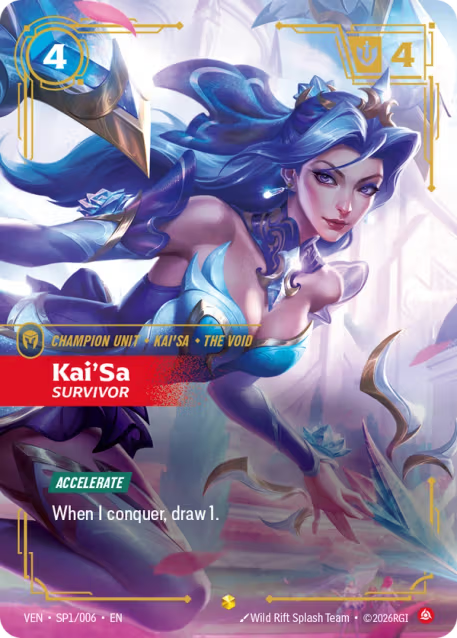
In every deck-building game, there will eventually be a meta.
Once players can construct their own decks, some strategies will inevitably prove more efficient than others. Players discover strong combinations, competitive decks spread through the community, and experimentation gradually gives way to optimisation. Specialized resources are already emerging around the Riftbound meta, such as riftstorm.gg.
I actually enjoy the creative side of deck building. I like putting together unusual compositions and seeing whether I can make them work. But if I want to play competitively, I have learned that starting from an established meta deck and adding a few personal twists is often more realistic.
I do the same thing in Clash Royale. I might enjoy experimenting with strange combinations, but when I want a deck that can consistently compete, I usually start with something proven and adapt it rather than building entirely from scratch.
Riftbound will inevitably face the same tension. The challenge is making sure that the meta gives players something to analyse without completely eliminating the freedom to experiment.
That process is also part of what keeps a TCG alive. New cards can disrupt established strategies, create new archetypes and give players reasons to rethink what they already know.
Can it last?
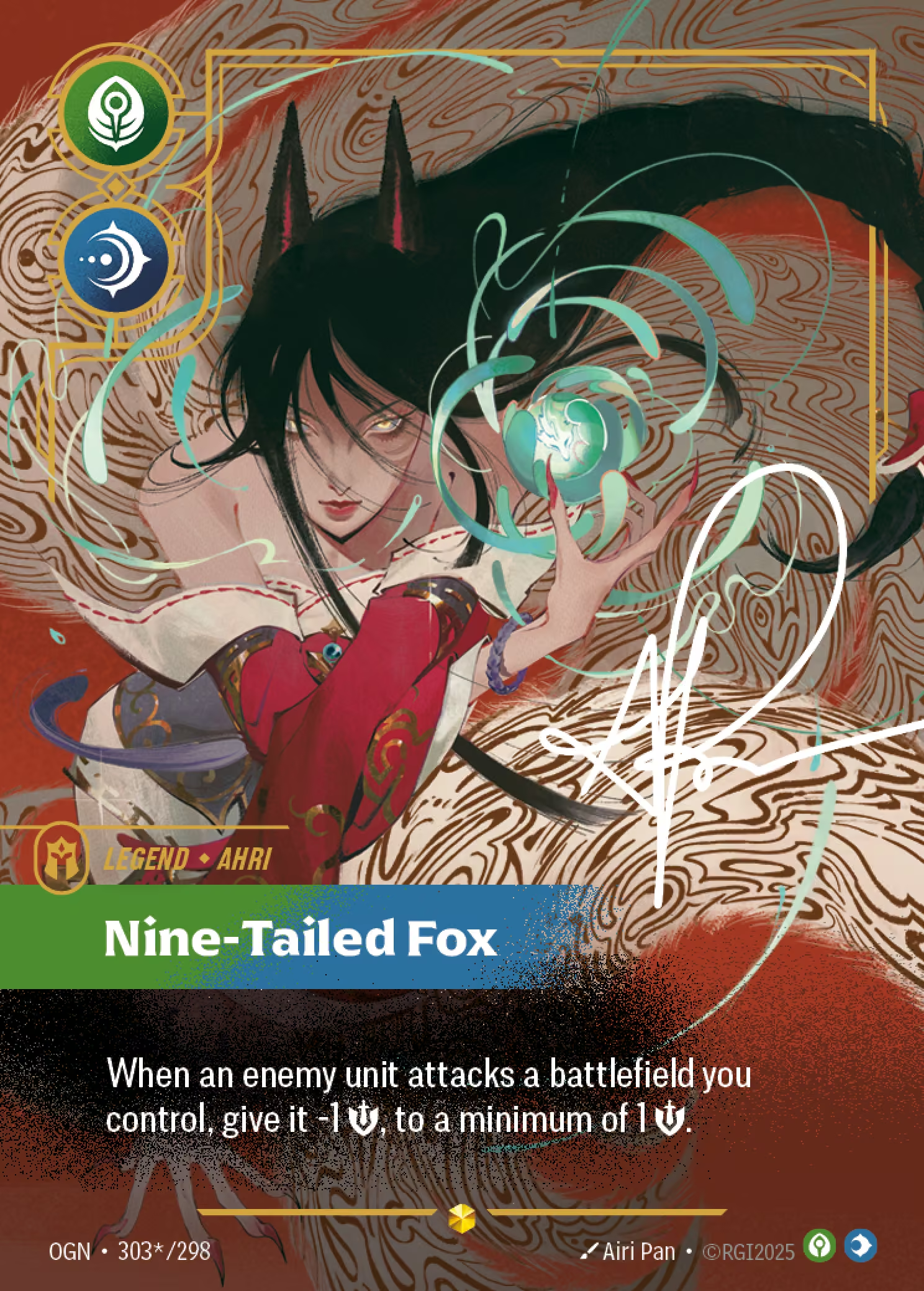
My main question is therefore not whether League of Legends provides enough material for a card game. It clearly does.
The more interesting question is whether Riftbound can develop a community that continues playing because they enjoy Riftbound itself, rather than simply because it carries the League of Legends name.
That is a significant challenge for any physical TCG. It needs an active player base, regular new content and enough strategic depth to keep experienced players engaged. At the same time, new players need to feel that entering the game is possible without already knowing everything about the existing meta.
League of Legends gives Riftbound an enormous head start in that respect. Its community already knows the characters and has a strong connection to the universe.
A convincing translation
What I find most interesting about Riftbound is the balance between familiarity and independence.
A League player can recognise the world, characters and visual language. A TCG player can approach it as a strategy game rather than simply as another League product.
That balance is what makes a video game adaptation work for me. It does not need to reproduce the original game literally. It needs to understand what made the original recognisable and translate those qualities into a new medium.
Riftbound appears to have made that transition surprisingly naturally. Whether it can maintain that momentum over the long term will depend on its community, its evolving meta and the quality of future releases.