Zup! 4 similar games & best alternatives
Should you play it?
Minimal physical puzzle with explosions
What works
- Easy and numerous achievements
- Cheap price
- Simple, relaxing puzzle gameplay
- Perfect for achievement hunters
- Customizable steam profile with achievement letters
Things to keep in mind
- Very short gameplay
- Low challenge and depth
- Repetitive and minimal innovation
- Limited replay value
- Basic sound design
What to play next
Similar games, hidden gems, and fresh directions from this game.
Top picks
Games that feel the closest overall
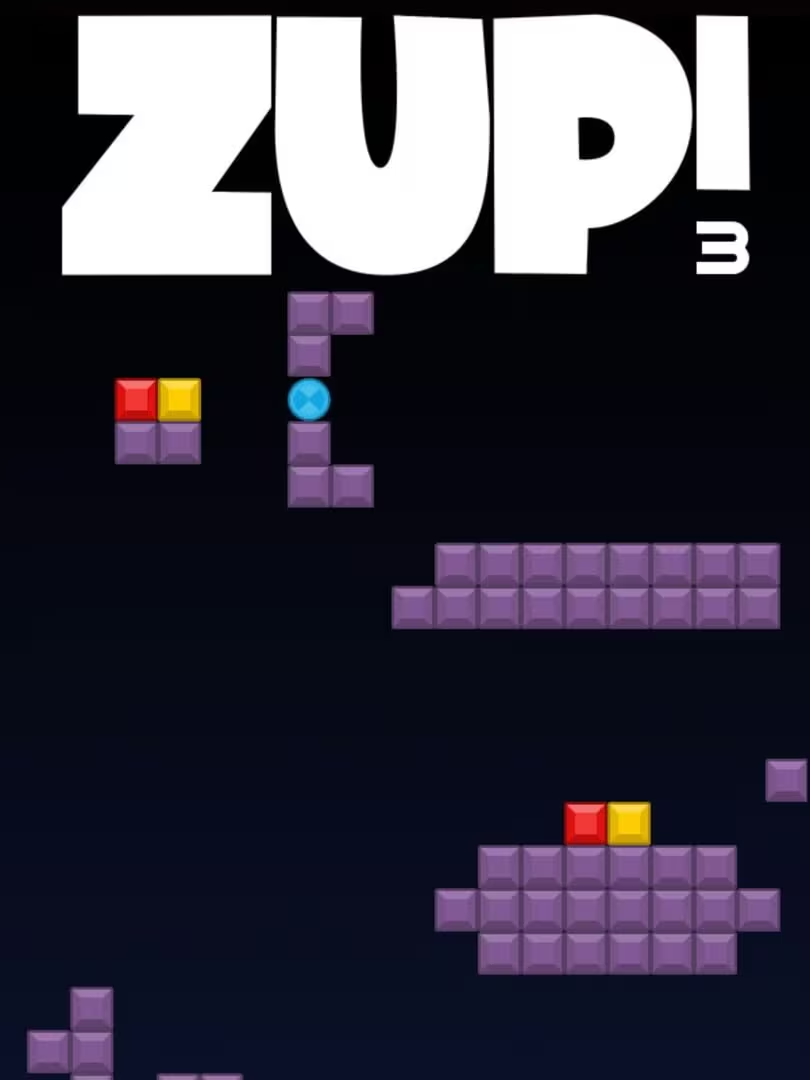
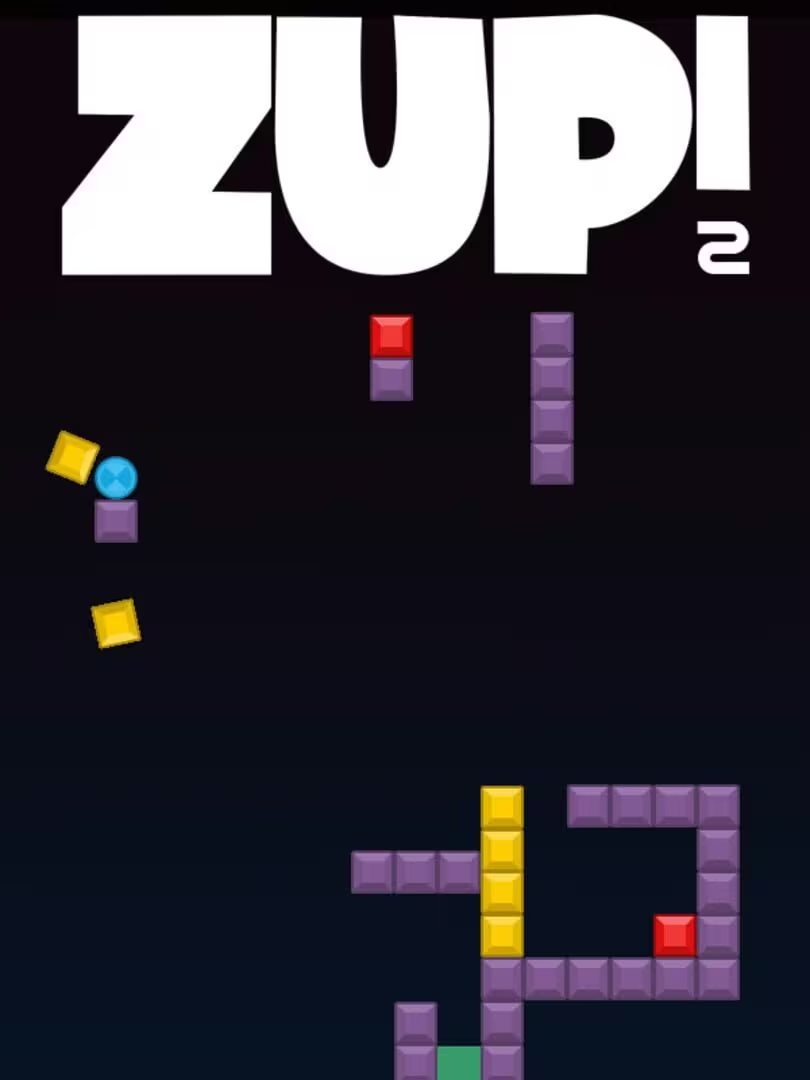
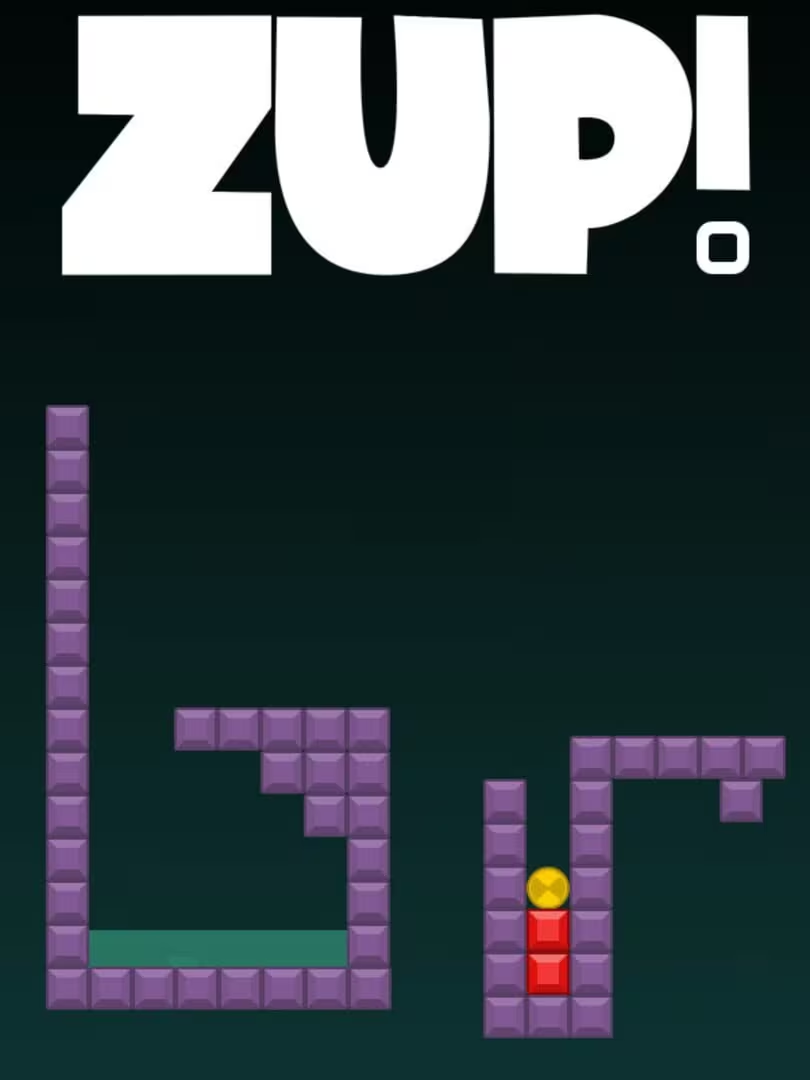
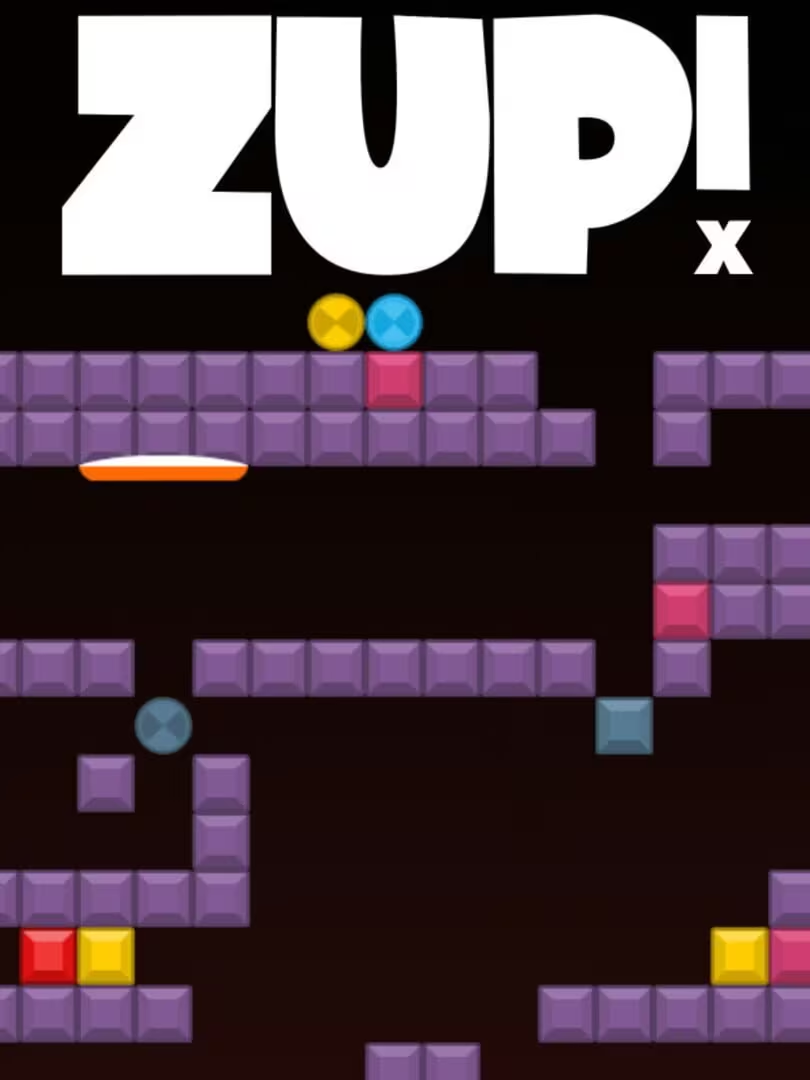
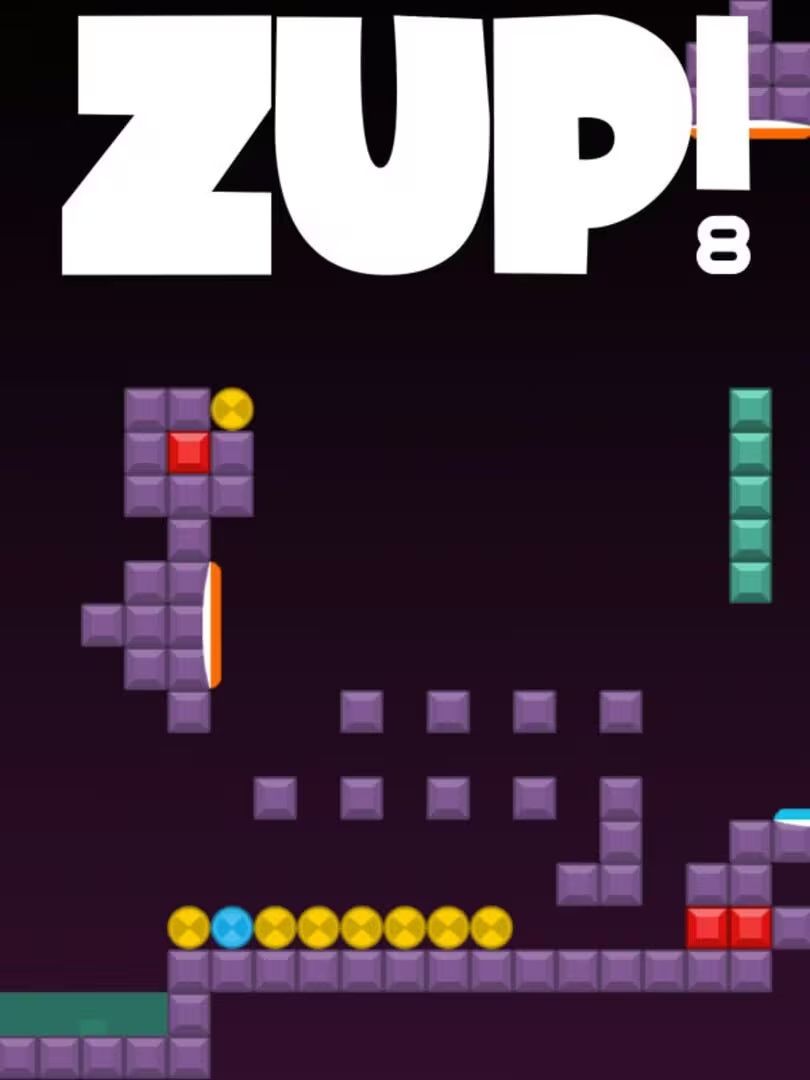
Hidden Gems
Less popular games with surprisingly high similarity


If you liked…
Recommendations by what you enjoyed most
Similarity map
Explore nearby similar games and see why they’re close.
Zup! 4: Less representative of its motivational profile, with noticeable differences. Motivations that often define this kind of title include Violence, Fantasy, Story, Thrill. Here, the score leans higher than usual among comparable games on Status, Violence. It leans lower than usual among comparable games on Continuation.
Why this game works
A motivational profile of the game, with the closest similar game for each player motivation.
-
Autonomy
Game with the same Autonomy vibe
3"Players choose how and when to trigger explosions to solve puzzles, allowing control over actions."
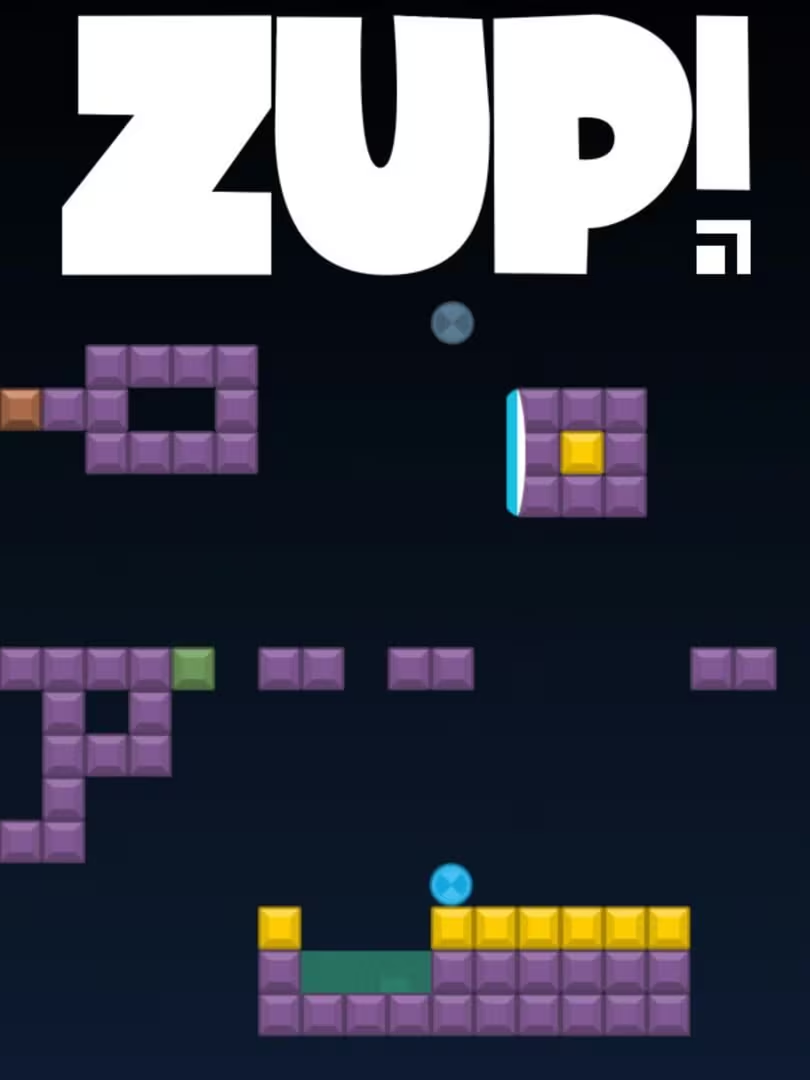 Zup! 7
"Players freely decide when and how to trigger explosions to solve puzzles, allowing personal control within simple mechanics."
-
Competence
Game with the same Competence vibe
2"Puzzles and timed challenges require some skill and attention but are generally easy and accessible, providing moderate challenge."
 Deliver Us The Moon
"The game offers straightforward puzzles with some timing challenges, providing a mild sense of skill and accomplishment."
-
Competition
Game with the same Competition vibe
-4"Focus is on individual puzzle solving and achievement hunting without competitive elements."
 Zup!
Zup!
"Focus is on individual puzzle solving and achievement hunting without competitive or ranked elements."
-
Continuation
Game with the same Continuation vibe
-3"Short game with limited replay value; players tend to complete it in one or two sessions and do not return frequently."
 A Normal Lost Phone
"Short gameplay sessions with low replay value; players complete the game quickly and often do not return."
-
Cooperation
Game with the same Cooperation vibe
-5"Entirely single-player experience with no multiplayer or cooperative features."
 Loddlenaut
"Entirely single-player experience with no multiplayer or cooperative features."
-
Creativity
Game with the same Creativity vibe
1"Players creatively solve puzzles by choosing explosion sequences; limited creation or modification."
 Zup! F
"Players experiment with timing and explosion sequences but within fixed puzzle designs and limited modification."
-
Domination
Game with the same Domination vibe
-5"No elements of exerting control over others; gameplay is solitary and non-confrontational."
 Terra Nil
"No elements of exerting control over others; gameplay is solitary and non-confrontational."
-
Escapism
Game with the same Escapism vibe
2"Relaxing and casual gameplay provides stress relief and distraction from real life."
 Zup! Z
"Casual and relaxing gameplay offers light distraction and stress relief, though not deeply immersive."
-
Expectation
Game with the same Expectation vibe
-4"Players engage voluntarily out of personal interest and intrinsic motivation rather than obligation."
 House Party
"Players engage voluntarily, often motivated by personal interest in achievements rather than obligation."
-
Experimenting
Game with the same Experimenting vibe
2"Some trial and error and timing experimentation is needed to solve puzzles."
 Oik
Oik
"Some trial-and-error and timing experimentation is needed to solve puzzles, encouraging trying new approaches."
-
Exploration
Game with the same Exploration vibe
-4"Levels are small, fixed environments with no exploration or discovery."
 Wet Girl
"Levels are short and linear with no open exploration or discovery of new areas."
-
Expression
Game with the same Expression vibe
3"Achievements allow players to customize their Steam profile with letters and symbols."
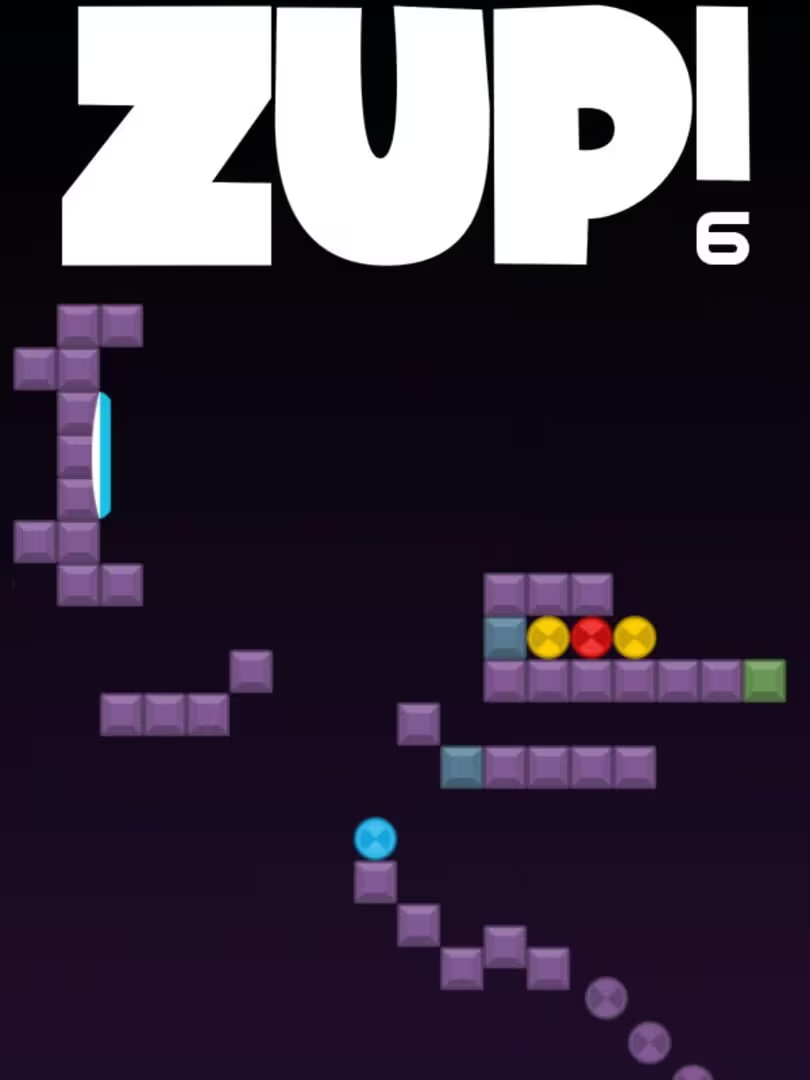 Zup! 6
"Achievements allow players to customize their Steam profile with letters and symbols, enabling self-expression."
-
Fantasy
Game with the same Fantasy vibe
-4"Gameplay is grounded in simple physics puzzles without fantasy or fictional narrative elements."
Zup! Z
"Gameplay is grounded in simple physics puzzles without narrative or imaginative fiction elements."
-
Fellowship
Game with the same Fellowship vibe
-5"No social or community gameplay features; players engage individually."
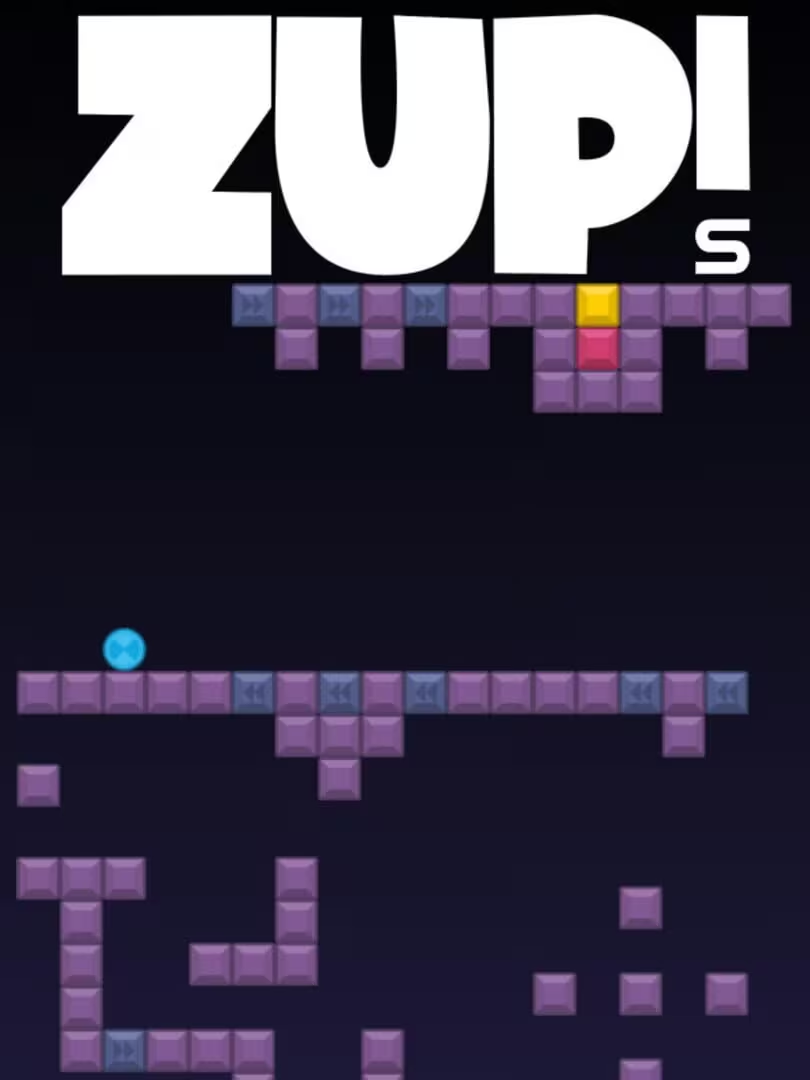 Zup! S
"No social or community gameplay features; players engage individually."
-
Growth
Game with the same Growth vibe
1"Some learning and skill development in puzzle solving and timing, but overall low complexity."
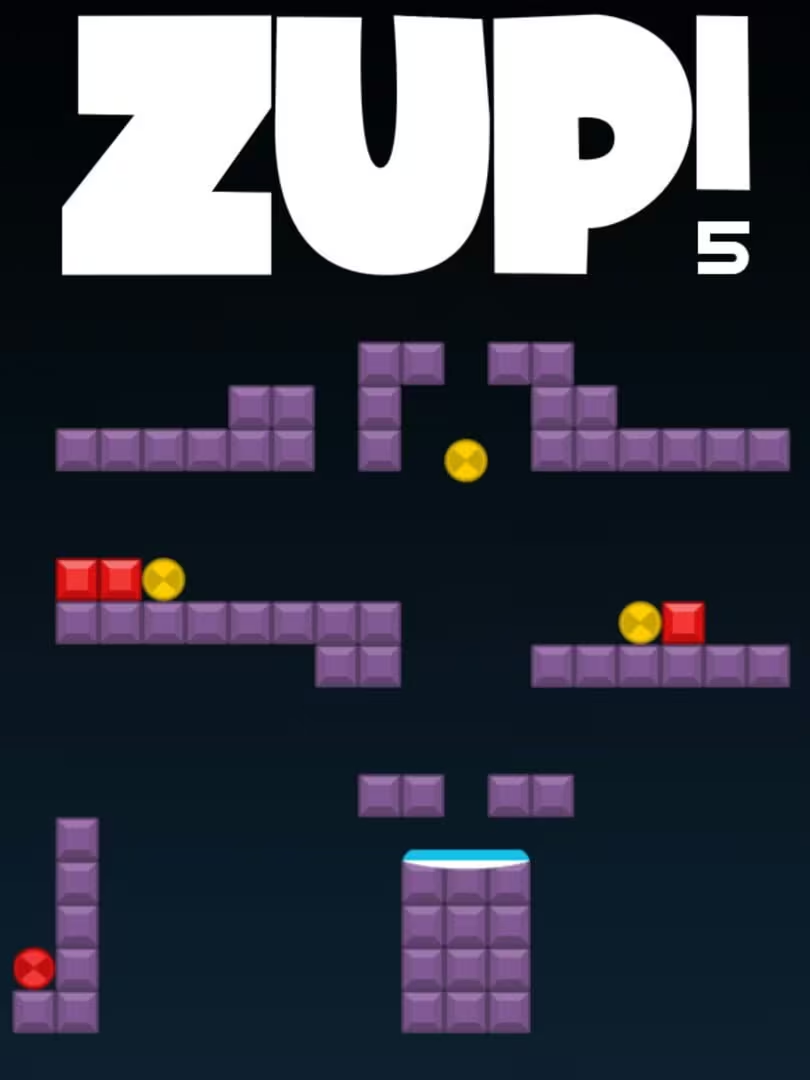 Zup! 5
"Some learning of timing and puzzle mechanics occurs, but overall skill development is minimal."
-
Health
Game with the same Health vibe
-5"Sedentary gameplay with no physical activity involved."
 World of Tanks Blitz
"Sedentary gameplay with no physical activity involved."
-
Idle
Game with the same Idle vibe
-3"Requires focused attention to solve puzzles; not designed for passive or background play."
 Doors: Paradox
"Requires focused attention to solve puzzles; not designed for passive or background play."
-
Intimacy
Game with the same Intimacy vibe
-5"No social or emotional interaction features."
 Puzzler World
"No social or emotional interaction features present."
-
Leadership
Game with the same Leadership vibe
-5"No leadership or group management roles; purely single-player."
 InfraSpace
"No leadership or group management roles; purely single-player."
-
Progression
Game with the same Progression vibe
3"Players progress through levels and unlock many achievements, providing a sense of advancement."
Oik
"Players progress through levels and unlock numerous achievements, providing a sense of advancement."
-
Relaxation
Game with the same Relaxation vibe
3"Calm music and simple gameplay create a relaxing experience for many players."
 Upside Down
"Calm music and simple gameplay create a relaxing experience with low stress."
-
Sensation
Game with the same Sensation vibe
1"Visual and auditory feedback from explosions and music provide moderate sensory stimulation."
Zup! 5
"Visual and auditory feedback is minimal but satisfying, with explosions providing mild stimulation."
-
Status
Game with the same Status vibe
4"Achievements serve as social status symbols on Steam profiles; players use them to showcase and gain recognition."
 Achievements printer
"Achievements are used to enhance player profiles, providing social recognition and status symbols."
-
Story
Game with the same Story vibe
-5"No narrative or story elements; gameplay is context-free puzzle solving."
 PICO PARK 2
"No narrative or story elements; gameplay is context-free puzzle solving."
-
Strategy
Game with the same Strategy vibe
2"Requires some planning and problem solving, but puzzles are mostly straightforward with occasional complexity."
 Deponia Doomsday
"Some planning and timing is required to solve puzzles, though complexity is low."
-
Thrill
Game with the same Thrill vibe
-3"Gameplay is low risk and predictable, with minimal suspense or tension."
 Academia : School Simulator
"Gameplay is low risk and predictable, with minimal suspense or tension."
-
Value
Game with the same Value vibe
4"Highly praised for low price, short playtime, and achievement rewards; good value for money."
Zup!
"Highly praised for low price, short playtime, and achievement rewards providing good return on investment."
-
Violence
Game with the same Violence vibe
1"Explosions are a core mechanic but non-violent and abstract."
Zup! 6
"Explosions are a core mechanic but are cartoonish and puzzle-oriented rather than violent."
-
Survival
Game with the same Survival vibe
-5"No survival or threat avoidance mechanics; stable and safe gameplay environment."
 Hatsune Miku: Project DIVA Mega Mix+
"No survival or threat avoidance mechanics; stable and safe gameplay environment."
Last update: 01/06/2026