Not For Broadcast: Prologue similar games & best alternatives
Should you play it?
Take control of the National Nightly News, as a radical government comes to power. In this immersive, high-pressure, propaganda sim, you control what the people see and determine what’s Not For Broadcast.
What works
- Unique and engaging gameplay
- Humorous and satirical narrative
- Immersive fmv and audiovisual presentation
- Challenging multitasking mechanics
- Realistic broadcast simulation elements
Things to keep in mind
- Can be stressful and anxiety-inducing
- Some performance issues on lower-end hardware
- Interference mini-game can be frustrating
- Limited replayability in prologue/demo
- No cooperative or social multiplayer features
What to play next
Similar games, hidden gems, and fresh directions from this game.
Top picks
Games that feel the closest overall

Hidden Gems
Less popular games with surprisingly high similarity

If you liked…
Recommendations by what you enjoyed most
Similarity map
Explore nearby similar games and see why they’re close.
Not For Broadcast: Prologue: Less representative of its motivational profile, with noticeable differences. Motivations that often define this kind of title include Fellowship, Violence, Survival, Cooperation. Here, the score leans higher than usual among comparable games on Leadership. It leans lower than usual among comparable games on Violence, Relaxation.
Why this game works
A motivational profile of the game, with the closest similar game for each player motivation.
-
Autonomy
Game with the same Autonomy vibe
4"Players have significant control over broadcast decisions, camera angles, censorship, and story direction, reflecting high autonomy."
 Not For Broadcast
"Players have significant control over camera switching, censorship timing, ad placement, and broadcast decisions, allowing freedom in directing the news show."
-
Competence
Game with the same Competence vibe
4"Game requires skillful multitasking, managing resources, and mastering complex mechanics."
 Godlike Burger
"The game requires multitasking skills, timing, and managing multiple mechanics simultaneously, providing a challenging and skill-based experience."
-
Competition
Game with the same Competition vibe
-3"Focus is on personal pace and individual performance rather than competing against others; no mention of ranked or leaderboard modes."
 Train Simulator Classic
"Focus is on individual performance and managing the broadcast rather than competing against others; no mention of leaderboards or ranked modes."
-
Continuation
Game with the same Continuation vibe
3"Players express eagerness to continue playing and anticipation for full game despite short prologue length."
 Wittle Mistakes - Prologue
"Players express eagerness to continue playing beyond the prologue, with anticipation for the full game and replaying to catch details."
-
Cooperation
Game with the same Cooperation vibe
-4"Gameplay centers on solo control of broadcast operations and personal decision-making, with minimal multiplayer or teamwork."
Not For Broadcast
"Gameplay centers on solo control of the broadcast room with no cooperative multiplayer or teamwork elements described."
-
Creativity
Game with the same Creativity vibe
3"Players creatively shape broadcasts by choosing camera shots, censorship, and content, influencing story outcomes."
Not For Broadcast
"Players can creatively choose camera angles, censoring timing, and ad placements, influencing the broadcast outcome and narrative."
-
Domination
Game with the same Domination vibe
-4"Interactions are primarily single-player; no evidence of exerting control over others or competitive dominance."
 King's Bounty: Armored Princess
"Interactions are individual and there is no indication of exerting control over other players or social dominance."
-
Escapism
Game with the same Escapism vibe
3"Players use the game as a dark, satirical escape with a unique theme, providing distraction and immersion."
 Execute
"The game offers a humorous and immersive escape into a fictional broadcast environment with satirical and dark comedic elements."
-
Expectation
Game with the same Expectation vibe
-4"Players engage voluntarily out of interest and enjoyment, with no indication of obligation or external pressure."
 Prison Architect
"Players engage voluntarily out of interest and enjoyment, with no indication of obligation or external pressure."
-
Experimenting
Game with the same Experimenting vibe
3"Players experiment with different cast combinations, camera angles, and audience strategies to optimize outcomes."
 The Crush House
"Players experiment with different camera angles, censorship timing, and ad choices, exploring game mechanics and outcomes."
-
Exploration
Game with the same Exploration vibe
1"Limited spatial exploration but players discover clues and secrets within a confined environment."
 The Red Stare
"Limited physical exploration, but players discover different broadcast scenarios and hidden details in the environment."
-
Expression
Game with the same Expression vibe
2"Some self-expression through choices and photography mechanic, though limited customization."
 11-11 Memories Retold
"Some self-expression through broadcast choices and camera work, though customization is limited to these aspects."
-
Fantasy
Game with the same Fantasy vibe
2"Set in a stylized historical period with some fictionalized elements, blending realism with imaginative scenarios."
 Plutocracy
"Set in an alternate 1980s with exaggerated and satirical elements, blending realistic broadcast simulation with fictional scenarios."
-
Fellowship
Game with the same Fellowship vibe
-4"Gameplay is solitary with minimal social interaction or community involvement."
 Stay Out of the House
"Gameplay is solitary with minimal social interaction or community involvement described."
-
Growth
Game with the same Growth vibe
3"Players develop multitasking skills and learn to manage complex broadcast mechanics over time."
Not For Broadcast
"Players develop multitasking and timing skills, learning to manage complex broadcast mechanics effectively."
-
Health
Game with the same Health vibe
-4"Primarily a sedentary game with no physical activity or health-related features."
 STAR WARS™ Jedi Knight - Jedi Academy™
"Primarily a sedentary game with no physical activity or health-related gameplay elements."
-
Idle
Game with the same Idle vibe
-4"Requires constant attention and focus; players must actively manage multiple tasks and threats."
 Welcome to the Game II
"Requires constant attention and multitasking; players must actively manage multiple tasks simultaneously."
-
Intimacy
Game with the same Intimacy vibe
-4"Social interactions are limited to scripted NPCs; no meaningful relationship building or emotional sharing."
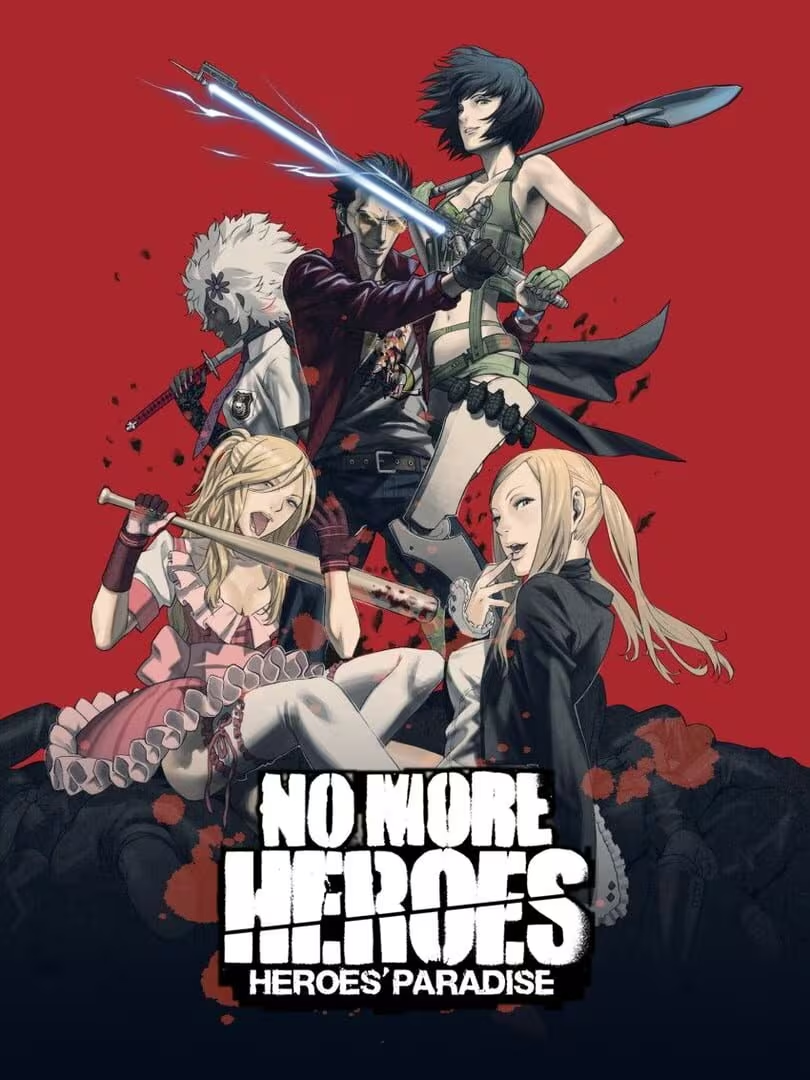 No More Heroes
"Social interactions are limited to scripted NPCs with no close relationship building or emotional sharing."
-
Leadership
Game with the same Leadership vibe
3"Players take leadership roles managing teams and leagues, making strategic decisions and guiding organizations."
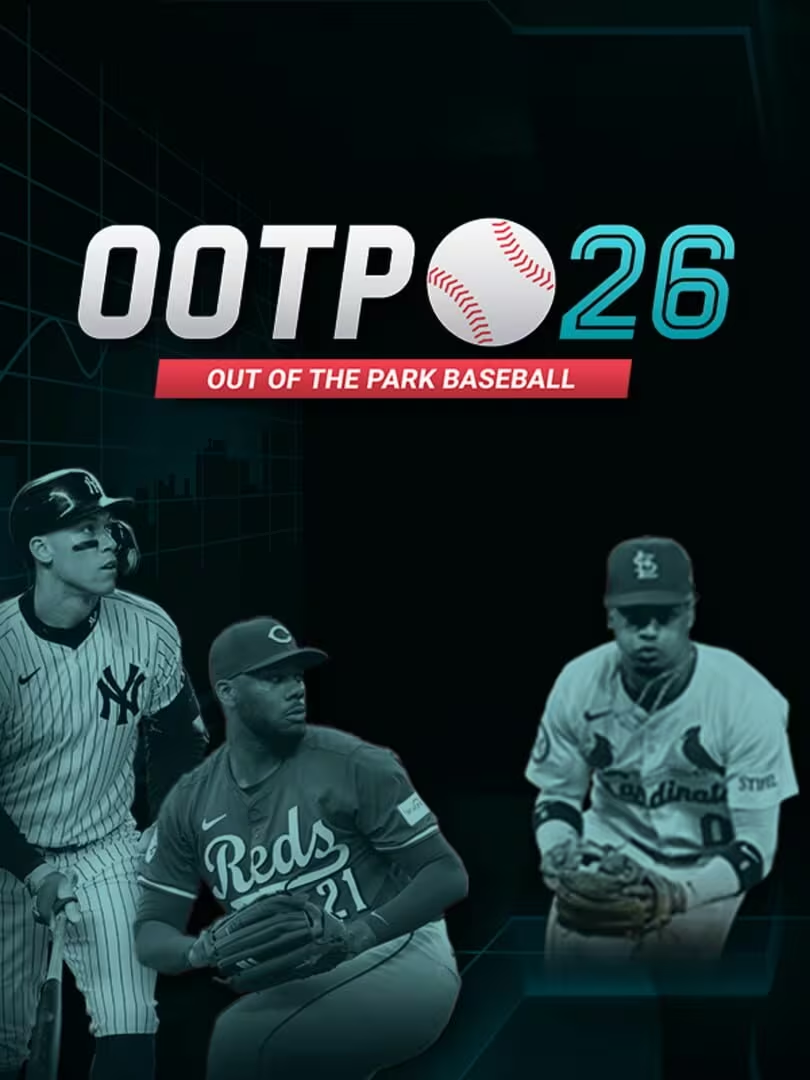 Out of the Park Baseball 26
"Players take on a leadership role controlling the broadcast and making key decisions, though not managing other players."
-
Progression
Game with the same Progression vibe
2"Progression is skill-based rather than item or upgrade accumulation; some variety in game modes."
 Warfork
"Progression is narrative and skill-based rather than item or upgrade accumulation; players advance through broadcast days."
-
Relaxation
Game with the same Relaxation vibe
-2"Gameplay is challenging and sometimes frustrating, causing tension rather than relaxation, though humor eases stress."
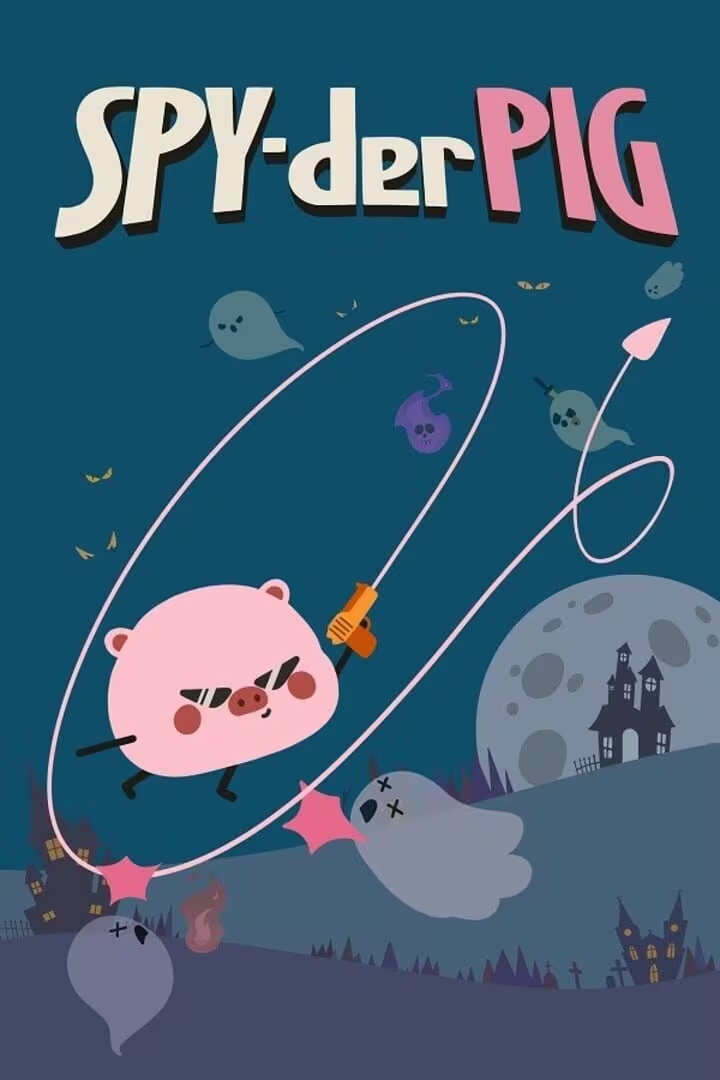 SPY-der PIG
"The game induces stress and tension due to multitasking and timing challenges, though humor provides some relief."
-
Sensation
Game with the same Sensation vibe
3"Engaging audiovisual FMV content and dynamic broadcast visuals provide sensory stimulation and entertainment."
Not For Broadcast
"Engaging audiovisual presentation with FMV, sound cues, and dynamic broadcast content provides stimulating sensory experience."
-
Status
Game with the same Status vibe
-4"No social status or recognition systems; gameplay is focused on personal experience without social evaluation."
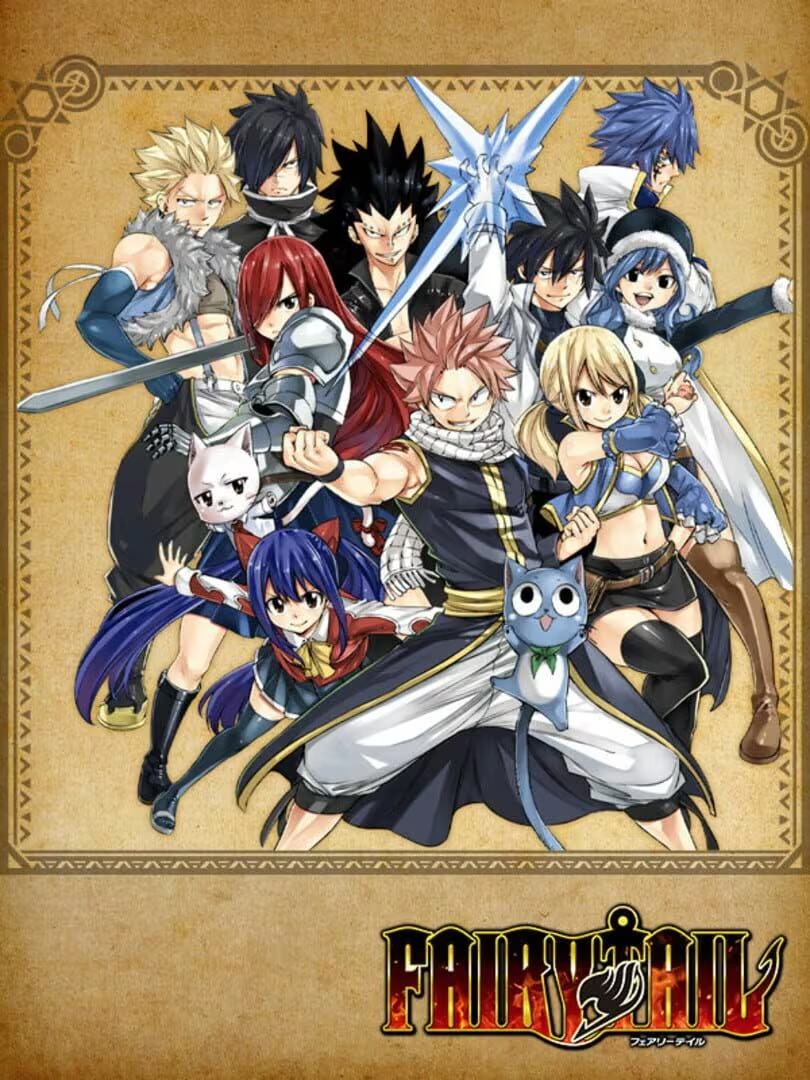 FAIRY TAIL
"No social status or recognition systems; focus is on personal gameplay without external social evaluation."
-
Story
Game with the same Story vibe
4"Strong narrative with political themes and character interactions enriches immersion."
 Isopod: A Webbed Spin-off
"Strong narrative immersion with political satire, character interactions, and evolving broadcast scenarios."
-
Strategy
Game with the same Strategy vibe
3"Players must plan camera viewing and anomaly reporting carefully to survive the night."
 I'm on Observation Duty 2
"Players must plan camera switches, censorship, and ad timing strategically to maintain viewer engagement and avoid failure."
-
Thrill
Game with the same Thrill vibe
3"Time pressure and risk of failure create suspense and excitement during gameplay."
 Uncle Chop's Rocket Shop
"Gameplay generates suspense and tension through real-time multitasking and risk of losing viewers or being fired."
-
Value
Game with the same Value vibe
3"Players perceive good value in the free demo and anticipate more in the full game."
 Drug Dealer Simulator: Free Sample
"Players perceive good value in the demo and full game due to unique gameplay, humor, and production quality."
-
Violence
Game with the same Violence vibe
-5"No combat or destructive gameplay; focus is on constructive management."
 TasteMaker
"No combat or destructive gameplay; focus is on constructive broadcast management."
-
Survival
Game with the same Survival vibe
3"Players must avoid failure by managing time, resources, and threats to progress."
 Half Minute Hero: The Second Coming
"Players must avoid failure by managing threats like interference, censorship misses, and timing errors to stay 'alive' in the job."
Last update: 01/06/2026