Reus similar games & best alternatives
Should you play it?
In Reus, you control powerful giants to shape the planet to your will. You can create mountains, oceans, forests and more. Enrich your planet with plants, minerals and animal life. There is only one thing on the planet that you do not control: mankind, with all their virtues and and all their vices.
What works
- Unique and deep gameplay mechanics
- High replayability with achievements and unlocks
- Charming art style and relaxing music
- Creative terraforming and resource management
- Engaging strategic puzzle elements
Things to keep in mind
- Slow giant movement can be frustrating
- Limited social interaction and multiplayer
- Some repetitiveness after many hours
- Initial complexity and learning curve
- Time-limited eras may feel restrictive
What to play next
Similar games, hidden gems, and fresh directions from this game.
Top picks
Games that feel the closest overall

Hidden Gems
Less popular games with surprisingly high similarity
If you liked…
Recommendations by what you enjoyed most
Similarity map
Explore nearby similar games and see why they’re close.
Reus: Less representative of its motivational profile, with noticeable differences. Motivations that often define this kind of title include Fellowship, Violence, Survival, Cooperation. Here, the score leans higher than usual among comparable games on Leadership. It leans lower than usual among comparable games on Violence, Exploration.
Why this game works
A motivational profile of the game, with the closest similar game for each player motivation.
-
Autonomy
Game with the same Autonomy vibe
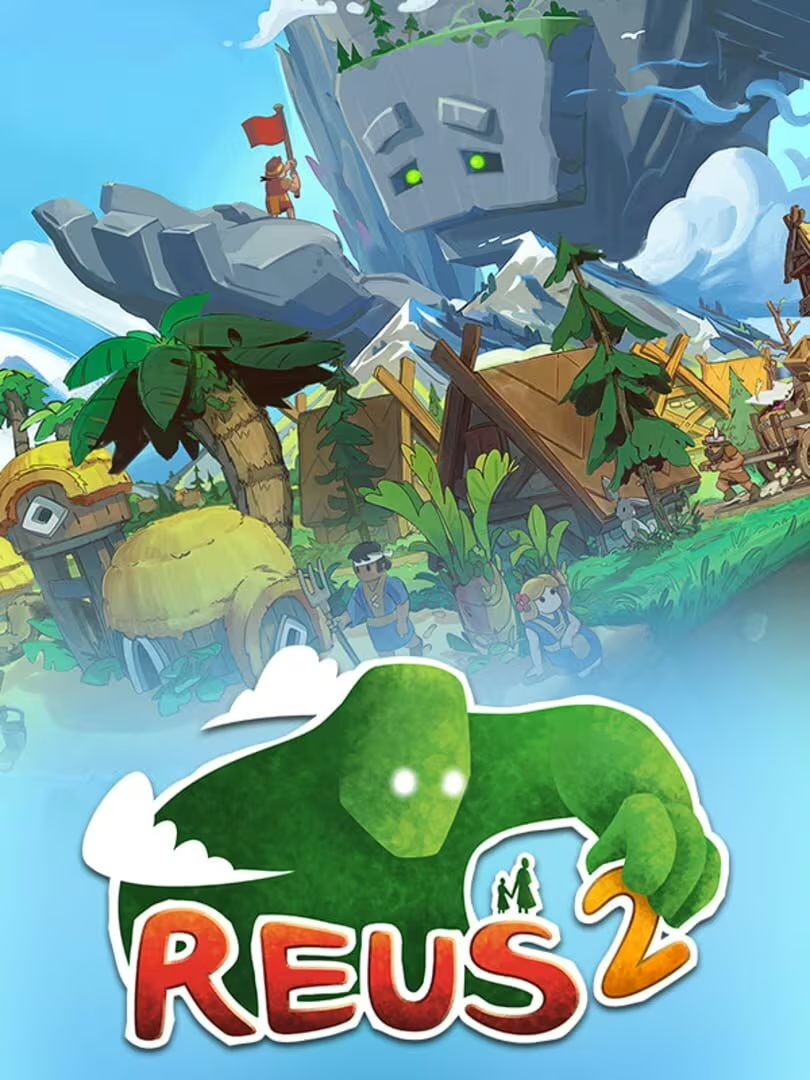
4"Players have control over placing biotica and terraforming, choosing giants and strategies freely without time pressure."
 Reus 2
"Players control four giants with unique abilities to shape the planet and influence human development, allowing for strategic freedom in terraforming and resource placement."
-
Competence
Game with the same Competence vibe
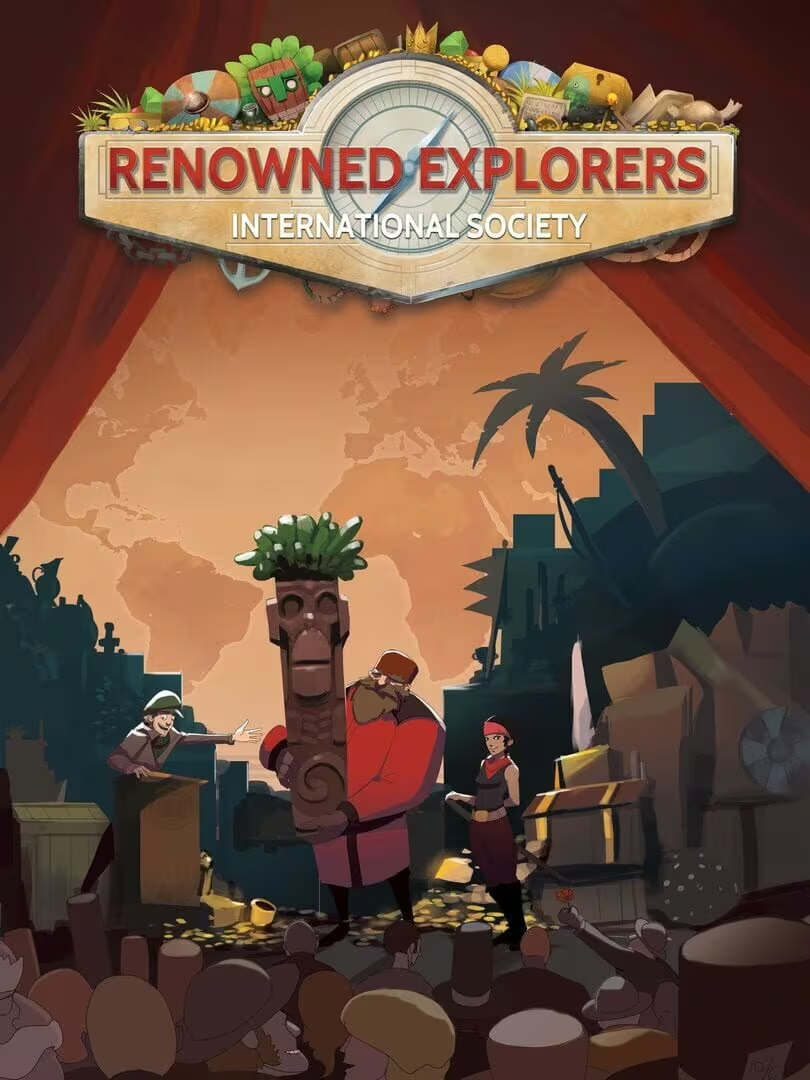
4"The game involves mastering complex tactical combat, skill checks, and strategic resource management, rewarding skillful play and planning."
 Renowned Explorers: International Society
"The game involves mastering complex resource synergies, managing greed and war mechanics, and unlocking new abilities through achievements, providing a challenging skill-based experience."
-
Competition
Game with the same Competition vibe
-3"Focus is mostly on personal progression and completing objectives rather than direct competition; AI villages present challenges but are not highly competitive."
 Kainga: Seeds of Civilization
"Focus is on managing the planet and human settlements rather than direct competition with other players; competition exists between AI villages but is indirect."
-
Continuation
Game with the same Continuation vibe
3"Addictive gameplay with repeated attempts to improve score and complete achievements; some players report playing for hours."
 PIXELMAN
"Players report addictive gameplay with many hours spent unlocking achievements and replaying eras, indicating strong desire to continue playing."
-
Cooperation
Game with the same Cooperation vibe
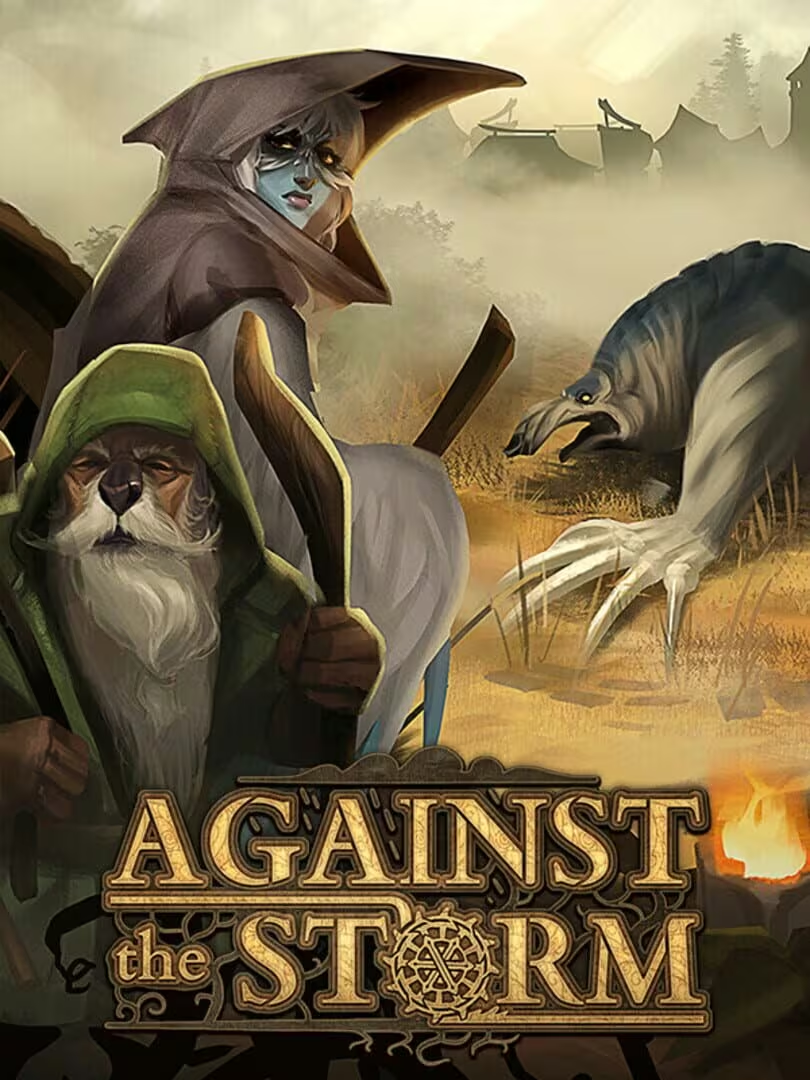
-4"Gameplay centers on individual settlement management with limited social or cooperative multiplayer elements."
 Against the Storm
"Gameplay centers on individual control of giants and managing settlements; no multiplayer or direct cooperation with other players."
-
Creativity
Game with the same Creativity vibe
5"Extensive building, terraforming, character customization, and modding support enable high creativity."
 Starbound
"High creativity in terraforming, combining biomes, placing resources, and experimenting with synergies and transmutations."
-
Domination
Game with the same Domination vibe
-4"Interactions are emergent and balanced; players do not impose authority over others but manipulate the world equally."
 WorldBox - God Simulator
"Interactions with humans are indirect; player punishes greedy or aggressive villages but does not exert authority over other players."
-
Escapism
Game with the same Escapism vibe
4"Players use the game as a relaxing, immersive escape into a surreal, whimsical world."
 Landlord of the Woods
"Players use the game as a relaxing, immersive experience to escape reality and engage in world-building and management."
-
Expectation
Game with the same Expectation vibe
-4"Players engage voluntarily for intrinsic interest and enjoyment, with no indication of obligation or external pressure."
 Heretic's Fork
"Players engage voluntarily for intrinsic interest and enjoyment, with no indication of obligation or external pressure."
-
Experimenting
Game with the same Experimenting vibe
5"Encourages trying different strategies, tech unlocks, and resource management approaches to optimize settlements."
 Settlement Survival
"Strong emphasis on trying new combinations of resources, upgrading giants, and exploring synergies to optimize settlements."
-
Exploration
Game with the same Exploration vibe
-2"Maps are limited and some are repetitive; exploration is constrained within small, familiar environments."
 Bodycam
"The planet map is fixed and relatively small; exploration is limited but players explore different strategies within the same environment."
-
Expression
Game with the same Expression vibe
3"Players express themselves through colony and building design, customizing their environment extensively."
 Colony Survival
"Players express themselves through terraforming choices and resource placement, customizing the planet's ecosystems and settlements."
-
Fantasy
Game with the same Fantasy vibe
4"Players engage in imaginative fiction with giant mythical creatures and a mysterious frozen world."
 Praey for the Gods
"Players embody elemental giants shaping a fictional planet, interacting with mythical-like beings and scenarios."
-
Fellowship
Game with the same Fellowship vibe
-4"The game is single-player focused with minimal social or community interaction in gameplay."
 Game Dev Tycoon
"The game is single-player focused with minimal social interaction or community involvement in gameplay."
-
Growth
Game with the same Growth vibe
4"Players learn complex mechanics, improve strategic skills, and unlock new content, supporting personal development."
 As We Descend
"Players learn complex mechanics, resource synergies, and strategic planning to improve performance and unlock new content."
-
Health
Game with the same Health vibe
-4"Sedentary gameplay with no physical activity involved."
 Mortal Kombat 11
"Sedentary gameplay with no physical activity involved."
-
Idle
Game with the same Idle vibe
-3"Requires focused attention and management; pausing is limited and gameplay is active."
 Rise to Ruins
"Requires active management and planning; pausing is allowed but constant attention is needed to optimize gameplay."
-
Intimacy
Game with the same Intimacy vibe
-5"No social or emotional relationship building; gameplay is solitary and strategic."
 Master of Orion 1
"No close social relationships or emotional connections; gameplay is solitary and strategic."
-
Leadership
Game with the same Leadership vibe
3"Players lead and manage multiple settlements and characters, making strategic decisions and guiding development."
 Evolution of Ages: Settlements
"Players lead the development of the planet and indirectly guide human settlements through giant upgrades and resource management."
-
Progression
Game with the same Progression vibe
5"Strong progression system with permanent upgrades, unlocks, and loot."
 Roboquest VR
"Strong progression system based on unlocking achievements, new resources, and giant abilities to advance through eras."
-
Relaxation
Game with the same Relaxation vibe
3"Gameplay can be relaxing and meditative despite some challenge and complexity."
 SimCity™ 4 Deluxe Edition
"The game is described as relaxing and meditative, though time pressure and complexity can create tension."
-
Sensation
Game with the same Sensation vibe
2"Visuals and music are pleasant but not intense; gameplay provides moderate sensory stimulation."
 WAKFU
WAKFU
"Visuals and music are pleasant and charming but not highly stimulating; gameplay provides moderate sensory engagement."
-
Status
Game with the same Status vibe
-4"No social recognition or multiplayer status systems; achievements are personal."
 Dead Effect
"No social recognition or multiplayer status systems; achievements are personal and internal."
-
Story
Game with the same Story vibe
2"Some narrative and lore elements exist but are minimal; gameplay is mostly context-free survival."
 Valheim
"Minimal narrative; some lore and thematic elements exist but gameplay is mostly context-free and emergent."
-
Strategy
Game with the same Strategy vibe
5"High strategic depth requiring planning, resource management, timing, and problem solving."
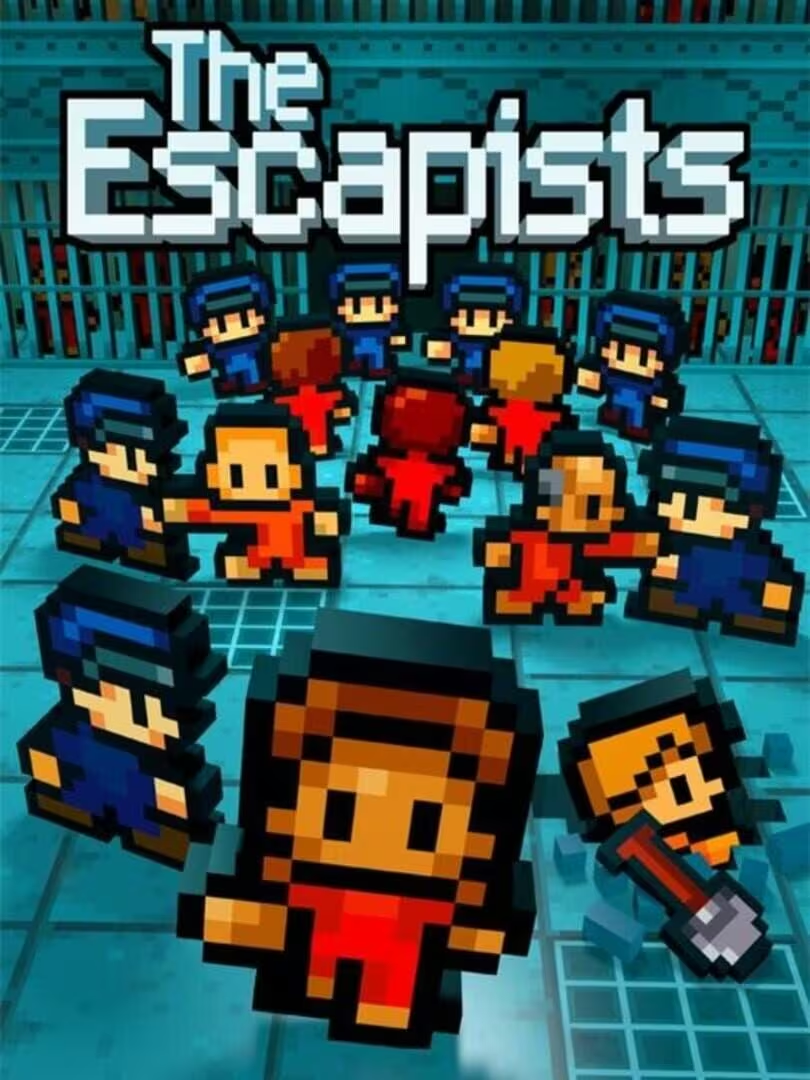 The Escapists
"High strategic depth involving resource management, timing, synergy optimization, and balancing competing village needs."
-
Thrill
Game with the same Thrill vibe
1"Some tension from managing crises and events, but overall a controlled and steady experience."
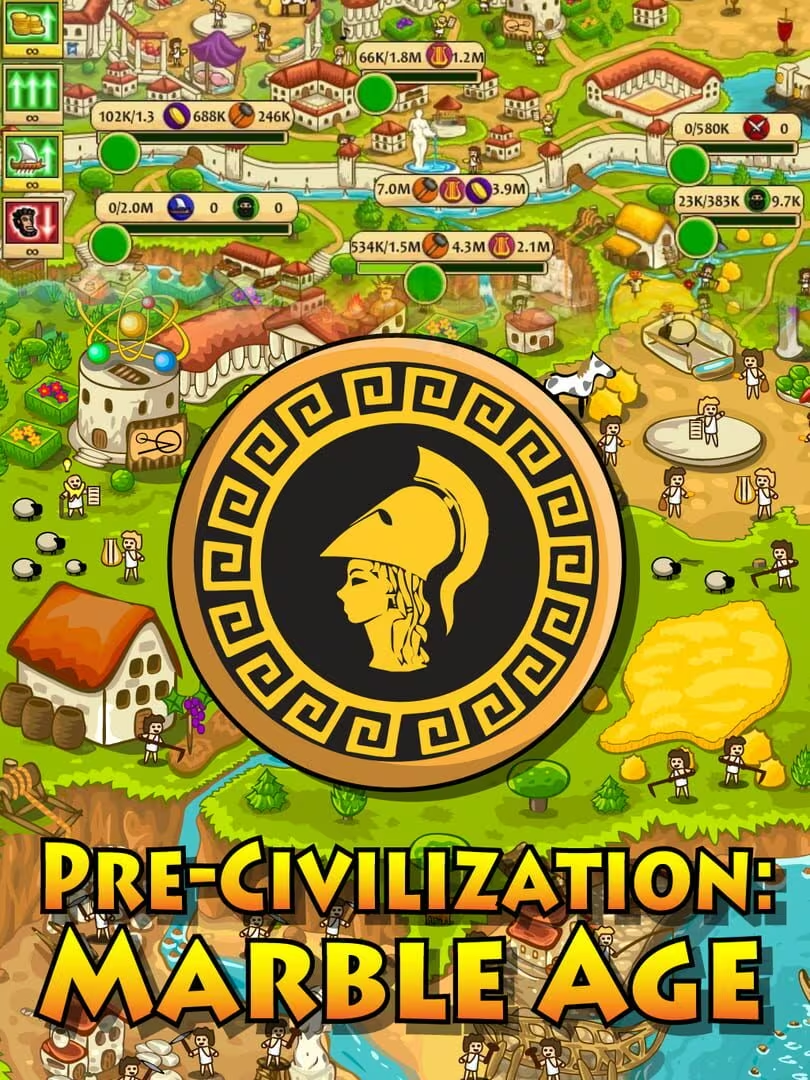 Marble Age
"Some tension from time limits and managing greed and war, but overall a controlled and thoughtful experience."
-
Value
Game with the same Value vibe
4"Players report good value for money with many hours of gameplay and replayability."
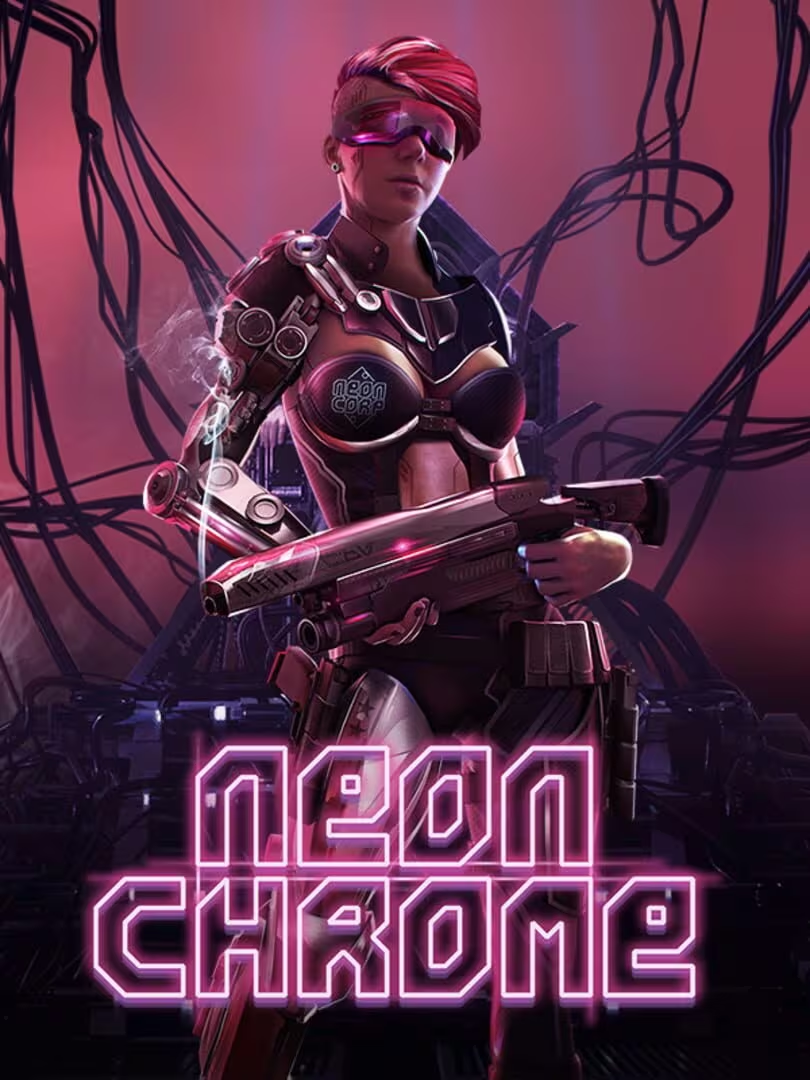 Neon Chrome
"Players report good value for money with many hours of gameplay and replayability, especially on sale."
-
Violence
Game with the same Violence vibe
-3"Violence is abstract and limited to policy effects; focus is on management rather than combat."
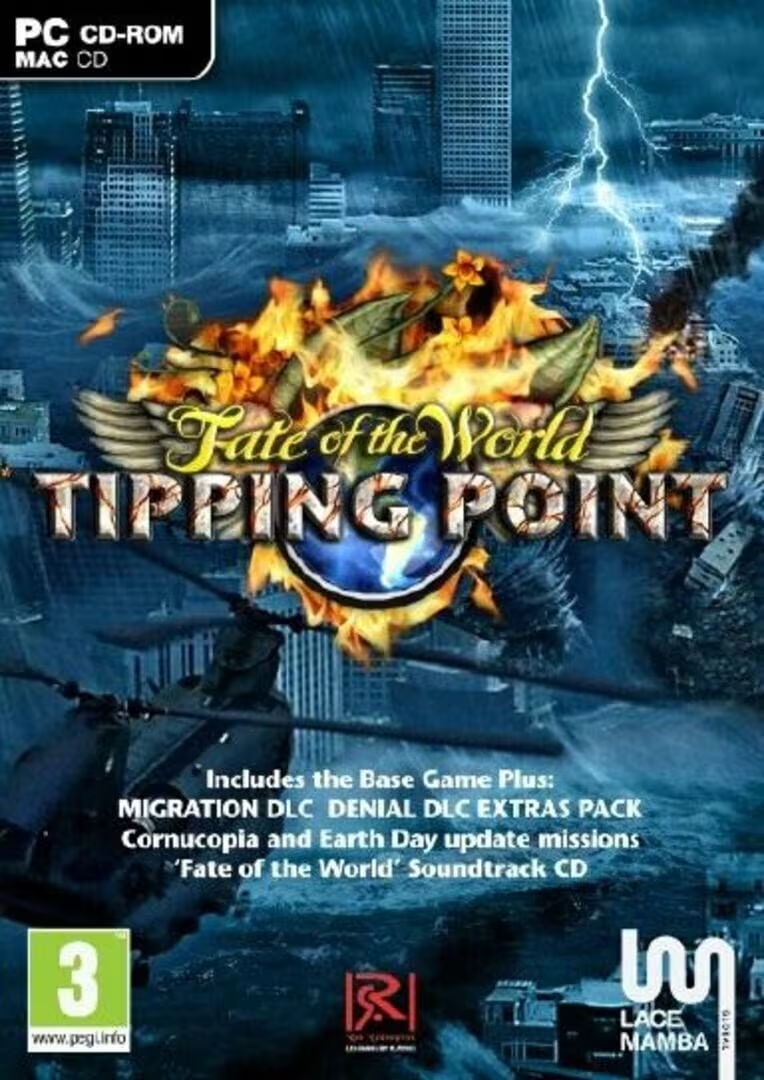 Fate of the World: Tipping Point
"Violence is indirect and limited to punishing aggressive villages; the focus is on creation and management."
-
Survival
Game with the same Survival vibe
3"Players must manage threats, defend settlements, and maintain resources to survive and expand."
 A Total War Saga: TROY
"Players manage threats from greedy or warlike villages and must strategically defend giants and settlements."
Last update: 01/06/2026