Sometimes: Success Requires Sacrifice similar games & best alternatives
Should you play it?
Sometimes: Success Requires Sacrifice, the title says it all! You get thrown into a dark room, with no light to be found anywhere! Are you willing to end your life to light the way for the next generation to proceed further? Play it today and find out!
What works
- Unique death-illumination mechanic
- Relaxing piano soundtrack
- Multiple game modes
- Low price / free availability
- Simple, accessible gameplay
Things to keep in mind
- Very short main mode
- Repetitive gameplay
- Lack of steam achievements
- No multiplayer or social features
- No save system and occasional bugs
What to play next
Similar games, hidden gems, and fresh directions from this game.
Top picks
Games that feel the closest overall

Hidden Gems
Less popular games with surprisingly high similarity
If you liked…
Recommendations by what you enjoyed most
Similarity map
Explore nearby similar games and see why they’re close.
Sometimes: Success Requires Sacrifice: Broadly representative of its motivational profile, with a few distinct shifts. Motivations that often define this kind of title include Expression, Fellowship, Cooperation, Status. Here, the score leans higher than usual among comparable games on Relaxation. It leans lower than usual among comparable games on Story, Thrill.
Why this game works
A motivational profile of the game, with the closest similar game for each player motivation.
-
Autonomy
Game with the same Autonomy vibe
3"Players have freedom to choose rituals, timing, and routes, with some strategic decision-making and multiple endings."
 Sucker for Love: First Date
"Players freely choose when and where to die to illuminate the path, enabling strategic self-sacrifice."
-
Competence
Game with the same Competence vibe
2"The game involves puzzle solving with trial and error, some timing challenges, and discovering correct sequences, but skill demands are moderate."
 McPixel 3
"Game involves learning level layouts and timing deaths to progress, but overall skill demands are moderate and repetitive."
-
Competition
Game with the same Competition vibe
-3"No multiplayer or leaderboards; focus is on personal progress and self-set goals."
 Game Dev Story
"No multiplayer or leaderboards; focus is on personal progress and self-set goals."
-
Continuation
Game with the same Continuation vibe
1"Short main campaign but workshop and achievements encourage replay and extended play, though some find it repetitive."
 I, Zombie
"Short main mode but multiple mini-games and achievements encourage some replay, though some find it repetitive."
-
Cooperation
Game with the same Cooperation vibe
-5"Entirely single-player experience with no cooperative elements."
 Whisker Squadron: Survivor
"Entirely single-player experience with no cooperative elements."
-
Creativity
Game with the same Creativity vibe
3"Creative kills, character perspectives, and a unique blend of horror and simulation elements."
 Massacre At The Mirage
"Unique mechanic of using death to light the way and multiple game modes show creative design."
-
Domination
Game with the same Domination vibe
-5"No player versus player interaction or dominance mechanics."
 OutDrive
"No player versus player or dominance mechanics; interactions are absent."
-
Escapism
Game with the same Escapism vibe
3"Relaxing music and simple gameplay provide a calming distraction and stress relief."
 Mind Spheres
"Relaxing music and simple gameplay provide a casual distraction and stress relief."
-
Expectation
Game with the same Expectation vibe
-4"Players engage voluntarily for fun and personal enjoyment, not out of obligation."
 Cube Racer
"Players engage voluntarily for casual enjoyment, not out of obligation."
-
Experimenting
Game with the same Experimenting vibe
2"Some experimentation with strategies and tech research order, but overall gameplay loops become repetitive."
 Dawn of Man
"Players experiment with death placement to reveal paths, but gameplay loops become repetitive."
-
Exploration
Game with the same Exploration vibe
3"Exploration of various dark environments and collection of clues drives gameplay."
 Slender: The Arrival
"Exploring dark levels by uncovering areas through death-driven illumination."
-
Expression
Game with the same Expression vibe
-5"No character customization or personalization options."
 MOMO.EXE
"No character customization or expressive options."
-
Fantasy
Game with the same Fantasy vibe
1"Abstract and stylized setting with a surreal protagonist, but minimal narrative or roleplay."
 TTV2
TTV2
"Stylized, simple sci-fi/fantasy setting but minimal narrative or roleplay elements."
-
Fellowship
Game with the same Fellowship vibe
-5"No social or community features; strictly solo play."
 Finding Frankie
"No social or community features; strictly solo play."
-
Growth
Game with the same Growth vibe
1"Players develop platforming skills and learn level layouts, but limited depth and progression reduce learning opportunities."
 Ukrainian Ninja
"Some learning of level layouts and strategies, but limited depth or progression systems."
-
Health
Game with the same Health vibe
-5"Sedentary gameplay with no physical activity."
 Griptape Backbone
"Sedentary gameplay with no physical activity."
-
Idle
Game with the same Idle vibe
-3"Requires player attention and active input; not designed for background or idle play."
 Big Action Mega Fight!
"Requires player attention and active input; no background or idle play."
-
Intimacy
Game with the same Intimacy vibe
-5"No social or emotional connections formed through gameplay."
 Nodebuster
"No social or emotional connections formed through gameplay."
-
Leadership
Game with the same Leadership vibe
-5"No leadership or group management elements."
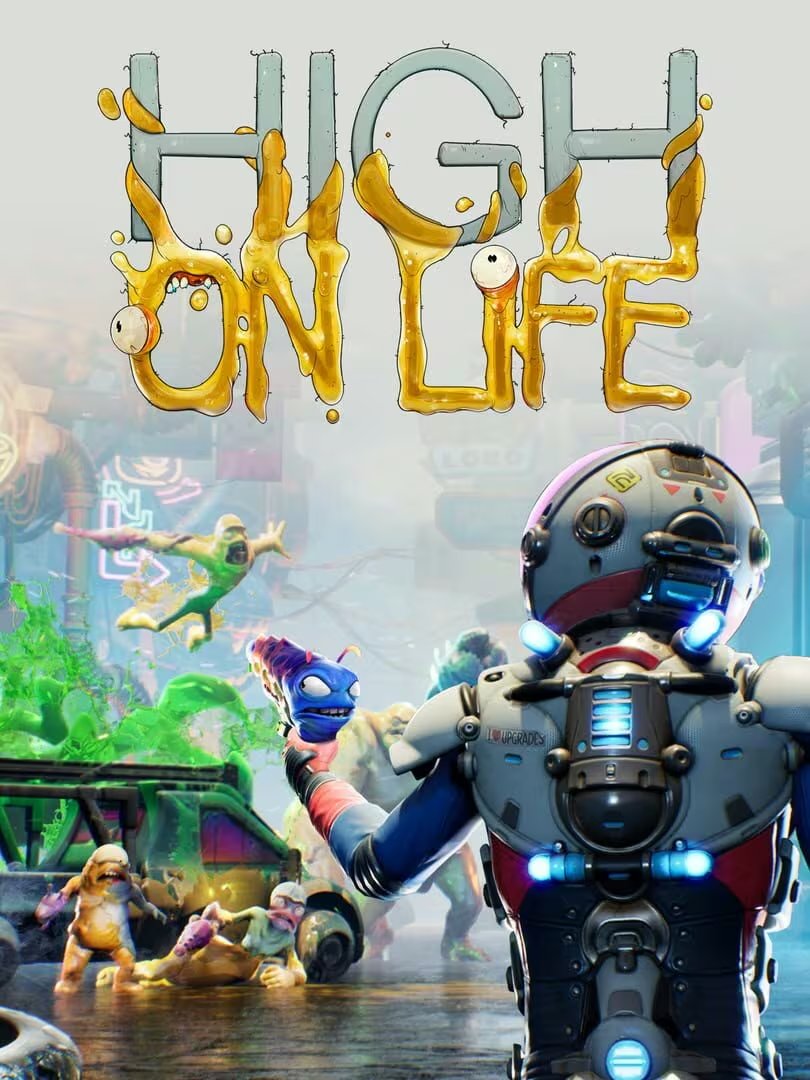 High On Life
"No leadership or group management elements."
-
Progression
Game with the same Progression vibe
1"Achievement collection provides some sense of progression, but no in-game upgrades or item accumulation."
 Evening Surprise
"In-game achievements and collectibles exist but no deep upgrade or item accumulation."
-
Relaxation
Game with the same Relaxation vibe
3"Calm, minimalist visuals and music create a relaxing atmosphere; some frustration from trial and error but overall low tension."
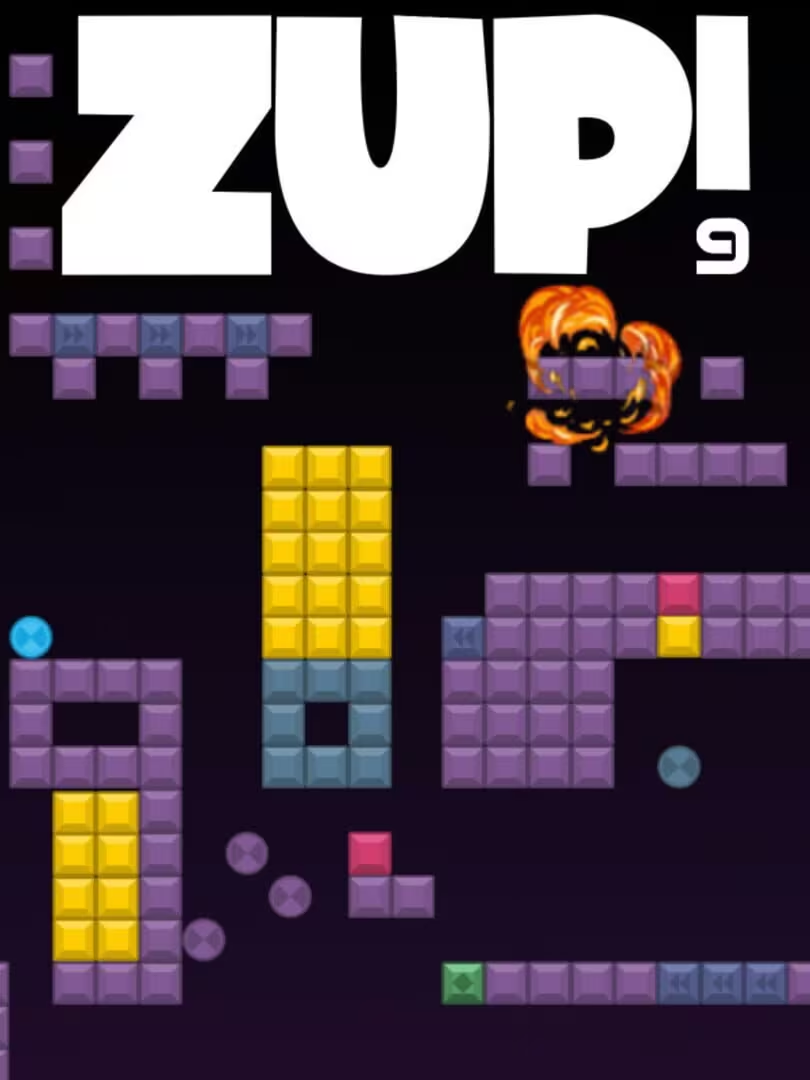 Zup! 9
"Calm music and simple mechanics create a relaxing atmosphere despite some frustration."
-
Sensation
Game with the same Sensation vibe
1"Simple, charming visuals and ambient music provide mild sensory stimulation."
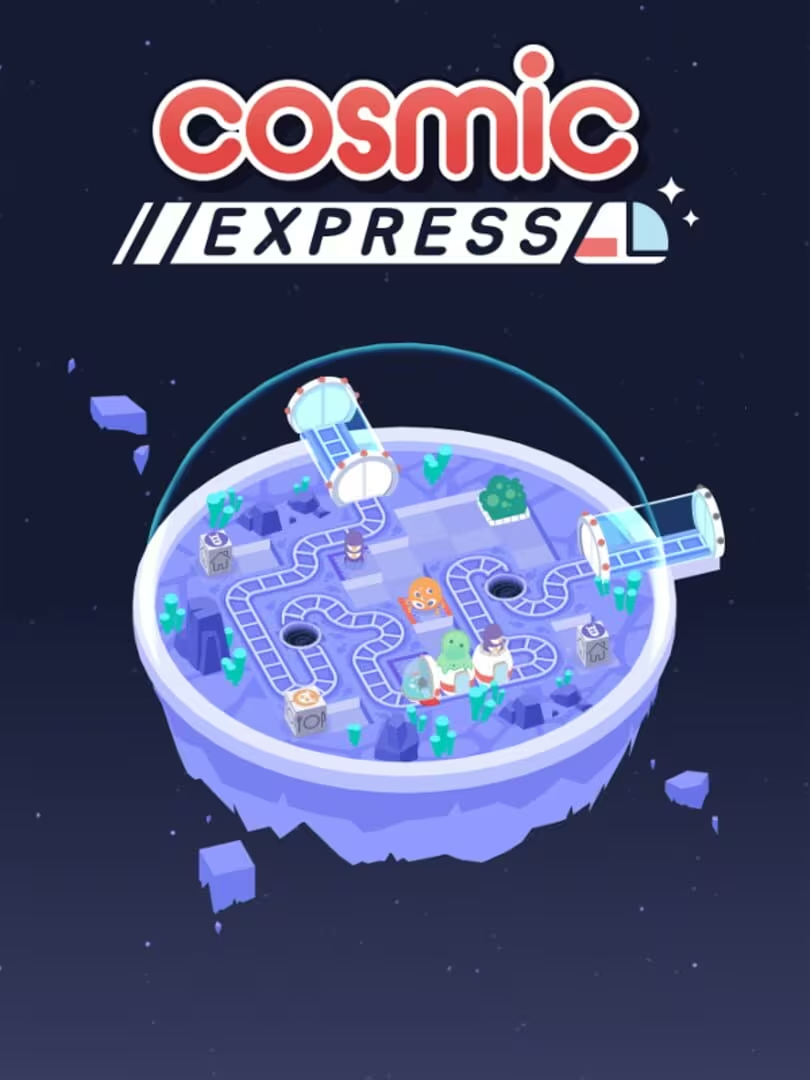 Cosmic Express
"Pleasant piano soundtrack and simple visuals provide mild sensory stimulation."
-
Status
Game with the same Status vibe
-5"No social recognition or ranking systems."
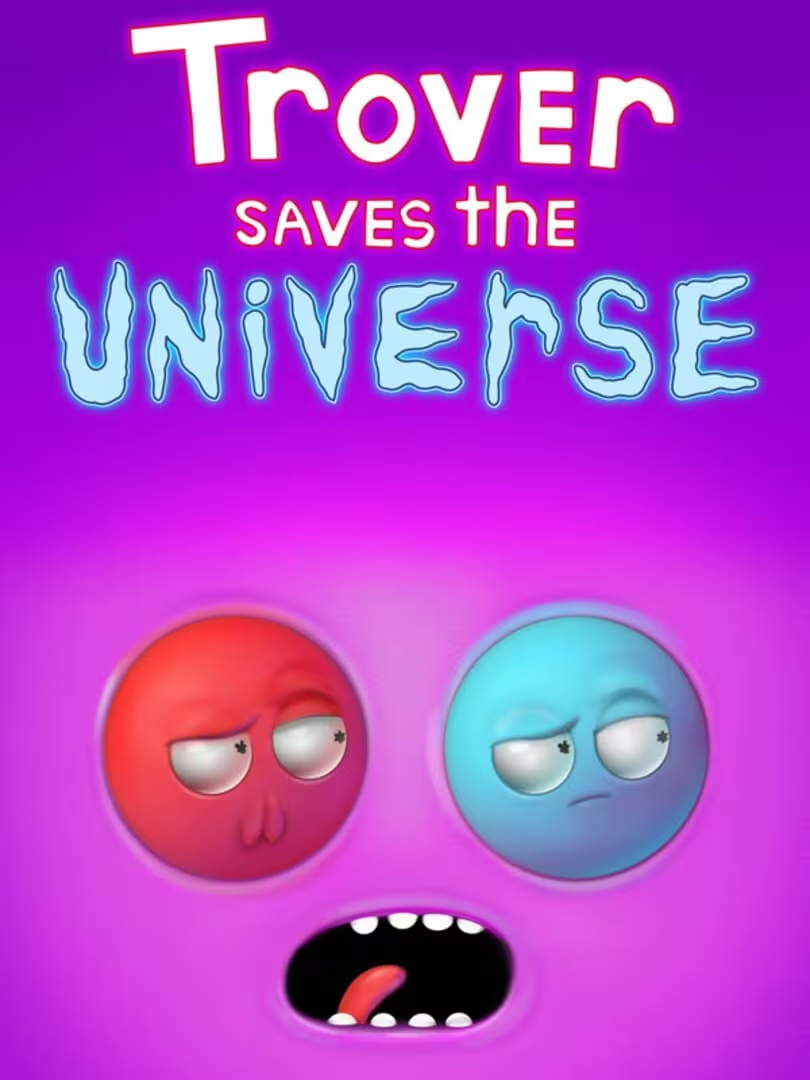 Trover Saves the Universe
"No social recognition or ranking systems."
-
Story
Game with the same Story vibe
-3"Minimal narrative elements; mostly context-free parkour and puzzle gameplay."
 Vectromirror 0™
"Minimal narrative; mostly context-free puzzle gameplay."
-
Strategy
Game with the same Strategy vibe
2"Requires planning routes and timing but largely trial-and-error and memorization."
 Vector
"Requires planning death placement and route memorization to progress."
-
Thrill
Game with the same Thrill vibe
0"Some tension from limited moves and traps, but overall low suspense."
 Cinderella Escape! R12
"Some tension from traps and timing, but overall low suspense and risk."
-
Value
Game with the same Value vibe
3"Good value for price, especially on sale; short but satisfying experience."
 Hero of the Kingdom: The Lost Tales 1
"Low price and free availability make it a good value for a short, creative experience."
-
Violence
Game with the same Violence vibe
2"Combat and damage dealing are central, but stylized and tactical rather than gratuitous or chaotic."
 HELLCARD
"Frequent character death and traps are central, though stylized and non-graphic."
-
Survival
Game with the same Survival vibe
1"Avoiding hazards and death is part of gameplay but not a survival-focused experience."
 Mission in Snowdriftland
"Avoiding traps and hazards is part of gameplay, but unlimited lives reduce survival pressure."
Last update: 01/06/2026