Verde Station similar games & best alternatives
Should you play it?
What do you trust most — what you see, what you're told, or your instincts? On a year long solo mission aboard Verde Station, you will test your wits and question everything, but you may not find answers. Welcome to solitude.
What works
- Unique psychological sci-fi narrative
- Immersive atmospheric exploration
- Multiple playthroughs encouraged
- Thought-provoking story
- Good value especially on sale
Things to keep in mind
- Very short gameplay duration
- Limited interactivity and customization
- Some technical issues reported
- Lack of multiple endings
- Minimal puzzle or gameplay complexity
What to play next
Similar games, hidden gems, and fresh directions from this game.
Top picks
Games that feel the closest overall


Hidden Gems
Less popular games with surprisingly high similarity
If you liked…
Recommendations by what you enjoyed most
Similarity map
Explore nearby similar games and see why they’re close.
Verde Station: Broadly representative of its motivational profile, with a few distinct shifts. Motivations that often define this kind of title include Expression, Fellowship, Cooperation, Status. Here, the score leans higher than usual among comparable games on Exploration, Relaxation. It leans lower than usual among comparable games on Violence.
Why this game works
A motivational profile of the game, with the closest similar game for each player motivation.
-
Autonomy
Game with the same Autonomy vibe
3"Players explore the train at their own pace and make decisions to solve puzzles and uncover story elements, though the gameplay is mostly walking and puzzle solving within set environments."
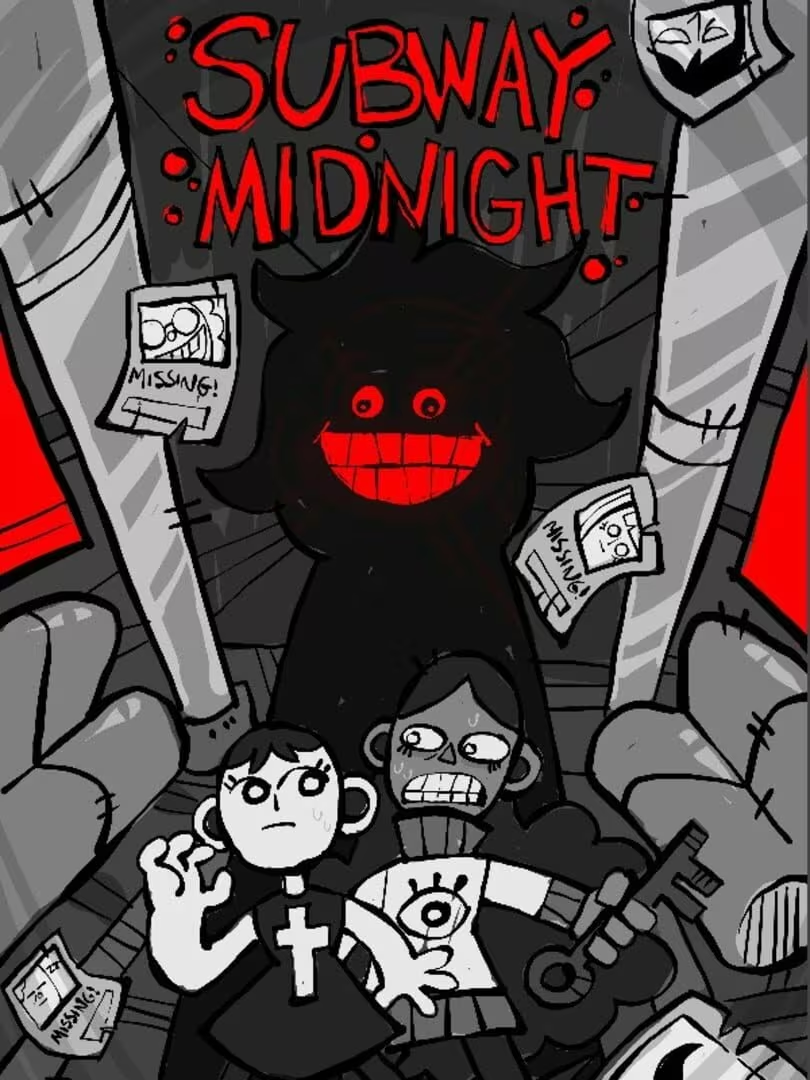 Subway Midnight
"Players explore the station at their own pace and make decisions about what to investigate, though the core gameplay and story progression is fixed."
-
Competence
Game with the same Competence vibe
2"Requires observation skills and piecing together clues, but no complex mechanics or skill challenges."
 Quanero VR
"Requires observation and puzzle-like interpretation of story elements, but no complex skill or technical challenge."
-
Competition
Game with the same Competition vibe
-5"No competitive elements; focus is on personal exploration and discovery without comparison to others."
 Star Sky
"No competitive elements; focus is on personal exploration and discovery."
-
Continuation
Game with the same Continuation vibe
3"Encourages multiple playthroughs to explore different endings and achievements, fostering habitual engagement."
 Sumire
"Designed for multiple playthroughs to uncover all story elements and achievements, encouraging habitual engagement."
-
Cooperation
Game with the same Cooperation vibe
-5"Single-player experience with no multiplayer or cooperative gameplay."
 Senua’s Saga: Hellblade II
"Single-player experience with no multiplayer or cooperative gameplay."
-
Creativity
Game with the same Creativity vibe
2"Players piece together story elements and interpret narrative, but gameplay and environment are predefined with minimal modification."
 Fingerbones
"Players piece together story elements creatively in their minds, though in-game creation or modification is minimal."
-
Domination
Game with the same Domination vibe
-5"No social dominance or power dynamics; experience is solitary and introspective."
 Layers of Fear (2016)
"No social dominance or power dynamics; experience is solitary and introspective."
-
Escapism
Game with the same Escapism vibe
4"Strong atmospheric and immersive sci-fi setting provides escape from reality."
 Cognition Method: Initiation
"Strongly immersive and atmospheric, providing an escape into a mysterious sci-fi environment."
-
Expectation
Game with the same Expectation vibe
-3"Players engage voluntarily out of interest and curiosity rather than obligation."
 Leviathan: The Last Day of the Decade
"Players engage voluntarily out of curiosity and interest rather than obligation."
-
Experimenting
Game with the same Experimenting vibe
3"Encourages exploration and trying different interactions to solve puzzles and uncover story elements."
 "LIFE" not found;
"Encourages exploration and trying different interactions to uncover story secrets."
-
Exploration
Game with the same Exploration vibe
4"Core gameplay involves exploring the space station, discovering logs, and uncovering story elements."
 The Station
"Core gameplay revolves around exploring the space station and discovering hidden details."
-
Expression
Game with the same Expression vibe
-4"Limited customization or personalization; players interact with fixed environments and characters."
 Cube Escape Collection
"Limited customization; players experience a fixed environment and character."
-
Fantasy
Game with the same Fantasy vibe
4"Set in a sci-fi horror space station with supernatural and cosmic horror elements, providing an imaginative fictional experience."
 We Went Back
"Set in a sci-fi space station with psychological and surreal narrative elements."
-
Fellowship
Game with the same Fellowship vibe
-5"Experience is solitary with no social or community features."
 TREE
TREE
"Experience is solitary with no social or community features."
-
Growth
Game with the same Growth vibe
3"Players develop understanding of mechanics and story through repeated play and reflection."
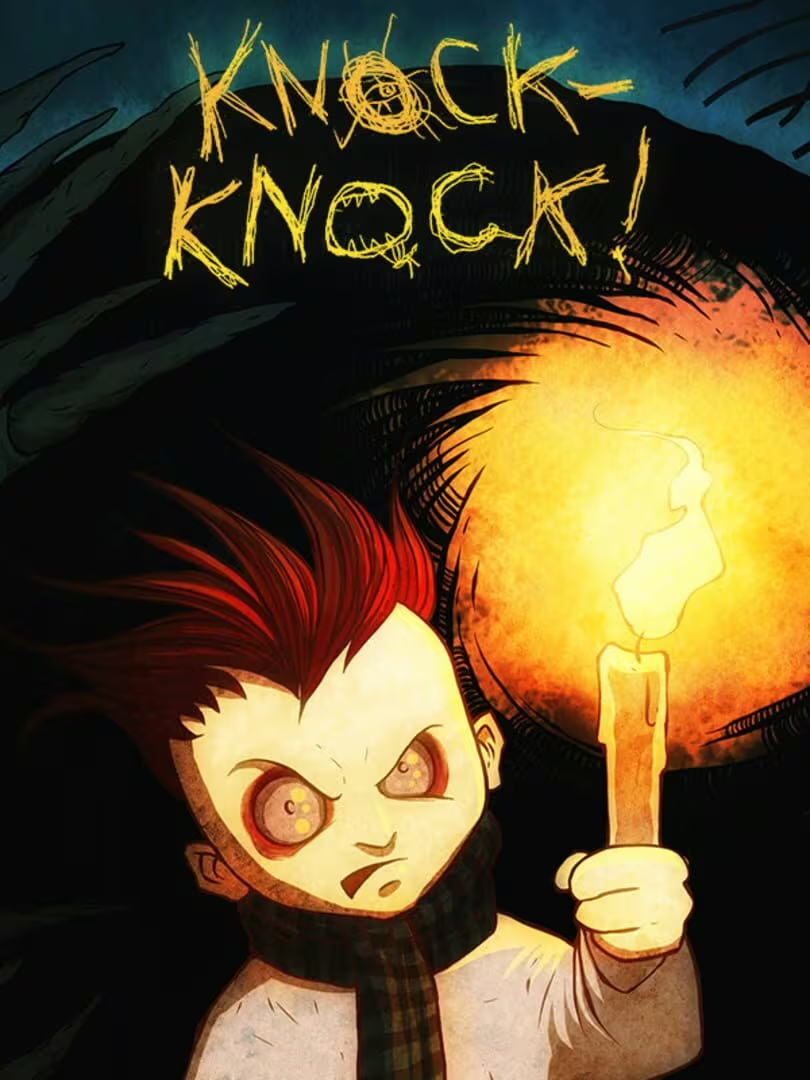 Knock-knock
"Players develop understanding of the story and environment through exploration and reflection."
-
Health
Game with the same Health vibe
-5"Sedentary gameplay with no physical activity involved."
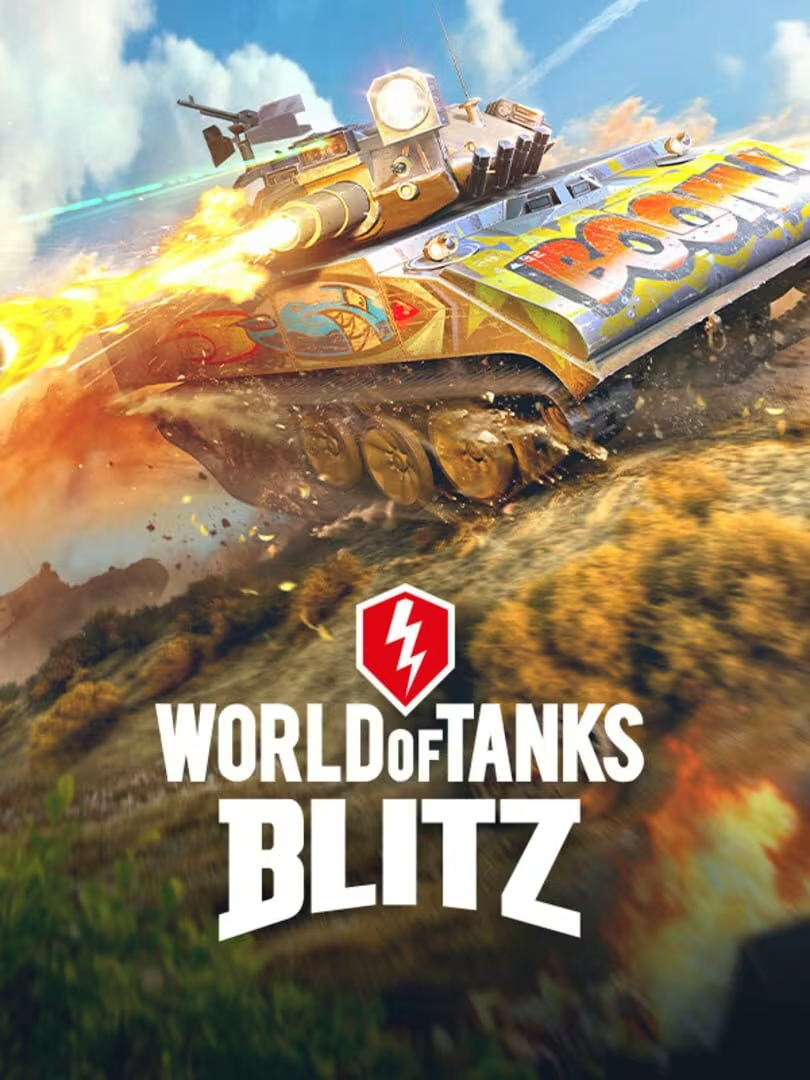 World of Tanks Blitz
"Sedentary gameplay with no physical activity involved."
-
Idle
Game with the same Idle vibe
-3"Requires focused attention to explore and piece together story; not a background or idle game."
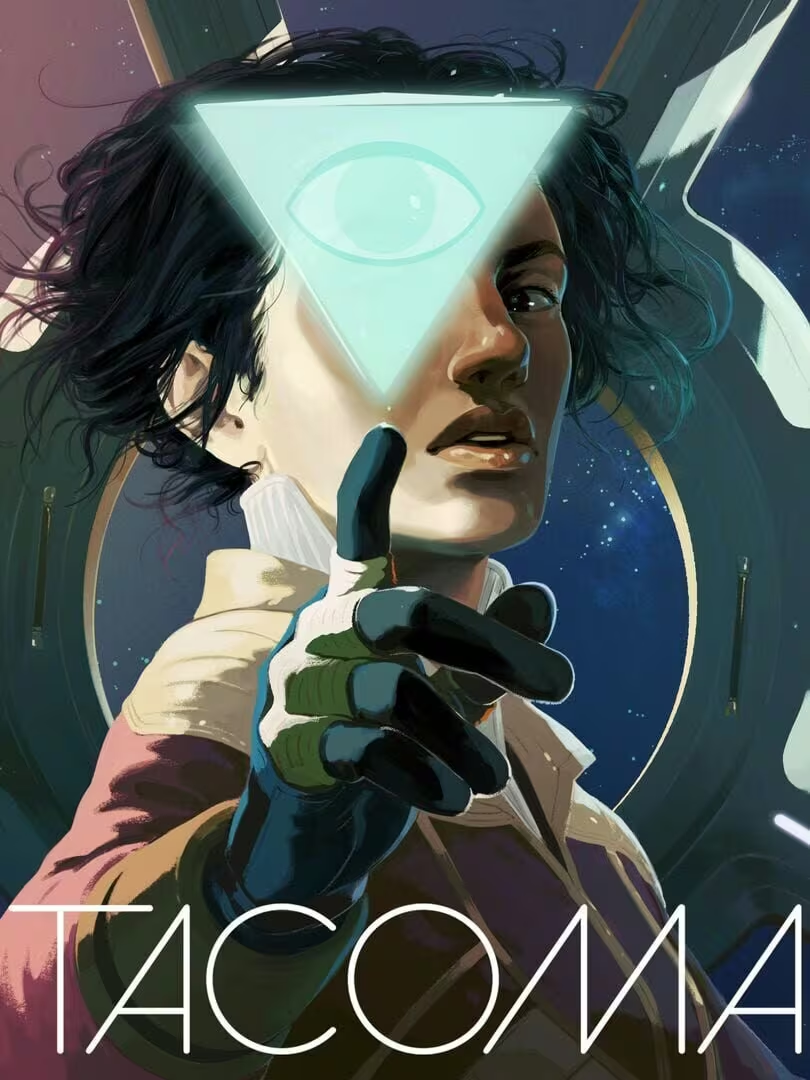 Tacoma
"Requires focused attention to explore and interpret story; not a background or idle game."
-
Intimacy
Game with the same Intimacy vibe
-5"No social or emotional relationship building; solitary experience."
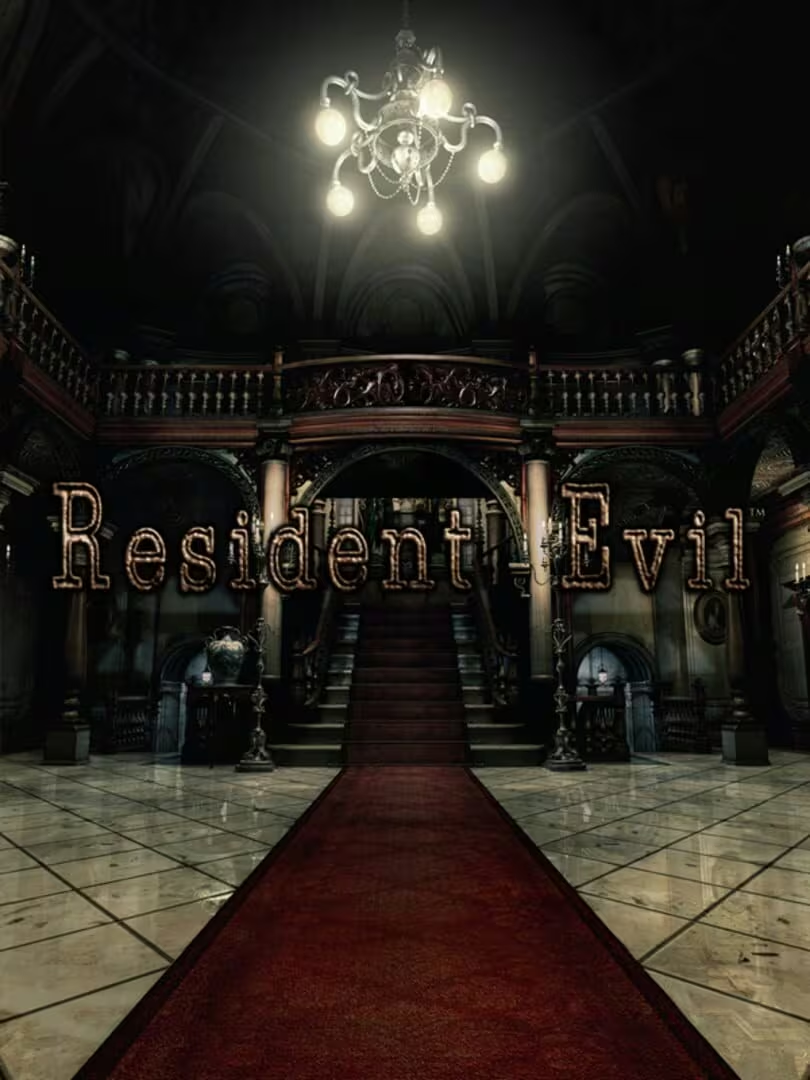 Resident Evil
"No social or emotional relationship building; solitary experience."
-
Leadership
Game with the same Leadership vibe
-5"No leadership or group management elements."
 High On Life
"No leadership or group management elements."
-
Progression
Game with the same Progression vibe
2"Progression is narrative and achievement-based rather than item or power accumulation."
 Title_Pending
"Progression is narrative and achievement-based rather than item or power accumulation."
-
Relaxation
Game with the same Relaxation vibe
3"Atmospheric and immersive with a slow pace, balancing tension and calm."
 Dagon: by H. P. Lovecraft
"Atmospheric and slow-paced, balancing tension and calm to create a thoughtful experience."
-
Sensation
Game with the same Sensation vibe
2"Visuals and sound design contribute to mood but sensory stimulation is moderate and subtle."
![Capsule for Event[0]](https://d2eatnf6sujjgc.cloudfront.net/gameaton-data/event-0/cover/event-0.avif) Event[0]
Event[0]
"Uses sound and visuals to create mood and unease but is not heavily sensory stimulating."
-
Status
Game with the same Status vibe
-5"No social recognition or status systems."
 Alan Wake
"No social recognition or status systems."
-
Story
Game with the same Story vibe
5"Narrative immersion is central, with story revealed through exploration and environmental storytelling."
 Outer Wilds
"Narrative immersion is central, with story revealed through exploration and environmental clues."
-
Strategy
Game with the same Strategy vibe
1"Some mental engagement in piecing together story elements but limited strategic gameplay."
 Higurashi When They Cry Hou - Ch.5 Meakashi
"Some mental challenge in piecing together story elements, but no complex strategy required."
-
Thrill
Game with the same Thrill vibe
3"Creates suspense and psychological tension through atmosphere and story rather than action or risk."
 Without a Dawn
"Creates suspense and psychological tension through atmosphere and narrative twists."
-
Value
Game with the same Value vibe
2"Generally considered good value for price, especially on sale, given quality and unique experience."
 Gray Dawn
"Generally regarded as good value for the price, especially on sale, given its unique experience."
-
Violence
Game with the same Violence vibe
-5"No violence or combat; focus on exploration and story."
 Fayburrow
"No violence or combat; focus on exploration and story."
-
Survival
Game with the same Survival vibe
1"Themes of psychological survival and endurance are present, but no gameplay survival mechanics."
 Wonderful Everyday Down the Rabbit-Hole
"Some thematic elements of survival and mental endurance, but no active survival gameplay."
Last update: 01/06/2026