Nevermind similar games & best alternatives
Should you play it?
Nevermind ushers you into dark and surreal worlds within the minds of trauma patients. When played with supported biofeedback technology, Nevermind picks up on indications of fear—lashing out if you allow your feelings of anxiety to get the better of you.
What works
- Unique psychological horror concept
- Immersive surreal environments
- Thought-provoking narrative
- Innovative biofeedback integration
- High-quality voice acting and soundtrack
Things to keep in mind
- Limited content and short gameplay
- Some puzzles are simplistic or unintuitive
- Biofeedback feature not accessible to all
- Slow movement and occasional motion sickness
- Lack of replay value beyond achievements
What to play next
Similar games, hidden gems, and fresh directions from this game.
Top picks
Games that feel the closest overall
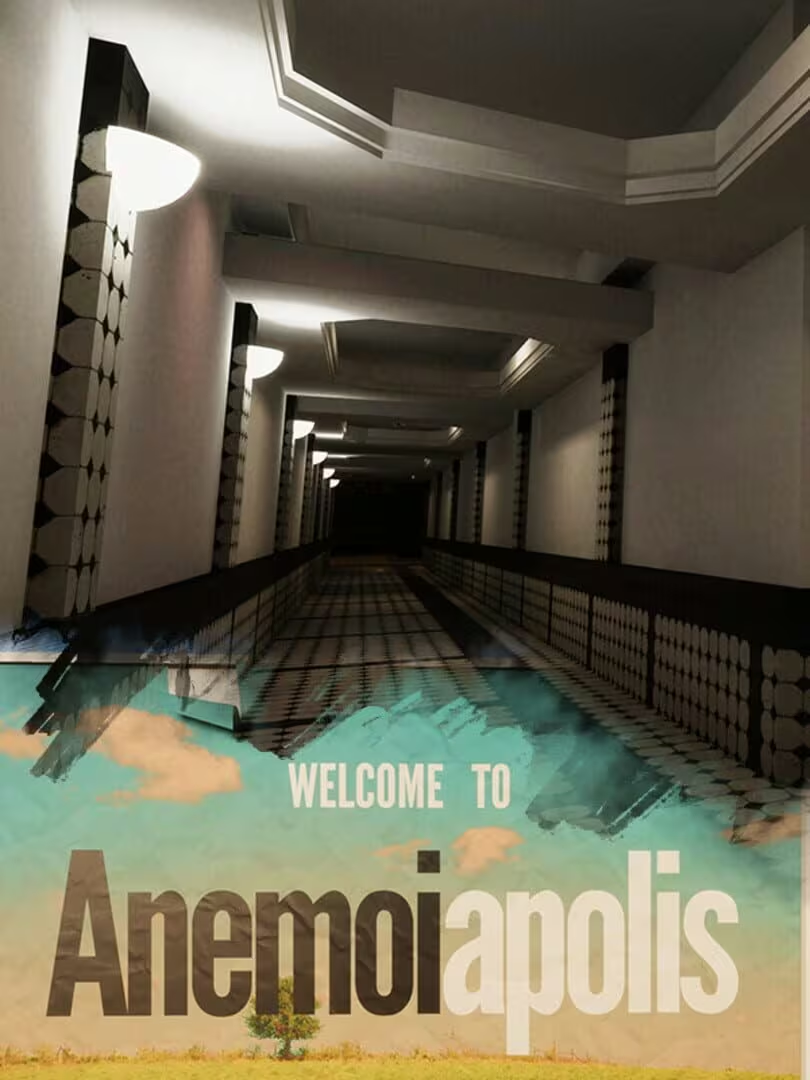
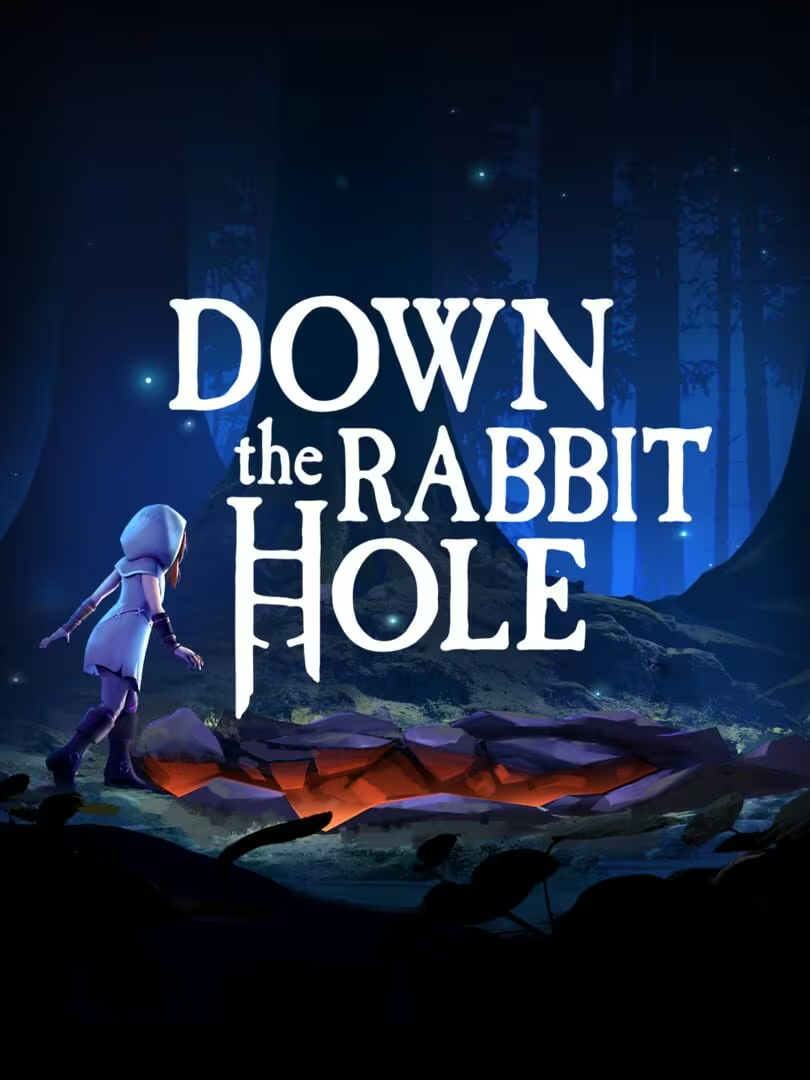
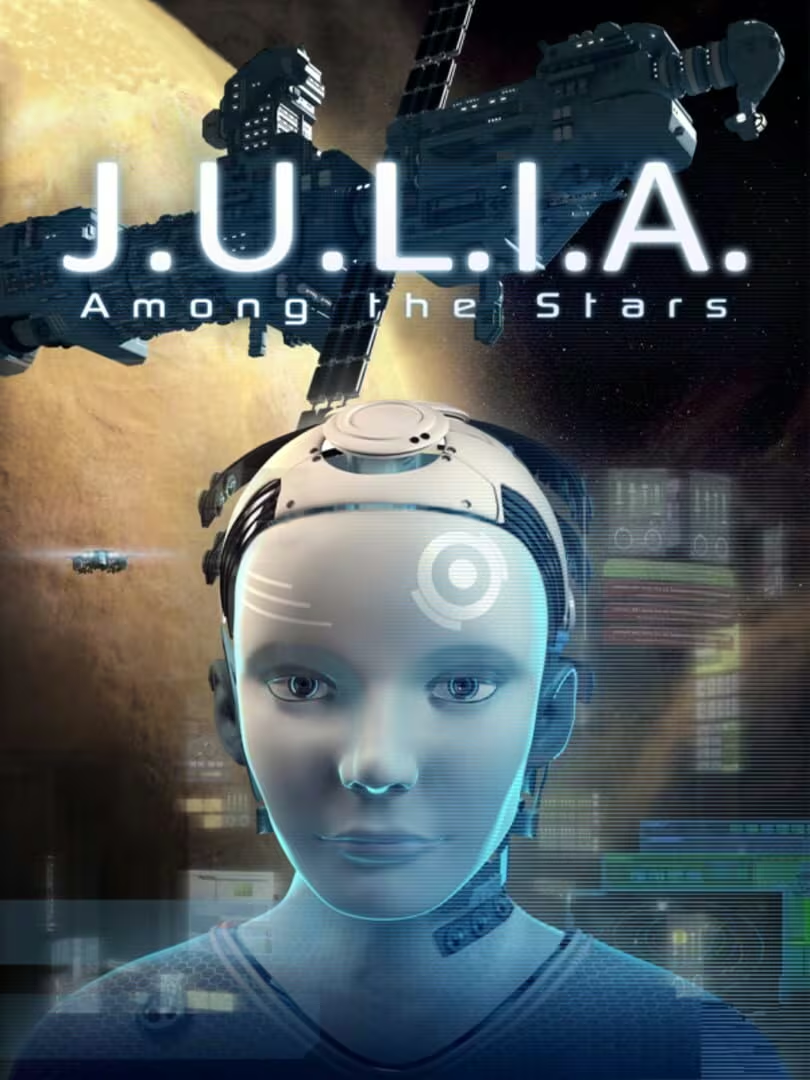
Hidden Gems
Less popular games with surprisingly high similarity
If you liked…
Recommendations by what you enjoyed most
Similarity map
Explore nearby similar games and see why they’re close.
Nevermind: Less representative of its motivational profile, with noticeable differences. Motivations that often define this kind of title include Survival, Violence, Competition, Thrill. Here, the score leans higher than usual among comparable games on Health. It leans lower than usual among comparable games on Value, Continuation.
Why this game works
A motivational profile of the game, with the closest similar game for each player motivation.
-
Autonomy
Game with the same Autonomy vibe
4"Players freely explore the hospital, interact with objects, and solve puzzles with some choice in approach."
 Reversion - The Escape (1st Chapter)
"Players explore patients' subconscious minds freely, solving puzzles and piecing memories with some personal interpretation."
-
Competence
Game with the same Competence vibe
3"Puzzles require logical thinking and memory, with a range of difficulties and some trial-and-error elements."
 The Inheritance of Crimson Manor
"Puzzle solving and memory ordering require skill and thought, though some puzzles are simple or trial-and-error."
-
Competition
Game with the same Competition vibe
-5"No competitive elements; focus is on personal pace and individual experience."
 The August Before: Chapter One
"No competitive elements; focus is on individual experience and personal progress."
-
Continuation
Game with the same Continuation vibe
-2"Short game with limited replay value; some players find repeated playthroughs tedious despite achievements."
 Indecision.
"Short game with limited content; some players replay for achievements but overall limited habitual play."
-
Cooperation
Game with the same Cooperation vibe
-5"Single-player experience with no cooperative gameplay."
 Nobody Wants to Die
"Single-player experience with no cooperative gameplay."
-
Creativity
Game with the same Creativity vibe
5"Highly creative surreal and psychological horror settings, unique characters, and imaginative storylines."
 Sanitarium
"Highly creative surreal environments and unique psychological horror concept."
-
Domination
Game with the same Domination vibe
-5"No elements of exerting control or superiority over others."
 Senren*Banka
"No elements of exerting control or superiority over others."
-
Escapism
Game with the same Escapism vibe
4"Players immerse themselves in a psychological horror narrative and atmospheric world to escape real life."
 SILENT HILL f
"Immerses players in abstract subconscious worlds to escape and explore psychological trauma."
-
Expectation
Game with the same Expectation vibe
-4"Players engage voluntarily out of interest in psychological themes and narrative experience."
 Milk inside a bag of milk inside a bag of milk
"Players engage voluntarily out of interest in psychological themes and unique gameplay."
-
Experimenting
Game with the same Experimenting vibe
3"Players explore puzzles and interact with various imaginative elements, encouraging experimentation."
 Lost in Play
"Players explore and interpret abstract environments and puzzles, encouraging experimentation."
-
Exploration
Game with the same Exploration vibe
4"Exploration of diverse and surreal dreamscapes is a core part of gameplay."
 The Dream Machine: Chapter 1 & 2
"Exploration of surreal, symbolic subconscious landscapes is core to gameplay."
-
Expression
Game with the same Expression vibe
-3"Limited character customization; focus is on narrative and environment rather than player self-expression."
 Mundaun
"Limited customization; focus is on narrative and environment rather than player self-expression."
-
Fantasy
Game with the same Fantasy vibe
3"Surreal, eerie environments and abstract characters create an imaginative fictional experience."
 Closure
"Surreal and abstract representations of trauma create imaginative, fictionalized experiences."
-
Fellowship
Game with the same Fellowship vibe
-5"No social or community features; solitary experience."
 INSIDE
"No social or community features; solitary experience."
-
Growth
Game with the same Growth vibe
3"Players develop understanding of complex social issues and improve puzzle-solving skills."
 Another Lost Phone: Laura's Story
"Players develop understanding of trauma and improve puzzle-solving skills."
-
Health
Game with the same Health vibe
1"Encourages mental health improvement and some physical activities like dancing."
 The Journey - Episode 1: Whatever This Is
"Biofeedback elements encourage emotional regulation but physical activity is minimal."
-
Idle
Game with the same Idle vibe
-3"Requires focused attention to solve puzzles and follow narrative; not a casual or background game."
 Who's Lila?
"Requires focused attention to puzzles and story; not a casual or background game."
-
Intimacy
Game with the same Intimacy vibe
-4"Limited social interaction; emotional engagement is mostly with the narrative and character rather than other players."
Who's Lila?
"Limited social interaction; emotional engagement is with game content, not other players."
-
Leadership
Game with the same Leadership vibe
-5"No leadership or group management elements."
 High On Life
"No leadership or group management elements."
-
Progression
Game with the same Progression vibe
3"Progression through unlocking and solving cases, collecting clues, and completing puzzles."
 Little Problems: A Cozy Detective Game
"Progression through unlocking memories and completing cases."
-
Relaxation
Game with the same Relaxation vibe
1"Atmospheric and immersive but combat and tension may reduce relaxation; mixed experience."
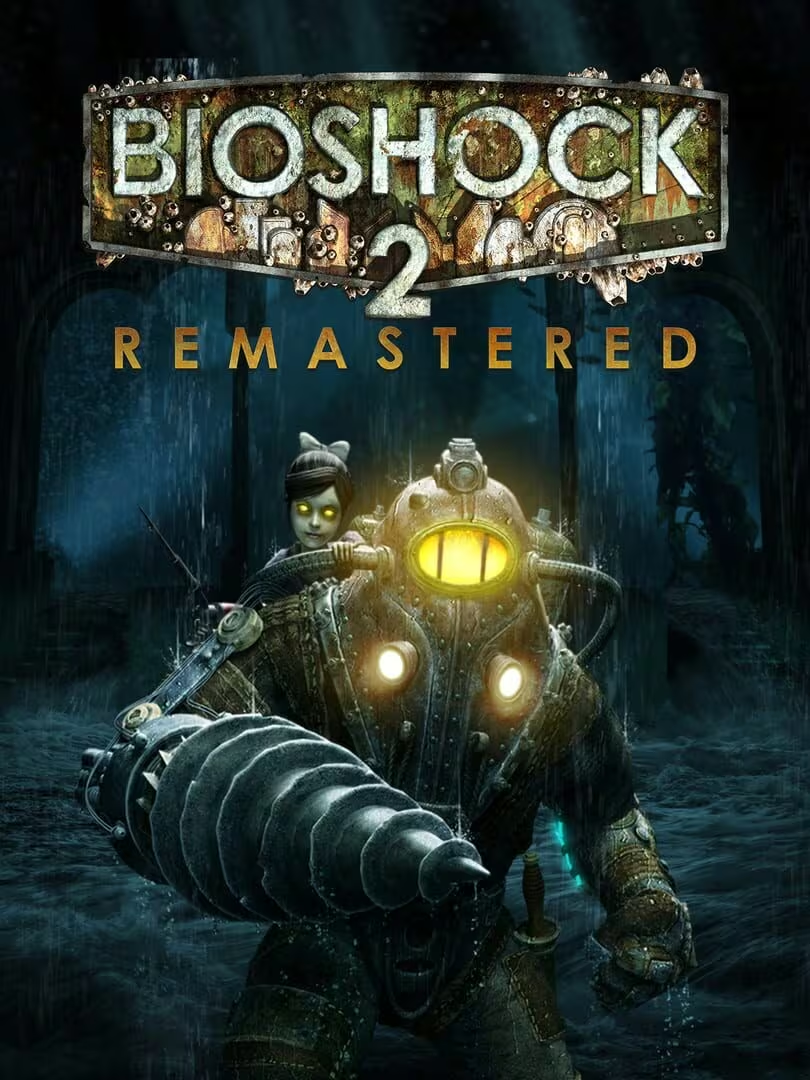 BioShock™ 2 Remastered
"Atmospheric and immersive but can induce tension and discomfort due to psychological themes."
-
Sensation
Game with the same Sensation vibe
3"Strong sensory stimulation through unsettling visuals, audio design, and atmosphere."
![Capsule for [Bober Bros] The Hole](https://d2eatnf6sujjgc.cloudfront.net/gameaton-data/bober-bros-the-hole/cover/bober-bros-the-hole.avif) [Bober Bros] The Hole
[Bober Bros] The Hole
"Strong sensory stimulation through visuals, sound, and unsettling atmosphere."
-
Status
Game with the same Status vibe
-5"No social status or recognition systems."
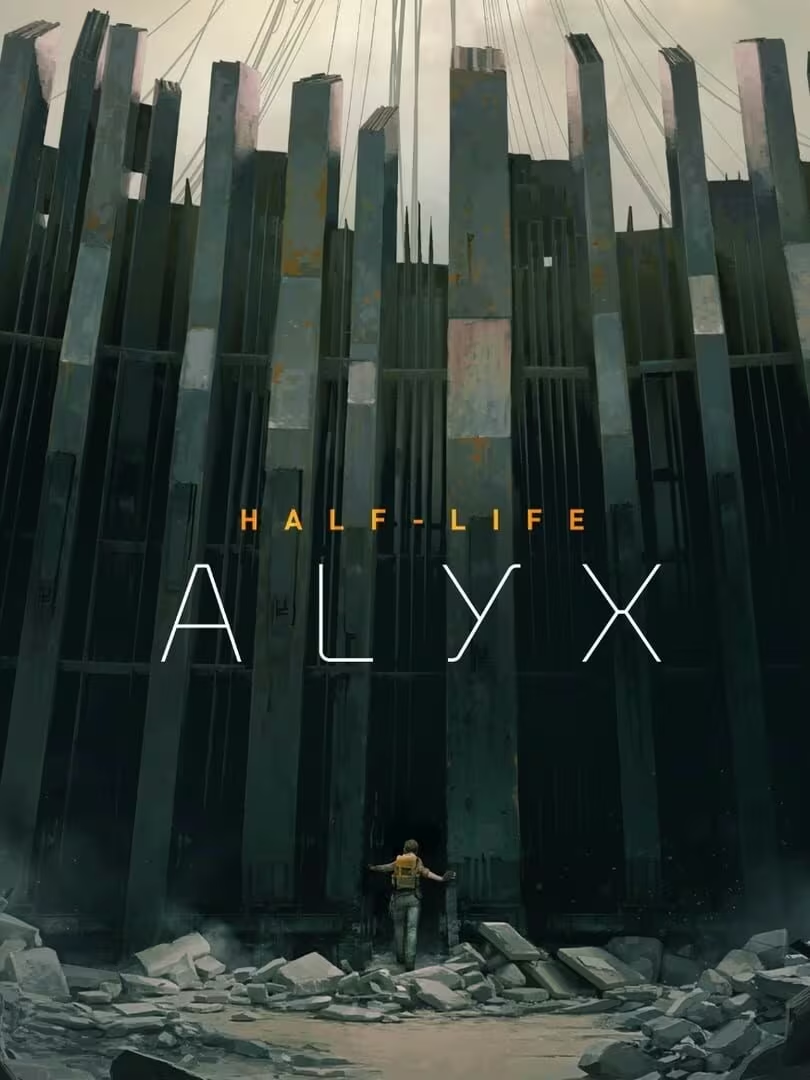 Half-Life: Alyx
"No social status or recognition systems."
-
Story
Game with the same Story vibe
5"Strong narrative focus with deep emotional and psychological storytelling."
 Bad Parenting 1: Mr. Red Face
"Narrative-driven with deep psychological stories for each patient."
-
Strategy
Game with the same Strategy vibe
2"Requires some problem solving and planning in puzzle solutions, but puzzles are generally straightforward."
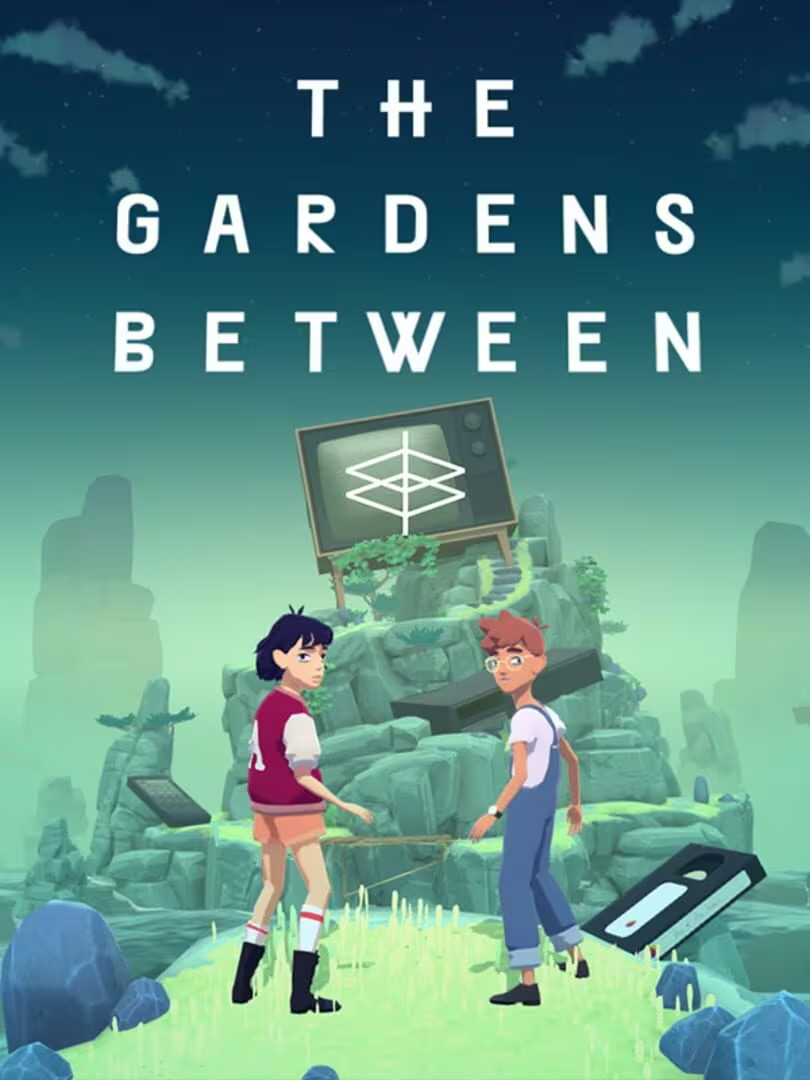 The Gardens Between
"Puzzle solving involves some planning and reasoning but is generally straightforward."
-
Thrill
Game with the same Thrill vibe
2"Psychological horror and suspense elements create tension and emotional thrill."
 Hello Charlotte EP3: Childhood's End
"Psychological tension and suspense replace traditional horror thrills."
-
Value
Game with the same Value vibe
-2"Short length and limited content make full price questionable; better value on sale."
 Electronic Super Joy: Groove City
"Criticized for short length and limited content relative to price."
-
Violence
Game with the same Violence vibe
-5"No violence; focus on love, healing, and companionship."
 My Little Puppy
"Focus on healing and understanding trauma rather than violence or destruction."
-
Survival
Game with the same Survival vibe
-4"No survival mechanics; stable, low-risk environment focused on mental and emotional challenges."
 The Test: Final Revelation
"No survival mechanics; stable environments with psychological challenges."
Last update: 01/06/2026