Please, Don’t Touch Anything similar games & best alternatives
Should you play it?
A brain-racking game about bathroom breaks, screwdrivers and nuclear explosions.
What works
- Unique and challenging puzzles
- Multiple diverse endings
- Engaging pixel art and soundtrack
- Encourages experimentation and discovery
- Low system requirements
Things to keep in mind
- Short overall playtime
- Some puzzles require external knowledge or guides
- Limited replay value after completion
- Can be frustrating or tedious
- Lack of narrative depth
What to play next
Similar games, hidden gems, and fresh directions from this game.
Top picks
Games that feel the closest overall





Hidden Gems
Less popular games with surprisingly high similarity
If you liked…
Recommendations by what you enjoyed most
Similarity map
Explore nearby similar games and see why they’re close.
Please, Don’t Touch Anything: Less representative of its motivational profile, with noticeable differences. Motivations that often define this kind of title include Expression, Fellowship, Cooperation, Status. Here, the score leans higher than usual among comparable games on Experimenting, Exploration. It leans lower than usual among comparable games on Survival.
Why this game works
A motivational profile of the game, with the closest similar game for each player motivation.
-
Autonomy
Game with the same Autonomy vibe
4"Players freely experiment with choices and actions, exploring multiple endings and outcomes with minimal constraints."
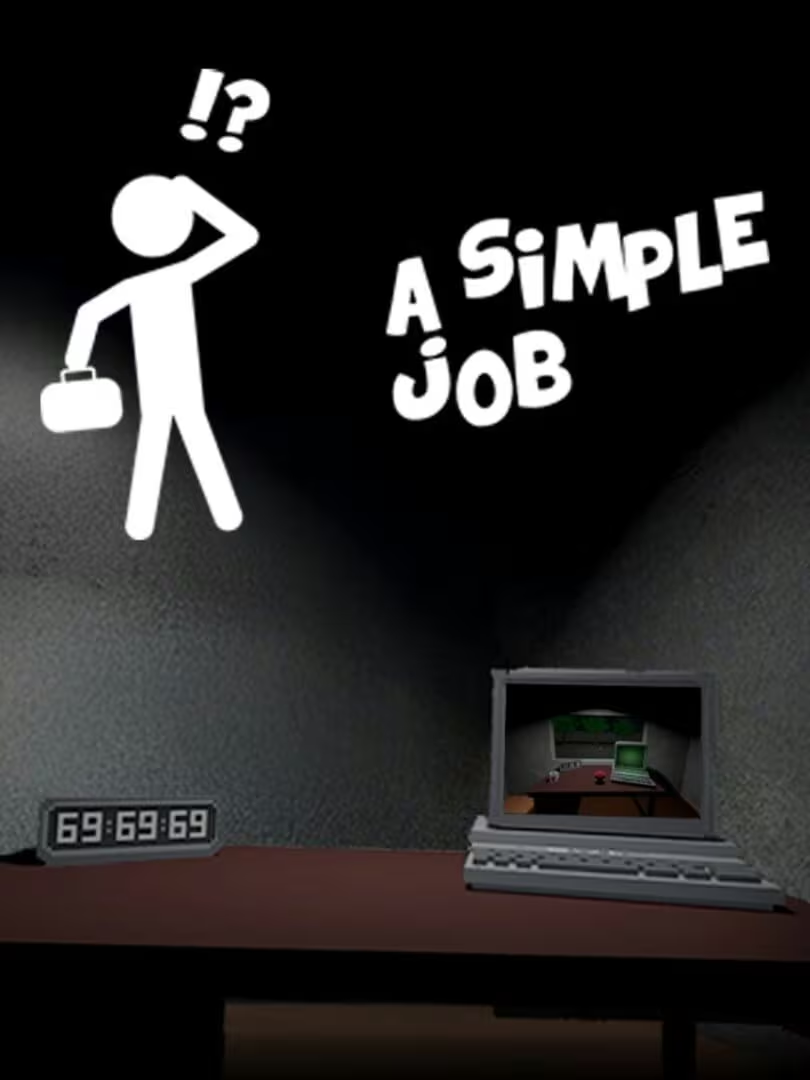 A Simple job
"Players freely experiment with the single button and panel, choosing their own sequence of actions to discover endings."
-
Competence
Game with the same Competence vibe
4"The game challenges players with complex puzzles requiring skillful deduction and logical reasoning, rewarding effective problem solving."
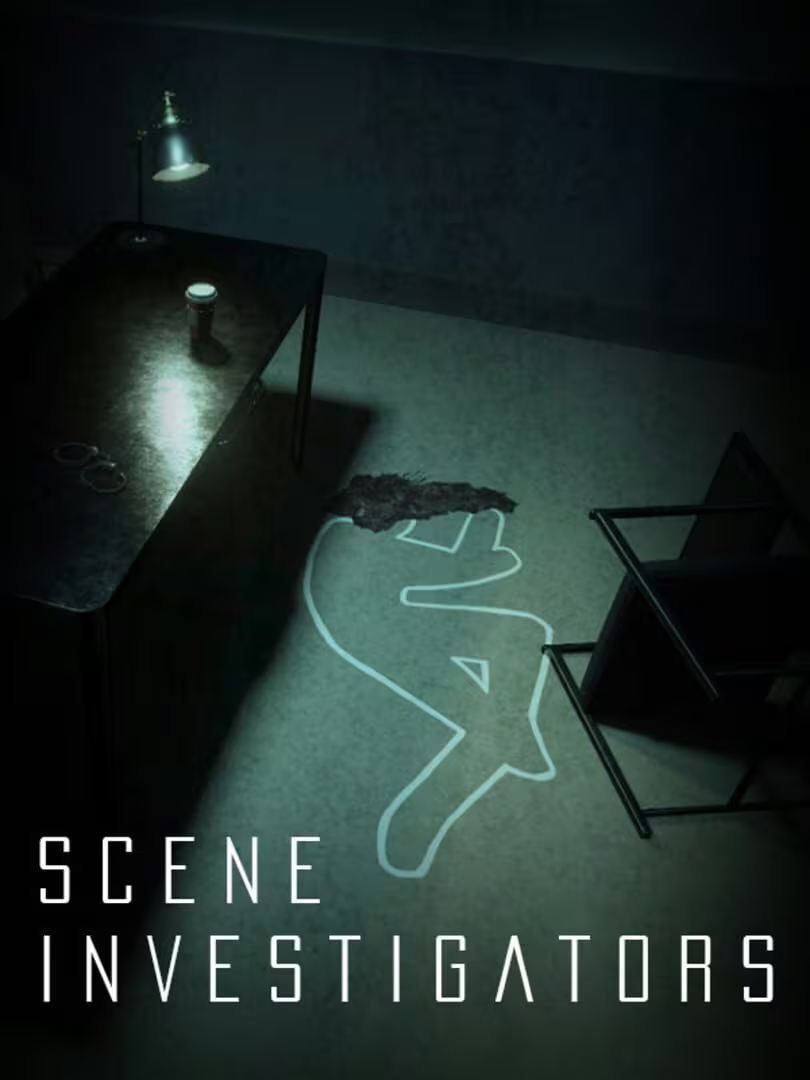 Scene Investigators
"The game challenges players with puzzles requiring observation, logic, and deduction, rewarding skillful problem solving."
-
Competition
Game with the same Competition vibe
-4"Single-player experience focused on personal puzzle solving without leaderboards or player comparison."
 klocki
"The game is single-player and focuses on personal puzzle solving without leaderboards or direct player comparison."
-
Continuation
Game with the same Continuation vibe
3"Players are motivated to replay multiple times to unlock all 41 endings and explore different character traits, showing habitual engagement."
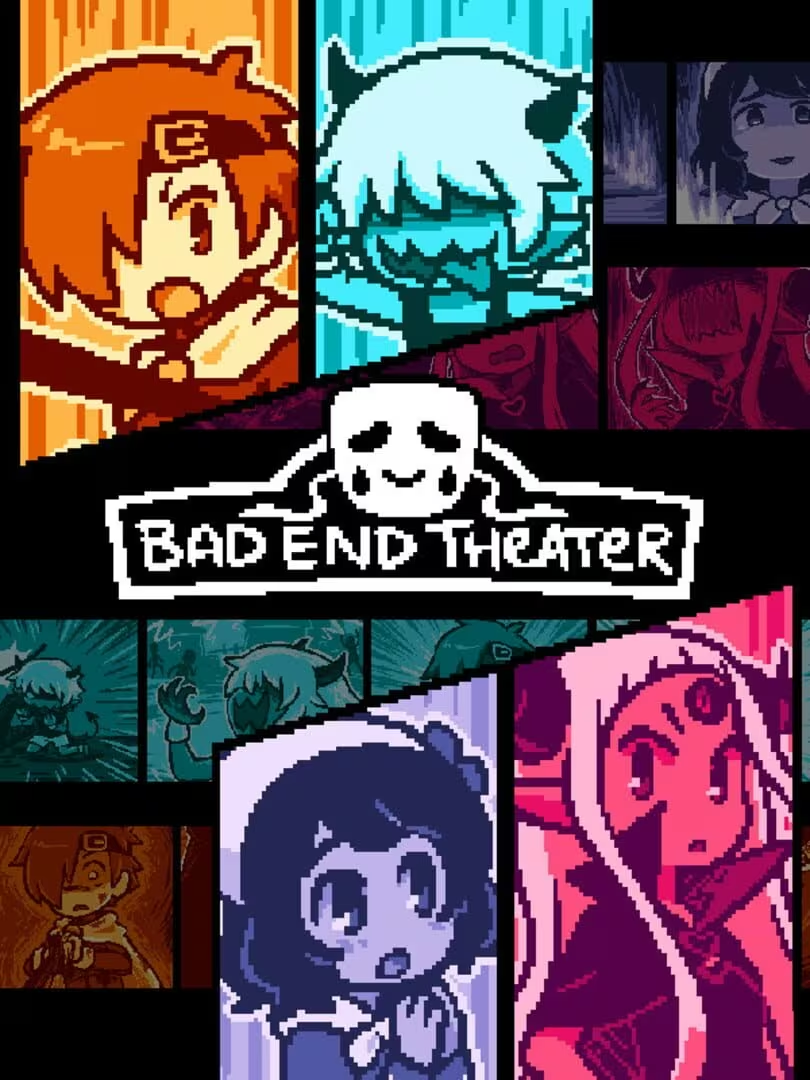 BAD END THEATER
"Players often engage in extended sessions trying to unlock all 25 endings, showing habitual and prolonged play."
-
Cooperation
Game with the same Cooperation vibe
-5"The game is designed for solo play with no multiplayer or cooperative gameplay elements."
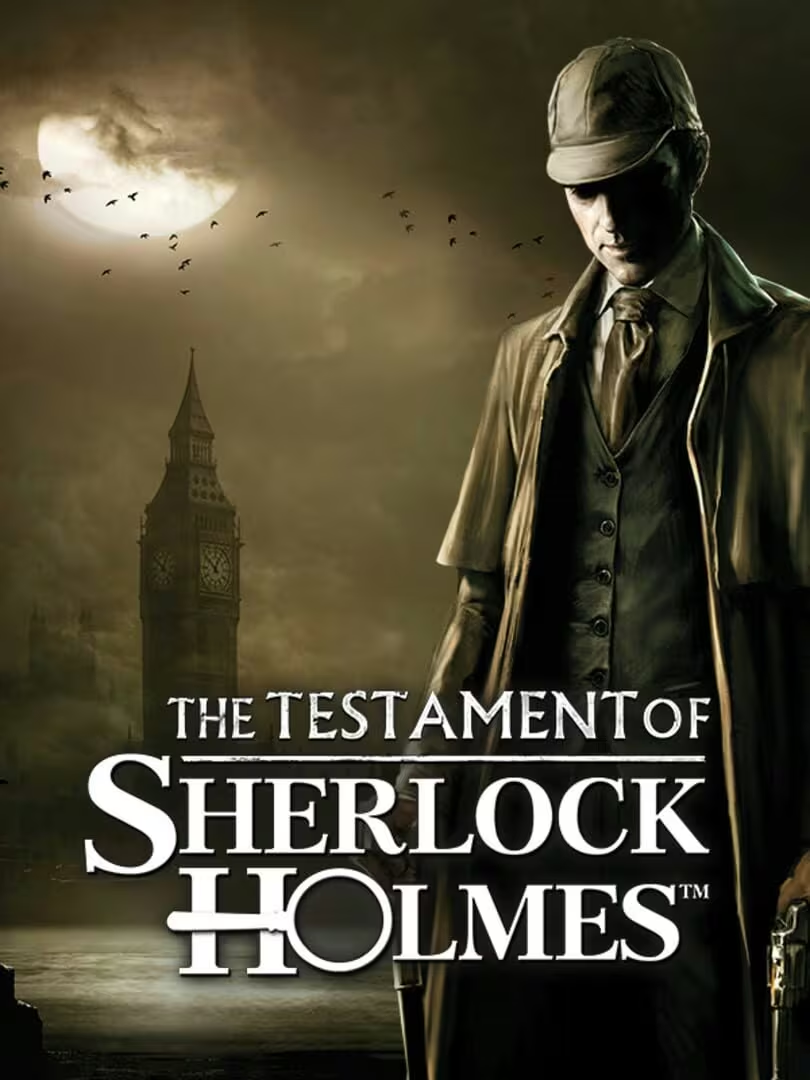 The Testament of Sherlock Holmes
"The game is designed for solo play with no multiplayer or cooperative elements."
-
Creativity
Game with the same Creativity vibe
3"Players experiment with different actions and sequences to discover varied outcomes and endings."
A Simple job
"Players creatively experiment with button presses and panel elements to discover new outcomes and endings."
-
Domination
Game with the same Domination vibe
-5"No social dominance or power dynamics; interactions are individual and self-directed."
 Sixty Four
"No elements of dominance or power over others; interactions are individual and self-directed."
-
Escapism
Game with the same Escapism vibe
3"Players use the game as a mental challenge and distraction, enjoying immersion in puzzle solving."
 First Class Escape: The Train of Thought
"Players use the game as a mental challenge and distraction, escaping into puzzle solving and discovery."
-
Expectation
Game with the same Expectation vibe
-4"Players engage voluntarily out of curiosity and intrinsic interest rather than obligation or external pressure."
 Superliminal
"Players engage voluntarily out of curiosity and intrinsic interest rather than obligation or external pressure."
-
Experimenting
Game with the same Experimenting vibe
5"Core gameplay revolves around trial and error, discovery, and testing unknown mechanics."
 Cultist Simulator
"Core gameplay revolves around trial and error, testing combinations and exploring possibilities."
-
Exploration
Game with the same Exploration vibe
4"Players explore multiple story branches and uncover hidden endings and narrative secrets."
BAD END THEATER
"Players explore the panel’s hidden features and multiple endings, uncovering secrets and surprises."
-
Expression
Game with the same Expression vibe
-5"No character or environment customization; presentation is fixed and standardized."
 The Room Two
"No character or environment customization; presentation is fixed and standardized."
-
Fantasy
Game with the same Fantasy vibe
2"Game features surreal and uncanny anomalies and horror elements, blending realistic settings with imaginative fiction."
 Anomaly Exit
"The game features surreal and imaginative endings with references to fiction and conspiracy themes."
-
Fellowship
Game with the same Fellowship vibe
-5"Minimal social interaction; primarily a solitary experience."
 Amnesia: The Dark Descent
"Minimal social interaction; primarily a solitary experience."
-
Growth
Game with the same Growth vibe
4"Players develop problem-solving skills and learn puzzle mechanics through gameplay."
 Myst
Myst
"Players develop problem-solving skills and learn puzzle mechanics through gameplay."
-
Health
Game with the same Health vibe
-5"Sedentary gameplay with no physical activity involved."
 World of Tanks Blitz
"Sedentary gameplay with no physical activity involved."
-
Idle
Game with the same Idle vibe
-4"Requires focused attention and active problem solving rather than passive or background play."
 Railbound
"Requires focused attention and active problem solving rather than passive or background play."
-
Intimacy
Game with the same Intimacy vibe
-5"No social or emotional relationship building; interactions are limited to solo play."
 Aquarist
"No social or emotional relationship building; interactions are limited to solo play."
-
Leadership
Game with the same Leadership vibe
-5"No leadership or group management roles; purely individual gameplay."
 Slay the Spire
"No leadership or group management roles; purely individual gameplay."
-
Progression
Game with the same Progression vibe
3"Progression through unlocking multiple endings and achievements."
 Please, Don't Touch Anything 3D
"Progression is through unlocking multiple endings and achievements, accumulating knowledge and completion."
-
Relaxation
Game with the same Relaxation vibe
1"Some players find puzzles relaxing and engaging, others find certain puzzles frustrating."
First Class Escape: The Train of Thought
"Some players find the puzzle solving relaxing, but others report frustration and tension."
-
Sensation
Game with the same Sensation vibe
1"Simple pixel art and chiptune music provide modest sensory enjoyment without intense stimulation."
 Famaze
"The pixel art and chiptune soundtrack provide moderate sensory stimulation, not intense excitement."
-
Status
Game with the same Status vibe
-5"No social recognition or status systems; achievements are personal and not publicly ranked."
 Chroma Zero
"No social recognition or status systems; achievements are personal and not publicly ranked."
-
Story
Game with the same Story vibe
1"Basic narrative with minimal depth; story serves mainly as context for puzzles."
 TOHU
TOHU
"Minimal narrative context; story is abstract and mostly conveyed through puzzle outcomes and references."
-
Strategy
Game with the same Strategy vibe
3"Requires logical reasoning, pattern recognition, and planning to solve puzzles and connect clues."
 Lost Wiki: Kozlovka
"Requires logical thinking, pattern recognition, and planning to solve puzzles and unlock endings."
-
Thrill
Game with the same Thrill vibe
1"Some suspense from puzzle solving and suspicion meter, but overall low risk and controlled environment."
 HackHub: Free Trial
"Some suspense in puzzle discovery, but overall low risk and controlled environment."
-
Value
Game with the same Value vibe
3"Generally considered good value for price, especially on sale, with polished gameplay and replayability."
 Hexologic
"Generally considered good value for price, especially on sale, given unique gameplay and replayability."
-
Violence
Game with the same Violence vibe
2"Some endings involve destruction or chaos, but violence is abstract and puzzle-based."
Please, Don't Touch Anything 3D
"Some endings depict destruction or chaos, but violence is abstract and puzzle-driven rather than explicit."
-
Survival
Game with the same Survival vibe
-5"No survival or threat avoidance mechanics; stable and safe gameplay environment."
 Hatsune Miku: Project DIVA Mega Mix+
"No survival or threat avoidance mechanics; stable and safe gameplay environment."
Last update: 01/06/2026