PRINCIPIA: Master of Science similar games & best alternatives
Should you play it?
Principia: Master of Science is a simulation game with the theme of European science in 17th century. Choose one of 12 real scientists from the era of Isaac Newton and proceed with your research. It is a time when even the term "Science" did not exist. Who can be the master of science?
What works
- Unique historical scientific theme
- Educational content about science history
- Freedom to choose scientists and research paths
- Immersive atmosphere and setting
- Passion project with niche appeal
Things to keep in mind
- Repetitive and slow gameplay
- Lack of depth in social and competitive mechanics
- Unfinished and abandoned development
- Annoying persistent music with no mute option
- Low replayability and limited content
What to play next
Similar games, hidden gems, and fresh directions from this game.
Top picks
Games that feel the closest overall





Hidden Gems
Less popular games with surprisingly high similarity
If you liked…
Recommendations by what you enjoyed most
Similarity map
Explore nearby similar games and see why they’re close.
PRINCIPIA: Master of Science: Less representative of its motivational profile, with noticeable differences. Motivations that often define this kind of title include Violence, Fantasy, Story, Thrill. Here, the score leans higher than usual among comparable games on Domination, Status, Competition.
Why this game works
A motivational profile of the game, with the closest similar game for each player motivation.
-
Autonomy
Game with the same Autonomy vibe
3"Players have freedom to explore and make choices affecting story and gameplay, but some mechanics are directed and limited."
 Disney Epic Mickey 2: The Power of Two
"Players can choose different scientists, research topics, and career paths, allowing some freedom in directing actions despite repetitive mechanics."
-
Competence
Game with the same Competence vibe
1"Gameplay involves managing time and resources with some challenge, but repetitive and simple mechanics."
 My Child Lebensborn Remastered
"The game involves skill in managing research and career progression but is criticized for being too easy and repetitive with limited challenge."
-
Competition
Game with the same Competition vibe
3"There is competition with AI studios, buying out competitors, sabotage, and market share battles, though some reviews note competition could be deeper."
 City Game Studio: Your Game Dev Adventure Begins
"There is competition with other scientists for publishing papers and gaining fame, though AI is weak and competition can feel shallow."
-
Continuation
Game with the same Continuation vibe
-2"Game is short and repetitive; many reviews mention quick boredom and limited content leading to short play sessions."
 Slavistan
"Many reviews mention low replayability, repetitive gameplay, and abandonment by developers leading to limited long-term engagement."
-
Cooperation
Game with the same Cooperation vibe
1"Diplomacy and alliances exist but are limited; cooperation is possible but not the main focus."
 Interstellar Space: Genesis
"Some interaction with other scientists exists, including cooperation and sabotage, but it is limited and underdeveloped."
-
Creativity
Game with the same Creativity vibe
1"Players can explore and experiment with different approaches, but game structure and objectives are predefined with limited creative modification."
 House of Detention
"Players can choose research directions and develop theories, but overall gameplay is constrained by repetitive and preset structures."
-
Domination
Game with the same Domination vibe
2"Players can exert political power and influence over others, but interactions emphasize strategic balance and compromise rather than outright domination."
 The Political Process
"Players can defame rivals and influence academic politics, exerting some control over others, though interactions lack depth."
-
Escapism
Game with the same Escapism vibe
2"Players enjoy historical immersion and thematic atmosphere as a form of distraction and relaxation."
 Egyptian Senet
"The game offers immersion into historical scientific discovery, providing a niche escape into intellectual and historical themes."
-
Expectation
Game with the same Expectation vibe
-3"Players engage out of personal interest and intrinsic motivation; some frustration with hype and technical issues but mostly voluntary play."
 Watch_Dogs™
"Players engage out of personal interest and intrinsic motivation, especially those passionate about science history."
-
Experimenting
Game with the same Experimenting vibe
-1"Gameplay is simple and repetitive with limited novelty; some experimentation with timing and strategies."
 Fly O'Clock
"Gameplay is mostly repetitive with limited novelty; some experimentation with research order is possible but constrained."
-
Exploration
Game with the same Exploration vibe
1"Players explore different maps and environments, though maps are limited and relatively small."
 死寂(Deathly Stillness)
"Players explore different scientific fields and European locations, though map and content are limited and repetitive."
-
Expression
Game with the same Expression vibe
-4"Minimal customization or personalization options; mostly standardized presentation."
 Arrow a Row
"Minimal customization or personalization; mostly standardized presentation with fixed characters and UI."
-
Fantasy
Game with the same Fantasy vibe
-4"Grounded in realistic scientific concepts and history rather than imaginative fiction."
 Odyssey - The Story of Science
"Strongly grounded in realistic historical context and scientific facts, with no fantasy or fictional elements."
-
Fellowship
Game with the same Fellowship vibe
1"Some community engagement and shared enthusiasm exist, but social connection is limited."
 Peggle Deluxe
"Some social interaction with other scientists and academies, but limited community feeling or deep social bonds."
-
Growth
Game with the same Growth vibe
2"Players learn game mechanics and improve skills over time, though some find progression limited."
 Ghost Janitors
"Players develop scientific knowledge and career progression, though learning is limited by game design and repetitiveness."
-
Health
Game with the same Health vibe
-5"Purely sedentary gameplay with no physical activity or health-related features."
 Tokyo Xtreme Racer
"Purely sedentary gameplay with no physical activity or health-related features."
-
Idle
Game with the same Idle vibe
3"Gameplay involves waiting and slow pacing, suitable for filling time."
 Trophy Fishing 2
"Turn-based gameplay with waiting for AI turns and slow pacing encourages idle moments and passive play."
-
Intimacy
Game with the same Intimacy vibe
-4"Social interactions are superficial and competitive; no evidence of close relationships formed."
Fly O'Clock
"Social interactions are superficial and limited to academic rivalry and cooperation, no close relationships."
-
Leadership
Game with the same Leadership vibe
2"Players lead a small squad and make strategic decisions, but leadership is limited in scope."
 Heads Will Roll: Reforged
"Players can rise to leadership roles in academies and influence decisions, though powers are limited and underdeveloped."
-
Progression
Game with the same Progression vibe
3"Progression through levels and earning achievements provide a sense of advancement."
 ARCADE GAME SERIES: PAC-MAN
"Clear progression through scientific achievements, career ranks, and reputation accumulation."
-
Relaxation
Game with the same Relaxation vibe
-1"Some players find it relaxing and trance-like, others find it stressful and frustrating."
 Dub Dash
"Some find the slow pace relaxing and immersive, others find it tedious and frustrating due to repetition and music."
-
Sensation
Game with the same Sensation vibe
-3"Sensory stimulation is minimal; graphics and audio are basic and not designed for excitement."
 Achievements printer
"Visuals and audio are minimalistic and repetitive, lacking stimulating sensory feedback or excitement."
-
Status
Game with the same Status vibe
3"Fame and reputation progression within the game provide social recognition in the game world."
 Karate Master 2 Knock Down Blow
"Gaining fame and recognition in scientific communities is a core gameplay element."
-
Story
Game with the same Story vibe
3"Narrative told through a journal with a coherent story that integrates with puzzles and scientific discovery."
Odyssey - The Story of Science
"Narrative is based on historical scientists’ careers and discoveries, providing a coherent historical storyline."
-
Strategy
Game with the same Strategy vibe
2"Some planning and resource management required but overall gameplay is straightforward."
 Internet Cafe Simulator
"Requires planning research, managing resources and relationships, though depth is limited and gameplay can be straightforward."
-
Thrill
Game with the same Thrill vibe
-2"Low risk and suspense; gameplay is predictable and lacks tension."
 Car Dealer Simulator
"Lacks suspense or risk; gameplay is predictable and low tension."
-
Value
Game with the same Value vibe
-2"Many players feel the game is overpriced for its limited content; better value on sale."
 DubWars
"Many players feel the game offers poor value at full price due to limited content and lack of updates."
-
Violence
Game with the same Violence vibe
-5"No violence; gameplay focuses on problem solving and cooperation."
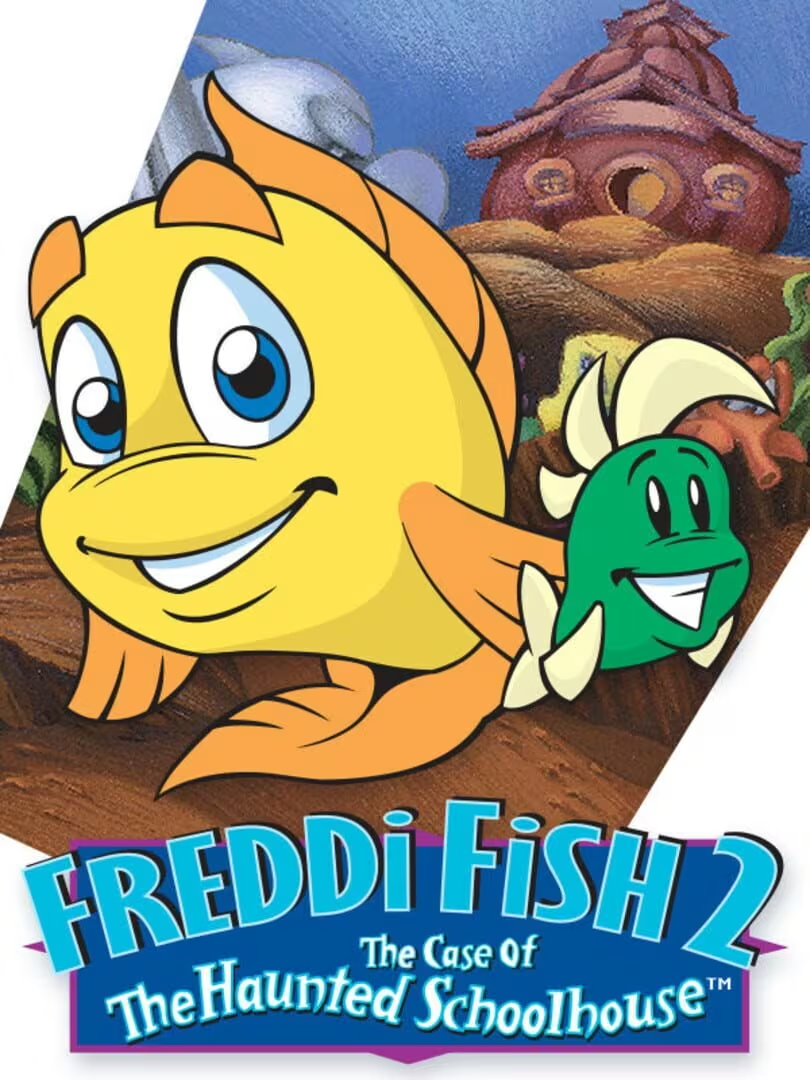 Freddi Fish 2: The Case of the Haunted Schoolhouse
"No violence; gameplay focuses on research, politics, and academic rivalry."
-
Survival
Game with the same Survival vibe
-3"No survival elements; gameplay occurs in stable, low-risk environments."
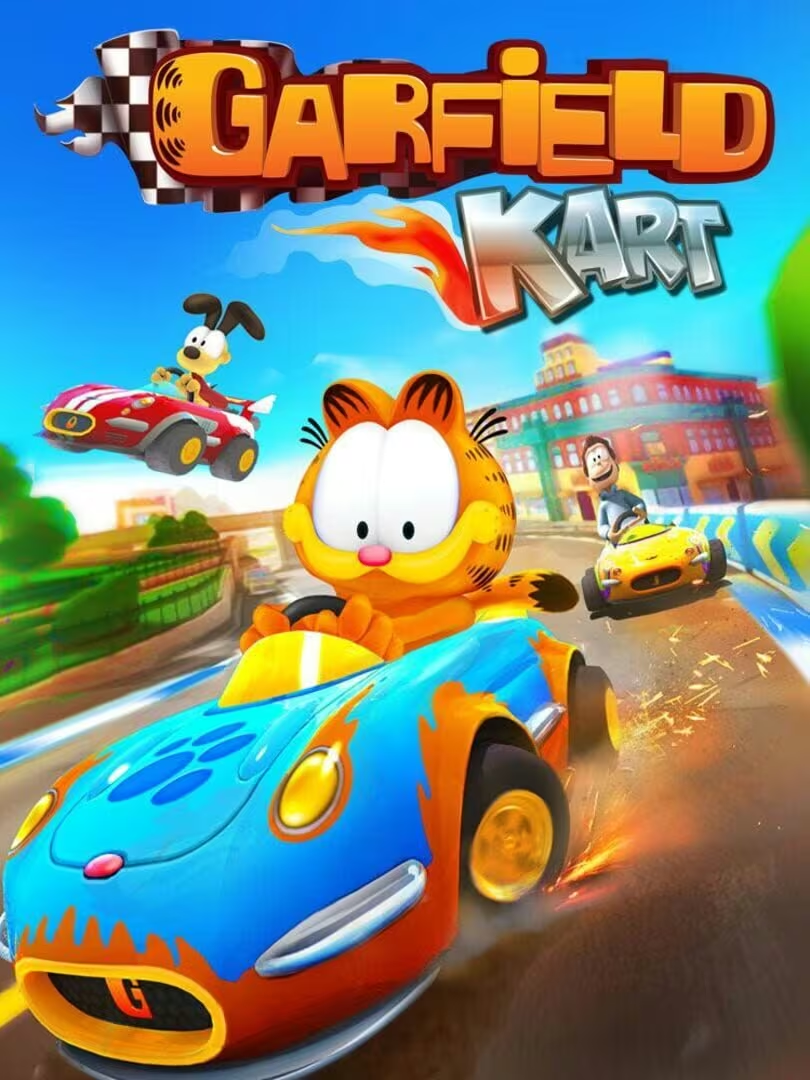 Garfield Kart
"No survival elements; gameplay occurs in stable, low-risk academic environment."
Last update: 01/06/2026