MHRD similar games & best alternatives
Should you play it?
MHRD is a hardware design game, in which you design various hardware circuits in a hardware description language. The hardware circuits you design get more complex as you go until you create a fully functional CPU design.
What works
- Educational and instructive on digital logic and cpu design
- Engaging logical puzzles with progressive difficulty
- Freedom to design and optimize circuits
- Retro aesthetic and immersive sound design
- Leaderboards for solution comparison
Things to keep in mind
- Short gameplay length with limited replay value
- Minimal user interface and editor limitations
- Lack of debugging tools and visualization
- No multiplayer or social features
- Some lag and input issues reported
What to play next
Similar games, hidden gems, and fresh directions from this game.
Top picks
Games that feel the closest overall



Hidden Gems
Less popular games with surprisingly high similarity
If you liked…
Recommendations by what you enjoyed most
Similarity map
Explore nearby similar games and see why they’re close.
MHRD: Less representative of its motivational profile, with noticeable differences. Motivations that often define this kind of title include Violence, Fantasy, Story, Thrill. Here, the score leans higher than usual among comparable games on Status, Competition. It leans lower than usual among comparable games on Continuation.
Why this game works
A motivational profile of the game, with the closest similar game for each player motivation.
-
Autonomy
Game with the same Autonomy vibe
4"Players have freedom to design and simulate their own circuits without preset goals or linear tasks, emphasizing personal control and creativity."
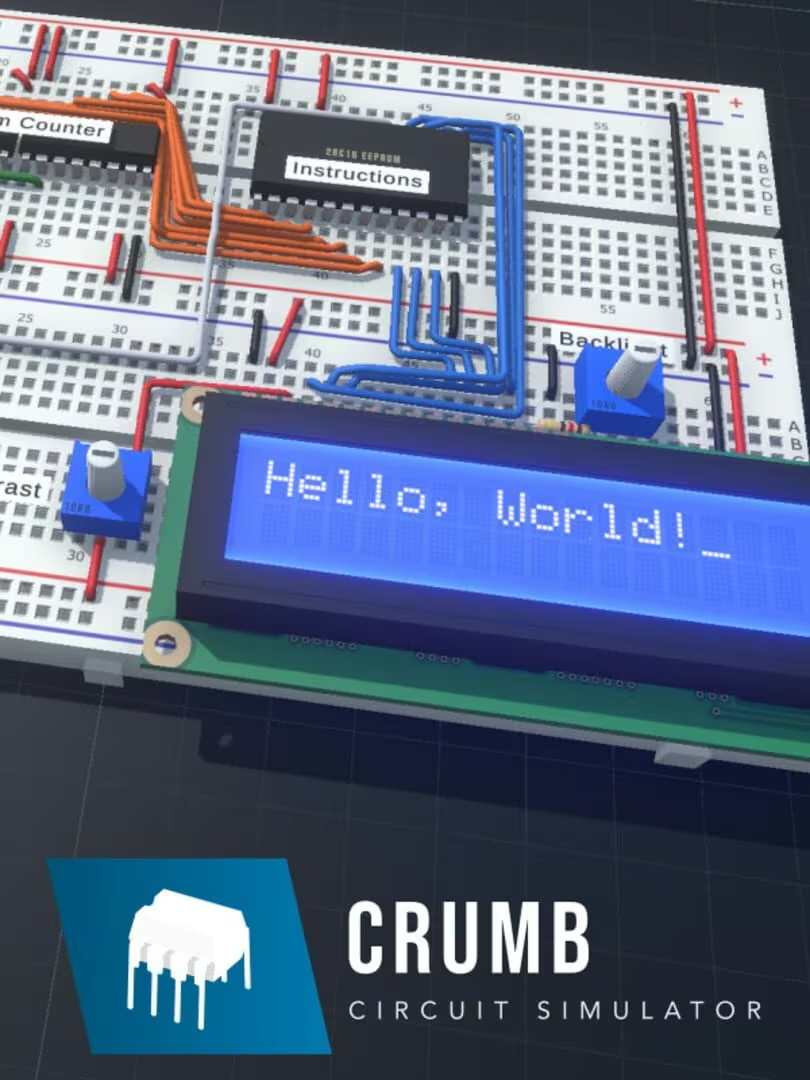 CRUMB Circuit Simulator
"Players have control over designing circuits and solutions, with freedom to optimize and revise designs."
-
Competence
Game with the same Competence vibe
5"The game demands high skill in logic, programming-like puzzle solving, and optimization with clear feedback on performance."
 SpaceChem
"Strong emphasis on mastering logic design, solving progressively complex puzzles, and receiving feedback on correctness."
-
Competition
Game with the same Competition vibe
2"Includes leaderboards and multiplayer modes for score competition, though many players focus on solo puzzle solving."
 Snood
Snood
"Includes leaderboards and comparisons of solutions (e.g. NAND count) but competition is secondary to learning and puzzle solving."
-
Continuation
Game with the same Continuation vibe
-2"Game is relatively short with limited replay value; players tend to finish campaign and move on."
 Tools Up!
"Game is relatively short and some players finish quickly; limited replay value beyond optimization."
-
Cooperation
Game with the same Cooperation vibe
-5"Entirely single-player with no cooperative or multiplayer elements."
 Touhou Luna Nights
"Entirely single-player with no cooperative or multiplayer elements."
-
Creativity
Game with the same Creativity vibe
4"Players design and optimize complex layouts and logic circuits, experimenting with routing and automation."
 Sintopia
"Players create and refine their own circuit designs from basic components."
-
Domination
Game with the same Domination vibe
-5"No elements of exerting control or superiority over others; cooperative and respectful experience."
 Shashingo: Learn Japanese with Photography
"No elements of exerting control or superiority over others; respectful and individual-focused."
-
Escapism
Game with the same Escapism vibe
3"Players use the game as a mental challenge and distraction, engaging deeply in abstract problem solving."
 Understand
"Players use the game as a mental challenge and distraction, enjoying focused problem solving."
-
Expectation
Game with the same Expectation vibe
-4"Players engage voluntarily out of interest and intrinsic motivation to solve puzzles."
 GRIDROAD
"Players engage voluntarily out of interest and intrinsic motivation to learn and solve puzzles."
-
Experimenting
Game with the same Experimenting vibe
4"Players try new coding strategies, circuit layouts, and optimizations, exploring mechanics and pushing limits."
 SHENZHEN I/O
"Encourages trying new circuit designs, testing optimizations, and exploring hardware description language."
-
Exploration
Game with the same Exploration vibe
-3"Linear progression with limited discovery; focus on story and puzzle battles rather than exploration."
 Cureocity
"Focused on known tasks and puzzles in a fixed progression rather than open-ended discovery."
-
Expression
Game with the same Expression vibe
-4"Minimal customization or self-expression; mostly standardized visuals and fixed character."
 Minutescape
"Uses standardized textual hardware description language; minimal cosmetic customization or self-expression."
-
Fantasy
Game with the same Fantasy vibe
-5"Grounded in realistic logic and deduction; no fictional or imaginative narrative elements."
 Hexcells Infinite
"Grounded in realistic digital logic and hardware design concepts; no fictional or fantastical elements."
-
Fellowship
Game with the same Fellowship vibe
-5"No social or community features; purely individual gameplay."
 Froggy's Battle
"No social or community features; strictly individual gameplay."
-
Growth
Game with the same Growth vibe
5"Strong focus on learning, skill acquisition, and personal development in computer science and logic."
 Turing Complete
"Strong focus on learning digital logic, hardware design, and personal skill development."
-
Health
Game with the same Health vibe
-5"Sedentary gameplay with no physical activity components."
 Stray
Stray
"Sedentary gameplay with no physical activity components."
-
Idle
Game with the same Idle vibe
-3"Requires focused attention and problem solving; not suited for casual or background play."
 Blocks That Matter
"Requires focused attention and problem solving; not suitable for casual or background play."
-
Intimacy
Game with the same Intimacy vibe
-5"No social or emotional relationship building; purely individual experience."
 BPM: BULLETS PER MINUTE
"No social or emotional relationship building; purely individual experience."
-
Leadership
Game with the same Leadership vibe
-5"No leadership or group management roles; individual puzzle solving only."
 Divide By Sheep
"No leadership or group management roles; individual puzzle solving only."
-
Progression
Game with the same Progression vibe
4"Players accumulate increasingly complex components and capabilities, progressing from gates to full CPUs."
Turing Complete
"Players accumulate increasingly complex circuit components culminating in building a CPU."
-
Relaxation
Game with the same Relaxation vibe
1"Some players find puzzles relaxing and engaging, others find certain puzzles frustrating."
 First Class Escape: The Train of Thought
"Some players find the logical puzzles relaxing, though others find it challenging and intense."
-
Sensation
Game with the same Sensation vibe
-3"Minimal sensory stimulation due to text-only format and lack of audiovisual effects."
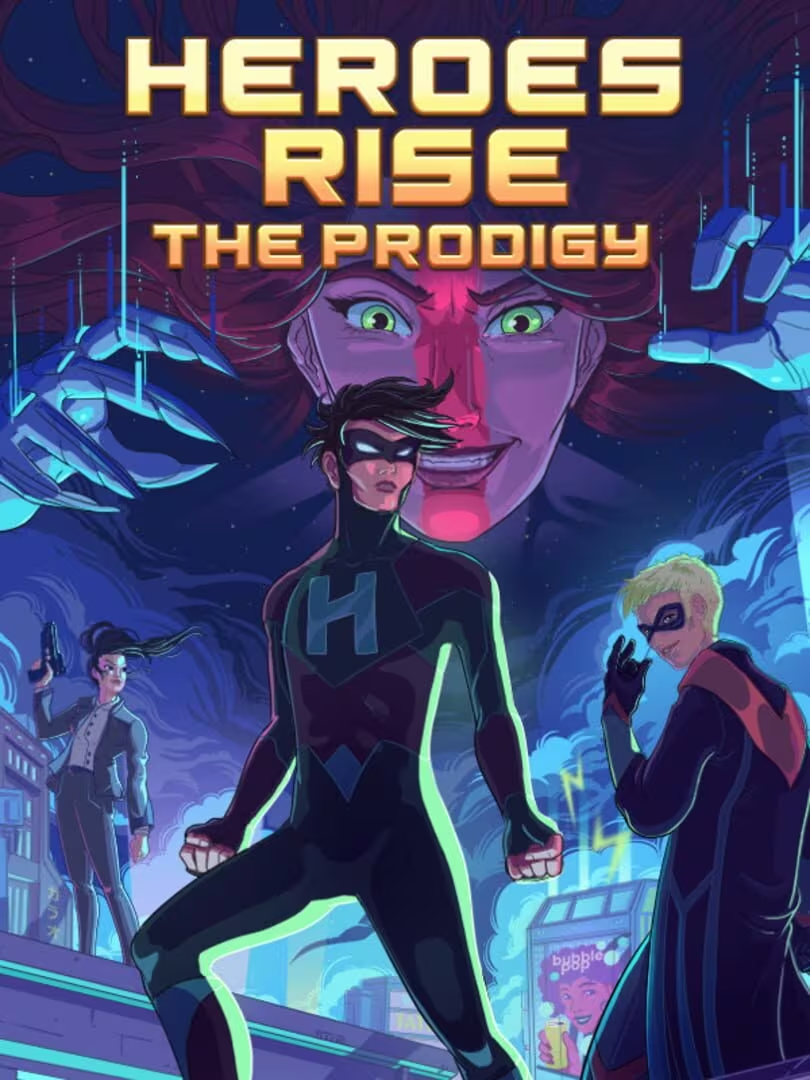 Heroes Rise: The Prodigy
"Minimal sensory stimulation; text-based interface with simple sounds and retro aesthetic."
-
Status
Game with the same Status vibe
2"Leaderboards offer some recognition, but social status is limited."
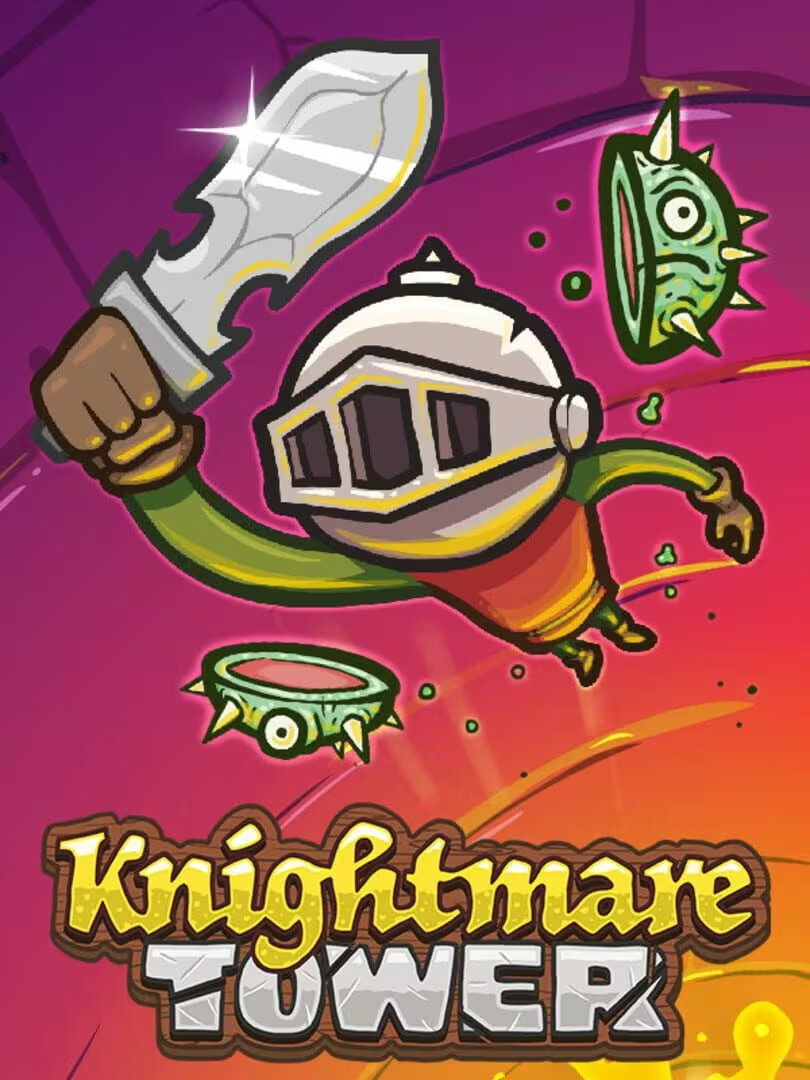 Knightmare Tower
"Leaderboards provide some recognition for efficient solutions, but social status is limited."
-
Story
Game with the same Story vibe
-4"Minimal narrative; focus is on puzzles rather than story immersion."
 A Little to the Left
"Minimal narrative or plot; focus is on technical puzzles rather than story immersion."
-
Strategy
Game with the same Strategy vibe
5"High mental challenge requiring logical reasoning, planning, and problem solving."
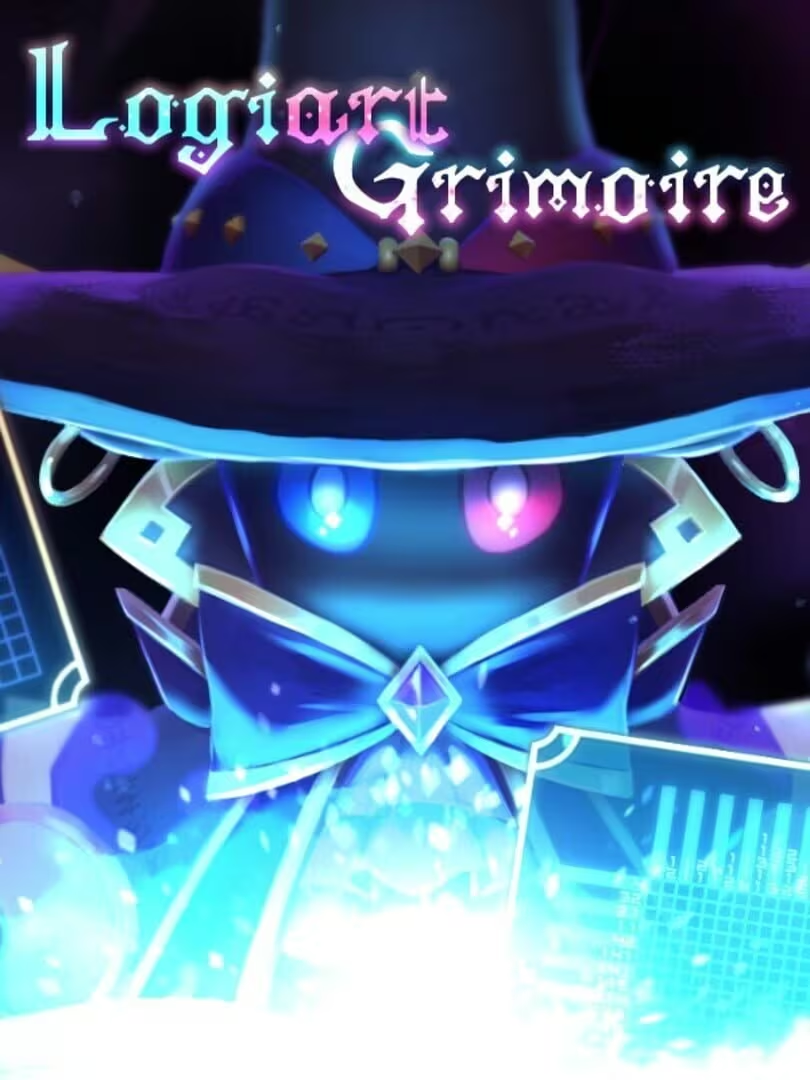 Logiart Grimoire
"High mental challenge requiring logical reasoning, planning, and problem solving."
-
Thrill
Game with the same Thrill vibe
-4"Low suspense or risk; steady emotional tone."
 NEKOPARA Vol. 3
"Low suspense or risk; steady intellectual challenge without emotional highs or lows."
-
Value
Game with the same Value vibe
3"Players perceive good value for price given the quality and experience despite short length."
 9 Childs Street
"Players perceive good educational and entertainment value for the price despite short length."
-
Violence
Game with the same Violence vibe
-5"No violence or destructive gameplay; focus on constructive and emotional experiences."
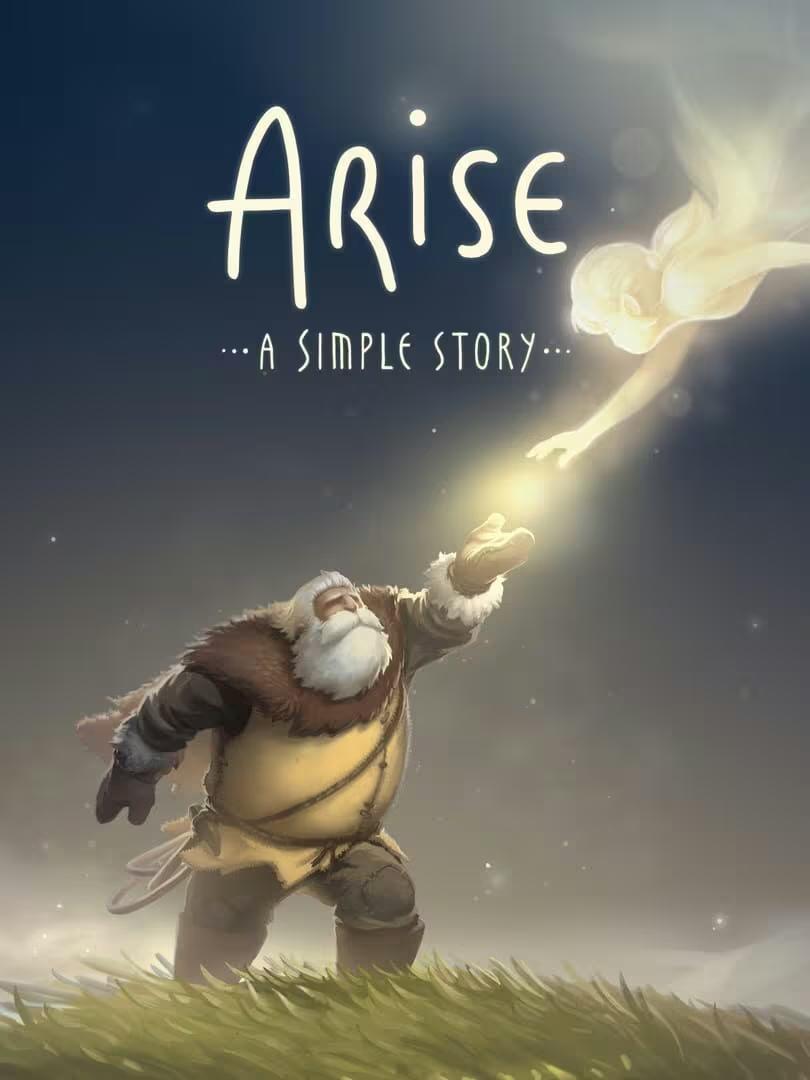 Arise: A Simple Story
"No violence or destructive gameplay; constructive and educational focus."
-
Survival
Game with the same Survival vibe
-5"No survival or threat elements; stable, low-risk puzzle environment."
 Cogs
Cogs
"No survival or threat elements; stable, low-risk puzzle environment."
Last update: 01/06/2026