Cogs similar games & best alternatives
Should you play it?
Cogs is a puzzle game where players build machines from sliding tiles. Players can choose from 50 levels and 3 gameplay modes. New puzzles are unlocked by building contraptions quickly and efficiently. Inventor Mode: Starting with simple puzzles, players are introduced to the widgets that are used to build machines gears, pipes,...
What works
- Challenging and varied puzzles
- Relaxing steampunk aesthetic
- Good replayability with multiple modes
- Well-polished and intuitive controls
- Affordable price
Things to keep in mind
- Timer and move limits can cause frustration
- Some find puzzles repetitive
- Lack of widescreen support
- No multiplayer or social features
- Music can be monotonous
What to play next
Similar games, hidden gems, and fresh directions from this game.
Top picks
Games that feel the closest overall


Hidden Gems
Less popular games with surprisingly high similarity
If you liked…
Recommendations by what you enjoyed most
Similarity map
Explore nearby similar games and see why they’re close.
Cogs: A very typical example of its motivational profile. Motivations that often define this kind of title include Violence, Fantasy, Story, Thrill. It leans lower than usual among comparable games on Expression, Story, Survival.
Why this game works
A motivational profile of the game, with the closest similar game for each player motivation.
-
Autonomy
Game with the same Autonomy vibe
4"Players have freedom to solve puzzles in multiple ways and choose their own approach to levels."
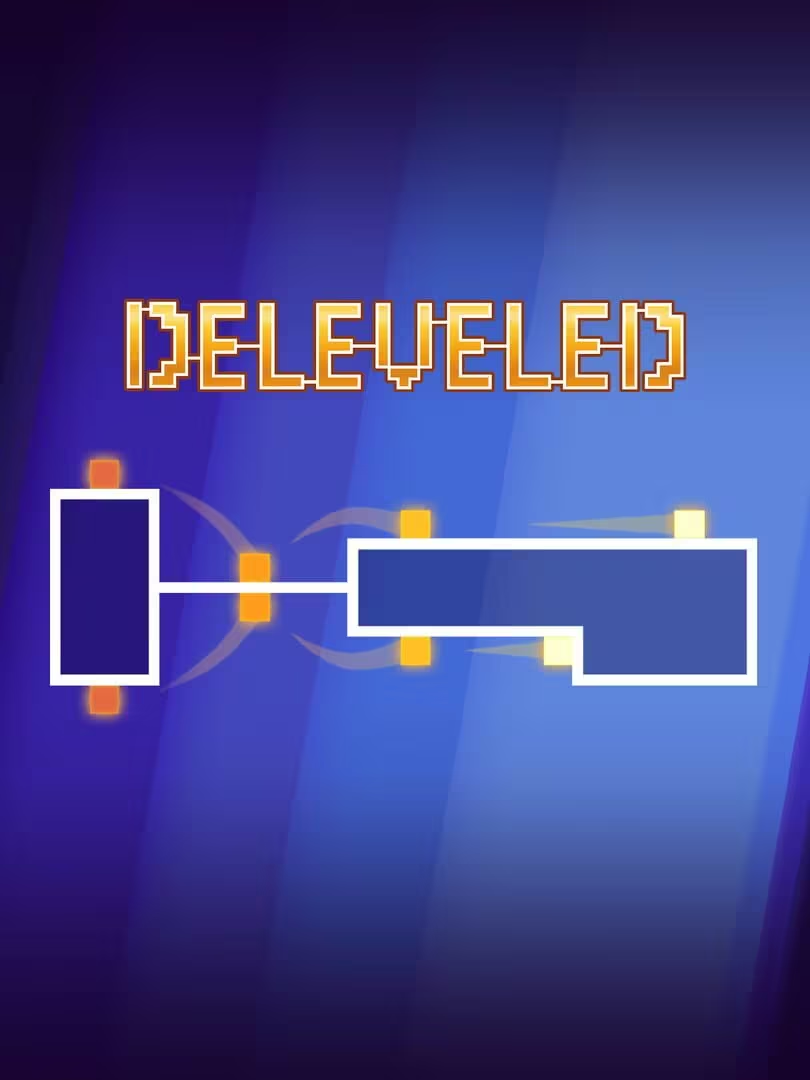 Deleveled
"Players freely choose how to solve puzzles, with multiple approaches and modes allowing self-directed play."
-
Competence
Game with the same Competence vibe
4"Challenging puzzles requiring skillful timing and problem solving with increasing difficulty."
 In Between
"Challenging puzzles with increasing difficulty and skill tests in timing and move efficiency."
-
Competition
Game with the same Competition vibe
-3"Focus is on personal puzzle solving and self-improvement rather than competing against others."
 Life Goes On: Done to Death
"Focus is on personal puzzle solving and self-improvement rather than direct competition with others."
-
Continuation
Game with the same Continuation vibe
3"Players report long play sessions and repeated retries on difficult puzzles, indicating sustained engagement."
 Delicious! Pretty Girls Mahjong Solitaire
"Many players report long playtimes and replaying puzzles to improve scores, indicating sustained engagement."
-
Cooperation
Game with the same Cooperation vibe
-5"Single-player puzzle game with no cooperative or multiplayer elements."
 Chuzzle Deluxe
"Single-player puzzle game with no cooperative or multiplayer elements."
-
Creativity
Game with the same Creativity vibe
2"Players experiment with tile manipulation and water flow to find solutions, though within a fixed puzzle structure and limited mechanics."
 Spring Falls
"Players creatively solve puzzles in multiple ways, but within predefined sliding tile mechanics."
-
Domination
Game with the same Domination vibe
-5"No elements of exerting control or superiority over others; purely individual puzzle solving."
 Hexologic
"No elements of exerting control or superiority over others; purely individual puzzle solving."
-
Escapism
Game with the same Escapism vibe
3"Players use the game as a relaxing, immersive mental challenge to escape daily stress."
 Hexcells Plus
"Players use the game as a relaxing, immersive mental challenge and stress relief."
-
Expectation
Game with the same Expectation vibe
-4"Players engage voluntarily for enjoyment and mental challenge, not out of obligation."
 Art Of Gravity
"Players engage voluntarily for enjoyment and mental challenge, not out of obligation."
-
Experimenting
Game with the same Experimenting vibe
3"Varied puzzle mechanics encourage trying new strategies and approaches."
 Labyrinthine Dreams
"Varied puzzle mechanics encourage trying different strategies and approaches."
-
Exploration
Game with the same Exploration vibe
-2"Puzzle environments are abstract and consistent; discovery is more about mechanics than new areas."
 Cubot
Cubot
"Puzzle environments are fixed and familiar; discovery is about solutions rather than new areas."
-
Expression
Game with the same Expression vibe
-4"Limited customization or self-expression; focus is on puzzle solving within preset design."
 Unmechanical
"Minimal customization or self-expression; focus is on puzzle solving within set designs."
-
Fantasy
Game with the same Fantasy vibe
-3"Focuses on realistic mechanical concepts and physics rather than imaginative fiction."
 Idling Gears
"Steampunk aesthetic but grounded in realistic mechanical puzzles rather than imaginative fiction."
-
Fellowship
Game with the same Fellowship vibe
-5"No social or community features; entirely single-player experience."
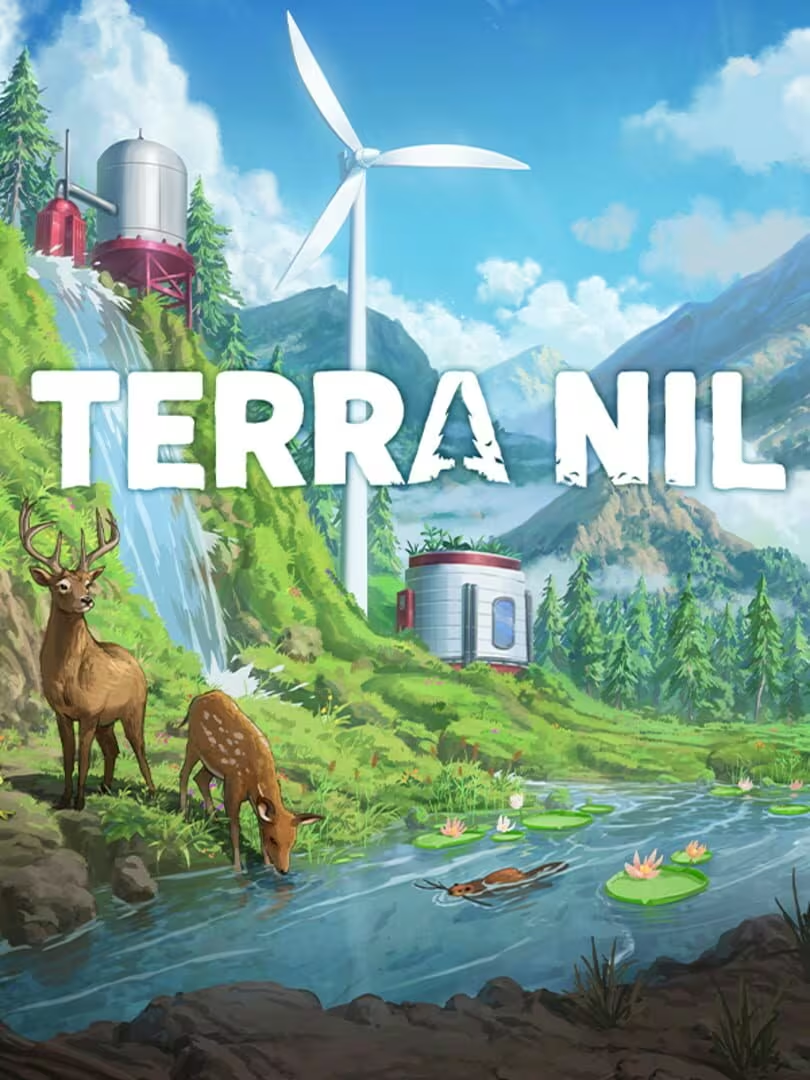 Terra Nil
"No social or community features; entirely single-player experience."
-
Growth
Game with the same Growth vibe
4"Players develop problem-solving skills, spatial reasoning, and learn new mechanics progressively."
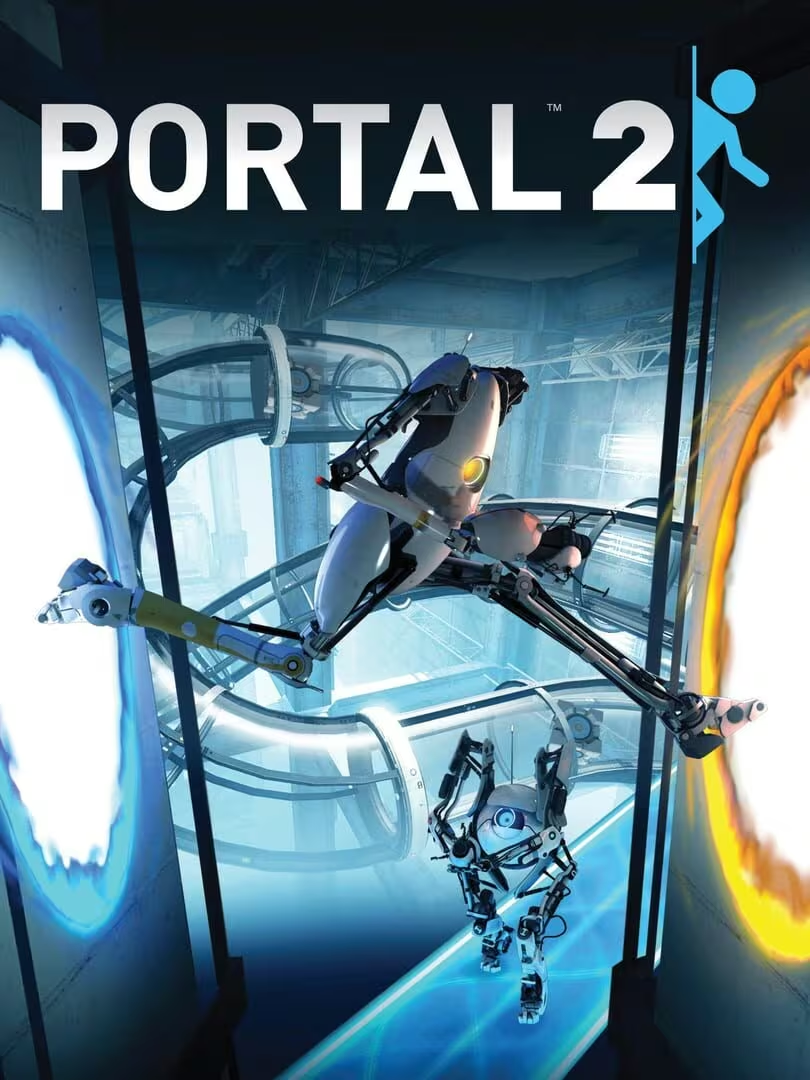 Portal 2
"Players develop spatial reasoning, problem-solving skills, and improve through practice."
-
Health
Game with the same Health vibe
-5"Sedentary puzzle gameplay with no physical activity involved."
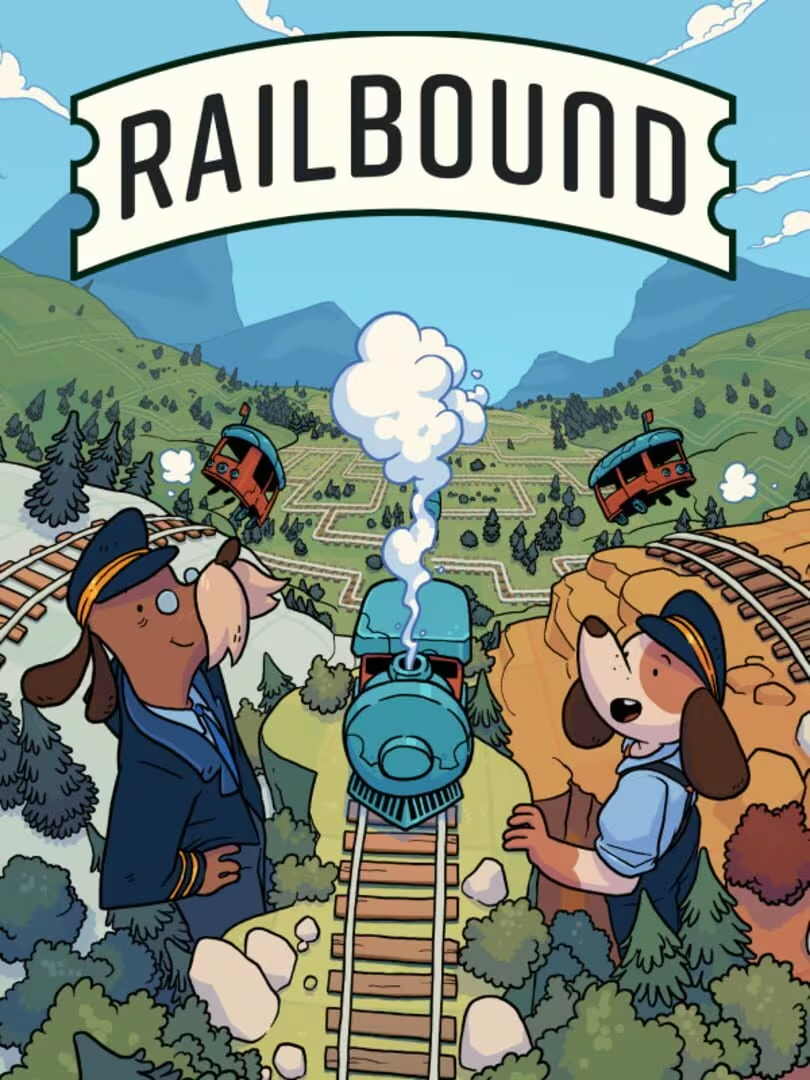 Railbound
"Sedentary puzzle gameplay with no physical activity involved."
-
Idle
Game with the same Idle vibe
-3"Requires focused attention and problem solving; not suited for passive or background play."
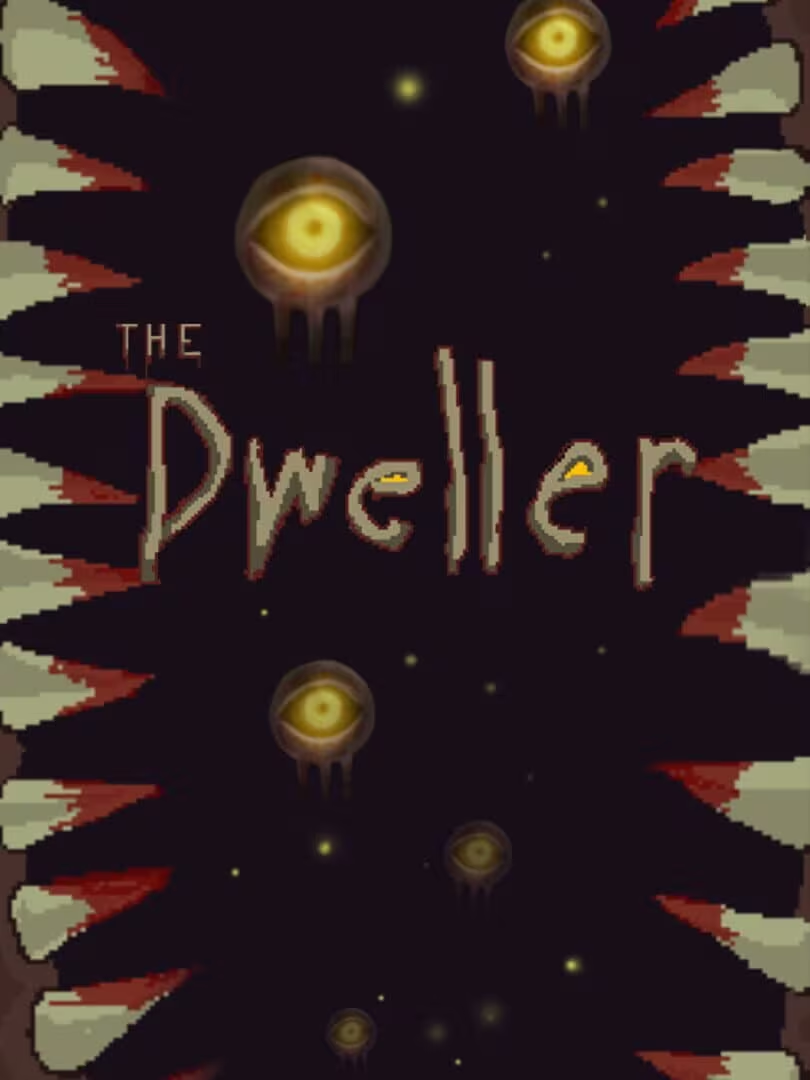 The Dweller
"Requires focused attention and thoughtful problem solving; not suited for passive or background play."
-
Intimacy
Game with the same Intimacy vibe
-5"No social or emotional relationship building; purely individual gameplay."
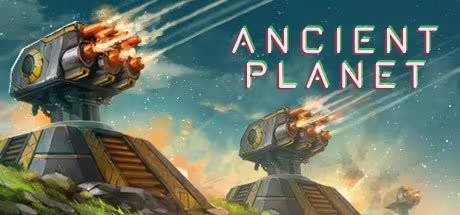 Ancient Planet Tower Defense
"No social or emotional relationship building; purely individual gameplay."
-
Leadership
Game with the same Leadership vibe
-5"No leadership or group management roles; single-player puzzle solving only."
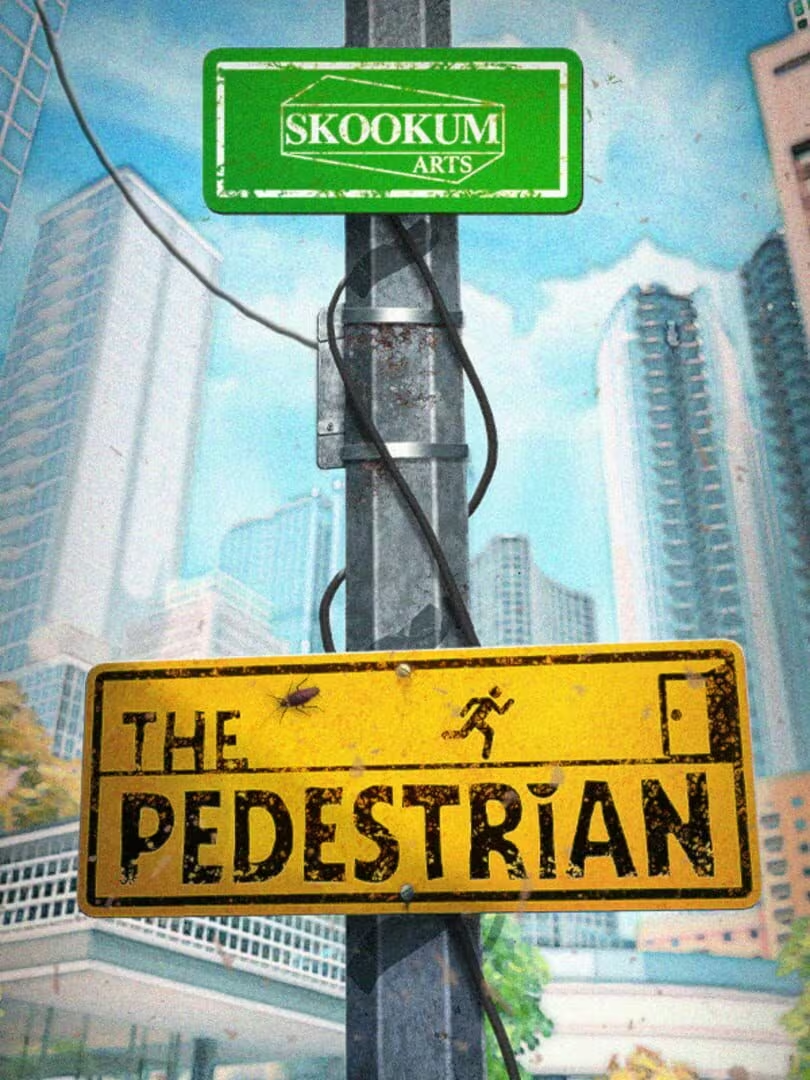 The Pedestrian
"No leadership or group management roles; single-player puzzle solving only."
-
Progression
Game with the same Progression vibe
3"Progression through unlocking and completing puzzles, but no item collection or upgrades."
 CrossCells
"Progression through unlocking puzzles and earning medals, though no item collection or upgrades."
-
Relaxation
Game with the same Relaxation vibe
3"Many players find the game relaxing and zen-like, though some modes and challenges induce tension and focus."
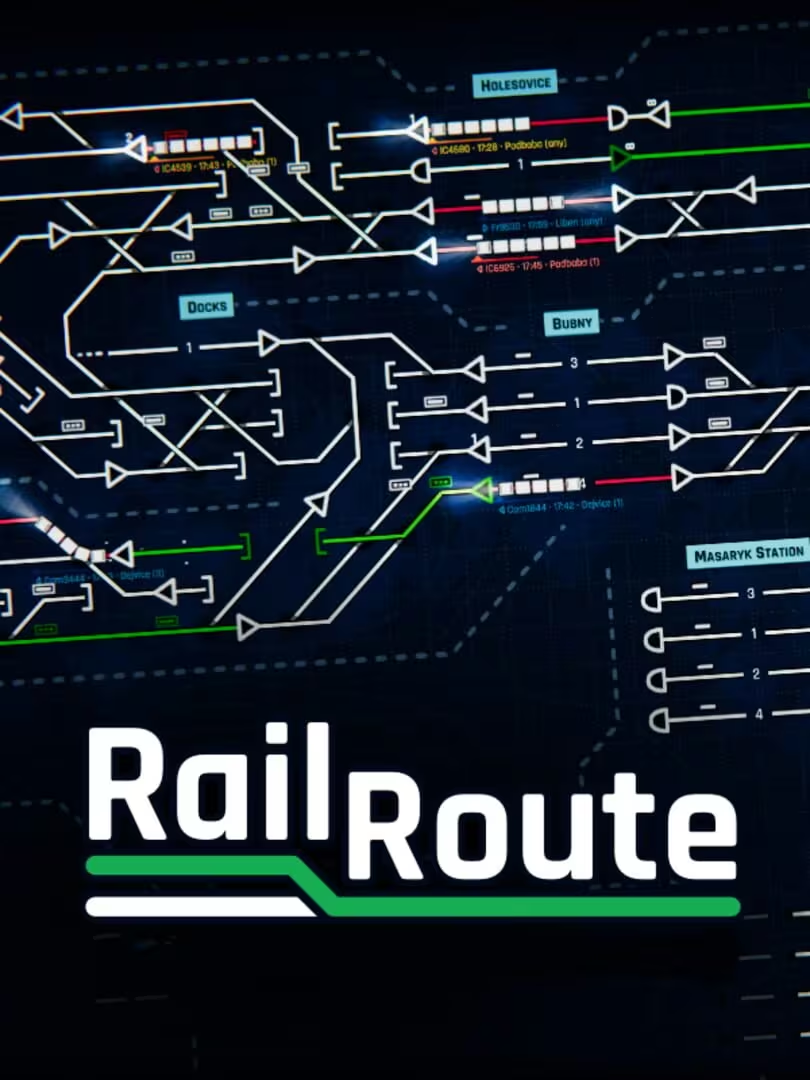 Rail Route
"Many players find the game relaxing and zen-like despite some timed challenges."
-
Sensation
Game with the same Sensation vibe
2"Pleasant visuals and sound design provide moderate sensory enjoyment."
 Isle of Arrows
"Pleasant steampunk visuals and sound design provide moderate sensory enjoyment."
-
Status
Game with the same Status vibe
-5"No social recognition or status elements; achievements are personal and private."
 TEST TEST TEST
"No social recognition or status elements; achievements are personal."
-
Story
Game with the same Story vibe
-5"No narrative or plot; purely context-free puzzle gameplay."
 Pixel Puzzles 2: Anime
"No narrative or story elements; purely context-free puzzle gameplay."
-
Strategy
Game with the same Strategy vibe
4"Requires logical planning, spatial reasoning, and problem solving to complete puzzles."
Railbound
"Requires logical thinking, planning moves, and spatial reasoning to solve puzzles efficiently."
-
Thrill
Game with the same Thrill vibe
-2"Game is mostly calm and controlled; timed modes add some tension but are optional."
 Galaxy Burger
"Some timed modes add mild tension, but overall gameplay is calm and methodical."
-
Value
Game with the same Value vibe
4"Players report good value for price with satisfying gameplay and replayability."
 Shardpunk
"Players report good value for price with many puzzles and replayability."
-
Violence
Game with the same Violence vibe
-5"No violence; gameplay is constructive and puzzle-based."
 Qbeh-1: The Atlas Cube
"No violence; gameplay is constructive and puzzle-based."
-
Survival
Game with the same Survival vibe
-5"No survival or threat elements; stable, low-risk puzzle environment."
 Hexcells Infinite
"No survival or threat elements; stable, low-risk puzzle environment."
Last update: 01/06/2026