Logic Bombs similar games & best alternatives
Should you play it?
Welcome to a realm of pure logic, where rules are rules and the next step can always be deduced.
What works
- Deep and challenging logic puzzles
- Large amount of handcrafted content
- Pure logic with no guesswork required
- Addictive and satisfying gameplay
- Excellent value for price
Things to keep in mind
- Lack of quality-of-life features (undo, note-taking)
- Minimal tutorial and explanation
- Barebones presentation and ui
- Some puzzles can be frustratingly difficult
- No social or multiplayer features
What to play next
Similar games, hidden gems, and fresh directions from this game.
Top picks
Games that feel the closest overall
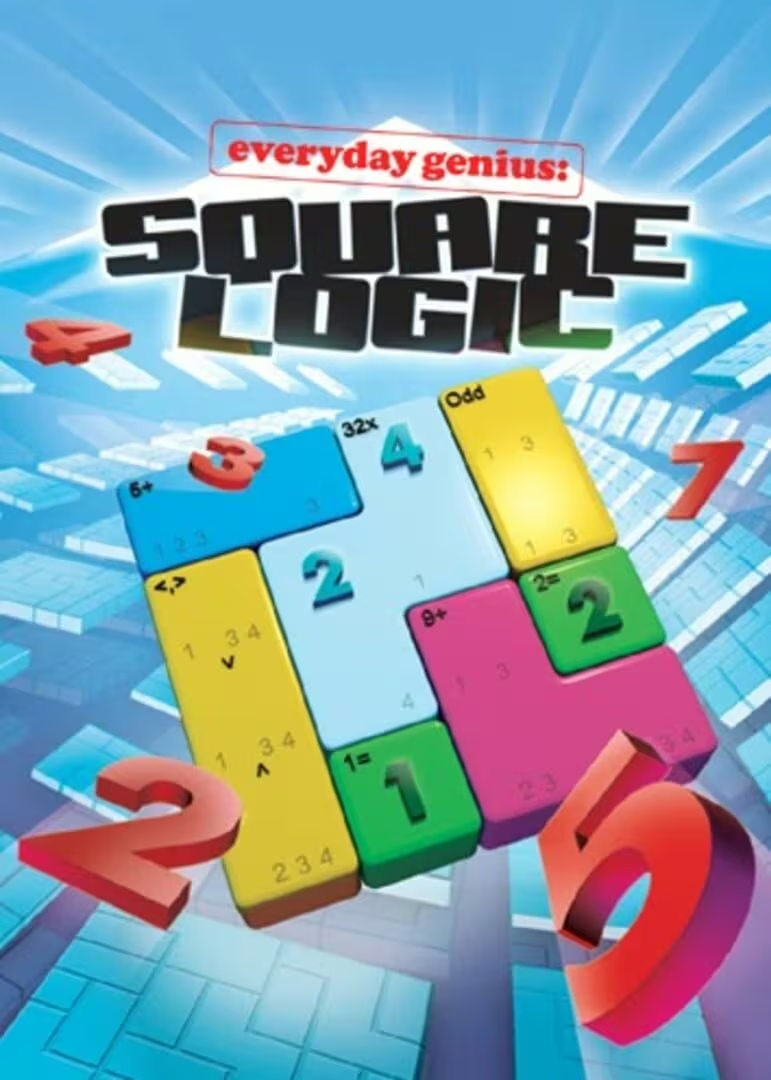
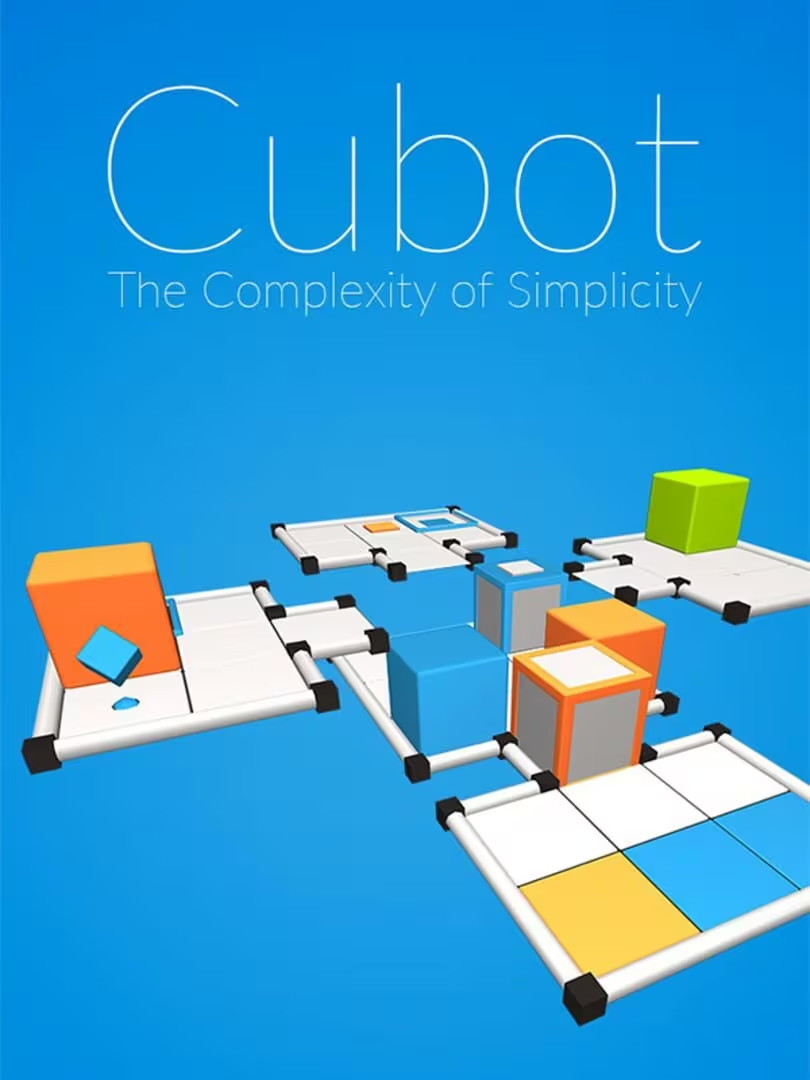


Hidden Gems
Less popular games with surprisingly high similarity
If you liked…
Recommendations by what you enjoyed most
Similarity map
Explore nearby similar games and see why they’re close.
Logic Bombs: Broadly representative of its motivational profile, with a few distinct shifts. Motivations that often define this kind of title include Violence, Fantasy, Story, Thrill. It leans lower than usual among comparable games on Expression, Exploration, Story.
Why this game works
A motivational profile of the game, with the closest similar game for each player motivation.
-
Autonomy
Game with the same Autonomy vibe
4"Players have full control over their moves and decisions in puzzle solving, with no automatic or preset routines."
 Chip's Challenge 1
"Players have full control over their puzzle-solving approach and decisions, with no forced routines or guesswork required."
-
Competence
Game with the same Competence vibe
5"The game challenges players with complex logic puzzles requiring skillful deduction and problem-solving, with feedback on correctness."
 14 Minesweeper Variants
"The game challenges players with complex logic puzzles requiring skillful deduction and provides clear feedback on correctness."
-
Competition
Game with the same Competition vibe
-4"Focus is on individual puzzle solving at personal pace without leaderboards or direct player comparison."
 Viewfinder
"Focus is on individual puzzle solving at personal pace without leaderboards or direct player comparison."
-
Continuation
Game with the same Continuation vibe
4"Many players report addictive gameplay with long sessions and additional daily puzzles encouraging habitual play."
 LOK Digital
"Players report addictive quality with long play sessions and habitual engagement to solve many puzzles."
-
Cooperation
Game with the same Cooperation vibe
-5"Entirely single-player experience focused on individual narrative without multiplayer or cooperative play."
 Life is Strange - Episode 1
"Entirely single-player experience focused on individual logical deduction without multiplayer or collaboration."
-
Creativity
Game with the same Creativity vibe
2"Players engage in logical deduction and pattern recognition, but no creation or modification of game content."
 Proverbs
"Players can explore different logical strategies and approaches, but no direct creation or modification of game content."
-
Domination
Game with the same Domination vibe
-5"No elements of exerting control or superiority over others; purely personal puzzle solving."
 The Talos Principle VR
"No elements of exerting control or superiority over others; purely personal puzzle solving."
-
Escapism
Game with the same Escapism vibe
3"Players use the game as a relaxing mental challenge and distraction from daily life."
 Classic Sudoku
"Players use the game as a relaxing mental challenge and distraction from daily life stress."
-
Expectation
Game with the same Expectation vibe
-4"Players engage voluntarily out of intrinsic interest and enjoyment of logic puzzles."
 Hexcells Infinite
"Players engage voluntarily out of intrinsic interest and enjoyment of logic puzzles."
-
Experimenting
Game with the same Experimenting vibe
3"Players experiment with logical deductions and new puzzle mechanics introduced progressively."
 Hexcells
"Players experiment with new logical deductions and strategies to solve puzzles."
-
Exploration
Game with the same Exploration vibe
-3"Gameplay involves known grids and categories; little discovery beyond puzzle solving."
 Wordle 4
"Game consists of known puzzle grids; discovery is about logical relations rather than new areas."
-
Expression
Game with the same Expression vibe
-4"Minimal customization or personalization options; presentation is standardized."
 Last Horizon
"Minimal customization or personalization; presentation is standardized and utilitarian."
-
Fantasy
Game with the same Fantasy vibe
-4"The game is abstract and puzzle-based without narrative or fictional roleplaying elements."
 RUSH
RUSH
"Game is abstract and realistic in logic puzzle terms; thematic elements are minimal and serve mechanics."
-
Fellowship
Game with the same Fellowship vibe
-5"No social or community features; play is solitary and individual."
 BalanCity
"No social or community features; play is solitary and independent."
-
Growth
Game with the same Growth vibe
5"Strong emphasis on learning new techniques and improving logical reasoning skills."
Classic Sudoku
"Strong emphasis on learning rules, developing logical reasoning skills, and personal improvement."
-
Health
Game with the same Health vibe
-5"Sedentary puzzle gameplay with no physical activity component."
 Void Stranger
"Sedentary puzzle gameplay with no physical activity component."
-
Idle
Game with the same Idle vibe
-3"Requires focused attention and mental engagement; not suitable for passive or background play."
 English Country Tune
"Requires focused attention and deliberate thought; not suitable for passive or background play."
-
Intimacy
Game with the same Intimacy vibe
-5"No social interactions or relationship building; purely individual experience."
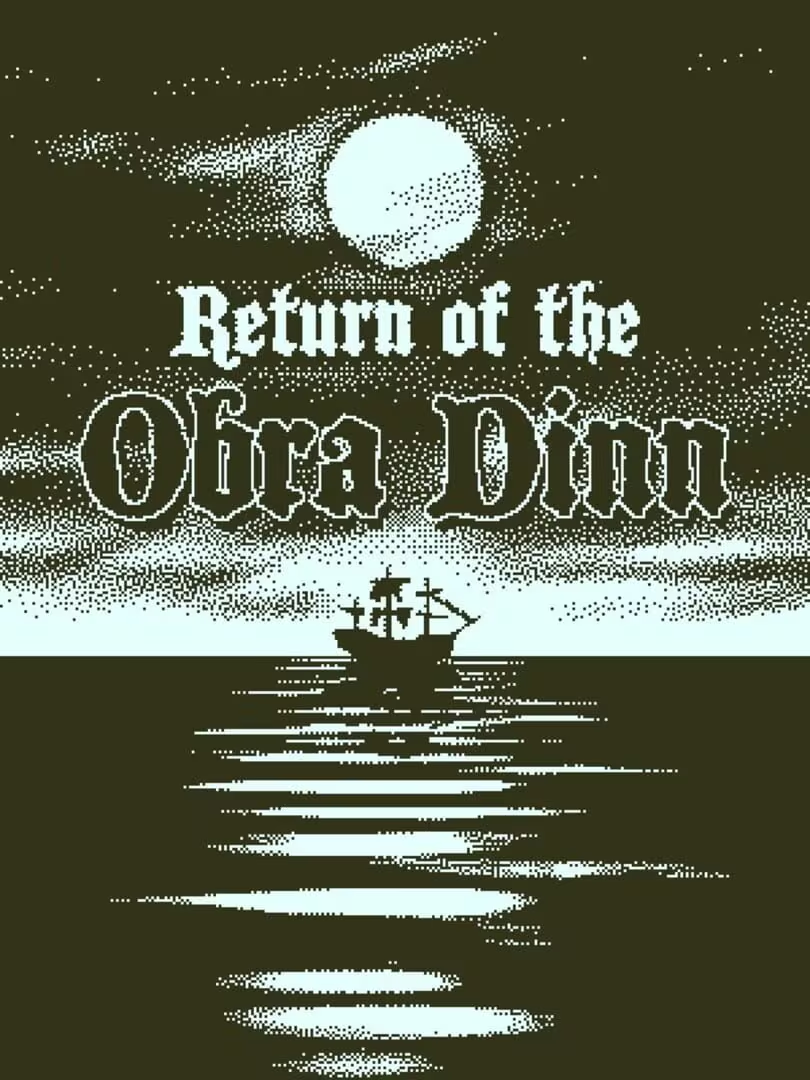 Return of the Obra Dinn
"No social interactions or relationship building; purely individual experience."
-
Leadership
Game with the same Leadership vibe
-5"No leadership or group management roles; single-player puzzle solving only."
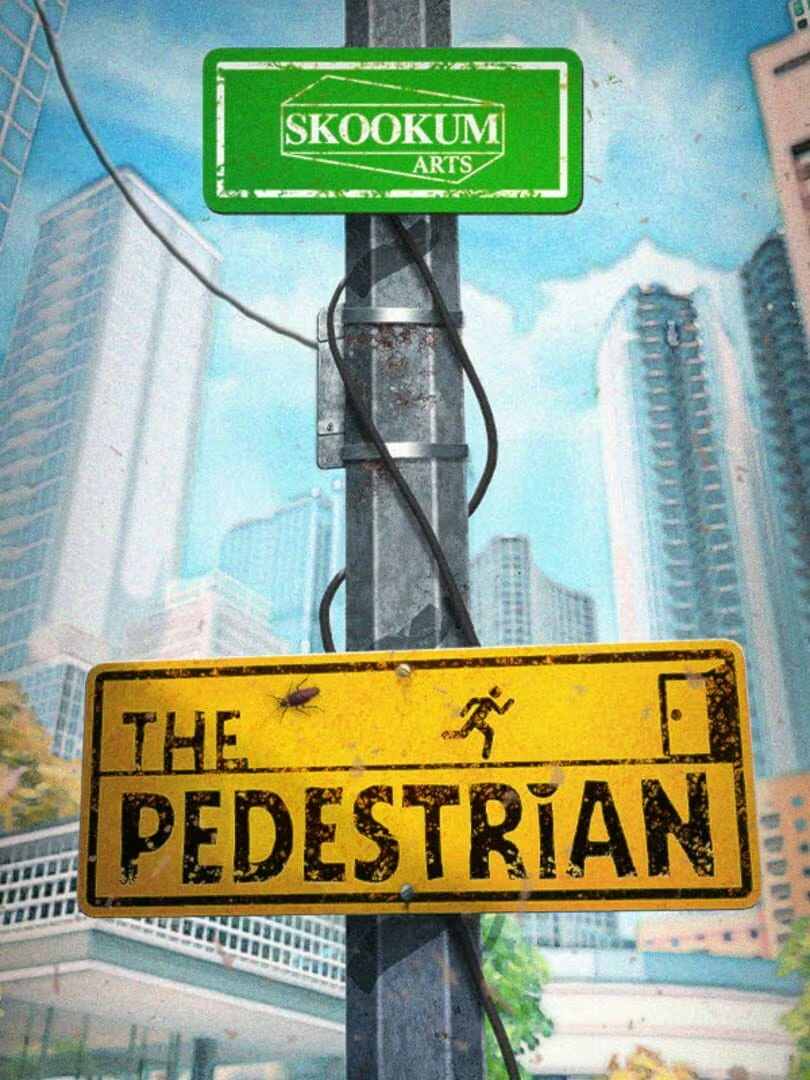 The Pedestrian
"No leadership or group management roles; single-player puzzle solving only."
-
Progression
Game with the same Progression vibe
3"Players progress through increasingly complex puzzles and unlock new components and challenges."
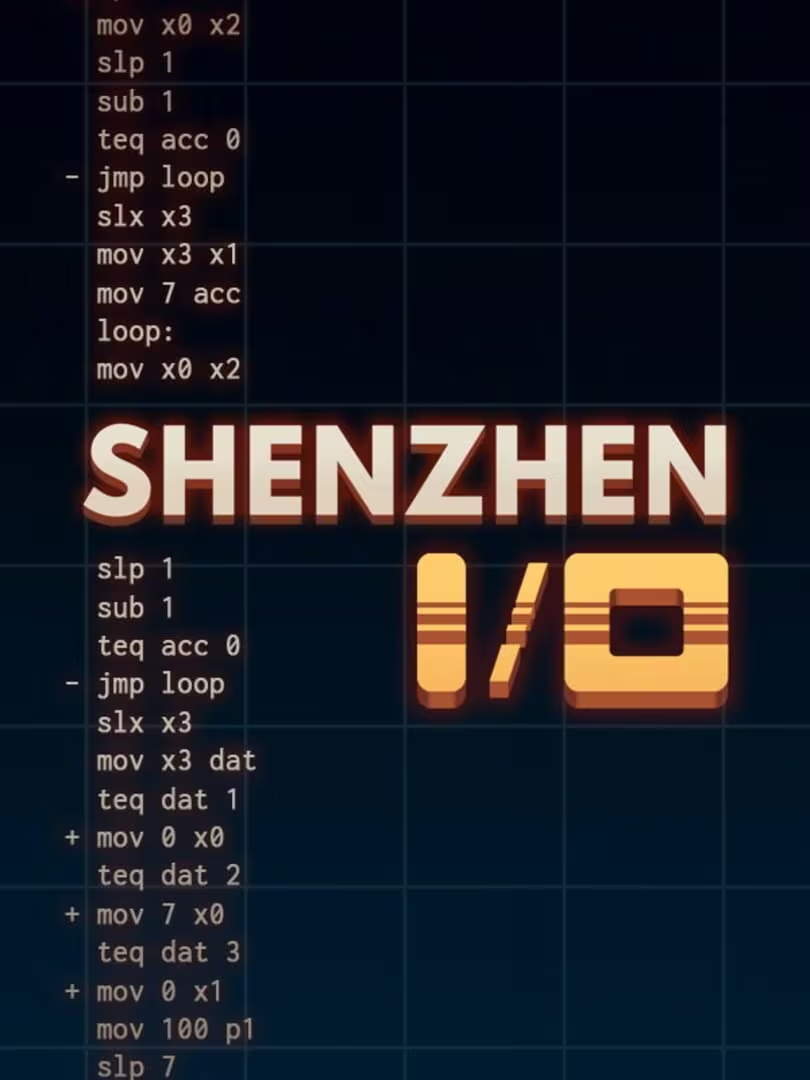 SHENZHEN I/O
"Players progress through a large set of puzzles, unlocking new challenges and concepts."
-
Relaxation
Game with the same Relaxation vibe
3"Some players find the game relaxing and enjoyable despite occasional challenging puzzles."
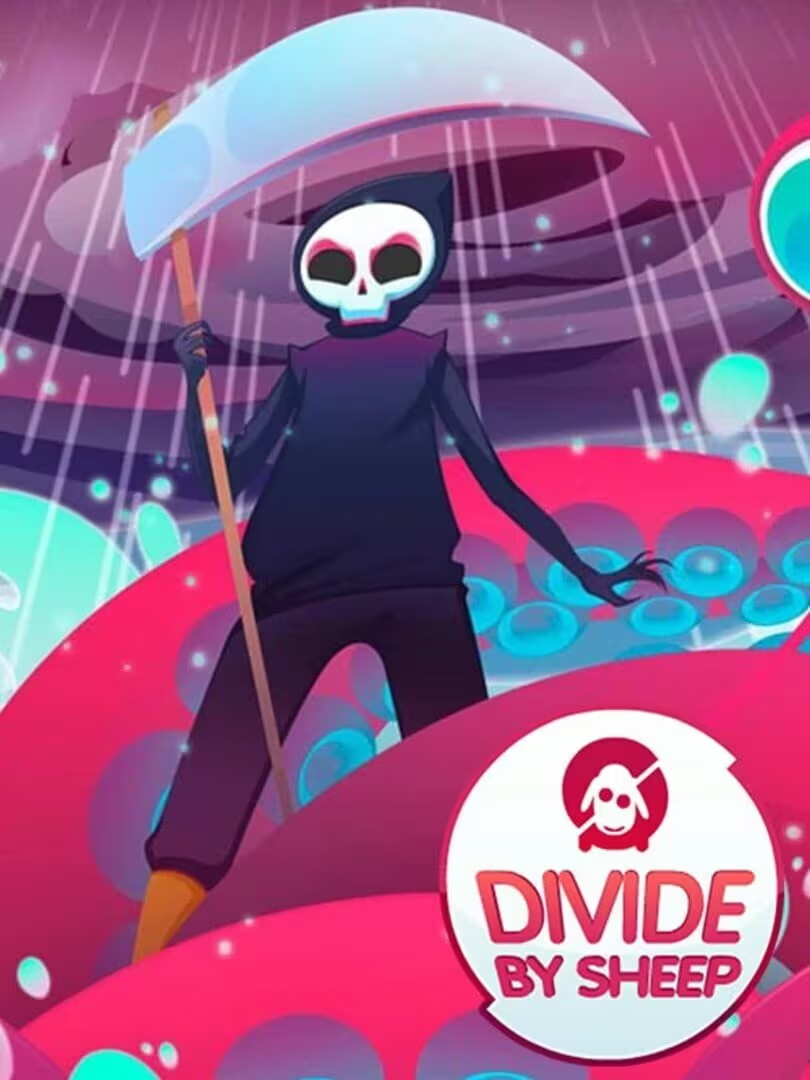 Divide By Sheep
"Many players find the game relaxing and satisfying, though some puzzles can be mentally intense."
-
Sensation
Game with the same Sensation vibe
1"Basic pixel art and sound effects provide modest sensory stimulation without intense excitement."
 Reprisal Universe
"Minimal sensory stimulation; simple sound effects and pixel art provide modest emotional engagement."
-
Status
Game with the same Status vibe
-5"No social recognition or status systems; achievements are personal and private."
 My Winter Car
"No social recognition or status systems; achievements are personal and private."
-
Story
Game with the same Story vibe
-5"No narrative or story elements; gameplay is context-free and focused on social deduction."
 Just Act Natural
"No narrative or plot; gameplay is context-free logical deduction."
-
Strategy
Game with the same Strategy vibe
5"High mental challenge requiring planning, logical reasoning, and problem solving."
 Snakebird
"High mental challenge requiring planning, reasoning, and problem solving."
-
Thrill
Game with the same Thrill vibe
-3"Low suspense or risk; puzzles are predictable with no real danger."
 Zen Chess: Mate in One
"Low suspense or risk; puzzles are controlled and predictable logical challenges."
-
Value
Game with the same Value vibe
5"Players report excellent value for money with many hours of engaging content."
 Magic Research
"Players report excellent value for money with many hours of quality content."
-
Violence
Game with the same Violence vibe
-5"No violence; gameplay focuses on constructive logical deduction."
 Bombe
Bombe
"Violence is purely thematic and symbolic; gameplay focuses on constructive logical placement."
-
Survival
Game with the same Survival vibe
-5"No survival or threat elements; stable and safe puzzle environment."
 Pictopix
"No survival or threat elements; stable and safe puzzle environment."
Last update: 01/06/2026