CrossCells similar games & best alternatives
Should you play it?
CrossCells is an ambient logic puzzle game.
What works
- Challenging and well-designed puzzles
- Calming and minimalistic presentation
- Logical deduction without guessing required
- Good value for price
- Quality audio feedback and music
Things to keep in mind
- Short total playtime
- Lack of undo or reset buttons
- No dark mode by default
- Some puzzles require mental juggling of many numbers
- No multiplayer or community features
What to play next
Similar games, hidden gems, and fresh directions from this game.
Top picks
Games that feel the closest overall



Hidden Gems
Less popular games with surprisingly high similarity
If you liked…
Recommendations by what you enjoyed most
Similarity map
Explore nearby similar games and see why they’re close.
CrossCells: Broadly representative of its motivational profile, with a few distinct shifts. Motivations that often define this kind of title include Violence, Fantasy, Story, Thrill. It leans lower than usual among comparable games on Expression, Fantasy, Exploration.
Why this game works
A motivational profile of the game, with the closest similar game for each player motivation.
-
Autonomy
Game with the same Autonomy vibe
4"Players freely decide which cells to mark or remove, solving puzzles through logical deduction without forced routines."
 SquareCells
"Players have freedom to decide which cells to activate or deactivate and solve puzzles through logical deduction without forced routines."
-
Competence
Game with the same Competence vibe
4"The game challenges players with progressively difficult puzzles requiring skillful logical reasoning and problem solving."
SquareCells
"The game challenges players with progressively harder puzzles requiring mental arithmetic and logical reasoning, providing a sense of achievement."
-
Competition
Game with the same Competition vibe
-4"Focus is on individual puzzle solving at personal pace without leaderboards or direct competition."
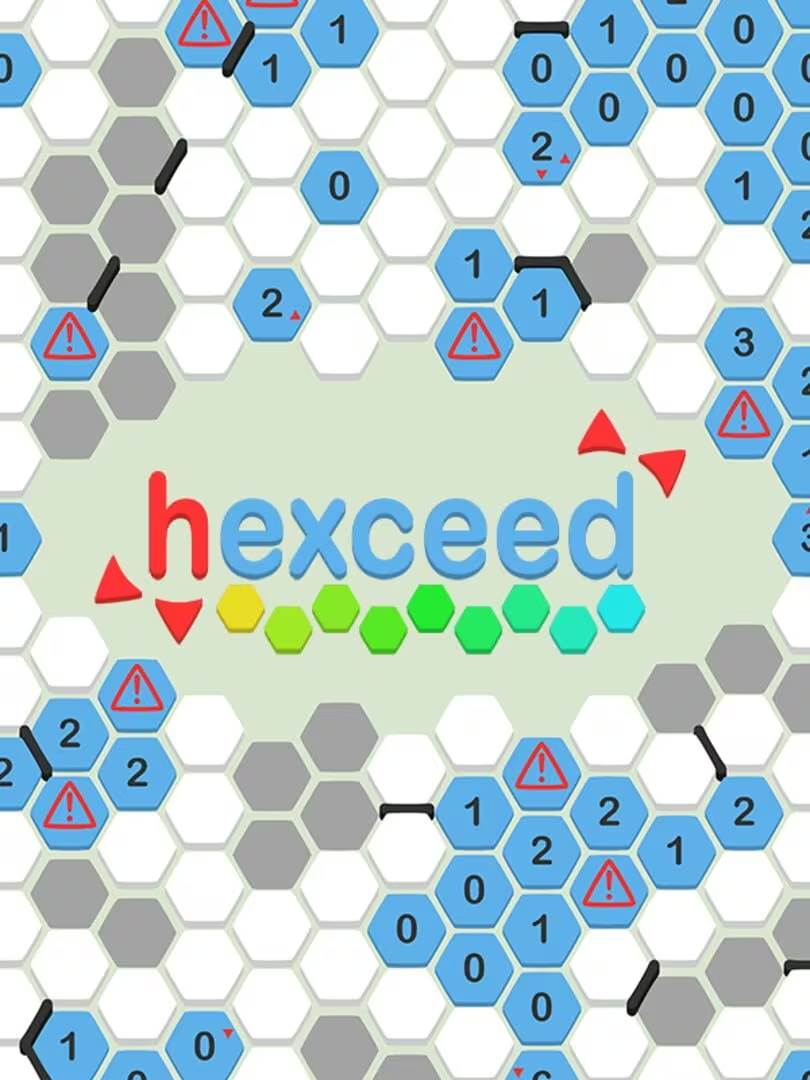 hexceed
"Focus is on individual puzzle solving at personal pace without leaderboards or direct competition."
-
Continuation
Game with the same Continuation vibe
1"Short play sessions around 10-30 minutes; some players enjoy replaying or DLC but overall limited habitual play."
 100 Romantic Cats
"Players tend to play in sessions lasting a few hours; some mention short total playtime but enjoy replaying or returning later."
-
Cooperation
Game with the same Cooperation vibe
-5"Entirely single-player with no cooperative or multiplayer elements."
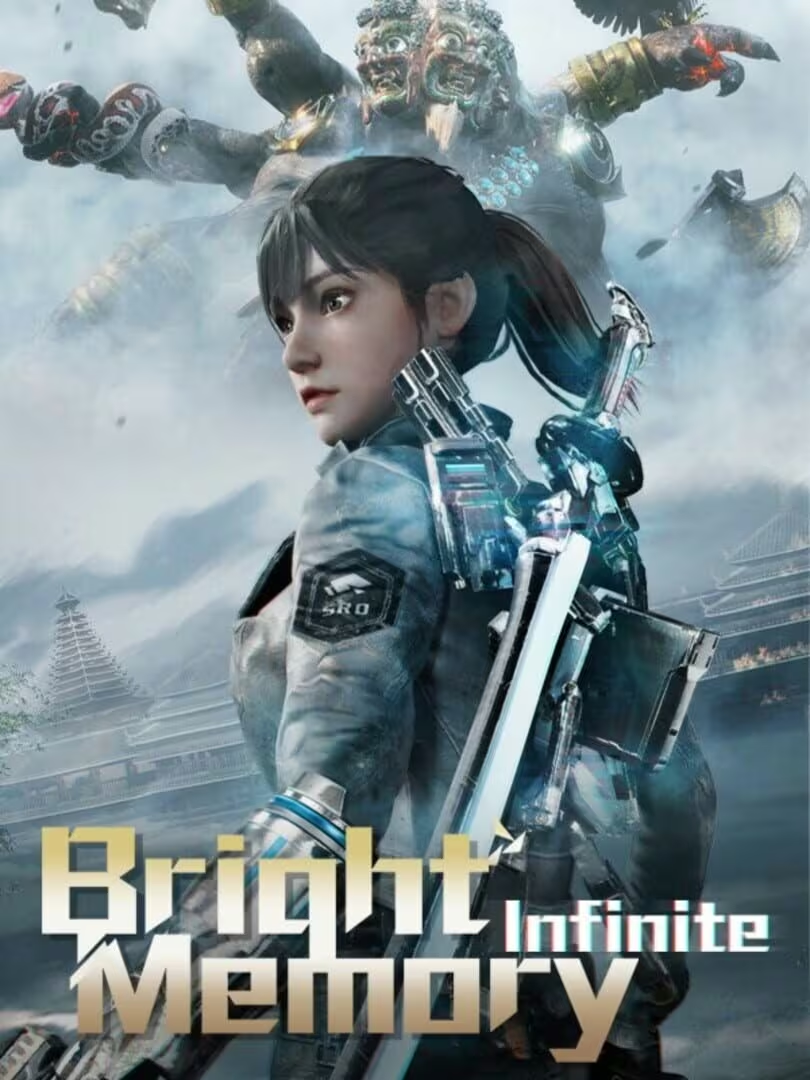 Bright Memory: Infinite
"Entirely single-player with no cooperative or multiplayer elements."
-
Creativity
Game with the same Creativity vibe
2"Players can experiment with different puzzle solutions and approaches, though within designed constraints."
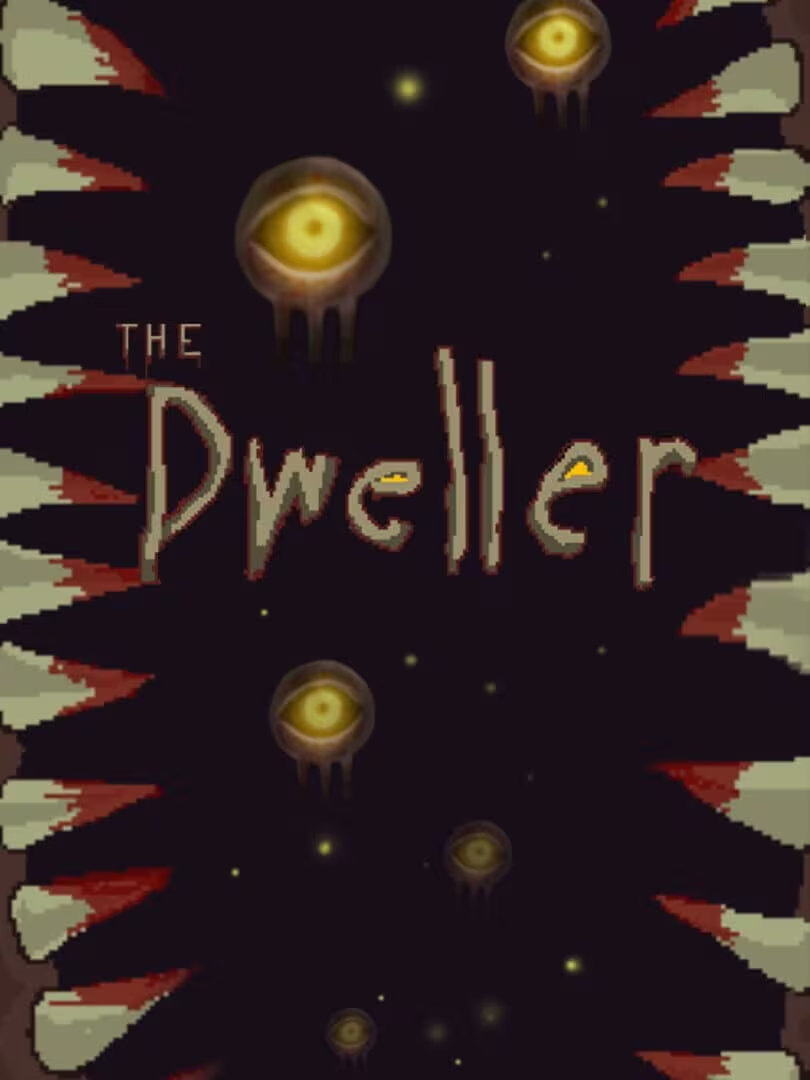 The Dweller
"Players create solutions by selecting cells but within strict puzzle constraints; limited customization or creation beyond solving."
-
Domination
Game with the same Domination vibe
-5"No social dominance or power dynamics; purely individual puzzle solving."
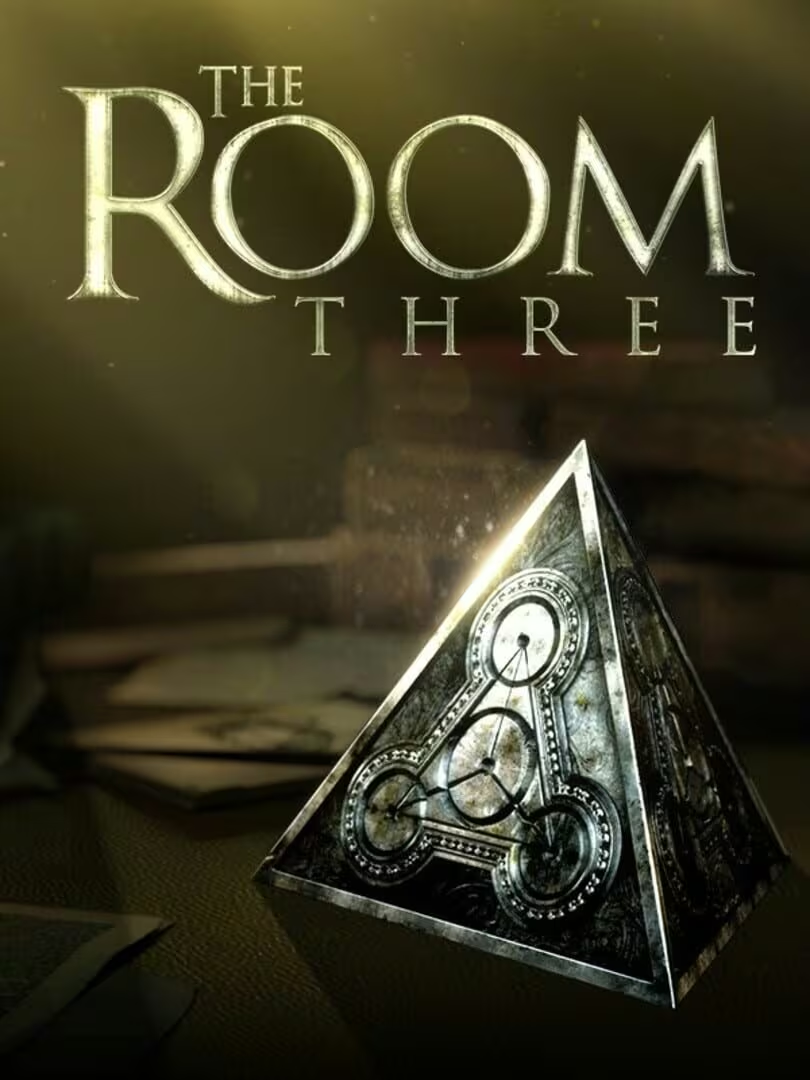 The Room Three
"No social dominance or power dynamics; purely individual puzzle solving."
-
Escapism
Game with the same Escapism vibe
3"Players use the game as a relaxing, casual distraction with calming music and simple gameplay."
 Super Blue Boy Planet
"Players use the game as a relaxing, meditative distraction with calming music and minimalistic design."
-
Expectation
Game with the same Expectation vibe
-4"Players engage voluntarily out of interest and enjoyment rather than obligation or external pressure."
 Sid Meier's Civilization® V
"Players engage voluntarily out of interest and enjoyment rather than obligation or external pressure."
-
Experimenting
Game with the same Experimenting vibe
2"Players experiment with clues and deductions to solve puzzles, though within a structured and linear framework."
 Duck Detective: The Secret Salami
"Some trial and error is used by players to test hypotheses, but mostly puzzles require logical deduction."
-
Exploration
Game with the same Exploration vibe
-3"Puzzle environments are fixed and known; no exploration of new areas or secrets beyond puzzle solutions."
 Splice
"Puzzles are fixed and known; no exploration of new areas or discovery beyond puzzle solving."
-
Expression
Game with the same Expression vibe
-4"Minimalist presentation with no avatar or environment customization."
 RYB
RYB
"Minimalistic presentation with no avatar or environment customization."
-
Fantasy
Game with the same Fantasy vibe
-5"Purely abstract and realistic puzzle gameplay with no fictional or imaginative elements."
 Lines X
"Purely abstract and realistic puzzle gameplay without fictional or imaginative elements."
-
Fellowship
Game with the same Fellowship vibe
-5"No community or social features; strictly solo play."
 Iron Lung
"No community or social features; strictly solo play."
-
Growth
Game with the same Growth vibe
4"Players develop logical reasoning and mathematical skills through progressively challenging puzzles."
 Hexologic
"Players develop logical thinking and mental arithmetic skills through progressively challenging puzzles."
-
Health
Game with the same Health vibe
-5"Sedentary gameplay with no physical activity involved."
 World of Tanks Blitz
"Sedentary gameplay with no physical activity involved."
-
Idle
Game with the same Idle vibe
-3"Requires focused attention to solve puzzles; not suitable for passive or background play."
 Polarity
"Requires focused attention to solve puzzles; not suitable for passive or background play."
-
Intimacy
Game with the same Intimacy vibe
-5"No social or emotional connections formed through gameplay."
 Nodebuster
"No social or emotional connections formed through gameplay."
-
Leadership
Game with the same Leadership vibe
-5"No leadership or group management elements."
 High On Life
"No leadership or group management elements."
-
Progression
Game with the same Progression vibe
3"Progression through unlocking new puzzles and mechanics; no item collection or upgrades."
 Sokobond
"Progression through unlocking and completing puzzles, but no item collection or upgrades."
-
Relaxation
Game with the same Relaxation vibe
4"Calming music and minimalist visuals promote relaxation and flow."
 hocus
hocus
"Calming music and minimalistic visuals create a relaxing atmosphere conducive to flow."
-
Sensation
Game with the same Sensation vibe
2"Enjoyable audiovisuals and engaging puzzle mechanics provide moderate sensory stimulation and emotional fun."
 We Were Here Expeditions: The FriendShip
"Pleasant audio and visual feedback enhance the puzzle experience without overwhelming stimulation."
-
Status
Game with the same Status vibe
-5"No social recognition or status systems present."
 Resident Evil 7 Biohazard
"No social recognition or status systems present."
-
Story
Game with the same Story vibe
-5"No narrative or story elements; purely abstract puzzles."
 Hexcells
"No narrative or story elements; purely abstract puzzles."
-
Strategy
Game with the same Strategy vibe
4"Requires logical planning, foresight, and strategic use of special cells."
Splice
"Requires logical reasoning, planning, and problem solving to deduce correct cell selections."
-
Thrill
Game with the same Thrill vibe
-2"Low suspense or risk; puzzles are challenging but not thrilling or tense."
 macdows 95
"Low suspense or risk; puzzles are challenging but not tense or thrilling."
-
Value
Game with the same Value vibe
3"Good value for price, especially on sale; praised for quality of puzzles despite short length."
Hexcells
"Good value for price with 50 handcrafted puzzles and quality design, though some find it short."
-
Violence
Game with the same Violence vibe
-5"No violence or destructive gameplay elements."
 Gorogoa
"No violence or destructive gameplay elements."
-
Survival
Game with the same Survival vibe
-5"No survival or threat avoidance mechanics."
 NEKOPARA Vol. 1
"No survival or threat avoidance mechanics."
Last update: 01/06/2026