The Dweller similar games & best alternatives
Should you play it?
The Dweller is a puzzle game where you play as the MONSTER! It's time to get rid of all those pesky archaeologists snooping around in your lair. SCARE them, CRUSH them, DEVOUR them! ELIMINATE THE INTRUDERS!
What works
- Unique monster-as-protagonist concept
- Interesting and challenging puzzles
- Atmospheric music and story notes
- Easy to learn controls
- Good value on sale
Things to keep in mind
- Short game length
- Limited visual variety
- Some difficulty spikes
- Abrupt and unsatisfying ending
- Lack of customization and multiplayer
What to play next
Similar games, hidden gems, and fresh directions from this game.
Top picks
Games that feel the closest overall
Hidden Gems
Less popular games with surprisingly high similarity
If you liked…
Recommendations by what you enjoyed most
Similarity map
Explore nearby similar games and see why they’re close.
The Dweller: Broadly representative of its motivational profile, with a few distinct shifts. Motivations that often define this kind of title include Expression, Fellowship, Cooperation, Status. Here, the score leans higher than usual among comparable games on Strategy. It leans lower than usual among comparable games on Exploration, Continuation.
Why this game works
A motivational profile of the game, with the closest similar game for each player motivation.
-
Autonomy
Game with the same Autonomy vibe
4"Players control a unique amorphous monster with freedom to move, choose combat or stealth approaches, and solve puzzles with different abilities."
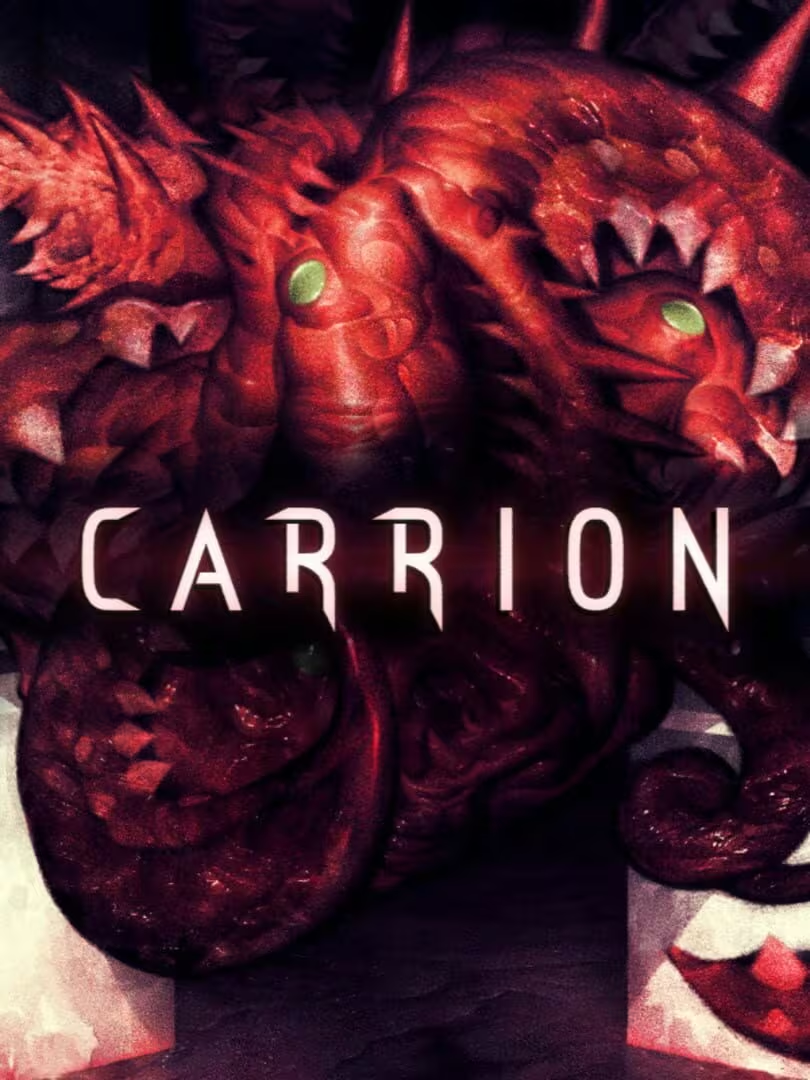 CARRION
"Players control the monster's movements and decide how to solve puzzles using possession of boulders and environmental manipulation."
-
Competence
Game with the same Competence vibe
3"Puzzles require logical thinking and planning, with increasing difficulty and feedback through level completion."
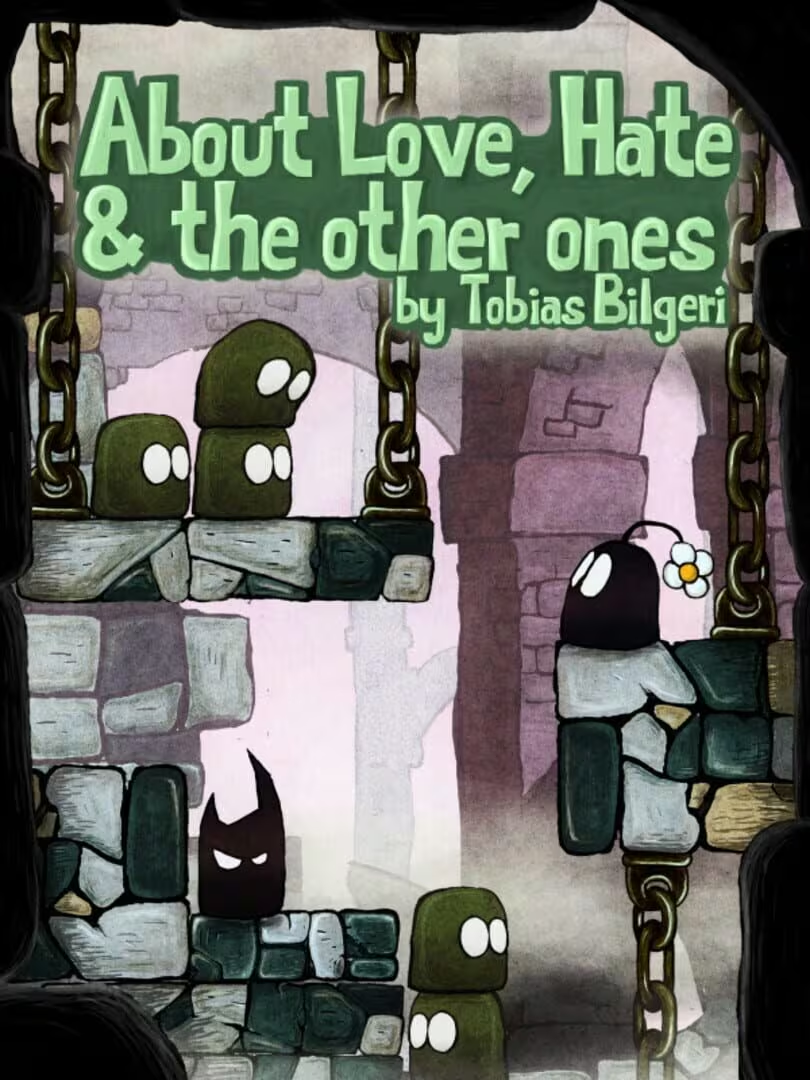 About Love, Hate and the other ones
"Puzzles require logical thinking and planning, with increasing difficulty and some challenging levels."
-
Competition
Game with the same Competition vibe
-4"Focus is on individual puzzle solving without competitive or ranked elements."
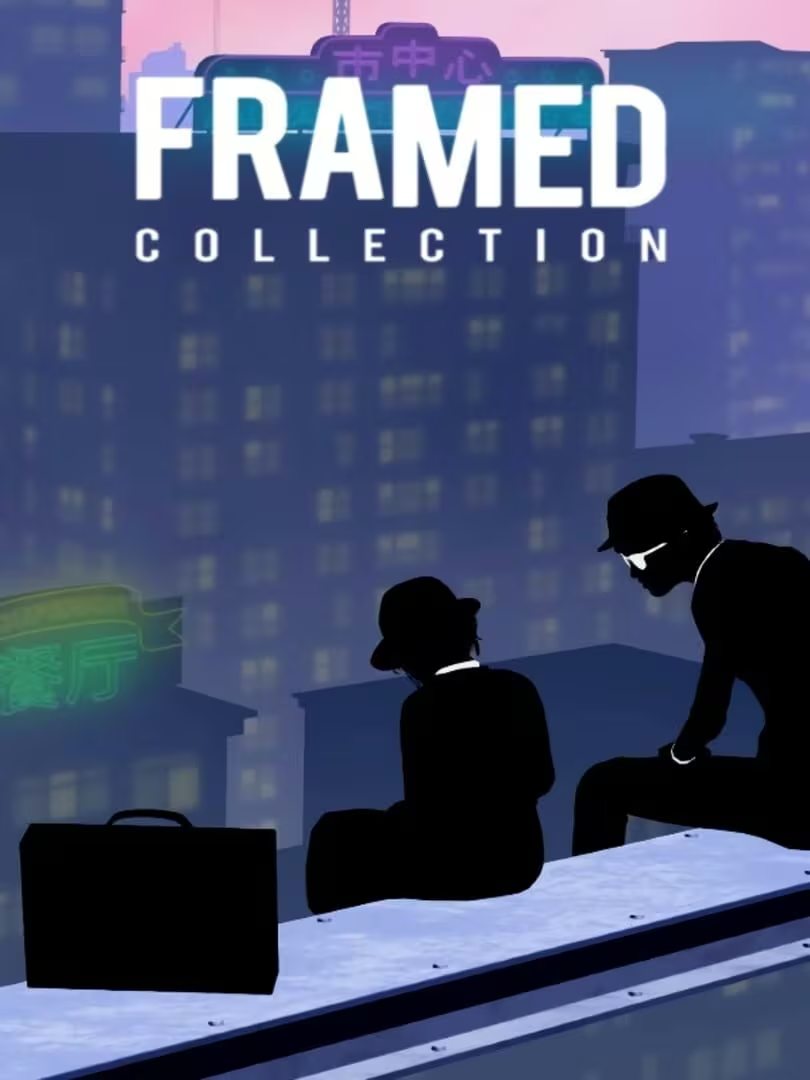 FRAMED Collection
"Focus is on individual puzzle solving without competitive or ranked elements."
-
Continuation
Game with the same Continuation vibe
-2"Short game (~2-3 hours) with limited replay value; players tend to finish quickly and do not engage in long habitual play."
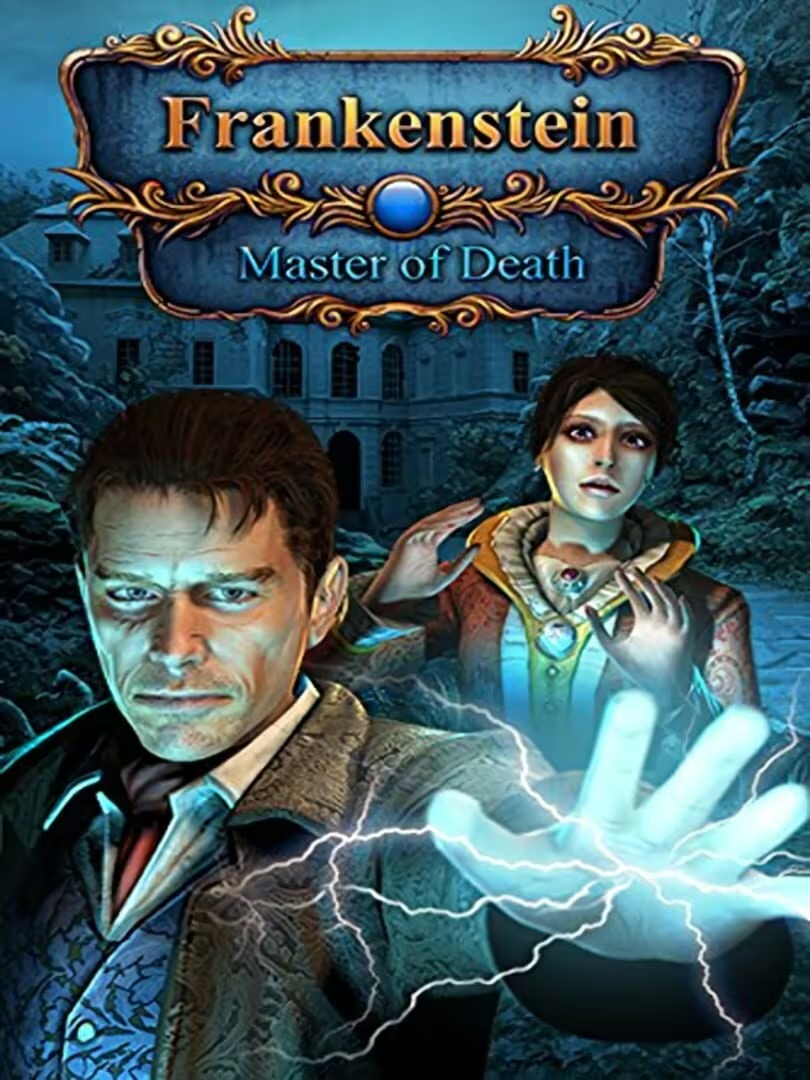 Frankenstein: Master of Death
"Short game (~2-3 hours) with limited replay value; players tend to finish quickly and do not engage in long habitual play."
-
Cooperation
Game with the same Cooperation vibe
-5"Single-player experience with no multiplayer or cooperative gameplay."
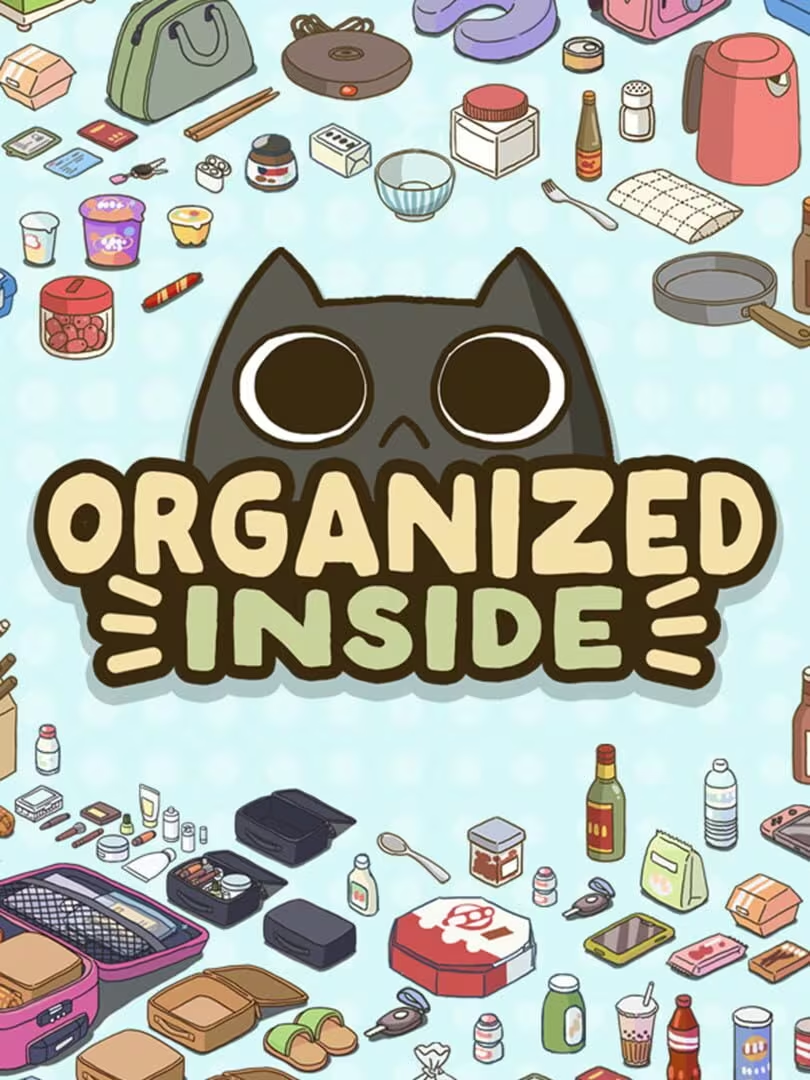 Organized Inside
"Single-player experience with no multiplayer or cooperative gameplay."
-
Creativity
Game with the same Creativity vibe
2"Players experiment with different abilities and puzzle approaches, but mostly work within designed puzzle constraints."
 1000 Amps
"Players can experiment with different puzzle solutions and approaches, though within designed constraints."
-
Domination
Game with the same Domination vibe
-5"No social dominance or power over other players; interactions are with game environment only."
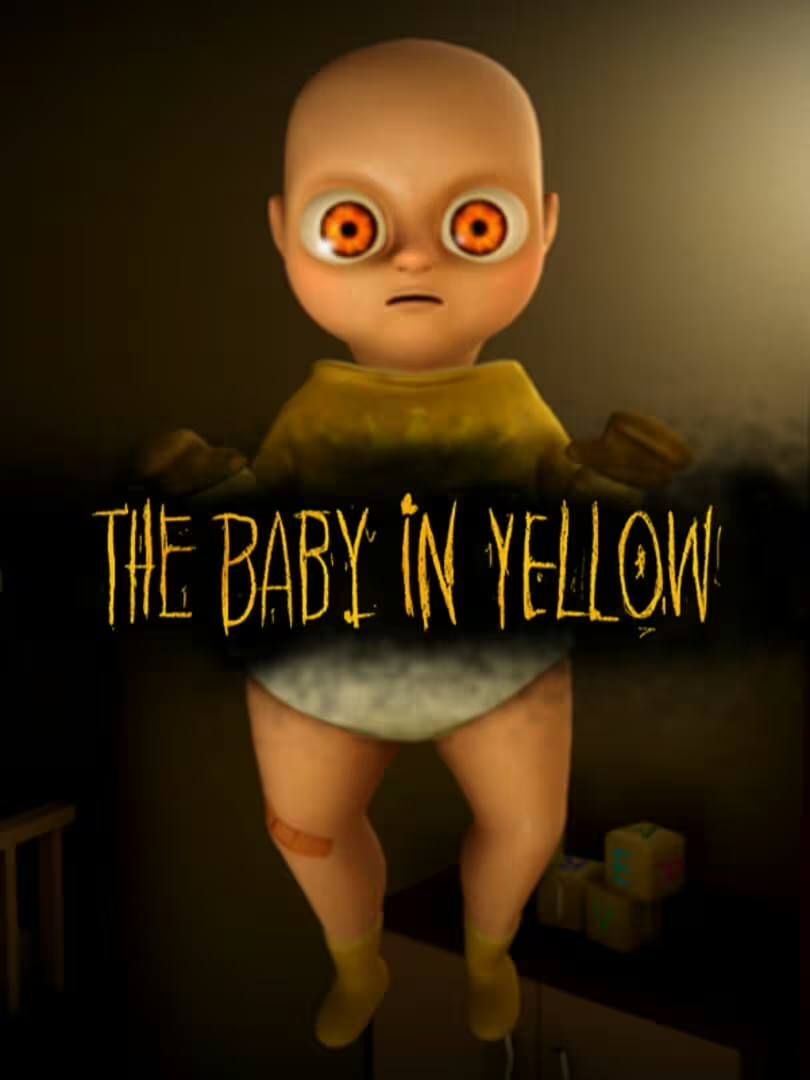 The Baby In Yellow
"No social dominance or power over other players; interaction is purely with game environment."
-
Escapism
Game with the same Escapism vibe
3"Players use the game as a mental challenge and distraction, enjoying its unique mechanics and atmosphere."
 OneShift
"Players use the game as a mental challenge and distraction, enjoying the dark atmosphere and unique role."
-
Expectation
Game with the same Expectation vibe
-4"Players engage voluntarily for casual enjoyment and puzzle solving, not out of obligation."
 Riddles Of The Past
"Players engage voluntarily for entertainment and puzzle enjoyment, not out of obligation."
-
Experimenting
Game with the same Experimenting vibe
3"Game encourages trying different approaches to puzzles and combat, with multiple solutions and exploration."
 Indiana Jones and the Great Circle
"Game encourages trying different tactics and puzzle solutions, with multiple approaches possible."
-
Exploration
Game with the same Exploration vibe
-3"Gameplay revolves around known puzzle environments with limited discovery beyond mechanics."
 Auditorium
"Gameplay is focused on single-screen puzzles with limited environmental discovery."
-
Expression
Game with the same Expression vibe
-4"Minimal customization or personalization options; mostly standardized presentation."
 Arrow a Row
"Minimal customization or personalization; standard visual presentation."
-
Fantasy
Game with the same Fantasy vibe
4"Strong Lovecraftian fantasy and horror themes with eldritch elements and supernatural anomalies."
 Do No Harm
"Players embody an eldritch monster in a dark, fictional setting with Lovecraftian themes."
-
Fellowship
Game with the same Fellowship vibe
-5"No social or community features; strictly single-player."
 Mafia: Definitive Edition
"No social or community features; strictly single-player."
-
Growth
Game with the same Growth vibe
3"Players develop puzzle-solving skills and learn new mechanics progressively."
 Machinika: Museum
"Players develop puzzle-solving skills and learn new mechanics progressively."
-
Health
Game with the same Health vibe
-5"Sedentary gameplay with no physical activity involved."
 World of Tanks Blitz
"Sedentary gameplay with no physical activity involved."
-
Idle
Game with the same Idle vibe
-3"Requires focused attention and problem solving; not suited for passive or background play."
 Tested on Humans: Escape Room
"Requires focused attention and problem solving; not suited for passive or background play."
-
Intimacy
Game with the same Intimacy vibe
-5"No social or emotional connections formed through gameplay."
 Nodebuster
"No social or emotional connections formed through gameplay."
-
Leadership
Game with the same Leadership vibe
-5"No leadership or group management roles; solo puzzle solving only."
 Glass Masquerade 2: Illusions
"No leadership or group management elements; solo puzzle solving."
-
Progression
Game with the same Progression vibe
2"Progression through story chapters, unlocking achievements and collectibles."
 Tell Me Why
"Progression through levels and unlocking story notes and achievements."
-
Relaxation
Game with the same Relaxation vibe
2"Atmospheric music and pacing provide some relaxation, though puzzles can be challenging and tense."
 Occlude
"Atmospheric music and pacing provide a somewhat relaxing experience despite puzzle challenges."
-
Sensation
Game with the same Sensation vibe
1"Basic pixel art and sound provide moderate sensory stimulation; not highly intense."
 Smooth Operators
"Basic pixel art and sound design provide modest sensory stimulation."
-
Status
Game with the same Status vibe
-5"No social recognition or status systems."
 Alan Wake
"No social recognition or status systems."
-
Story
Game with the same Story vibe
3"Narrative is delivered through environmental storytelling and notes, requiring player interpretation."
 Haydee 2
"Narrative delivered through notes and lore that unfolds as player progresses."
-
Strategy
Game with the same Strategy vibe
4"Requires logical reasoning, planning, and problem-solving to complete puzzles."
 hexceed
"Requires planning and logical problem solving to complete puzzles."
-
Thrill
Game with the same Thrill vibe
1"Some tension from puzzle solving and time challenges, but overall low suspense or risk."
 Escape Simulator
"Some tension in puzzle solving but no high-risk or suspenseful moments."
-
Value
Game with the same Value vibe
3"Generally considered good value for money, especially when purchased on sale."
 Farm Frenzy 4
"Generally considered good value especially when purchased on sale."
-
Violence
Game with the same Violence vibe
3"Game involves investigating deaths and violent fates, though presented in stylized, non-graphic manner."
 Return of the Obra Dinn
"Gameplay centers on killing or scaring archaeologists in various ways."
-
Survival
Game with the same Survival vibe
1"Some challenge in avoiding failure and completing levels, but no traditional survival mechanics."
 *NEW* SCUFFED EPIC BHOP SIMULATOR 2023 (POG CHAMP)
"Some challenge in avoiding unwinnable states and restarting levels, but no survival mechanics."
Last update: 01/06/2026