Machinika: Museum similar games & best alternatives
Should you play it?
Welcome to the Museum! Machinika Museum is a mystery game where you discover beautiful and mysterious machines of extra-terrestrial origins in an atmospheric galaxy-spanning 3D puzzle game. Will you be able to understand their stories and discover what happened to their previous owner?
What works
- Engaging and logical puzzles
- Pleasant sci-fi atmosphere and visuals
- Intuitive controls and interface
- Relaxing and immersive gameplay
- Good value especially on sale
Things to keep in mind
- Very short game length
- Some minor bugs and glitches
- Lack of hint system
- Minimal story depth
- No multiplayer or social features
What to play next
Similar games, hidden gems, and fresh directions from this game.
Top picks
Games that feel the closest overall
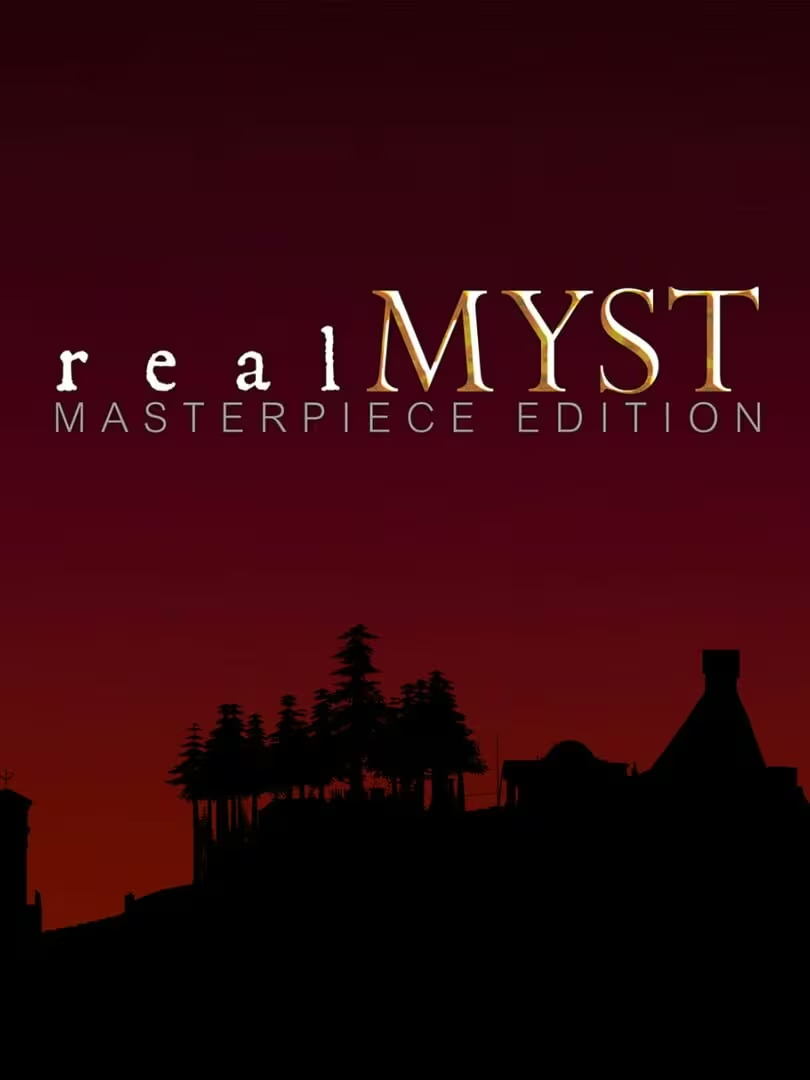

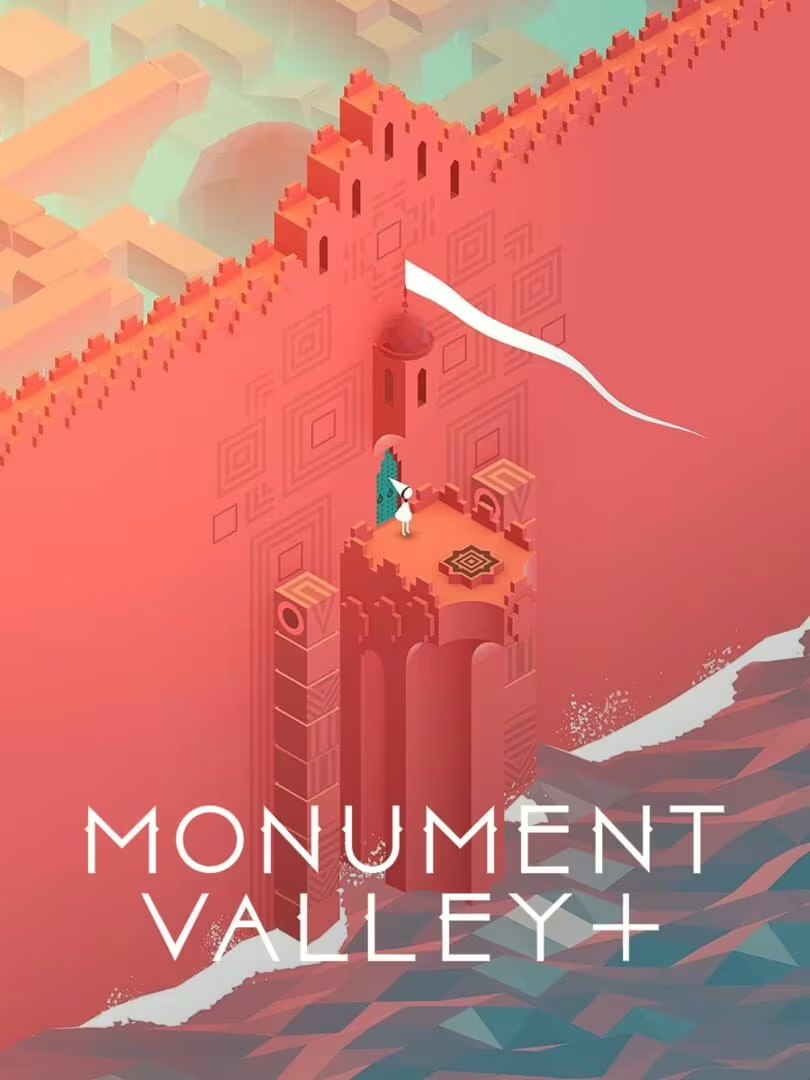
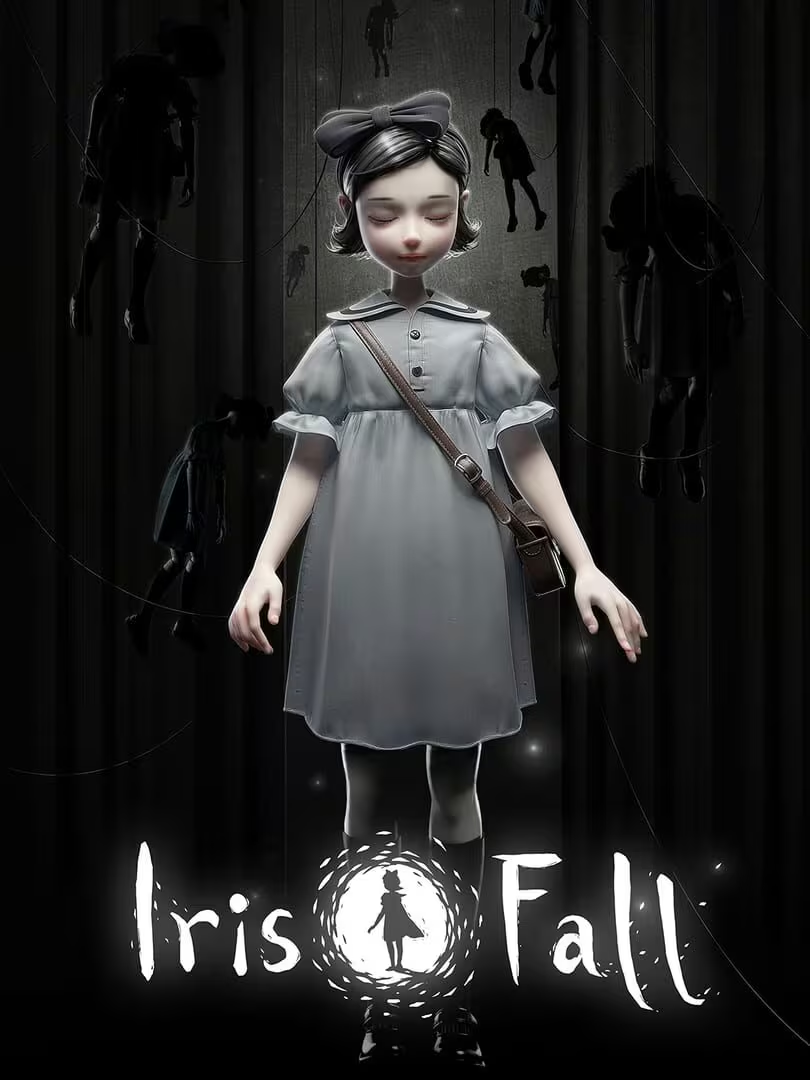
Hidden Gems
Less popular games with surprisingly high similarity
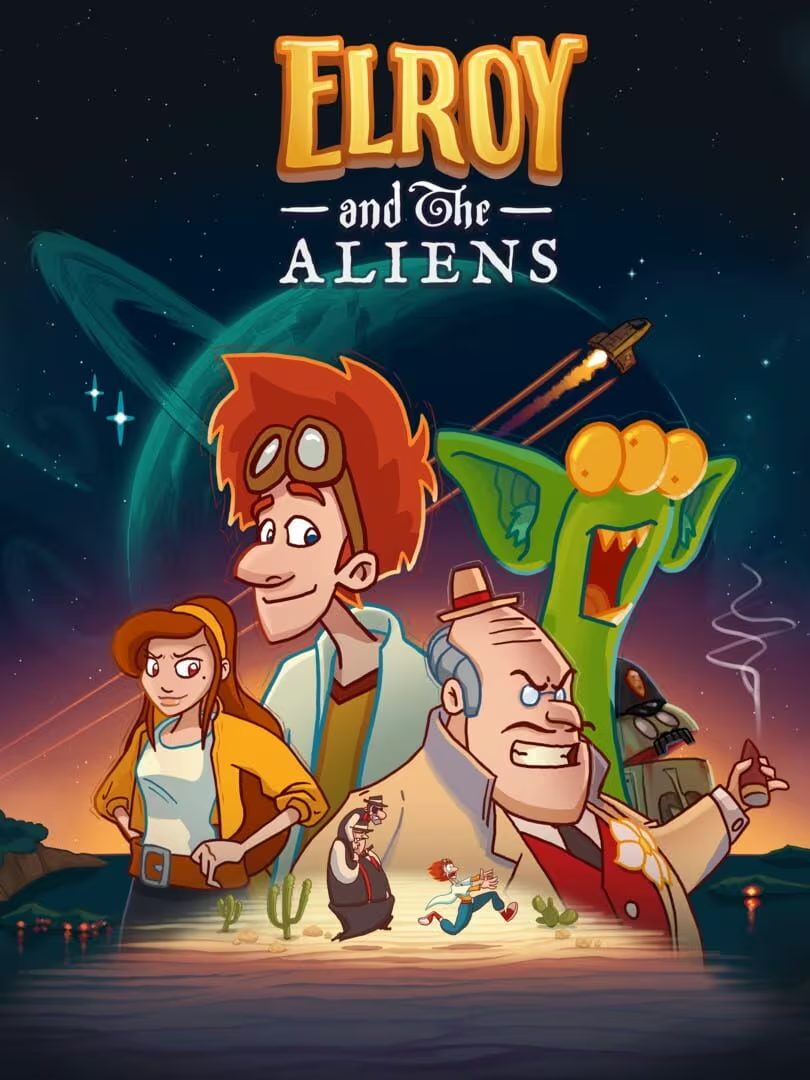
If you liked…
Recommendations by what you enjoyed most
Similarity map
Explore nearby similar games and see why they’re close.
Machinika: Museum: A very typical example of its motivational profile. Motivations that often define this kind of title include Survival, Violence, Competition, Thrill. It leans lower than usual among comparable games on Intimacy, Expression, Thrill.
Why this game works
A motivational profile of the game, with the closest similar game for each player motivation.
-
Autonomy
Game with the same Autonomy vibe
4"Players freely explore and manipulate puzzle boxes at their own pace with optional hints and puzzle skips."
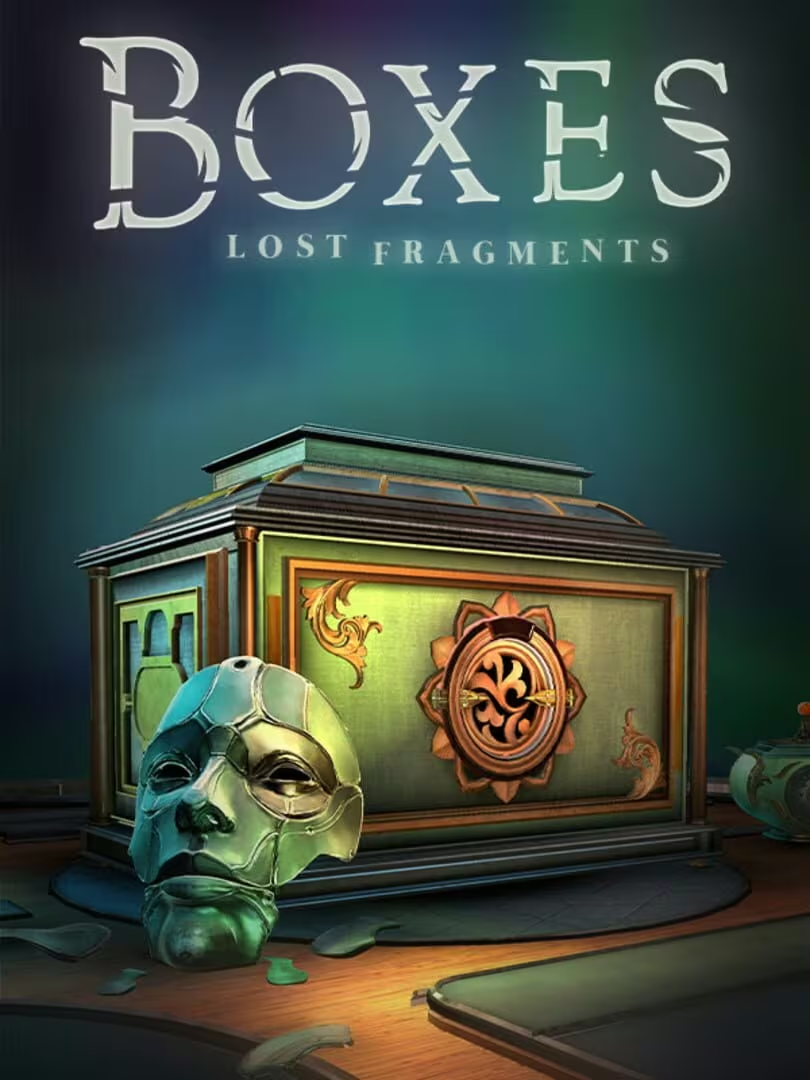 Boxes: Lost Fragments
"Players freely explore and manipulate puzzle objects at their own pace with minimal forced sequences."
-
Competence
Game with the same Competence vibe
3"Puzzles provide a moderate challenge with logical solutions, requiring skill and thought to solve, though not extremely difficult."
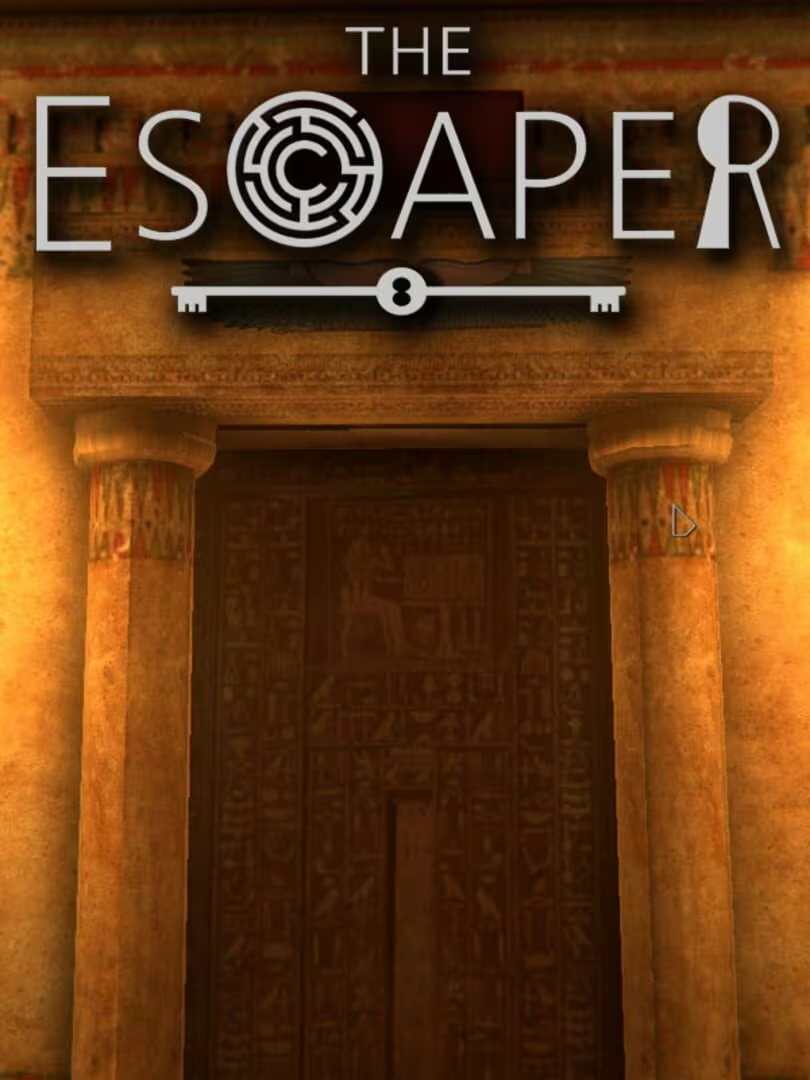 The Escaper
"Puzzles provide moderate challenge with logical problem solving and feedback, though generally not very difficult."
-
Competition
Game with the same Competition vibe
-5"No evidence of competitive elements; gameplay is solo and self-paced."
 Shiver
"No evidence of competitive elements; gameplay is solitary and self-paced."
-
Continuation
Game with the same Continuation vibe
2"Players enjoy replaying with different partners and look forward to sequels, though game length is short."
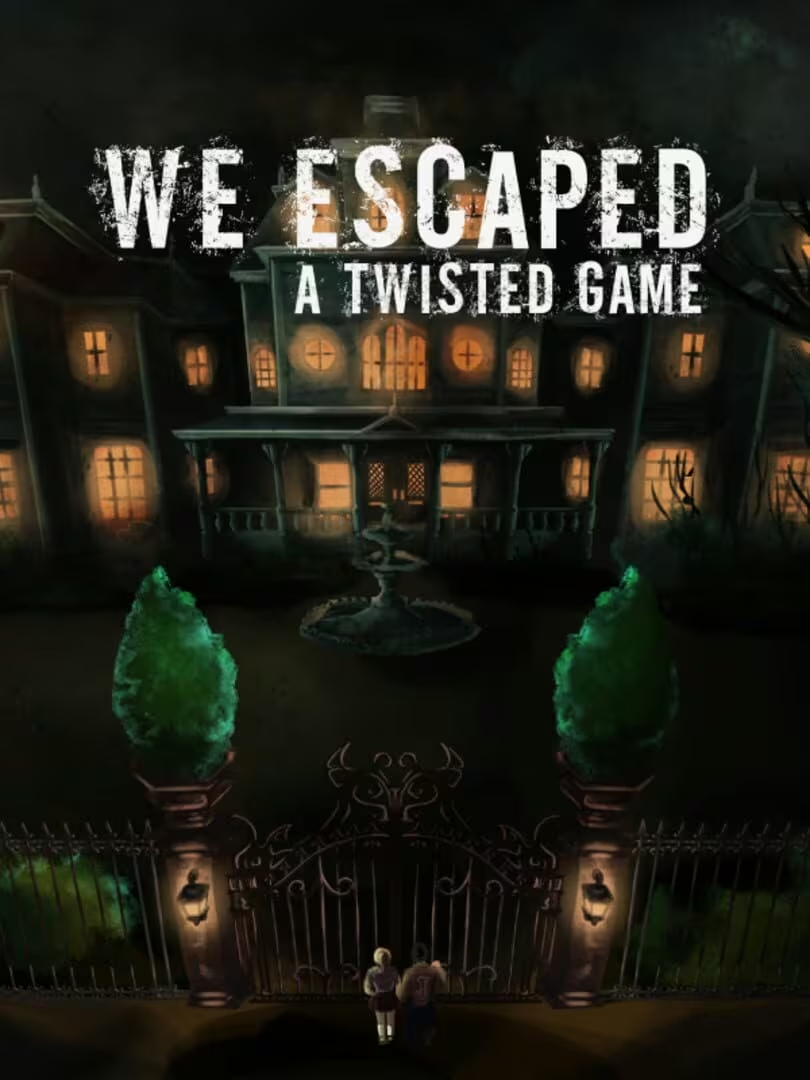 We Escaped a Twisted Game
"Players express interest in replaying or continuing with sequels, though the base game is short."
-
Cooperation
Game with the same Cooperation vibe
-5"Entirely single-player experience with no cooperative gameplay."
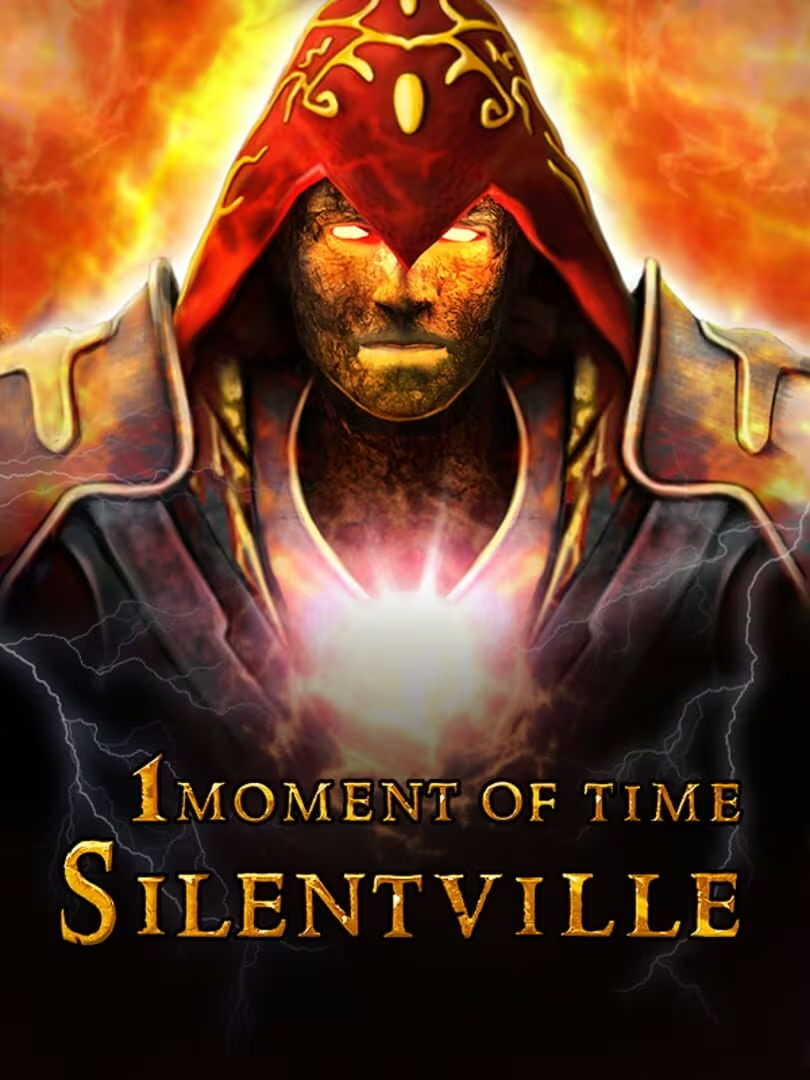 1 Moment Of Time: Silentville
"Entirely single-player experience with no cooperative gameplay."
-
Creativity
Game with the same Creativity vibe
3"Players creatively solve puzzles and explore alien technology, though within a fixed narrative and environment."
 The Dig®
"Players experiment with alien artifacts and tools, assembling and solving puzzles creatively."
-
Domination
Game with the same Domination vibe
-5"No social dominance or power dynamics present; purely individual puzzle solving."
 Zup! 8
"No social dominance or power dynamics present; purely individual puzzle solving."
-
Escapism
Game with the same Escapism vibe
4"Players use the game as a relaxing, engaging distraction with immersive sci-fi setting and satisfying gameplay loops."
 Defense Grid: The Awakening
"Players use the game as a relaxing distraction with immersive sci-fi puzzles and atmosphere."
-
Expectation
Game with the same Expectation vibe
-4"Players engage voluntarily for intrinsic interest and personal enjoyment without obligation."
 Exo One
"Players engage voluntarily for enjoyment and intrinsic interest without obligation."
-
Experimenting
Game with the same Experimenting vibe
3"Encourages trying different puzzle solutions and exploring interactions to progress."
 Haven Moon
"Encourages trying different puzzle approaches and tool uses to progress."
-
Exploration
Game with the same Exploration vibe
2"Exploration is limited to discovering new puzzle mechanics and level designs rather than open-world or spatial discovery."
 She Remembered Caterpillars
"Exploration is limited to examining puzzle objects and their components rather than large environments."
-
Expression
Game with the same Expression vibe
-3"Minimal character or environment customization; focus is on puzzle mechanics rather than self-expression."
 Recursed
"Minimal character or environment customization; focus is on puzzle interaction rather than self-expression."
-
Fantasy
Game with the same Fantasy vibe
4"Strong sci-fi theme with imaginative alien races, space battles, and fictional technology."
 FTL: Faster Than Light
"Strong sci-fi theme with alien artifacts and imaginative technology."
-
Fellowship
Game with the same Fellowship vibe
-5"No social or community features; solitary gameplay."
 Alan Wake
"No social or community features; solitary gameplay."
-
Growth
Game with the same Growth vibe
3"Players develop puzzle-solving skills and learn new mechanics progressively."
 Art Of Gravity
"Players develop puzzle-solving skills and learn new mechanics progressively."
-
Health
Game with the same Health vibe
-5"Sedentary gameplay with no physical activity involved."
 World of Tanks Blitz
"Sedentary gameplay with no physical activity involved."
-
Idle
Game with the same Idle vibe
-4"Requires focused attention to solve puzzles; not suitable for passive or background play."
 FRAMED Collection
"Requires focused attention to solve puzzles; not suitable for passive or background play."
-
Intimacy
Game with the same Intimacy vibe
-5"No social or emotional relationship building; purely individual experience."
 BPM: BULLETS PER MINUTE
"No social or emotional relationship building; purely individual experience."
-
Leadership
Game with the same Leadership vibe
-5"No leadership or group management elements present."
 Trover Saves the Universe
"No leadership or group management elements present."
-
Progression
Game with the same Progression vibe
3"Progression through unlocking and completing increasingly complex puzzles."
 Strange Jigsaws
"Progression through unlocking and assembling artifacts and completing puzzles."
-
Relaxation
Game with the same Relaxation vibe
3"Generally relaxing and calming atmosphere with moderate challenge."
 Locked In Mind
"Generally relaxing with moderate challenge and soothing atmosphere."
-
Sensation
Game with the same Sensation vibe
2"Pleasant visuals and sound design provide moderate sensory stimulation without intense excitement."
 Frankenstein: Master of Death
"Visuals and sound design provide pleasant sensory stimulation without intense excitement."
-
Status
Game with the same Status vibe
-5"No social recognition or status systems involved."
 MADiSON
"No social recognition or status systems involved."
-
Story
Game with the same Story vibe
2"A light sci-fi narrative adds atmosphere and motivation but is secondary to puzzle gameplay."
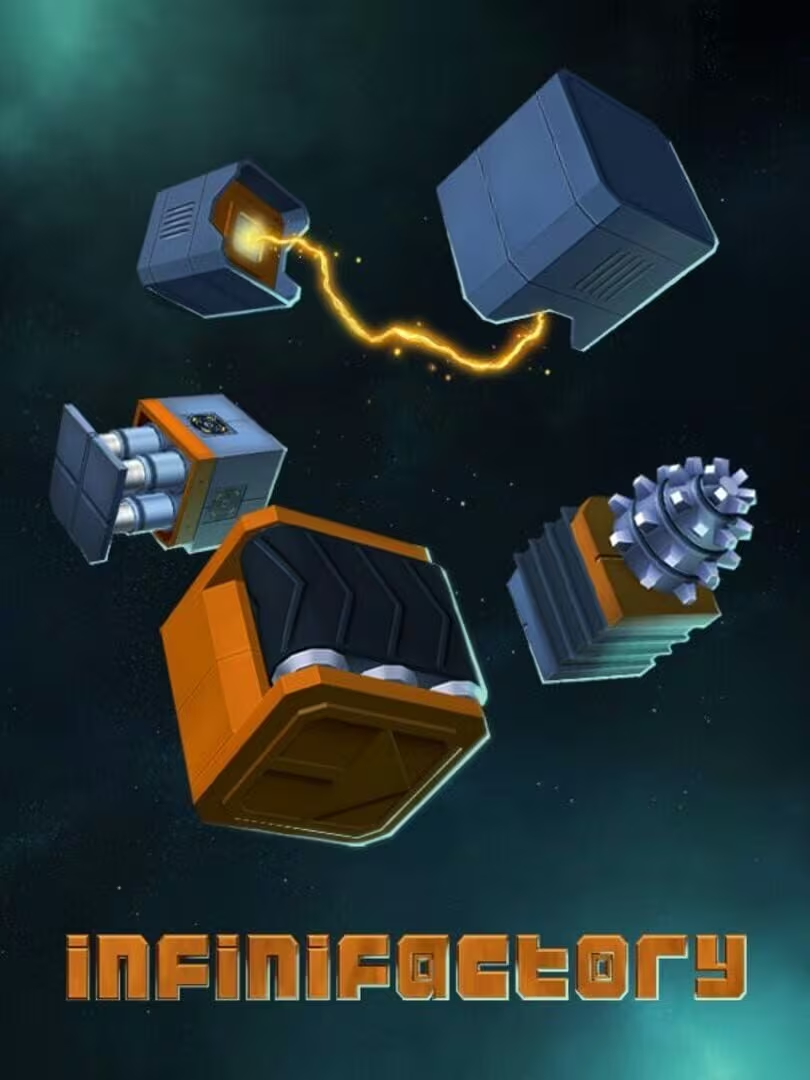 Infinifactory
"Light narrative connecting puzzles with some mystery and sci-fi elements."
-
Strategy
Game with the same Strategy vibe
2"Requires logical thinking and puzzle solving; no complex strategic planning."
 Reversion - The Escape (1st Chapter)
"Requires logical thinking and puzzle solving but limited strategic planning."
-
Thrill
Game with the same Thrill vibe
-3"Low suspense or risk; calm and steady puzzle solving."
 Wordle
"Low suspense or risk; calm and steady puzzle gameplay."
-
Value
Game with the same Value vibe
3"Generally perceived as good value for price, especially on sale; some note short length."
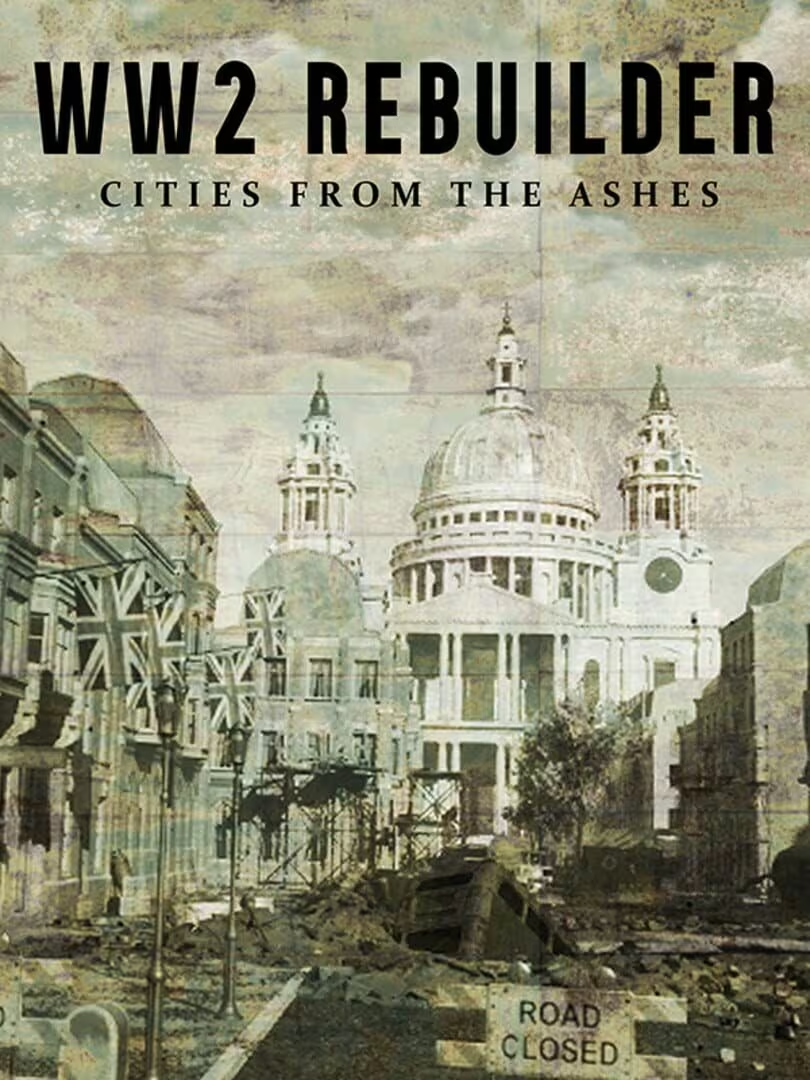 WW2 Rebuilder
"Generally perceived as good value especially when purchased on sale despite short length."
-
Violence
Game with the same Violence vibe
-5"No violent content; focus on constructive puzzle solving."
 Tested on Humans: Escape Room
"No violent content; focus on constructive puzzle solving."
-
Survival
Game with the same Survival vibe
-5"No survival or threat avoidance mechanics."
 To the Moon
"No survival or threat avoidance mechanics."
Last update: 01/06/2026