Zup! 8 similar games & best alternatives
Should you play it?
Minimal physical puzzle with explosions
What works
- Relaxing and accessible puzzle gameplay
- Massive number of achievements for profile customization
- Short playtime suitable for casual sessions
- Good value with trading cards and low price
- Simple mechanics with some challenging puzzles
Things to keep in mind
- Repetitive gameplay with minimal innovation
- Very short overall game length
- No multiplayer or social features
- Achievement spam can be overwhelming
- Limited replayability beyond achievement hunting
What to play next
Similar games, hidden gems, and fresh directions from this game.
Top picks
Games that feel the closest overall

Hidden Gems
Less popular games with surprisingly high similarity
If you liked…
Recommendations by what you enjoyed most
Similarity map
Explore nearby similar games and see why they’re close.
Zup! 8: Less representative of its motivational profile, with noticeable differences. Motivations that often define this kind of title include Violence, Fantasy, Story, Thrill. Here, the score leans higher than usual among comparable games on Status, Violence. It leans lower than usual among comparable games on Exploration.
Why this game works
A motivational profile of the game, with the closest similar game for each player motivation.
-
Autonomy
Game with the same Autonomy vibe
3"Players choose how and when to trigger explosions to solve puzzles, allowing control over actions."
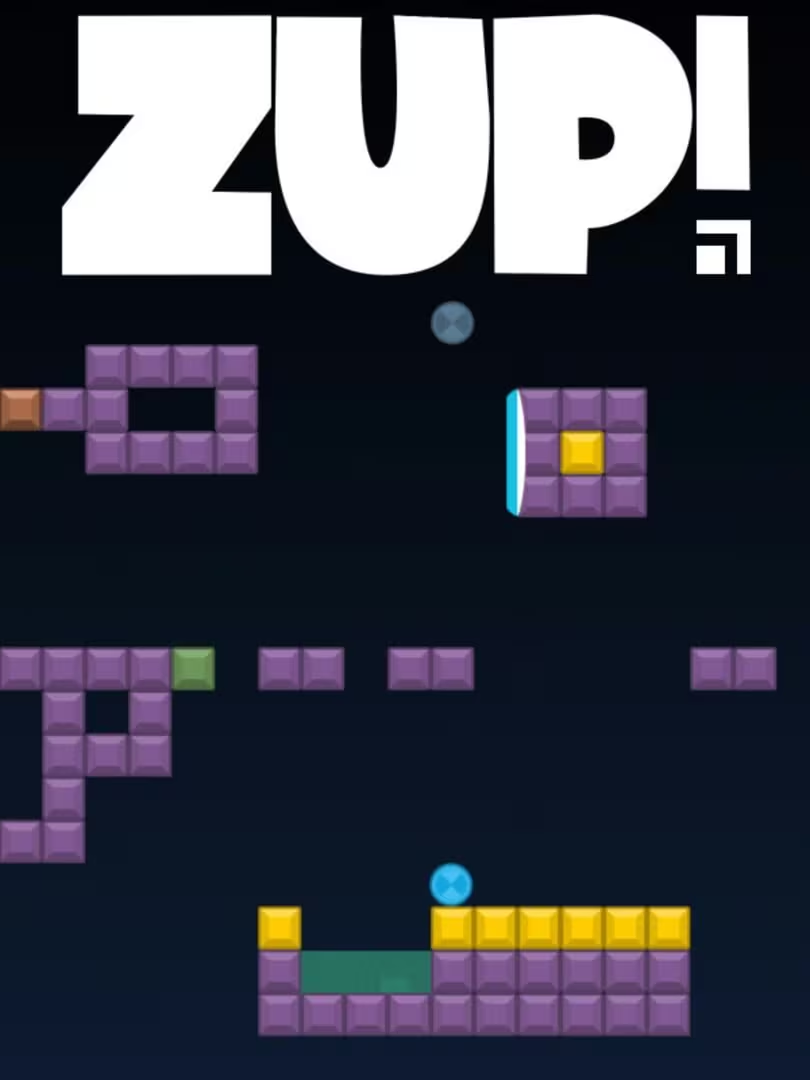 Zup! 7
"Players freely decide when and where to click to trigger explosions and move blocks, allowing control over puzzle solving."
-
Competence
Game with the same Competence vibe
2"Puzzles provide some challenge and require thinking, but are mostly easy and accessible with limited difficulty variation."
 LEGO® Builder's Journey
"Puzzles require some thinking and timing, but overall are easy and accessible with some challenging levels."
-
Competition
Game with the same Competition vibe
-4"No evidence of competitive elements; focus is on individual puzzle solving and achievement hunting."
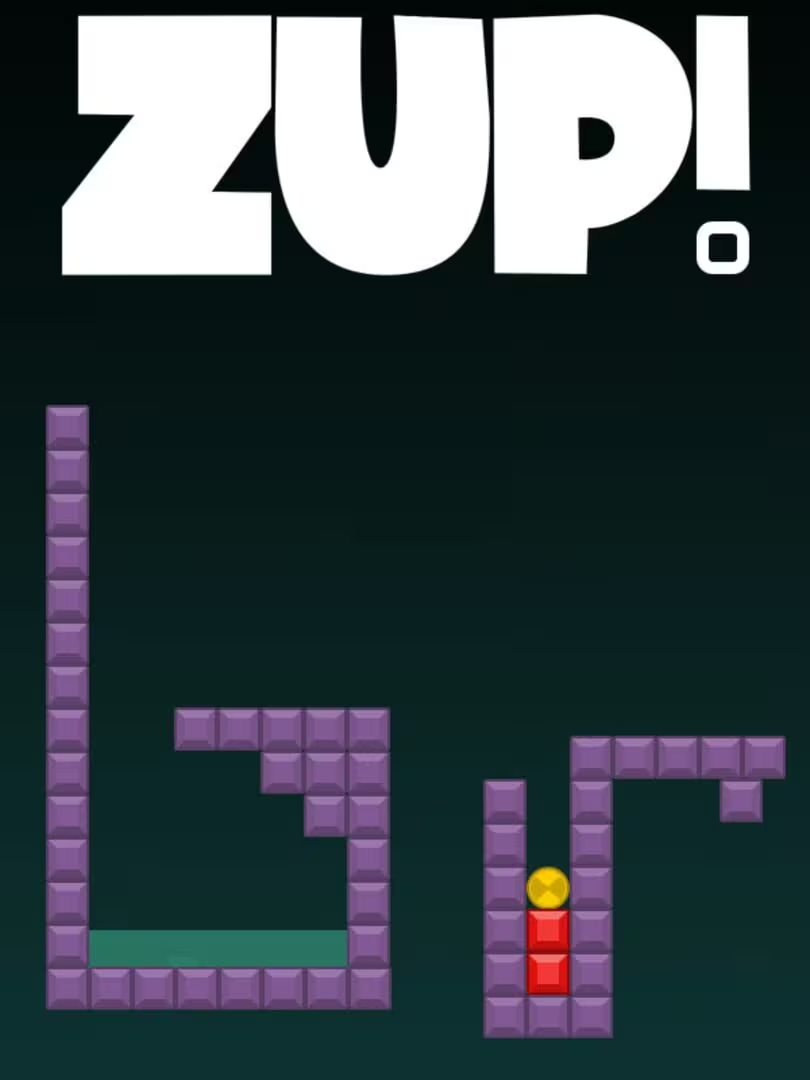 Zup! Zero
"No evidence of competitive elements; focus is on personal puzzle solving and achievement hunting."
-
Continuation
Game with the same Continuation vibe
1"Short game (~2-3 hours) with some replay value for achievements, but generally a one-time experience."
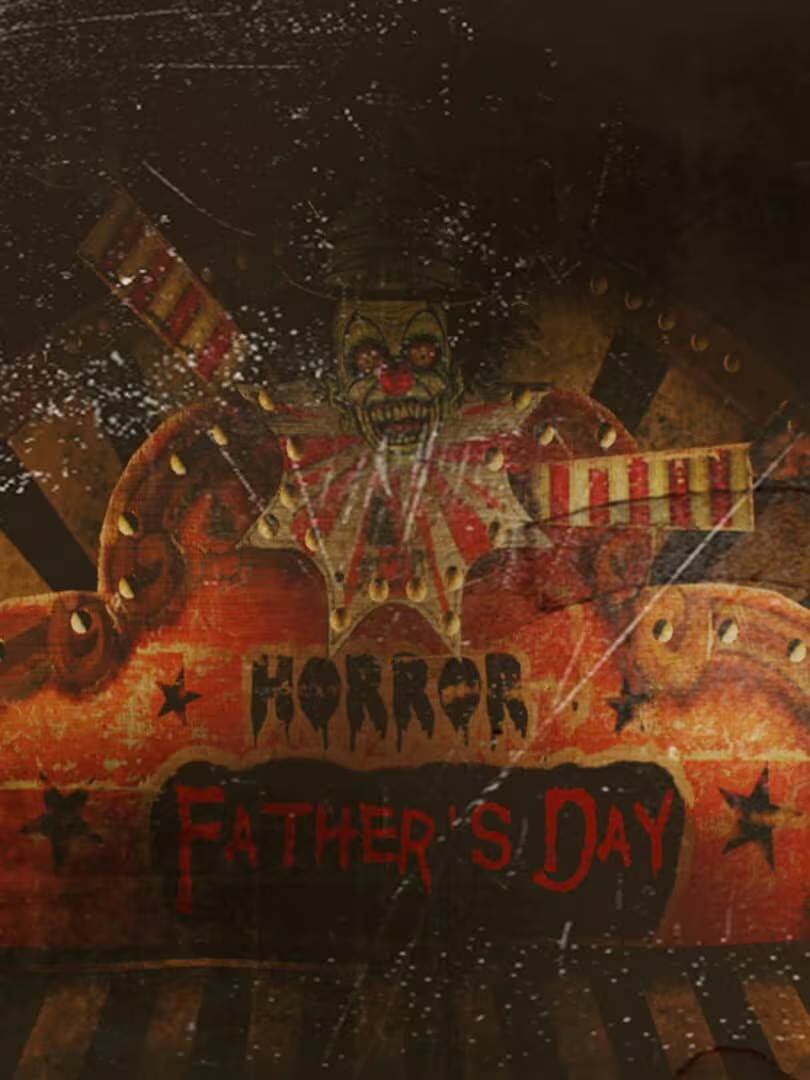 Father's Day
"Short playtime (~1 hour) with some replay for achievements, but generally a quick, casual experience."
-
Cooperation
Game with the same Cooperation vibe
-5"Single-player game with no multiplayer or cooperative features."
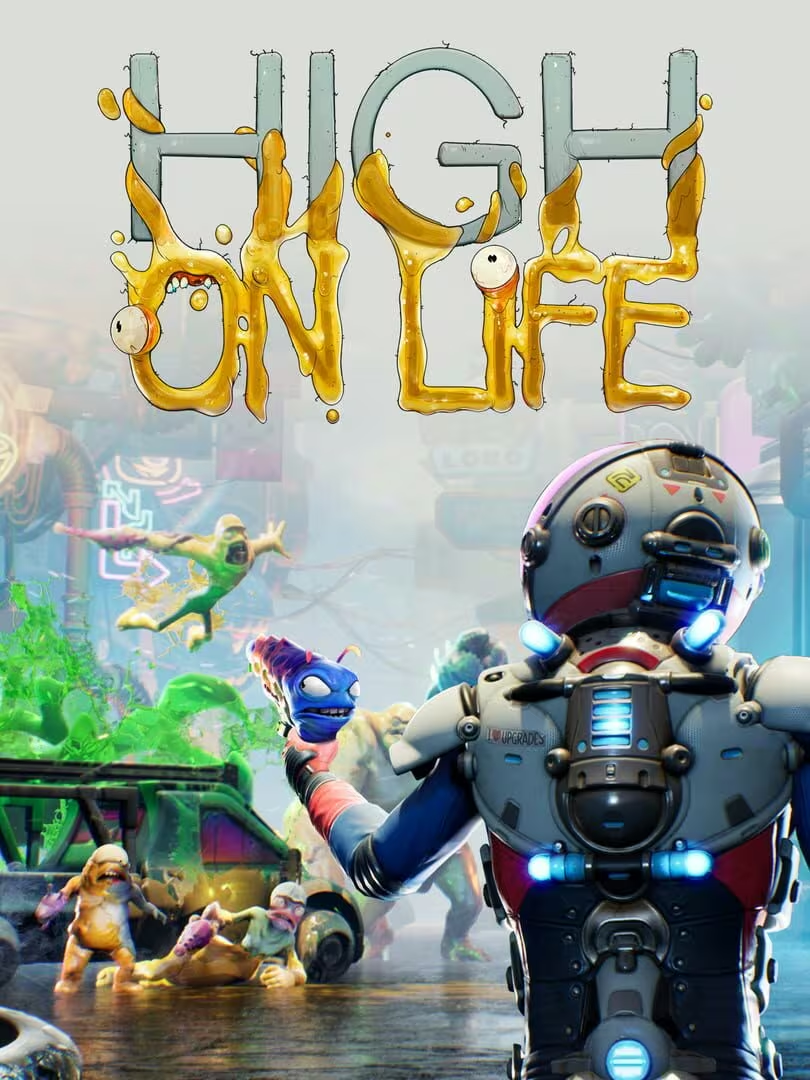 High On Life
"Single-player game with no multiplayer or cooperative features."
-
Creativity
Game with the same Creativity vibe
1"Players can creatively arrange achievements for profile customization, but gameplay follows fixed puzzle structures."
 Zup! Z
"Some creativity in arranging achievements for profile customization; gameplay follows preset puzzle designs."
-
Domination
Game with the same Domination vibe
-5"No social dominance or power dynamics present; purely individual puzzle solving."
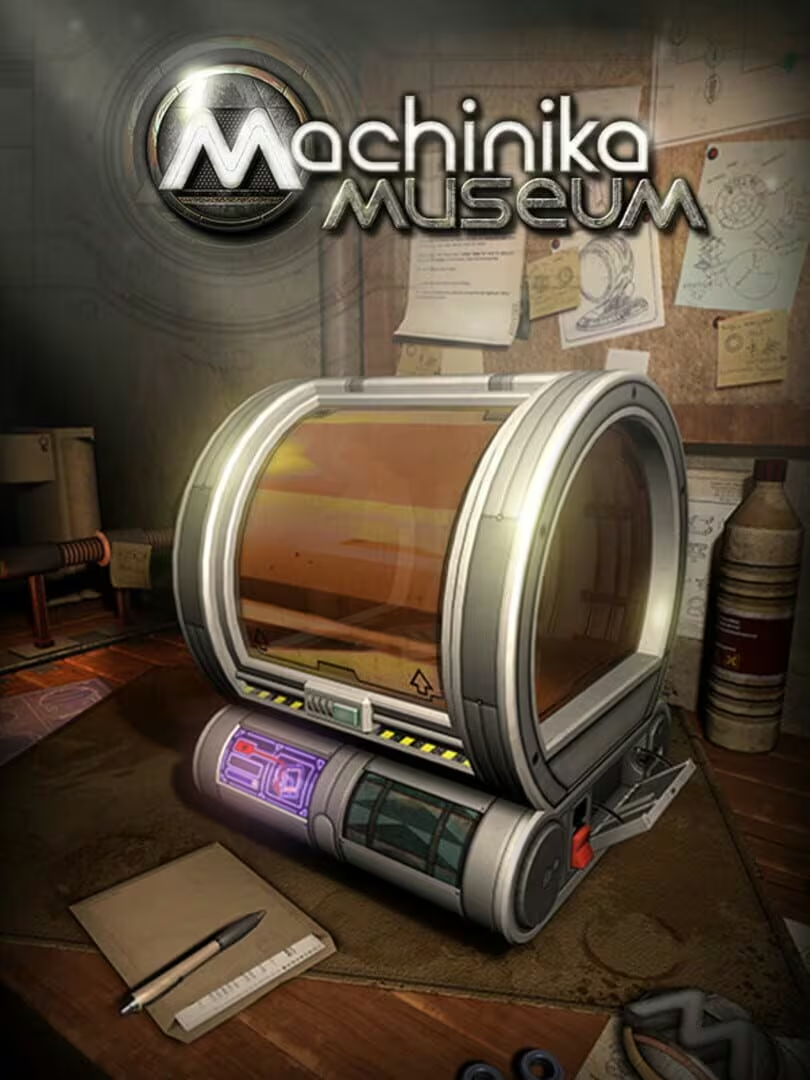 Machinika: Museum
"No social dominance or power dynamics present; purely individual puzzle solving."
-
Escapism
Game with the same Escapism vibe
3"Relaxing and casual gameplay provides a light escape from real life stress."
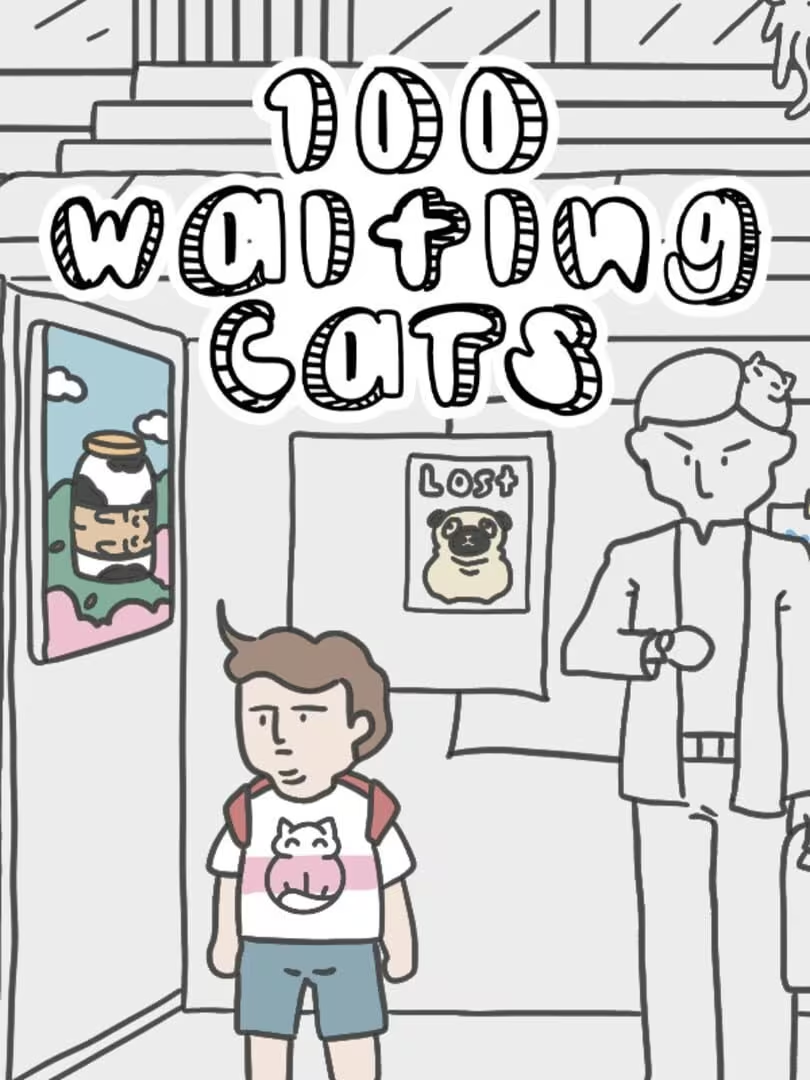 100 Waiting Cats
"Relaxing and casual gameplay provides a mild escape from real life stress."
-
Expectation
Game with the same Expectation vibe
-3"Players engage voluntarily for fun or achievement hunting; no obligation or external pressure noted."
Zup! 7
"Players engage voluntarily for fun or achievement hunting; no obligation or external pressure noted."
-
Experimenting
Game with the same Experimenting vibe
2"Players experiment with timing and physics to solve puzzles, though within fixed mechanics."
 Zup! Zero 2
"Players experiment with timing and sequence of clicks to solve puzzles, though within fixed mechanics."
-
Exploration
Game with the same Exploration vibe
-4"Levels are short and structured with no open-world or discovery elements."
 Zup! S
"Levels are short and designed; no open-world or discovery elements."
-
Expression
Game with the same Expression vibe
3"Achievements allow players to customize their Steam profile with letters and symbols, enabling self-expression."
 Zup! 4
"Achievement letters and symbols allow personal expression through Steam profile customization."
-
Fantasy
Game with the same Fantasy vibe
-4"Gameplay is grounded in simple physics puzzles with minimal narrative or fictional elements."
Zup! S
"Gameplay is based on simple physics puzzles with minimal narrative or fictional elements."
-
Fellowship
Game with the same Fellowship vibe
-5"No community or social interaction features; purely solo experience."
 Achievement Clicker 2018
"No community or social interaction features; purely solo experience."
-
Growth
Game with the same Growth vibe
2"Some learning and skill development in puzzle solving and using game features, but mostly familiar routines."
 Jigsaw Puzzles Infinite
"Some learning and problem-solving involved in puzzle completion, though mostly easy."
-
Health
Game with the same Health vibe
-5"Sedentary gameplay with no physical activity."
 Microtransaction Simulator
"Sedentary gameplay with no physical activity."
-
Idle
Game with the same Idle vibe
2"Some players describe it as suitable for casual play with ability to multitask, but requires attention during combat."
 Ampersat
"Can be played casually with some multitasking; not requiring constant intense focus."
-
Intimacy
Game with the same Intimacy vibe
-5"No social or emotional relationship building."
 Five Nights at Freddy's 2
"No social or emotional relationship building."
-
Leadership
Game with the same Leadership vibe
-5"No leadership or group management elements."
High On Life
"No leadership or group management elements."
-
Progression
Game with the same Progression vibe
4"Strong progression through levels, upgrades, and achievement collection."
 Intergalactic Bubbles
"Strong progression through levels and massive achievement unlocking."
-
Relaxation
Game with the same Relaxation vibe
4"Calm music and simple puzzles provide a relaxing, low-stress experience."
Zup! 7
"Calm music and simple puzzles create a relaxing experience."
-
Sensation
Game with the same Sensation vibe
2"Visual and audio effects like explosions and battle sounds provide sensory stimulation."
 Blitzkrieg 2 Anthology
"Visual explosions and sounds provide mild sensory stimulation."
-
Status
Game with the same Status vibe
4"Achievements and profile customization provide social recognition and status within Steam community."
Zup! Z
"Achievements and profile customization provide social recognition within Steam community."
-
Story
Game with the same Story vibe
-5"No narrative or story elements; purely puzzle gameplay."
 Freeways
"No narrative or story elements; purely puzzle gameplay."
-
Strategy
Game with the same Strategy vibe
2"Requires planning and timing to solve puzzles, though mechanics are simple."
Zup! Zero 2
"Requires planning and timing to solve puzzles, but mechanics are straightforward."
-
Thrill
Game with the same Thrill vibe
0"Minimal suspense or risk; some tension from timing but overall low thrill factor."
 Shift
Shift
"Mild suspense in timing clicks but no strong thrill or risk elements."
-
Value
Game with the same Value vibe
4"Highly regarded as good value for price due to short, affordable gameplay and numerous achievements and trading cards."
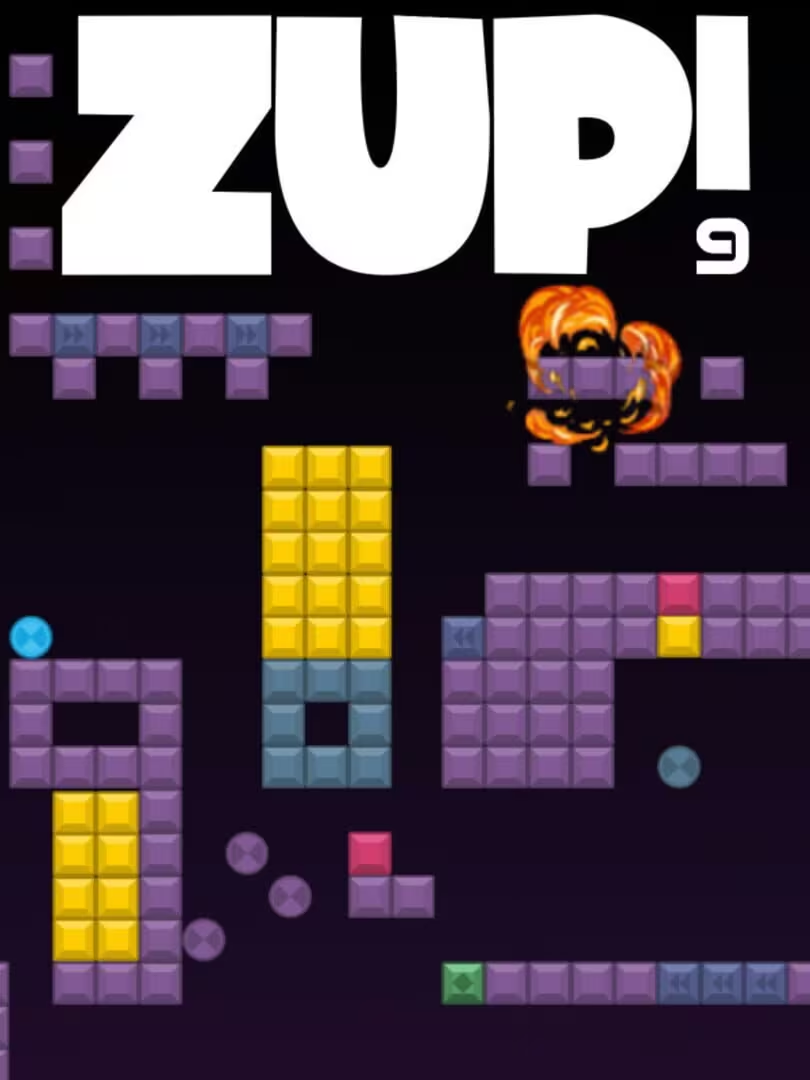 Zup! 9
"Good value for price due to short playtime, many achievements, and valuable trading cards."
-
Violence
Game with the same Violence vibe
0"Explosions are a core mechanic but non-violent and abstract."
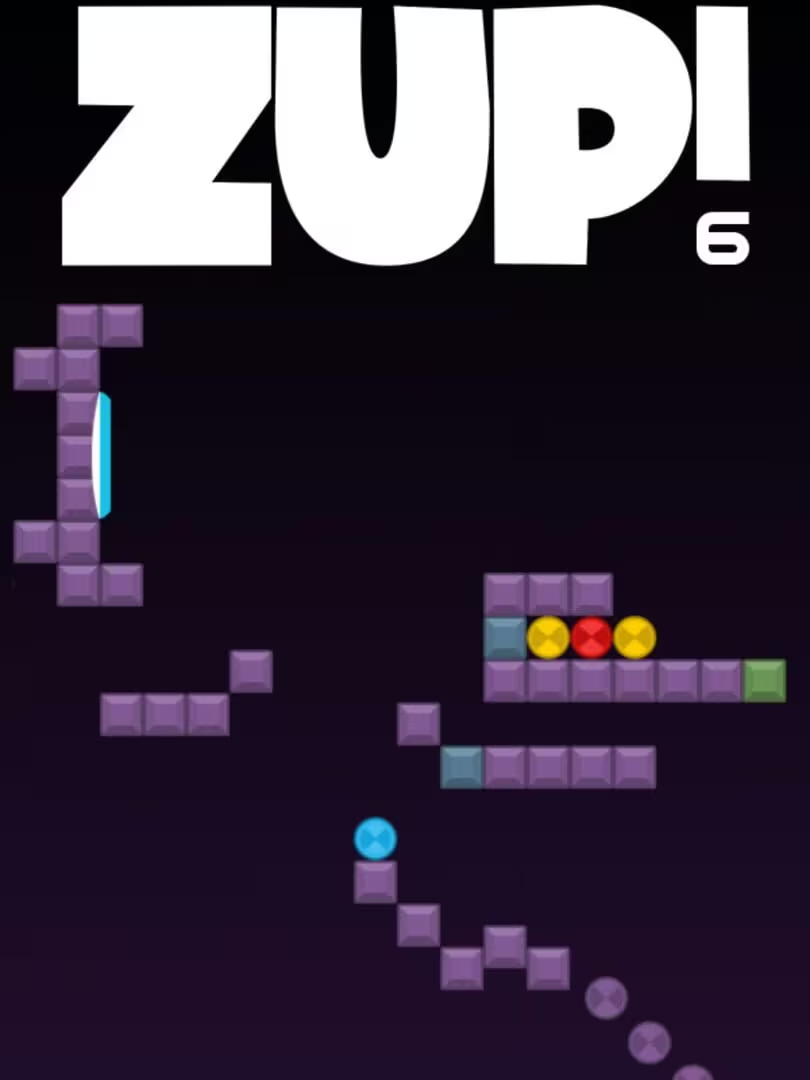 Zup! 6
"Explosions present but not focused on violence; neutral in this dimension."
-
Survival
Game with the same Survival vibe
-5"No survival or threat avoidance mechanics."
 To the Moon
"No survival or threat avoidance mechanics."
Last update: 01/06/2026