SCP Strategy similar games & best alternatives
Should you play it?
Take control of the SCP Foundation. For the general good, find, contain, and protect SCP objects. Develop your foundation and protect it from hostile organizations, in the last resort destroy them and capture SCP objects held there.
What works
- Engaging scp lore and universe immersion
- Customization and modding options
- Accessible and simple gameplay
- Reasonable price, especially on sale
- Potential for future updates and improvements
Things to keep in mind
- Repetitive and shallow gameplay
- Limited strategic depth and challenge
- Minimal social or cooperative features
- Bugs and ui issues reported
- Lack of meaningful containment mechanics and events
What to play next
Similar games, hidden gems, and fresh directions from this game.
Top picks
Games that feel the closest overall
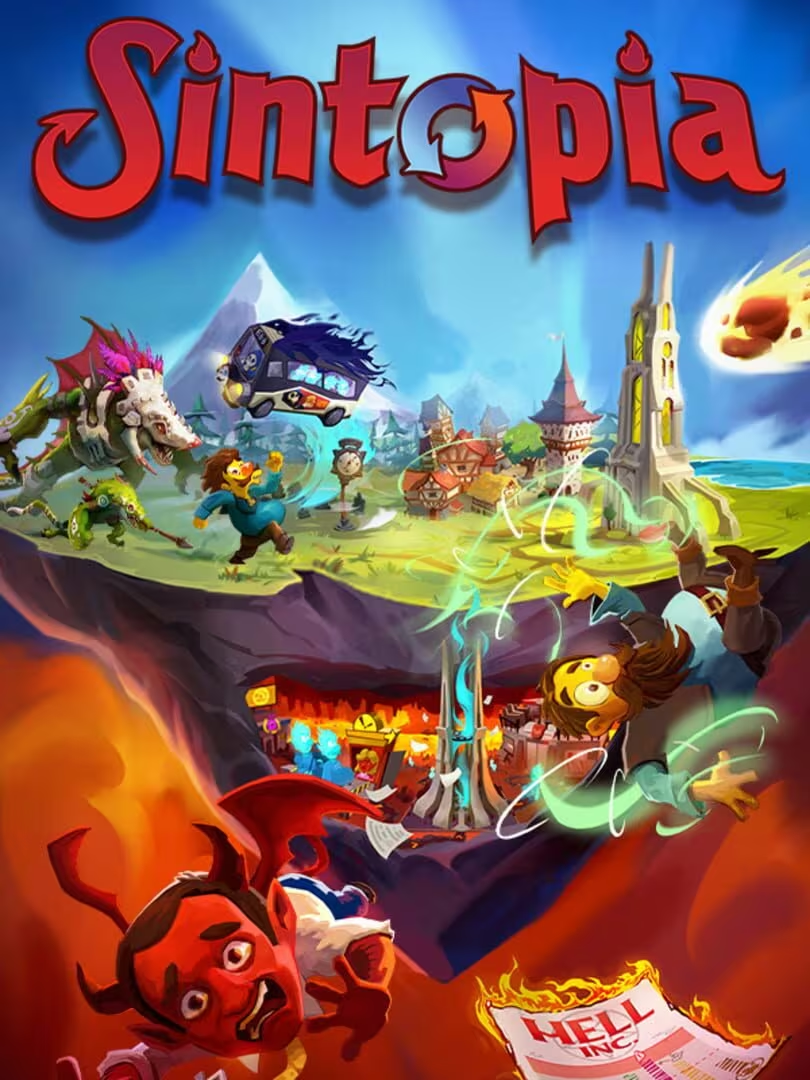
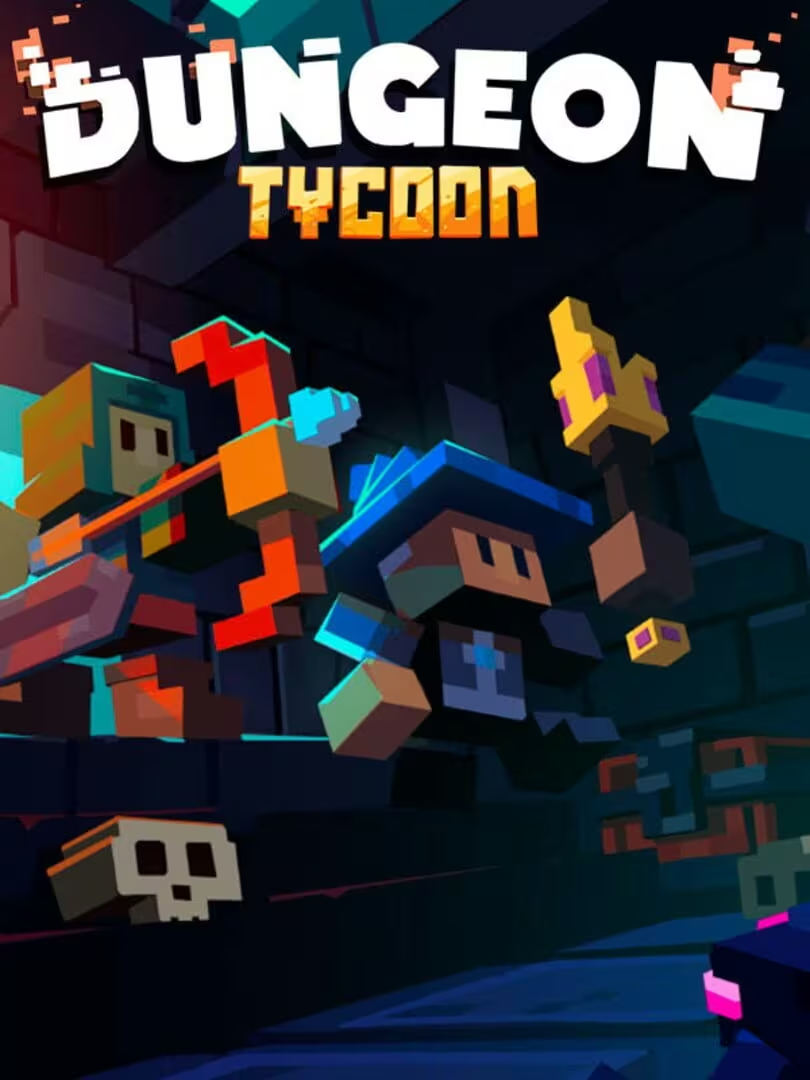
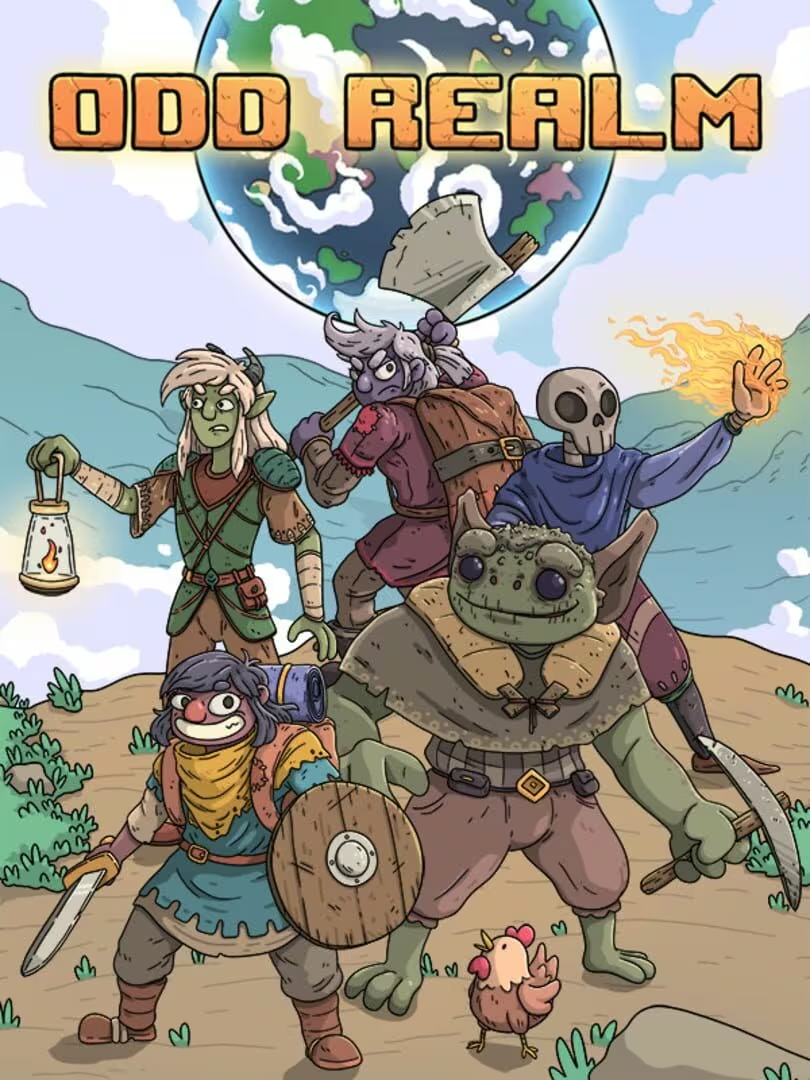
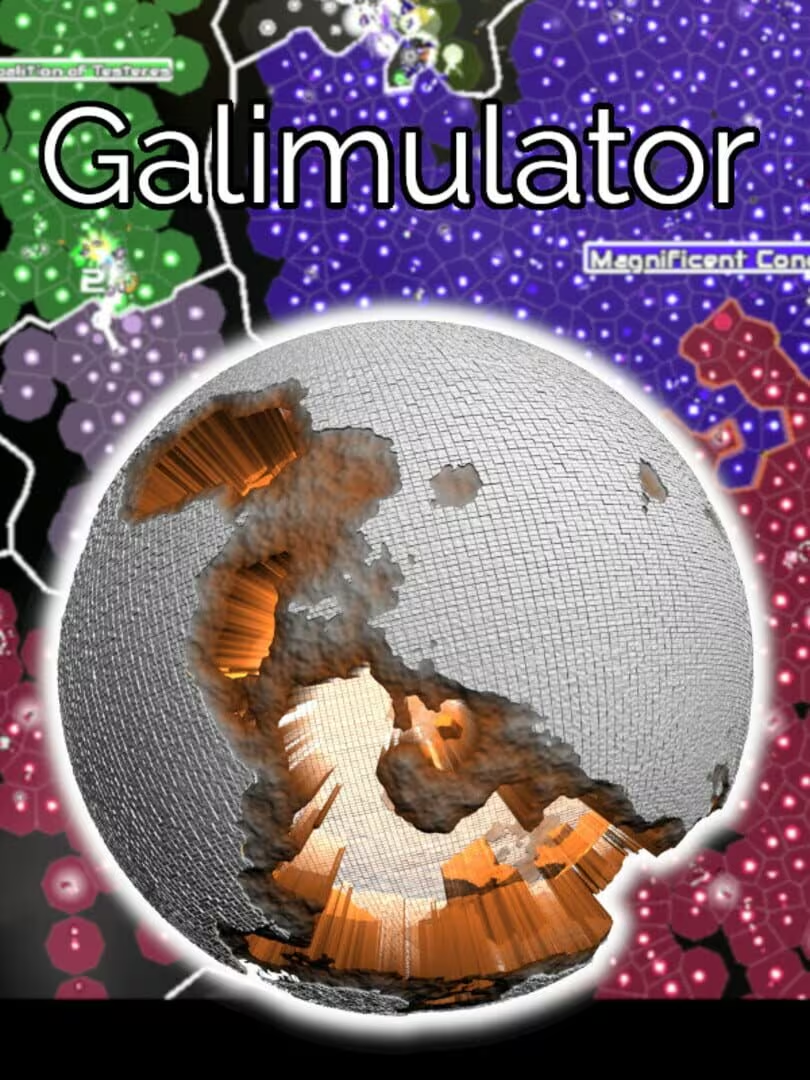



Hidden Gems
Less popular games with surprisingly high similarity
If you liked…
Recommendations by what you enjoyed most
Similarity map
Explore nearby similar games and see why they’re close.
SCP Strategy: Less representative of its motivational profile, with noticeable differences. Motivations that often define this kind of title include Violence, Fantasy, Story, Thrill. Here, the score leans higher than usual among comparable games on Domination, Fantasy, Leadership.
Why this game works
A motivational profile of the game, with the closest similar game for each player motivation.
-
Autonomy
Game with the same Autonomy vibe
3"Players can freely choose units, research paths, and strategies; some routine in resource gathering but overall player-directed actions."
 Dungeons 4
"Players can freely choose where to place sites, assign MTF units, and decide research priorities, showing moderate control over actions."
-
Competence
Game with the same Competence vibe
2"The game offers some challenge in managing resources, staff, and emergencies, but many reviews mention repetitive tasks and limited depth reducing skill variation."
 Rescue HQ - The Tycoon
"The game involves managing units, research, and combat mini-games, but many reviews note simplicity and repetitive tasks limiting skill expression."
-
Competition
Game with the same Competition vibe
-2"Focus is on personal progression and story rather than direct competition or leaderboards; combat is automated and strategic rather than PvP."
 Punch Club 2: Fast Forward
"Focus is on personal management and progression rather than direct competition or ranked modes; some PvP-like combat against AI GOIs exists but is simple."
-
Continuation
Game with the same Continuation vibe
1"Some players report addictive moments but also note repetitive tasks that reduce long-term engagement."
 Hacker Simulator: Free Trial
"Players report some engagement and habitual play, but also note repetitiveness and early boredom, indicating moderate continuation motivation."
-
Cooperation
Game with the same Cooperation vibe
-3"Gameplay is mostly single-player with little to no multiplayer cooperation; managing own characters independently."
 My Little Life
"Gameplay is largely single-player management with minimal or no multiplayer cooperation or teamwork."
-
Creativity
Game with the same Creativity vibe
3"Workshop and mod support enable players to customize and add new content, including custom rooms and SCPs."
 SCP – Containment Breach
"Players can create and name custom SCPs, MTF units, and sites, and mod tools allow some customization, fostering creativity."
-
Domination
Game with the same Domination vibe
1"Some elements of exerting control over others via combat and sabotage, but interactions are balanced and not overly aggressive."
 Startopia
"There is some exertion of control over other organizations via combat, but interactions are simple and lack depth."
-
Escapism
Game with the same Escapism vibe
3"Players use the game for immersive horror experience and stress relief; strong immersion in fictional SCP universe."
 SCP: Containment Breach 2
"Players enjoy immersion in the SCP universe and lore as a form of escape, despite some criticism of shallow gameplay."
-
Expectation
Game with the same Expectation vibe
-3"Players engage voluntarily out of interest and fandom; no indication of obligation or external pressure."
 Neptunia: Sisters VS Sisters
"Reviews indicate players engage voluntarily out of interest and fandom, not obligation or external pressure."
-
Experimenting
Game with the same Experimenting vibe
2"Some experimentation with different strategies and approaches is possible, but the game has a somewhat linear progression and limited novelty."
 Cultures - 8th Wonder of the World
"Some experimentation with strategies and unit placement is possible, but overall gameplay is repetitive and limited in novelty."
-
Exploration
Game with the same Exploration vibe
1"Maps offer some discovery and hiding spot exploration, but environments are relatively small and familiar."
 PropHunter
"The globe map allows some discovery of SCP locations, but the environment is static and lacks deep exploration elements."
-
Expression
Game with the same Expression vibe
3"Customization through map editor and modding allows player expression, though character customization is limited."
 STAR WARS™ Galactic Battlegrounds Saga
"Customization of SCPs, units, and sites, including naming and modding, supports player expression."
-
Fantasy
Game with the same Fantasy vibe
4"Strong SCP universe setting with horror and supernatural elements; players enjoy imaginative fiction and lore."
 SCP: 5K
"Strong SCP lore and fictional setting immerse players in imaginative fiction and roleplaying as Foundation administrators."
-
Fellowship
Game with the same Fellowship vibe
-4"Minimal social interaction; gameplay is primarily solo with limited community engagement mentioned."
 Doomsday Hunters
"Minimal social or community interaction; gameplay is primarily solo with little social connection."
-
Growth
Game with the same Growth vibe
2"Players learn to manage resources and make strategic decisions, though learning curve is moderate and gameplay can be repetitive."
 Beholder: Conductor
"Players learn game mechanics and improve management skills, though learning curve is moderate and gameplay can become rote."
-
Health
Game with the same Health vibe
-5"No physical activity involved; gameplay is sedentary and click-based."
 Pickle Clicker
"No physical activity involved; gameplay is sedentary and click-intensive."
-
Idle
Game with the same Idle vibe
3"Gameplay involves waiting and slow pacing, suitable for filling time."
 Trophy Fishing 2
"Game involves waiting for actions to complete and some idle progression, with some players noting it as a time-killer."
-
Intimacy
Game with the same Intimacy vibe
-5"No evidence of close social relationships or emotional sharing; interactions are minimal and surface-level."
 Diplomacy is Not an Option
"No evidence of close social relationships or emotional sharing; interactions are minimal and surface-level."
-
Leadership
Game with the same Leadership vibe
2"Players manage leaders with unique skills and make strategic decisions, but leadership is limited to game mechanics."
 Terraformers: First Steps on Mars
"Players lead the Foundation and manage units and sites, but leadership is limited to game mechanics without social leadership."
-
Progression
Game with the same Progression vibe
4"Progression through unit upgrades, resource management, and campaign advancement is central to gameplay."
 Battle Realms: Zen Edition
"Clear progression through research, site expansion, and unit upgrades drives gameplay and player goals."
-
Relaxation
Game with the same Relaxation vibe
1"Some players find the game relaxing, but others report frustration and tension."
 UNO
UNO
"Some players find the game relaxing and chill, but others report frustration and boredom, indicating mixed relaxation experience."
-
Sensation
Game with the same Sensation vibe
1"Visuals and audio are pleasant but not intense; moderate sensory stimulation."
 Polarity
"Visuals and audio are described as good but not exceptional; sensory stimulation is moderate and functional."
-
Status
Game with the same Status vibe
-5"No social recognition or status systems; achievements are personal and not socially visible."
 Chasm: The Rift
"No social recognition or status systems; achievements are personal and not socially visible."
-
Story
Game with the same Story vibe
3"Contains lore and narrative elements related to SCP universe, though story is not deeply told in-game."
 SCP: Labrat
"The game includes SCP lore and narrative elements that engage players, though story depth is limited."
-
Strategy
Game with the same Strategy vibe
1"Some tactical combat elements exist but overall gameplay is straightforward and not deeply strategic."
 South of Midnight
"Some strategic elements exist in unit management and combat, but overall gameplay is simple and lacks deep strategy."
-
Thrill
Game with the same Thrill vibe
0"Mixed reports of early tension but later gameplay becomes predictable and low risk."
 ROD: Revolt Of Defense
"Mixed reports: some tension from containment breaches and combat, but overall gameplay is predictable and low risk."
-
Value
Game with the same Value vibe
2"Players feel the game offers reasonable value especially on sale, with good content for the price."
 Furnish Master
"Players feel the game offers reasonable value for price, especially on sale, though some note limited content."
-
Violence
Game with the same Violence vibe
1"Combat exists but is not the main focus; more about strategic positioning than destruction."
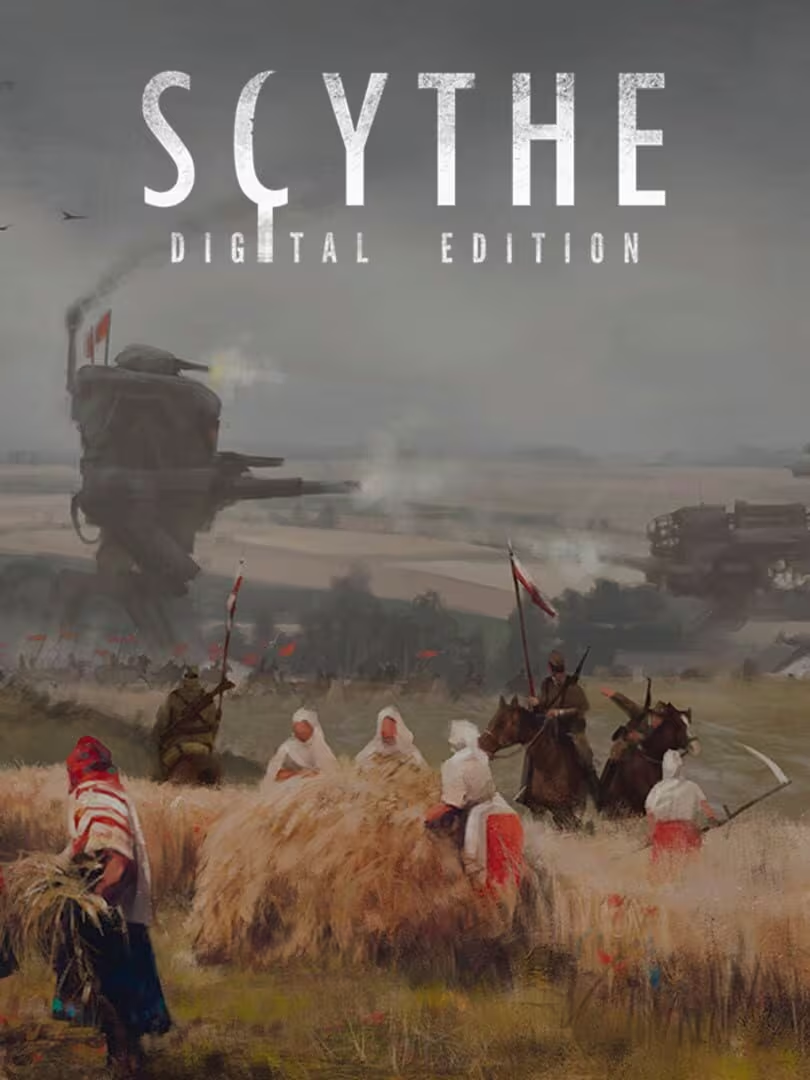 Scythe: Digital Edition
"Combat against other organizations involves destruction, but it is simple and not a major focus."
-
Survival
Game with the same Survival vibe
1"Players manage threats like escapes and disasters but in a controlled, low-risk environment."
 Jurassic World Evolution 3
"Players manage threats like containment breaches and attacks, but these are low risk and manageable."
Last update: 01/06/2026