Star Dynasties similar games & best alternatives
Should you play it?
Take the reins of a feudal dynasty in a divided galaxy following the destruction of earth. Star Dynasties is a turn based, procedurally generated narrative of human drama and personal politics, mixed with a light empire management layer. Your choices. Your legacy.
What works
- Deep political and dynastic intrigue
- Emergent narrative storytelling
- Turn-based strategic gameplay
- Strong replayability
- Immersive sci-fi feudal setting
Things to keep in mind
- Combat system can be frustrating and abstract
- Ui and pop-up management can be cumbersome
- Limited multiplayer or social features
- Some repetitive events and limited content variety
- Slow pacing may not suit all players
What to play next
Similar games, hidden gems, and fresh directions from this game.
Top picks
Games that feel the closest overall
Hidden Gems
Less popular games with surprisingly high similarity

If you liked…
Recommendations by what you enjoyed most
Similarity map
Explore nearby similar games and see why they’re close.
Star Dynasties: Broadly representative of its motivational profile, with a few distinct shifts. Motivations that often define this kind of title include Competition, Fellowship, Status, Cooperation. Here, the score leans higher than usual among comparable games on Story. It leans lower than usual among comparable games on Fellowship, Cooperation.
Why this game works
A motivational profile of the game, with the closest similar game for each player motivation.
-
Autonomy
Game with the same Autonomy vibe
4"Players have significant control over their actions and decisions, including managing orders, family succession, city development, and diplomacy."
 Old World
"Players have significant control over their dynasty's actions and decisions, including diplomacy, intrigue, and family management, though constrained by limited action points and character availability."
-
Competence
Game with the same Competence vibe
3"Players engage in strategic resource management and route planning with skillful decision-making, though some randomness affects outcomes."
 Insurmountable
"Players engage in strategic decision-making and skillful management of relationships and resources, with meaningful consequences and feedback, though some randomness affects outcomes."
-
Competition
Game with the same Competition vibe
3"Players compete against AI nations with dynamic wars and naval arms races, but no explicit ranked or leaderboard competition."
 Rule the Waves 3
"The game involves competing against AI factions for territory and influence, with political and military rivalry, but no direct player-vs-player competition or leaderboards."
-
Continuation
Game with the same Continuation vibe
4"Players report long play sessions, habitual engagement, and repeated playthroughs to experience emergent stories."
 Hard Time III
"Long play sessions and multiple playthroughs are common, with emergent stories and dynastic progression encouraging habitual engagement."
-
Cooperation
Game with the same Cooperation vibe
-2"Focus is mostly on individual dynasty management and competition; multiplayer exists but is buggy and less emphasized."
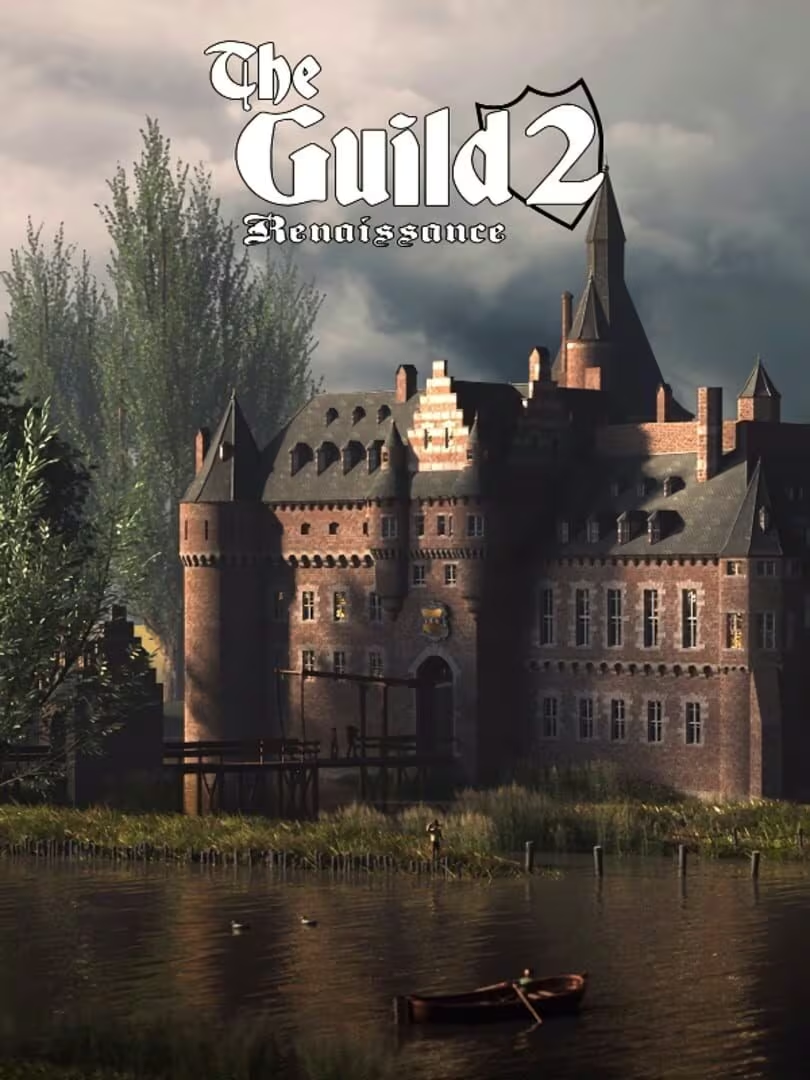 The Guild II
"Gameplay focuses on individual dynasty management and political maneuvering; cooperation is limited to AI vassals and allies rather than multiplayer teamwork."
-
Creativity
Game with the same Creativity vibe
3"Players can customize their dynasty’s development, choose professions, and engage in diverse strategies, though within predefined systems."
 The Guild Gold Edition
"Players can customize their dynasty, make strategic choices, and experiment with different political and familial strategies, though the game world is procedurally generated."
-
Domination
Game with the same Domination vibe
2"Players can impose authority or democratic control, but interactions emphasize political balance over domination."
 Frostpunk 2
"Players seek to exert control over other factions and vassals through political and military means, but must maintain reputation and honor to avoid rebellion."
-
Escapism
Game with the same Escapism vibe
4"Players engage in a dystopian fictional world with immersive story and characters, providing escape from reality."
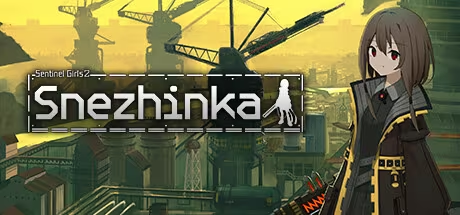 Snezhinka:Sentinel Girls2
"The immersive sci-fi feudal setting and emergent narratives provide a strong escape from real life, with players engaging in complex fictional dynastic drama."
-
Expectation
Game with the same Expectation vibe
-4"Players engage voluntarily out of interest and intrinsic motivation, with no indication of obligation or pressure."
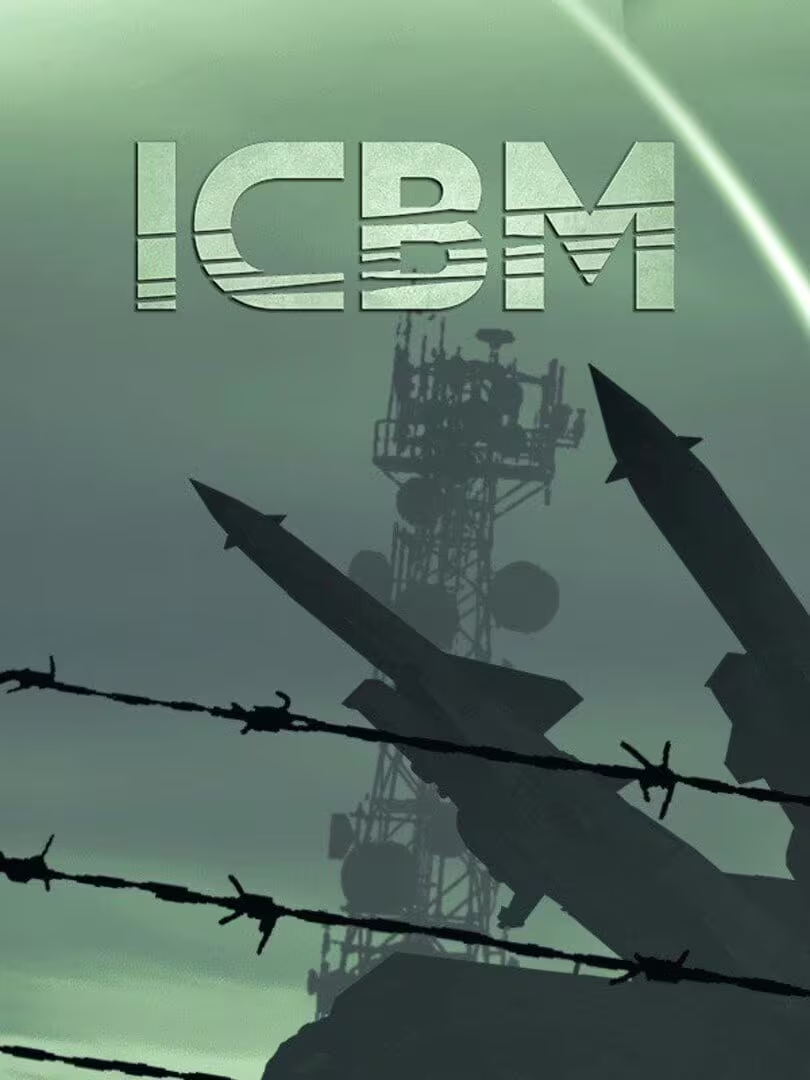 ICBM
ICBM
"Players engage voluntarily out of interest and intrinsic motivation, with no indication of obligation or external pressure."
-
Experimenting
Game with the same Experimenting vibe
3"Players try different characters, abilities, and strategies; some exploration of game mechanics."
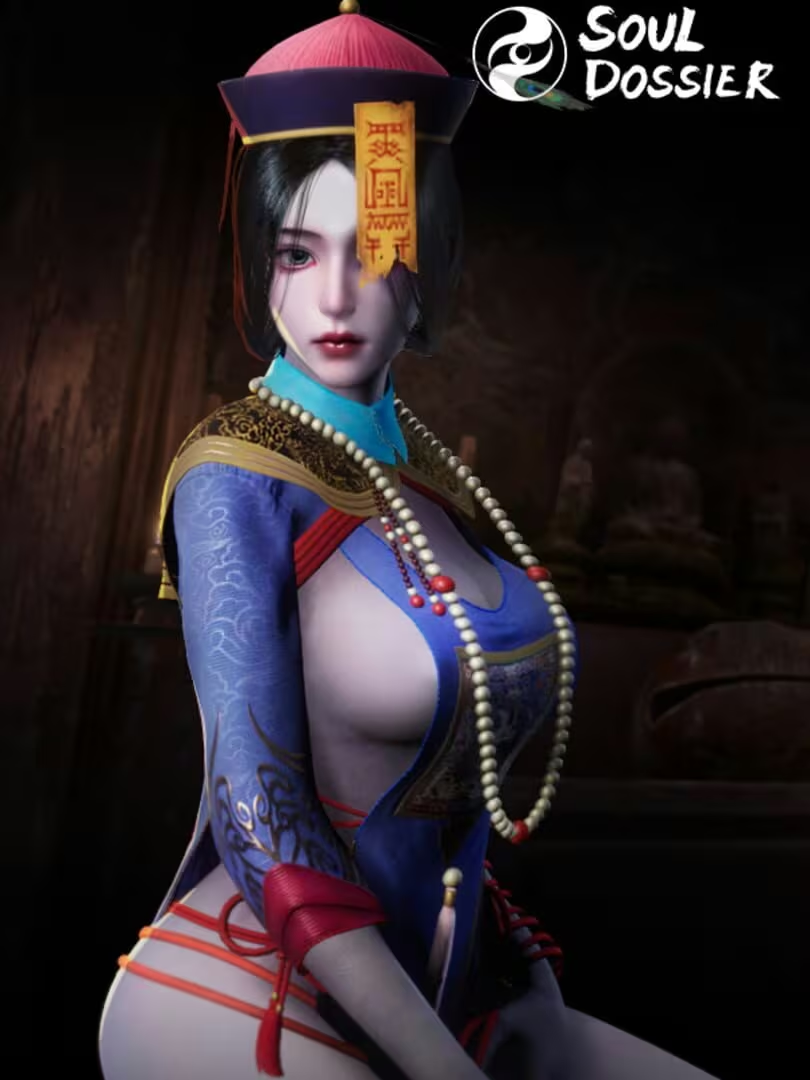 Soul Dossier
"Players try different strategies, character traits, and political maneuvers to explore game mechanics and outcomes."
-
Exploration
Game with the same Exploration vibe
2"Procedurally generated galaxies and sectors encourage discovery and exploration."
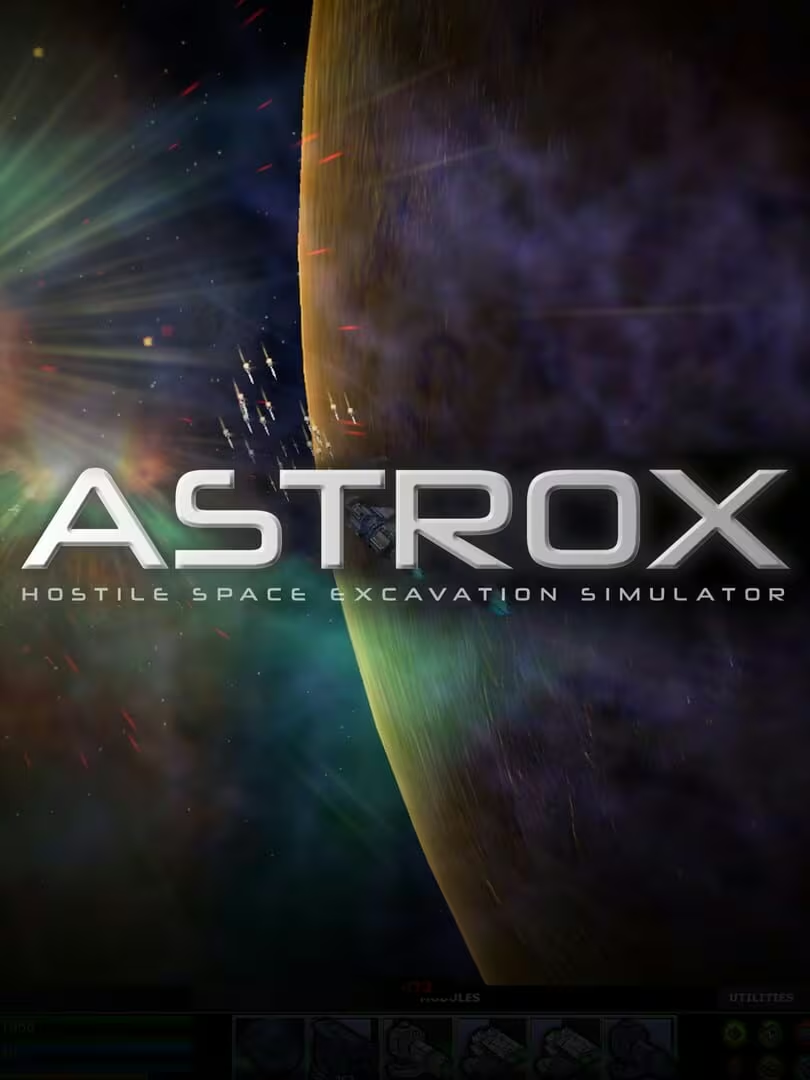 Astrox: Hostile Space Excavation
"Procedurally generated galaxies and random events encourage discovery, though the focus is more on political dynamics than physical exploration."
-
Expression
Game with the same Expression vibe
3"Players express themselves through dynasty management, city specialization, and strategic choices, though cosmetic customization is limited."
Old World
"Players customize their dynasty's traits and appearance, and shape their narrative through choices, though visual customization is limited."
-
Fantasy
Game with the same Fantasy vibe
3"The game features a speculative sci-fi narrative with imaginative fiction and mysterious technology."
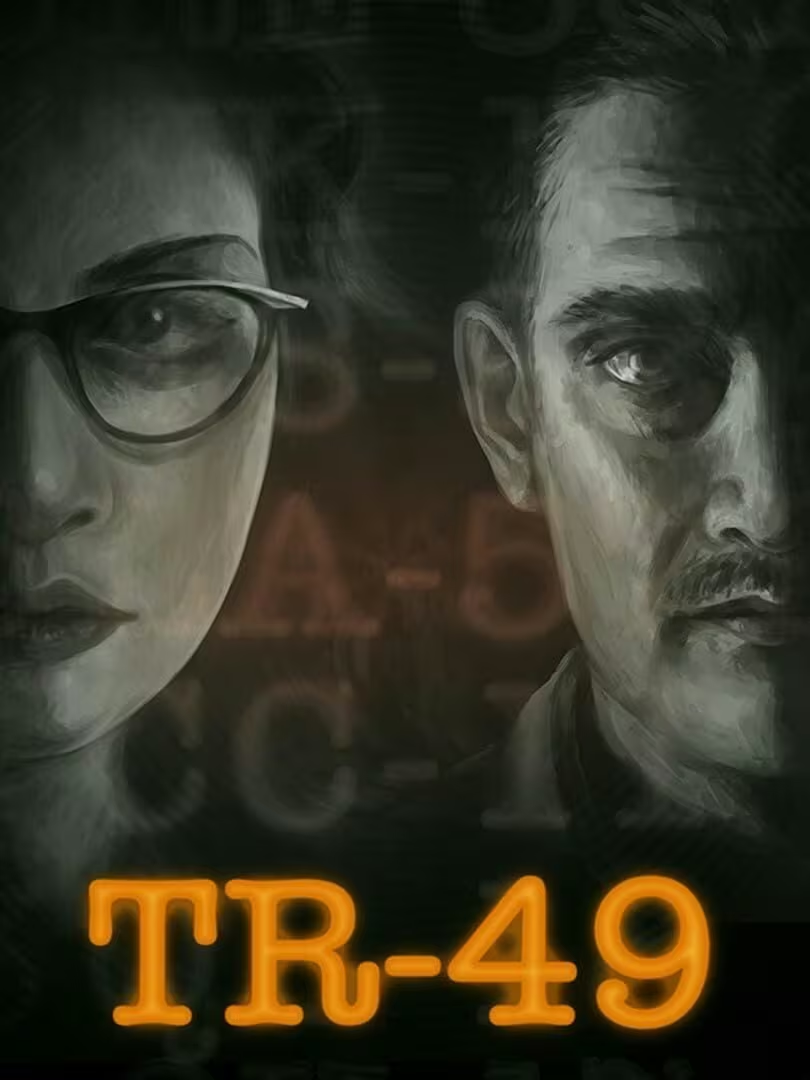 TR-49
TR-49
"The game features a sci-fi feudal setting with imaginative fiction, dynastic intrigue, and speculative technology."
-
Fellowship
Game with the same Fellowship vibe
-3"Focuses on solo dynasty management; multiplayer is limited and unstable, reducing social community aspects."
The Guild Gold Edition
"The game is primarily single-player with minimal social interaction; players focus on individual dynasty management."
-
Growth
Game with the same Growth vibe
3"Players learn game mechanics, improve skills, and develop strategies over repeated playthroughs."
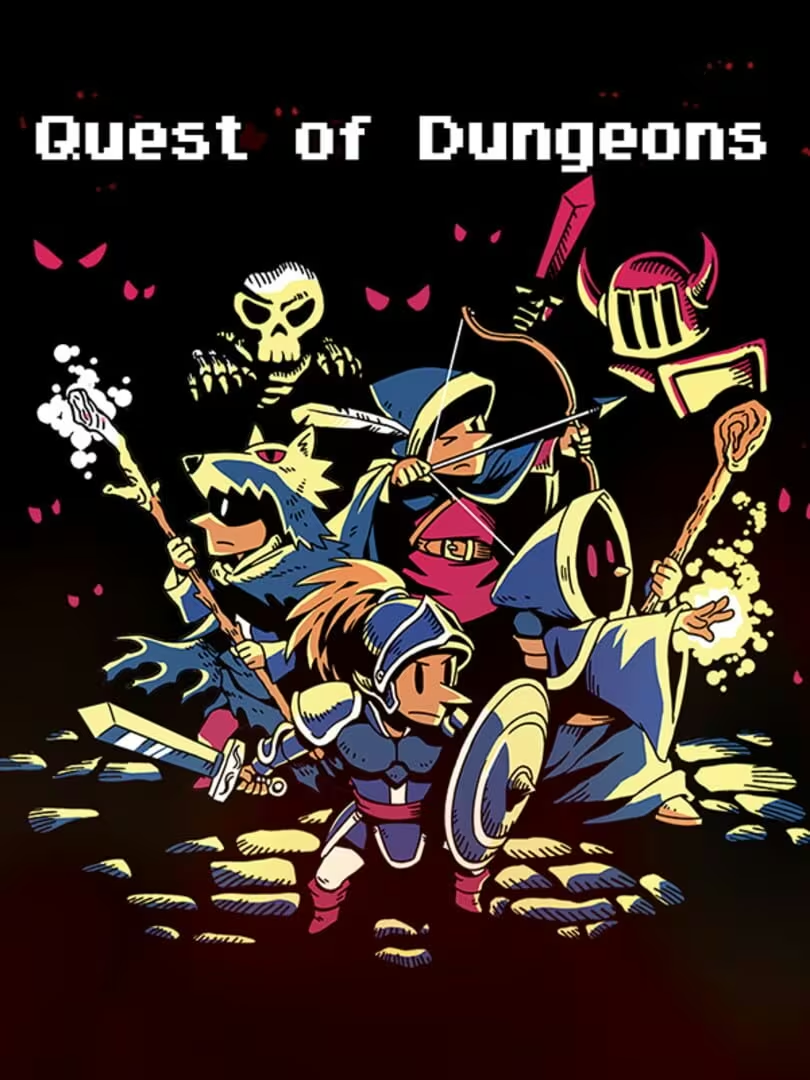 Quest of Dungeons
"Players learn game mechanics, develop strategies, and improve their skills over multiple playthroughs."
-
Health
Game with the same Health vibe
-4"The game is sedentary with no physical activity involved."
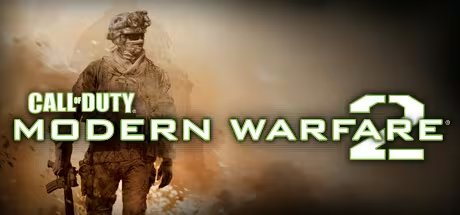 Call of Duty®: Modern Warfare® 2 (2009)
"The game is sedentary with no physical activity involved."
-
Idle
Game with the same Idle vibe
-3"Requires focused attention and strategic planning each turn; not designed for passive or background play."
 Walk of Life
"The game requires focused attention and strategic planning each turn, with limited opportunities for passive or background play."
-
Intimacy
Game with the same Intimacy vibe
2"Players form emotional connections with characters through story and dialogue, but limited to in-game relationships."
 Death end re;Quest
"Players engage with deep character relationships and family dynamics, though emotional connections are virtual and limited to game characters."
-
Leadership
Game with the same Leadership vibe
4"Players lead dynasties, manage vassals, and guide political decisions, embodying leadership roles."
 Crusader Kings III
"Players lead their dynasty and manage vassals, making authoritative decisions and guiding political direction."
-
Progression
Game with the same Progression vibe
4"Players accumulate resources, upgrade units, and expand territory through conquest and diplomacy."
 A Total War Saga: TROY
"Players accumulate territory, influence, and power through conquest, diplomacy, and family alliances."
-
Relaxation
Game with the same Relaxation vibe
2"Game balances tension and flow; moments of calm planning interspersed with high stakes action."
 Heat Signature
"The game offers a slow-paced, contemplative experience with moments of tension balanced by strategic planning."
-
Sensation
Game with the same Sensation vibe
1"Visual and auditory elements are modest but effective; focus is more on narrative and strategy."
 Heads Will Roll: Reforged
"Visual and auditory elements are modest but effective; emotional engagement arises mainly from narrative and strategic outcomes."
-
Status
Game with the same Status vibe
3"Fame and reputation progression within the game provide social recognition in the game world."
 Karate Master 2 Knock Down Blow
"Recognition within the game world through reputation and honor is important, though external social status is minimal."
-
Story
Game with the same Story vibe
5"Strong narrative immersion with emergent storytelling and character-driven events."
Crusader Kings III
"Strong narrative immersion with emergent stories, character-driven events, and dynastic drama."
-
Strategy
Game with the same Strategy vibe
5"High mental challenge requiring planning, resource management, and problem solving."
 Idol Manager
"High mental challenge requiring planning, diplomacy, resource management, and problem solving."
-
Thrill
Game with the same Thrill vibe
3"Players experience suspense and tension from political plots, wars, and unexpected events."
 Crusader Kings II
"Players experience suspense and tension from political intrigue, warfare, and unpredictable events."
-
Value
Game with the same Value vibe
3"Players perceive good return on investment through extensive content, replayability, and engaging gameplay."
 Warhammer 40,000: Chaos Gate - Daemonhunters
"Players perceive good return on investment through engaging gameplay and replayability, especially at discounted prices."
-
Violence
Game with the same Violence vibe
2"Military combat is present but simplified; violence is part of political conflict."
 Rogue State Revolution
"Combat and military conflict are present but abstracted; violence is a means to political ends rather than gratuitous."
-
Survival
Game with the same Survival vibe
4"Players must manage threats, rebellions, and succession crises to maintain their dynasty's survival."
Crusader Kings II
"Players must manage threats, rebellions, and resource constraints to maintain their dynasty's survival."
Last update: 01/06/2026