Super Dungeon Maker similar games & best alternatives
Should you play it?
Super Dungeon Maker is a creative pixel art dungeon editor inspired by the best 2D adventure games. Choose however many levels, enemies, secret rooms, traps and items you want. Challenge your friends and the community to master your dungeon or play the countless dungeons of the community.
What works
- Highly creative dungeon building tools
- Intuitive and accessible editor
- Active and supportive developer community
- Zelda-inspired nostalgic art and gameplay
- Cross-platform level sharing and community content
Things to keep in mind
- Limited content and items in early access
- Bugs and glitches affecting gameplay and editor
- Lack of progression incentives and rewards
- No cooperative or multiplayer gameplay
- Some ui and control issues reported
What to play next
Similar games, hidden gems, and fresh directions from this game.
Top picks
Games that feel the closest overall
Hidden Gems
Less popular games with surprisingly high similarity
If you liked…
Recommendations by what you enjoyed most
Similarity map
Explore nearby similar games and see why they’re close.
Super Dungeon Maker: Broadly representative of its motivational profile, with a few distinct shifts. Motivations that often define this kind of title include Cooperation, Fellowship, Intimacy, Leadership. It leans lower than usual among comparable games on Cooperation, Intimacy, Progression.
Why this game works
A motivational profile of the game, with the closest similar game for each player motivation.
-
Autonomy
Game with the same Autonomy vibe
4"Players have significant freedom to design and customize their dungeon layout, monster placement, traps, and upgrades, allowing personal control over gameplay decisions."
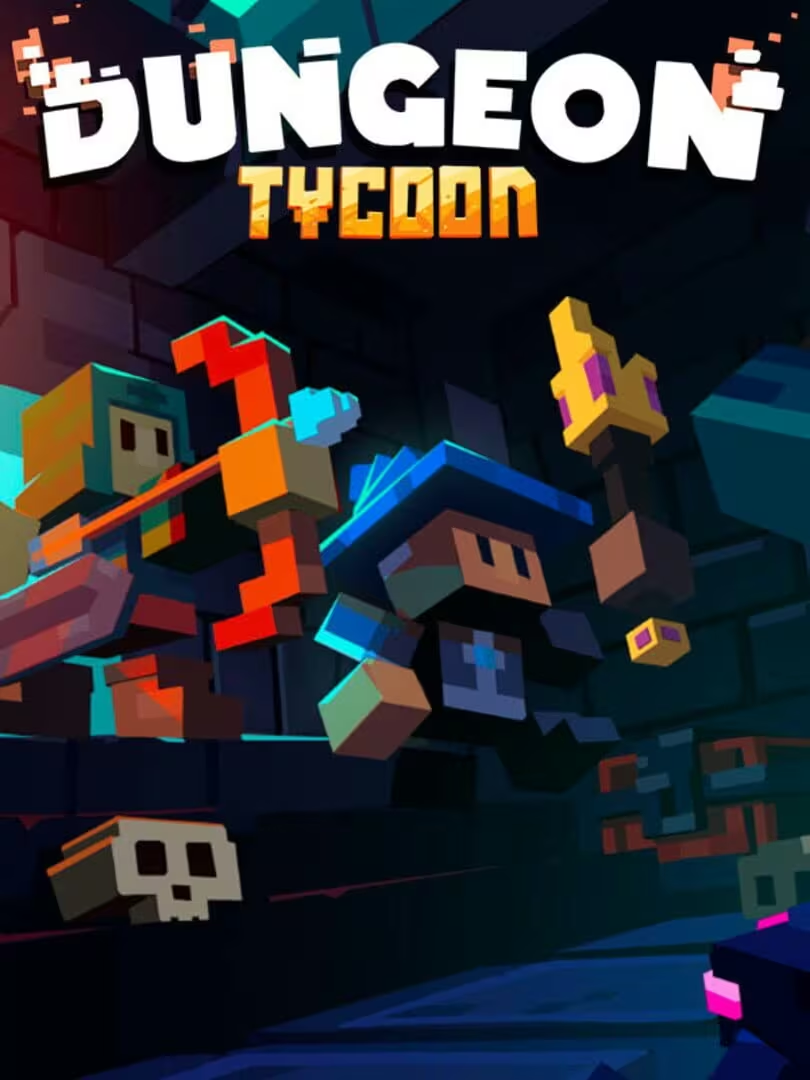 Dungeon Tycoon
"Players have freedom to create their own dungeons with a variety of tools and design choices, enabling personal control over gameplay experience."
-
Competence
Game with the same Competence vibe
3"The game offers challenging puzzles and combat requiring skill and strategy, though combat can be repetitive and clunky."
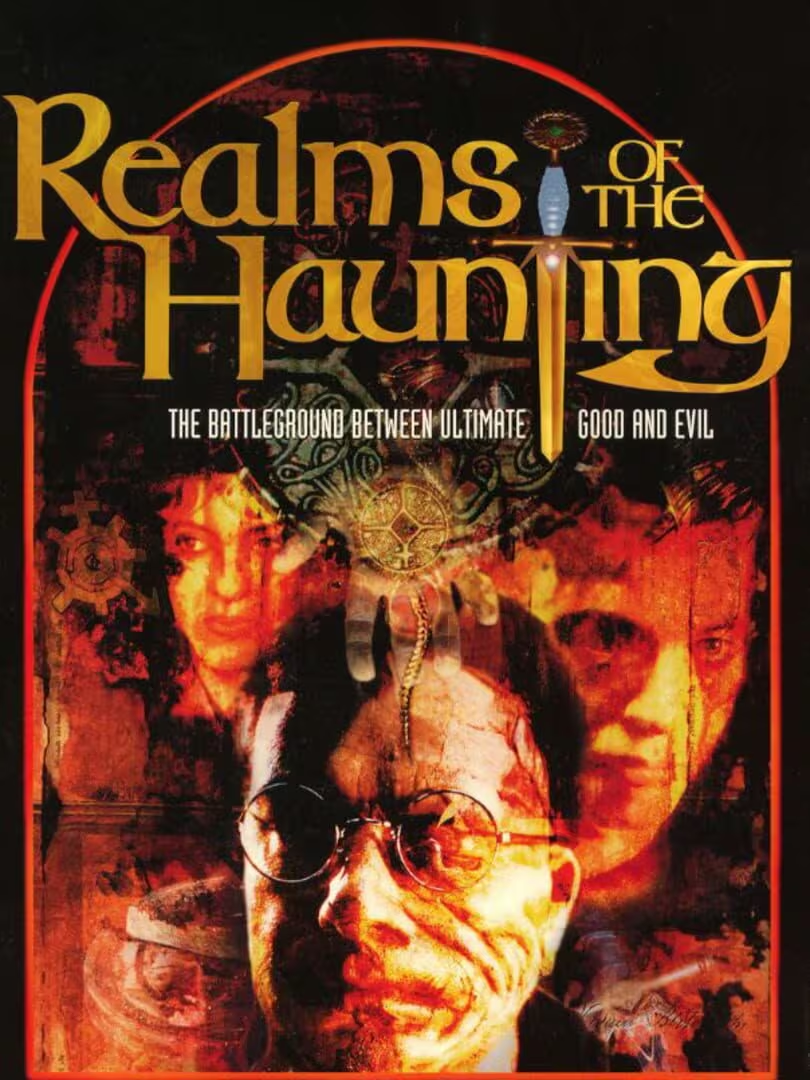 Realms of the Haunting
"The game offers skill-based combat and puzzle solving, but some repetitive enemy types and limited items reduce challenge variety."
-
Competition
Game with the same Competition vibe
-3"Focus is on personal exploration and progression rather than competing against others, though there are some speedrun leaderboards."
 Super Win the Game
"Focus is on personal creativity and playing at one's own pace; leaderboards and speedrun features are requested but not yet implemented."
-
Continuation
Game with the same Continuation vibe
3"Players report long sessions and habitual play, though some frustration with bugs may limit engagement."
 War of Dots
"Players report long sessions building and playing dungeons, though some frustration with bugs and limited content can reduce engagement."
-
Cooperation
Game with the same Cooperation vibe
-4"Gameplay centers on solo missions and individual objectives; no evidence of cooperative multiplayer or teamwork."
 Deadeye Deepfake Simulacrum
"Gameplay centers on individual dungeon creation and solo play; no evidence of cooperative multiplayer or teamwork features."
-
Creativity
Game with the same Creativity vibe
5"Core motivation is creating and customizing dungeons with a versatile editor and sharing creations with the community."
 Quest Master
"Core motivation is creative expression through dungeon building, with many tools and community sharing enabling high customization."
-
Domination
Game with the same Domination vibe
-5"Interactions are balanced and respectful; no evidence of power imposition or dominance over others."
 Winds of Change
"Interactions are balanced and collaborative in spirit; no reports of power imposition or dominance over others."
-
Escapism
Game with the same Escapism vibe
4"Players use the game as a nostalgic escape into Zelda-like worlds and creative outlets, providing stress relief and immersion."
Quest Master
"Players use the game as a fun distraction and stress relief, enjoying immersion in Zelda-like fantasy worlds and creative play."
-
Expectation
Game with the same Expectation vibe
-4"Players engage voluntarily out of intrinsic interest and passion for Zelda-style dungeon creation and exploration."
Quest Master
"Players engage voluntarily out of intrinsic interest and passion for dungeon creation and exploration."
-
Experimenting
Game with the same Experimenting vibe
4"Players explore different skills, crafting builds, combat styles, and dungeon modifiers, encouraging experimentation."
 Crea
Crea
"Players explore new dungeon designs and test game mechanics, though some desire more items and features to expand experimentation."
-
Exploration
Game with the same Exploration vibe
3"Procedurally generated dungeons and item discovery encourage exploration, though environments are somewhat repetitive."
 Dungeon Clawler
"Exploration occurs within user-created dungeons with new puzzles and layouts, but environments are limited to preset tilesets."
-
Expression
Game with the same Expression vibe
4"Players express themselves through dungeon design, monster naming, and aesthetic choices."
 Dungeon Tycoon: Prologue
"Players express themselves through dungeon aesthetics and design choices, though cosmetic variety is somewhat limited currently."
-
Fantasy
Game with the same Fantasy vibe
5"Strong fantasy setting with monsters, magic, and an imaginative story inspired by Zelda and other RPGs."
 Eternal Edge+ Prologue
"Strongly rooted in Zelda-inspired fantasy settings, characters, and imaginative dungeon scenarios."
-
Fellowship
Game with the same Fellowship vibe
2"Community engagement through Discord and custom levels fosters a sense of belonging, though gameplay is mostly solo."
 Beatblock
"Community sharing and Discord engagement foster a sense of belonging, though gameplay is mostly solo."
-
Growth
Game with the same Growth vibe
3"Players develop problem-solving skills and learn puzzle mechanics, especially via level editor."
 Escape Simulator
"Players develop skills in dungeon design and puzzle creation, with learning encouraged by the editor's complexity."
-
Health
Game with the same Health vibe
-5"Sedentary gameplay with no physical activity or health-related features."
 DRAGON BALL Z: KAKAROT
"Sedentary gameplay with no physical activity or health-related features."
-
Idle
Game with the same Idle vibe
-3"Requires focused attention for building and gameplay; not designed for passive or background play."
 Brickadia
"Requires focused attention for building and playing dungeons; not designed for passive or background play."
-
Intimacy
Game with the same Intimacy vibe
-4"Social interactions are limited to surface-level community exchanges; no close relationship formation described."
 Genome Guardian 2
"Social interactions are limited to surface-level community sharing and feedback; no close relationship formation reported."
-
Leadership
Game with the same Leadership vibe
2"Some players lead by creating popular dungeons and guiding community trends, but no formal leadership roles."
Quest Master
"Dungeon creators lead by designing content for others to play, but no formal leadership or group management features."
-
Progression
Game with the same Progression vibe
2"Some progression through unlocking characters, cosmetics, and future planned content, but limited currently."
 Liar's Bar
"Some progression through unlocking bosses and items, but overall limited by early access content and static character abilities."
-
Relaxation
Game with the same Relaxation vibe
3"Many players find the game relaxing and enjoyable despite some frustration with bugs."
 Chocolatier®: Decadence by Design™
"Many players find the creative process and dungeon exploration relaxing and enjoyable despite some frustration with bugs."
-
Sensation
Game with the same Sensation vibe
3"Bright, colorful graphics and pleasant audio provide enjoyable sensory stimulation."
 Farm Together 2
"Colorful retro graphics and sound provide pleasant sensory stimulation, though audio variety is limited."
-
Status
Game with the same Status vibe
-2"Recognition mostly within community and multiplayer groups; no major social status or ranking systems."
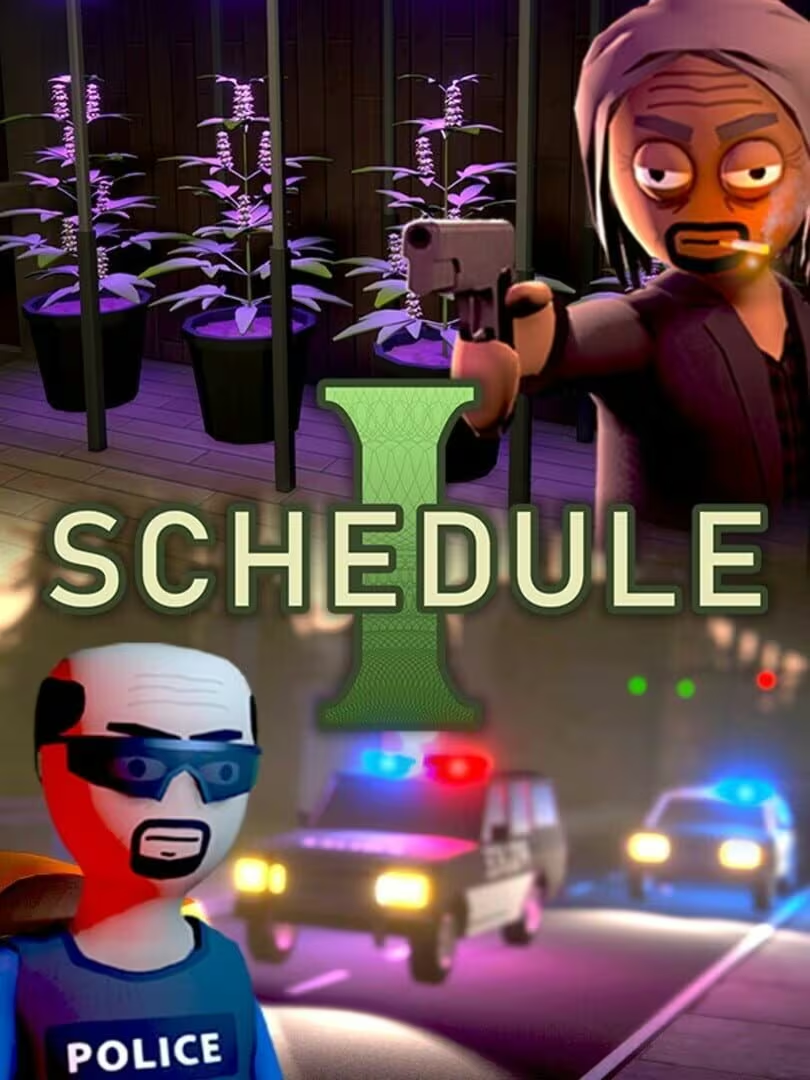 Schedule I
"Recognition mainly through community sharing and hearts on dungeons; no strong social status or ranking systems."
-
Story
Game with the same Story vibe
1"Some lore and narrative elements present but not a major focus; gameplay driven more than story."
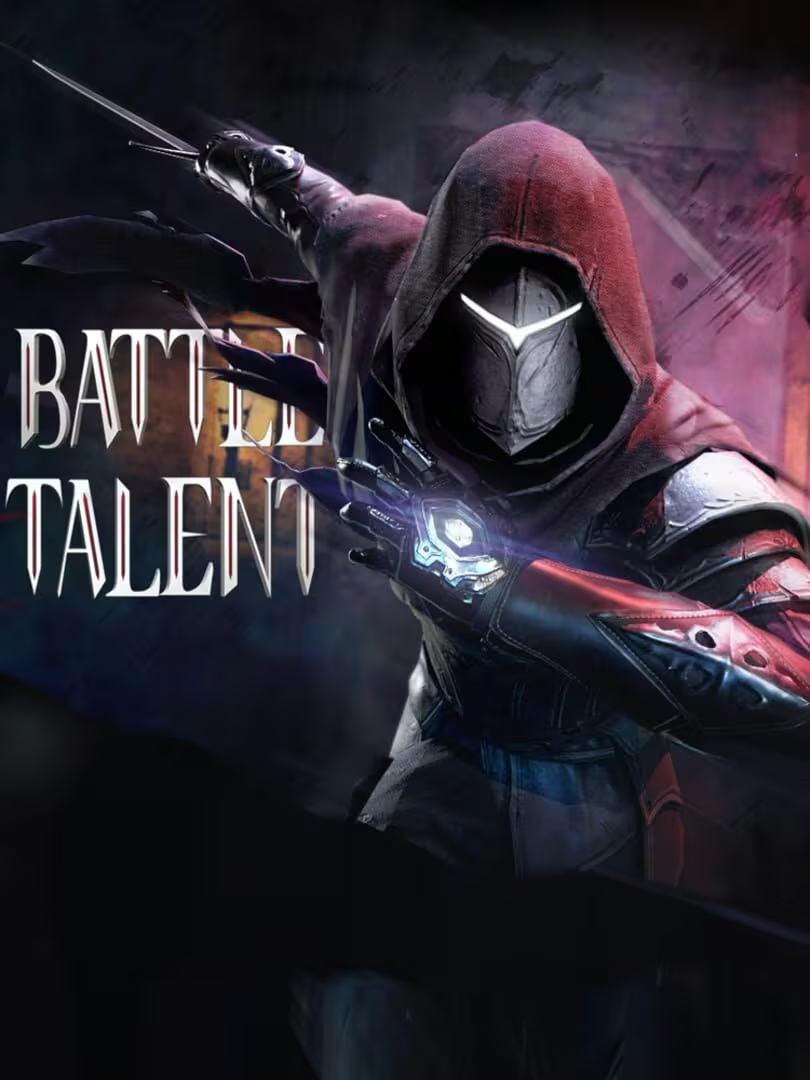 Battle Talent
"Some narrative elements exist, but the main focus is on player-created dungeons rather than a strong overarching story."
-
Strategy
Game with the same Strategy vibe
3"Players engage in problem solving, planning routes, and puzzle solving requiring analytical thinking."
 Tomb Raider IV-VI Remastered
"Players engage in puzzle solving and planning dungeon layouts, requiring analytical thinking and problem solving."
-
Thrill
Game with the same Thrill vibe
1"Some tension exists in combat and puzzles, but overall the experience is more relaxed and charming than suspenseful."
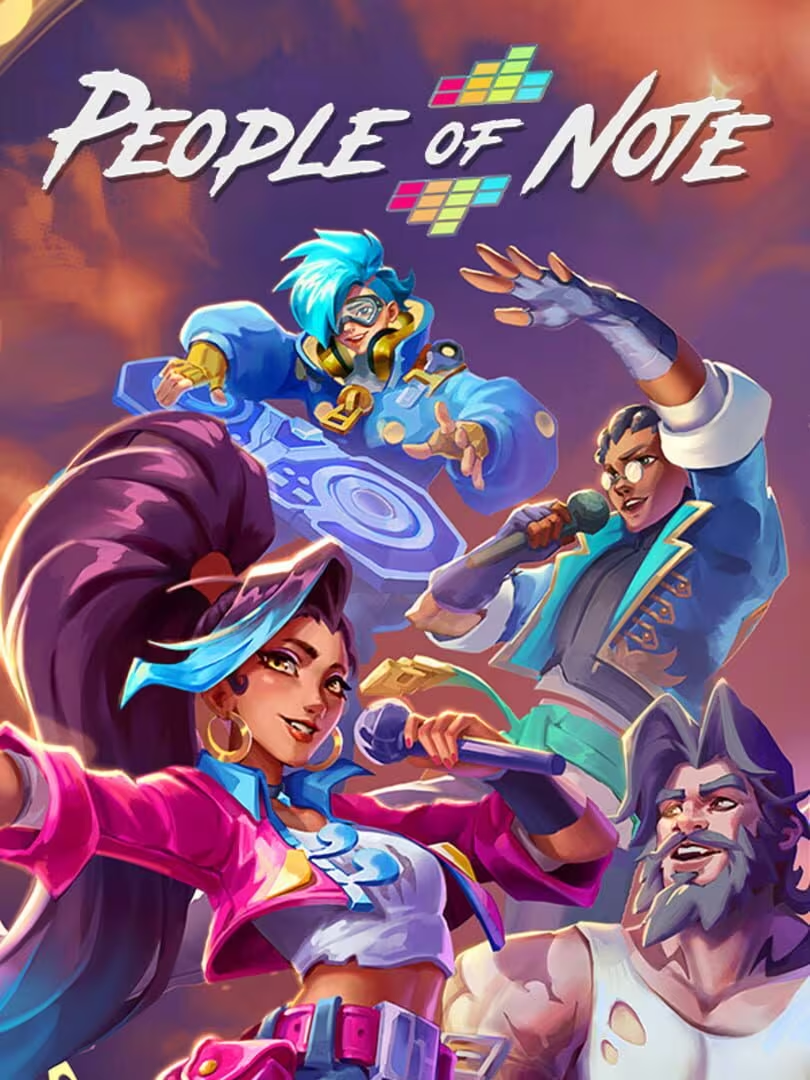 People of Note
"Some tension from combat and puzzles, but overall experience is more casual and creative than suspenseful."
-
Value
Game with the same Value vibe
3"Players feel the game offers good entertainment value, especially given frequent updates and creativity."
 CHKN
CHKN
"Players feel the game offers good value for creativity and content, especially given its low price and ongoing updates."
-
Violence
Game with the same Violence vibe
1"Combat exists but is mild and cartoonish; violence is not a primary focus."
 Townsmen VR
"Combat exists but is mild and cartoonish; violence is not a primary focus or motivation."
-
Survival
Game with the same Survival vibe
1"Some resource management and combat survival elements, but low risk and forgiving gameplay."
 MareQuest: An Interactive Tail
"Some survival elements in combat and resource management, but low risk and forgiving gameplay."
Last update: 01/06/2026