Junji Ito Maniac: An Infinite Gaol similar games & best alternatives




Should you play it?
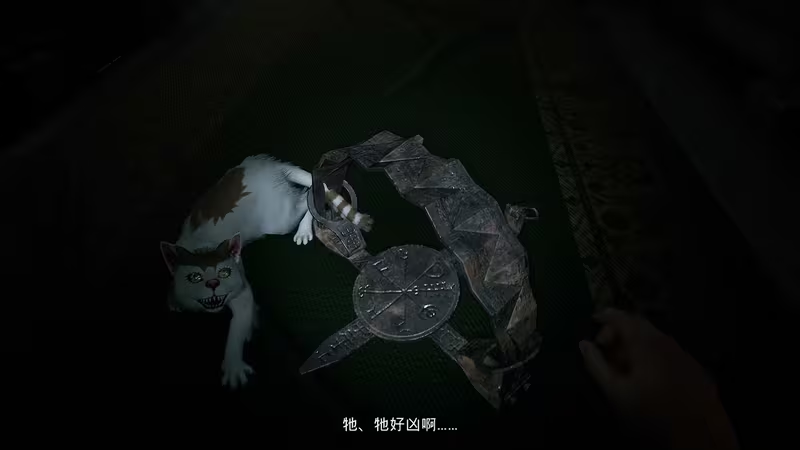
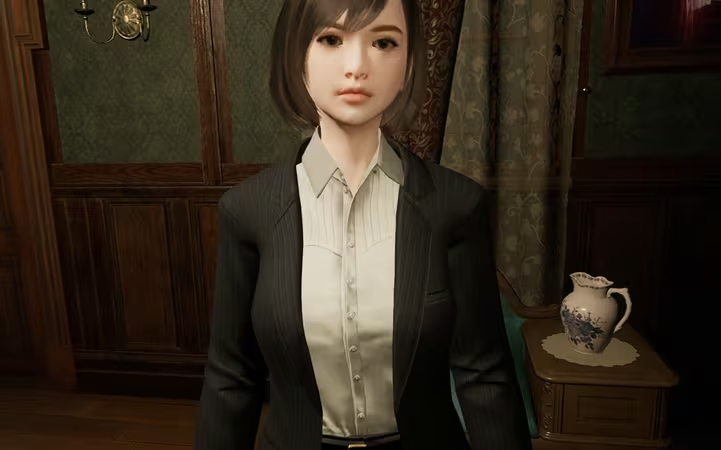
Junji Ito Maniac: An Infinite Gaol is a first-person survival horror game inspired by Junji Ito's psychological horror and eerie aesthetics. This work centers on the twisted potential of human nature and fear of the unknown, taking you on a journey of survival where memory and mystery intertwine.
What works
- Strong junji ito thematic references and atmosphere
- Multiple endings and replayability
- Accessible puzzles and gameplay
- Good optimization and performance
- Engaging psychological horror experience
Things to keep in mind
- Limited enemy variety and combat depth
- Short playtime and some pacing issues
- Stamina system frustrating for some players
- Some narrative and translation inconsistencies
- Ai-generated artwork detracts from atmosphere
What to play next
Top picks
Games that feel the closest overall





Hidden Gems
Less popular games with surprisingly high similarity
If you liked…
Recommendations by what you enjoyed most

Similarity map
Explore nearby similar games and see why they’re close.
Junji Ito Maniac: An Infinite Gaol: Less representative of its motivational profile, with noticeable differences. Motivations that often define this kind of title include Fellowship, Violence, Cooperation, Survival. It leans lower than usual among comparable games on Experimenting, Competition, Leadership.
Why this game works
A motivational profile of the game, with the closest similar game for each player motivation.
-
Autonomy
Game with the same Autonomy vibe
3"Players explore the mansion freely, solve puzzles with multiple solutions, and choose paths leading to different endings, indicating control over actions and decisions."
"Players explore a mansion with some freedom, make choices affecting endings, and solve puzzles with some agency."
-
Competence
Game with the same Competence vibe
2"Puzzles are generally easy and straightforward, offering some challenge but mostly accessible gameplay."
"Puzzles are generally easy and gameplay is accessible, but boss fights and stamina management add some challenge."
-
Competition
Game with the same Competition vibe
-5"No competitive elements or player comparison; focus is on solo exploration and story."
"No competitive elements or player comparison; focus is on solo exploration and story."
-
Continuation
Game with the same Continuation vibe
2"Multiple endings and replayability encourage repeated playthroughs, though some players find repetition and slow pacing reduce engagement."
"Multiple endings and replayability encourage continued play, though some find pacing slow or frustrating."
-
Cooperation
Game with the same Cooperation vibe
-5"Entirely single-player experience with no cooperative gameplay."
"Entirely single-player experience with no cooperative gameplay."
-
Creativity
Game with the same Creativity vibe
3"Players engage with symbolic storytelling and multiple endings, but limited player-driven creation or customization."
"Creative use of Junji Ito’s universe and multiple endings, though gameplay mechanics are conventional."
-
Domination
Game with the same Domination vibe
-5"No social dominance or power over others; interactions are solitary and narrative-driven."
"No social dominance or power over others; interactions are narrative and solitary."
-
Escapism
Game with the same Escapism vibe
4"Strong psychological horror atmosphere provides immersive escape from reality."
"Strong psychological horror atmosphere provides immersive escape from reality."
-
Expectation
Game with the same Expectation vibe
-3"Players engage voluntarily out of interest in horror and story; no obligation or external pressure reported."
"Players engage voluntarily for interest in Junji Ito and horror; no obligation or pressure noted."
-
Experimenting
Game with the same Experimenting vibe
1"Some exploration of different endings and puzzle solutions, but gameplay mostly follows established routines."
"Some exploration of different endings and puzzle approaches, but mostly established gameplay routines."
-
Exploration
Game with the same Exploration vibe
4"Exploration of a detailed mansion environment is central, with discovery of clues and secrets driving the narrative."
"Exploration of a detailed mansion with secrets and environmental storytelling is central."
-
Expression
Game with the same Expression vibe
1"Limited character customization; expression mainly through narrative choices and exploration rather than visual personalization."
"Limited character customization; some expression through narrative choices but minimal visual personalization."
-
Fantasy
Game with the same Fantasy vibe
4"Strong surreal and psychological horror elements with dreamlike, imaginative fiction and symbolic storytelling."
"Engages with surreal, supernatural horror themes and imaginative creatures from Junji Ito’s works."
-
Fellowship
Game with the same Fellowship vibe
-5"No social or community features; experience is solitary."
"No social or community features; experience is solitary."
-
Growth
Game with the same Growth vibe
2"Players develop puzzle-solving skills and gain narrative understanding."
"Players learn puzzle solutions and game mechanics; some narrative understanding develops."
-
Health
Game with the same Health vibe
-5"Sedentary gameplay with no physical activity or health-related features."
"Sedentary gameplay with no physical activity or health-related features."
-
Idle
Game with the same Idle vibe
-3"Requires focused attention; some slow pacing but not idle or background play."
"Requires focused attention; some slow pacing but not background or idle play."
-
Intimacy
Game with the same Intimacy vibe
-5"No social or emotional relationship building beyond narrative characters."
"No social or emotional relationship building beyond narrative characters."
-
Leadership
Game with the same Leadership vibe
-5"No leadership or group management elements."
"No leadership or group management elements."
-
Progression
Game with the same Progression vibe
3"Progression through story advancement, puzzle completion, and unlocking multiple endings."
"Progression through story, puzzle completion, and unlocking multiple endings."
-
Relaxation
Game with the same Relaxation vibe
1"Atmosphere is tense and eerie but gameplay is not highly stressful; some players find it relaxing while others find it frustrating."
"Atmosphere is tense and unsettling rather than relaxing, but some find gameplay calming."
-
Sensation
Game with the same Sensation vibe
3"Strong sensory stimulation through eerie sound design, visuals, and suspenseful atmosphere."
"Strong sensory atmosphere with eerie visuals and sound design enhancing horror experience."
-
Status
Game with the same Status vibe
-5"No social recognition or status systems."
"No social recognition or status systems."
-
Story
Game with the same Story vibe
4"Narrative immersion with mysterious lore and multiple endings."
"Narrative immersion with multiple endings and strong references to Junji Ito’s lore."
-
Strategy
Game with the same Strategy vibe
2"Some strategic thinking required for stealth and puzzle solving."
"Some strategic use of traps and stealth, but overall straightforward puzzle solving."
-
Thrill
Game with the same Thrill vibe
3"Some suspense and horror elements create tension and thrill."
"Tension and suspense from horror elements and chase sequences create thrills."
-
Value
Game with the same Value vibe
3"Generally considered good value for price, especially by fans, despite some criticism of reused content and bugs."
"Generally considered good value for price and content, especially for fans."
-
Violence
Game with the same Violence vibe
2"Combat involves attacking enemies and using destructive spells, but also includes constructive environmental interactions."
"Combat involves setting traps and environmental attacks on enemies, mild violence."
-
Survival
Game with the same Survival vibe
3"Survival element present in evading enemies and managing stamina, though not highly complex."
"Survival elements include avoiding enemies, managing stamina, and using traps strategically."











Last update: 09/07/2026