Kaizen: A Factory Story similar games & best alternatives
Should you play it?
Kaizen is an open-ended puzzle automation game from the original Zachtronics team, set in 1980s Japan. Design, build, and optimize production lines to create iconic products, like calculators, camcorders, and arcade machines.
What works
- Accessible and polished gameplay
- Engaging optimization and puzzle design
- Charming story and characters
- Quality of life features like timeline editing
- Active community and weekly puzzle updates
Things to keep in mind
- Shorter and easier than previous zachtronics games
- Limited complexity and variety of tools
- Pachinko solitaire mini-game is luck-based
- Some ui and visibility issues on high resolutions
- Story feels unfinished or abrupt
What to play next
Similar games, hidden gems, and fresh directions from this game.
Top picks
Games that feel the closest overall
Hidden Gems
Less popular games with surprisingly high similarity


If you liked…
Recommendations by what you enjoyed most
Similarity map
Explore nearby similar games and see why they’re close.
Kaizen: A Factory Story: Broadly representative of its motivational profile, with a few distinct shifts. Motivations that often define this kind of title include Violence, Fantasy, Story, Thrill. Here, the score leans higher than usual among comparable games on Competition, Status, Story.
Why this game works
A motivational profile of the game, with the closest similar game for each player motivation.
-
Autonomy
Game with the same Autonomy vibe
4"Players have freedom to design and optimize their factory layouts within spatial constraints, with no forced routines."
 MineMogul
"Players have freedom to design and optimize factory layouts and solutions with multiple approaches possible."
-
Competence
Game with the same Competence vibe
4"Challenging puzzles requiring skill and problem-solving; players receive feedback and feel effective when overcoming complex tasks."
 I Expect You To Die 3: Cog in the Machine
"Engages players in challenging puzzles requiring skillful optimization and problem solving."
-
Competition
Game with the same Competition vibe
3"Includes leaderboards and time challenges encouraging players to compare performance."
 BLACKHOLE
"Includes leaderboards and histograms comparing player solutions encouraging competition."
-
Continuation
Game with the same Continuation vibe
3"Players report habitual play in short bursts and returning after breaks to solve challenging puzzles."
 inbento
"Players report habitual play, returning for weekly puzzles and optimization challenges."
-
Cooperation
Game with the same Cooperation vibe
-3"Gameplay centers on solo puzzle solving and story progression with limited multiplayer or cooperative elements."
 Kindergarten 3
"Focuses on individual puzzle solving with limited direct collaboration."
-
Creativity
Game with the same Creativity vibe
4"Players experiment with factory layouts, unit combinations, and research paths to create unique solutions each run."
 ShapeHero Factory
"Encourages creative design of factory processes and multiple solution paths."
-
Domination
Game with the same Domination vibe
-4"No evidence of exerting control over others; interactions are balanced and respectful."
 FINAL FANTASY VII REBIRTH
"Interactions are balanced and respectful; no evidence of exerting control over others."
-
Escapism
Game with the same Escapism vibe
3"Players use the game as a relaxing, stress-relieving experience with immersive factory building and exploration."
 FOUNDRY
"Players enjoy the relaxing and immersive factory building and story experience."
-
Expectation
Game with the same Expectation vibe
-4"Players engage voluntarily out of intrinsic interest and enjoyment."
 Abiotic Factor
"Players engage voluntarily out of intrinsic interest and enjoyment."
-
Experimenting
Game with the same Experimenting vibe
4"Strong encouragement to experiment with different designs, iterate, and optimize solutions."
 Infinifactory
"Strong emphasis on trying new solutions, iterating designs, and exploring optimization."
-
Exploration
Game with the same Exploration vibe
-2"Gameplay centers on known puzzle boards and mechanics rather than discovering new areas or secrets."
 Scalak
"Gameplay centers on known puzzle environments rather than discovering new areas."
-
Expression
Game with the same Expression vibe
2"Some character and environment personalization through choices and interactions, though limited customization."
 Backfirewall_
"Some personalization through solution design, but limited character or environment customization."
-
Fantasy
Game with the same Fantasy vibe
-3"The game is grounded in plausible factory automation and logistics without strong fictional or mythical elements."
 Modulus: Factory Automation
"Grounded in realistic manufacturing and factory automation themes."
-
Fellowship
Game with the same Fellowship vibe
-3"Primarily a solo experience with minimal social community interaction described."
 Purrfect Apawcalypse: Patches' Infurno
"Primarily a solo experience with minimal social community interaction."
-
Growth
Game with the same Growth vibe
4"Players develop skills in planning, optimization, and problem solving."
 Satisfactory
"Players develop skills in logic, optimization, and problem solving."
-
Health
Game with the same Health vibe
-5"Sedentary puzzle gameplay with no physical activity component."
 Void Stranger
"Sedentary puzzle gameplay with no physical activity component."
-
Idle
Game with the same Idle vibe
-3"Requires focused attention and active problem solving throughout sessions."
 I Expect You To Die 2: The Spy and the Liar
"Requires focused attention and active problem solving."
-
Intimacy
Game with the same Intimacy vibe
-4"Limited social interaction beyond co-op; mostly individual experience with minimal emotional sharing."
 THOTH
THOTH
"Limited social interaction beyond casual sharing of solutions."
-
Leadership
Game with the same Leadership vibe
-4"No leadership roles; players act independently solving puzzles."
 Poly Bridge 2
"No leadership or authoritative roles; players solve puzzles individually."
-
Progression
Game with the same Progression vibe
3"Progression through unlocking puzzles and improving solutions, with optimization goals and challenges."
 ABI-DOS
"Players accumulate optimized solutions and unlock new puzzles."
-
Relaxation
Game with the same Relaxation vibe
3"Described as chill and relaxing with calming music and pacing."
 Wordatro!
"Described as a chill, cozy, and pleasant experience with relaxing music and story."
-
Sensation
Game with the same Sensation vibe
2"Enjoyable audiovisual presentation but not focused on intense sensory stimulation."
 Crusader Kings III
"Enjoyable audiovisual presentation with satisfying feedback but not intense stimulation."
-
Status
Game with the same Status vibe
2"Leaderboards provide some recognition but limited social status impact."
 Pinball FX Classic VR
"Leaderboards provide recognition among peers but limited broader social status."
-
Story
Game with the same Story vibe
3"The game features a charming, voice-acted narrative with character interactions and a progressing plot."
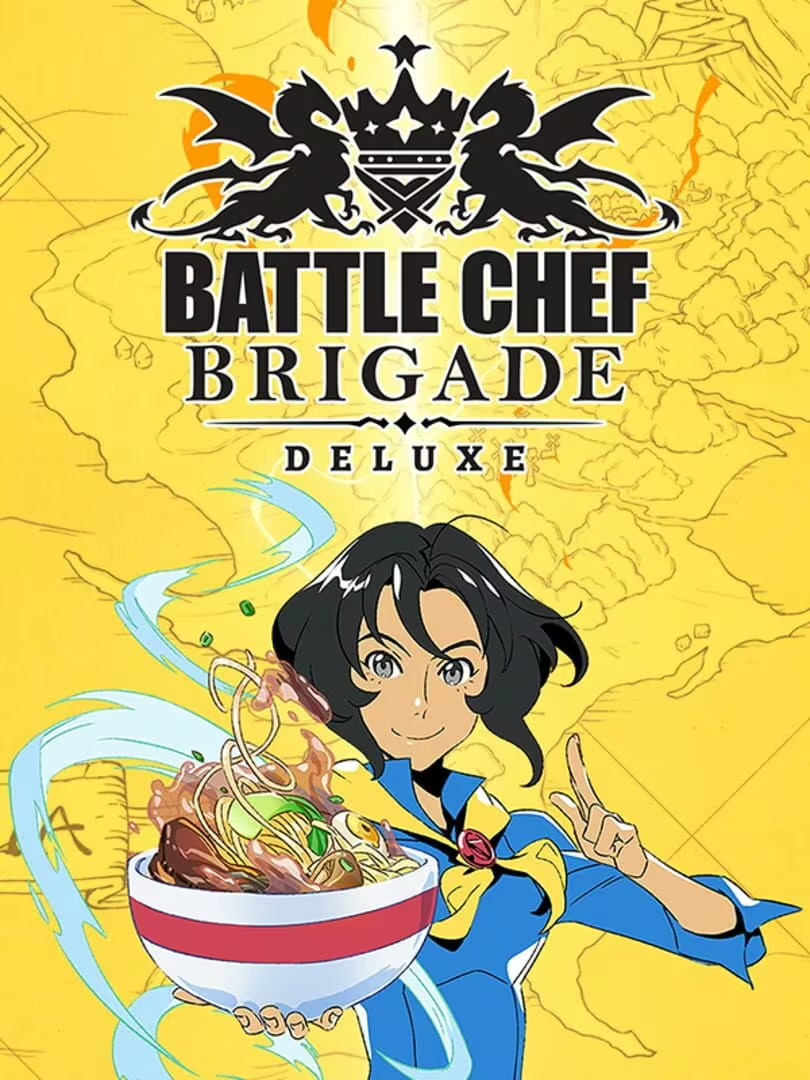 Battle Chef Brigade Deluxe
"Includes a charming narrative with voice acting and character development."
-
Strategy
Game with the same Strategy vibe
4"Requires logical thinking, planning, and analytical problem solving."
 Pro Office Calculator
"Requires analytical thinking, planning, and optimization strategies."
-
Thrill
Game with the same Thrill vibe
-2"Gameplay is more about thoughtful problem solving and less about suspense or risk."
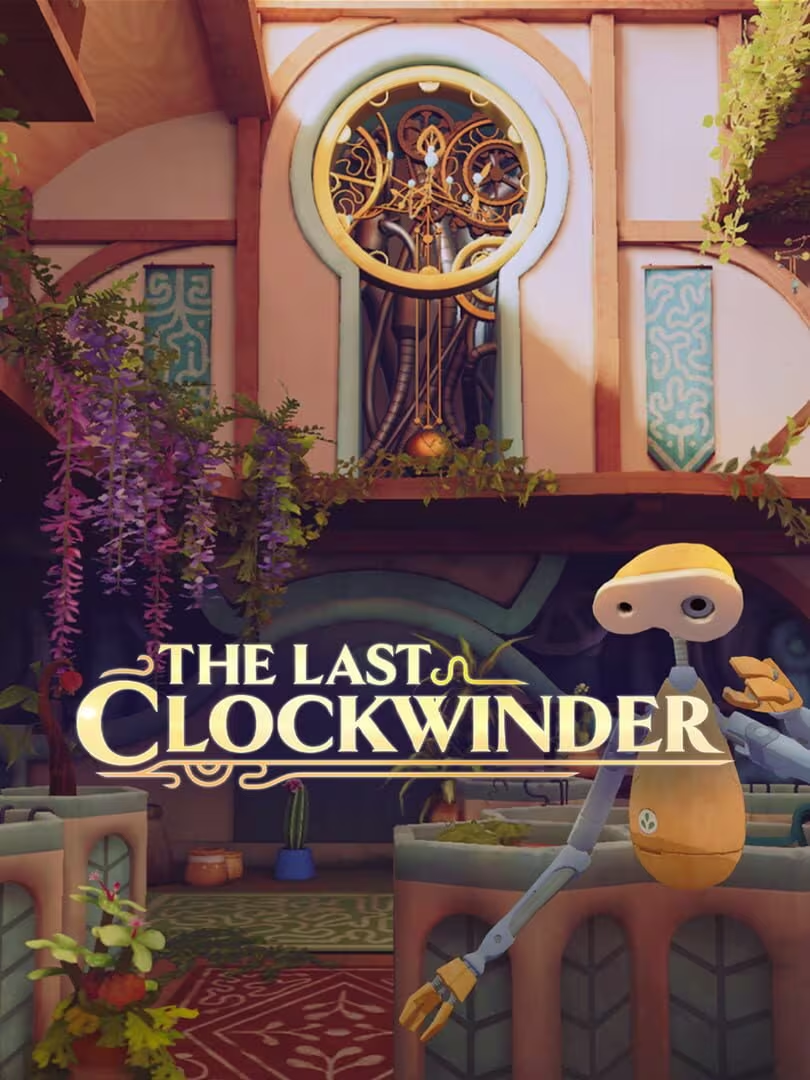 The Last Clockwinder
"Gameplay is low risk and predictable, focusing on thoughtful problem solving."
-
Value
Game with the same Value vibe
3"Players feel the game offers good value with unique mechanics, polish, and replayability."
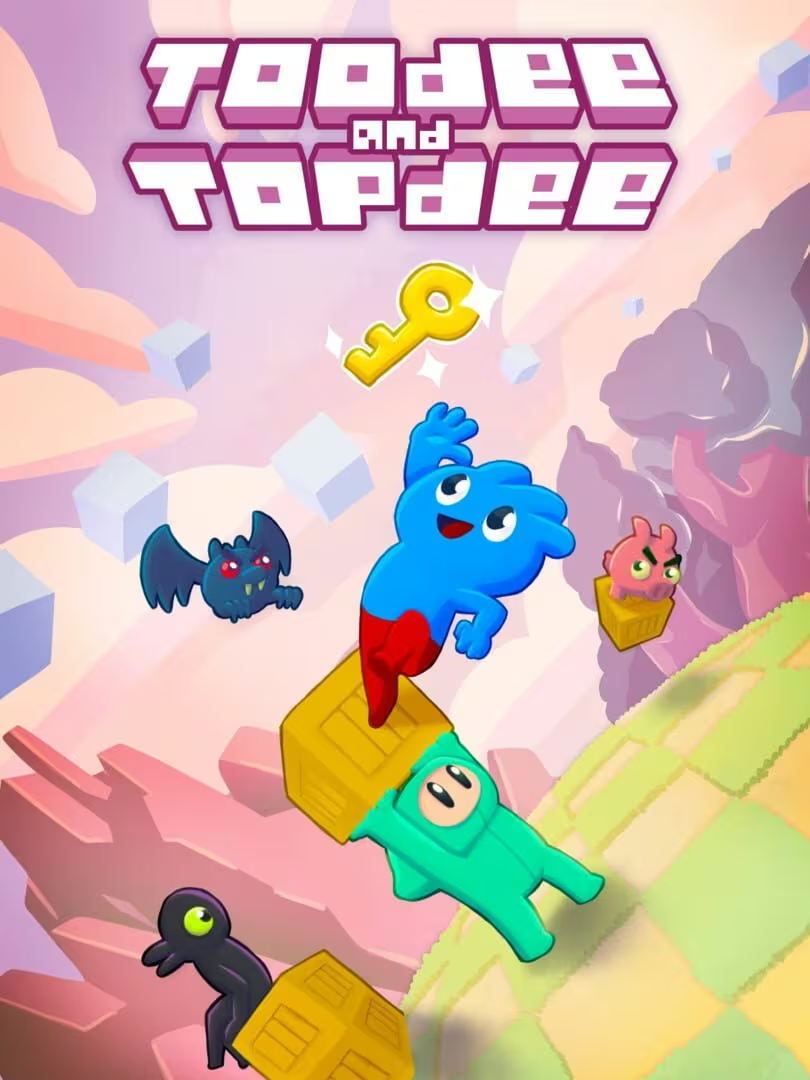 Toodee and Topdee
"Players find good value in gameplay, polish, and ongoing puzzle updates."
-
Violence
Game with the same Violence vibe
-5"No combat or destructive elements; focus on constructive factory building."
 shapez
"No combat or destructive elements; focus on constructive factory building."
-
Survival
Game with the same Survival vibe
-5"Stable, low-risk environment without threats or failure states."
 Tiny Terraces
"Stable, low-risk environment without threats or failure states."
Last update: 01/06/2026