Cypher similar games & best alternatives
Should you play it?
Cypher is a first person puzzle game about cryptography.
What works
- Challenging and educational puzzles
- Immersive museum atmosphere
- Calming classical music
- Good value for price
- Unique cryptography focus
Things to keep in mind
- Steep difficulty curve may frustrate casual players
- Minimal in-game hint system
- Lack of gameplay variety beyond puzzle solving
- No multiplayer or social features
- Some puzzles require external research or tools
What to play next
Similar games, hidden gems, and fresh directions from this game.
Top picks
Games that feel the closest overall


Hidden Gems
Less popular games with surprisingly high similarity
If you liked…
Recommendations by what you enjoyed most
Similarity map
Explore nearby similar games and see why they’re close.
Cypher: Less representative of its motivational profile, with noticeable differences. Motivations that often define this kind of title include Violence, Fantasy, Story, Thrill. Here, the score leans higher than usual among comparable games on Story. It leans lower than usual among comparable games on Expression, Sensation.
Why this game works
A motivational profile of the game, with the closest similar game for each player motivation.
-
Autonomy
Game with the same Autonomy vibe
4"Players freely explore and solve puzzles with minimal hand-holding, choosing their own approach to challenges."
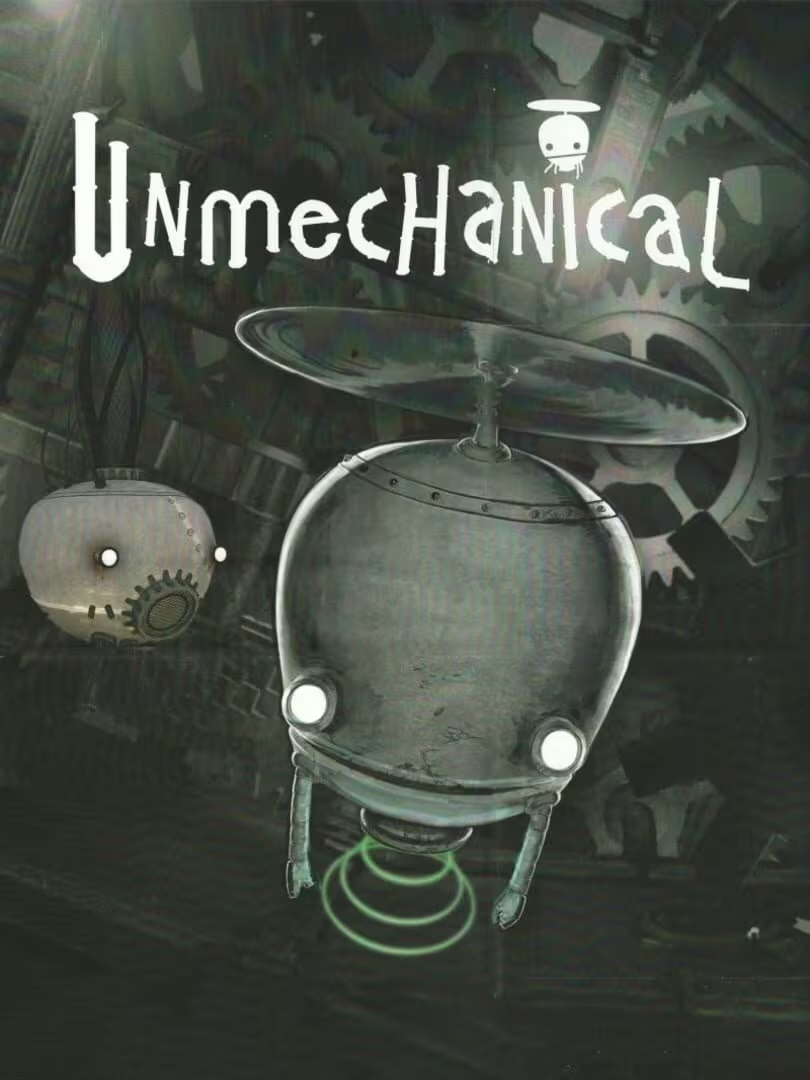 Unmechanical
"Players freely choose how to approach puzzles with pen and paper, no fixed path or hand-holding"
-
Competence
Game with the same Competence vibe
5"Challenging puzzles requiring advanced logic and skill; difficulty ramps up significantly with large puzzles."
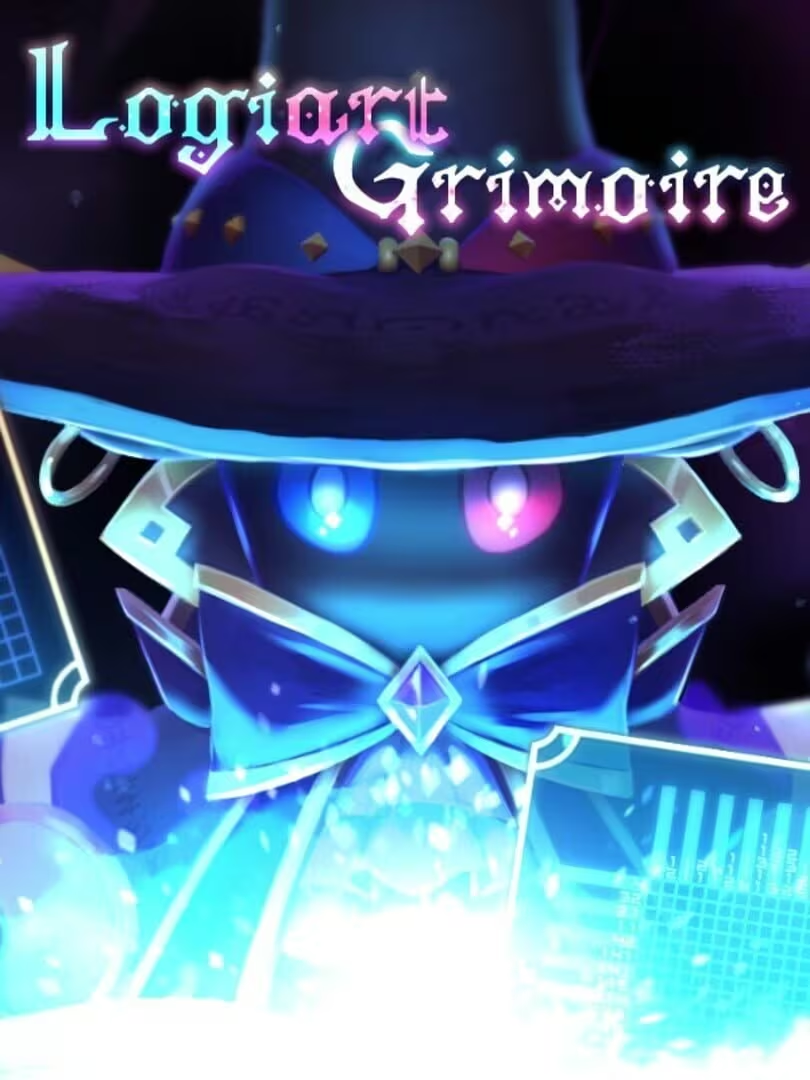 Logiart Grimoire
"Highly challenging puzzles requiring skill, learning, and problem solving; strong feedback through puzzle solving"
-
Competition
Game with the same Competition vibe
-4"Focus is on personal puzzle solving at own pace; no multiplayer or leaderboards mentioned."
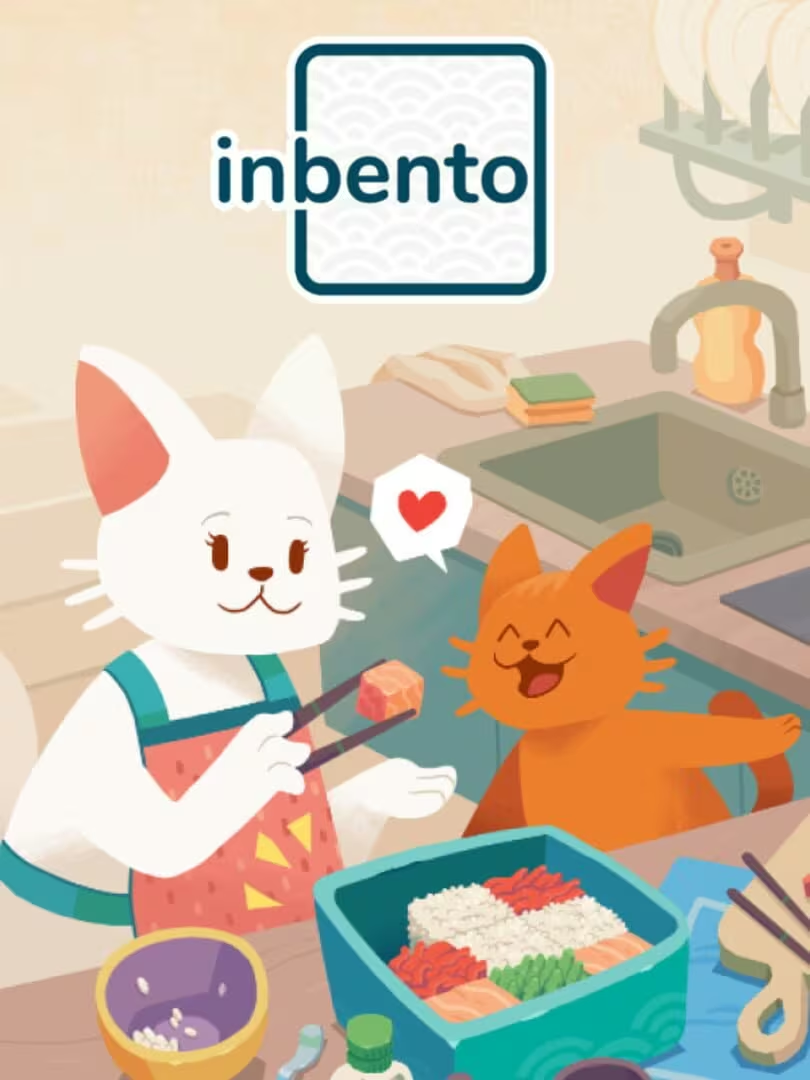 inbento
"Focus on individual puzzle solving at personal pace, no multiplayer or leaderboards"
-
Continuation
Game with the same Continuation vibe
3"Players often spend many hours and return repeatedly to solve difficult puzzles and complete achievements."
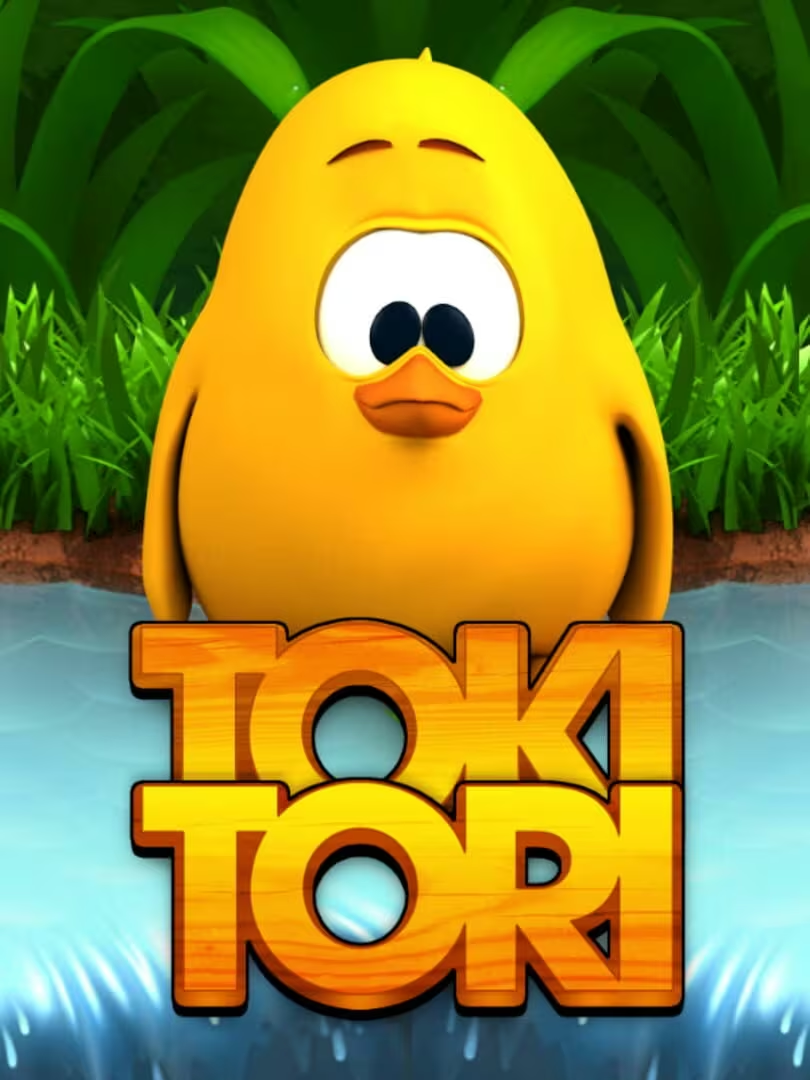 Toki Tori
"Players invest many hours and return repeatedly to solve difficult puzzles"
-
Cooperation
Game with the same Cooperation vibe
-5"Single-player experience focused on individual puzzle solving without multiplayer or cooperative elements."
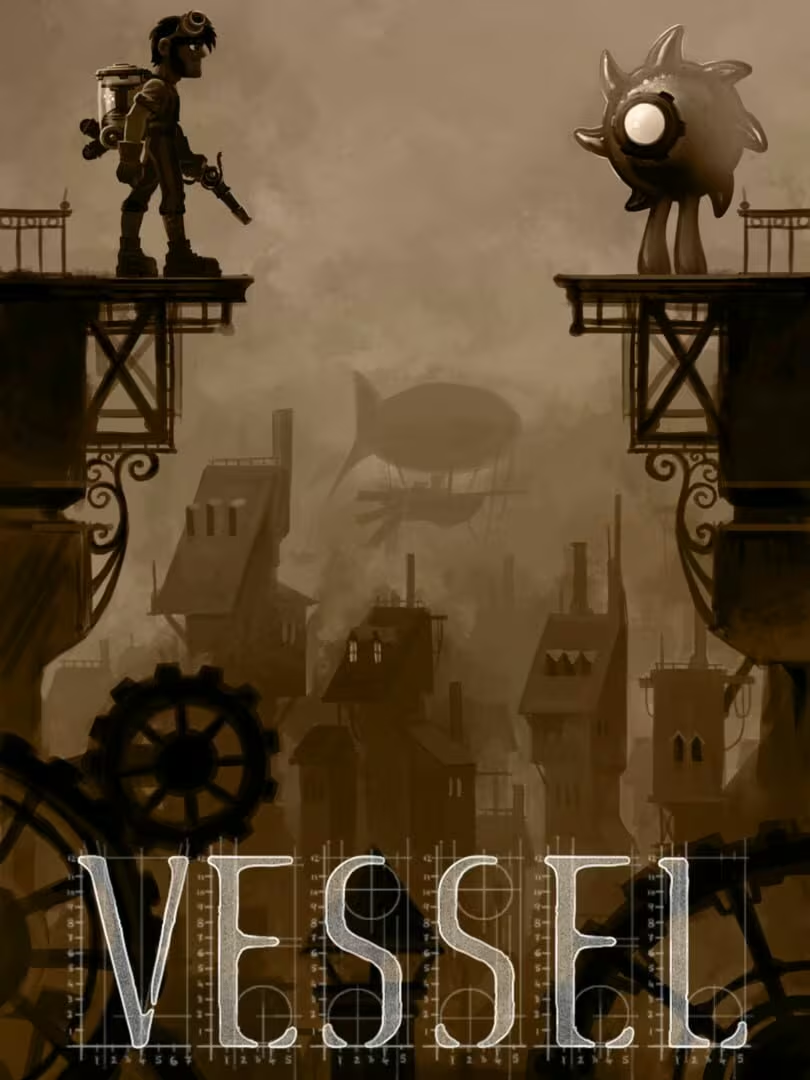 Vessel
"Single player experience focused on individual puzzle solving with minimal social interaction"
-
Creativity
Game with the same Creativity vibe
2"Players experiment with different paths and strategies, but within fixed puzzle structures."
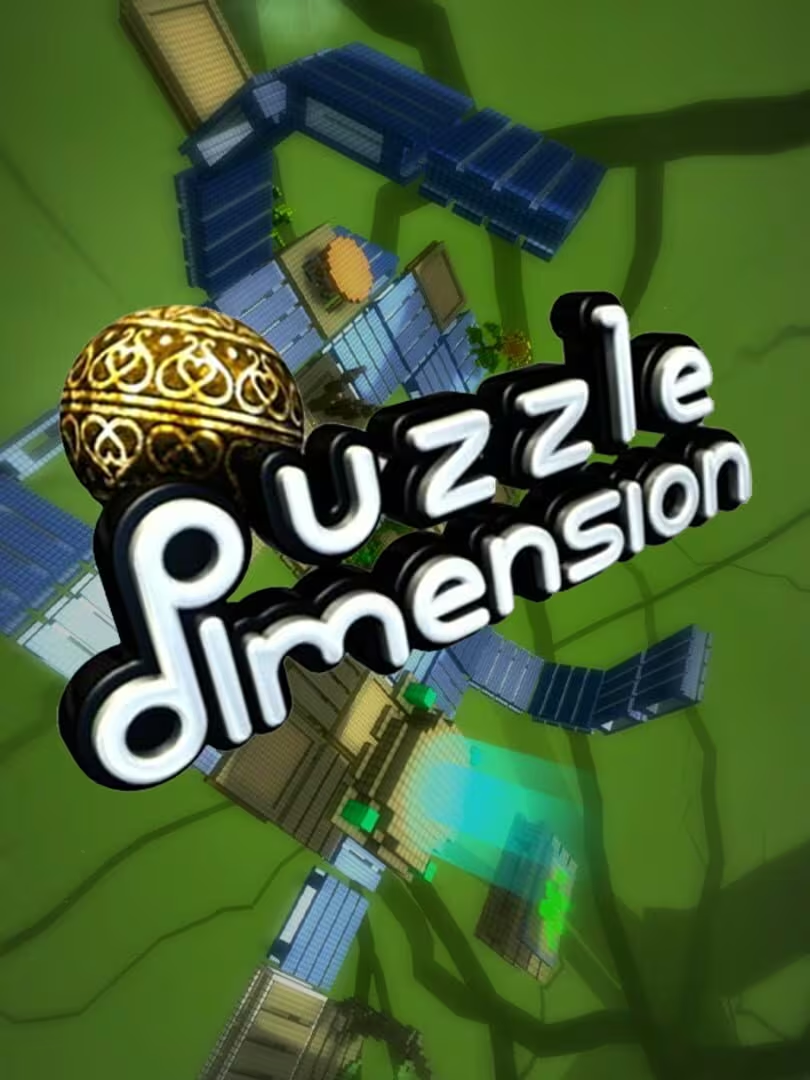 Puzzle Dimension
"Players experiment with different cipher solving strategies and external tools, but within fixed puzzle structures"
-
Domination
Game with the same Domination vibe
-5"No elements of domination or power over others; cooperative or equal participation not applicable."
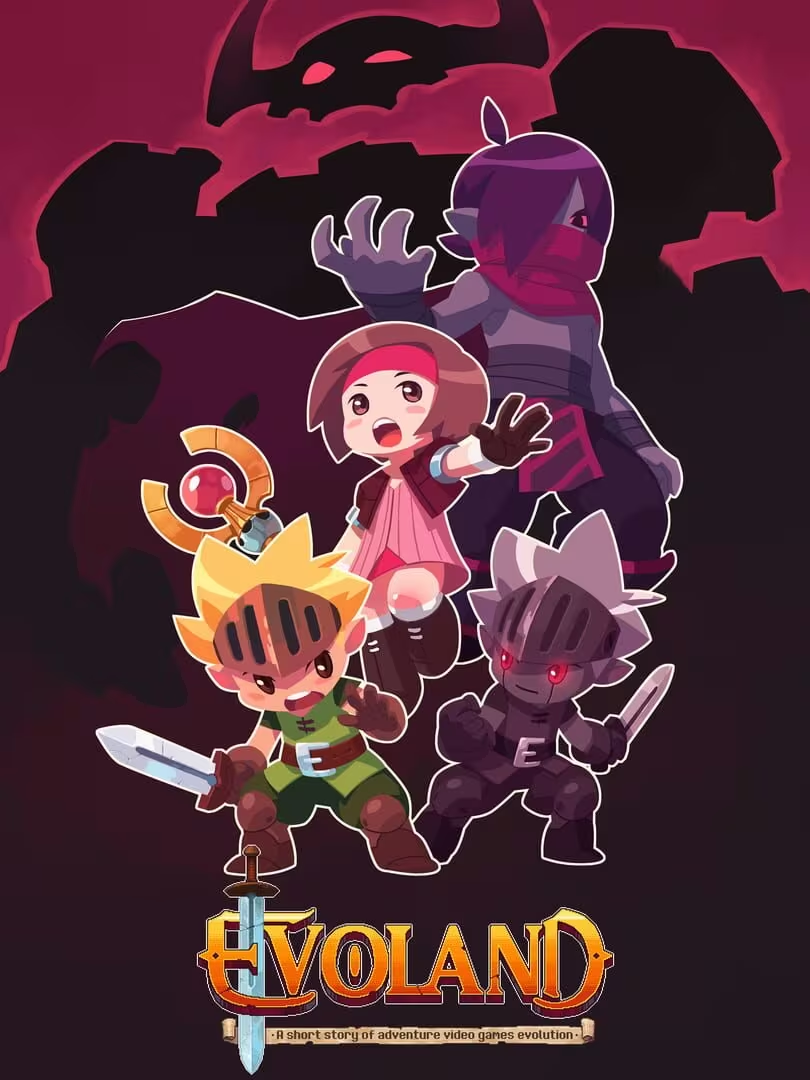 Evoland
"No competitive or dominance elements; cooperative or equal participation not applicable"
-
Escapism
Game with the same Escapism vibe
3"Immersive atmosphere and mysterious story provide escape from reality through engaging puzzles."
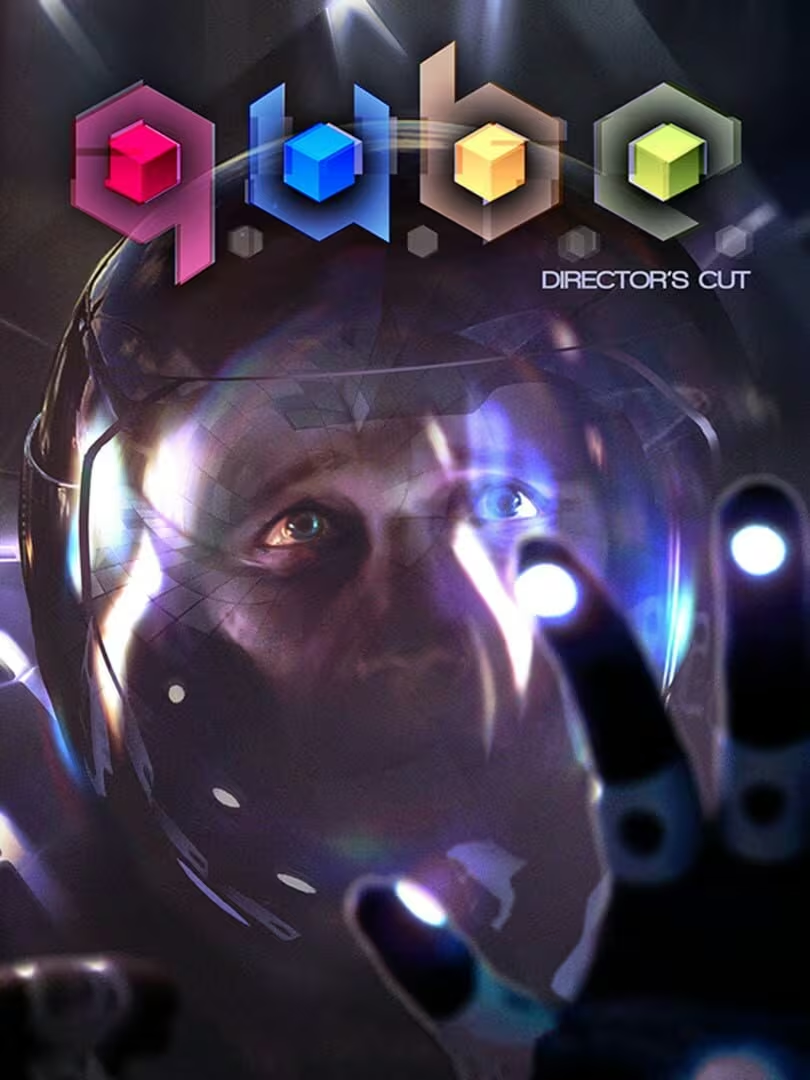 Q.U.B.E: Director's Cut
"Immersive museum atmosphere and challenging puzzles provide mental escape and focus"
-
Expectation
Game with the same Expectation vibe
-4"Players engage voluntarily out of personal interest and intrinsic motivation to solve puzzles."
 The House of Da Vinci 2
"Players engage voluntarily out of interest and intrinsic motivation for cryptography and puzzles"
-
Experimenting
Game with the same Experimenting vibe
4"Encourages trying different puzzle manipulations and perspectives to discover solutions."
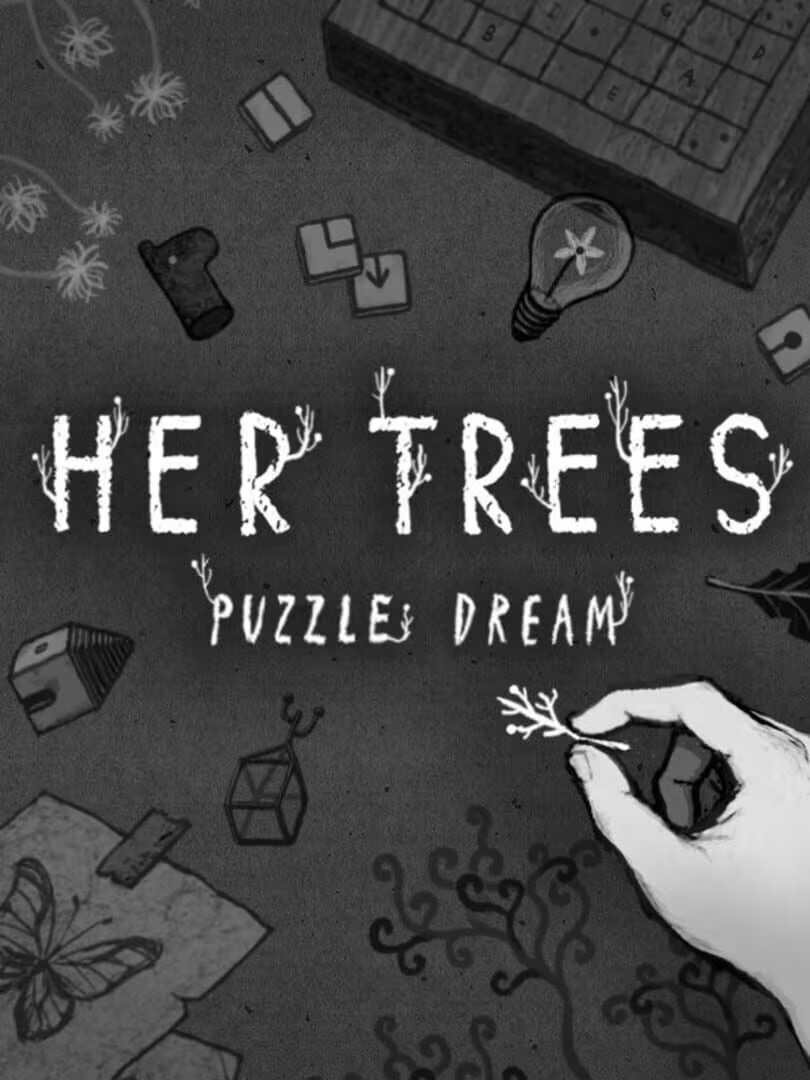 HER TREES : PUZZLE DREAM
"Strong emphasis on trying different decryption methods and external research to solve puzzles"
-
Exploration
Game with the same Exploration vibe
2"Exploration of the manor and revisiting rooms with new abilities, though environments are mostly static and corridor-like."
 Sherlock Holmes and The Hound of The Baskervilles
"Exploring different rooms and cipher types, but environments are minimalistic and static"
-
Expression
Game with the same Expression vibe
-5"No character or environment customization; minimalistic presentation."
 Wordle
"No character or environment customization; minimalistic and uniform presentation"
-
Fantasy
Game with the same Fantasy vibe
-4"Strong focus on historical accuracy and realism rather than fictional or fantastical elements."
 Isonzo
"Realistic cryptography and historical context, no fictional or fantastical elements"
-
Fellowship
Game with the same Fellowship vibe
-4"Minimal social interaction; some community sharing of guides but gameplay is solo."
 100 hidden cats
"Primarily solo play with limited social connection; some community guides exist but not core to experience"
-
Growth
Game with the same Growth vibe
5"Strong learning curve with skill acquisition in logic, programming concepts, and problem solving."
 SpaceChem
"Strong learning curve with acquisition of cryptography knowledge and problem-solving skills"
-
Health
Game with the same Health vibe
-5"Sedentary gameplay requiring focused mental effort; no physical activity involved."
 7 Billion Humans
"Sedentary gameplay requiring mental effort, no physical activity involved"
-
Idle
Game with the same Idle vibe
-4"Requires focused attention and sustained mental engagement rather than casual or background play."
 The Black Watchmen
"Requires focused attention and sustained mental engagement; not casual or background play"
-
Intimacy
Game with the same Intimacy vibe
-5"No social or emotional relationship building; solitary puzzle experience."
 ChromaGun
"No social or emotional relationship building; solitary puzzle solving"
-
Leadership
Game with the same Leadership vibe
-5"No leadership or group management roles; single player experience"
 Gal*Gun: Double Peace
"No leadership or group management roles; single player experience"
-
Progression
Game with the same Progression vibe
3"Progression through puzzles and rooms, but no item collection or upgrades."
 My Sticker Book
"Progression through unlocking rooms and puzzles, but no item collection or upgrades"
-
Relaxation
Game with the same Relaxation vibe
2"Calm music and pacing create a relaxing atmosphere, though some puzzles induce tension and challenge."
 Another Perspective
"Calming music and atmosphere balance the mental challenge for a relaxing puzzle experience"
-
Sensation
Game with the same Sensation vibe
-3"Minimal sensory stimulation; simple visuals and repetitive music with limited excitement."
 Three Digits
"Minimal sensory stimulation with simple visuals and classical music; subdued emotional tone"
-
Status
Game with the same Status vibe
-5"No social recognition or ranking systems; individual focus"
 Supplice
"No social recognition or ranking systems; individual focus"
-
Story
Game with the same Story vibe
2"Light narrative with some story elements and historical context, but minimal plot depth."
 GET OUT!
"Light narrative through museum setting and historical context, but no overarching plot"
-
Strategy
Game with the same Strategy vibe
5"High mental challenge requiring logical reasoning, planning, and problem solving."
 MHRD
MHRD
"High mental challenge requiring logical reasoning, planning, and analytical thinking"
-
Thrill
Game with the same Thrill vibe
-3"Low suspense or risk; steady cognitive challenge without emotional highs or lows."
 Lexica
"Low suspense or risk; steady cognitive challenge without emotional highs or lows"
-
Value
Game with the same Value vibe
4"Players perceive good value due to well-crafted puzzles and reasonable price."
 Hexcells Plus
"Good perceived value for price given depth and length of challenging puzzles"
-
Violence
Game with the same Violence vibe
-5"No violence; focus is on constructive learning activities."
 You Can Kana - Learn Japanese Hiragana & Katakana
"No violence; focus on constructive intellectual engagement"
-
Survival
Game with the same Survival vibe
-5"Stable, low-risk environment without threats or failure states."
 Kaizen: A Factory Story
"Stable, low-risk environment with no threats or failure states"
Last update: 01/06/2026