Mimic Logic similar games & best alternatives
Should you play it?
"Mimic Logic" is an automatically generated logic puzzle roguelike. Listen to the statements of the treasure chests, find the lying mimics, and open the rest of the treasure chests! Opening a mimic results in a game over.
What works
- Unique and challenging logic puzzles
- High replayability with multiple dungeon modes
- Engaging mix of puzzle and rpg elements
- Excellent value for price
- Addictive and satisfying gameplay loop
Things to keep in mind
- Lack of fullscreen mode
- Some puzzles can be unsolvable or require guessing
- Minimal story and environmental variety
- Ui and controls could be more polished
- No cloud saves or multiplayer features
What to play next
Similar games, hidden gems, and fresh directions from this game.
Top picks
Games that feel the closest overall


Hidden Gems
Less popular games with surprisingly high similarity
If you liked…
Recommendations by what you enjoyed most
Similarity map
Explore nearby similar games and see why they’re close.
Mimic Logic: Less representative of its motivational profile, with noticeable differences. Motivations that often define this kind of title include Fellowship, Violence, Survival, Cooperation. It leans lower than usual among comparable games on Violence, Expression, Fantasy.
Why this game works
A motivational profile of the game, with the closest similar game for each player motivation.
-
Autonomy
Game with the same Autonomy vibe
4"Players freely explore puzzles and decide how to approach solutions without pressure or forced routines."
 HER TREES : PUZZLE DREAM
"Players freely choose how to solve puzzles, manage resources, and decide risk-taking strategies."
-
Competence
Game with the same Competence vibe
5"High skill and logical reasoning required to solve puzzles; difficulty ramps up with challenging handcrafted levels and infinite puzzles."
 Hexcells Infinite
"High skill and logical reasoning required to solve procedurally generated puzzles and manage dungeon progression."
-
Competition
Game with the same Competition vibe
-3"Focus is on individual puzzle solving and personal improvement rather than competing against others."
 Classic Sudoku
"Focus is on individual puzzle solving and personal progress rather than competing against others."
-
Continuation
Game with the same Continuation vibe
4"Players report long sessions, addictive gameplay loops, and high replayability."
 Chrono Ark
"Players report high replayability, addictive gameplay loop, and long play sessions."
-
Cooperation
Game with the same Cooperation vibe
-5"Entirely single-player experience focused on individual puzzle solving."
 English Country Tune
"Entirely single-player experience focused on individual puzzle solving and dungeon crawling."
-
Creativity
Game with the same Creativity vibe
3"Players customize upgrades and use various abilities creatively to explore and solve puzzles."
 SteamWorld Dig 2
"Players experiment with different puzzle-solving approaches and strategies; some customization in character upgrades."
-
Domination
Game with the same Domination vibe
-5"No evidence of exerting control over others; gameplay is solitary and self-directed."
 Melvor Idle
"No evidence of exerting control over others; gameplay is solitary and self-directed."
-
Escapism
Game with the same Escapism vibe
4"Players use the game as a mental challenge and distraction from real life, enjoying immersion in puzzles."
 TEST TEST TEST
"Players use the game as a mental challenge and distraction, enjoying immersion in puzzles and dungeon atmosphere."
-
Expectation
Game with the same Expectation vibe
-4"Players engage voluntarily out of intrinsic interest and enjoyment of logic puzzles."
Hexcells Infinite
"Players engage voluntarily out of intrinsic interest in logic puzzles and gameplay."
-
Experimenting
Game with the same Experimenting vibe
4"Players try different race/class combos, strategies, and approaches to solve puzzles and dungeons."
 Desktop Dungeons
"Players try different dungeon modes, difficulty levels, and puzzle-solving tactics."
-
Exploration
Game with the same Exploration vibe
2"Some exploration of varied environments including outdoor and indoor areas, though mostly structured puzzle rooms."
 Q.U.B.E. 2
"Exploration of different dungeon types and puzzle variations, though environments are visually similar."
-
Expression
Game with the same Expression vibe
-3"Limited character customization; focus is on puzzle solving rather than avatar personalization."
 Ittle Dew
"Limited character customization; focus is on puzzle solving rather than avatar personalization."
-
Fantasy
Game with the same Fantasy vibe
1"Game has some fantasy elements in enemies and towers but overall a stylized, simple aesthetic without deep fictional narrative."
 Rogue Tower
"Light fantasy theme with mimics and dungeon crawling, but grounded in logical deduction rather than heavy fiction."
-
Fellowship
Game with the same Fellowship vibe
-5"No multiplayer or social community features; experience is solitary."
 Dishonored 2
"No multiplayer or social community features; experience is solitary."
-
Growth
Game with the same Growth vibe
5"Strong emphasis on learning, mental development, and improving puzzle-solving skills."
 4D Minesweeper
"Strong emphasis on learning logic, improving puzzle-solving skills, and character progression."
-
Health
Game with the same Health vibe
-5"Standard sedentary gameplay with no physical activity elements."
 Faeria
"Standard sedentary gameplay with no physical activity elements."
-
Idle
Game with the same Idle vibe
-4"Requires focused attention and active problem solving; not suited for idle or background play."
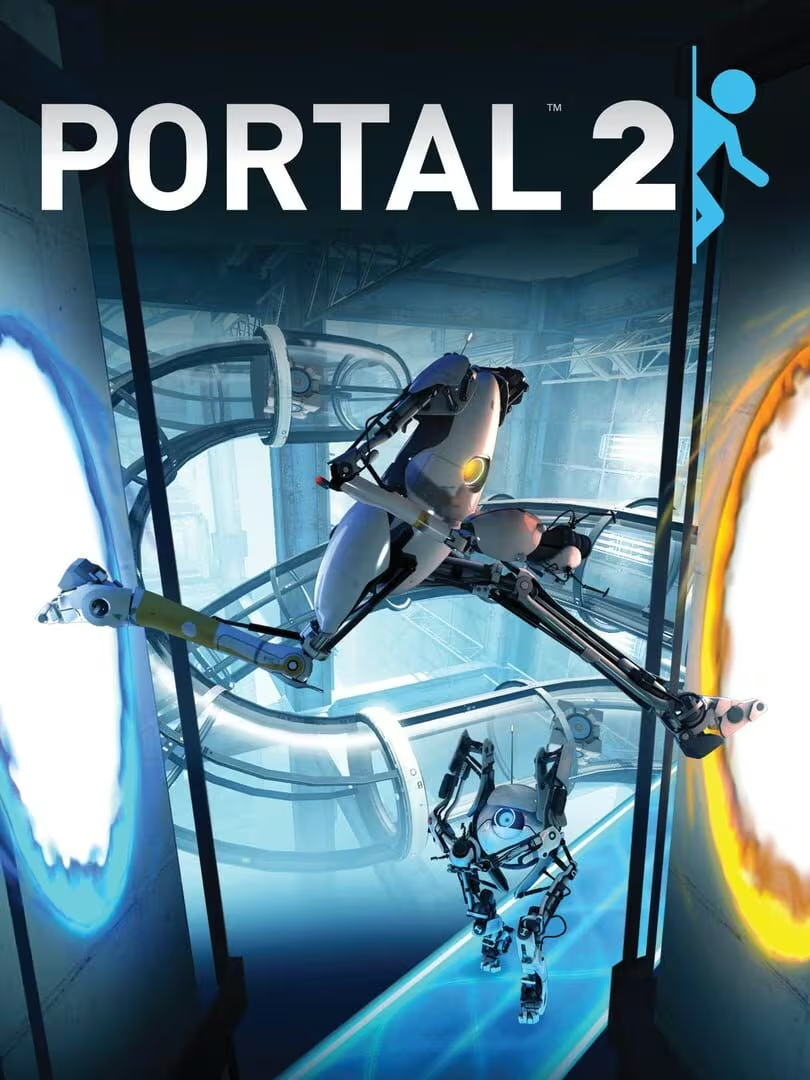 Portal 2
"Requires focused attention and active problem solving; not suited for idle or background play."
-
Intimacy
Game with the same Intimacy vibe
-5"No social or emotional relationship-building aspects."
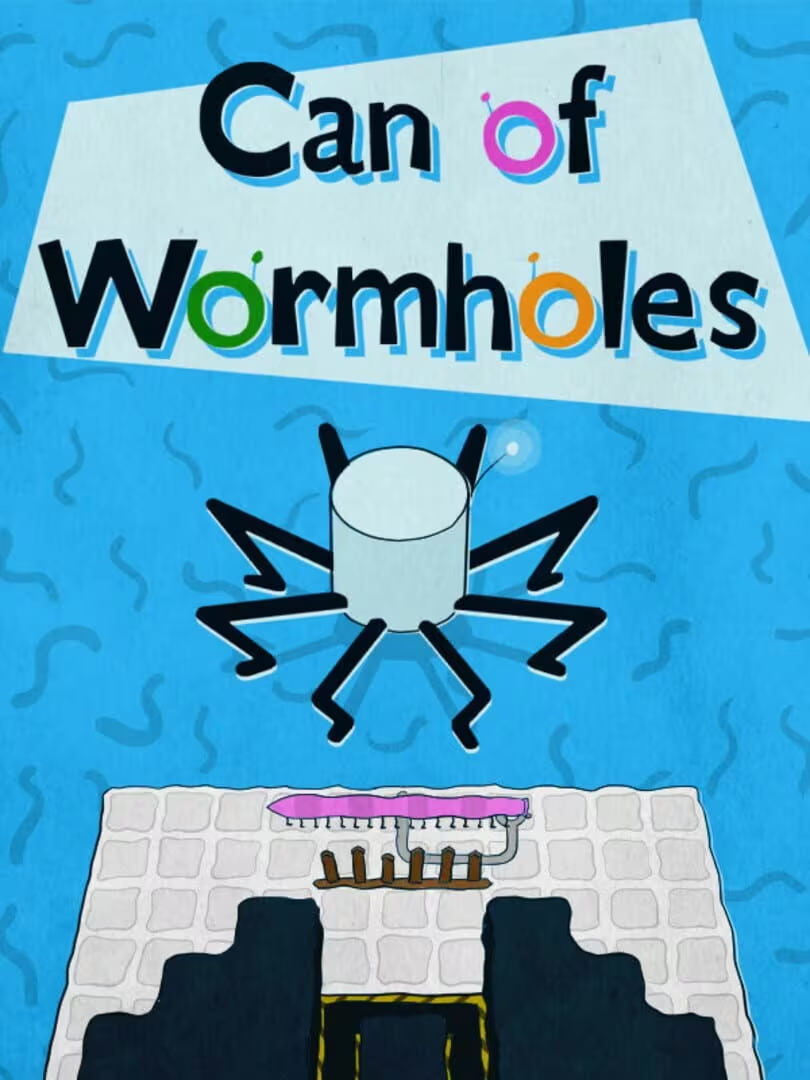 Can of Wormholes
"No social or emotional relationship-building aspects."
-
Leadership
Game with the same Leadership vibe
-5"No leadership or group management elements."
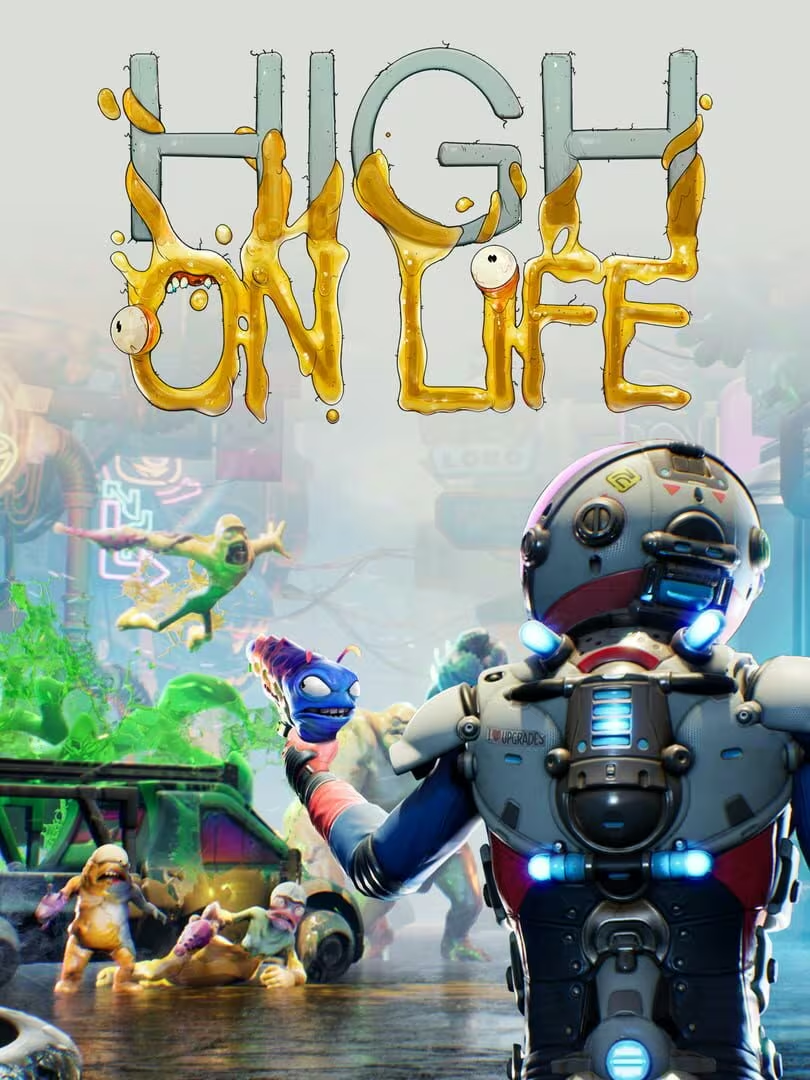 High On Life
"No leadership or group management elements."
-
Progression
Game with the same Progression vibe
4"Players accumulate experience, skill points, equipment, and upgrades to improve characters."
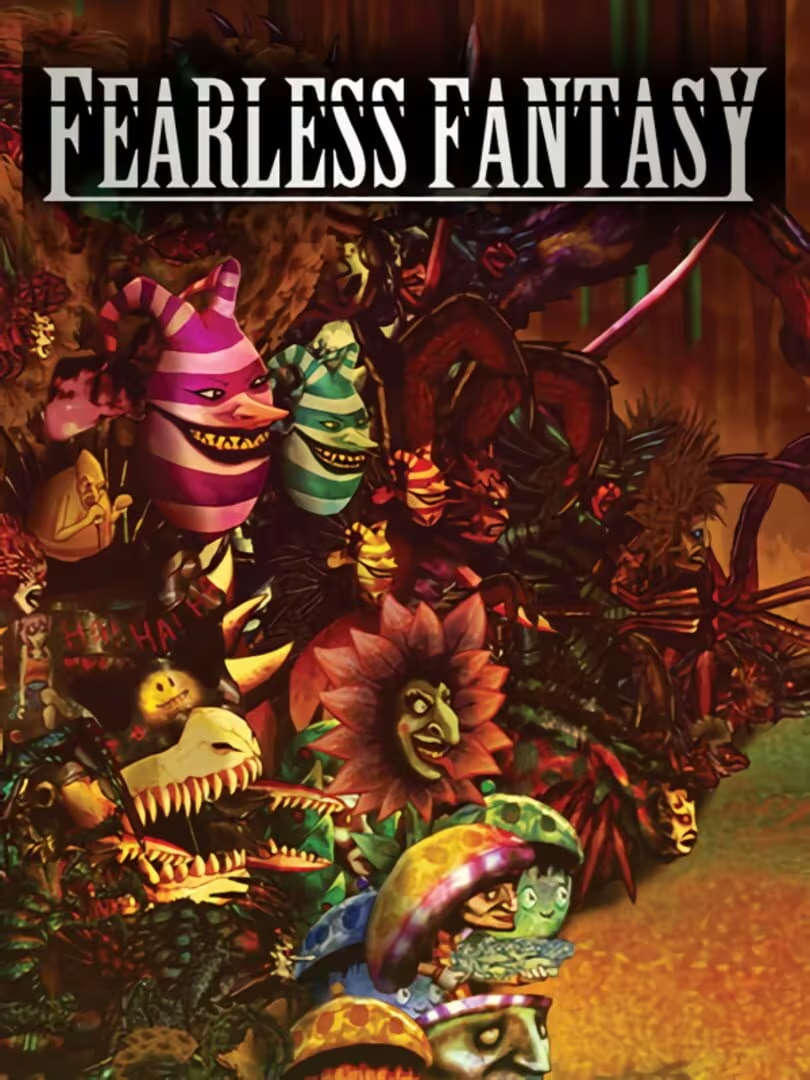 Fearless Fantasy
"Players accumulate loot, experience, and upgrades to improve character stats and abilities."
-
Relaxation
Game with the same Relaxation vibe
1"Some moments of flow and satisfaction in puzzle solving, but overall tension and suspense present."
 Amanda the Adventurer 3
"Some tension from time limits and risk, but overall a satisfying flow state for puzzle solving."
-
Sensation
Game with the same Sensation vibe
1"Visuals and music are pleasant but understated; sensory stimulation is subtle and focused on cognitive engagement."
 Patrick's Parabox
"Simple visuals and music provide moderate sensory stimulation; focus is on mental engagement."
-
Status
Game with the same Status vibe
-5"No social recognition or ranking systems."
 Trover Saves the Universe
"No social recognition or ranking systems."
-
Story
Game with the same Story vibe
1"Minimal narrative with light story elements and character charm, but primarily focused on puzzle gameplay."
 Cats Love Boxes
"Minimal story elements present but not a major focus; gameplay centers on puzzles."
-
Strategy
Game with the same Strategy vibe
5"High mental challenge requiring planning, resource management, and problem solving."
 Idol Manager
"Strong mental challenge requiring planning, deduction, and resource management."
-
Thrill
Game with the same Thrill vibe
3"Combat tension and risk management provide suspense and excitement."
 Dead Grid
"Risk and suspense from opening chests and managing limited resources create moments of tension."
-
Value
Game with the same Value vibe
5"Players report excellent value for price with extensive content and replayability."
 ASTLIBRA Revision
"Players report excellent value for price with extensive content and replayability."
-
Violence
Game with the same Violence vibe
-3"Combat is minimal and puzzle-focused rather than violent or destructive."
 Dungeons of Dreadrock
"Combat is minimal and tactical rather than violent or destructive; focus is on puzzle solving."
-
Survival
Game with the same Survival vibe
3"Players must manage health and resources to avoid death and progress deeper into the dungeon."
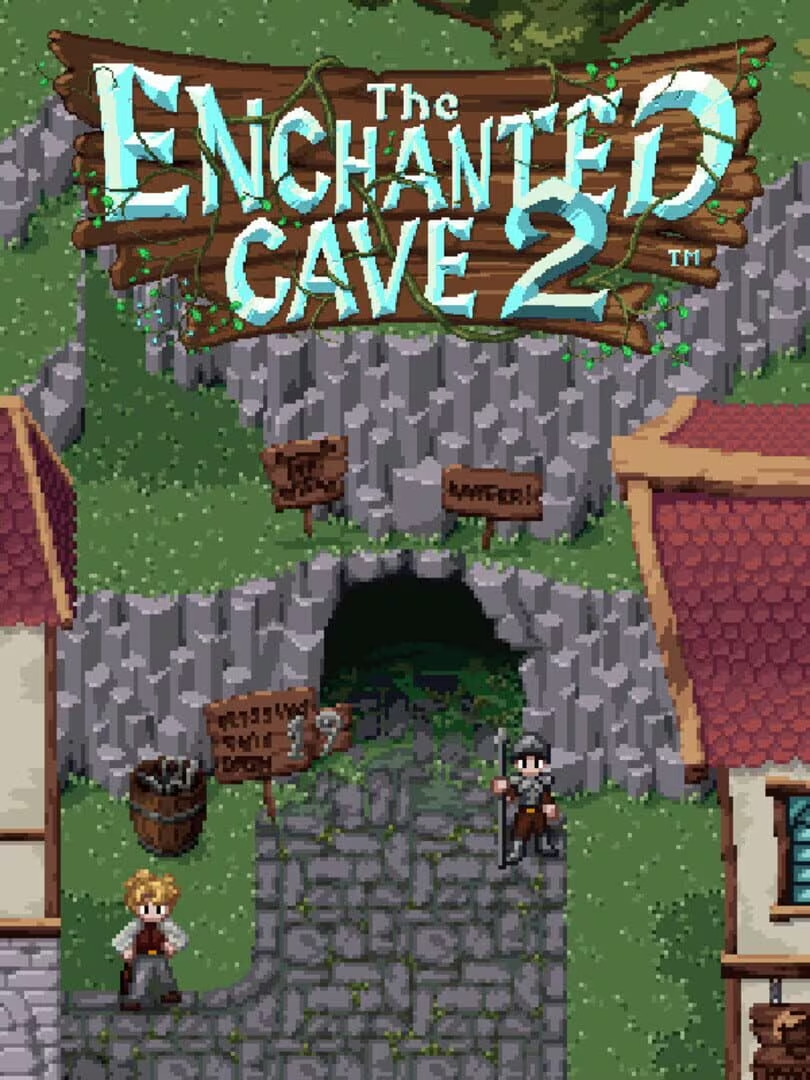 The Enchanted Cave 2
"Resource and health management add survival elements to dungeon crawling."
Last update: 01/06/2026