Tile Cities similar games & best alternatives
Should you play it?
Tile Cities turns city-building experience into a simple relaxing puzzle game and does so with style
What works
- Addictive and relaxing gameplay
- Simple yet strategic city building puzzle
- Low price and great value
- Color customization options
- Minimalistic and accessible design
Things to keep in mind
- Lack of tutorial or clear instructions
- Some repetitiveness and potential monotony
- No multiplayer or social features
- Limited visual polish and audio
- Random tile generation can cause frustration
What to play next
Similar games, hidden gems, and fresh directions from this game.
Top picks
Games that feel the closest overall
Hidden Gems
Less popular games with surprisingly high similarity
If you liked…
Recommendations by what you enjoyed most
Similarity map
Explore nearby similar games and see why they’re close.
Tile Cities: A very typical example of its motivational profile. Motivations that often define this kind of title include Violence, Fantasy, Story, Thrill. Here, the score leans higher than usual among comparable games on Survival. It leans lower than usual among comparable games on Story, Fantasy.
Why this game works
A motivational profile of the game, with the closest similar game for each player motivation.
-
Autonomy
Game with the same Autonomy vibe
4"Players freely choose where to place tiles and plan their moves strategically, allowing control over game actions."
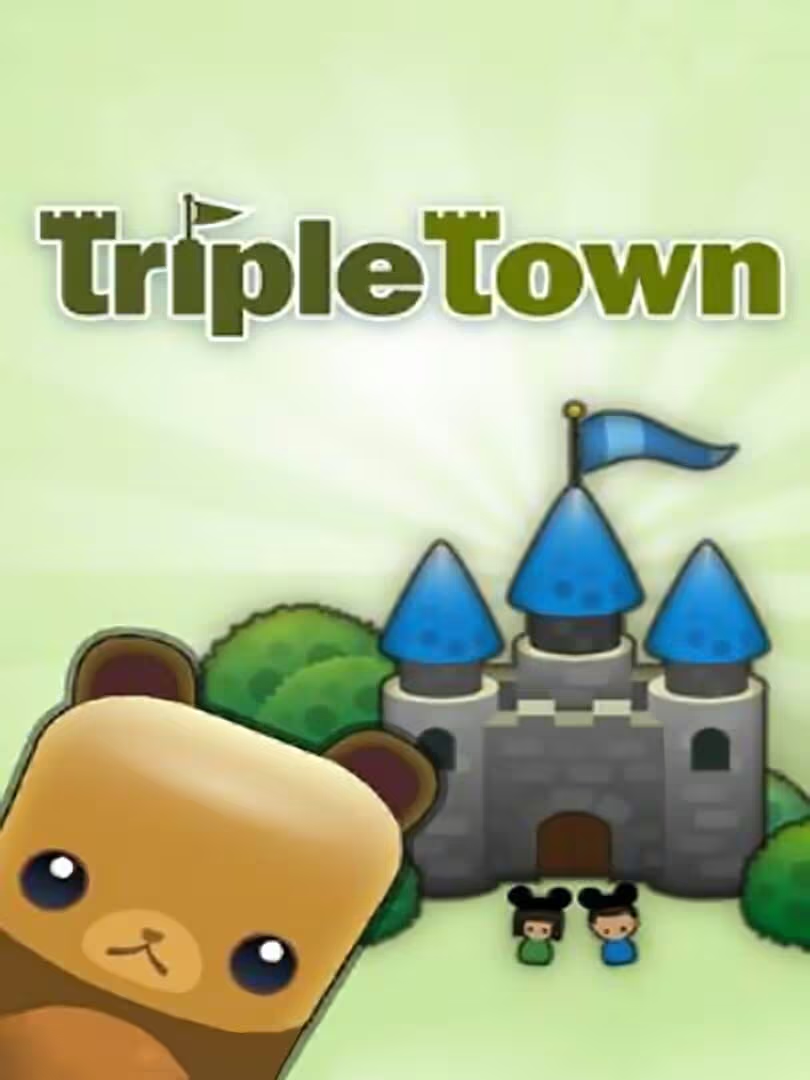 Triple Town
"Players freely choose where to place randomly given tiles, deciding how to build their city and manage resources."
-
Competence
Game with the same Competence vibe
3"Game involves strategic placement and puzzle solving with increasing difficulty, rewarding skillful planning."
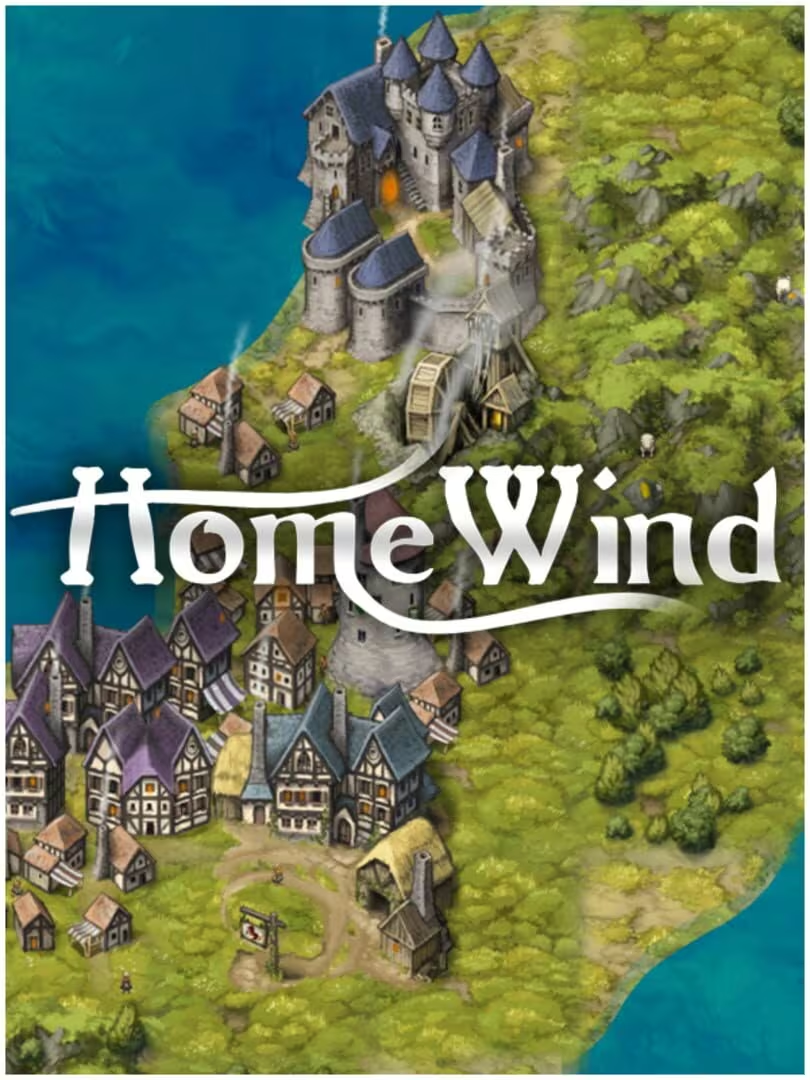 Home Wind
"Game involves strategic placement and puzzle solving with increasing complexity, rewarding skillful play."
-
Competition
Game with the same Competition vibe
-3"Focus is on personal strategy and pacing rather than direct competition or leaderboards."
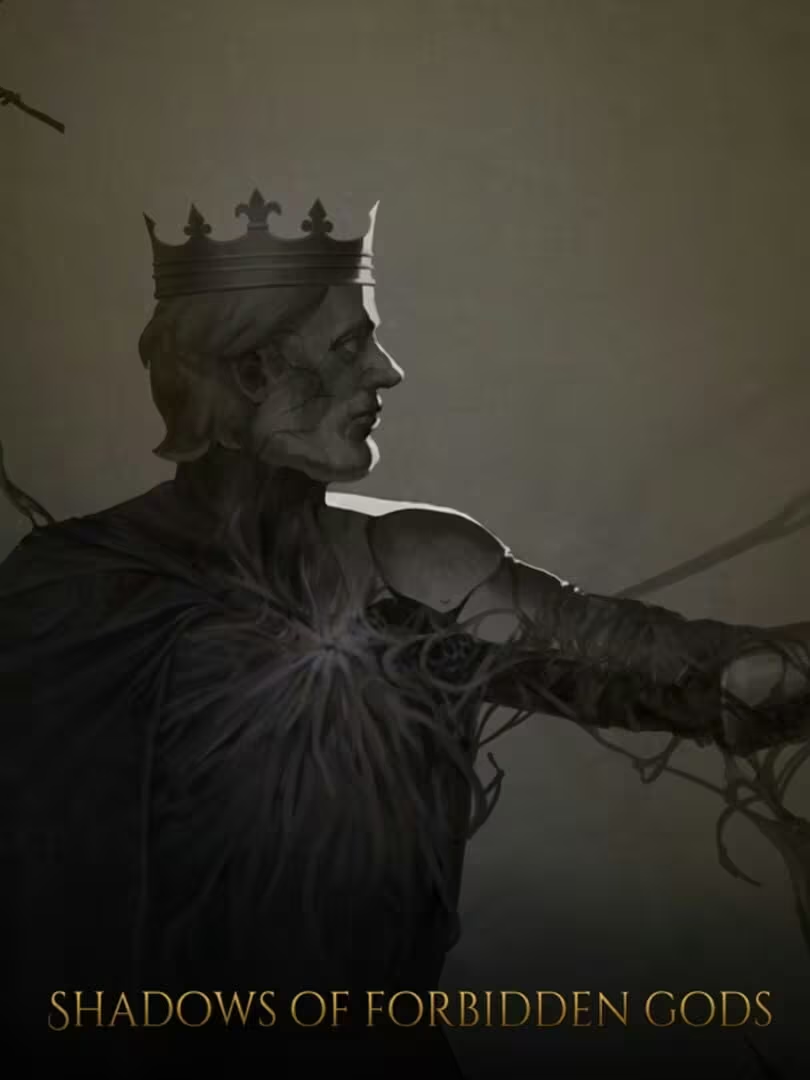 Shadows of Forbidden Gods
"Focus is on personal pacing and self-set goals rather than direct competition or leaderboards."
-
Continuation
Game with the same Continuation vibe
4"Many players report long sessions and addictive gameplay, often losing track of time while playing."
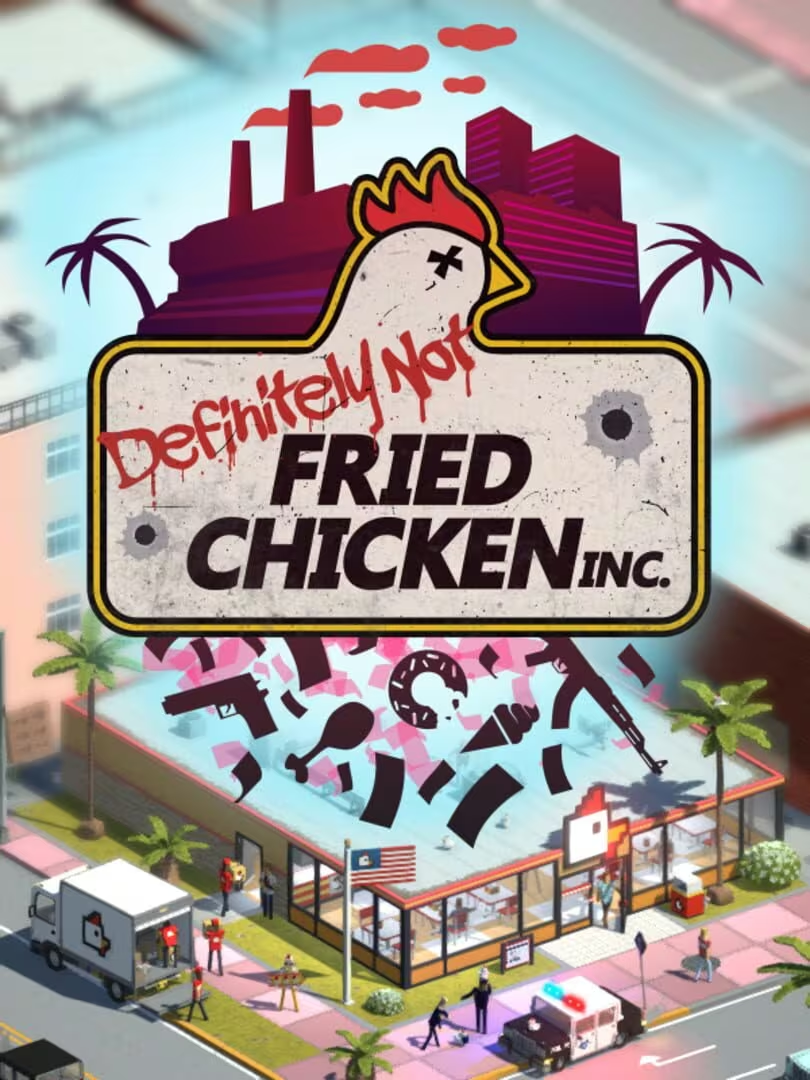 Definitely Not Fried Chicken
"Many players report addictive gameplay and long sessions, often losing track of time."
-
Cooperation
Game with the same Cooperation vibe
-5"Single-player experience with no multiplayer or cooperative elements."
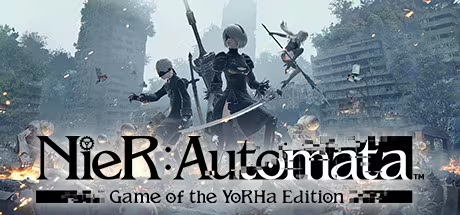 NieR:Automata™
"Single-player experience with no multiplayer or cooperative elements."
-
Creativity
Game with the same Creativity vibe
3"Players can design city layouts, build monuments, and customize strategies, though within preset game mechanics."
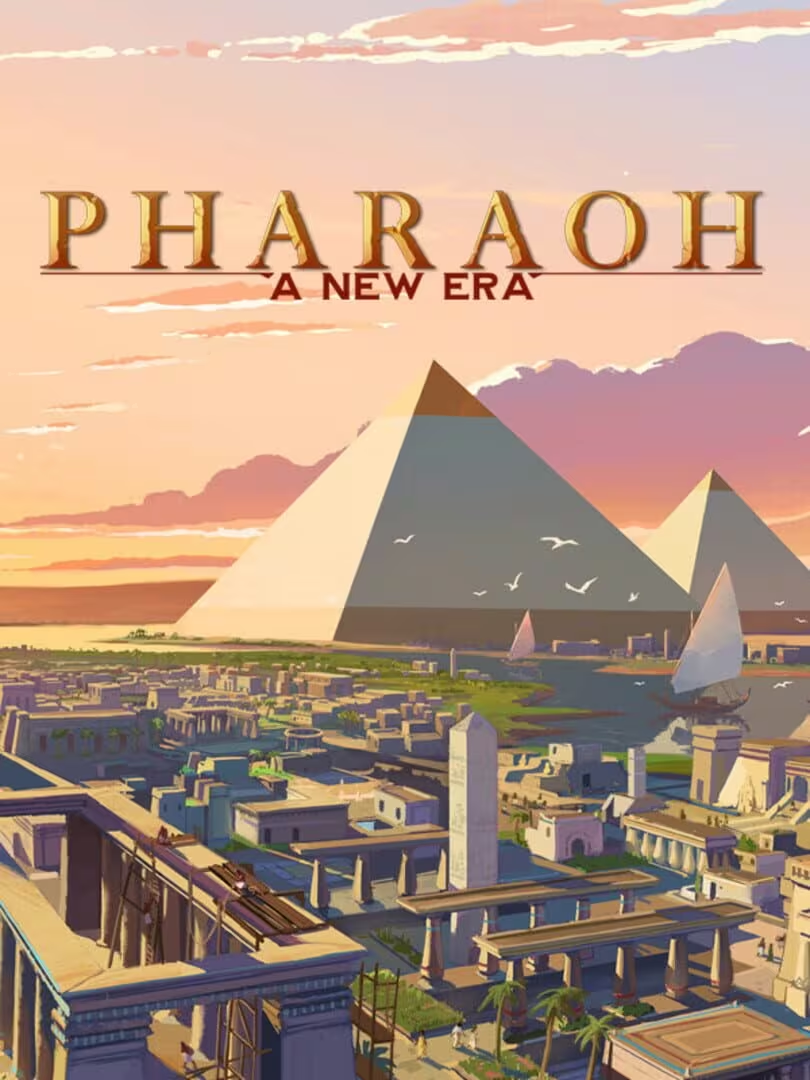 Pharaoh™: A New Era
"Players create unique city layouts and can recolor tiles, though tile shapes are predefined."
-
Domination
Game with the same Domination vibe
-5"No social dominance or power dynamics; purely individual gameplay."
 The Secret Order 2: Masked Intent
"No social dominance or power dynamics; purely individual gameplay."
-
Escapism
Game with the same Escapism vibe
4"Players use the game as a relaxing, immersive puzzle experience to escape daily stress."
 Railbound
"Players use the relaxing, minimalistic puzzle gameplay to decompress and escape real-life stress."
-
Expectation
Game with the same Expectation vibe
-4"Engagement is voluntary and driven by intrinsic interest and enjoyment."
 Game Dev Tycoon
"Engagement is voluntary and driven by intrinsic interest and enjoyment."
-
Experimenting
Game with the same Experimenting vibe
3"Players experiment with tile placement and strategies to optimize combos and city building."
Triple Town
"Players explore tile placement strategies and color customizations, experimenting with city design."
-
Exploration
Game with the same Exploration vibe
-2"Limited exploration of new areas; gameplay centers on puzzle-solving within fixed map grids with some variation."
 Into the Breach
"Gameplay centers on a fixed board with no new areas to discover, but tile arrangements vary."
-
Expression
Game with the same Expression vibe
2"Some customization of color palettes allows limited self-expression, though overall minimalistic visuals."
 Flat Heroes
"Color customization allows some personal expression, though overall visuals are minimalistic."
-
Fantasy
Game with the same Fantasy vibe
-4"Game simulates realistic resource management and town building without fantastical or fictional elements."
 Factory Town Idle
"Game simulates plausible city building and resource management without fantastical elements."
-
Fellowship
Game with the same Fellowship vibe
-5"No social or community features; purely solo play."
 A Game About Feeding A Black Hole
"No social or community features; purely solo play."
-
Growth
Game with the same Growth vibe
3"Players develop skills in city building, resource management, and strategic planning over time."
 Grand Ages: Rome
"Players develop skills and strategies over time to improve scores and city layouts."
-
Health
Game with the same Health vibe
-5"Sedentary gameplay with no physical activity involved."
 World of Tanks Blitz
"Sedentary gameplay with no physical activity involved."
-
Idle
Game with the same Idle vibe
-3"Requires focused attention and engagement rather than passive or background play."
 The Magic Circle
"Requires focused attention and thoughtful placement rather than passive or background play."
-
Intimacy
Game with the same Intimacy vibe
-5"No social interaction or relationship building."
 Masterplan Tycoon
"No social interaction or relationship building."
-
Leadership
Game with the same Leadership vibe
-5"No leadership or group management roles."
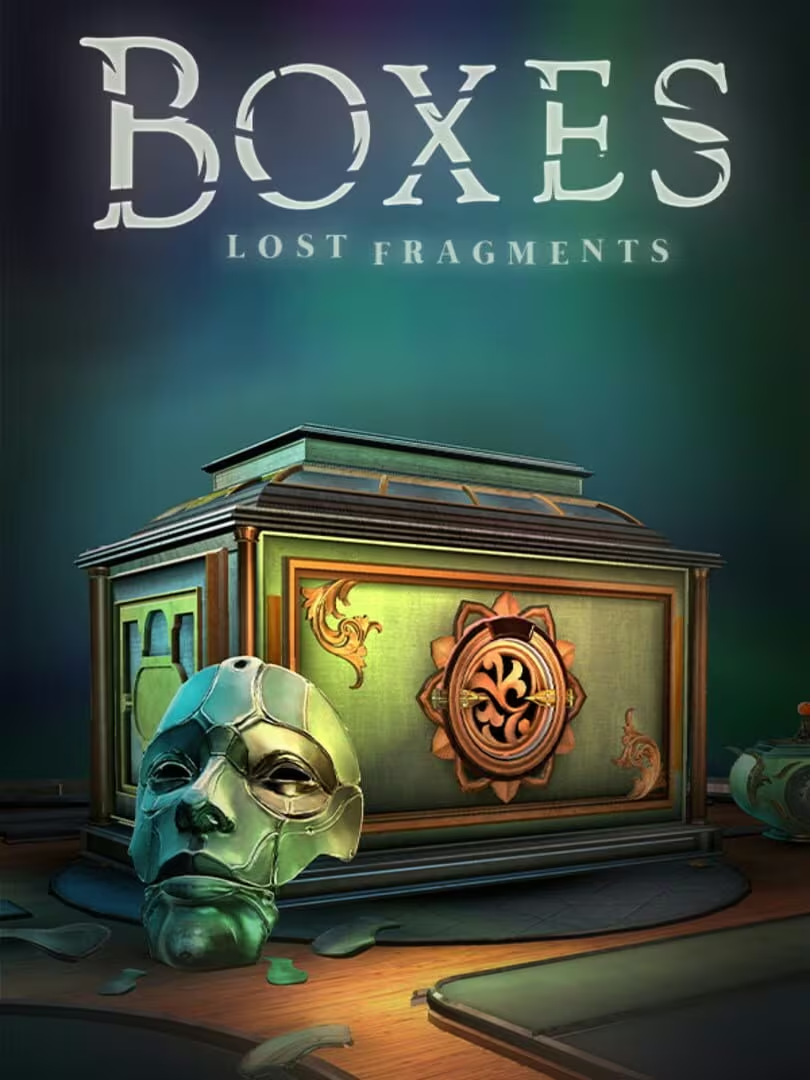 Boxes: Lost Fragments
"No leadership or group management roles."
-
Progression
Game with the same Progression vibe
3"Players accumulate skins, achievements, and unlock new maps, showing progression through gameplay."
 *NEW* SCUFFED BHOP SIMULATION 2026 GOTY EDITION
"Players accumulate city tiles and unlock achievements, showing progression through gameplay."
-
Relaxation
Game with the same Relaxation vibe
4"Many reviews highlight relaxing, zen-like gameplay with a good balance of challenge and flow."
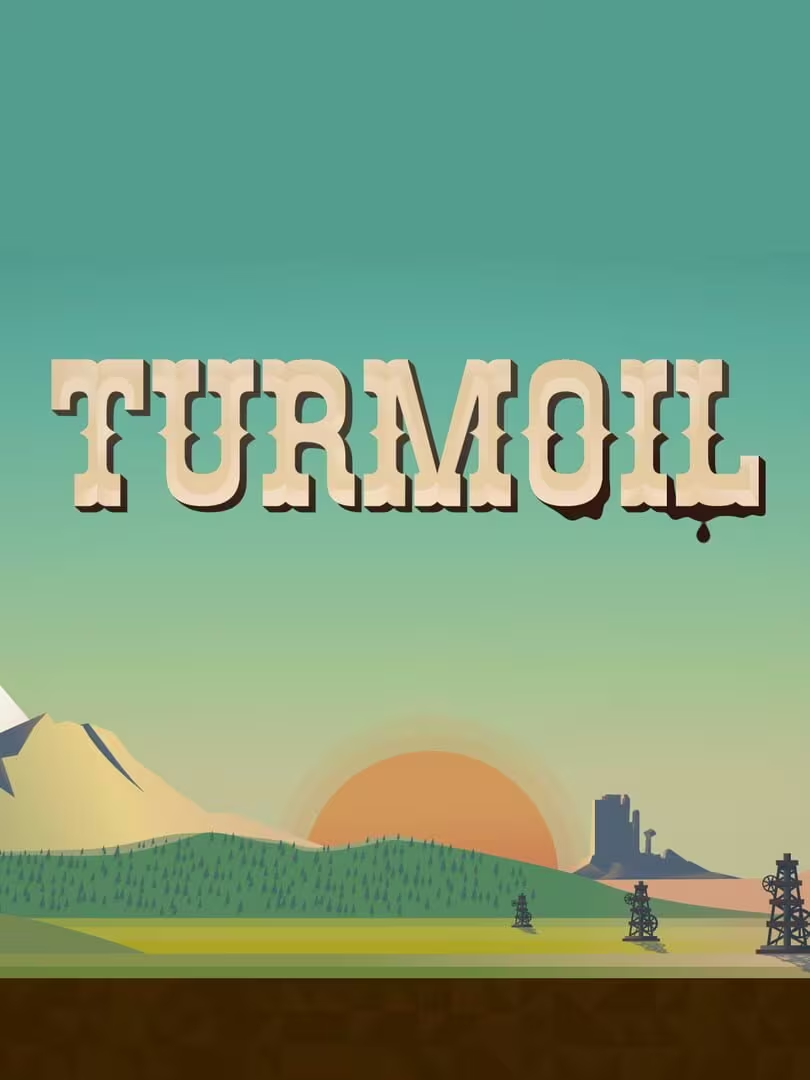 Turmoil
"Many reviews emphasize relaxing, zen-like gameplay and stress relief."
-
Sensation
Game with the same Sensation vibe
2"Visuals and sound provide moderate stimulation; not highly intense or minimal sensory input."
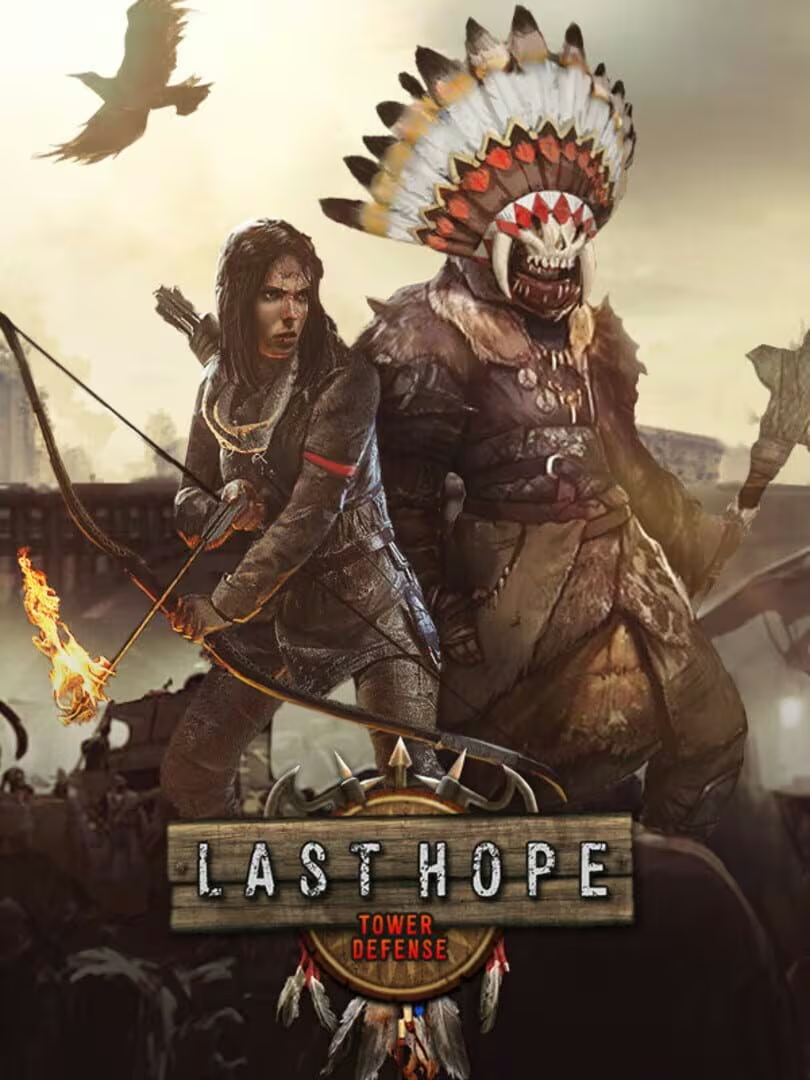 Last Hope - Tower Defense
"Minimalistic visuals and sound effects provide moderate sensory stimulation."
-
Status
Game with the same Status vibe
-5"No social recognition or ranking systems."
 Trover Saves the Universe
"No social recognition or ranking systems."
-
Story
Game with the same Story vibe
-5"No narrative or plot; gameplay is context-free and focused on puzzle and city-building mechanics."
 ISLANDERS: New Shores
"No narrative or plot; gameplay is context-free puzzle city building."
-
Strategy
Game with the same Strategy vibe
4"Requires planning, optimization, and problem solving to manage resources, tile placement, and progression."
 Territory Idle
"Requires planning and problem solving to optimize tile placement and resource management."
-
Thrill
Game with the same Thrill vibe
-2"Low risk, low tension gameplay; no real suspense or thrill."
 Underminer
"Low risk, self-paced gameplay with minimal suspense or tension."
-
Value
Game with the same Value vibe
5"Highly praised for its low price and amount of gameplay; considered a great value for money."
 Wall World
"Highly praised for its low price and enjoyable gameplay, considered great value."
-
Violence
Game with the same Violence vibe
-5"No combat or destructive violence; focus on constructive city building."
 SimCity™ 3000 Unlimited
"No violence; focus on constructive city building."
-
Survival
Game with the same Survival vibe
2"Players must manage resources and avoid failure conditions to continue runs, adding a survival aspect."
 Technotopia
"Players must manage resource demands to avoid game over, adding a survival element."
Last update: 01/06/2026