Aurora Nights similar games & best alternatives
Should you play it?
Aurora Nights is an entertaining educational game for learning to identify the constellations.
What works
- Educational content about constellations
- Relaxing music and atmosphere
- Low price and good value
- Easy achievements and trading cards
- Simple and accessible gameplay
Things to keep in mind
- Very short and limited content
- Lack of challenge and depth
- Only northern hemisphere constellations
- Minimal encyclopedia information
- No social or multiplayer features
What to play next
Similar games, hidden gems, and fresh directions from this game.
Top picks
Games that feel the closest overall



Hidden Gems
Less popular games with surprisingly high similarity
If you liked…
Recommendations by what you enjoyed most
Similarity map
Explore nearby similar games and see why they’re close.
Aurora Nights: A very typical example of its motivational profile. Motivations that often define this kind of title include Strategy, Experimenting, Competence, Survival. It leans lower than usual among comparable games on Fantasy, Creativity, Thrill.
Why this game works
A motivational profile of the game, with the closest similar game for each player motivation.
-
Autonomy
Game with the same Autonomy vibe
3"Players have freedom to interpret and choose constellations as responses, but the narrative is somewhat on rails limiting full autonomy."
 Grotto
"Players freely choose which constellations to explore and can toggle help lines on or off, allowing some control over their learning experience."
-
Competence
Game with the same Competence vibe
-2"Gameplay involves simple, repetitive tasks with minimal skill or challenge."
 Bite Night
"Gameplay is very simple and repetitive, with minimal challenge; mostly involves connecting dots with little skill variation."
-
Competition
Game with the same Competition vibe
-5"No competitive elements; focus is on personal pace and relaxation without comparison to others."
 SUMMERHOUSE
"No competitive elements or comparison to others; focus is on individual learning and relaxation."
-
Continuation
Game with the same Continuation vibe
1"Some players replay to achieve all endings and achievements, but overall short playtime limits habitual engagement."
 Just, Bearly
"Some players replay to achieve 100% completion and collect achievements/cards, but overall short playtime and limited content reduce habitual engagement."
-
Cooperation
Game with the same Cooperation vibe
-5"Entirely single-player with no cooperative or multiplayer features."
 Sherlock Holmes and The Hound of The Baskervilles
"Entirely single-player with no cooperative or multiplayer features."
-
Creativity
Game with the same Creativity vibe
-4"Players follow a fixed routine with no meaningful creation or modification opportunities."
 The Salesman
"Players follow predefined star patterns to form constellations; no creative building or modification."
-
Domination
Game with the same Domination vibe
-5"No elements of exerting control or superiority over others."
 To the Moon
"No elements of exerting control or superiority over others."
-
Escapism
Game with the same Escapism vibe
3"Relaxing atmosphere and calming music provide a pleasant escape from real life stress."
 Golf Peaks
"Relaxing music and atmosphere provide a mild escape and stress relief through peaceful stargazing."
-
Expectation
Game with the same Expectation vibe
-4"Players engage voluntarily out of interest in mystery and atmosphere, no obligation or pressure noted."
 Radiolight
"Players engage voluntarily out of interest in astronomy or relaxation; no obligation or pressure reported."
-
Experimenting
Game with the same Experimenting vibe
-3"Gameplay is repetitive with little novelty or exploration of mechanics."
 Wet Girl
"Gameplay is repetitive and guided; little novelty or exploration of new mechanics."
-
Exploration
Game with the same Exploration vibe
2"Players discover zodiac signs, cat stories, and unlock bonus puzzles, encouraging some curiosity."
 Zodiacats
"Players discover and learn about 35 constellations with some curiosity-driven reading, though limited to northern hemisphere."
-
Expression
Game with the same Expression vibe
-5"No customization or personalization options; standardized presentation."
 Conscious Existence - A Journey Within
"No customization or personalization options; standardized presentation of constellations."
-
Fantasy
Game with the same Fantasy vibe
-3"Focus on realistic physics and plausible spaceflight rather than fictional or mythological elements."
 Juno: New Origins
"Focus on realistic star maps and astronomy with some mythological background, but no fictional or imaginative roleplay."
-
Fellowship
Game with the same Fellowship vibe
-5"No social or community features; purely individual experience."
 Alice: Madness Returns
"No social or community features; purely individual experience."
-
Growth
Game with the same Growth vibe
3"Players learn game mechanics, weapon use, and map navigation; skill improves with repeated play."
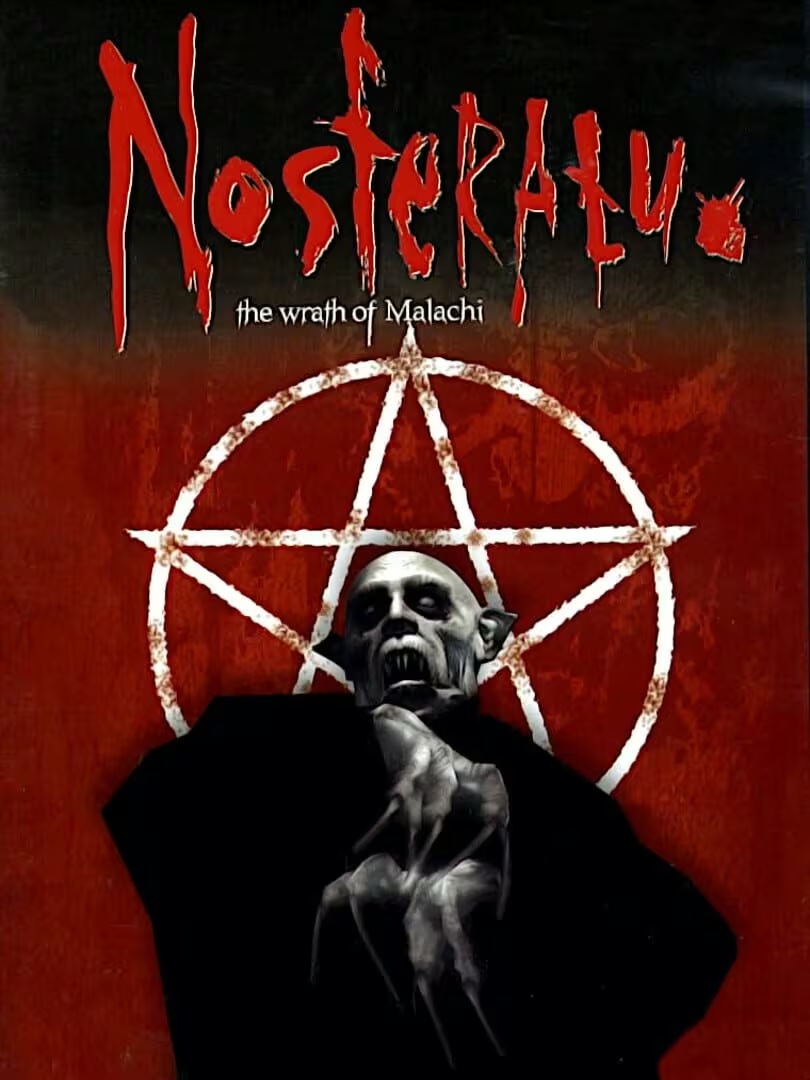 Nosferatu: The Wrath of Malachi
"Educational content and repetition help players learn and memorize constellations."
-
Health
Game with the same Health vibe
-5"Sedentary gameplay with no physical activity involved."
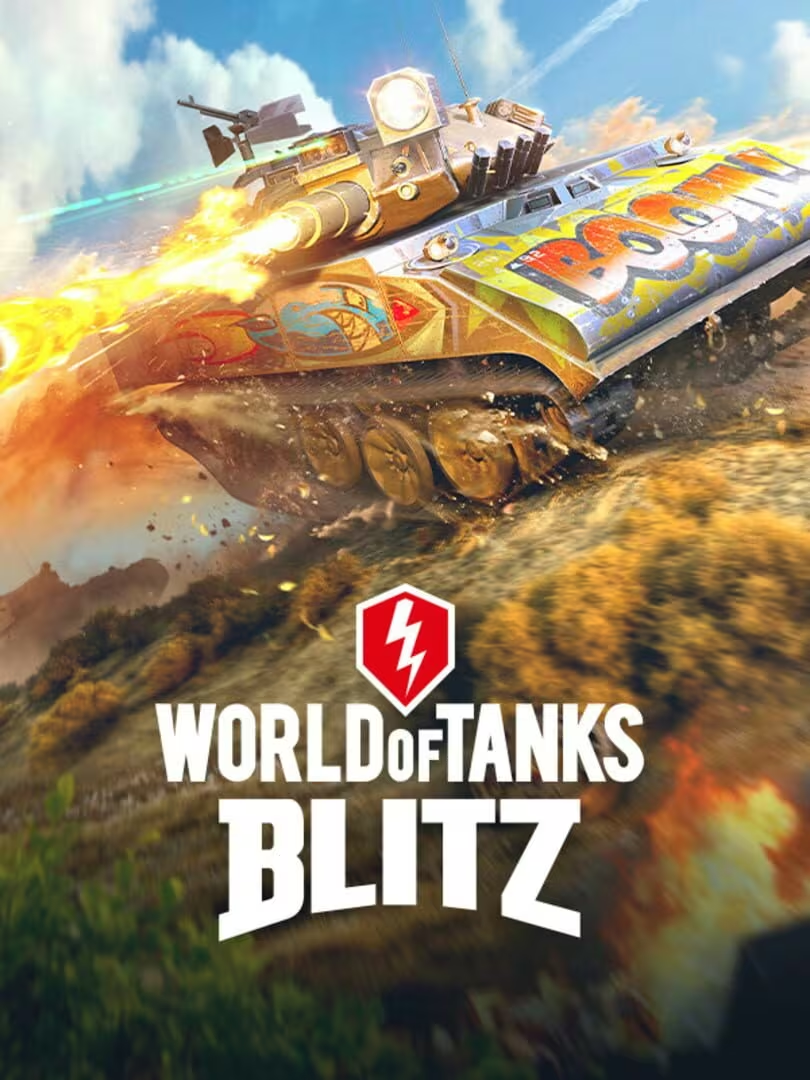 World of Tanks Blitz
"Sedentary gameplay with no physical activity involved."
-
Idle
Game with the same Idle vibe
-3"Requires focused attention and interaction; not designed for background or idle play."
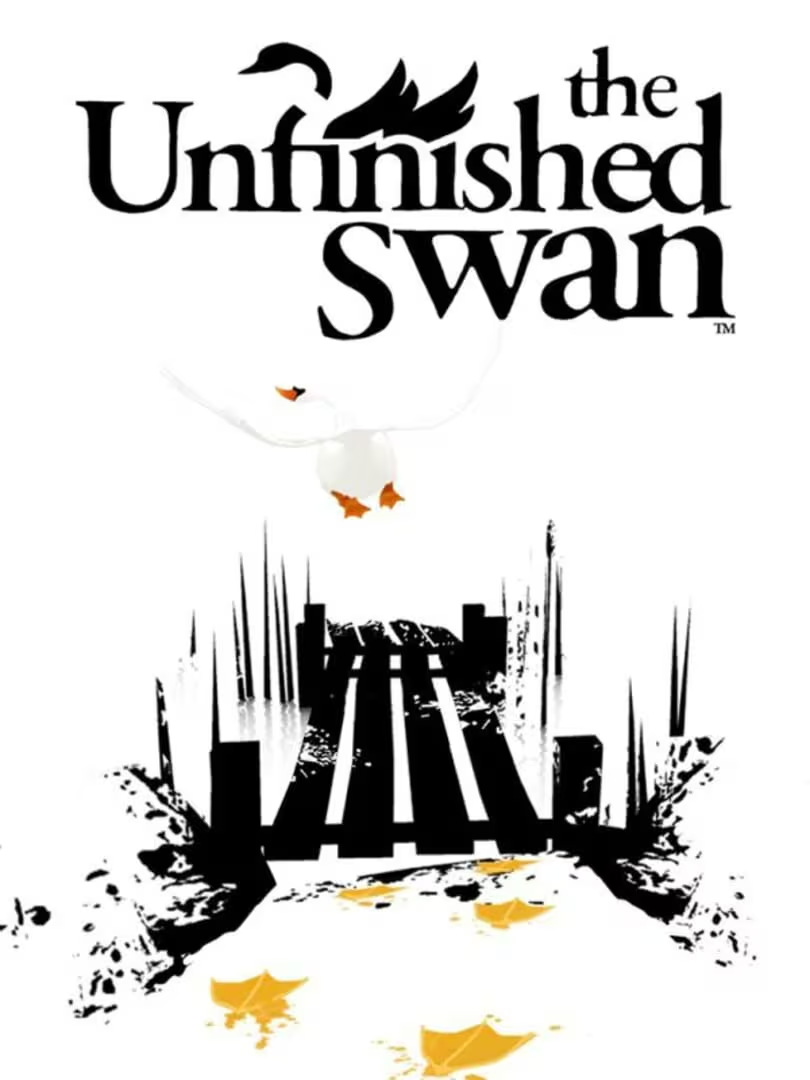 The Unfinished Swan
"Requires focused attention to connect stars; not designed for background or idle play."
-
Intimacy
Game with the same Intimacy vibe
-5"No social interactions or relationship building."
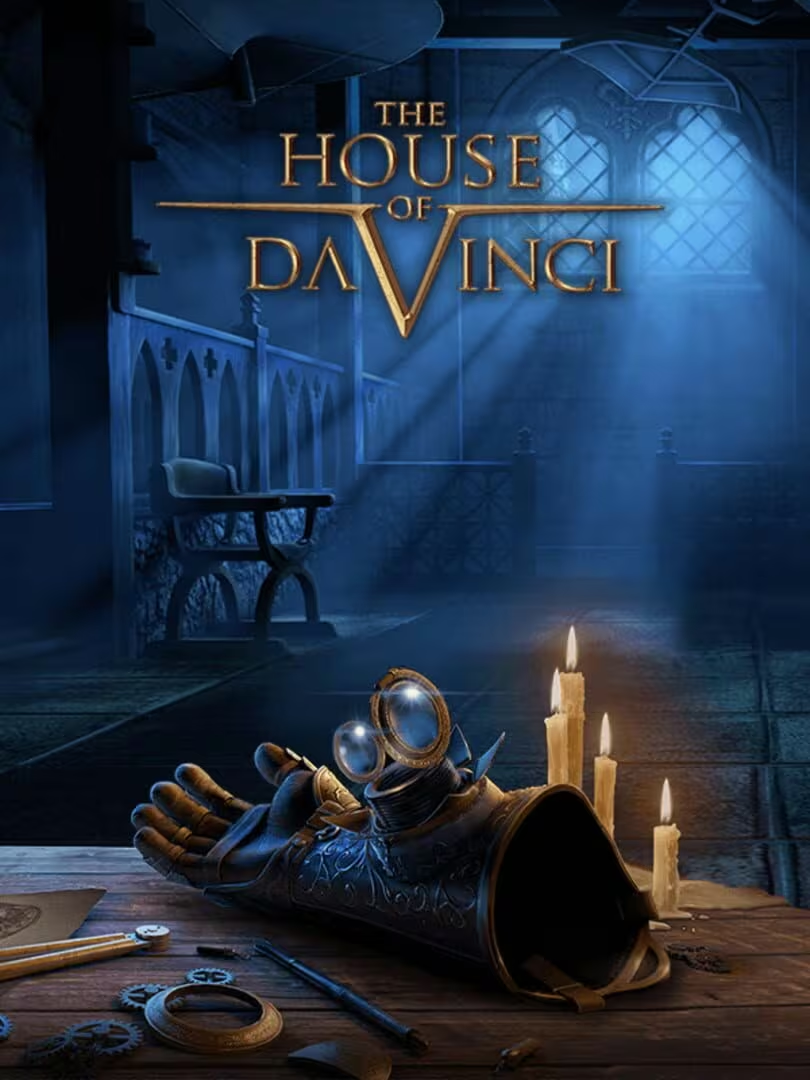 The House of Da Vinci
"No social interactions or relationship building."
-
Leadership
Game with the same Leadership vibe
-5"No leadership or group management elements."
 High On Life
"No leadership or group management elements."
-
Progression
Game with the same Progression vibe
2"Progression through story and unlocking constellations; no item collection or power accumulation."
Grotto
"Progression through unlocking constellations, encyclopedia entries, achievements, and trading cards."
-
Relaxation
Game with the same Relaxation vibe
4"Calm music and simple gameplay provide a relaxing experience."
 Zup! 6
"Calm music and simple gameplay create a relaxing and meditative experience."
-
Sensation
Game with the same Sensation vibe
1"Visuals and sound are pleasant but not highly stimulating or intense."
 Electrician Simulator
"Visuals and sounds are pleasant but minimalistic and subdued rather than intense or exciting."
-
Status
Game with the same Status vibe
-5"No social recognition or status systems present."
 Resident Evil 7 Biohazard
"No social recognition or status systems present."
-
Story
Game with the same Story vibe
1"Includes bird facts and thematic elements but no overarching narrative or plot."
 Wingspan
"Includes brief mythological and historical notes on constellations but lacks an overarching narrative."
-
Strategy
Game with the same Strategy vibe
-4"Gameplay involves straightforward, repetitive tasks with no complex planning or problem solving."
 Star Wars: Droid Repair Bay
"Gameplay involves simple connect-the-dots with no complex planning or problem solving."
-
Thrill
Game with the same Thrill vibe
-5"No suspense or risk; controlled and predictable experience."
 your wife
"No suspense or risk; very controlled and predictable experience."
-
Value
Game with the same Value vibe
4"Low price, easy achievements, and trading cards offer good perceived value for time and money."
 Pretty Neko
"Low price and easy achievements with trading cards provide good perceived value for time and money."
-
Violence
Game with the same Violence vibe
-5"No combat or destructive elements; purely constructive and observational."
 Hidden Lands - Spot the differences
"No combat or destructive elements; purely constructive and educational."
-
Survival
Game with the same Survival vibe
-5"No threats or survival mechanics; stable and safe environment."
 Proteus
"No threats or survival mechanics; stable and safe environment."
Last update: 01/06/2026