Awe similar games & best alternatives
Should you play it?
Awe is a god-game about expressing one’s creativity by shaping and building planets’ ecosystems in a soothing and relaxing ambiance carried by beautiful, minimalist lowpoly 3D art style and atmospheric music.
What works
- Relaxing and zen-like atmosphere
- Soothing ambient soundtrack
- Low price and good value
- Simple and accessible gameplay
- Unique minimalistic art style
Things to keep in mind
- Lack of tutorial or clear instructions
- Repetitive and limited gameplay depth
- Some frustrating waiting mechanics
- Minimal narrative or story
- Not suitable for colorblind players
What to play next
Similar games, hidden gems, and fresh directions from this game.
Top picks
Games that feel the closest overall
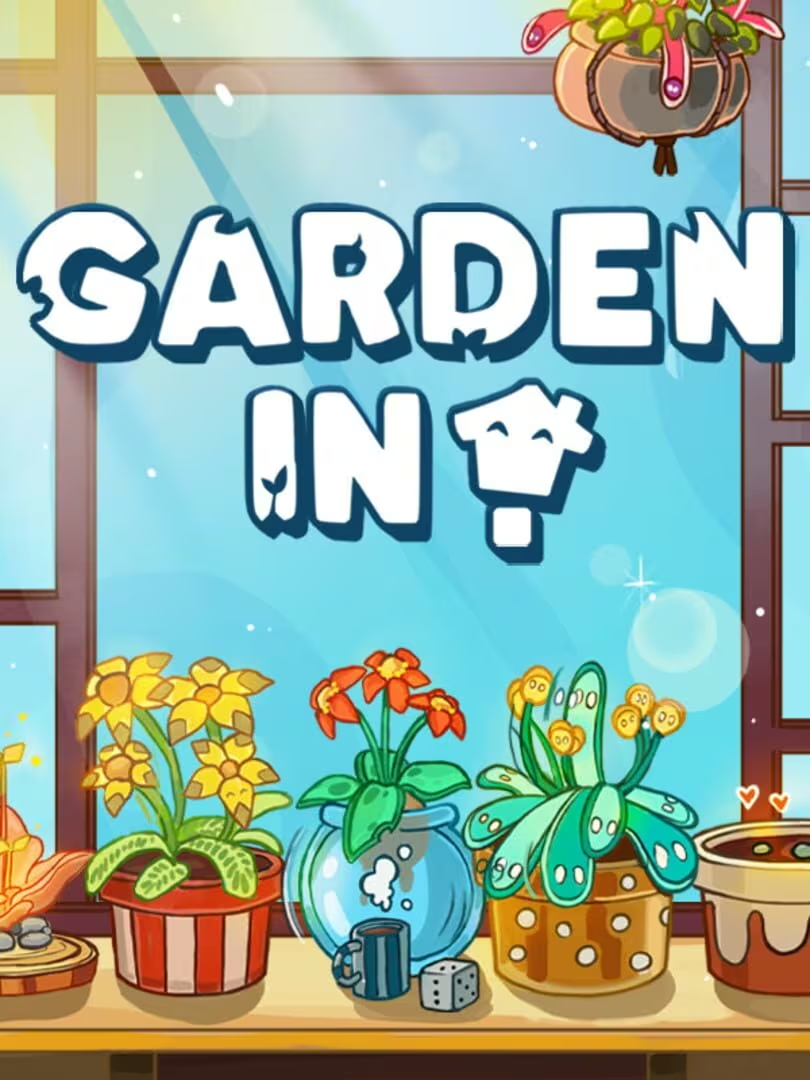
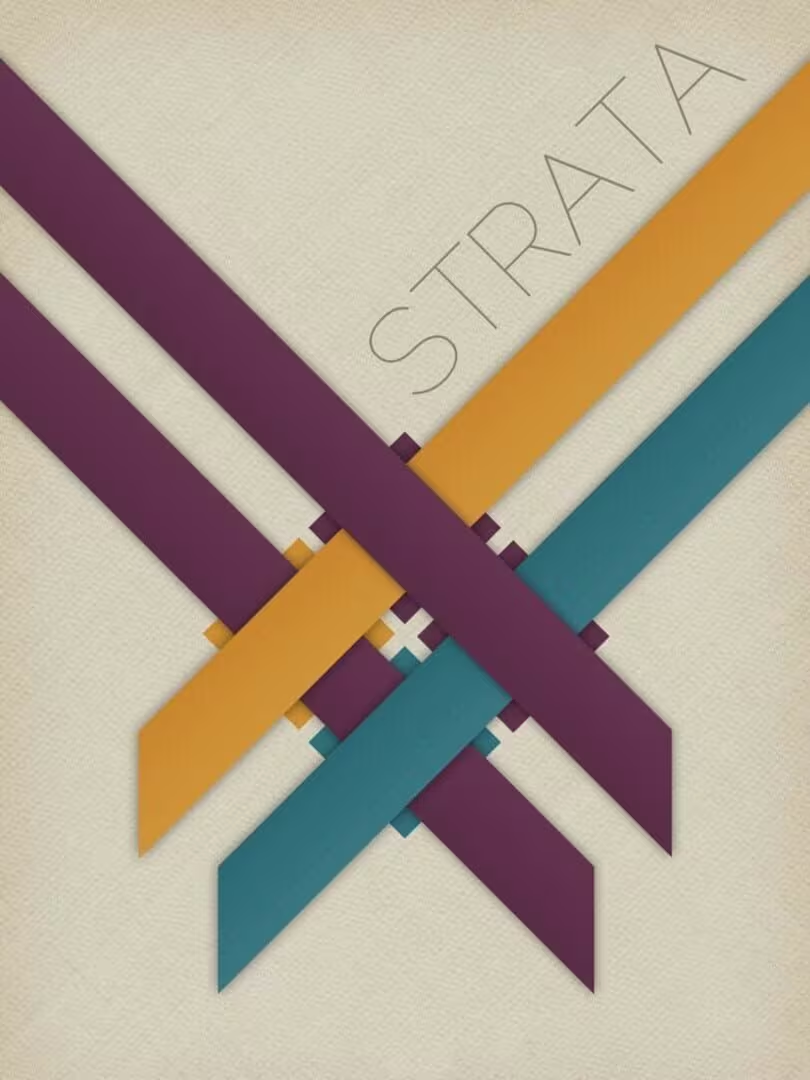
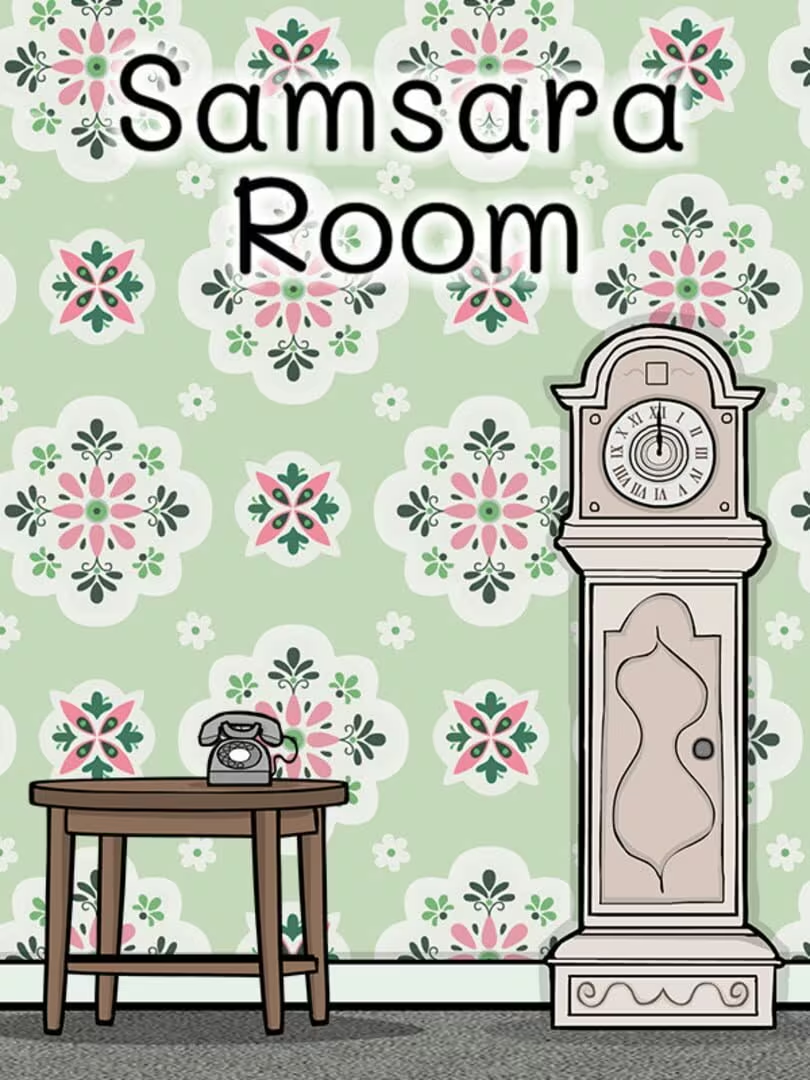

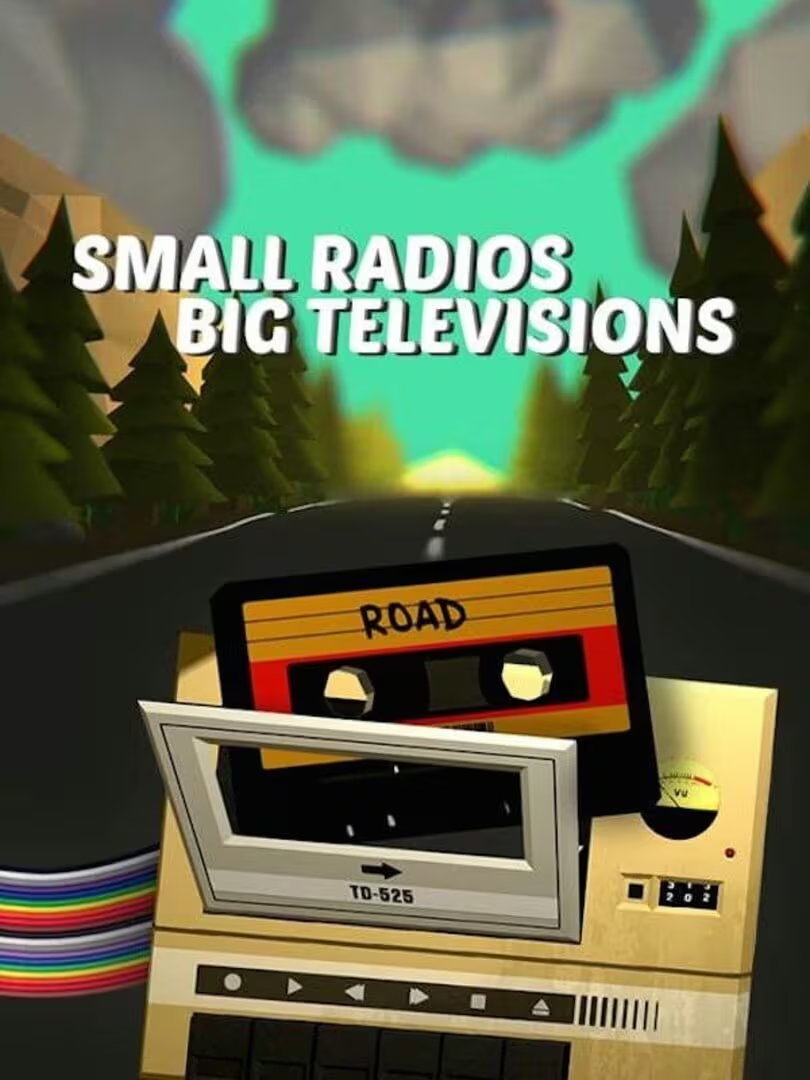
Hidden Gems
Less popular games with surprisingly high similarity
If you liked…
Recommendations by what you enjoyed most
Similarity map
Explore nearby similar games and see why they’re close.
Awe: Broadly representative of its motivational profile, with a few distinct shifts. Motivations that often define this kind of title include Violence, Fantasy, Story, Thrill. Here, the score leans higher than usual among comparable games on Idle, Fantasy. It leans lower than usual among comparable games on Survival.
Why this game works
A motivational profile of the game, with the closest similar game for each player motivation.
-
Autonomy
Game with the same Autonomy vibe
3"Players have freedom to explore the world at their own pace and choose how to interact with puzzles and collectibles, though the overall narrative is linear."
 The Midnight Walk
"Players freely choose how to place assets on planets and decide when to progress, though gameplay is constrained by puzzle sequences."
-
Competence
Game with the same Competence vibe
2"The game involves puzzle solving with trial and error, some timing challenges, and discovering correct sequences, but skill demands are moderate."
 McPixel 3
"Game involves pattern recognition and memory challenges that increase in difficulty, providing moderate skill engagement."
-
Competition
Game with the same Competition vibe
-4"No competitive elements or player comparison; focus is on personal pace and relaxation."
 Pretty Neko
"No competitive elements or player comparison; focus is on personal pace and relaxation."
-
Continuation
Game with the same Continuation vibe
1"Some players report playing in short bursts or habitual sessions, but others find it repetitive and disengage after some time."
 Two Digits
"Some players report playing for several hours and returning occasionally, but others find it easy to lose interest after short sessions."
-
Cooperation
Game with the same Cooperation vibe
-5"Entirely single-player with no cooperative or multiplayer features."
![Capsule for [Chilla's Art] The Ghost Train | 幽霊列車](https://d2eatnf6sujjgc.cloudfront.net/gameaton-data/chilla-s-art-the-ghost-train/cover/chilla-s-art-the-ghost-train.avif) [Chilla's Art] The Ghost Train | 幽霊列車
[Chilla's Art] The Ghost Train | 幽霊列車
"Entirely single-player with no cooperative or multiplayer features."
-
Creativity
Game with the same Creativity vibe
1"Some level design variety and puzzles, but mostly uses predefined structures and assets with limited player creation."
 The Backrooms: Unbounded
"Players can place assets on planets in their own style, but creation is limited by puzzle constraints and predefined assets."
-
Domination
Game with the same Domination vibe
-5"No elements of dominance or control over others; purely individual experience."
 Bonsai
"No elements of dominance or control over others; purely individual experience."
-
Escapism
Game with the same Escapism vibe
4"Highly relaxing and zen-like experience used for stress relief and distraction"
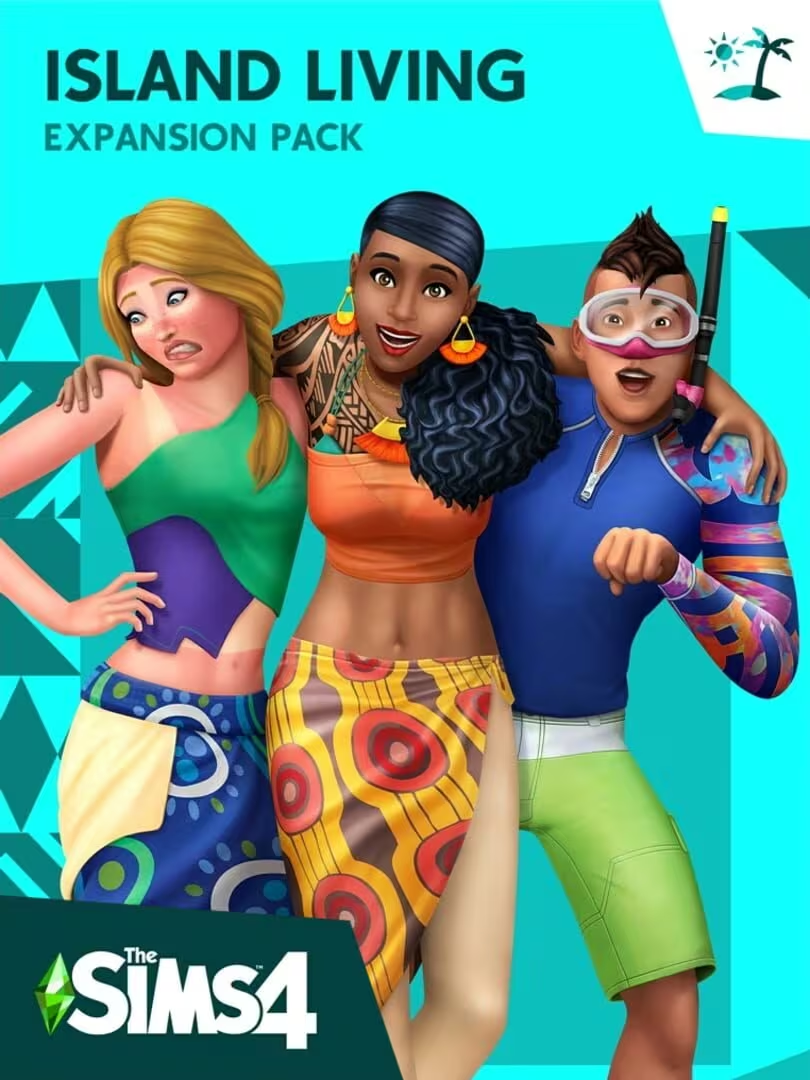 ISLANDERS
"Many reviews highlight the relaxing, zen-like atmosphere and stress relief qualities."
-
Expectation
Game with the same Expectation vibe
-4"Players engage voluntarily for enjoyment and relaxation, not out of obligation."
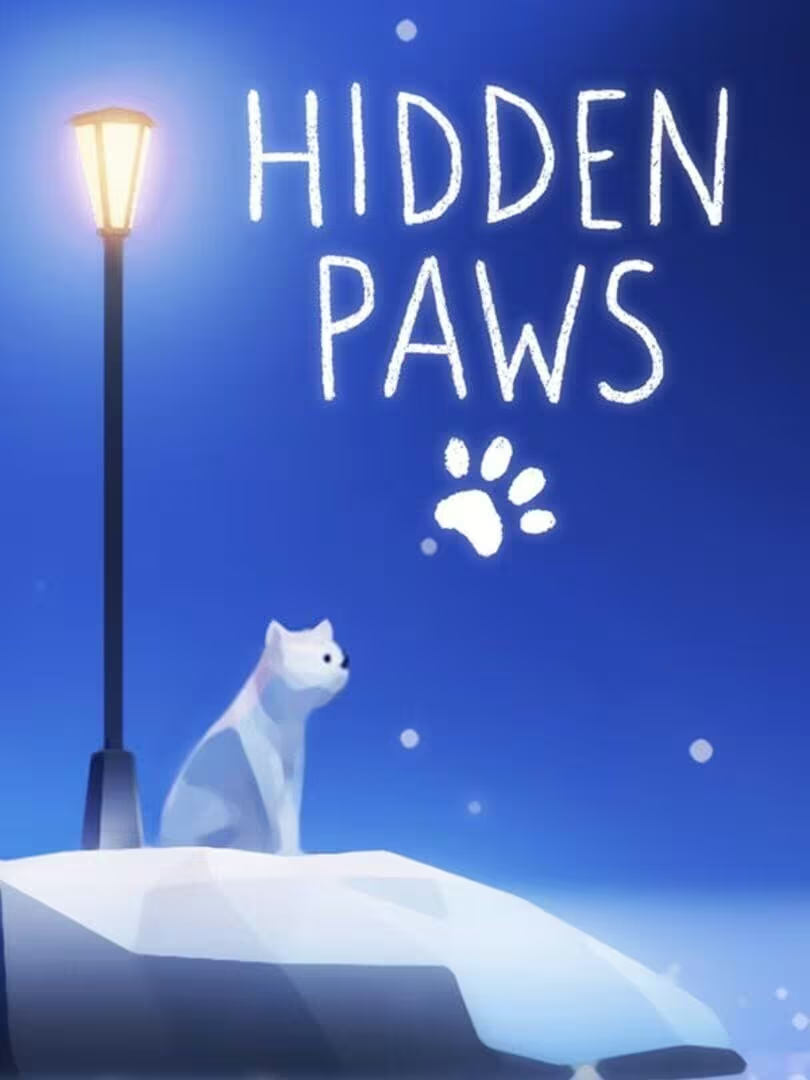 Hidden Paws
"Players engage voluntarily for relaxation and casual enjoyment, not out of obligation."
-
Experimenting
Game with the same Experimenting vibe
2"Players explore and experiment with objects and puzzles, though some gameplay is repetitive."
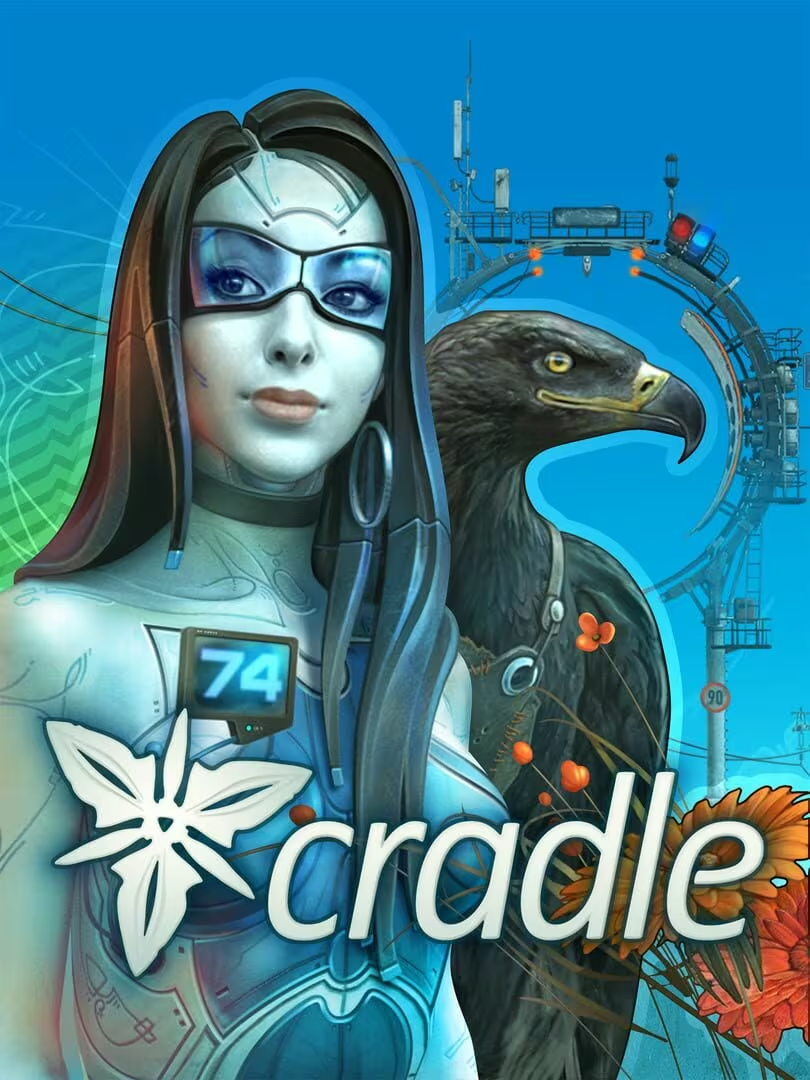 Cradle
"Players explore color combinations and puzzle mechanics, though the gameplay is somewhat repetitive."
-
Exploration
Game with the same Exploration vibe
2"Players explore new puzzle mechanics and layouts across 14 worlds, though environments are limited."
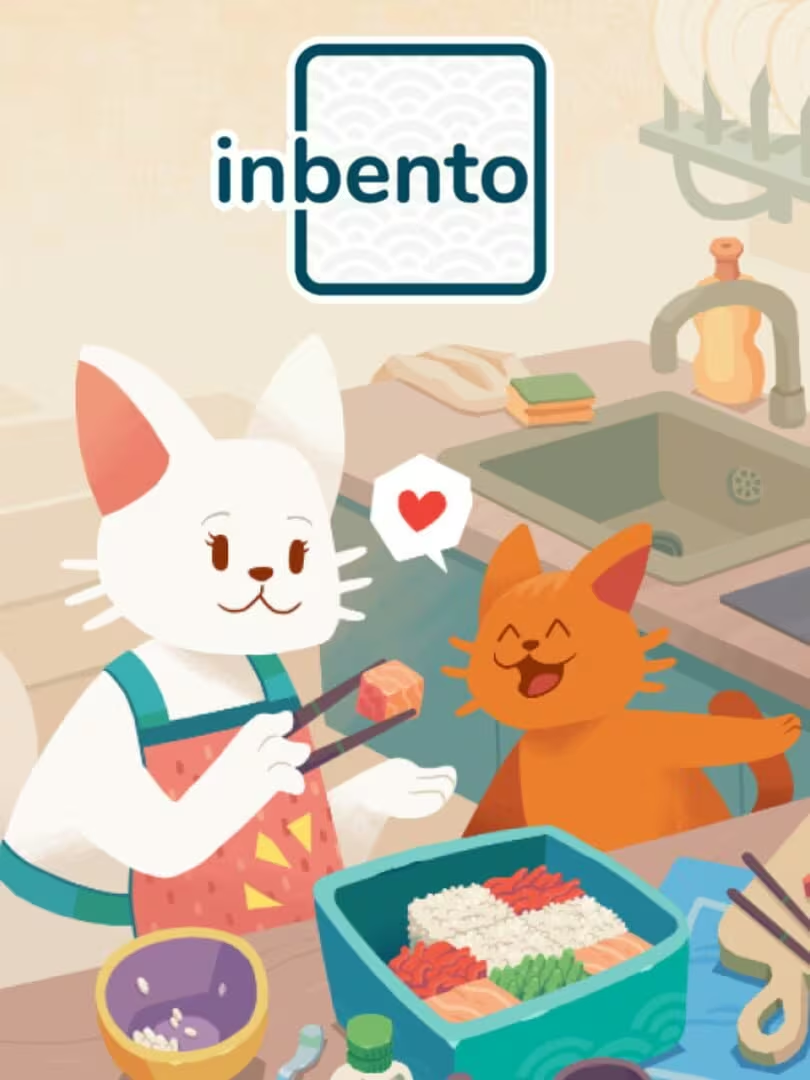 inbento
"Players discover new puzzle sequences and unlock new assets across multiple planets, but environments are limited."
-
Expression
Game with the same Expression vibe
1"Some cosmetic and character choice via planets, but limited avatar customization."
 Paper Planet
"Some customization of planet appearance through asset placement, but limited by puzzle requirements."
-
Fantasy
Game with the same Fantasy vibe
1"Sci-fi setting with imaginative units and story, but gameplay is abstract and strategic rather than immersive fantasy."
 Prismata
"Players assume a god-like role creating planets, but gameplay is abstract and minimalistic rather than immersive fantasy."
-
Fellowship
Game with the same Fellowship vibe
-5"No social or community features; experience is solitary."
 Demetrios - The BIG Cynical Adventure
"No social or community features; experience is solitary."
-
Growth
Game with the same Growth vibe
2"Players develop puzzle-solving skills and improve over time."
 Pixel Puzzles Traditional Jigsaw Puzzles
"Players learn puzzle mechanics and improve memory skills over time."
-
Health
Game with the same Health vibe
-5"Sedentary gameplay with no physical activity involved."
 World of Tanks Blitz
"Sedentary gameplay with no physical activity involved."
-
Idle
Game with the same Idle vibe
3"Game supports casual, pick-up-and-play sessions with some background or relaxed play."
 New Day
"Game supports casual, intermittent play and can be used as a time filler or relaxing background activity."
-
Intimacy
Game with the same Intimacy vibe
-5"No social or emotional relationship building within the game."
 Slay the Spire
"No social or emotional relationship building within the game."
-
Leadership
Game with the same Leadership vibe
-5"No leadership or group management elements."
 High On Life
"No leadership or group management elements."
-
Progression
Game with the same Progression vibe
3"Players accumulate resources, unlock skills, and complete missions to progress through the game."
 Rover Mechanic Simulator
"Players unlock new assets and progress through planets, accumulating resources (Awe) to advance."
-
Relaxation
Game with the same Relaxation vibe
5"Highly relaxing and zen-like experience with soothing music and calm gameplay."
Hidden Paws
"Strongly emphasized by players as a calming, zen-like experience with soothing music and visuals."
-
Sensation
Game with the same Sensation vibe
2"Enjoyable low-poly visuals and ambient soundtrack provide pleasant sensory stimulation."
 Under the Sand REDUX - a road trip simulator
"Enjoyable ambient soundtrack and pleasing low-poly visuals provide moderate sensory stimulation."
-
Status
Game with the same Status vibe
-5"No social recognition or status systems present."
 Resident Evil 7 Biohazard
"No social recognition or status systems present."
-
Story
Game with the same Story vibe
-4"Minimal narrative; gameplay is context-free and focused on puzzle mechanics."
 Safety First!
"Minimal narrative or plot; gameplay is context-free and focused on puzzles."
-
Strategy
Game with the same Strategy vibe
1"Some planning involved in color mixing and challenge completion, but overall gameplay is straightforward."
 de Blob
"Some planning and timing required to manage color sequences and asset placement, but overall simple mechanics."
-
Thrill
Game with the same Thrill vibe
-3"Gameplay is low risk and calm; lacks suspense or high tension moments."
 Car Mechanic Simulator 2018
"Gameplay is low risk and lacks suspense or tension; some frustration from waiting mechanics but mostly calm."
-
Value
Game with the same Value vibe
5"Highly praised for excellent value given low price and satisfying gameplay."
 Hook
Hook
"Highly praised for low price and good value as a relaxing casual game."
-
Violence
Game with the same Violence vibe
-5"No violence; gameplay centers on peaceful puzzle solving and exploration."
 Samorost 2
"No violence; gameplay centers on peaceful creation and puzzle solving."
-
Survival
Game with the same Survival vibe
-5"No survival or threat avoidance elements; stable and safe gameplay environment."
 The Past Within
"No survival or threat avoidance elements; stable and safe gameplay environment."
Last update: 01/06/2026