Hook similar games & best alternatives
Should you play it?
HOOK is a short minimal, puzzle game.
What works
- Affordable price
- Relaxing and minimalistic design
- Gradual difficulty increase
- Intuitive mechanics without tutorial
- Calming music and sound design
Things to keep in mind
- Very short gameplay length
- Limited replay value
- Lack of narrative or social features
- Some puzzles may feel too easy or repetitive
- No customization or creative elements
What to play next
Similar games, hidden gems, and fresh directions from this game.
Top picks
Games that feel the closest overall


Hidden Gems
Less popular games with surprisingly high similarity
If you liked…
Recommendations by what you enjoyed most
Similarity map
Explore nearby similar games and see why they’re close.
Hook: Less representative of its motivational profile, with noticeable differences. Motivations that often define this kind of title include Violence, Fantasy, Story, Thrill. It leans lower than usual among comparable games on Continuation, Expression, Exploration.
Why this game works
A motivational profile of the game, with the closest similar game for each player motivation.
-
Autonomy
Game with the same Autonomy vibe
4"Players have freedom to choose cleaning order and methods, with no fixed routine enforced."
 Viscera Cleanup Detail
"Players freely decide the order to pull hooks and manipulate switches, with no fixed routine imposed."
-
Competence
Game with the same Competence vibe
3"Puzzles increase in difficulty and require logical thinking, providing a sense of skill mastery, though not overly challenging."
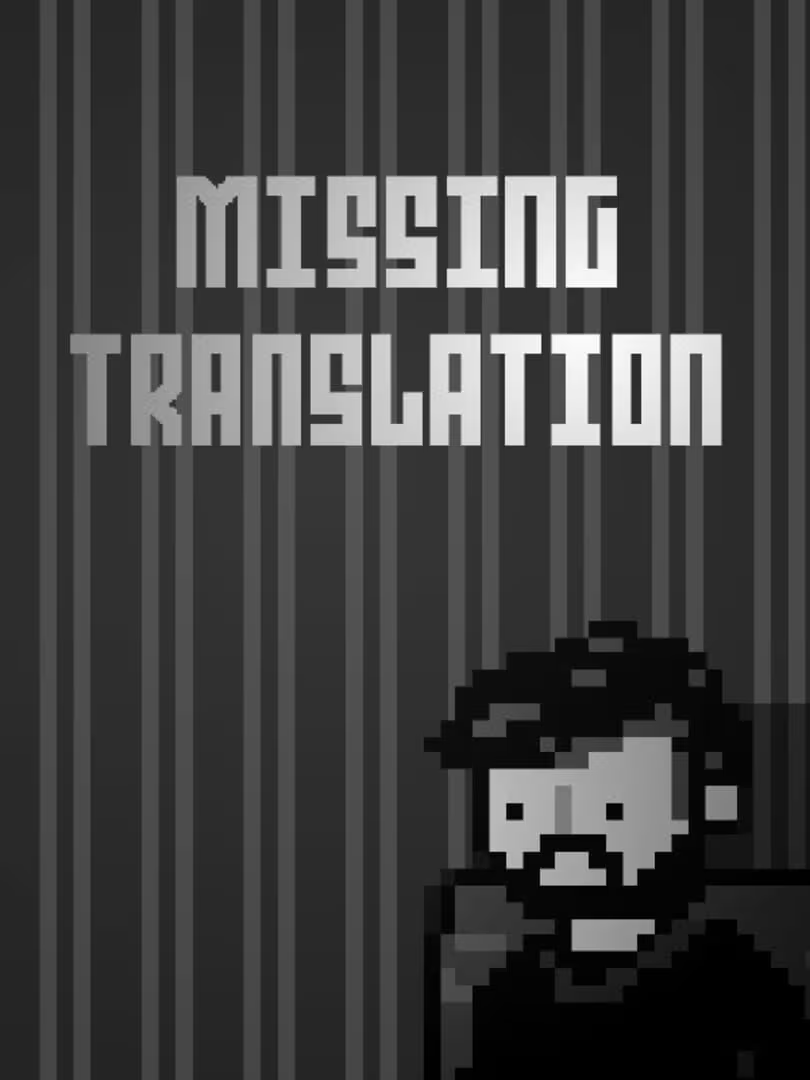 Missing Translation
"Puzzles increase in complexity and require logical thinking and planning, providing a sense of skill mastery."
-
Competition
Game with the same Competition vibe
-4"Single-player experience focused on personal puzzle solving without competitive elements or leaderboards."
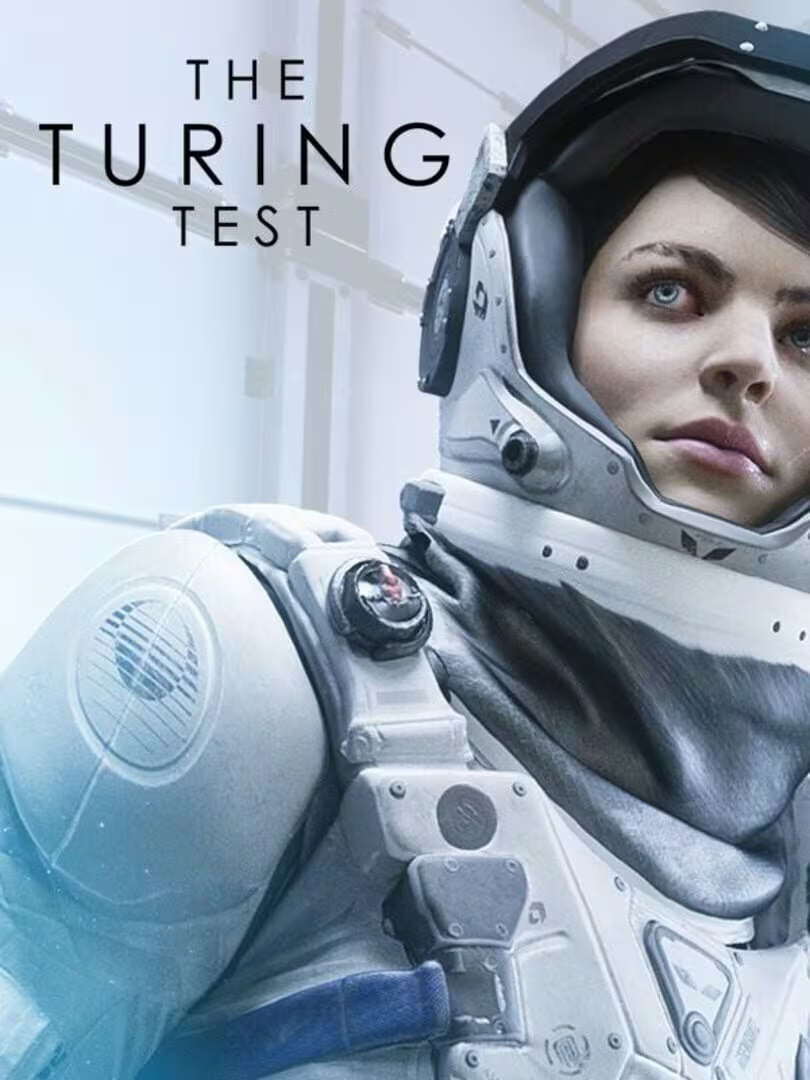 The Turing Test
"Single-player experience focused on personal puzzle solving without leaderboards or direct competition."
-
Continuation
Game with the same Continuation vibe
-3"Short game (~1.5-2 hours) with limited replay value; players tend to complete it in one or two sessions."
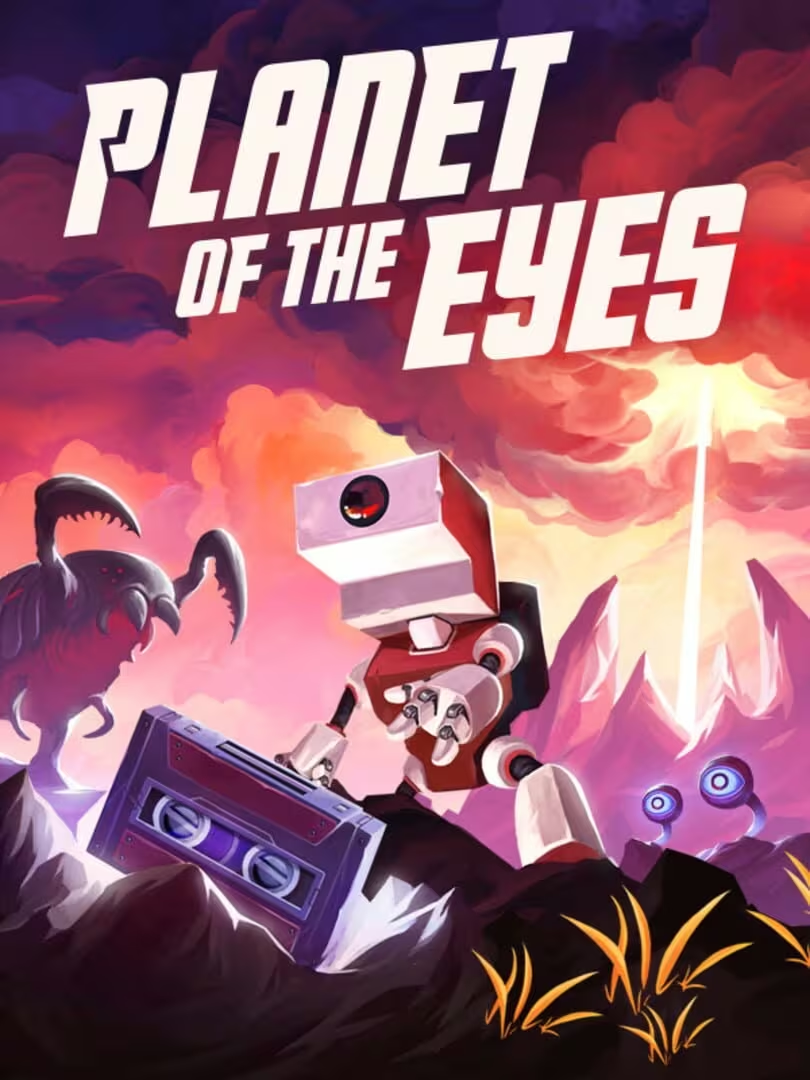 Planet of the Eyes
"Short game (~1 hour) with limited replay value; players tend to finish it in one or two sessions."
-
Cooperation
Game with the same Cooperation vibe
-5"Entirely single-player with no multiplayer or cooperative elements."
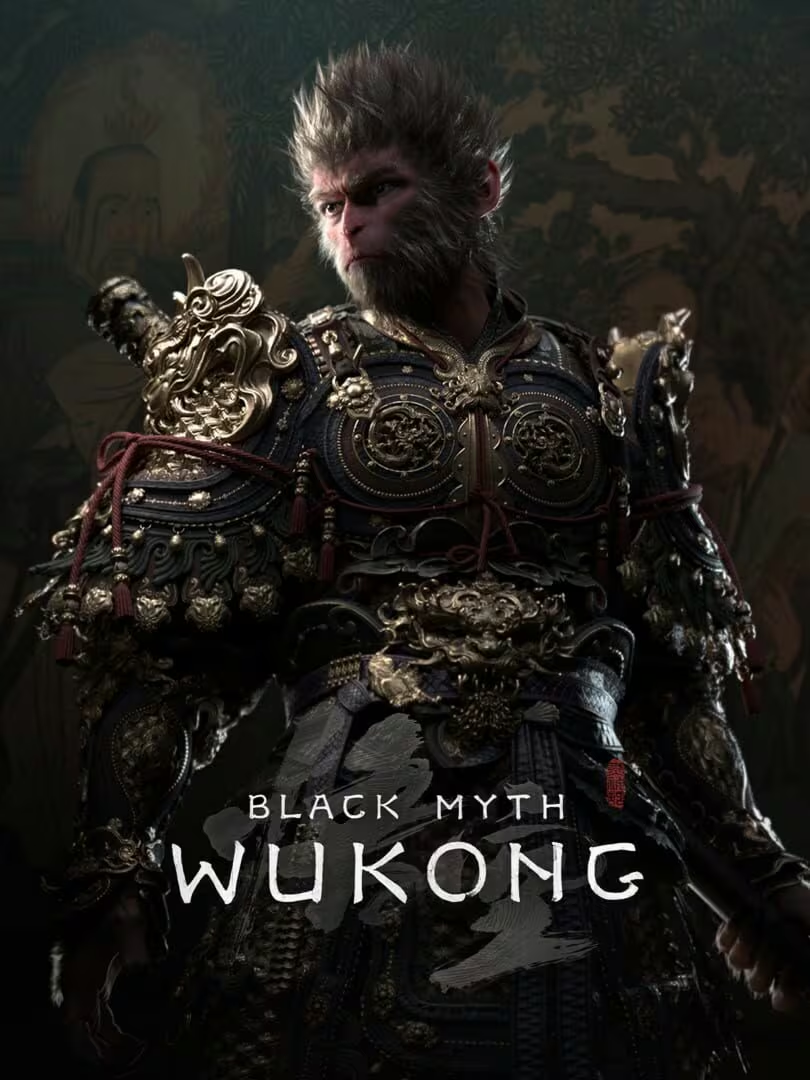 Black Myth: Wukong
"Entirely single-player with no multiplayer or cooperative elements."
-
Creativity
Game with the same Creativity vibe
1"Players explore and solve puzzles but do not create or modify game content."
 Black Mirror I
"Players solve puzzles using provided mechanics but do not create or modify content."
-
Domination
Game with the same Domination vibe
-5"No social dominance or power dynamics present; purely individual puzzle solving."
 Machinika: Museum
"No social interactions or power dynamics; purely individual puzzle solving."
-
Escapism
Game with the same Escapism vibe
3"Many players use the relaxing music and minimalistic design to unwind and distract from real life stress."
 Wayout
"Relaxing atmosphere and minimalistic design help players unwind and distract from real life."
-
Expectation
Game with the same Expectation vibe
-4"Players engage voluntarily for enjoyment and mental challenge, not out of obligation."
 Railbound
"Players engage voluntarily for enjoyment and mental challenge, not out of obligation."
-
Experimenting
Game with the same Experimenting vibe
2"Puzzle mechanics encourage trying different sequences and timing; some players explore alternative solutions."
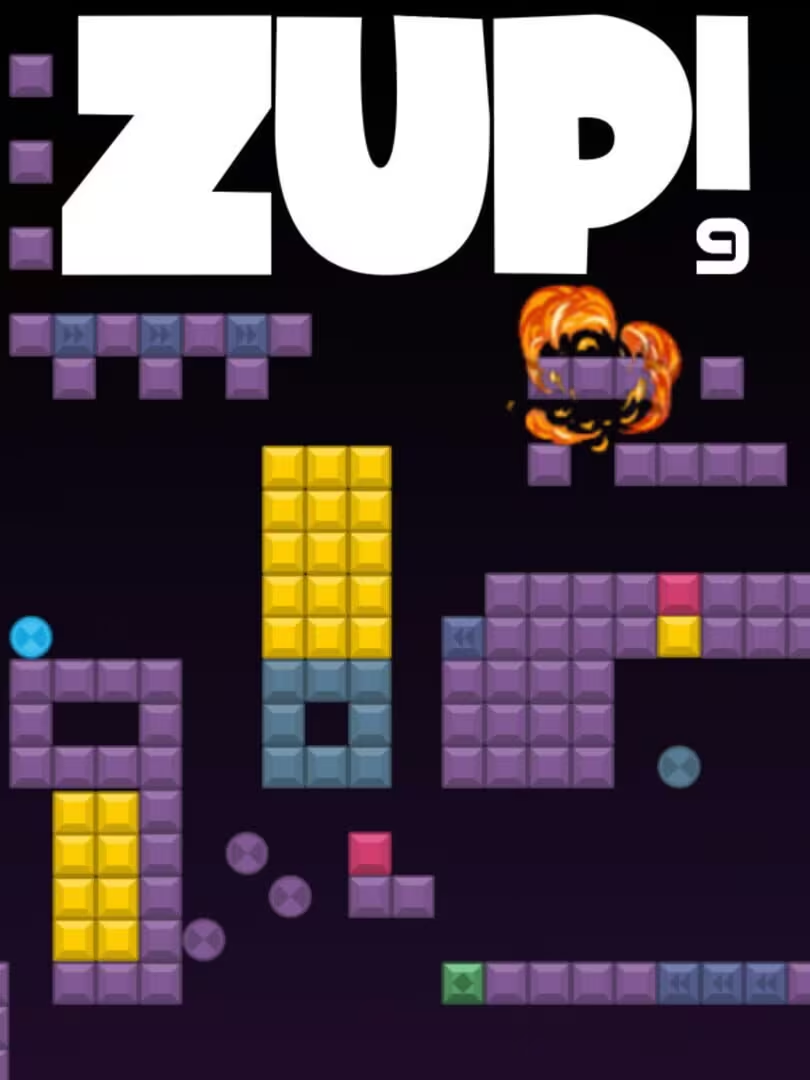 Zup! 9
"Players explore puzzle mechanics and try different sequences to solve levels."
-
Exploration
Game with the same Exploration vibe
-4"Gameplay involves known puzzle environments with no open-world or discovery elements."
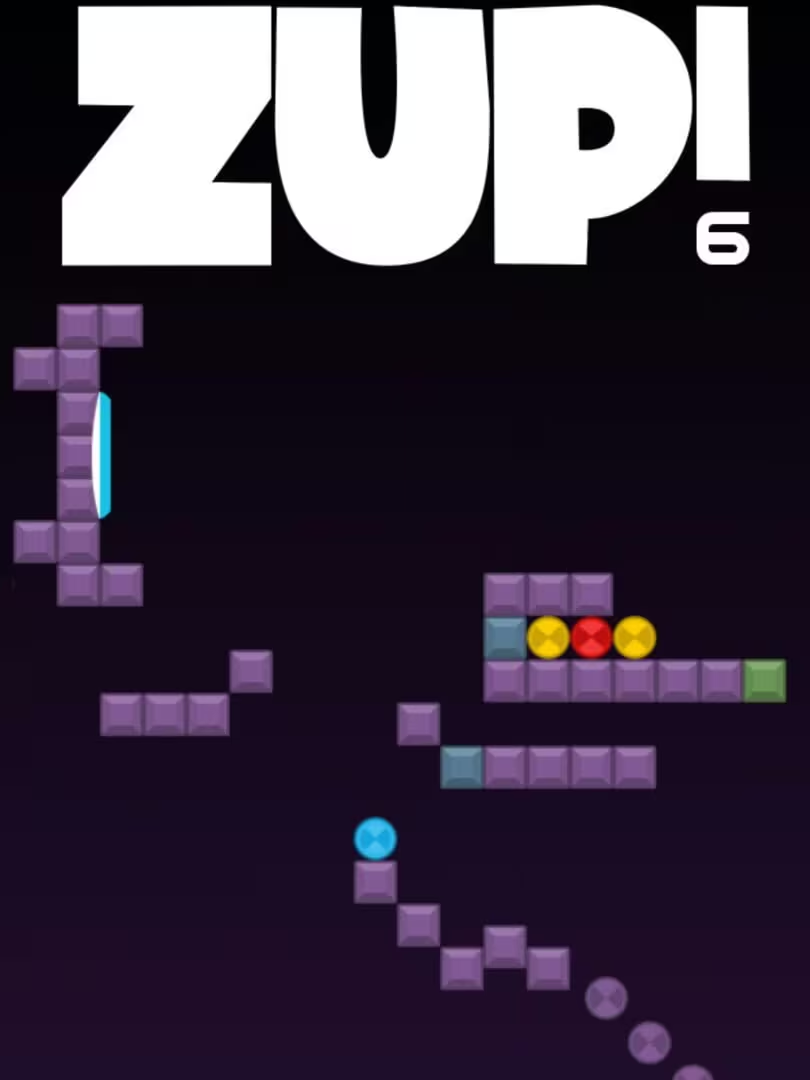 Zup! 6
"Gameplay is confined to known puzzle boards without open-world or discovery elements."
-
Expression
Game with the same Expression vibe
-5"No character or environment customization; minimalistic and standardized visuals."
 Project Rhombus
"No character or environment customization; minimalistic and standardized visuals."
-
Fantasy
Game with the same Fantasy vibe
-5"Realistic puzzle mechanics without fictional or imaginative elements."
 Lines X Free
"Realistic puzzle mechanics based on circuits and logic, no fictional or fantastical elements."
-
Fellowship
Game with the same Fellowship vibe
-5"No community or social features; entirely solo experience."
 Zen Chess: Mate in One
"No community or social features; entirely solo experience."
-
Growth
Game with the same Growth vibe
3"Players develop problem-solving skills and learn new mechanics progressively through puzzles."
 Q.U.B.E: Director's Cut
"Players learn new mechanics and improve logical thinking as puzzles progress."
-
Health
Game with the same Health vibe
-5"Sedentary gameplay with no physical activity involved."
 World of Tanks Blitz
"Sedentary gameplay with no physical activity involved."
-
Idle
Game with the same Idle vibe
-4"Requires focused attention and active problem solving; not suited for background or idle play."
 Palindrome Syndrome: Escape Room
"Requires focused attention and problem solving; not suited for background or idle play."
-
Intimacy
Game with the same Intimacy vibe
-5"No social or emotional connections formed through gameplay."
 Nodebuster
"No social or emotional connections formed through gameplay."
-
Leadership
Game with the same Leadership vibe
-5"No leadership or group management roles; single-player puzzle solving only."
 The Pedestrian
"No leadership or group management roles; single-player puzzle solving only."
-
Progression
Game with the same Progression vibe
2"Progression through story and unlocking new abilities and mechanics, but no item collection or upgrades."
 Keeper
"Progression through levels and unlocking new mechanics, but no item collection or upgrades."
-
Relaxation
Game with the same Relaxation vibe
4"Calming music and visuals create a relaxing experience despite some challenging sections."
 The Floor is Jelly
"Calming music, minimalistic visuals, and fair difficulty curve create a relaxing experience."
-
Sensation
Game with the same Sensation vibe
2"Simple but pleasant audio-visual feedback enhances enjoyment; not highly stimulating but engaging."
 Tasty Planet: Back for Seconds
"Pleasant audio and visual feedback enhance enjoyment but are subtle and minimalistic."
-
Status
Game with the same Status vibe
-5"No social recognition or status systems present."
 Resident Evil 7 Biohazard
"No social recognition or status systems present."
-
Story
Game with the same Story vibe
-5"No narrative or story elements; purely abstract puzzles."
 Hexcells
"No narrative or story elements; purely abstract puzzles."
-
Strategy
Game with the same Strategy vibe
3"Requires planning and logical reasoning to solve puzzles efficiently."
 TransPlan
"Requires planning and logical sequencing to solve puzzles effectively."
-
Thrill
Game with the same Thrill vibe
-3"Low risk and tension; gameplay is calm and controlled rather than suspenseful."
 Steam Engine Simulator
"Low risk and tension; gameplay is calm and methodical rather than suspenseful."
-
Value
Game with the same Value vibe
5"Highly praised for excellent value given low price and quality gameplay."
 Super Kiwi 64
"Highly praised for excellent value given low price and satisfying gameplay."
-
Violence
Game with the same Violence vibe
-5"No violent content; gameplay is constructive and puzzle-focused."
 RUSH
RUSH
"No violent content; gameplay is constructive and puzzle-focused."
-
Survival
Game with the same Survival vibe
-5"No survival or threat avoidance mechanics; stable and safe puzzle environment."
 A Monster's Expedition
"No survival or threat avoidance mechanics; stable and safe puzzle environment."
Last update: 01/06/2026