Wayout similar games & best alternatives
Should you play it?
Relax, clear your mind and find the way out.
What works
- Challenging and well-designed puzzles
- Low price with many levels
- Relaxing music and minimalistic visuals
- Progressive introduction of new mechanics
- Good value for puzzle enthusiasts
Things to keep in mind
- Steep difficulty curve can cause frustration
- Lack of tutorial or clear instructions
- Minimalistic presentation may feel repetitive
- No social or multiplayer features
- Some ui and navigation issues
What to play next
Similar games, hidden gems, and fresh directions from this game.
Top picks
Games that feel the closest overall

Hidden Gems
Less popular games with surprisingly high similarity
If you liked…
Recommendations by what you enjoyed most
Similarity map
Explore nearby similar games and see why they’re close.
Wayout: Broadly representative of its motivational profile, with a few distinct shifts. Motivations that often define this kind of title include Violence, Fantasy, Story, Thrill. It leans lower than usual among comparable games on Expression, Fantasy, Exploration.
Why this game works
A motivational profile of the game, with the closest similar game for each player motivation.
-
Autonomy
Game with the same Autonomy vibe
4"Players freely choose moves and strategies to solve puzzles without time pressure or forced routines."
 KAMI
KAMI
"Players freely choose how to approach puzzles and decide their own moves without imposed routines."
-
Competence
Game with the same Competence vibe
5"The game challenges players with increasingly complex puzzles requiring skill, logic, and reflexes, providing strong feedback and a sense of mastery."
 Portal
"The game strongly challenges players' mental skills with increasingly difficult puzzles and demands mastery of mechanics."
-
Competition
Game with the same Competition vibe
-4"Focus is on personal puzzle solving without competitive elements or leaderboards."
 Please, Don't Touch Anything 3D
"Focus is on personal puzzle solving without direct competition or leaderboards."
-
Continuation
Game with the same Continuation vibe
2"Many players find the game addictive and engaging for several hours, though some get frustrated and quit at difficult levels."
 OneShift
"Some players engage for hours and enjoy progressing through many levels, though others find it frustrating and disengage."
-
Cooperation
Game with the same Cooperation vibe
-5"Entirely single-player puzzle experience with no cooperative elements."
 Lines X Free
"Entirely single-player puzzle experience with no cooperative elements."
-
Creativity
Game with the same Creativity vibe
1"Players experiment with move sequences creatively within fixed puzzle constraints but no building or customization."
 KNIGHTS
"Players experiment with tile pressing strategies, but within a fixed puzzle structure and limited customization."
-
Domination
Game with the same Domination vibe
-5"No social dominance or power over others; purely individual puzzle solving."
 Q.U.B.E. 2
"No social dominance or power over others; purely individual puzzle solving."
-
Escapism
Game with the same Escapism vibe
3"Many players use the relaxing music and simple puzzles to unwind and distract from real life stress."
 Shift
Shift
"Many players use the relaxing music and minimalistic design to unwind and distract from real life stress."
-
Expectation
Game with the same Expectation vibe
-4"Players engage voluntarily out of intrinsic interest and enjoyment of puzzles, not due to obligation or external pressure."
 Patrick's Parabox
"Players engage voluntarily out of interest in puzzles, not due to obligation or external pressure."
-
Experimenting
Game with the same Experimenting vibe
4"Game mechanics evolve frequently, encouraging players to adapt and try new movement styles and strategies."
 No Time To Explain Remastered
"Players try different pressing patterns and learn new mechanics introduced progressively."
-
Exploration
Game with the same Exploration vibe
-3"Exploration limited to puzzle mechanics and level selection; no open world or discovery elements."
 Sokobond
"Exploration is limited to puzzle mechanics and level progression rather than discovering new environments."
-
Expression
Game with the same Expression vibe
-4"Minimalistic visuals with no character or environment customization."
Lines X Free
"Minimalistic visuals with no character or environment customization."
-
Fantasy
Game with the same Fantasy vibe
-5"The game is abstract and logical, with no fictional narrative or fantastical elements."
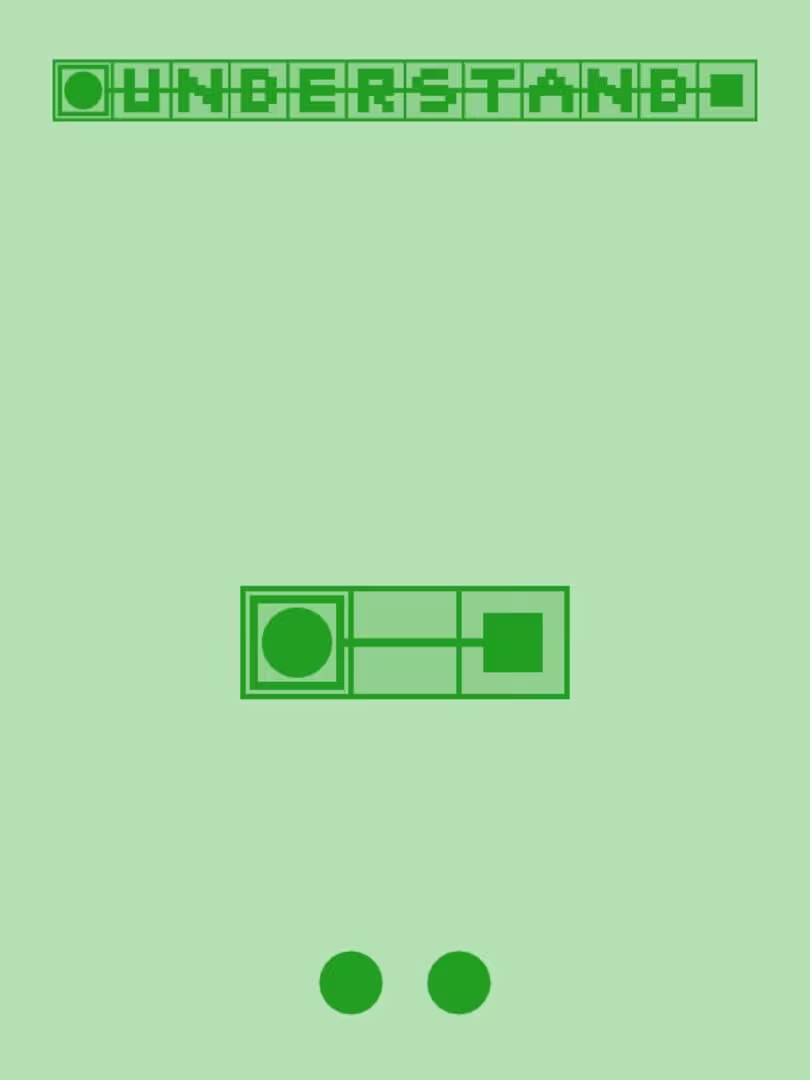 Understand
"The game is abstract and realistic in concept, with no fictional or narrative elements."
-
Fellowship
Game with the same Fellowship vibe
-5"No community or social features; purely solo play."
 Ys I & II Chronicles+
"No community or social features; purely solo play."
-
Growth
Game with the same Growth vibe
4"Players develop problem-solving skills and learn new puzzle mechanics progressively."
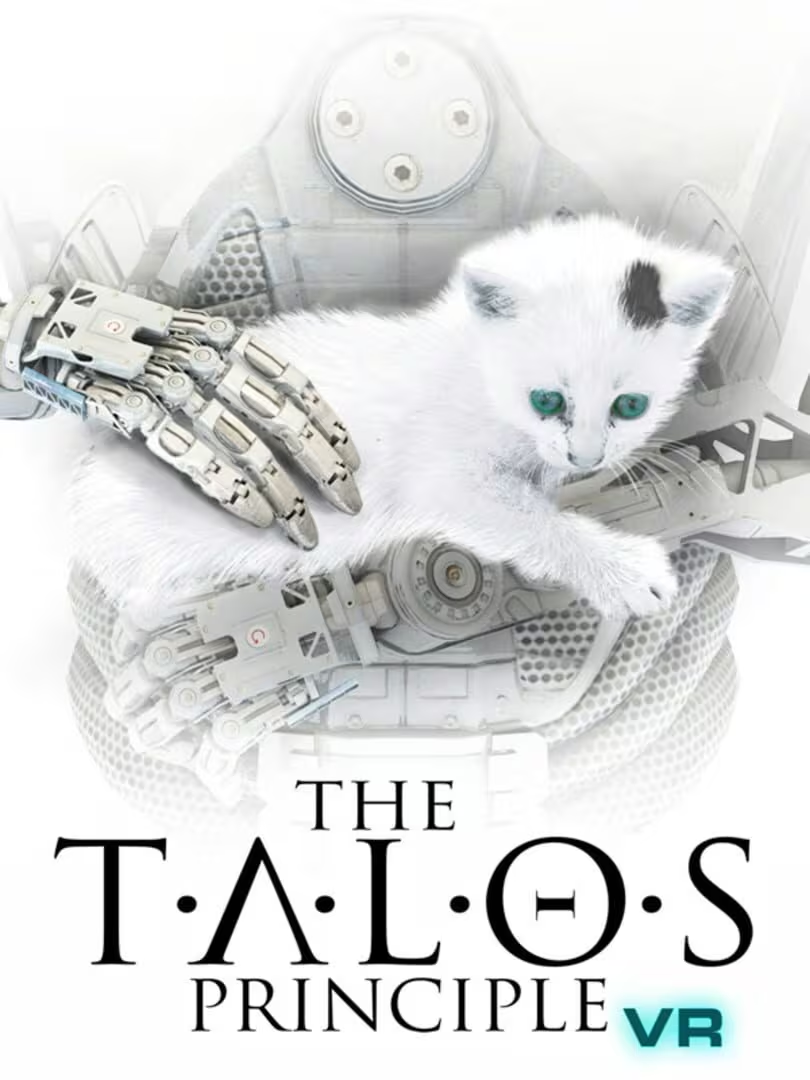 The Talos Principle VR
"Players develop problem-solving skills and learn new puzzle mechanics as they progress."
-
Health
Game with the same Health vibe
-5"Sedentary gameplay with no physical activity involved."
 World of Tanks Blitz
"Sedentary gameplay with no physical activity involved."
-
Idle
Game with the same Idle vibe
-3"Requires focused attention to solve puzzles; not suitable for passive or background play."
 Polarity
"Requires focused attention to solve puzzles; not suitable for passive or background play."
-
Intimacy
Game with the same Intimacy vibe
-5"No social or emotional connections formed through gameplay."
 Nodebuster
"No social or emotional connections formed through gameplay."
-
Leadership
Game with the same Leadership vibe
-5"No leadership or group management roles; individual puzzle solving only."
 MHRD
MHRD
"No leadership or group management roles; individual puzzle solving only."
-
Progression
Game with the same Progression vibe
4"Players unlock puzzles progressively and complete achievements, showing clear progression."
 Pixel Puzzles 2: Birds
"Players progress through many levels and unlock achievements, with a final puzzle unlocked by perfect completion."
-
Relaxation
Game with the same Relaxation vibe
3"Calming aesthetics and music create a relaxing atmosphere despite some challenging puzzles."
 HUMANITY
"Relaxing music and minimalistic design create a calming atmosphere, though some find puzzles frustrating."
-
Sensation
Game with the same Sensation vibe
1"Basic sensory stimulation with simple graphics and sounds; some players enjoy the quirky audio effects."
 Barro 2020
"Simple visual and auditory stimuli with some players appreciating the meditative clicking sounds."
-
Status
Game with the same Status vibe
-4"No social recognition or ranking; achievements are personal milestones."
 Purple Place - Classic Games
"No social recognition or ranking; achievements are personal milestones."
-
Story
Game with the same Story vibe
-5"No narrative or story elements; purely abstract puzzle gameplay."
 LYNE
LYNE
"No narrative or story elements; purely abstract puzzle gameplay."
-
Strategy
Game with the same Strategy vibe
5"High mental challenge requiring planning, logic, and problem solving to complete puzzles."
 Stephen's Sausage Roll
"High mental challenge requiring logical planning and strategic thinking to solve puzzles efficiently."
-
Thrill
Game with the same Thrill vibe
-3"Low suspense or risk; gameplay is controlled and predictable."
 Voxel Tycoon
"Low suspense or risk; gameplay is controlled and predictable."
-
Value
Game with the same Value vibe
4"Players perceive good value for money given price and content."
 1 Moment Of Time: Silentville
"Players perceive good value for money given the amount of content and challenge at a low price."
-
Violence
Game with the same Violence vibe
-5"No violence; gameplay is constructive and puzzle-based."
 Qbeh-1: The Atlas Cube
"No violence; gameplay is constructive and puzzle-focused."
-
Survival
Game with the same Survival vibe
-5"No survival or threat elements; stable and safe gameplay environment."
 Zenge
Zenge
"No survival or threat elements; stable and safe gameplay environment."
Last update: 01/06/2026