Codename: Panzers, Phase Two similar games & best alternatives
Should you play it?
Fight alongside your troops in the sweltering desert heat of the Sahara or in the blustery heights of the Italian Alps. Wield your strategic prowess to gain the upper hand by the light of day and exploit the dark shroud of night to launch surprise attacks. Tanks, planes, troops, weapons - the resources are at your command.
What works
- Engaging wwii strategy gameplay
- Multiple campaigns with storylines
- Map and mission editor for creativity
- Nostalgic value and historical setting
- Affordable price and compatibility updates
Things to keep in mind
- Outdated graphics and animations
- Ai pathfinding and unit control issues
- Short campaign length
- Bugs and occasional crashes
- Limited active multiplayer community
What to play next
Similar games, hidden gems, and fresh directions from this game.
Top picks
Games that feel the closest overall
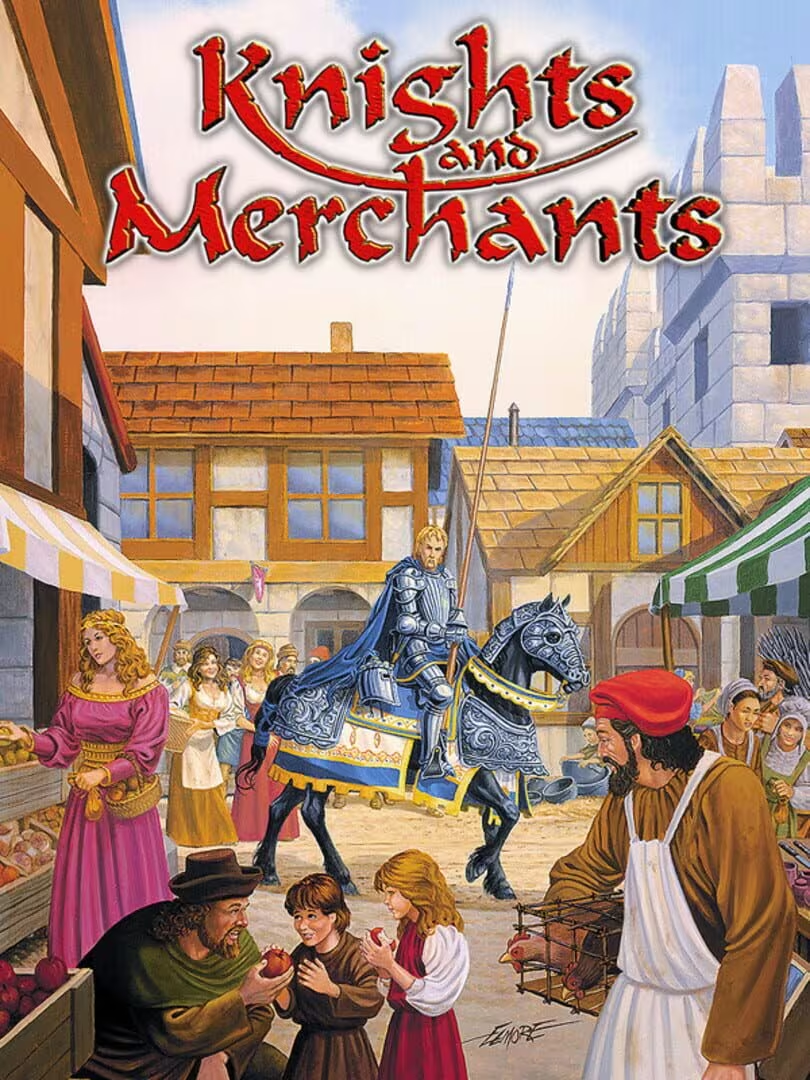
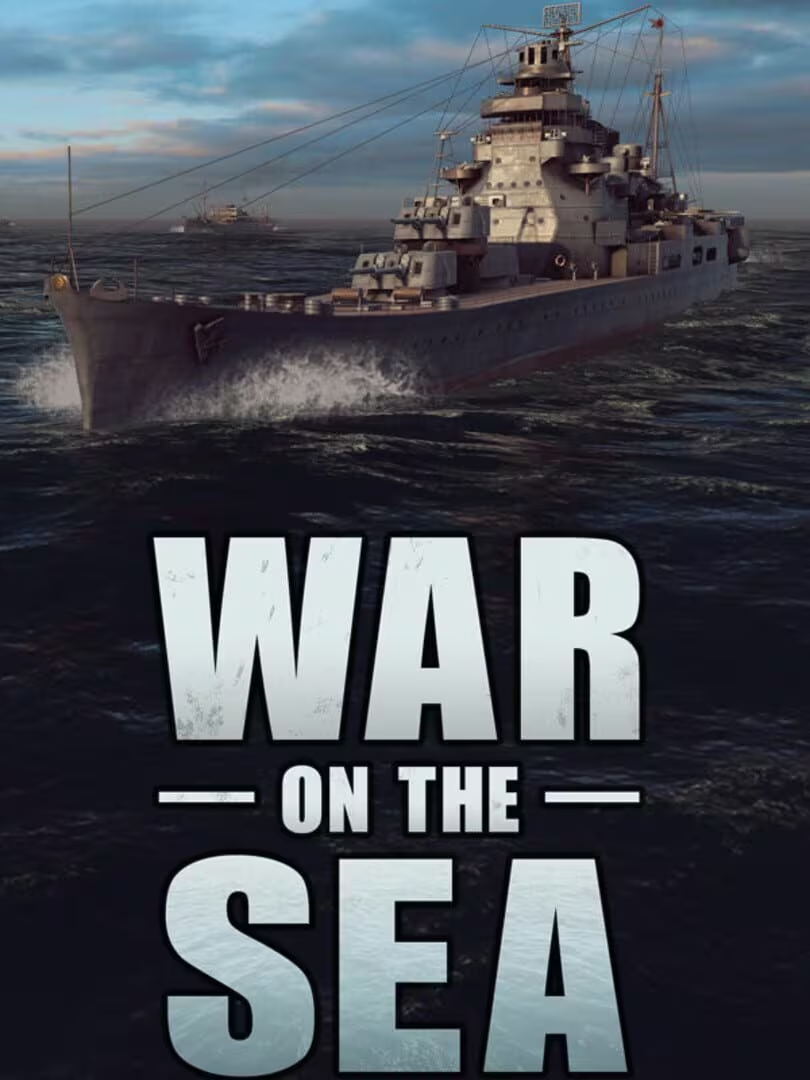
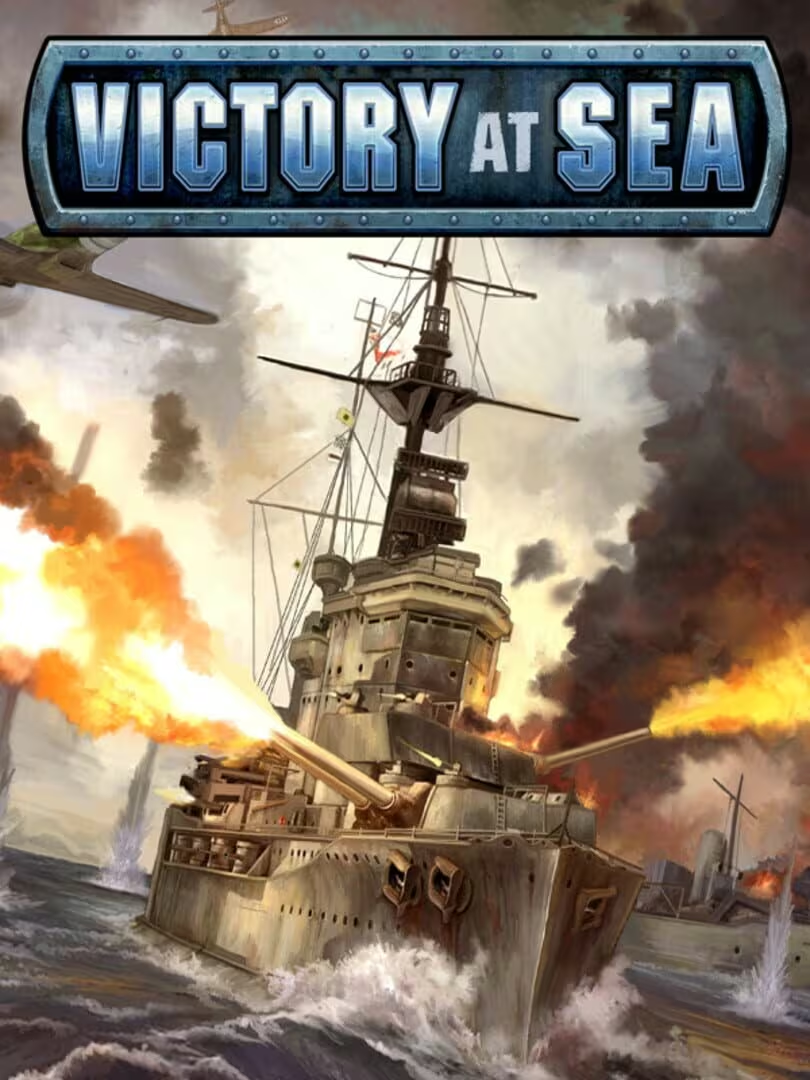
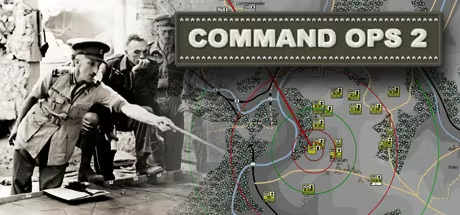
Hidden Gems
Less popular games with surprisingly high similarity
If you liked…
Recommendations by what you enjoyed most
Similarity map
Explore nearby similar games and see why they’re close.
Codename: Panzers, Phase Two: Less representative of its motivational profile, with noticeable differences. Motivations that often define this kind of title include Fellowship, Violence, Survival, Cooperation. Here, the score leans higher than usual among comparable games on Leadership, Violence. It leans lower than usual among comparable games on Fantasy.
Why this game works
A motivational profile of the game, with the closest similar game for each player motivation.
-
Autonomy
Game with the same Autonomy vibe
3"Players can choose different commanders and doctrines, plan strategies, and control individual units with some freedom, but missions are somewhat scripted and have limited unit reinforcements."
 Sudden Strike 4
"Players choose units and strategies freely before missions; some scripted mission constraints exist but overall player-directed tactics dominate."
-
Competence
Game with the same Competence vibe
4"Game offers challenging missions, especially on higher difficulties, requiring skillful micro and strategy."
 Iron Marines
"Game offers challenging missions with tactical depth and difficulty scaling; players report skillful play and strategic thinking required."
-
Competition
Game with the same Competition vibe
-2"Multiplayer exists but is rarely populated; focus is mostly on single-player campaigns and personal progression."
 Codename: Panzers, Phase One
"Multiplayer exists but is rarely active; most play is single-player focused on personal progress and campaign completion."
-
Continuation
Game with the same Continuation vibe
3"Many players report nostalgic attachment and habitual play, replaying campaigns and skirmishes over long periods."
 Praetorians - HD Remaster
"Nostalgic players return repeatedly; campaigns are short but engaging; some frustration with bugs but overall attachment remains."
-
Cooperation
Game with the same Cooperation vibe
-3"The game focuses mainly on individual command and strategy with limited mention of cooperative multiplayer or teamwork."
 Fleet Command
"Game primarily single-player or competitive; limited cooperative multiplayer noted; focus on individual command."
-
Creativity
Game with the same Creativity vibe
4"Mission editor and character customization allow players to create and modify content extensively."
 Hover
Hover
"Map and mission editors allow players to create custom content, extending gameplay beyond preset missions."
-
Domination
Game with the same Domination vibe
-4"No evidence of dominance behaviors; gameplay is individual and cooperative social dynamics are respectful."
 Nightmare Reaper
"No strong evidence of dominance behaviors; interactions are balanced and respectful; multiplayer is minimal."
-
Escapism
Game with the same Escapism vibe
4"Players use the game for immersive WWII experience and nostalgia, escaping real life."
 Call of Duty: United Offensive
"Players use the game as a nostalgic escape into WWII settings and strategic challenges, detaching from real life."
-
Expectation
Game with the same Expectation vibe
-4"Players engage voluntarily out of personal interest and nostalgia; no obligation or external pressure reported."
 Tiny Combat Arena
"Players engage voluntarily out of personal interest and nostalgia; no obligation or external pressure reported."
-
Experimenting
Game with the same Experimenting vibe
3"Players experiment with different unit builds and strategies within scripted missions."
 Attack of the Earthlings
"Players experiment with unit compositions, strategies, and custom maps; some scripted mission constraints limit full experimentation."
-
Exploration
Game with the same Exploration vibe
2"Players explore a large campaign map with multiple theaters and battlefields, though maps are limited."
 Grand Tactician: The Civil War (1861-1865)
"Campaigns explore different theaters (Africa, Italy, Yugoslavia); some discovery in mission design and custom maps."
-
Expression
Game with the same Expression vibe
3"Customization mainly through base building and some character progression; cosmetic personalization is present but limited."
 Dune: Awakening
"Customization mainly through unit selection and map editor; limited cosmetic personalization but some self-expression via created content."
-
Fantasy
Game with the same Fantasy vibe
-3"Game focuses on historical accuracy and realistic WWII scenarios rather than imaginative or fictional elements."
 Strategic Command WWII: World at War
"Game focuses on historical WWII realism rather than imaginative fiction; realistic units and scenarios."
-
Fellowship
Game with the same Fellowship vibe
-3"Minimal social interaction; multiplayer exists but community is small and inactive."
 Hard Truck Apocalypse: Rise Of Clans / Ex Machina: Meridian 113
"Limited active community; multiplayer is scarce; social interaction minimal."
-
Growth
Game with the same Growth vibe
4"Players develop strategic skills, learn unit counters, and improve through trial and error in challenging missions."
 Annihilate The Spance
"Players develop strategic skills, learn unit strengths, and improve through repeated play and mission challenges."
-
Health
Game with the same Health vibe
-5"No physical activity involved; typical sedentary computer gameplay."
 Shieldwall
"No physical activity involved; typical sedentary computer gameplay."
-
Idle
Game with the same Idle vibe
-3"Requires focused attention during missions; not designed for casual or background play."
 Rogue Trooper
"Requires focused attention during missions; not designed for casual or background play."
-
Intimacy
Game with the same Intimacy vibe
-4"Minimal social or emotional connection; interactions are mostly surface-level or absent."
 Two Point Hospital
"Minimal social or emotional connection; interactions mostly surface-level or absent."
-
Leadership
Game with the same Leadership vibe
4"Players assume command roles managing armies, assigning generals, and directing large-scale operations, embodying leadership."
 Gary Grigsby's War in the East
"Player commands and directs units strategically; assumes leadership role over forces."
-
Progression
Game with the same Progression vibe
3"Players accumulate units and upgrades during matches; campaign unlocks new units and missions."
 Tooth and Tail
"Players accumulate experience and unlock units; mission points used to buy units; some progression through campaigns."
-
Relaxation
Game with the same Relaxation vibe
1"Some players find the game relaxing and nostalgic, but others report frustration due to controls and bugs."
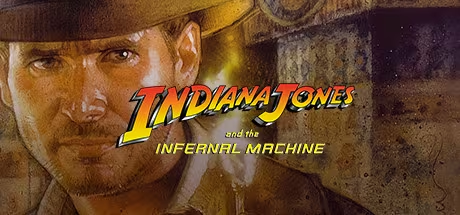 Indiana Jones® and the Infernal Machine™
"Some players find nostalgic enjoyment and flow; others report frustration due to bugs and AI issues."
-
Sensation
Game with the same Sensation vibe
2"Visual and audio effects are engaging for its time, with detailed units and explosions."
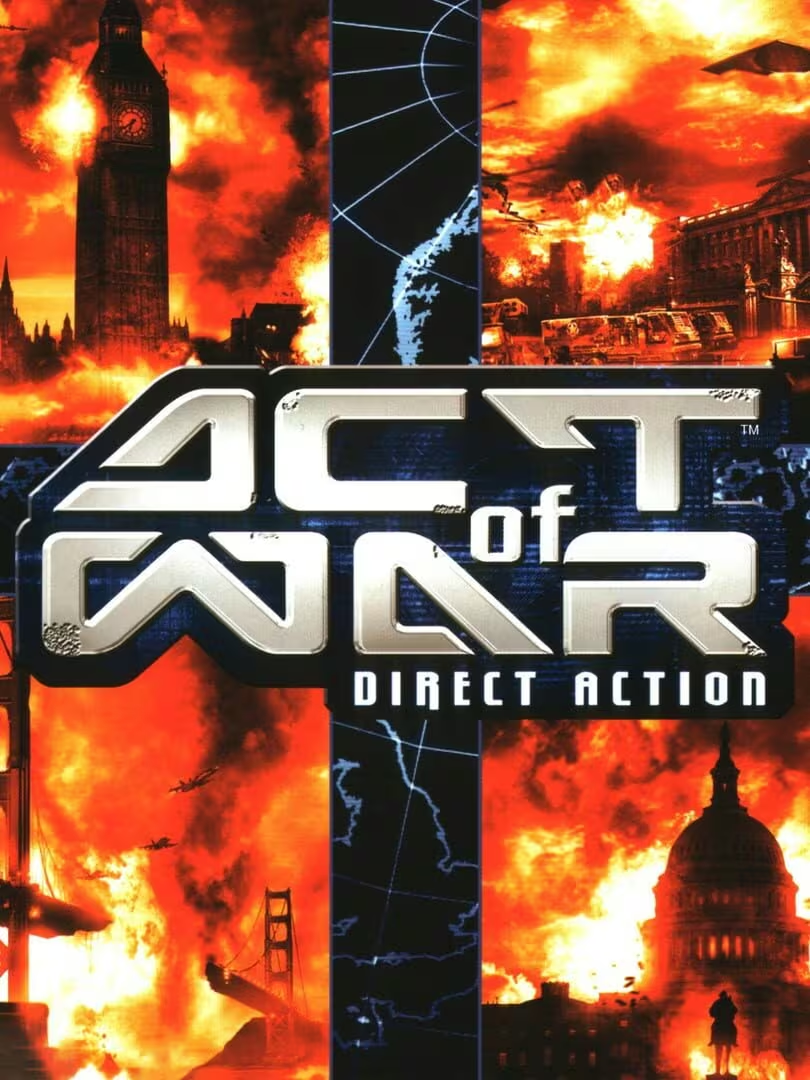 Act of War: Direct Action
"Visual and audio effects are dated but appreciated; some excitement from tactical combat and explosions."
-
Status
Game with the same Status vibe
-4"No social recognition or ranking; achievements and cards are minimal."
 Cube Destroyer
"Little emphasis on social recognition or ranking; achievements and cards are absent."
-
Story
Game with the same Story vibe
4"Campaign features a strong narrative with cutscenes, character development, and sci-fi lore."
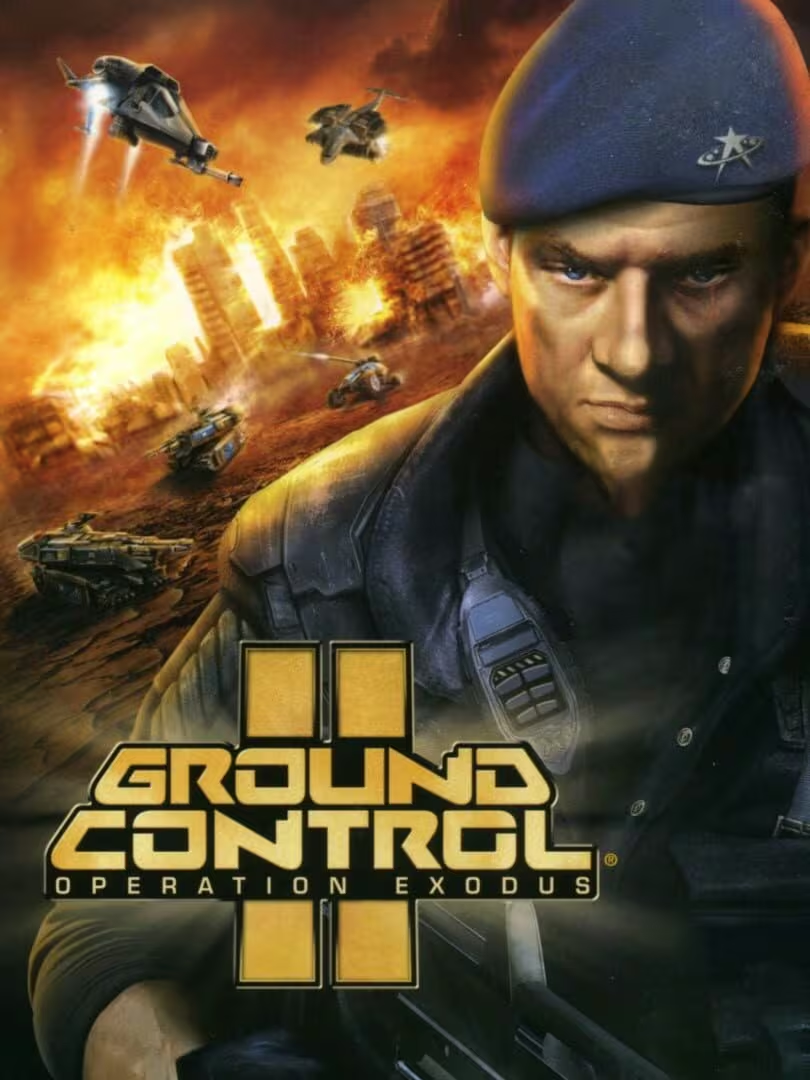 Ground Control II: Operation Exodus
"Campaigns have connected storylines with cutscenes and character development; narrative appreciated by players."
-
Strategy
Game with the same Strategy vibe
5"High emphasis on tactical planning, resource management, and problem solving; core gameplay is strategic."
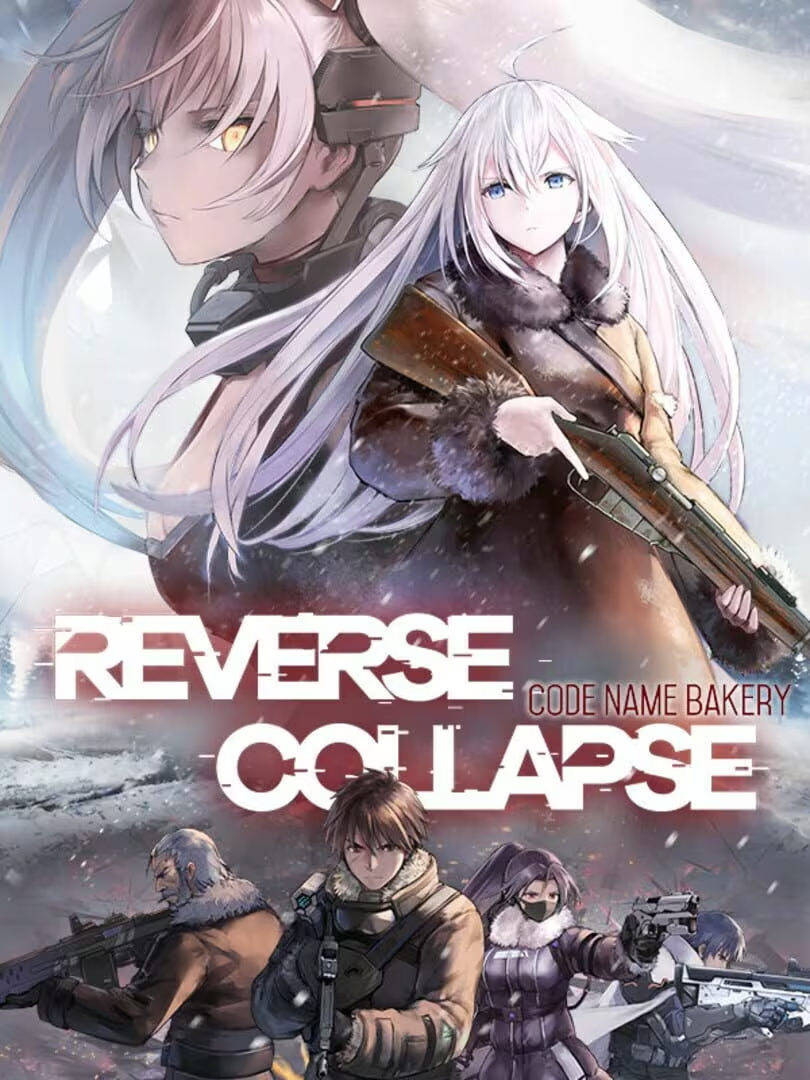 Reverse Collapse: Code Name Bakery
"Strong emphasis on tactical planning, unit composition, and battlefield maneuvers; core gameplay is strategic."
-
Thrill
Game with the same Thrill vibe
2"Some suspense and tension in missions, but overall a controlled and methodical experience."
 Anonymous Hacker Simulator
"Some suspense in challenging missions; risk of failure creates tension but overall controlled environment."
-
Value
Game with the same Value vibe
3"Players feel good value when buying on sale; extensive content and replayability provide good return on investment."
 Tom Clancy's Ghost Recon® Breakpoint
"Affordable price and nostalgic value; players feel good return on investment especially during sales."
-
Violence
Game with the same Violence vibe
4"Combat and destruction are central gameplay elements with artillery, tanks, and infantry battles."
 Company of Heroes 2 - The British Forces
"Combat and destruction of enemy units central to gameplay; tank battles and artillery fire prominent."
-
Survival
Game with the same Survival vibe
3"Players must avoid unit losses and manage resources to survive and succeed in missions."
 Battlezone: Combat Commander
"Players must manage unit survival and resources carefully to succeed in missions."
Last update: 01/06/2026