Potionomics similar games & best alternatives
Should you play it?
You’ve inherited your uncle’s potion shop—and a huge debt. Better get brewing! Customize your store, hire heroes to gather ingredients, befriend (or romance) fellow vendors to learn new haggling strategies, and go head-to-head with competitors in this narrative-driven, deck-building shop simulator.
What works
- Charming characters and animations
- Engaging and deep gameplay loop
- Strong narrative and romance options
- Polished art and music
- Meaningful strategic planning
Things to keep in mind
- Stressful time constraints for some players
- Some ui and quality of life issues
- Loading screens interrupt flow
- Limited replayability after completion
- Some rng frustration with ingredients
What to play next
Similar games, hidden gems, and fresh directions from this game.
Top picks
Games that feel the closest overall

Hidden Gems
Less popular games with surprisingly high similarity
If you liked…
Recommendations by what you enjoyed most
Similarity map
Explore nearby similar games and see why they’re close.
Potionomics: Broadly representative of its motivational profile, with a few distinct shifts. Motivations that often define this kind of title include Cooperation, Fellowship, Intimacy, Leadership. Here, the score leans higher than usual among comparable games on Competition, Status. It leans lower than usual among comparable games on Violence.
Why this game works
A motivational profile of the game, with the closest similar game for each player motivation.
-
Autonomy
Game with the same Autonomy vibe
4"Players have freedom to explore, experiment with potion crafting, and choose their own approach to puzzles and combat."
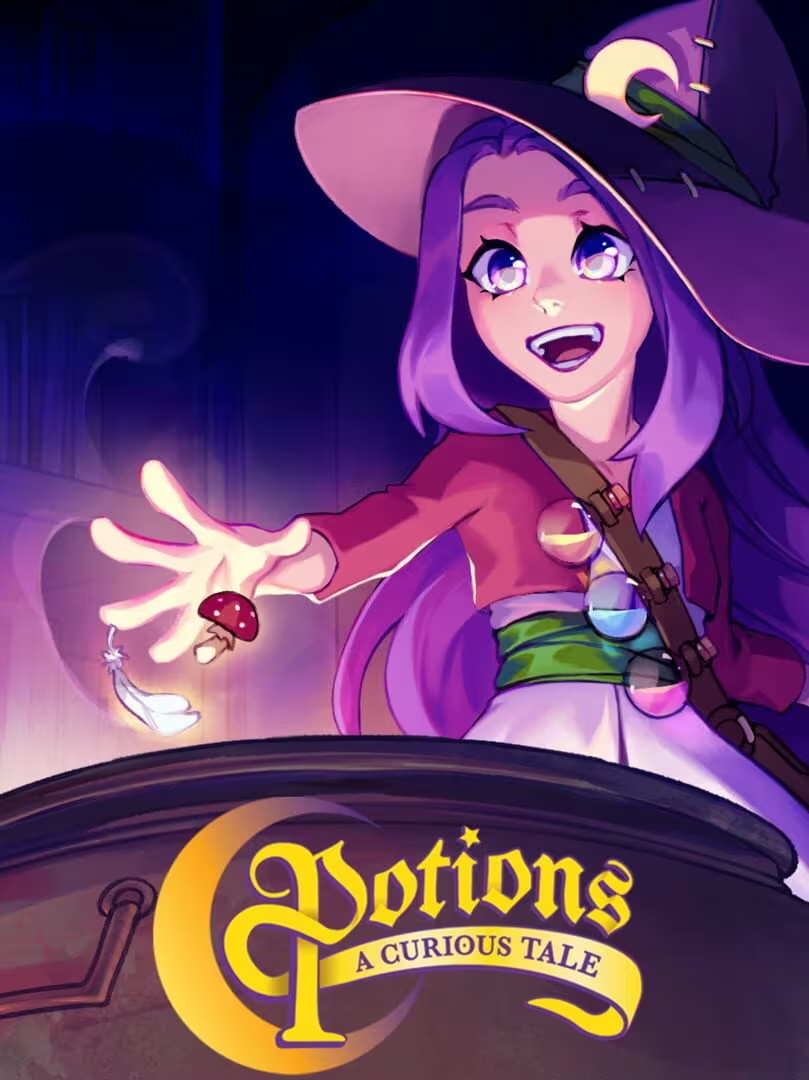 Potions: A Curious Tale
"Players have freedom to manage their time, choose which potions to craft, which NPCs to interact with, and how to build their deck for haggling."
-
Competence
Game with the same Competence vibe
4"The game challenges players with complex deckbuilding and precise execution to solve combat puzzles, rewarding skill and mastery."
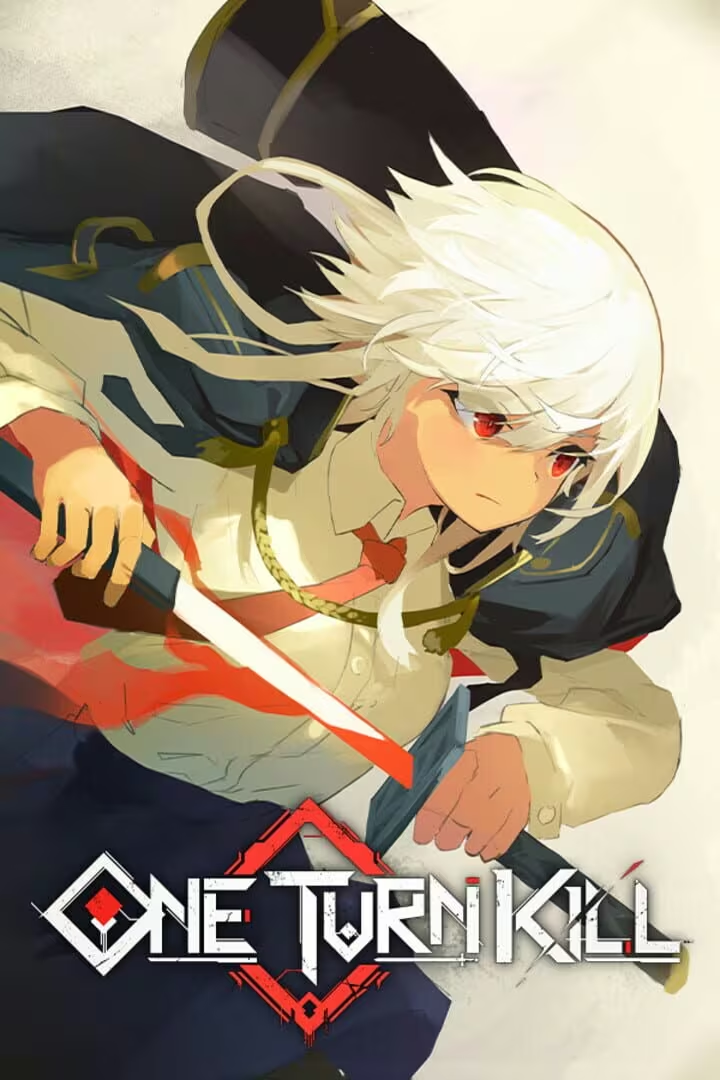 One Turn Kill
"The game challenges players with complex time management, potion crafting ratios, and strategic deckbuilding with feedback from competitions."
-
Competition
Game with the same Competition vibe
3"Competitive elements exist via skill-based matchmaking, ranks, and player-versus-player challenges, though some players focus on casual or cooperative play."
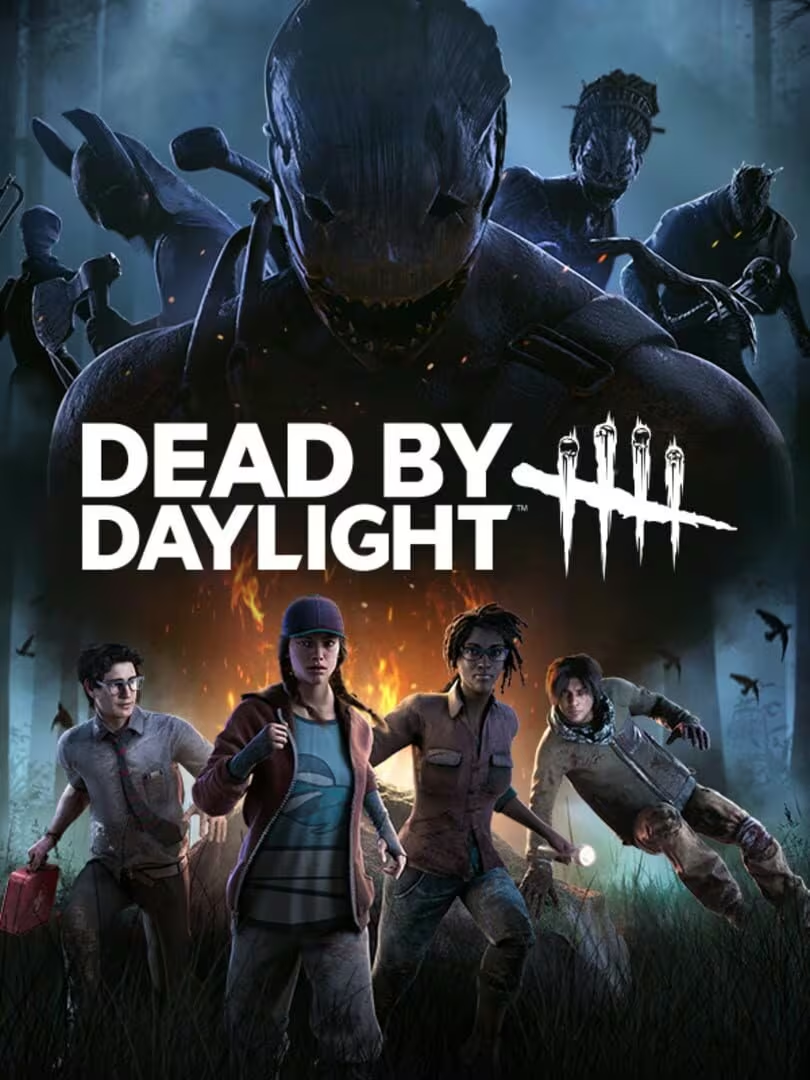 Dead by Daylight
"Competitive elements include timed potion contests and rival NPCs, but players can also focus on personal progress and relationships."
-
Continuation
Game with the same Continuation vibe
3"Many players report long playtimes and habitual engagement despite some pacing issues."
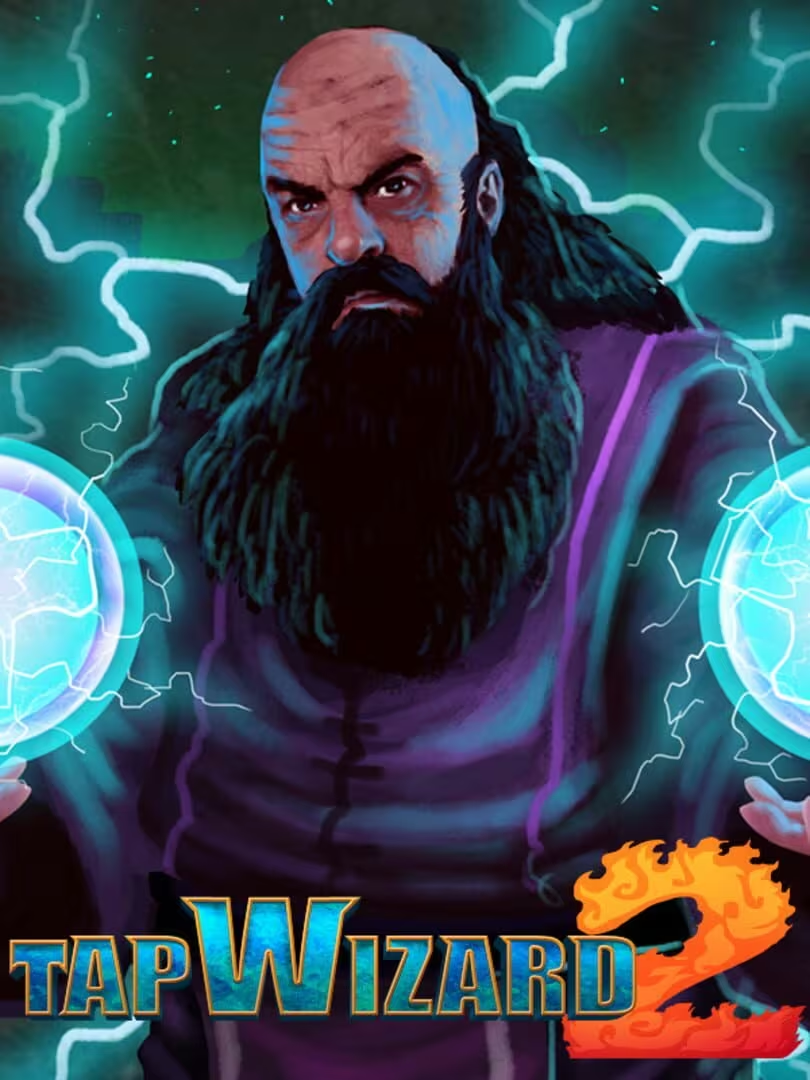 Tap Wizard 2
"Many players report long play sessions and habitual engagement, though some find the pacing stressful and take breaks."
-
Cooperation
Game with the same Cooperation vibe
2"Some cooperation via trading and social interactions with NPCs, but mostly single player focused."
 Echoes of the Plum Grove
"Players interact with NPCs to build relationships that provide cards and discounts, but gameplay is mostly single-player focused."
-
Creativity
Game with the same Creativity vibe
3"Players design their own potion production lines and experiment with different ingredient combinations and workshop layouts."
 The Magical Mixture Mill
"Players experiment with potion recipes and deckbuilding, though constrained by ingredient availability and game mechanics."
-
Domination
Game with the same Domination vibe
-3"Interactions emphasize mutual respect and collaboration rather than exerting control or superiority over others."
 No Straight Roads: Encore Edition
"Interactions emphasize mutual respect and collaboration rather than exerting control or superiority over others."
-
Escapism
Game with the same Escapism vibe
4"Players use the game to immerse themselves in a fantasy world and escape real-life stress through story and gameplay."
 FINAL FANTASY IV
"Players use the game to immerse in a charming fantasy world and escape real-life stress through engaging gameplay and story."
-
Expectation
Game with the same Expectation vibe
-4"Players engage voluntarily out of intrinsic interest and enjoyment rather than obligation or external pressure."
 Sins of a Solar Empire II
"Players engage voluntarily out of intrinsic interest and enjoyment rather than obligation or external pressure."
-
Experimenting
Game with the same Experimenting vibe
3"Players try different potion combinations, explore new areas, and experiment with crafting mechanics."
 Little Witch in the Woods
"Players try new potion combinations, deck strategies, and relationship approaches, though some routines emerge over time."
-
Exploration
Game with the same Exploration vibe
2"Players discover new characters, outfits, and storylines progressively, though within a fixed game world."
 Spiral Clicker
"Players discover new ingredients and character storylines, but the game world is relatively contained and familiar."
-
Expression
Game with the same Expression vibe
2"Some character customization and deck building allow for personal expression, though limited cosmetic options."
 Menace from the Deep
"Character relationships and deckbuilding allow some self-expression, but limited cosmetic customization is noted."
-
Fantasy
Game with the same Fantasy vibe
4"The game features an imaginative fantasy world with anthropomorphic characters and magical elements."
 Sephiria
"The game features a whimsical fantasy setting with magical potions, anthropomorphic characters, and imaginative storylines."
-
Fellowship
Game with the same Fellowship vibe
2"Players build relationships with NPCs and feel part of a community, though social interaction is limited to single-player."
 Tiny Bookshop
"Players form connections with NPCs and enjoy character interactions, though social play is limited to single-player."
-
Growth
Game with the same Growth vibe
4"Players develop skills in management, crafting, and strategy over time."
 Potion Tycoon
"Players develop skills in time management, potion crafting, deckbuilding, and strategic planning throughout the game."
-
Health
Game with the same Health vibe
-4"Game involves sedentary play with no physical activity; some reports of long sessions and fatigue."
 MISERY
"The game is sedentary with no physical activity elements; some players report long sessions and disrupted sleep."
-
Idle
Game with the same Idle vibe
-3"Requires focused attention and continuous engagement during gameplay; not suited for background or idle play."
 Command & Conquer™ Remastered Collection
"Requires focused attention and planning; gameplay involves continuous engagement rather than background play."
-
Intimacy
Game with the same Intimacy vibe
3"Players form meaningful relationships with NPCs through dialogue, gifts, and story interactions."
 Survivalist
"Players build meaningful relationships with NPCs through dialogue, gifting, and romance options."
-
Leadership
Game with the same Leadership vibe
-2"Players mostly focus on personal progression and collaboration with NPCs rather than leading groups."
 My Time at Portia
"Players mostly support and interact with NPCs without leading or managing groups."
-
Progression
Game with the same Progression vibe
4"Players accumulate items, upgrades, and relationship levels as they advance through the story and gameplay."
 Wylde Flowers
"Players accumulate ingredients, potions, upgrades, and relationship ranks to progress through the story and challenges."
-
Relaxation
Game with the same Relaxation vibe
-1"Game is challenging and can cause frustration; some find it relaxing but many report tension and difficulty."
 Gun Rocket
"While some find the game cozy, many report stress due to time constraints and resource management challenges."
-
Sensation
Game with the same Sensation vibe
3"The game offers rich sensory stimulation through detailed visuals, music, and immersive writing."
 Golden Treasure: The Great Green
"The game provides rich visual and auditory stimulation through detailed animations, music, and character design."
-
Status
Game with the same Status vibe
2"Recognition comes from winning championships and gaining sponsors, though mostly within the game context."
 Motorsport Manager
"Recognition comes from winning competitions and building relationships, though mostly within the game world."
-
Story
Game with the same Story vibe
4"Strong narrative immersion with well-developed characters and multiple romantic storylines."
 Making*Lovers
"Strong narrative immersion with character-driven storylines, romance, and overarching plot."
-
Strategy
Game with the same Strategy vibe
4"Requires planning, resource management, and tactical deckbuilding; strategic depth appreciated by players."
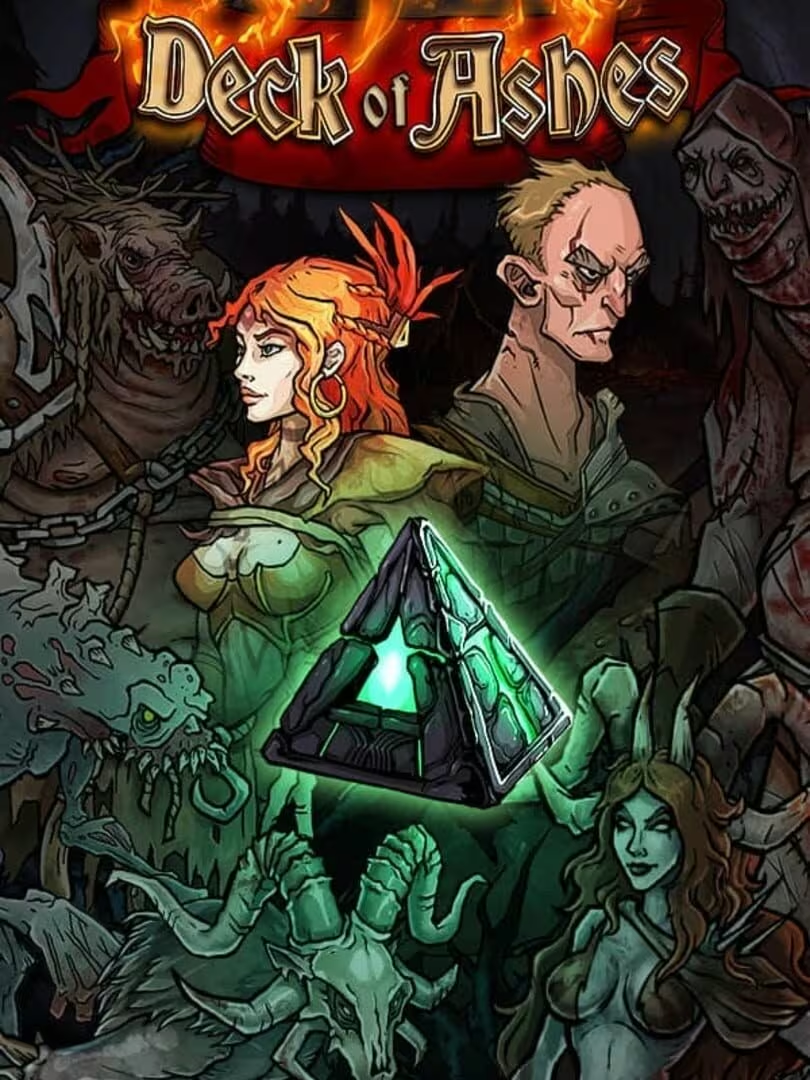 Deck of Ashes
"Players engage in complex strategic planning involving deckbuilding, time management, and resource allocation."
-
Thrill
Game with the same Thrill vibe
2"Time limits and speed challenges add suspense and excitement, though not extreme risk or tension."
 Chip
Chip
"The timed competitions and resource scarcity create tension and excitement, though not extreme suspense."
-
Value
Game with the same Value vibe
4"Players perceive good value from time invested due to engaging gameplay and progression."
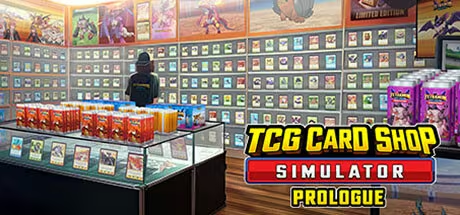 TCG Card Shop Simulator: Prologue
"Players perceive good value for time invested due to depth, polish, and engaging gameplay."
-
Violence
Game with the same Violence vibe
-4"Gameplay focuses on building, trading, and socializing rather than combat or destruction."
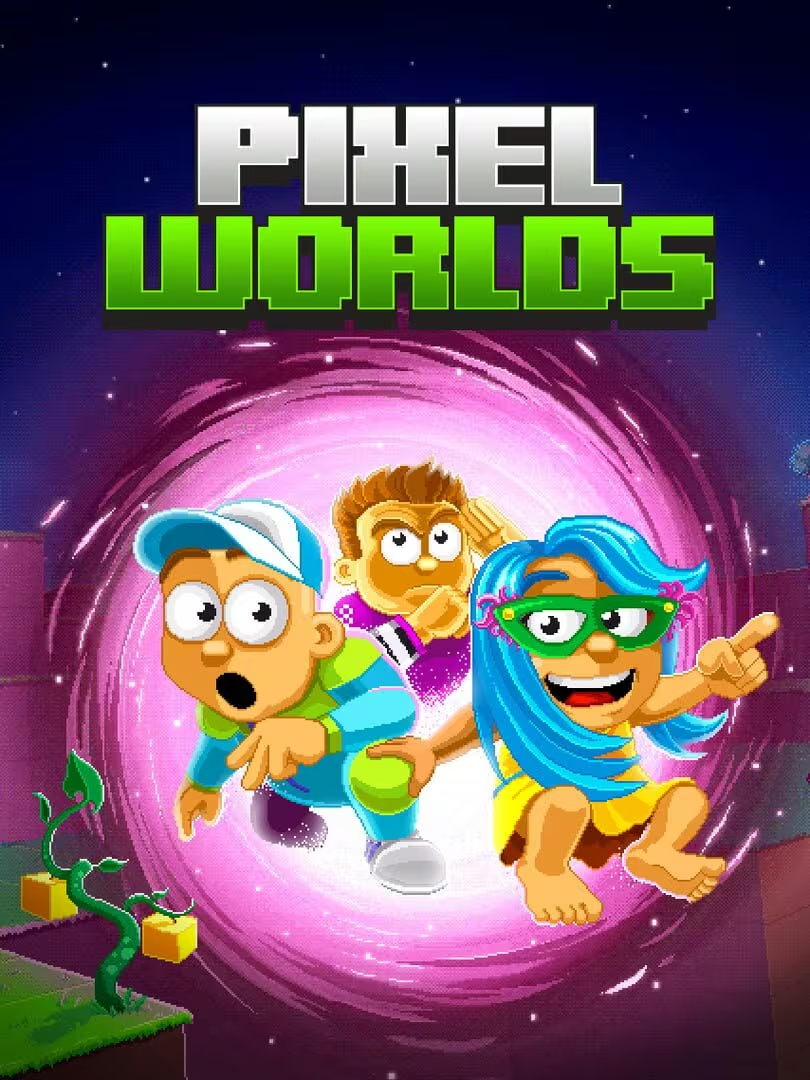 Pixel Worlds: MMO Sandbox
"Gameplay focuses on crafting, trading, and relationships rather than combat or destruction."
-
Survival
Game with the same Survival vibe
2"Players manage risks like mechanical failures and race incidents, requiring strategic defense and resource management."
 F1® Manager 2024
"Players manage risks of failing competitions and resource shortages, but threats are abstract and game-based."
Last update: 01/06/2026