Quartet similar games & best alternatives
Should you play it?
A series of unlikely train robberies. A mysterious deck of cards. A fleet of deadly airships. An accidental mage. Choose from four stories, in any order, and discover how they intertwine in this turn-based RPG.
What works
- Engaging story with strong character development
- Strategic and fluid turn-based combat with character swapping
- Beautiful pixel art and varied, memorable soundtrack
- No random encounters and respect for player time
- Good pacing and rewarding exploration
Things to keep in mind
- Relatively short game length with some underdeveloped character arcs
- Lack of deep character customization or progression systems
- Some late-game side quests feel vague or less fulfilling
- No multiplayer or social gameplay features
- Normal difficulty considered too easy by some players
What to play next
Similar games, hidden gems, and fresh directions from this game.
Top picks
Games that feel the closest overall



Hidden Gems
Less popular games with surprisingly high similarity
If you liked…
Recommendations by what you enjoyed most
Similarity map
Explore nearby similar games and see why they’re close.
Quartet: Broadly representative of its motivational profile, with a few distinct shifts. Motivations that often define this kind of title include Fellowship, Violence, Survival, Cooperation. Here, the score leans higher than usual among comparable games on Intimacy, Leadership, Story.
Why this game works
A motivational profile of the game, with the closest similar game for each player motivation.
-
Autonomy
Game with the same Autonomy vibe
4"Players can freely choose characters, create custom characters, and switch between two characters during battle, allowing personal control and decision-making."
 SAMURAI WARRIORS 4-II
"Players can choose from multiple characters and freely swap party members in battle, allowing personal control over tactics and progression."
-
Competence
Game with the same Competence vibe
3"Combat involves strategic use of skills, exploiting enemy weaknesses, and managing party builds, providing satisfying skill-based challenges."
 OCTOPATH TRAVELER™
"Combat involves strategic use of AP, character swapping, and exploiting enemy weaknesses, providing skill-based challenges especially in mid to late game."
-
Competition
Game with the same Competition vibe
-4"Focus is on single-player experience without mention of multiplayer or leaderboards; players engage at their own pace without social comparison."
 Felvidek
"Focus is on single-player experience with no mention of multiplayer or leaderboards; players engage at their own pace without social comparison."
-
Continuation
Game with the same Continuation vibe
3"Many players report long play sessions (8-15 hours), exploration, and engagement with story and atmosphere encouraging extended play."
 Kona II: Brume
"Many players report long play sessions (20-35 hours), engaging story and combat encourage habitual play and completion of side quests."
-
Cooperation
Game with the same Cooperation vibe
-3"Gameplay centers on individual player control of a party; no multiplayer or cooperative play mentioned."
 Atelier Ryza 3: Alchemist of the End & the Secret Key
"Gameplay centers on individual player control of a party; no multiplayer or cooperative play mentioned."
-
Creativity
Game with the same Creativity vibe
2"Players can customize characters with different builds, talents, and item combinations, but within predefined game systems."
 Razenroth
"Players can customize party composition and equipment, and experiment with combos, but character builds are relatively straightforward without deep customization systems."
-
Domination
Game with the same Domination vibe
-5"No evidence of player dominance over others; interactions are single-player and narrative-driven."
 Chorus
"No evidence of player-vs-player or dominance behaviors; interactions are narrative-driven and cooperative within the party."
-
Escapism
Game with the same Escapism vibe
4"Players use the game to immerse in a rich fantasy world, escaping real life through story, exploration, and lore."
 Summoner
"Players use the game to immerse in a rich fantasy world with compelling story and characters, providing a strong escape from reality."
-
Expectation
Game with the same Expectation vibe
-4"Players engage voluntarily out of intrinsic interest and enjoyment; no indications of obligation or external pressure."
 Astrea: Six-Sided Oracles
"Players engage voluntarily out of intrinsic interest and enjoyment; no indications of obligation or external pressure."
-
Experimenting
Game with the same Experimenting vibe
3"Combat encourages trying different combos, powers, and strategies; players experiment with abilities and team setups."
 SCARLET NEXUS
"The battle system encourages trying different party combinations and strategies, and players enjoy discovering powerful combos."
-
Exploration
Game with the same Exploration vibe
3"Players explore multiple towns and dungeons; some hidden paths and secrets encourage discovery."
 Garden Story
"Exploration of towns, dungeons, and hidden areas is rewarding and encouraged, with branching paths and secrets to discover."
-
Expression
Game with the same Expression vibe
2"Some character customization through gear and skills, but no avatar creation or deep cosmetic options."
 Wigmund
"Character sprites have unique identities and some expressive animations, but no deep avatar customization or cosmetic modifications."
-
Fantasy
Game with the same Fantasy vibe
5"Strong fantasy setting with magic, mythical elements, and imaginative fiction."
 Monomyth
"Strong fantasy setting with magic, mythical elements, and narrative themes including war and conflict in an imaginative world."
-
Fellowship
Game with the same Fellowship vibe
-3"The game is single-player with minimal social interaction; community engagement is external."
 Tribal Hunter
"Game is single-player focused with minimal social interaction; community engagement occurs outside the game (e.g., Twitch chats)."
-
Growth
Game with the same Growth vibe
3"Players develop skills, upgrade characters, and learn strategies, reflecting personal growth and progression."
 Figure Adventure
"Players develop skills and strategies over time, learn enemy weaknesses, and improve party builds; character story arcs show growth."
-
Health
Game with the same Health vibe
-5"Typical sedentary gameplay with no physical activity or health-related mechanics."
 Assassin's Creed® Origins
"Typical sedentary gameplay with no physical activity or health-related mechanics."
-
Idle
Game with the same Idle vibe
-4"Requires continuous attention and focus during combat and exploration; not designed for idle or background play."
 Alan Wake's American Nightmare
"Requires continuous player attention during combat and exploration; no background or idle gameplay elements."
-
Intimacy
Game with the same Intimacy vibe
2"Players form emotional connections with characters through dialogue and story, though no direct social bonding."
 The Crown of Leaves
"Players form emotional connections with characters through story and dialogue, though no multiplayer or real social bonding."
-
Leadership
Game with the same Leadership vibe
3"Player leads and manages a party of characters, making strategic decisions and directing actions."
 Dawnsbury Days
"Player leads and manages a party of characters, making strategic decisions and directing actions."
-
Progression
Game with the same Progression vibe
4"Players accumulate items, upgrades, and better ships; quest and skill progression systems reinforce advancement."
 Salt 2: Shores of Gold
"Players accumulate items, gear upgrades, and character levels; side quests and story progression provide a sense of advancement."
-
Relaxation
Game with the same Relaxation vibe
3"Balanced pacing with moments of calm exploration and intense boss fights; generally enjoyable flow."
 DRAGON BALL Z: KAKAROT
"Generally balanced pacing with enjoyable combat and story; some tension in boss fights but overall a smooth experience."
-
Sensation
Game with the same Sensation vibe
3"Enjoyable pixel art and soundtrack provide sensory pleasure and emotional engagement."
 RITE
RITE
"Enjoyable pixel art, varied music, and engaging soundtracks provide sensory pleasure and emotional engagement."
-
Status
Game with the same Status vibe
-4"No social recognition or status systems within the game; achievements are personal and not publicly ranked."
 Drug Lord Tycoon
"No social status or recognition systems within the game; achievements are personal and not publicly ranked."
-
Story
Game with the same Story vibe
5"Strong narrative focus with engaging plot, character development, and episodic storytelling praised by players."
 Tales of Monkey Island: Complete Season
"Strong narrative focus with interconnected character stories, meaningful dialogue, and a cohesive plot praised by players."
-
Strategy
Game with the same Strategy vibe
4"Combat requires planning, exploiting weaknesses, and tactical use of skills and party composition."
OCTOPATH TRAVELER™
"Combat requires planning, exploiting weaknesses, managing AP, and tactical character swapping for success."
-
Thrill
Game with the same Thrill vibe
2"Some boss fights provide tension and challenge, but overall game is moderate in suspense and risk."
 HorrorVale
"Some challenging boss fights and strategic tension, but overall the game is not high-risk or suspenseful."
-
Value
Game with the same Value vibe
4"Players report good value for time and money with 8-15 hours of content, replayability, and engaging gameplay."
 UNSIGHTED
"Players report good value for time and money with 20-35 hours of content, engaging story, and replayability."
-
Violence
Game with the same Violence vibe
1"Combat involves turn-based battles with monsters, but violence is mild and cartoonish, typical of JRPGs."
 DRAGON QUEST MONSTERS: The Dark Prince
"Combat involves turn-based battles with attacks and status effects; violence is stylized and typical of JRPGs, not gratuitous."
-
Survival
Game with the same Survival vibe
1"Players manage resources and combat threats; however, the game is not focused on survival mechanics or high risk."
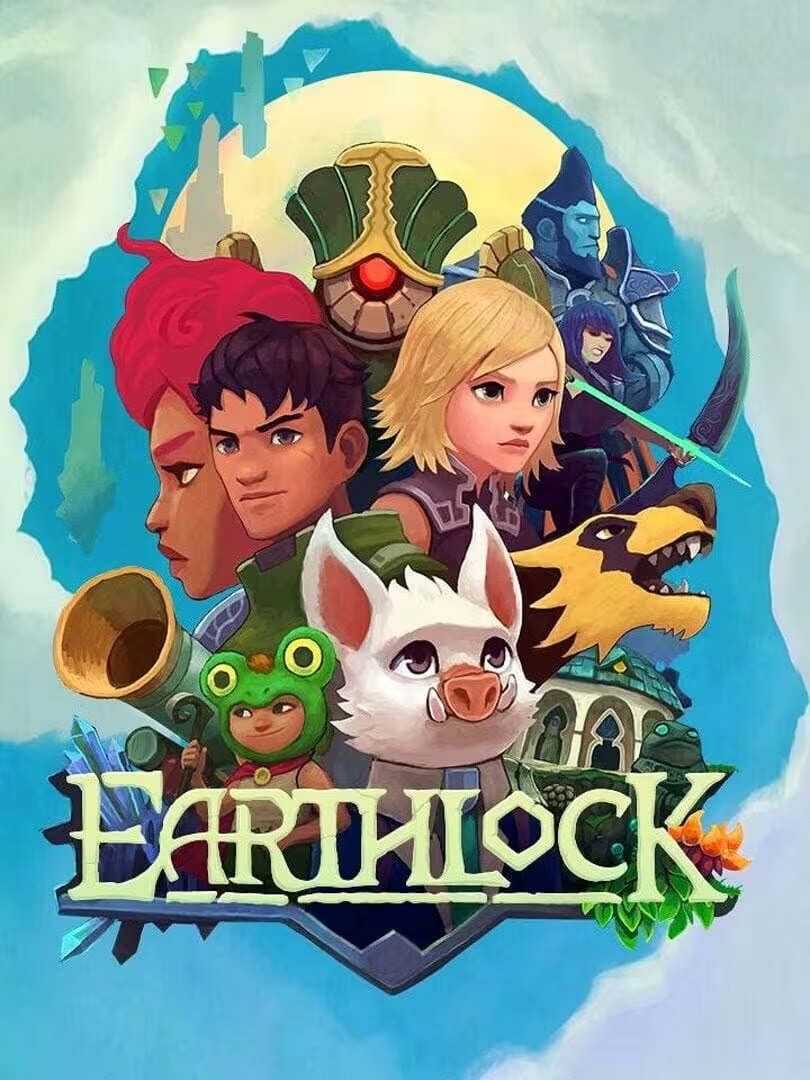 EARTHLOCK
"Players manage resources like AP and health in combat, but the game is not focused on survival mechanics or high-risk scenarios."
Last update: 01/06/2026