Tametsi similar games & best alternatives
Should you play it?
Tametsi is a difficult logic game played on a set of tiles, in which you must use the clues provided to discover and mark hidden mines.
What works
- Extremely challenging and well-crafted puzzles
- Large amount of content with 160 handcrafted levels
- No guessing required, purely logic-based
- In-game drawing tool for note-taking
- Excellent value for price
Things to keep in mind
- Minimal audiovisual presentation, no music
- Some ui and quality-of-life features require relaunch to change
- Can be frustratingly difficult and time-consuming
- No social or multiplayer features
- Drawing annotations do not save between sessions
What to play next
Similar games, hidden gems, and fresh directions from this game.
Top picks
Games that feel the closest overall

Hidden Gems
Less popular games with surprisingly high similarity
If you liked…
Recommendations by what you enjoyed most
Similarity map
Explore nearby similar games and see why they’re close.
Tametsi: Less representative of its motivational profile, with noticeable differences. Motivations that often define this kind of title include Violence, Fantasy, Story, Thrill. Here, the score leans higher than usual among comparable games on Thrill. It leans lower than usual among comparable games on Fantasy, Sensation.
Why this game works
A motivational profile of the game, with the closest similar game for each player motivation.
-
Autonomy
Game with the same Autonomy vibe
4"Players have full control over their logical deductions and decisions without randomness or forced guessing."
 Hexcells
"Players have full control over their logical deductions and decisions; no forced routines or guesswork required."
-
Competence
Game with the same Competence vibe
5"The game is highly challenging, requiring skillful reasoning, planning, and execution to solve intricate puzzles."
 Recursed
"The game is highly challenging, requiring advanced logical reasoning and rewarding skillful puzzle solving."
-
Competition
Game with the same Competition vibe
-4"Focus is on individual puzzle solving without direct competition or leaderboards."
Hexcells
"Focus is on individual puzzle solving without leaderboards or direct competition."
-
Continuation
Game with the same Continuation vibe
4"Players invest many hours exploring, solving puzzles, and replaying with different difficulty modes, showing strong attachment."
 Hedon Bloodrite
"Players invest many hours and often return repeatedly to solve puzzles, indicating strong attachment."
-
Cooperation
Game with the same Cooperation vibe
-5"The game is a solo puzzle experience with no cooperative or multiplayer elements."
 Glass Masquerade 2: Illusions
"The game is a solo puzzle experience with no multiplayer or cooperative elements."
-
Creativity
Game with the same Creativity vibe
3"Players use drawing tools and communication to creatively solve puzzles, though within predefined structures."
 Unsolved Case
"Players use an in-game drawing tool to annotate and explore puzzle solutions, enhancing creative problem solving."
-
Domination
Game with the same Domination vibe
-5"No social dominance or power dynamics; purely individual puzzle solving."
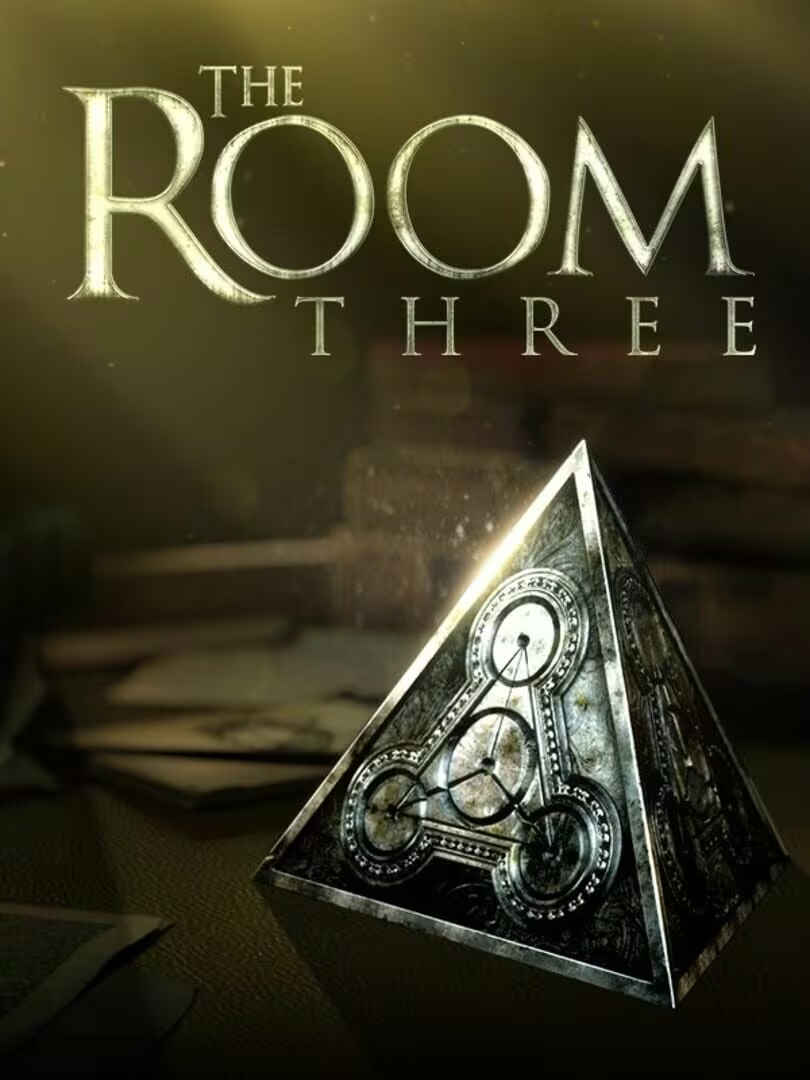 The Room Three
"No social dominance or power dynamics; purely individual puzzle solving."
-
Escapism
Game with the same Escapism vibe
3"Players use the game as a relaxing and mentally engaging distraction from real life."
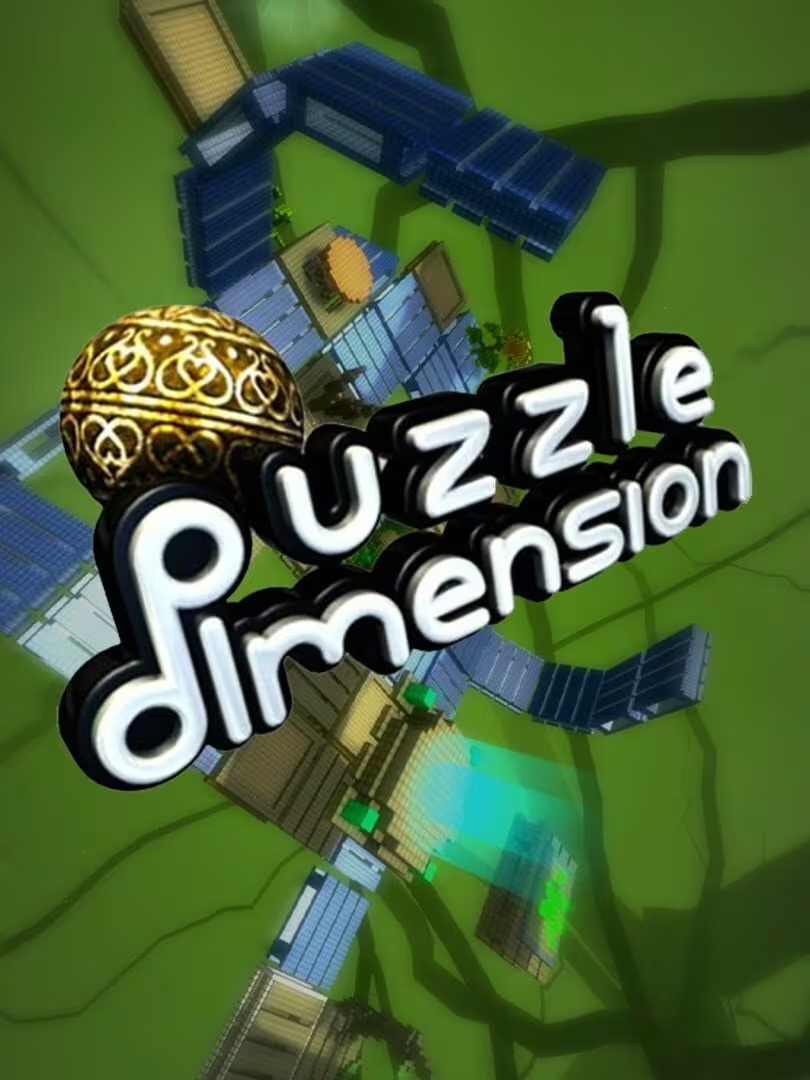 Puzzle Dimension
"Many players use the game to relax and distract themselves, enjoying mental engagement away from real life."
-
Expectation
Game with the same Expectation vibe
-4"Players engage voluntarily out of intrinsic interest and enjoyment of challenging puzzles."
Recursed
"Players engage voluntarily out of intrinsic interest and love for challenging puzzles."
-
Experimenting
Game with the same Experimenting vibe
4"Players experiment with new logical deductions and strategies to solve puzzles."
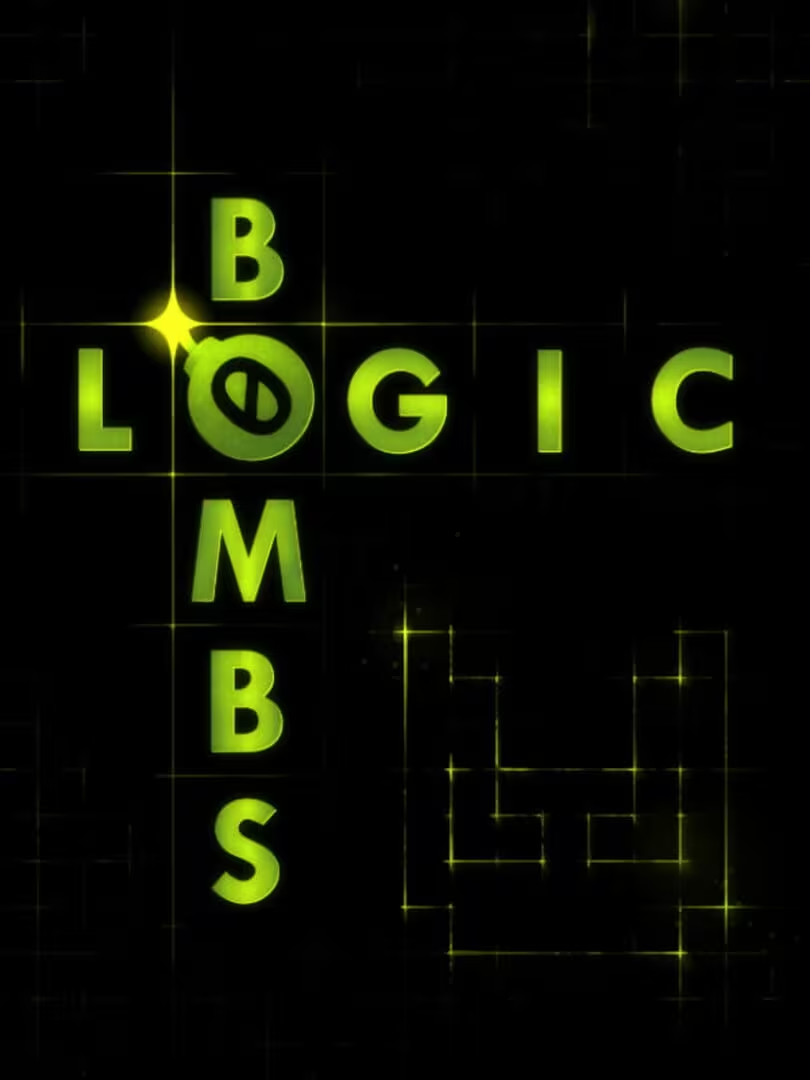 Logic Bombs
"Players experiment with logical deductions and use the drawing tool to test hypotheses."
-
Exploration
Game with the same Exploration vibe
2"Players explore new mechanics and terrain types progressively across worlds, discovering new puzzle elements."
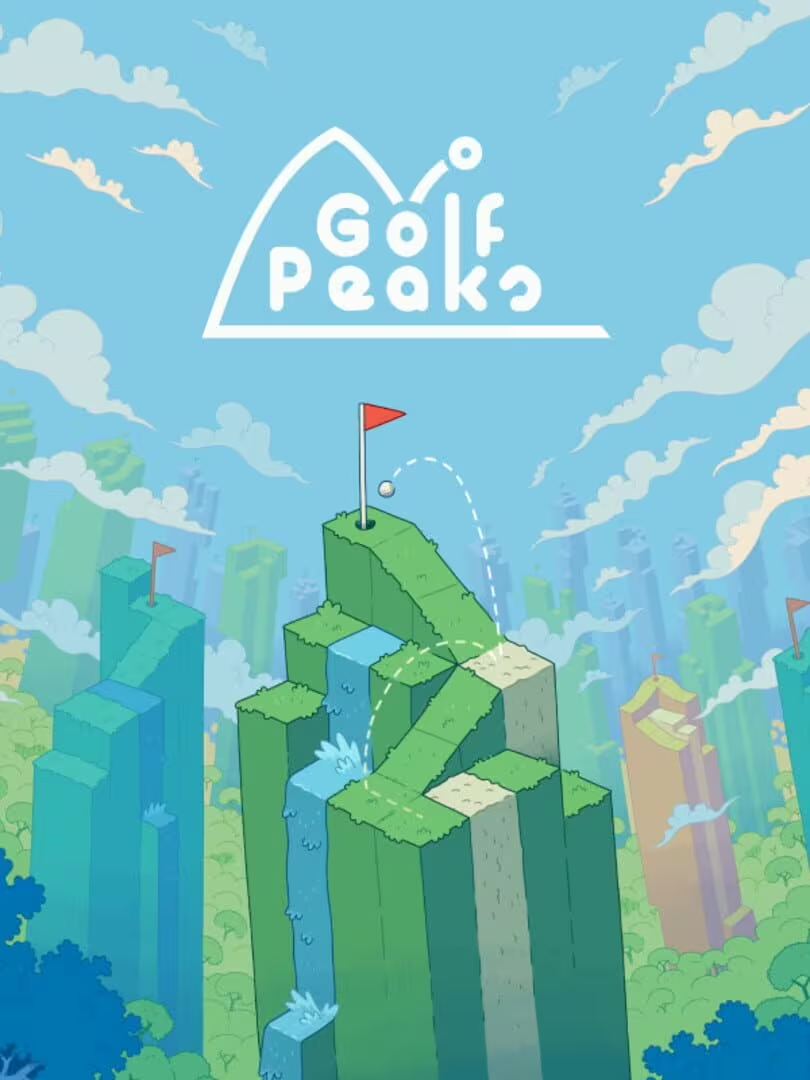 Golf Peaks
"Players explore a wide variety of handcrafted puzzles and tile shapes, discovering new logical patterns."
-
Expression
Game with the same Expression vibe
2"Drawing and note-taking tools allow some degree of personal expression in puzzle solving, though visual customization is minimal."
 14 Minesweeper Variants
"The drawing tool allows some personal expression in annotating puzzles, though limited to functional notes."
-
Fantasy
Game with the same Fantasy vibe
-5"The game is grounded in realistic logic puzzles without fictional or imaginative narrative elements."
14 Minesweeper Variants
"The game is grounded in realistic logic puzzles without fictional or imaginative narrative elements."
-
Fellowship
Game with the same Fellowship vibe
-5"No community or social features; gameplay is solitary."
 Puzzler World
"No community or social features; gameplay is solitary."
-
Growth
Game with the same Growth vibe
5"Players learn complex systems, improve skills, and deepen understanding over many hours."
 Cultist Simulator
"Players develop advanced logical reasoning and problem-solving skills over many hours."
-
Health
Game with the same Health vibe
-4"Primarily sedentary gameplay with no physical activity involved."
 Don't Starve Together
"Primarily sedentary gameplay with no physical activity involved."
-
Idle
Game with the same Idle vibe
-3"Requires focused attention and mental engagement rather than casual or background play."
 Cosmic Express
"Requires focused attention and sustained mental engagement rather than casual or background play."
-
Intimacy
Game with the same Intimacy vibe
-5"No social or emotional relationship building; purely individual experience."
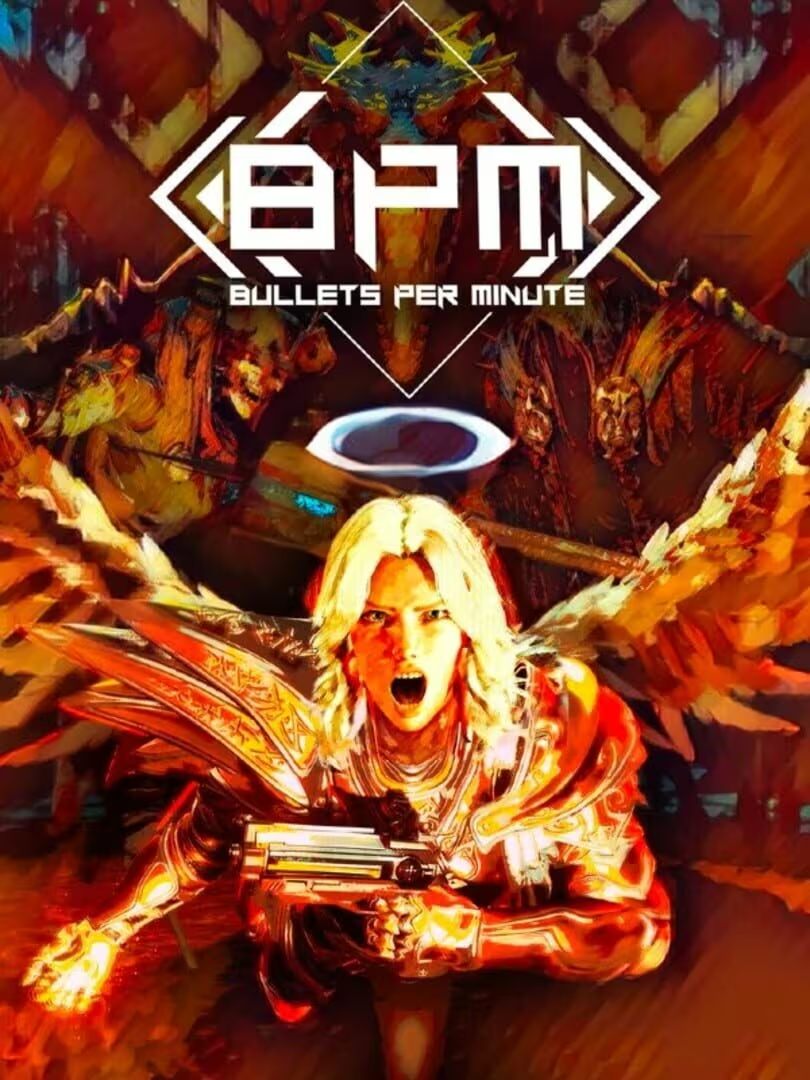 BPM: BULLETS PER MINUTE
"No social or emotional relationship building; purely individual experience."
-
Leadership
Game with the same Leadership vibe
-5"No leadership or group management elements present."
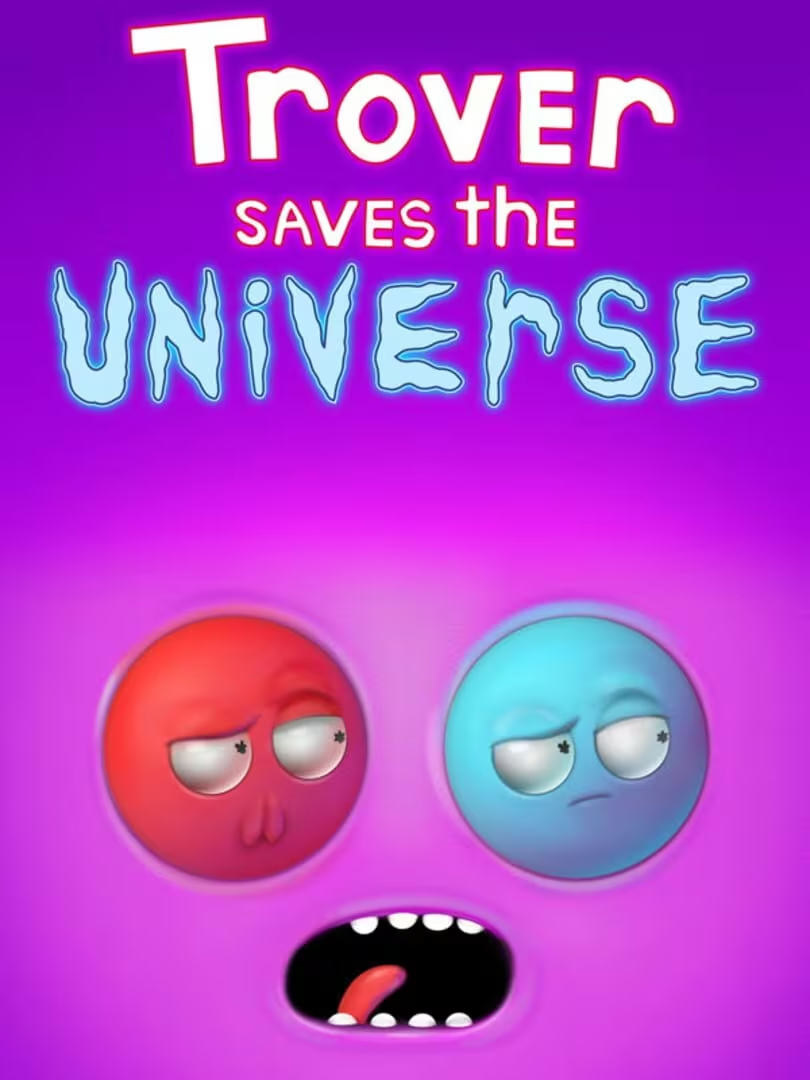 Trover Saves the Universe
"No leadership or group management elements present."
-
Progression
Game with the same Progression vibe
3"Players progress through a large set of puzzles, unlocking new challenges and concepts."
Logic Bombs
"Players progress through a large number of handcrafted puzzles, unlocking new levels and challenges."
-
Relaxation
Game with the same Relaxation vibe
3"Some players find the logical puzzle solving relaxing and satisfying despite the mental challenge."
 Bombe
Bombe
"Many players find the logical puzzle solving relaxing and mentally engaging in a flow state."
-
Sensation
Game with the same Sensation vibe
-2"Sensory stimulation is minimal; focus is on intellectual challenge rather than audiovisual excitement."
 Crisis in the Kremlin
"Minimal sensory stimulation; focus is on mental challenge rather than audiovisual excitement."
-
Status
Game with the same Status vibe
-4"No social recognition or ranking systems; achievements are personal milestones."
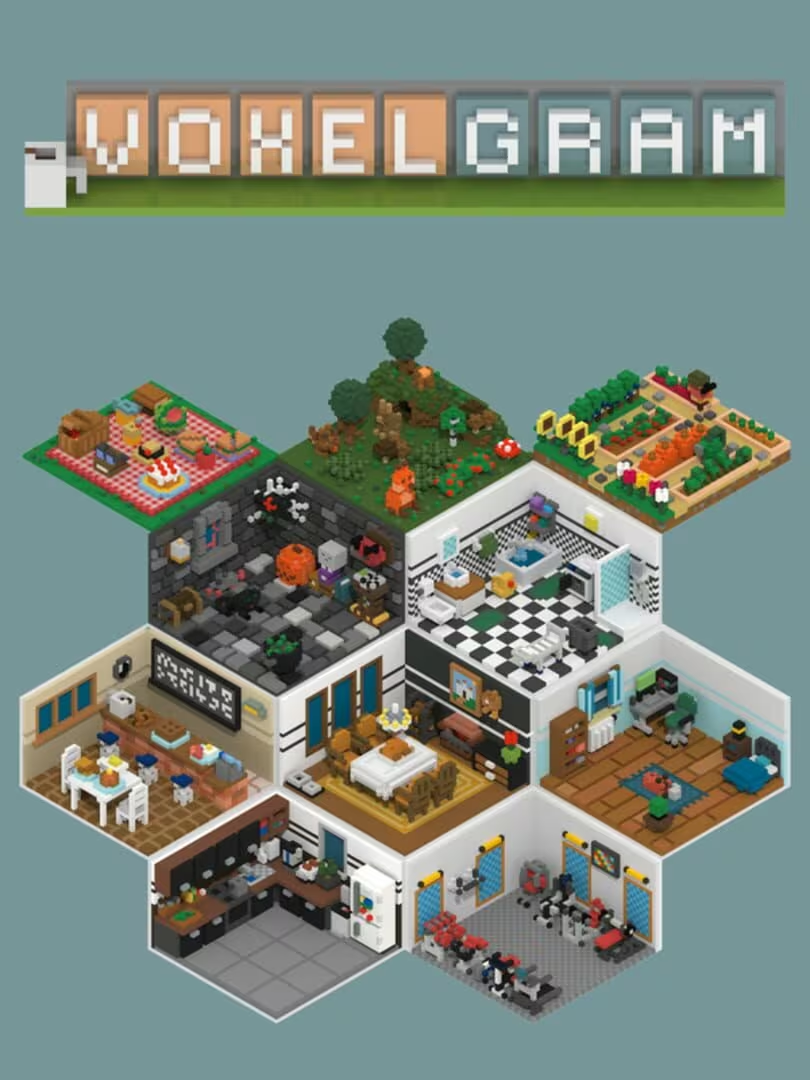 Voxelgram
"No social recognition or ranking systems; achievements are personal milestones."
-
Story
Game with the same Story vibe
-5"No narrative or story elements; gameplay is context-free logic puzzles."
14 Minesweeper Variants
"No narrative or story elements; gameplay is context-free logic puzzles."
-
Strategy
Game with the same Strategy vibe
5"Strong emphasis on logical thinking, planning, and problem solving to complete puzzles."
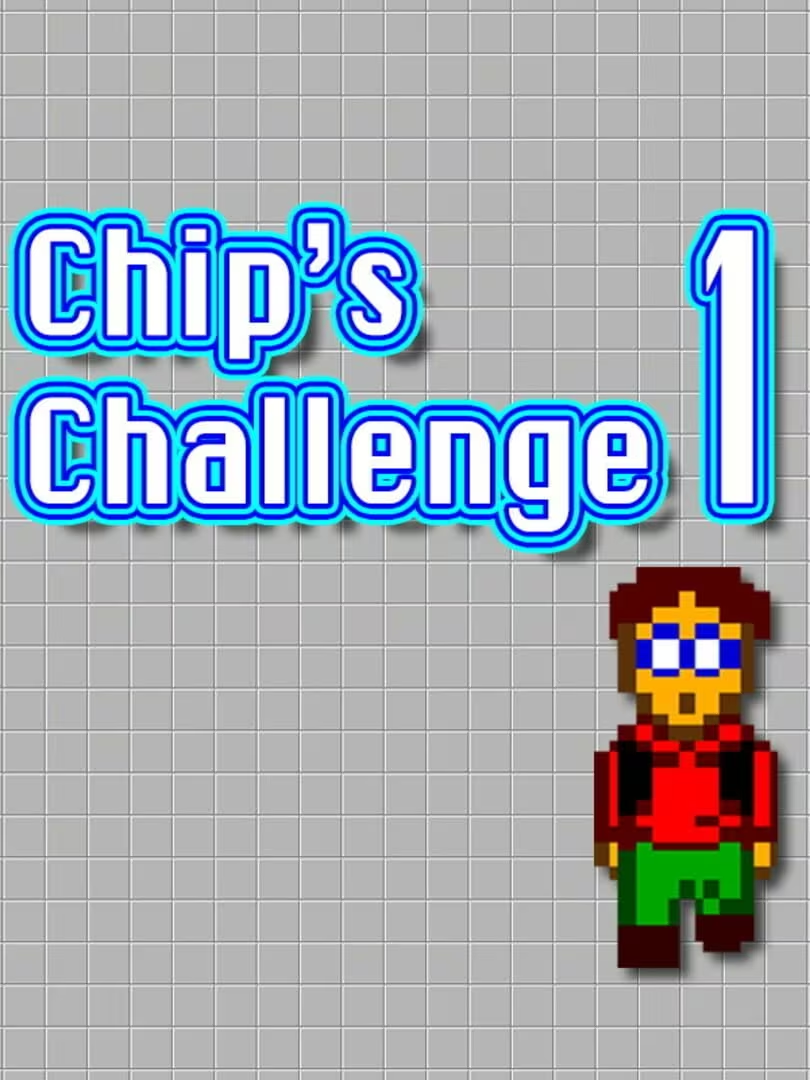 Chip's Challenge 1
"Heavy emphasis on logical reasoning, planning, and problem solving throughout the puzzles."
-
Thrill
Game with the same Thrill vibe
2"Some suspense and excitement from solving difficult puzzles and uncovering secrets, but low physical risk."
 Lingo 2
"Some thrill from solving difficult puzzles and overcoming mental challenges, but no risk or suspense."
-
Value
Game with the same Value vibe
5"Players report excellent value for money with extensive content and long playtime for a low price."
 Touhou Artificial Dream in Arcadia
"Exceptional value for money with extensive content and long playtime at a low price."
-
Violence
Game with the same Violence vibe
-5"No violence or destructive gameplay; focus is on constructive logical deduction."
 4D Minesweeper
"No violent or destructive gameplay; purely constructive logical deduction."
-
Survival
Game with the same Survival vibe
-5"No survival or threat avoidance mechanics; stable puzzle environment."
 Baba Is You
"No survival or threat avoidance mechanics; stable and predictable puzzle environment."
Last update: 01/06/2026