Tiny Brains similar games & best alternatives
Should you play it?
"Tiny Brains" is a cooperative action puzzler that follows four super-powered lab animals in their attempt to escape a mad scientist's experiments. In this joyously chaotic multiplayer game, the four "Tiny Brains" must combine their unique physics-based powers to navigate through a trick-ridden maze.
What works
- Excellent local and online co-op experience
- Fun and humorous gameplay with unique character abilities
- Accessible puzzle mechanics suitable for all ages
- Good value especially on sale
- Short playtime ideal for party sessions
Things to keep in mind
- Very short main campaign
- Limited replay value beyond main story
- Online multiplayer can be buggy or laggy
- Minimal character customization
- Some puzzles and modes less engaging
What to play next
Similar games, hidden gems, and fresh directions from this game.
Top picks
Games that feel the closest overall
Hidden Gems
Less popular games with surprisingly high similarity


If you liked…
Recommendations by what you enjoyed most
Similarity map
Explore nearby similar games and see why they’re close.
Tiny Brains: Less representative of its motivational profile, with noticeable differences. Motivations that often define this kind of title include Expression, Fellowship, Cooperation, Status. Here, the score leans higher than usual among comparable games on Cooperation, Fellowship, Intimacy.
Why this game works
A motivational profile of the game, with the closest similar game for each player motivation.
-
Autonomy
Game with the same Autonomy vibe
3"Players control multiple characters with unique abilities and solve puzzles mostly in linear paths, allowing some freedom in approach but within designed solutions."
 Eriksholm: The Stolen Dream
"Players control one of four characters with unique abilities and must coordinate actions, allowing some freedom in approach but within puzzle constraints."
-
Competence
Game with the same Competence vibe
3"Puzzles require skillful communication and coordination, with some timed challenges that test players' abilities, though overall difficulty is moderate."
 Operation: Tango
"Puzzles require skillful timing and coordination, though generally not very difficult; some challenge modes increase difficulty."
-
Competition
Game with the same Competition vibe
2"Includes multiplayer modes and leaderboards, but competition is not the primary focus; casual and cooperative play also emphasized."
 FPV Kamikaze Drone
"Includes competitive modes like Tiny Soccer, but main experience is cooperative; competition is present but not dominant."
-
Continuation
Game with the same Continuation vibe
-2"Short campaign (~3-4 hours) with limited replayability; some players desire more content and longer engagement."
 There Came an Echo
"Short main campaign (~2-3 hours) with limited replay value; some extra modes extend playtime but overall not designed for long habitual play."
-
Cooperation
Game with the same Cooperation vibe
5"Core gameplay revolves around local co-op teamwork, requiring players to coordinate actions, help each other, and solve puzzles together; strong emphasis on cooperation."
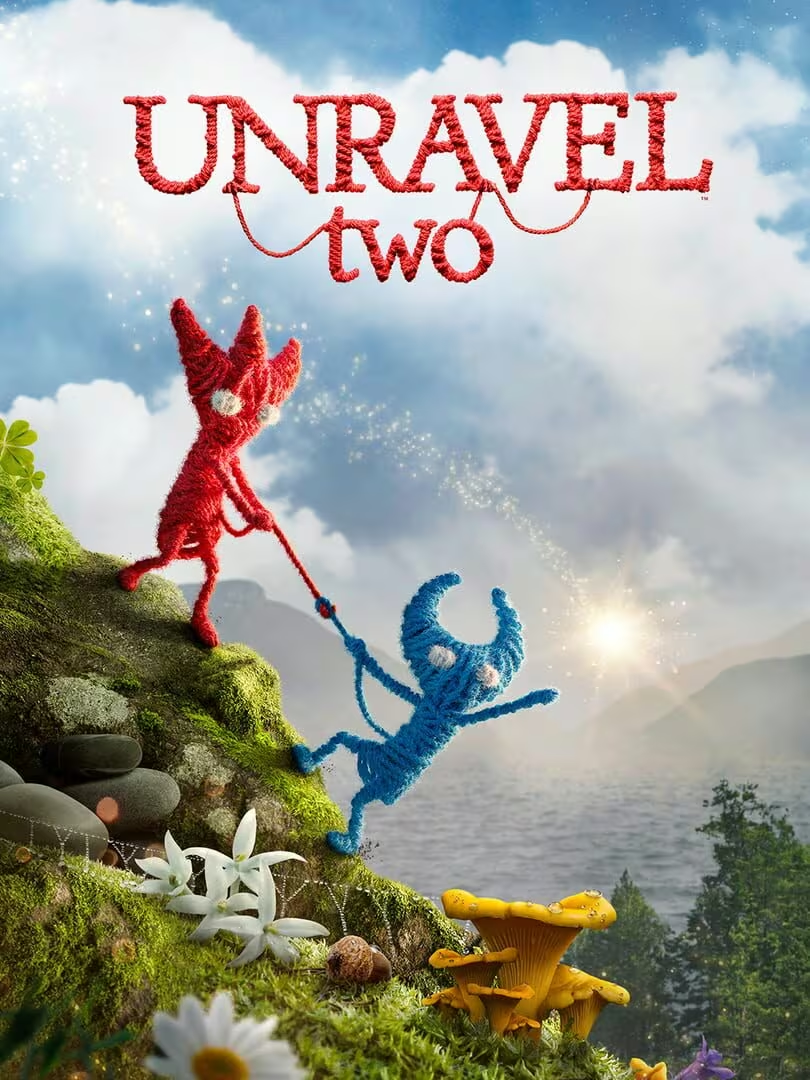 Unravel Two
"Core gameplay revolves around 4-player local or online co-op requiring teamwork and synchronized actions to solve puzzles."
-
Creativity
Game with the same Creativity vibe
3"Players creatively use different characters' unique abilities to solve puzzles and progress; the game includes various gameplay styles and mini-games."
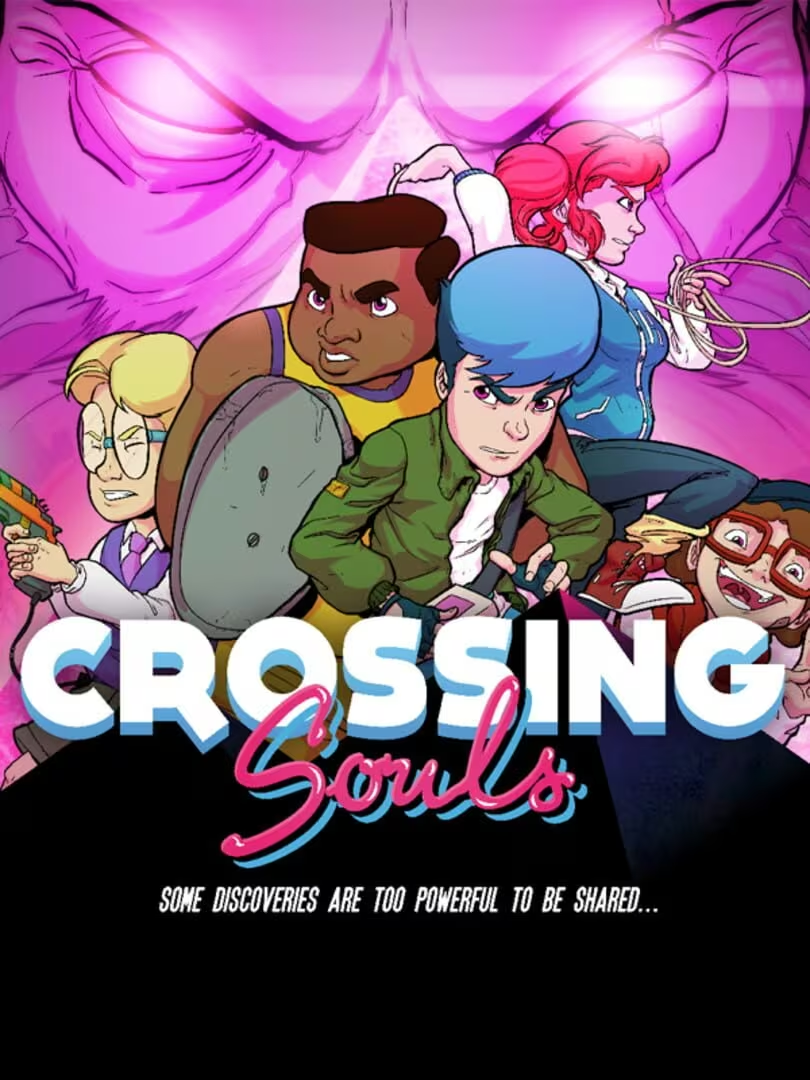 Crossing Souls
"Players creatively combine unique character abilities to solve puzzles; some freedom in puzzle solutions but within designed scenarios."
-
Domination
Game with the same Domination vibe
-4"Emphasizes equal participation and cooperation rather than dominance or power over others."
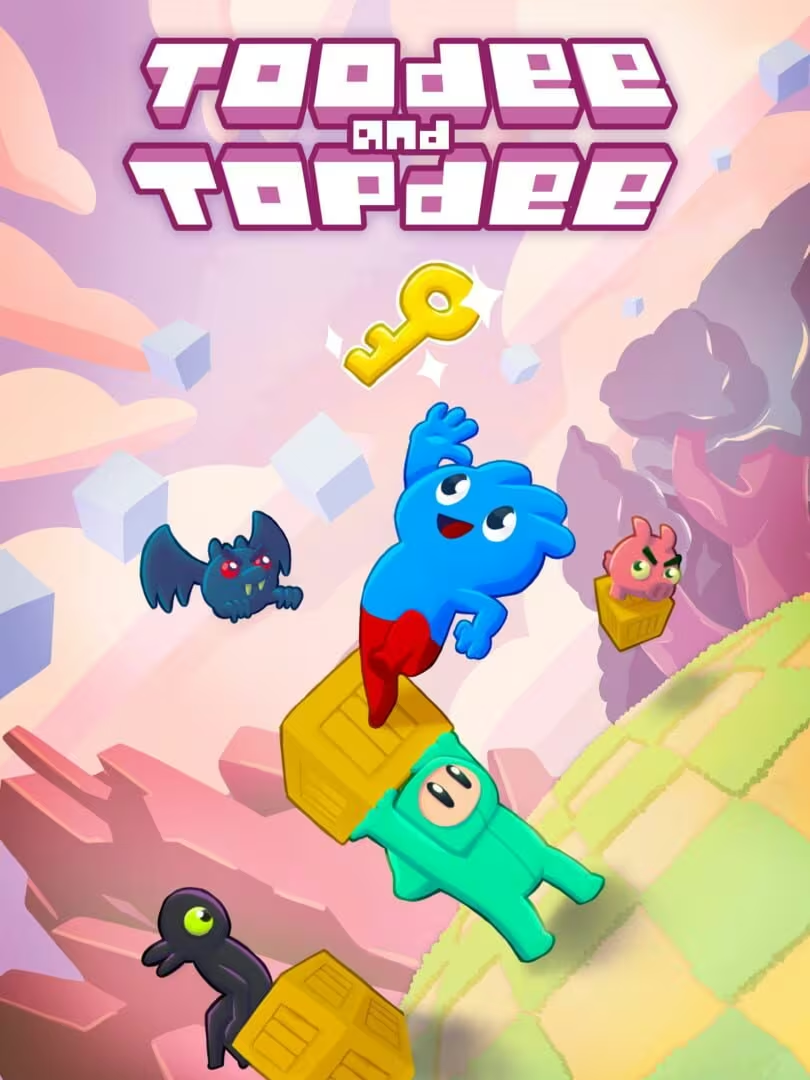 Toodee and Topdee
"Emphasizes equal participation and teamwork rather than exerting control or superiority over others."
-
Escapism
Game with the same Escapism vibe
3"Players enjoy humorous story and fantasy setting as a form of lighthearted escape."
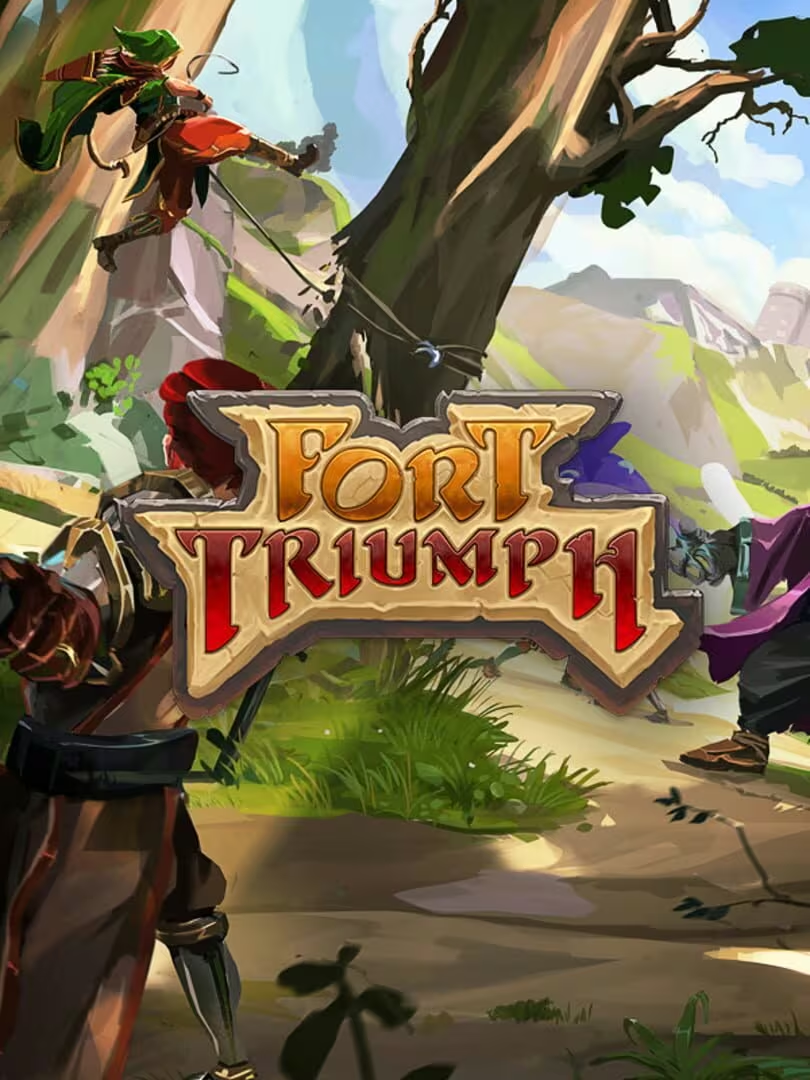 Fort Triumph
"Provides a lighthearted, humorous escape with charming characters and cooperative fun, suitable for casual social play."
-
Expectation
Game with the same Expectation vibe
-4"Players engage voluntarily for fun and social interaction, with no indication of obligation or pressure."
 Golf It!
"Players engage voluntarily for fun and social interaction, with no indication of obligation or pressure."
-
Experimenting
Game with the same Experimenting vibe
2"Some experimentation with puzzle solutions and exploration, though largely within established gameplay routines."
 Still Life
"Some experimentation with character abilities and puzzle solutions, though puzzles are mostly straightforward."
-
Exploration
Game with the same Exploration vibe
-3"Gameplay is focused on known puzzle levels rather than discovering new areas or secrets."
 Zup! XS
"Gameplay is focused on known puzzle rooms and challenges rather than open exploration or discovery."
-
Expression
Game with the same Expression vibe
-3"Limited customization; players select characters but no significant avatar or environment personalization."
 JermaSlots
"Limited customization; players select characters but no significant avatar or environment personalization."
-
Fantasy
Game with the same Fantasy vibe
3"Game features imaginative fiction with lab-engineered animals and robotic suits, creating a fantasy setting."
 Wires And Whiskers
"Features imaginative fiction with genetically modified lab animals and a mad scientist narrative."
-
Fellowship
Game with the same Fellowship vibe
4"Strong sense of community and shared experience through local multiplayer and cooperative play."
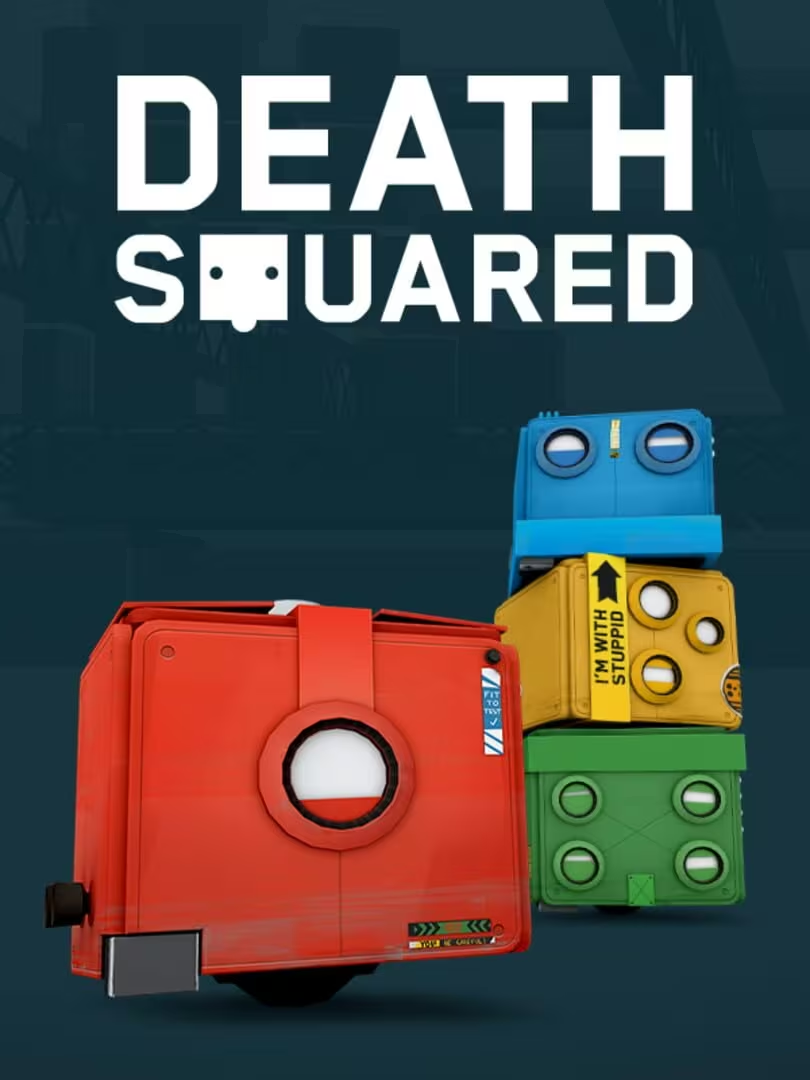 Death Squared
"Strong sense of community and shared experience through cooperative multiplayer play."
-
Growth
Game with the same Growth vibe
2"Players develop skills in puzzle solving and navigation, though learning curve is moderate and gameplay is simple."
![Capsule for [Chilla's Art] The Caregiver | 終焉介護](https://d2eatnf6sujjgc.cloudfront.net/gameaton-data/chilla-s-art-the-caregiver/cover/chilla-s-art-the-caregiver.avif) [Chilla's Art] The Caregiver | 終焉介護
[Chilla's Art] The Caregiver | 終焉介護
"Players develop coordination and puzzle-solving skills, though learning curve is moderate and gameplay is accessible."
-
Health
Game with the same Health vibe
-5"Sedentary gameplay typical of puzzle platformers with no physical activity elements."
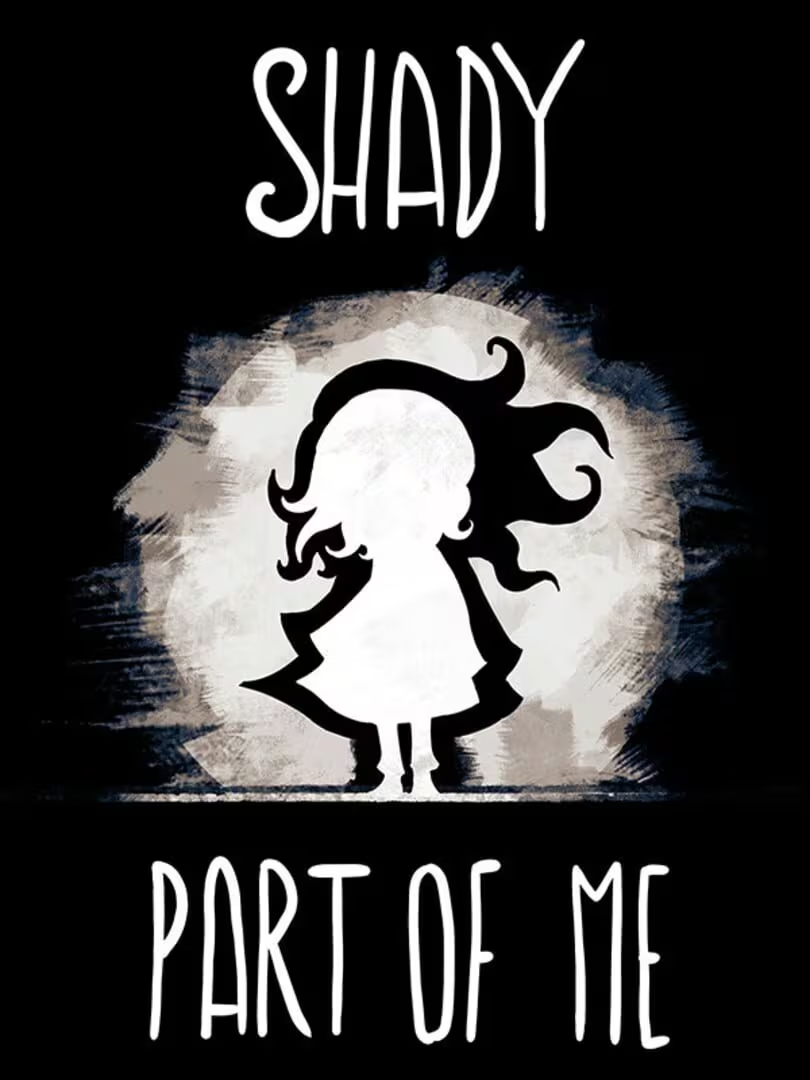 Shady Part of Me
"Sedentary gameplay typical of puzzle platformers with no physical activity elements."
-
Idle
Game with the same Idle vibe
-3"Requires focused attention and coordination during play; not suited for passive or background gaming."
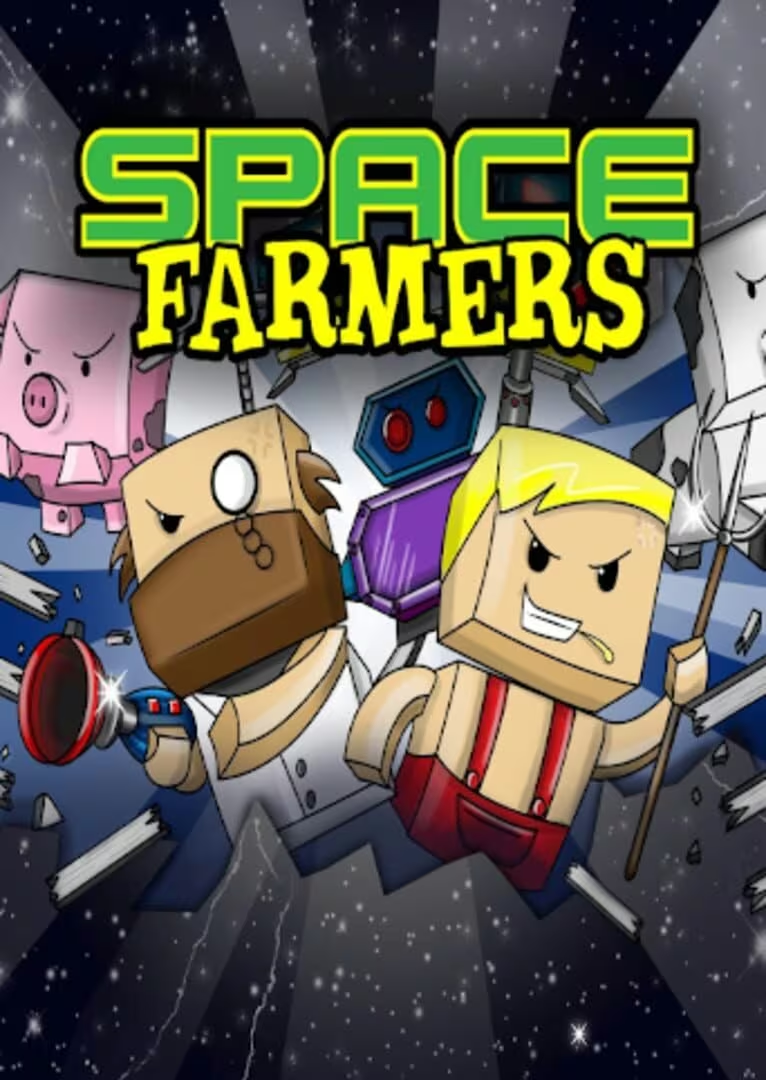 Space Farmers
"Requires focused attention and coordination during play; not suited for passive or background gaming."
-
Intimacy
Game with the same Intimacy vibe
3"Cooperative play fosters social interaction and bonding, though no deep emotional connections are described."
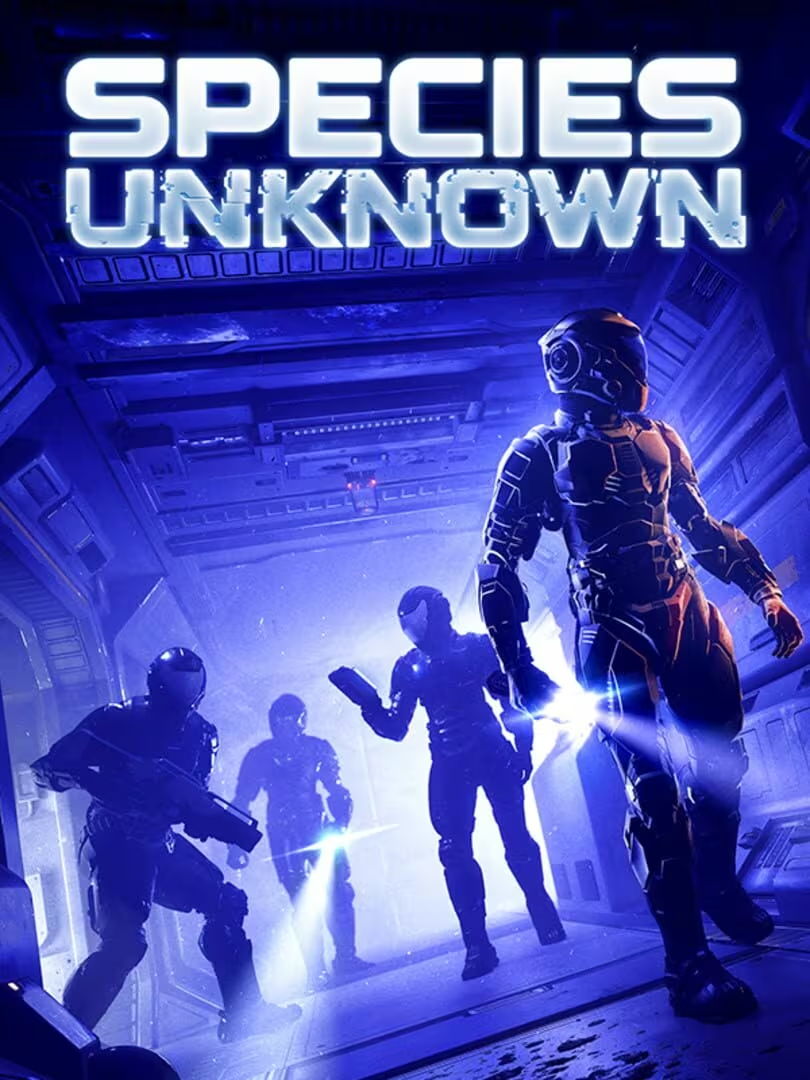 Species: Unknown
"Encourages social interaction and bonding through cooperative play, though not focused on deep emotional connections."
-
Leadership
Game with the same Leadership vibe
-2"Gameplay emphasizes shared decision-making and cooperation rather than hierarchical leadership roles."
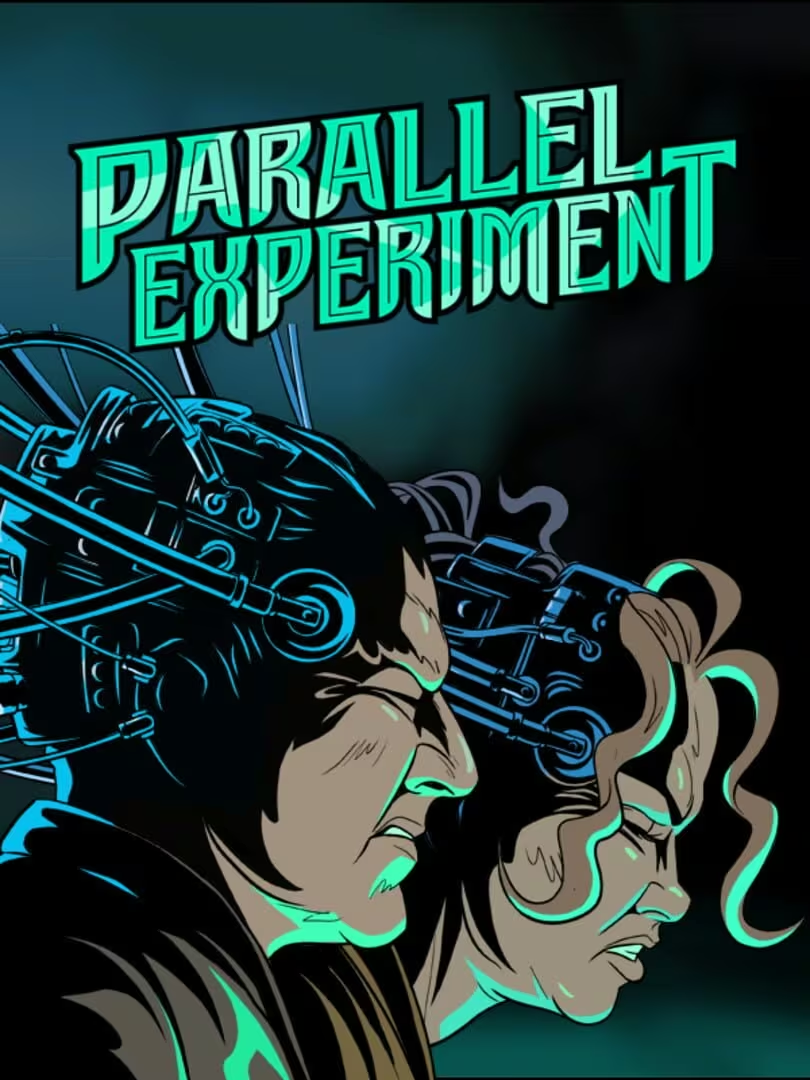 Parallel Experiment
"Gameplay encourages shared decision-making and cooperation rather than distinct leadership roles."
-
Progression
Game with the same Progression vibe
2"Players progress through missions and unlock challenge modes, but no extensive item or upgrade accumulation."
 Operation: Tango - Friend Pass
"Players progress through levels and unlock challenge modes, but no extensive item collection or upgrades."
-
Relaxation
Game with the same Relaxation vibe
2"Generally lighthearted and fun, though some puzzles and timed challenges add tension."
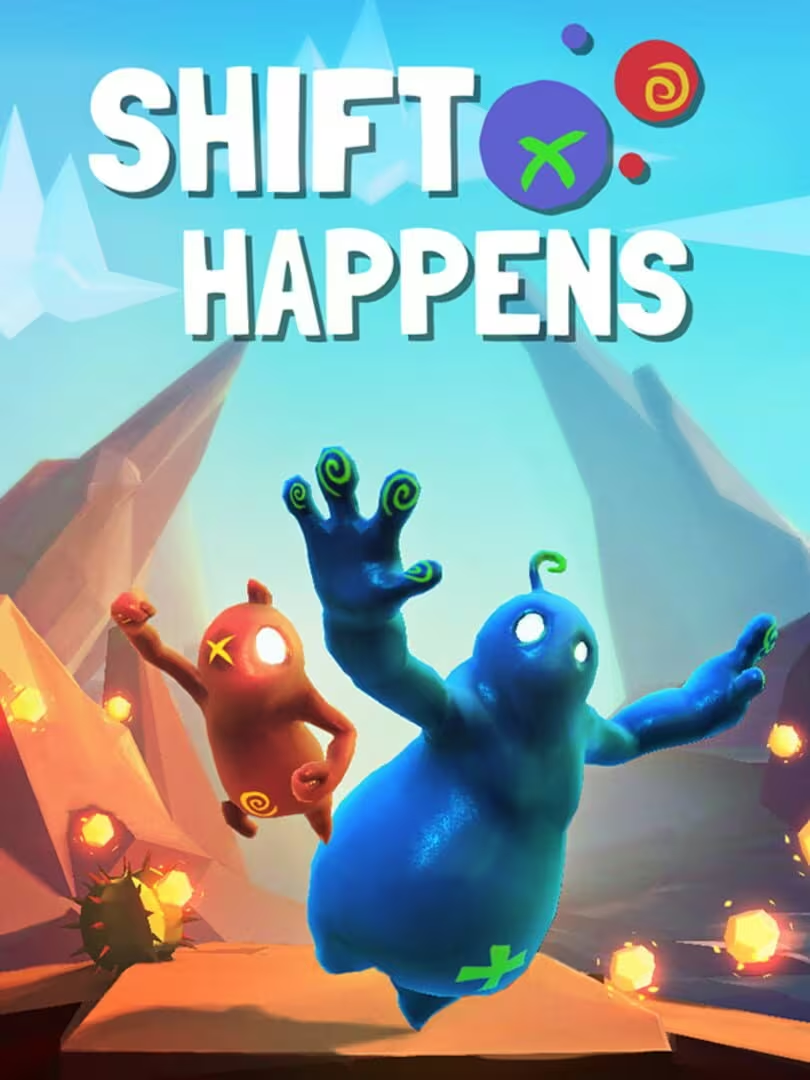 Shift Happens
"Generally lighthearted and fun with some moments of tension in timed puzzles, balancing challenge and flow."
-
Sensation
Game with the same Sensation vibe
2"Colorful visuals and humorous audio provide sensory stimulation and entertainment."
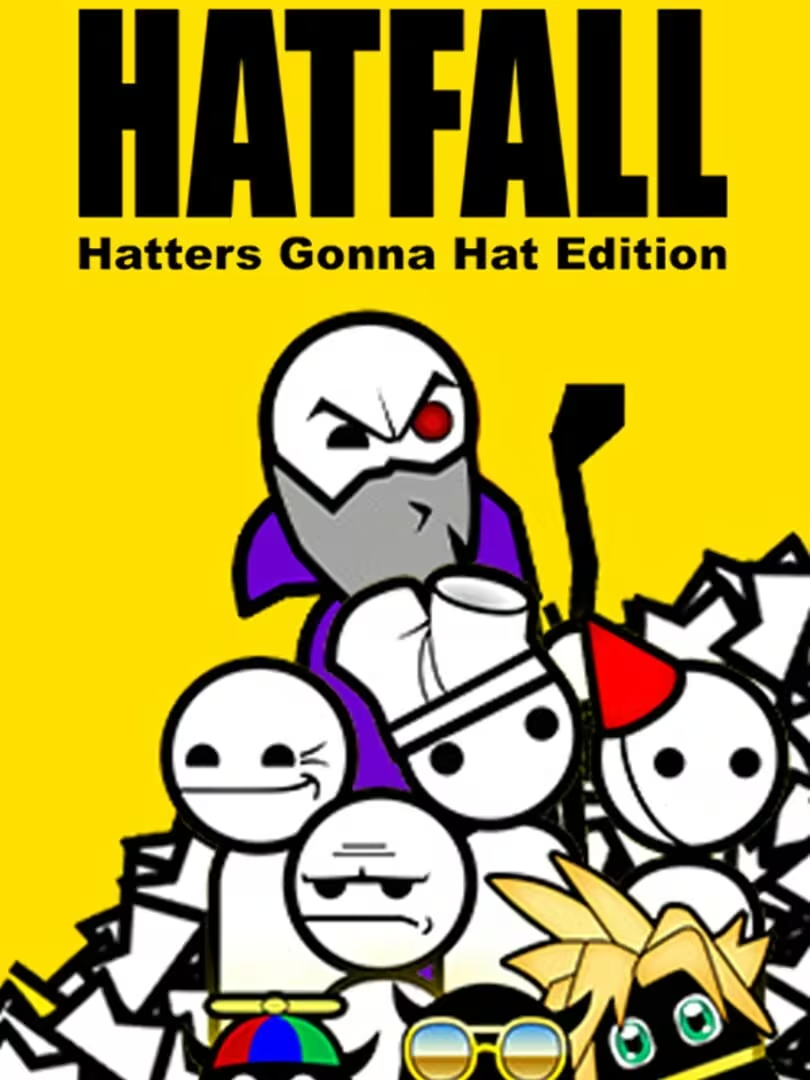 Zero Punctuation: Hatfall - Hatters Gonna Hat Edition
"Colorful visuals and humorous audio provide moderate sensory stimulation and emotional enjoyment."
-
Status
Game with the same Status vibe
-3"Limited emphasis on social recognition or ranking; focus is on cooperative fun rather than status."
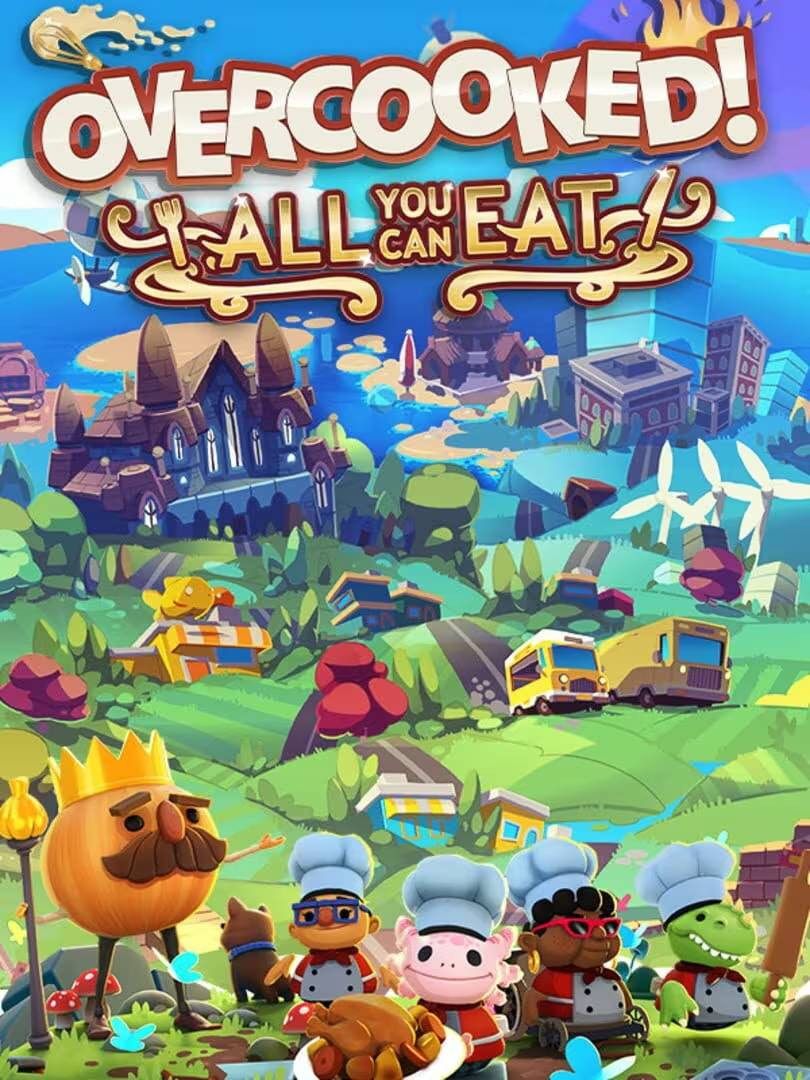 Overcooked! All You Can Eat
"Focus is on cooperative fun rather than social recognition or status within a community."
-
Story
Game with the same Story vibe
2"Light narrative with humorous elements and themed levels, but story is minimal and secondary."
 Beware Planet Earth
"Includes a light narrative with humorous elements and character personalities, but story is short and secondary."
-
Strategy
Game with the same Strategy vibe
3"Puzzles require logical thinking, planning, and problem solving, though not deeply complex."
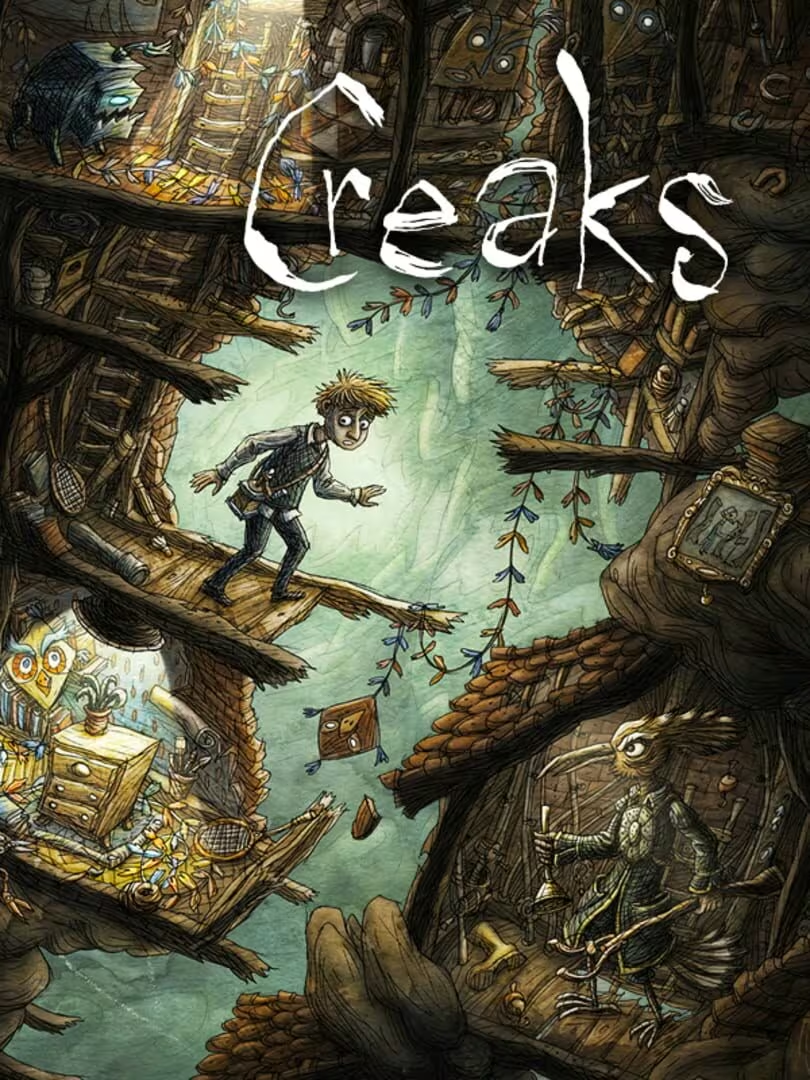 Creaks
"Requires planning and coordination of character abilities to solve puzzles, though puzzles are not deeply complex."
-
Thrill
Game with the same Thrill vibe
2"Some suspenseful timed puzzles create excitement, but overall experience is casual and lighthearted."
Operation: Tango
"Some suspenseful moments in timed or action-oriented puzzles, but overall experience is light and fun."
-
Value
Game with the same Value vibe
3"Good value especially on sale; short length balanced by replayability and unique experience."
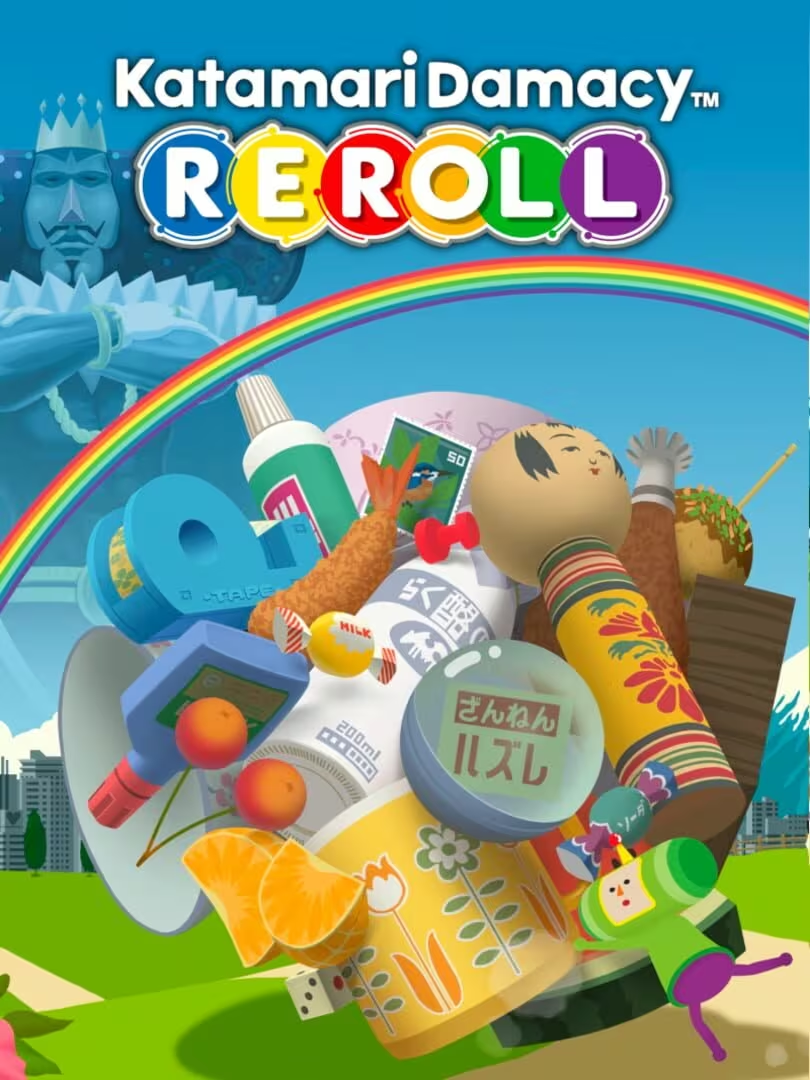 Katamari Damacy REROLL
"Good value especially when purchased on sale; short length balanced by enjoyable cooperative experience."
-
Violence
Game with the same Violence vibe
-2"Minor combat elements present but mostly constructive puzzle-solving and cooperation."
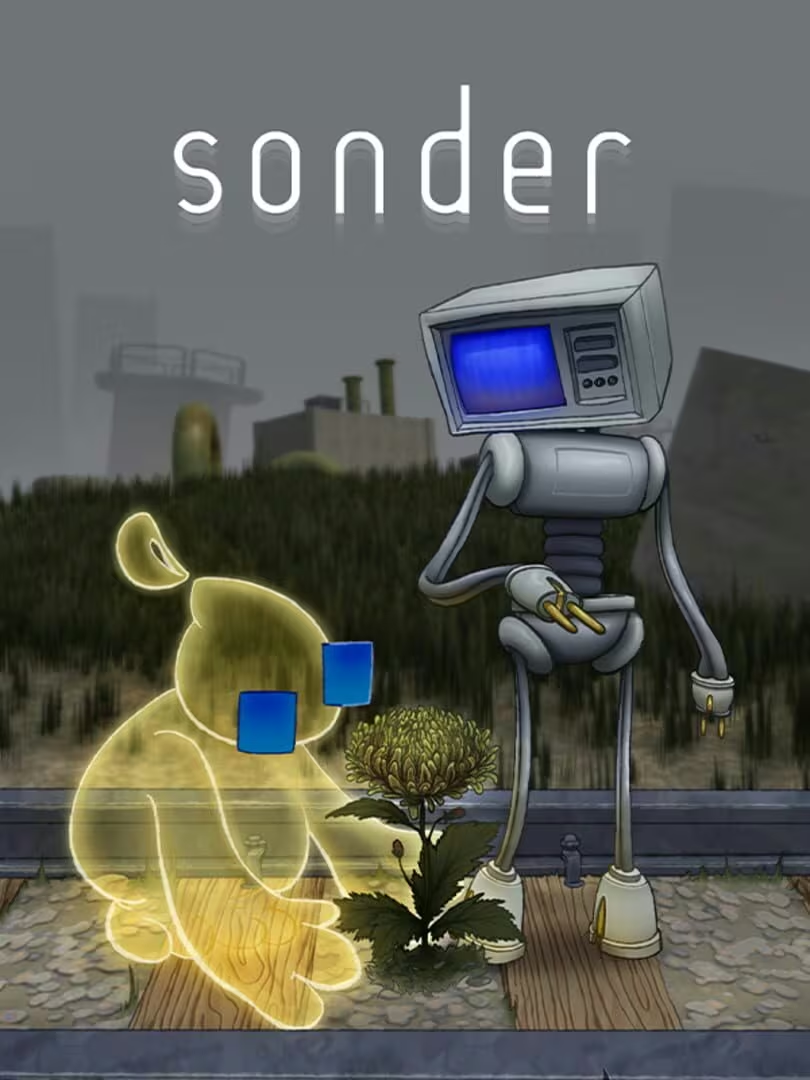 Sonder
"Minor combat elements present but focus is primarily on puzzle solving and cooperative gameplay."
-
Survival
Game with the same Survival vibe
-3"No real threat or failure states; players respawn instantly and gameplay is forgiving."
 LEGO® Indiana Jones™: The Original Adventures
"No real threat of failure; players respawn instantly and gameplay is low-risk."
Last update: 01/06/2026