To The Core similar games & best alternatives
Should you play it?
To The Core is an incremental game about extracting and using resources from planets to buy upgrades.
What works
- Addictive and satisfying gameplay
- Engaging upgrade system
- Good soundtrack and visuals
- Reasonable game length
- Active developer support
Things to keep in mind
- Grindy and tedious late game
- Ui and quality of life issues
- Performance drops in endgame
- Lack of content and replayability
- Some bugs and clunky controls
What to play next
Similar games, hidden gems, and fresh directions from this game.
Top picks
Games that feel the closest overall



Hidden Gems
Less popular games with surprisingly high similarity
If you liked…
Recommendations by what you enjoyed most
Similarity map
Explore nearby similar games and see why they’re close.
To The Core: Broadly representative of its motivational profile, with a few distinct shifts. Motivations that often define this kind of title include Expression, Fellowship, Cooperation, Status. Here, the score leans higher than usual among comparable games on Violence, Relaxation. It leans lower than usual among comparable games on Thrill.
Why this game works
A motivational profile of the game, with the closest similar game for each player motivation.
-
Autonomy
Game with the same Autonomy vibe
3"Players have freedom to click and choose upgrades at their own pace, though gameplay is largely repetitive and routine."
 Poop Clicker
"Players can choose upgrades and progression paths freely, but gameplay involves repetitive clicking and some fixed routines."
-
Competence
Game with the same Competence vibe
3"Players feel effective progressing through upgrades and surviving waves, though some find late game grindy."
 The Spotter: Dig or Die
"Players feel effective as they upgrade and destroy planets faster, but late game involves grinding and some tedious tasks."
-
Competition
Game with the same Competition vibe
-4"No PvP or ranked modes; focus is on personal progress and self-set goals without comparison to others."
 Merchant of the Skies
"Focus is on personal progression and self-set goals; no mention of PvP or ranked modes."
-
Continuation
Game with the same Continuation vibe
2"Players report addictive gameplay and long sessions, though some find it repetitive and eventually disengage."
 Lost But Found
"Many players report addictive gameplay and long play sessions, though some mention abrupt endings and grind fatigue."
-
Cooperation
Game with the same Cooperation vibe
-5"Game is single-player with no cooperative elements."
 WAVESHAPER
"Game is single-player with no cooperative elements."
-
Creativity
Game with the same Creativity vibe
1"Some customization of builds and strategies, but limited variety and linear upgrade paths."
 RollScape
"Players customize upgrade paths and strategies, but no building or creation mechanics."
-
Domination
Game with the same Domination vibe
-5"No evidence of exerting control or superiority over other players; purely individual experience."
 Angry Video Game Nerd II: ASSimilation
"No evidence of exerting control over other players; purely individual experience."
-
Escapism
Game with the same Escapism vibe
4"Players use the game as a relaxing, absorbing distraction with a soothing soundtrack and engaging mechanics."
 Aotenjo: Infinite Hands
"Players use the game as a relaxing, satisfying distraction with engaging music and visuals."
-
Expectation
Game with the same Expectation vibe
-4"Players engage voluntarily for fun and relaxation, not out of obligation."
 Cat Quest
"Players engage voluntarily for fun and relaxation, not out of obligation."
-
Experimenting
Game with the same Experimenting vibe
3"Upgrade combinations and run strategies encourage trying new builds and approaches."
 Timber Rush
"Upgrade tree and different tools encourage trying new strategies and approaches."
-
Exploration
Game with the same Exploration vibe
2"Players explore new planets and galaxies, though environments are familiar and gameplay loops are repetitive."
 Galaxy Life
"Players discover new planets and resources, though environments are somewhat repetitive."
-
Expression
Game with the same Expression vibe
-3"Limited customization; players manage upgrades but no mention of avatar or environment personalization."
 Wasteland Bites
"Limited customization; players select upgrades but no avatar or environment personalization."
-
Fantasy
Game with the same Fantasy vibe
2"Game features space mining and sci-fi elements, providing an imaginative setting though grounded in plausible mechanics."
 Astronomics
"Game features imaginative space mining and planetary destruction, though not heavily narrative or roleplay focused."
-
Fellowship
Game with the same Fellowship vibe
-5"No social or community features; single-player experience."
 High On Life
"No social or community features; single-player experience."
-
Growth
Game with the same Growth vibe
4"Players learn timing, resource management, and optimize strategies to improve performance and progress."
 Wild Growth
"Players learn and develop strategies to optimize resource gathering and upgrade paths."
-
Health
Game with the same Health vibe
-5"Sedentary gameplay with no physical activity involved."
 World of Tanks Blitz
"Sedentary gameplay with no physical activity involved."
-
Idle
Game with the same Idle vibe
-3"Requires active clicking and attention; not an idle or background game."
 Lumberjacked
"Requires active clicking and attention for much of the game; some late-game partial automation."
-
Intimacy
Game with the same Intimacy vibe
-5"No social or emotional relationship building."
 Five Nights at Freddy's 2
"No social or emotional relationship building."
-
Leadership
Game with the same Leadership vibe
-5"No leadership or group management roles."
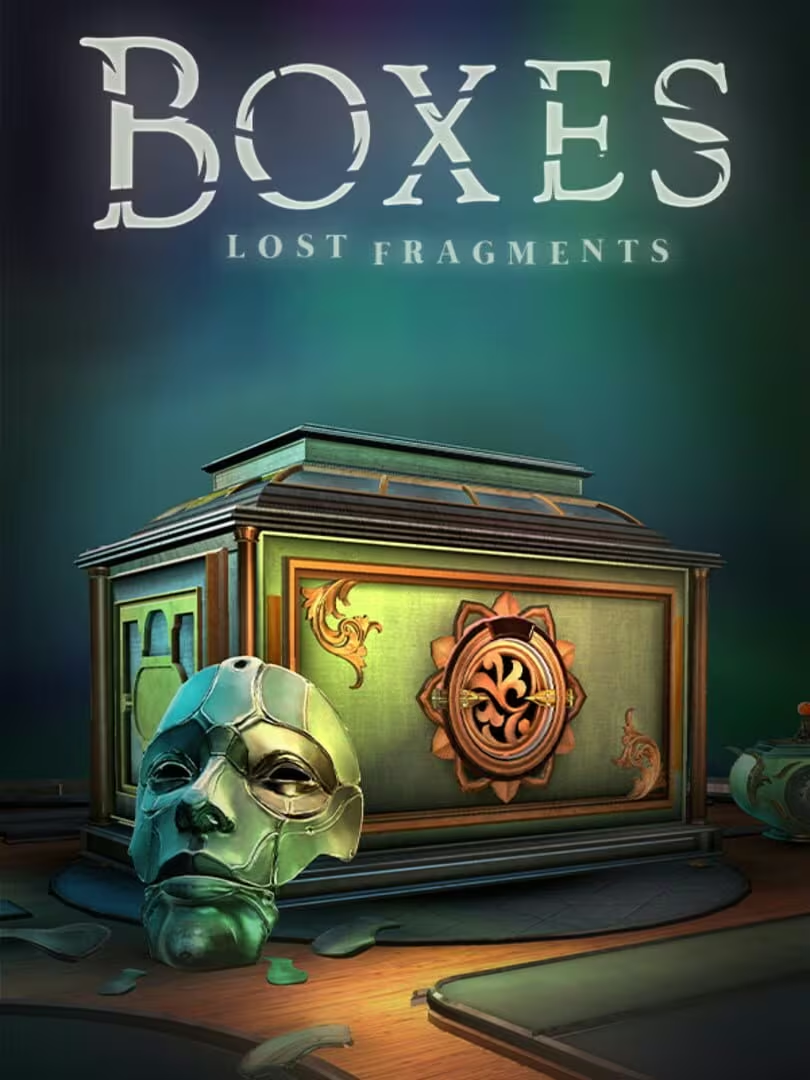 Boxes: Lost Fragments
"No leadership or group management roles."
-
Progression
Game with the same Progression vibe
5"Strong focus on accumulating resources, upgrading buildings, and unlocking new units and planets."
Galaxy Life
"Strong focus on accumulating upgrades, resources, and unlocking new planets."
-
Relaxation
Game with the same Relaxation vibe
3"Many players find the game relaxing and enjoyable despite some grind."
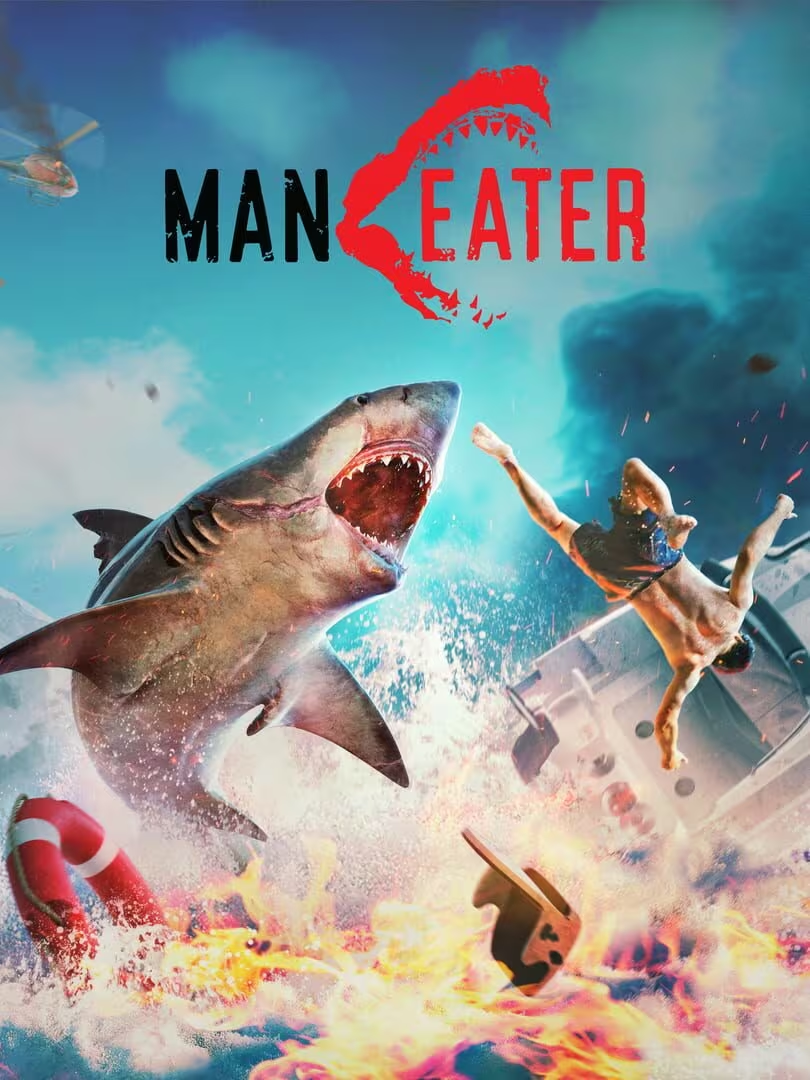 Maneater
"Many players find the game satisfying and relaxing despite some grind and lag issues."
-
Sensation
Game with the same Sensation vibe
3"Satisfying sound effects and visual feedback provide sensory enjoyment."
 Puzzle Together Multiplayer Jigsaw Puzzles
"Visual and auditory feedback, including particle effects and music, provide sensory enjoyment."
-
Status
Game with the same Status vibe
-5"No social recognition or ranking systems."
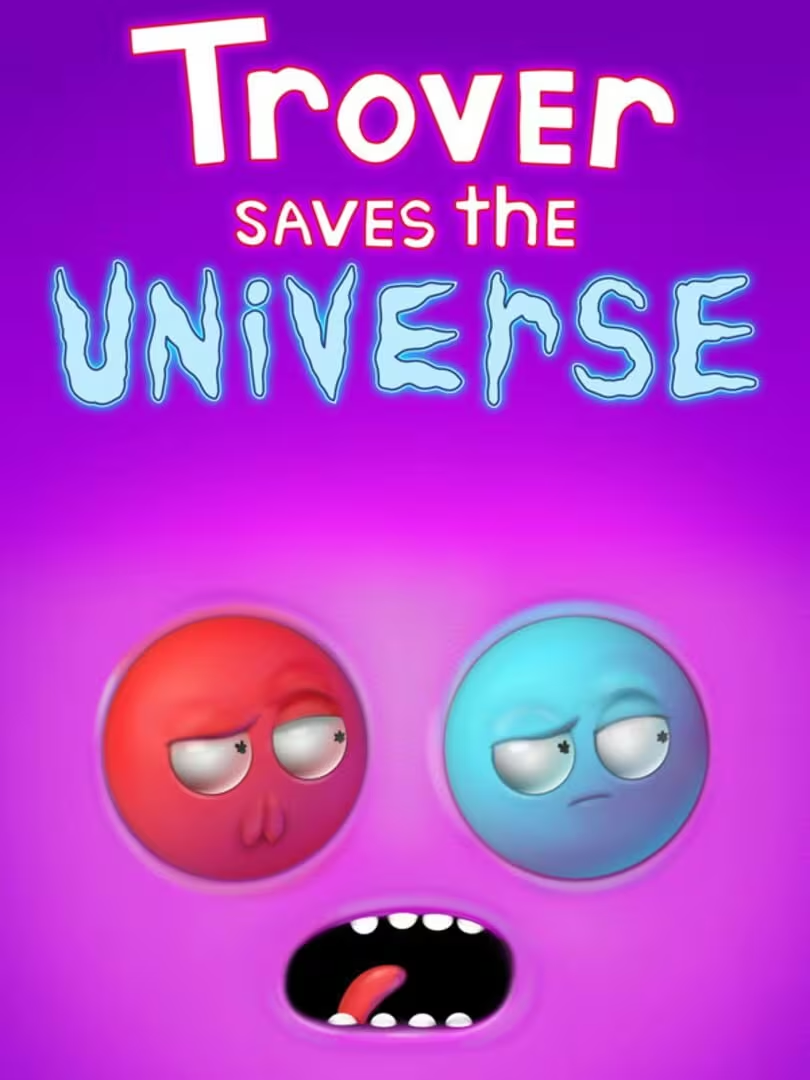 Trover Saves the Universe
"No social recognition or ranking systems."
-
Story
Game with the same Story vibe
1"Minimal narrative or lore; some thematic elements but mostly context-free incremental gameplay."
 Lyca
Lyca
"Minimal narrative; some thematic elements but mostly context-free incremental gameplay."
-
Strategy
Game with the same Strategy vibe
3"Players make strategic decisions on upgrade paths and resource management to optimize progression."
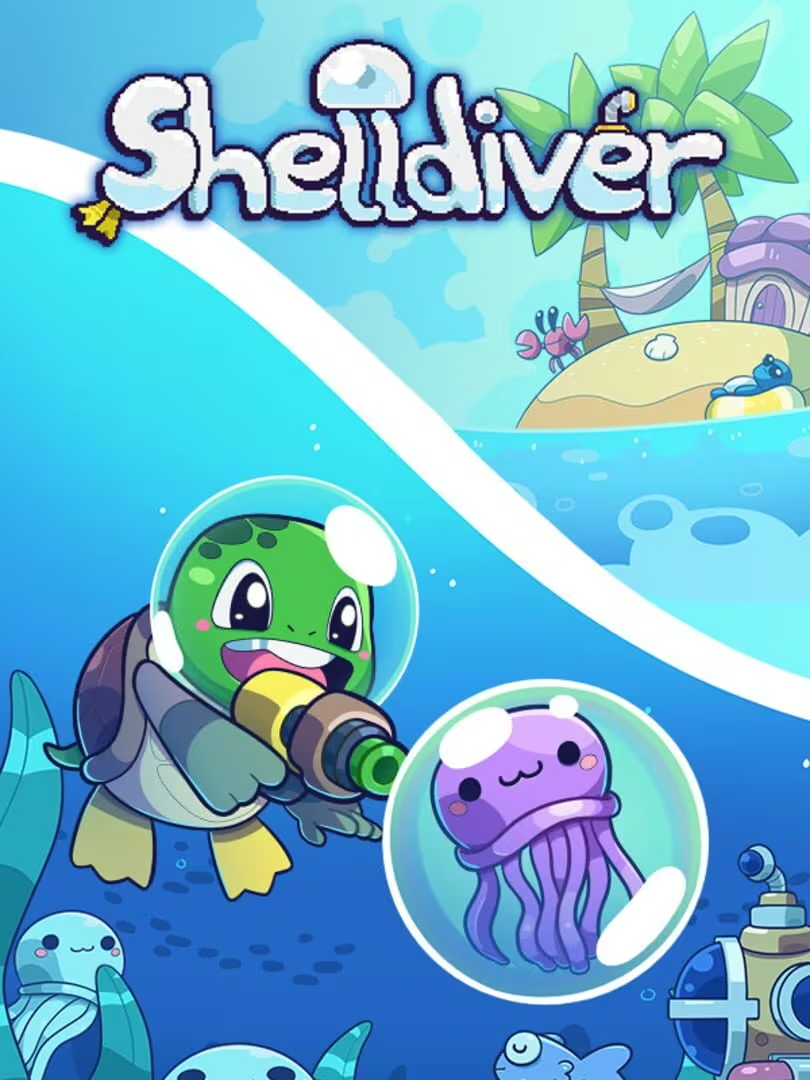 Shelldiver
"Players plan upgrade paths and resource management, though late game becomes more repetitive."
-
Thrill
Game with the same Thrill vibe
-2"Gameplay is low risk with predictable outcomes; tension is mild and mostly from resource management."
 Honey, I Joined a Cult
"Gameplay is mostly controlled and predictable; some tension from resource management but no high risk."
-
Value
Game with the same Value vibe
3"Players feel the game offers good value for price given quality and potential, though content is limited."
 VOIN
VOIN
"Players generally feel the game offers good entertainment value for its price despite some content limitations."
-
Violence
Game with the same Violence vibe
4"Gameplay centers on shooting and destroying asteroids and enemies with explosive effects."
 Echoes+
"Gameplay centers on destruction of planets and blocks with explosive effects."
-
Survival
Game with the same Survival vibe
1"Some resource and fuel management to avoid failure, but threats are low and forgiving."
 Space Rock Breaker
"Some resource and fuel management elements, but low threat and failure risk."
Last update: 01/06/2026