VR: Vacate the Room (Virtual Reality Escape) similar games & best alternatives
Should you play it?
VR: Vacate the Room is a short Escape the Room game.It is a VR Experience where you need to find clues to solve puzzles and find your way out.
What works
- High immersion with roomscale vr
- Intuitive and accessible puzzle gameplay
- Low price compared to real-life escape rooms
- Well polished and stable experience
- Good demonstration of vr capabilities
Things to keep in mind
- Very short playtime (~20-30 minutes)
- Limited replayability
- Some minor control and tracking issues
- Lack of narrative depth or variety
- Not suitable for smaller play spaces or shorter players
What to play next
Similar games, hidden gems, and fresh directions from this game.
Top picks
Games that feel the closest overall


Hidden Gems
Less popular games with surprisingly high similarity
If you liked…
Recommendations by what you enjoyed most
Similarity map
Explore nearby similar games and see why they’re close.
VR: Vacate the Room (Virtual Reality Escape): Less representative of its motivational profile, with noticeable differences. Motivations that often define this kind of title include Survival, Violence, Competition, Thrill. Here, the score leans higher than usual among comparable games on Health. It leans lower than usual among comparable games on Story, Fantasy.
Why this game works
A motivational profile of the game, with the closest similar game for each player motivation.
-
Autonomy
Game with the same Autonomy vibe
4"Players freely explore the room, interact with many objects, and solve puzzles at their own pace without forced routines."
 Abode
Abode
"Players freely explore the roomscale environment and solve puzzles at their own pace without forced routines."
-
Competence
Game with the same Competence vibe
2"Puzzles are generally easy to moderate, providing some skill challenge but not highly difficult or complex."
 A Fisherman's Tale
"Puzzles are generally easy to moderate, providing some skill challenge but not highly difficult."
-
Competition
Game with the same Competition vibe
-4"Focus is on individual puzzle solving without leaderboards or player comparison."
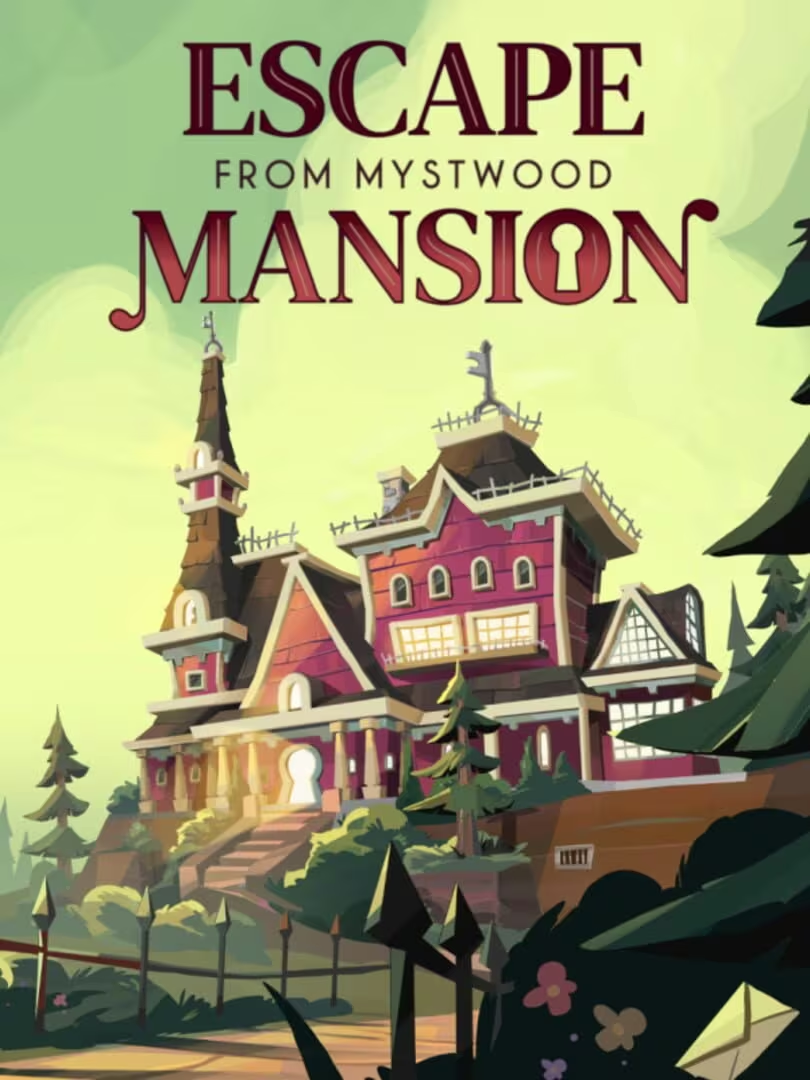 Escape From Mystwood Mansion
"Focus is on individual puzzle solving without comparison or leaderboards."
-
Continuation
Game with the same Continuation vibe
-3"Short gameplay (about 2-3 hours) and low replay value suggest limited long-term engagement."
 Inbetween Land
"Short gameplay (~20-30 minutes) with limited replayability reduces long-term engagement."
-
Cooperation
Game with the same Cooperation vibe
-5"Single-player experience with no cooperative or multiplayer elements."
 Cookie Clicker
"Single-player experience with no cooperative or multiplayer elements."
-
Creativity
Game with the same Creativity vibe
3"Players creatively solve puzzles using various interactive objects and mechanisms, though within designed constraints."
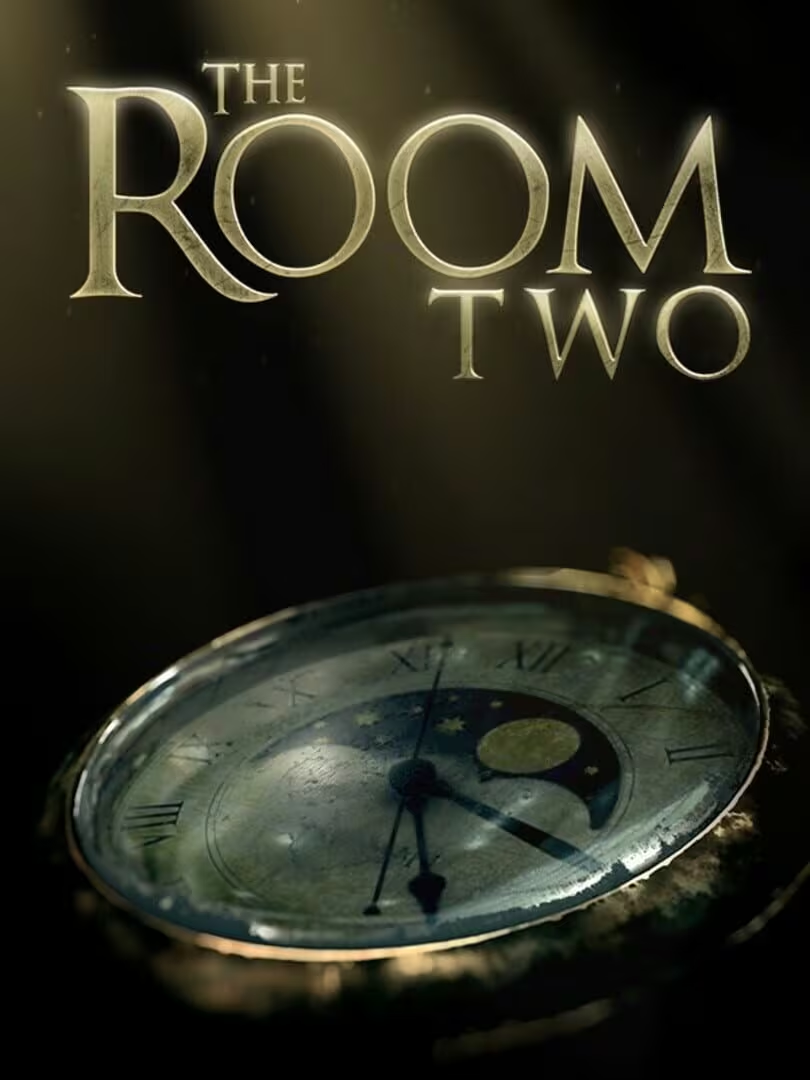 The Room Two
"Players interact with objects and solve puzzles creatively within the room, but no creation or modification."
-
Domination
Game with the same Domination vibe
-5"No social dominance or power dynamics; purely individual experience."
 Pretty Neko
"No social dominance or power dynamics; purely individual experience."
-
Escapism
Game with the same Escapism vibe
4"Players use the immersive VR environment to escape into intense combat and strategic gameplay, away from real life."
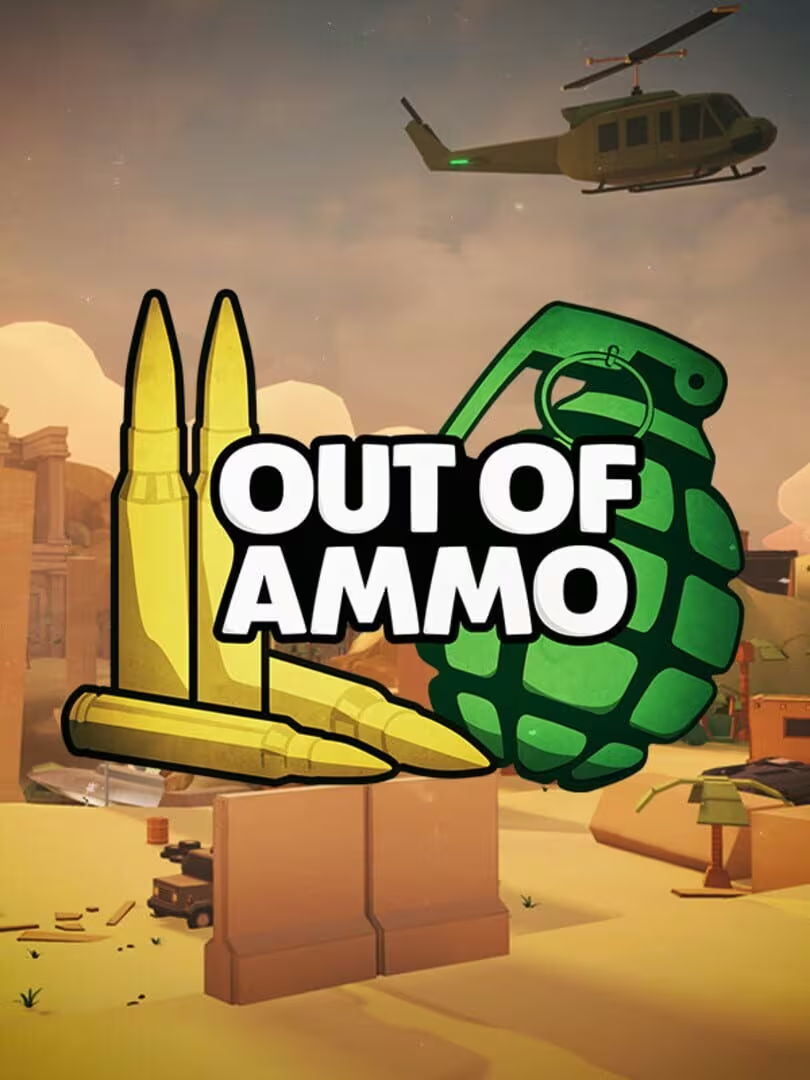 Out of Ammo
"Immersive VR environment allows players to escape reality and experience a virtual room escape."
-
Expectation
Game with the same Expectation vibe
-4"Players engage voluntarily out of interest and enjoyment, not obligation."
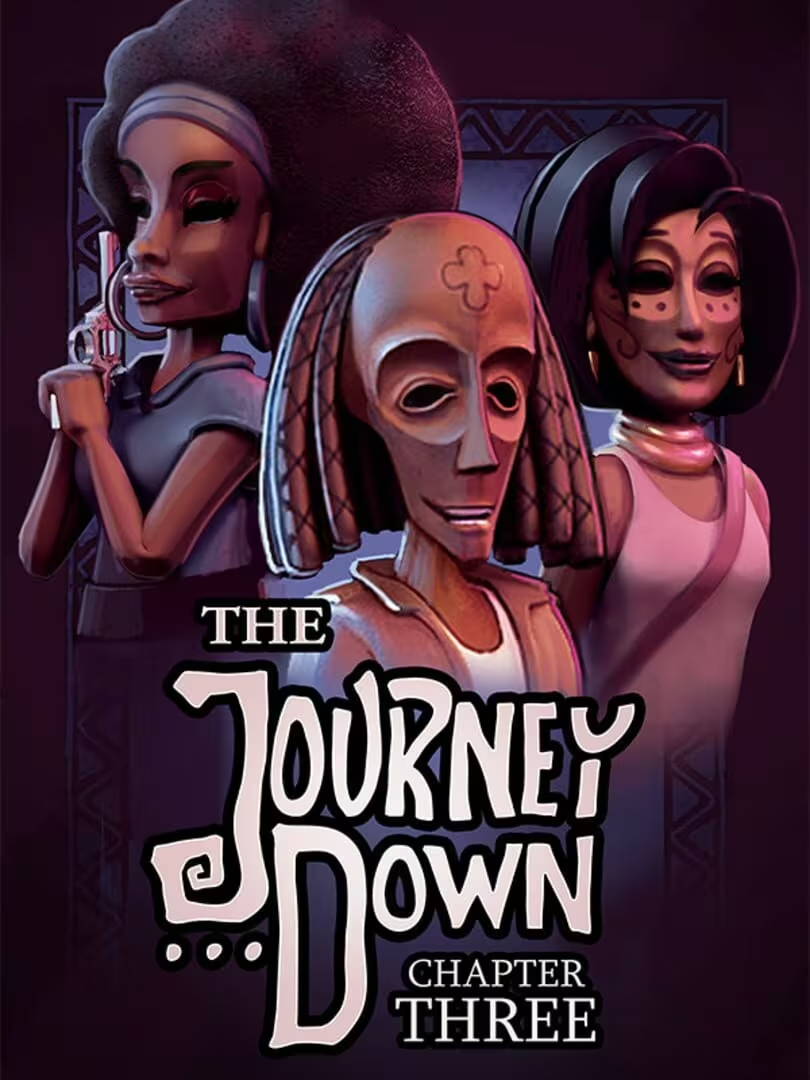 The Journey Down: Chapter Three
"Players engage voluntarily out of interest and enjoyment, not obligation."
-
Experimenting
Game with the same Experimenting vibe
3"Players explore puzzles and interact with various imaginative elements, encouraging experimentation."
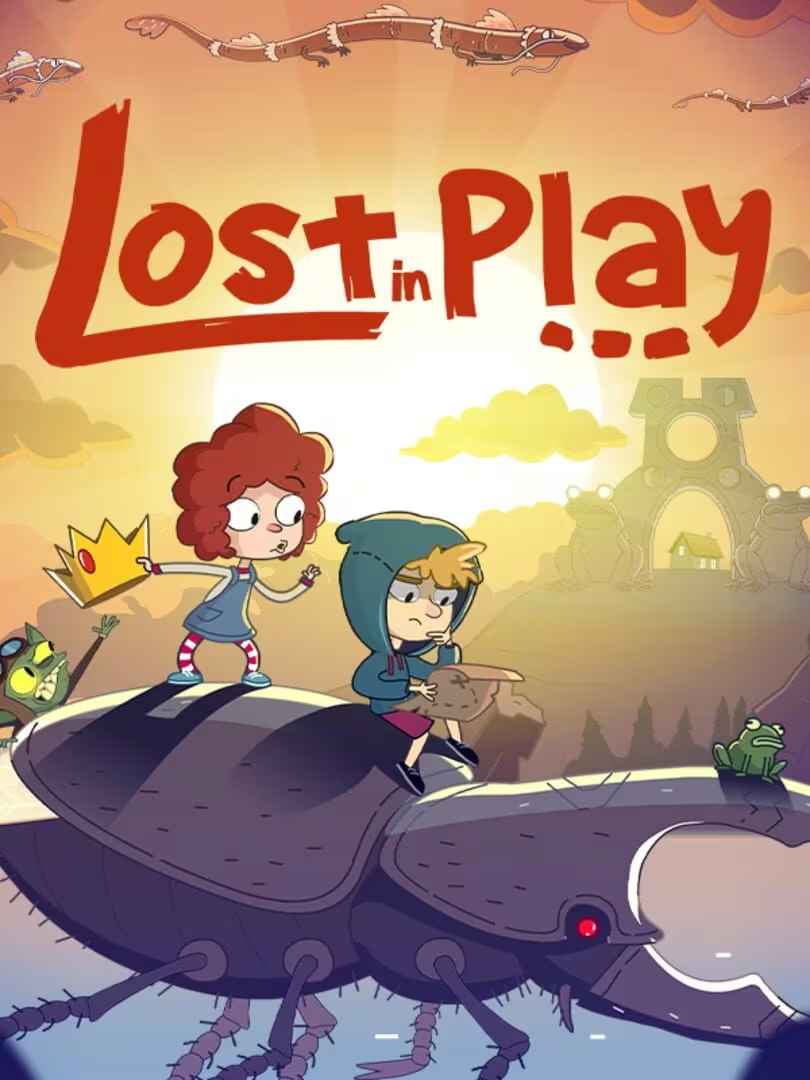 Lost in Play
"Players explore and test objects and clues to solve puzzles, encouraging experimentation."
-
Exploration
Game with the same Exploration vibe
4"Exploring multiple rooms and discovering new areas and secrets is a core gameplay element."
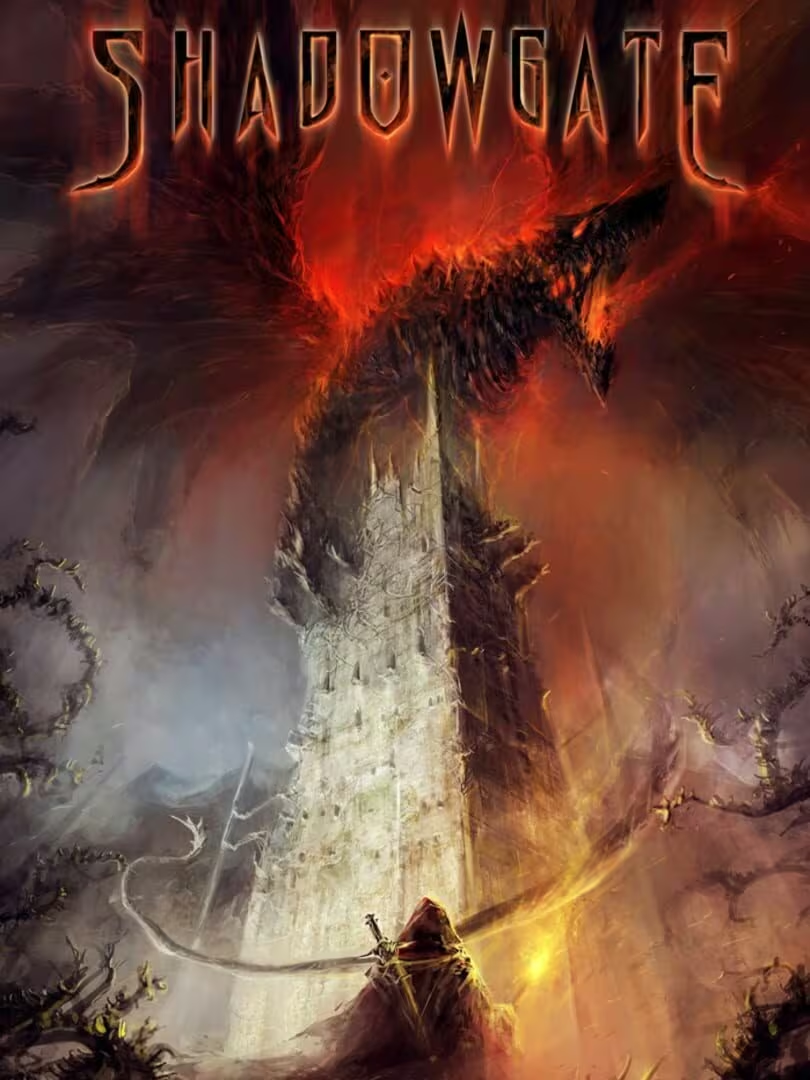 Shadowgate
"Roomscale VR encourages thorough exploration of the environment to find clues."
-
Expression
Game with the same Expression vibe
-4"No character customization or self-expression features."
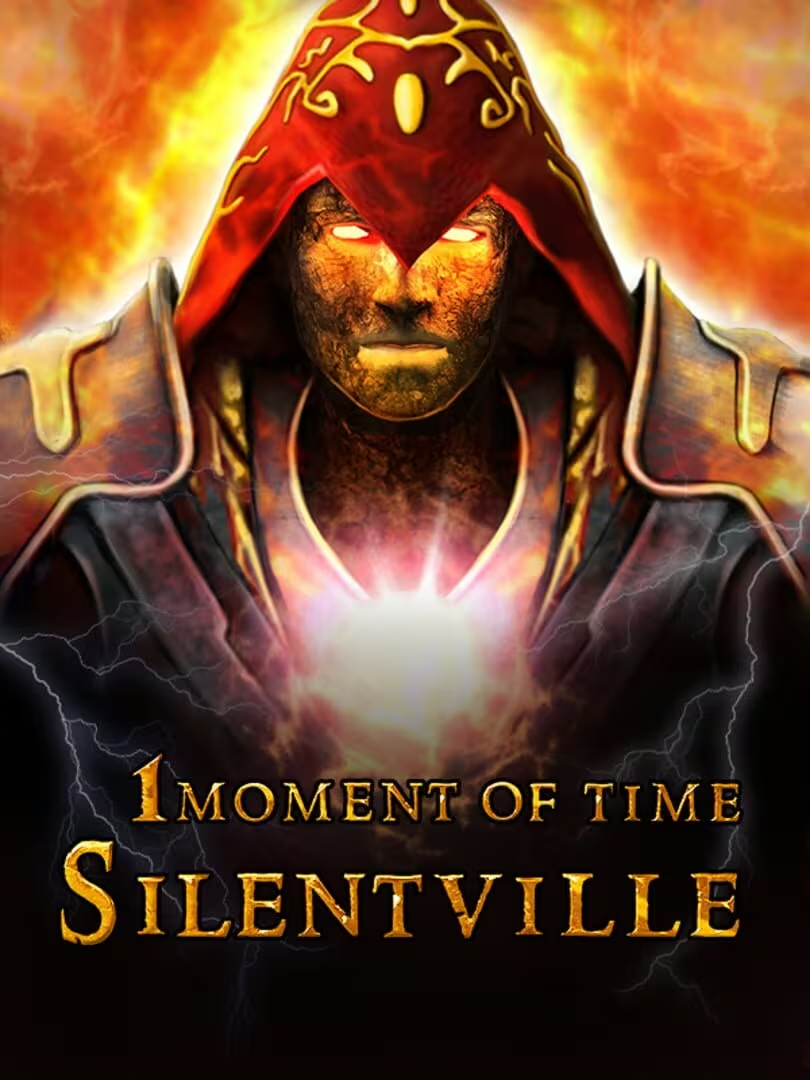 1 Moment Of Time: Silentville
"No character customization or self-expression features."
-
Fantasy
Game with the same Fantasy vibe
-3"Game presents plausible escape room scenarios with minimal fantasy or fictional elements."
 In Sink: A Co-op Escape Adventure
"Realistic escape room setting with no fantasy or fictional elements."
-
Fellowship
Game with the same Fellowship vibe
-5"No community or social features; solo play only."
 Graveyard Shift
"No community or social features; solo play only."
-
Growth
Game with the same Growth vibe
2"Players develop spatial reasoning and puzzle solving skills, though limited by game length."
 DARQ: Complete Edition
"Players develop puzzle-solving skills and spatial awareness, though limited complexity."
-
Health
Game with the same Health vibe
3"Physical movement in roomscale VR and active arm motions provide light exercise."
 Cosmic Trip
"Roomscale VR requires physical movement, bending, crouching, and walking."
-
Idle
Game with the same Idle vibe
-4"Requires focused attention and active cooperation throughout the session."
 Sam & Dan: Floaty Flatmates
"Requires active attention and interaction throughout the short session."
-
Intimacy
Game with the same Intimacy vibe
-5"No social or emotional connections formed within the game."
 Iron Lung
"No social or emotional connections formed within the game."
-
Leadership
Game with the same Leadership vibe
-5"No leadership or group management roles."
 Coin Flipper
"No leadership or group management roles."
-
Progression
Game with the same Progression vibe
1"Some item collection and puzzle progression, but limited upgrades or accumulation."
 Gomo
Gomo
"Limited progression through puzzle completion and unlocking harder mode, but no item accumulation."
-
Relaxation
Game with the same Relaxation vibe
2"Generally relaxing with balanced challenge, though some puzzles cause frustration."
 Beyond The Edge Of Owlsgard
"Generally relaxing with moderate challenge and flow, though some tension in puzzles."
-
Sensation
Game with the same Sensation vibe
3"Immersive VR visuals, sound design, and physical interaction provide strong sensory stimulation and emotional engagement."
 Budget Cuts
"Immersive VR visuals and sound provide sensory stimulation and engagement."
-
Status
Game with the same Status vibe
-5"No social recognition or status elements."
 Pony Island
"No social recognition or status elements."
-
Story
Game with the same Story vibe
-3"Minimal narrative or lore; focus is on abstract puzzle solving rather than story immersion."
 Recursed
"Minimal narrative context; focus is on puzzle solving rather than story immersion."
-
Strategy
Game with the same Strategy vibe
1"Puzzles require some logical thinking but are generally straightforward."
 Beatbuddy: Tale of the Guardians
"Puzzles require some logical thinking but are mostly straightforward."
-
Thrill
Game with the same Thrill vibe
1"Some suspense from puzzle solving and story developments, but low risk and tension overall."
Beyond The Edge Of Owlsgard
"Some suspense from puzzle solving and confined space, but low risk and tension."
-
Value
Game with the same Value vibe
1"Generally considered good value on sale for short but enjoyable experience."
 Sakura Angels
"Generally considered good value for price compared to real-life escape rooms, though short length noted."
-
Violence
Game with the same Violence vibe
-5"No violence or destructive gameplay; focus on constructive puzzle solving."
 Manifold Garden
"No violence or destructive gameplay; focus on constructive puzzle solving."
-
Survival
Game with the same Survival vibe
-4"No survival or threat elements; stable and low-risk environment."
 Premium Bowling
"No survival or threat elements; stable and safe environment."
Last update: 01/06/2026