Orcs Must Die! Deathtrap similar games & best alternatives
Should you play it?
Orcs Must Die! Deathtrap combines chaotic third-person combat with devious trap-laying strategy. Enjoy endless replayability as your War Mage grows stronger through roguelite progression. Repel relentless orc hordes solo or with up to 4 players.
What works
- Engaging cooperative multiplayer
- Challenging and strategic gameplay
- Roguelike progression and replayability
- Active developer support and updates
- Varied characters and traps
Things to keep in mind
- Limited barricades can frustrate some players
- Large maps with limited viable killbox locations
- Minimal narrative or story content
- Some technical and ui issues reported
- Solo play less optimal and more challenging
What to play next
Similar games, hidden gems, and fresh directions from this game.
Top picks
Games that feel the closest overall
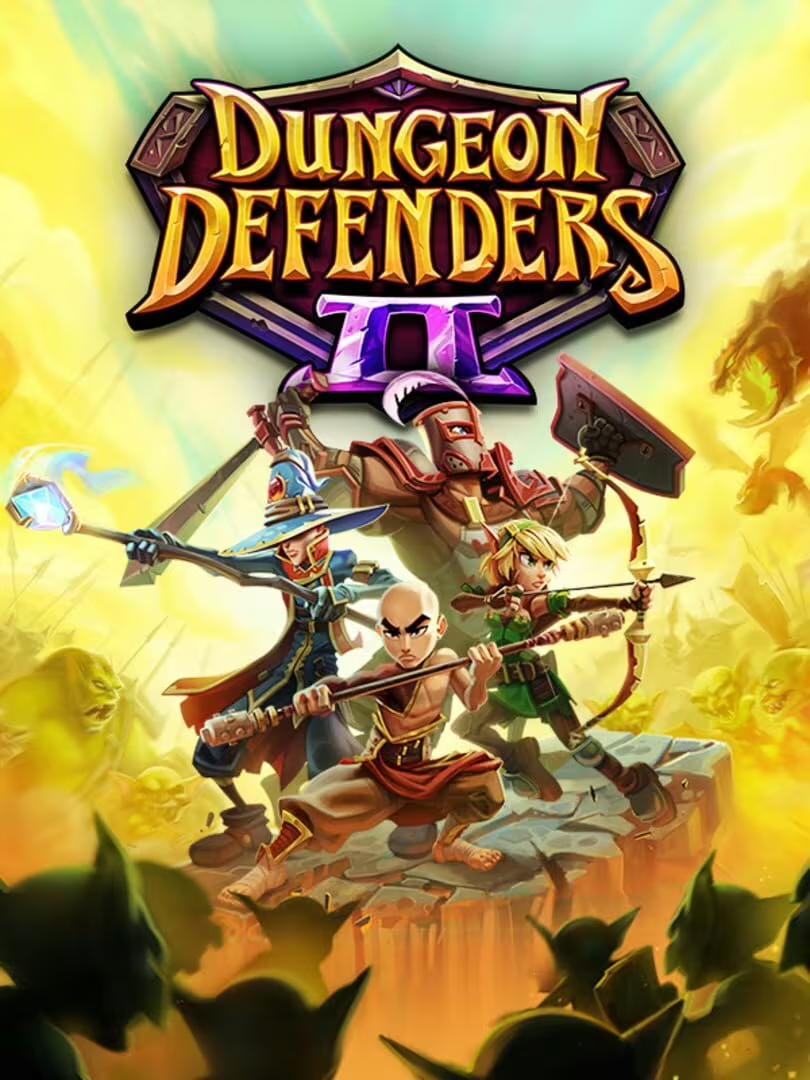
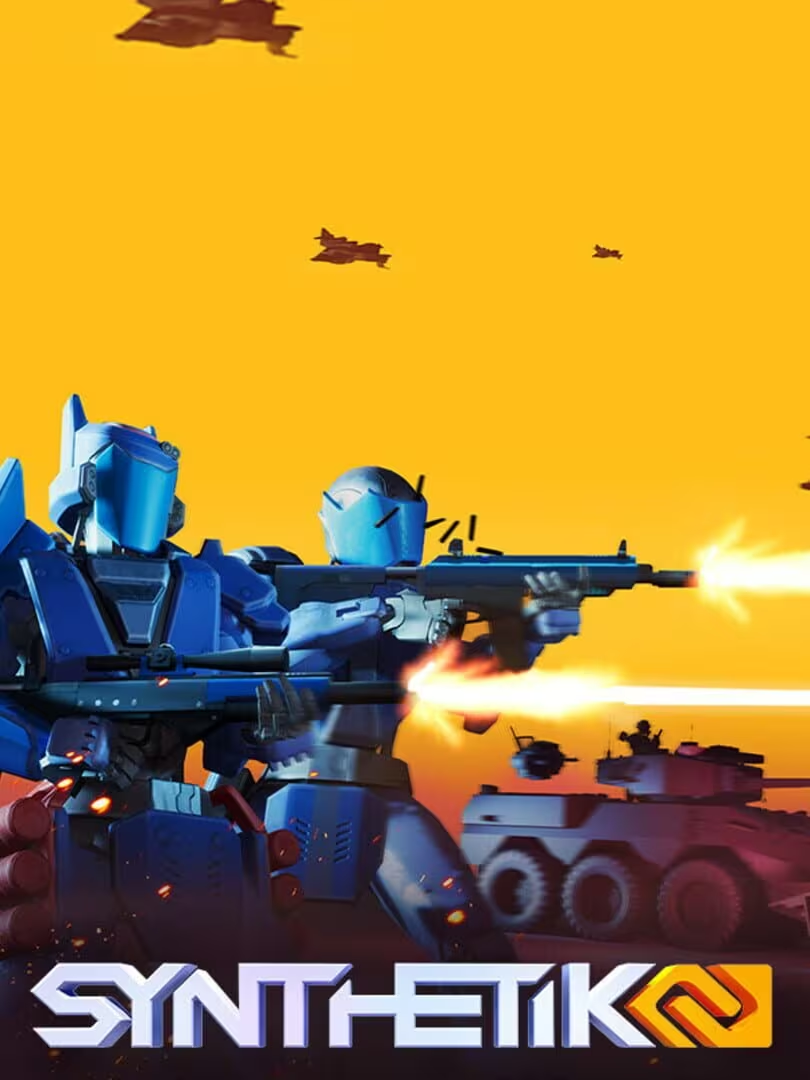
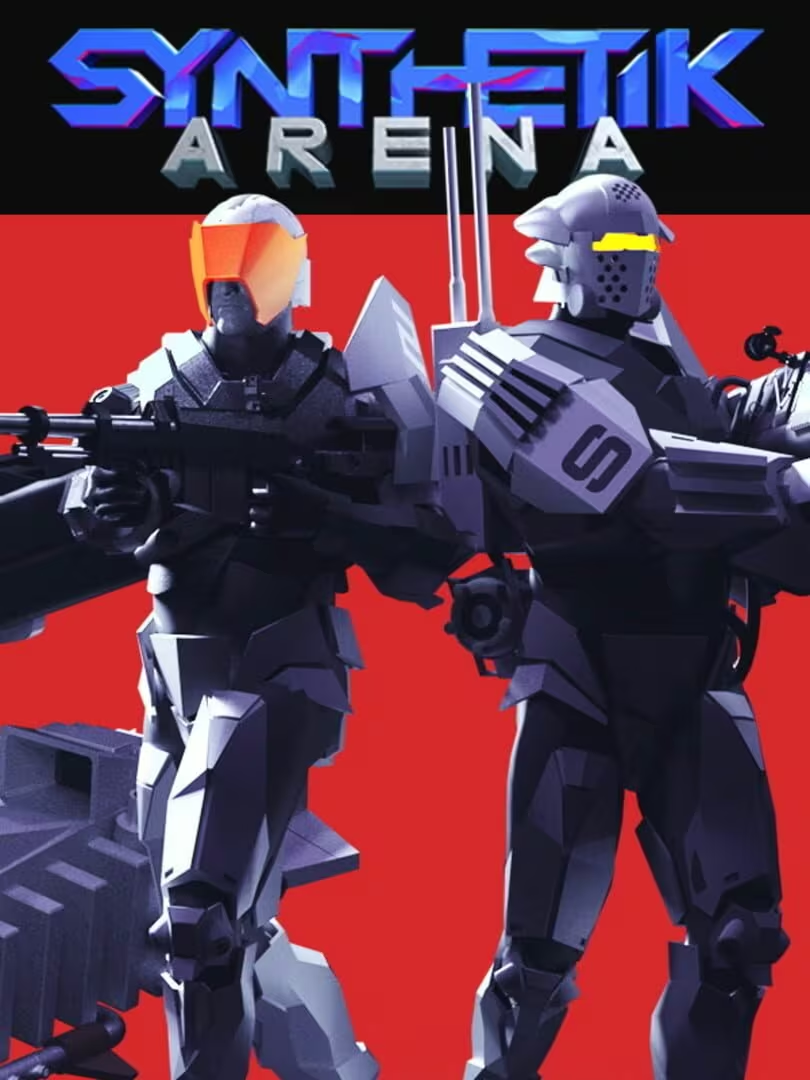
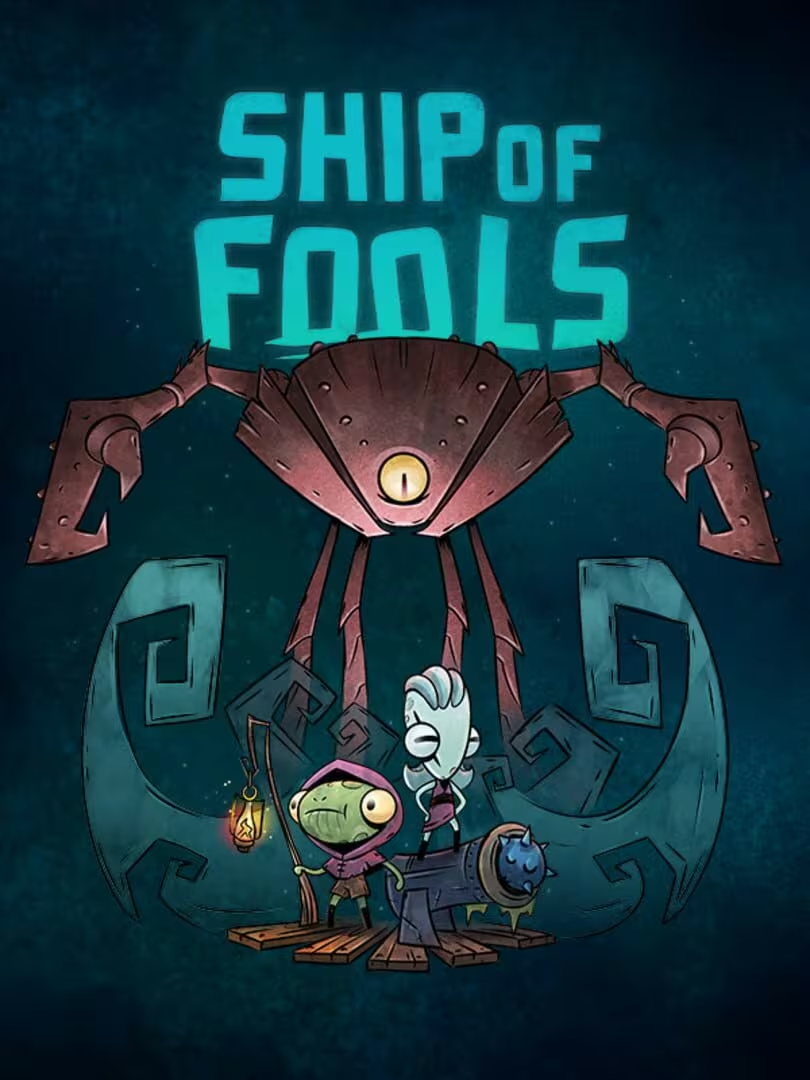
Hidden Gems
Less popular games with surprisingly high similarity
If you liked…
Recommendations by what you enjoyed most
Similarity map
Explore nearby similar games and see why they’re close.
Orcs Must Die! Deathtrap: A very typical example of its motivational profile. Motivations that often define this kind of title include Cooperation, Fellowship, Intimacy, Leadership. Here, the score leans higher than usual among comparable games on Intimacy, Leadership. It leans lower than usual among comparable games on Story.
Why this game works
A motivational profile of the game, with the closest similar game for each player motivation.
-
Autonomy
Game with the same Autonomy vibe
4"Players freely explore multiple paths and make decisions that open new areas; the game encourages experimentation and personal choice rather than fixed routines."
 The Heilwald Loophole
"Players can choose different characters, traps, and upgrade paths freely; the game encourages strategic thinking and adapting to changing conditions rather than following fixed routines."
-
Competence
Game with the same Competence vibe
3"The game is challenging and requires skillful play, character builds, and strategic thinking, rewarding mastery and experimentation."
 Brigand: Oaxaca
"The game offers a challenging experience with skillful trap placement, character abilities, and strategic decisions; some players find it difficult but rewarding."
-
Competition
Game with the same Competition vibe
-3"Focus is primarily on cooperative multiplayer and solo play with no emphasis on ranked modes or leaderboards; players set their own goals and pace."
 Dragon Marked For Death
"Focus is primarily on cooperative and solo play with no mention of ranked modes or leaderboards; players set their own goals and progress at their own pace."
-
Continuation
Game with the same Continuation vibe
4"Many players report long playtimes (40-100+ hours), replayability with many missions, collectibles, and character progression encouraging habitual play."
 SENRAN KAGURA ESTIVAL VERSUS
"Many players report long play sessions and habitual play due to roguelike progression and replayability; some mention hundreds of hours played."
-
Cooperation
Game with the same Cooperation vibe
4"Strong emphasis on co-op multiplayer with up to 4 players; teamwork is encouraged though solo play is possible but harder."
 Hot Brass
"The game is designed around 2-4 player co-op with teamwork emphasized; solo play is possible but less optimal and more challenging."
-
Creativity
Game with the same Creativity vibe
3"Players creatively solve puzzles and discover unconventional ways to bypass traps, though within fixed level designs."
 Eryi's Action
"Players experiment with trap placement, limited barricades, and character builds; the game encourages creative problem solving within constraints."
-
Domination
Game with the same Domination vibe
-4"Interactions are balanced and cooperative; no evidence of trash talk or power imposition."
 Dungeons 4
"Interactions are cooperative and balanced; no evidence of trash talk or exerting power over others."
-
Escapism
Game with the same Escapism vibe
4"Players use the game as a challenging distraction and stress relief through immersive roguelike gameplay."
 Magicite
"Players use the game as a fun distraction and stress relief; the roguelike elements and action provide engaging escapism."
-
Expectation
Game with the same Expectation vibe
-4"Players engage voluntarily out of intrinsic interest and enjoyment; no evidence of obligation or pressure."
 HELLDIVERS™ 2
"Players engage voluntarily out of intrinsic interest and enjoyment; some frustration exists but no evidence of obligation or pressure."
-
Experimenting
Game with the same Experimenting vibe
4"Players frequently try new builds, spells, and modifiers; the game encourages exploration of mechanics and creative experimentation."
 Vellum
"The game encourages trying new traps, strategies, and adapting to random modifiers and threads; players enjoy experimenting with builds."
-
Exploration
Game with the same Exploration vibe
2"Players explore detailed maps with some verticality and secrets, though currently limited to few maps."
 Incursion Red River
"Maps are large with some hidden areas and secrets, but players mostly focus on known choke points; some exploration between waves."
-
Expression
Game with the same Expression vibe
2"Some cosmetic customization exists (skins), but mostly players express themselves through build choices and character selection."
 Ravenswatch
"Some character customization and skins exist, but limited cosmetic options; players express individuality mainly through playstyle."
-
Fantasy
Game with the same Fantasy vibe
4"The game features a fantasy setting with magic, kingdoms, and mythical elements, providing imaginative fiction."
 The Advisor - Episode 1: Royal Pain
"The game features fantasy elements such as orcs, magic, and imaginative characters; it is set in a fictional universe."
-
Fellowship
Game with the same Fellowship vibe
4"Strong community aspect with cooperative multiplayer and active developer communication; social play emphasized."
 This Means Warp
"Strong community aspect with cooperative play, shared goals, and active developer communication; players enjoy social connections."
-
Growth
Game with the same Growth vibe
4"Players develop skills, learn strategies, and unlock cards; progression system supports personal development."
 Crystal Clash
"Players develop skills, learn map layouts, and improve strategies; the progression system supports personal development."
-
Health
Game with the same Health vibe
-4"Sedentary gameplay with no physical activity; players report long sessions but no physical engagement."
 Dead Space™ 2
"The game involves sedentary play with no physical activity; some players mention long sessions but no physical engagement."
-
Idle
Game with the same Idle vibe
-3"Requires active attention and continuous focus during waves."
 Yet Another Zombie Defense
"Requires active attention and continuous engagement during waves; some downtime between waves but overall focus is needed."
-
Intimacy
Game with the same Intimacy vibe
3"Players form friendships and social bonds through community and cooperative play, though not focused on close emotional sharing."
 Last Train Outta' Wormtown
"Players form social bonds through cooperative play and community interaction; some emotional sharing and teamwork."
-
Leadership
Game with the same Leadership vibe
2"Some players take leadership roles in coordinating team actions, but overall cooperation is balanced."
 DEVOUR
"Some players take leadership roles in coordinating barricades and strategies, but overall cooperation is balanced."
-
Progression
Game with the same Progression vibe
4"Character leveling, skill trees, and item upgrades provide a strong sense of progression."
 Yakuza 4 Remastered
"Strong emphasis on accumulating upgrades, traps, and character skill trees; progression is a core motivator."
-
Relaxation
Game with the same Relaxation vibe
2"Game balances challenge and flow; some players find it relaxing while others find it stressful."
 Pixel Cafe
"The game balances challenge and flow; some players find it relaxing while others find it tense and demanding."
-
Sensation
Game with the same Sensation vibe
3"Engaging audiovisual feedback from traps and combat provides sensory stimulation and excitement."
 Meet Your Maker
"Enjoyable visual and auditory effects, satisfying combat feedback, and exciting trap interactions provide sensory stimulation."
-
Status
Game with the same Status vibe
-3"No evidence of social status or popularity systems; focus is on cooperative play rather than recognition."
 Malum
Malum
"No evidence of social status or popularity seeking; players focus on personal or cooperative achievement without social evaluation."
-
Story
Game with the same Story vibe
-3"Minimal narrative; gameplay is wave-based defense without plot or character interaction."
 Beach Invasion 1944
"Minimal narrative or story elements; gameplay is focused on wave defense and roguelike progression rather than plot."
-
Strategy
Game with the same Strategy vibe
4"High mental challenge with complex problem solving, resource management, and strategic planning required."
 Hollywood Animal
"High mental challenge with planning trap placement, managing resources, and adapting to modifiers; strategic thinking is essential."
-
Thrill
Game with the same Thrill vibe
3"Players enjoy suspense and tension from waves of enemies and survival modes with relief upon success."
 Iron Brigade
"Players enjoy suspense and tension from waves and bosses; relief and excitement follow successful defenses."
-
Value
Game with the same Value vibe
4"Players perceive good value for time and money, with many hours of engaging gameplay."
 Startup Company
"Players perceive good value for money and time invested; many report hundreds of hours of enjoyable gameplay."
-
Violence
Game with the same Violence vibe
3"Combat-focused gameplay involving killing orcs and using weapons."
 ORCS
ORCS
"Combat and destruction of orcs is central to gameplay; players enjoy violent fantasy action."
-
Survival
Game with the same Survival vibe
3"Players manage resources and defend against threats; survival is a key gameplay aspect."
 Age of Mythology: Extended Edition
"Players must avoid failure by managing threats and resources; survival is a key gameplay element."
Last update: 01/06/2026