Pixel Puzzles: Japan similar games & best alternatives
Should you play it?
Pixel Puzzles: Japan combines traditional jigsaw puzzle style gameplay with light video-game interactivity.
What works
- Relaxing japanese-themed puzzles and music
- Progressive difficulty with unique puzzle piece shapes
- Pleasant visuals and calming atmosphere
- Good value especially on sale
- Single-player focused for casual play
Things to keep in mind
- No save feature for puzzles in progress
- Difficulty selecting specific puzzle pieces due to floating pieces
- Limited number of puzzles
- Lack of multiplayer or social features
- Repetitive music track
What to play next
Similar games, hidden gems, and fresh directions from this game.
Top picks
Games that feel the closest overall



Hidden Gems
Less popular games with surprisingly high similarity
If you liked…
Recommendations by what you enjoyed most
Similarity map
Explore nearby similar games and see why they’re close.
Pixel Puzzles: Japan: Less representative of its motivational profile, with noticeable differences. Motivations that often define this kind of title include Violence, Fantasy, Story, Thrill. It leans lower than usual among comparable games on Experimenting, Expression, Exploration.
Why this game works
A motivational profile of the game, with the closest similar game for each player motivation.
-
Autonomy
Game with the same Autonomy vibe
3"Players direct their own puzzle solving actions and choose which pieces to place, showing control over decisions."
 Furry Feet
"Players freely choose puzzles to solve and decide how to approach piece placement, but within the fixed jigsaw puzzle structure."
-
Competence
Game with the same Competence vibe
2"Puzzles are generally simple and moderate in difficulty, providing some challenge but not highly demanding skill."
 Small Radios Big Televisions
"Puzzles increase in difficulty and require attention and patience, but mechanics are simple and skill demands moderate."
-
Competition
Game with the same Competition vibe
-4"No competitive or ranked modes; focus is on individual puzzle solving at personal pace."
 Zen Chess: Mate in One
"No competitive or ranked modes; focus is on individual puzzle completion at own pace."
-
Continuation
Game with the same Continuation vibe
1"Players report spending many hours completing puzzles, with save features encouraging long-term engagement."
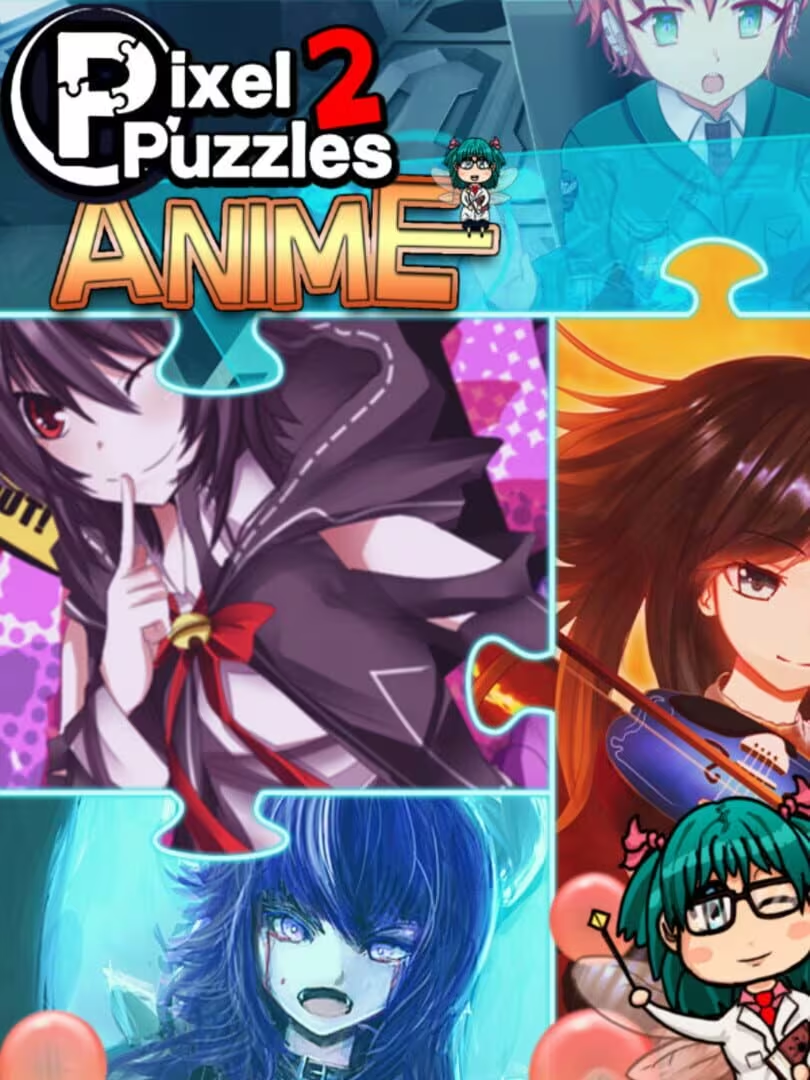 Pixel Puzzles 2: Anime
"Players spend hours completing puzzles but some find frustration with piece selection and lack of save feature may reduce long-term engagement."
-
Cooperation
Game with the same Cooperation vibe
-5"Single-player experience with no multiplayer or cooperative elements."
 Blasphemous
"Single-player experience with no multiplayer or cooperative elements."
-
Creativity
Game with the same Creativity vibe
1"Limited creativity in gameplay; players solve puzzles but do not create or modify content."
 Shiver
"Some creativity in puzzle piece shapes and visual themes, but players follow predefined puzzles without creation or modification."
-
Domination
Game with the same Domination vibe
-5"No social dominance or power dynamics; purely individual puzzle solving."
 The Room Three
"No social dominance or power dynamics; purely individual puzzle solving."
-
Escapism
Game with the same Escapism vibe
4"The relaxing music, beautiful visuals, and immersive puzzle solving provide a calming escape from real life."
 The Artisan of Glimmith
"Relaxing Japanese-themed puzzles and music provide a calming escape from real life."
-
Expectation
Game with the same Expectation vibe
-4"Players engage voluntarily for relaxation and enjoyment, not out of obligation."
 Glass Masquerade 3: Honeylines
"Players engage voluntarily for relaxation and enjoyment, not out of obligation."
-
Experimenting
Game with the same Experimenting vibe
-2"Gameplay involves following puzzle-solving routines with limited novelty or mechanic experimentation."
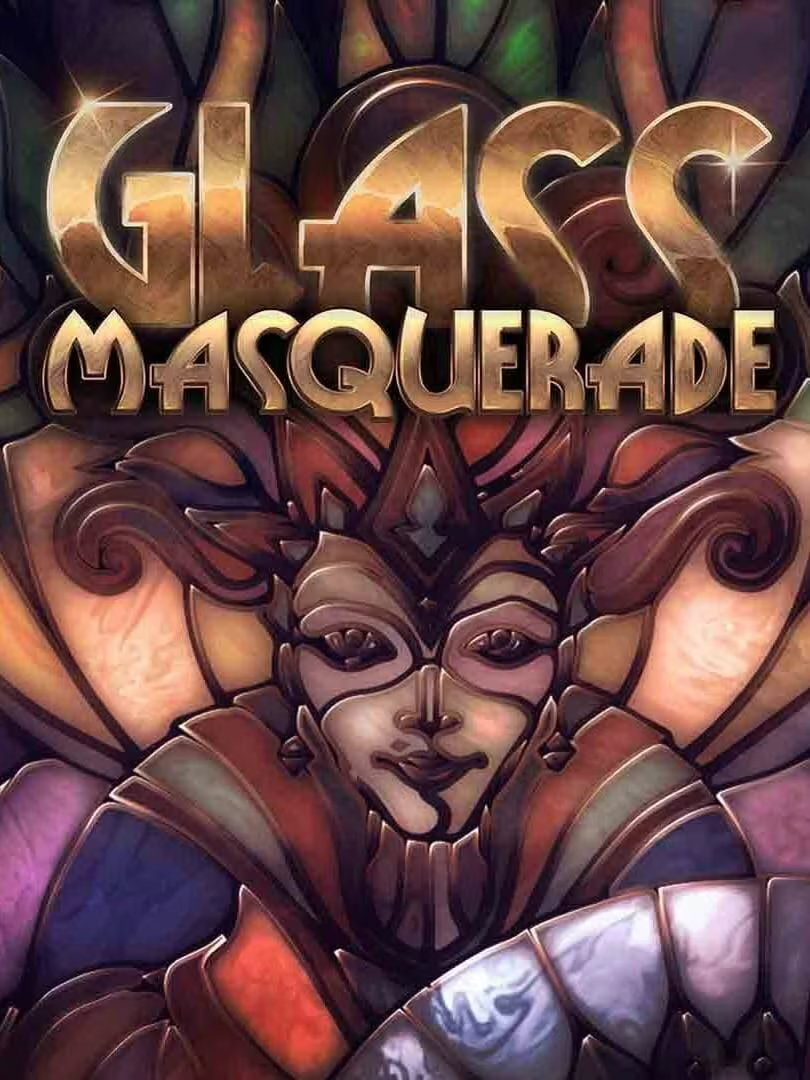 Glass Masquerade
"Gameplay involves established jigsaw puzzle routines with little novelty exploration."
-
Exploration
Game with the same Exploration vibe
-3"Puzzle images are fixed and known; no discovery of new areas or secrets."
Glass Masquerade 3: Honeylines
"Puzzle images are fixed and known; no exploration of new areas or secrets."
-
Expression
Game with the same Expression vibe
-3"Limited customization; players cannot modify characters or environments significantly."
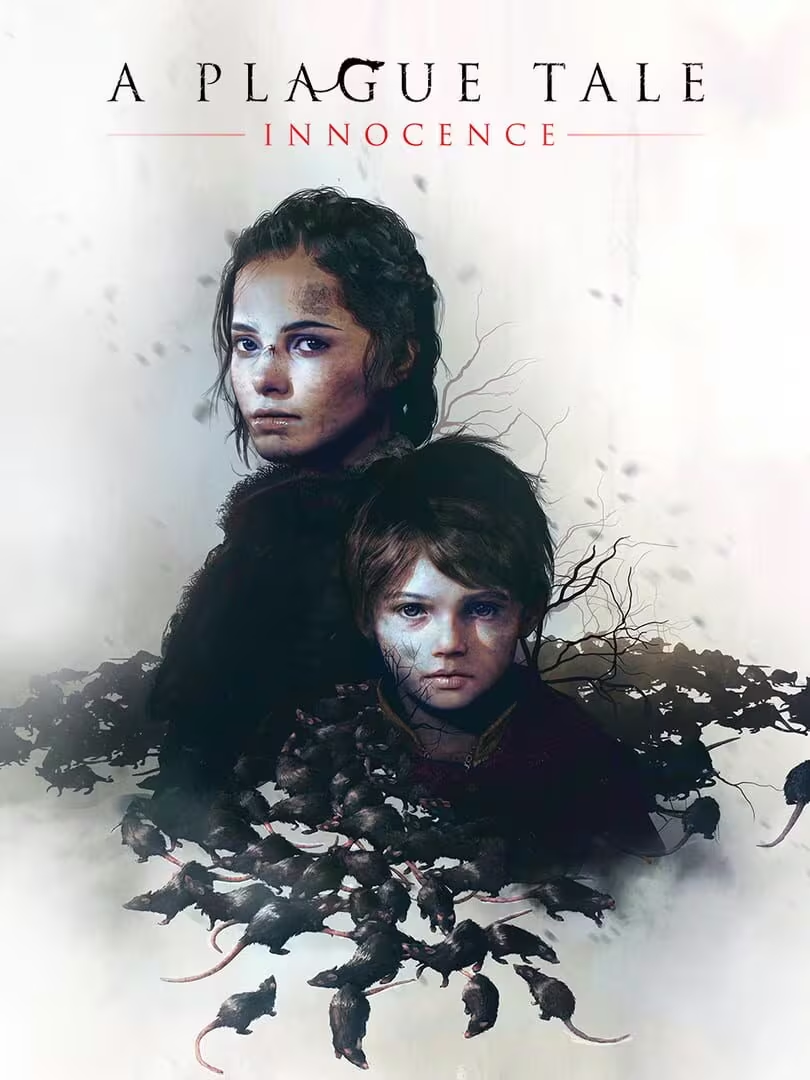 A Plague Tale: Innocence
"Limited customization; players do not modify characters or environments."
-
Fantasy
Game with the same Fantasy vibe
-4"Strong emphasis on historical realism and authentic WWII setting; no fantasy or fictional elements."
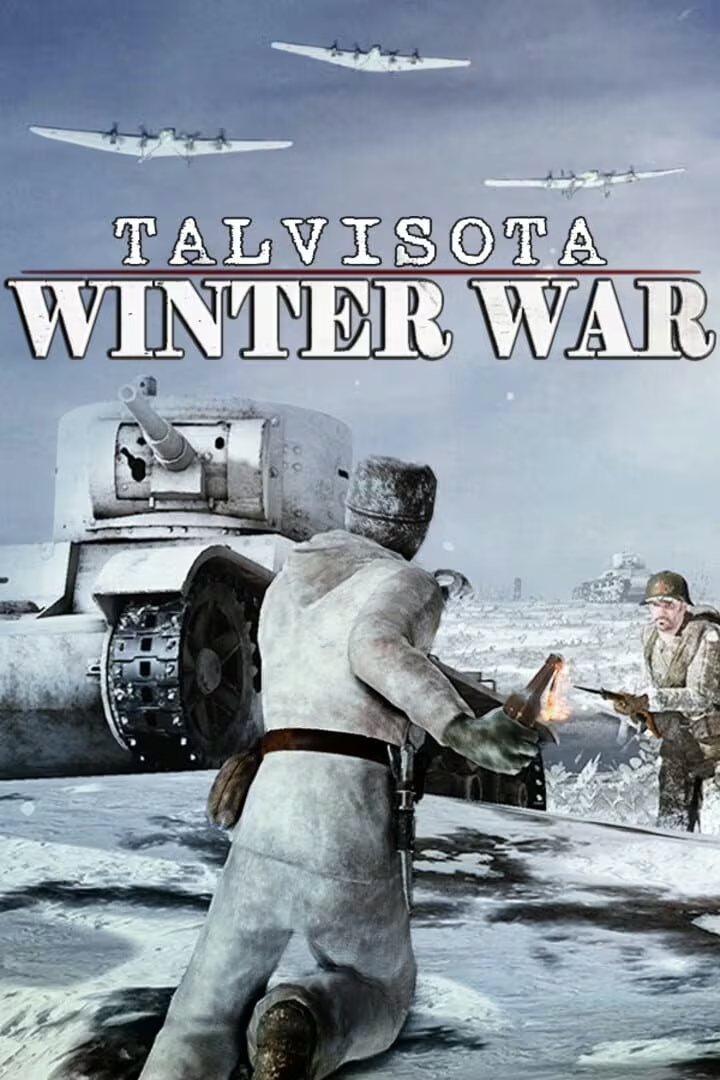 Talvisota - Winter War
"Realistic Japanese landscapes and cultural imagery; no fantasy or fictional elements."
-
Fellowship
Game with the same Fellowship vibe
-5"No social or community features; solo play only."
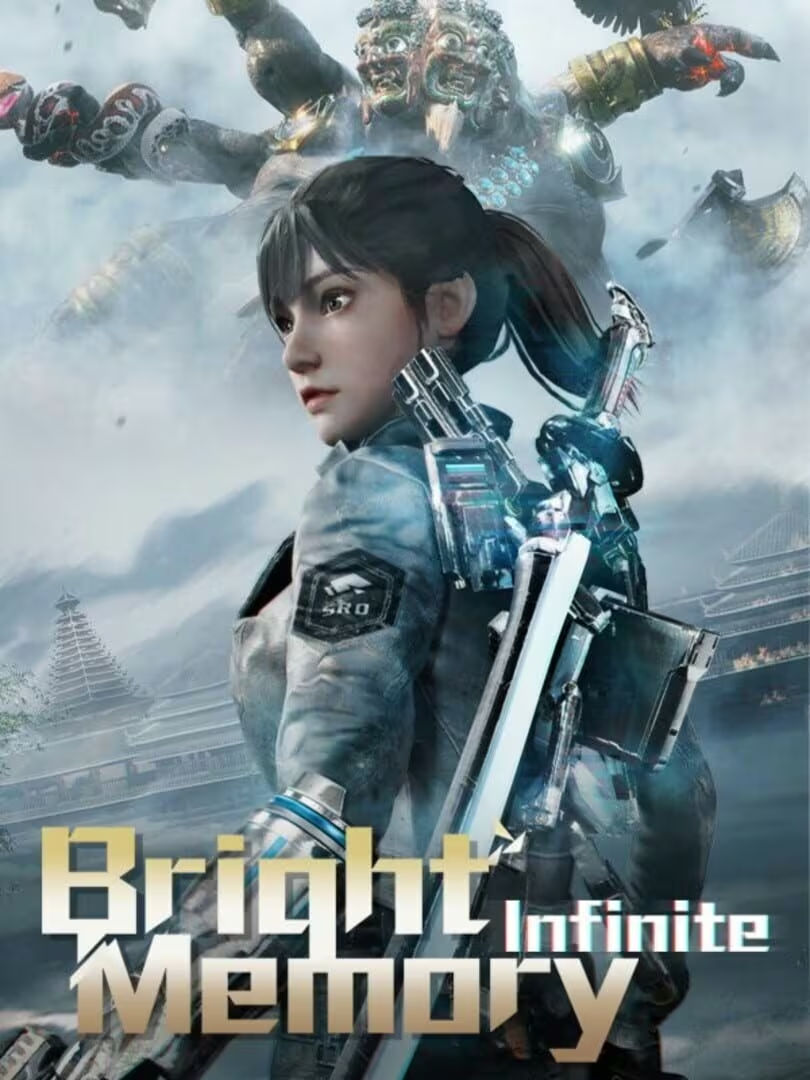 Bright Memory: Infinite
"No social or community features; solo play only."
-
Growth
Game with the same Growth vibe
2"Players develop problem-solving skills and progress through increasingly complex puzzles."
 Wallace & Gromit’s Grand Adventures
"Players develop puzzle-solving skills and progress through increasingly difficult puzzles."
-
Health
Game with the same Health vibe
-5"Sedentary gameplay with no physical activity."
 Senua’s Saga: Hellblade II
"Sedentary gameplay with no physical activity."
-
Idle
Game with the same Idle vibe
-3"Requires focused attention to place pieces; not designed for background or idle play."
 Pixel Puzzles Traditional Jigsaw Puzzles
"Requires focused attention to place pieces; not suitable for background or idle play."
-
Intimacy
Game with the same Intimacy vibe
-5"No social interactions or relationship building."
 The House of Da Vinci
"No social interactions or relationship building."
-
Leadership
Game with the same Leadership vibe
-5"No leadership or group management roles."
 Boxes: Lost Fragments
"No leadership or group management roles."
-
Progression
Game with the same Progression vibe
3"Progression through unlocking characters, skins, and leveling."
 Brawlhalla
"Progression through unlocking puzzles and leveling up the monk avatar."
-
Relaxation
Game with the same Relaxation vibe
4"Game is praised for its calming music, gentle gameplay, and relaxing atmosphere."
 TurnOn
"Game is praised for its relaxing atmosphere, music, and calming gameplay."
-
Sensation
Game with the same Sensation vibe
1"Pleasant visuals and sounds provide mild sensory enjoyment but not intense stimulation."
 Faerie Solitaire
"Pleasant visuals and ambient sounds provide mild sensory stimulation."
-
Status
Game with the same Status vibe
-5"No social recognition or status systems."
 Alan Wake
"No social recognition or status systems."
-
Story
Game with the same Story vibe
-2"Minimal narrative and worldbuilding; story is light and mostly thematic flavor."
 LONESTAR
"Minimal narrative; light thematic framing with monk avatar but no plot."
-
Strategy
Game with the same Strategy vibe
1"Some puzzle solving and planning in assembling parts, but largely straightforward and guided."
 Mech Builder
"Some planning and problem solving in puzzle assembly, but straightforward mechanics."
-
Thrill
Game with the same Thrill vibe
-3"Low suspense or risk; calm and predictable gameplay."
 100 hidden dogs
"Low risk and suspense; calm and predictable gameplay."
-
Value
Game with the same Value vibe
3"Good value especially on sale; offers many hours of gameplay and variety for price."
 Insane 2
"Good value especially on sale; provides hours of relaxing gameplay."
-
Violence
Game with the same Violence vibe
-5"No violence; gameplay centers on constructive puzzle assembly."
 Wilmot Works It Out
"No violence; constructive puzzle assembly."
-
Survival
Game with the same Survival vibe
-5"No survival or threat elements; stable and safe gameplay environment."
 House Flipper
"No survival or threat elements; stable and safe gameplay environment."
Last update: 01/06/2026