Art Of Gravity similar games & best alternatives
Should you play it?
Art Of Gravity is a voxel/physics based puzzle game, revolving around the theme of destroying abstract figures, which results in mesmerizing displays of dance of gravity.
What works
- Relaxing and soothing gameplay
- Satisfying physics and destruction effects
- Good value for price
- Gradual difficulty curve
- Short and accessible puzzle experience
Things to keep in mind
- Short game length
- Some physics unpredictability
- Lack of level selection convenience
- Minimal replay value
- No multiplayer or social features
What to play next
Similar games, hidden gems, and fresh directions from this game.
Top picks
Games that feel the closest overall


Hidden Gems
Less popular games with surprisingly high similarity
If you liked…
Recommendations by what you enjoyed most
Similarity map
Explore nearby similar games and see why they’re close.
Art Of Gravity: Broadly representative of its motivational profile, with a few distinct shifts. Motivations that often define this kind of title include Violence, Fantasy, Story, Thrill. Here, the score leans higher than usual among comparable games on Violence. It leans lower than usual among comparable games on Expression, Exploration.
Why this game works
A motivational profile of the game, with the closest similar game for each player motivation.
-
Autonomy
Game with the same Autonomy vibe
4"Players freely explore puzzles and decide how to approach solutions without pressure or forced routines."
 HER TREES : PUZZLE DREAM
"Players freely choose how to shoot balls and experiment with mechanics to solve puzzles."
-
Competence
Game with the same Competence vibe
3"Puzzles provide a moderate challenge with a learning curve, requiring skillful use of mechanics and problem solving."
 Q.U.B.E. 2
"Puzzles provide a moderate challenge with a learning curve and some skill in planning shots."
-
Competition
Game with the same Competition vibe
-4"Focus is on individual puzzle solving at personal pace without comparison or ranked modes."
 Little Problems: A Cozy Detective Game
"Focus is on personal puzzle solving at own pace without comparison or ranked modes."
-
Continuation
Game with the same Continuation vibe
2"Players report replaying for achievements and special stages; however, game is short and some find it less engaging over time."
 Sonic the Hedgehog 4 - Episode II
"Some players report replaying for achievements and enjoying the satisfying physics, but overall short playtime."
-
Cooperation
Game with the same Cooperation vibe
-5"Single-player puzzle game with no multiplayer or cooperative elements."
 Freeways
"Single-player puzzle game with no multiplayer or cooperative elements."
-
Creativity
Game with the same Creativity vibe
2"Players experiment with different paths and strategies, but within fixed puzzle structures."
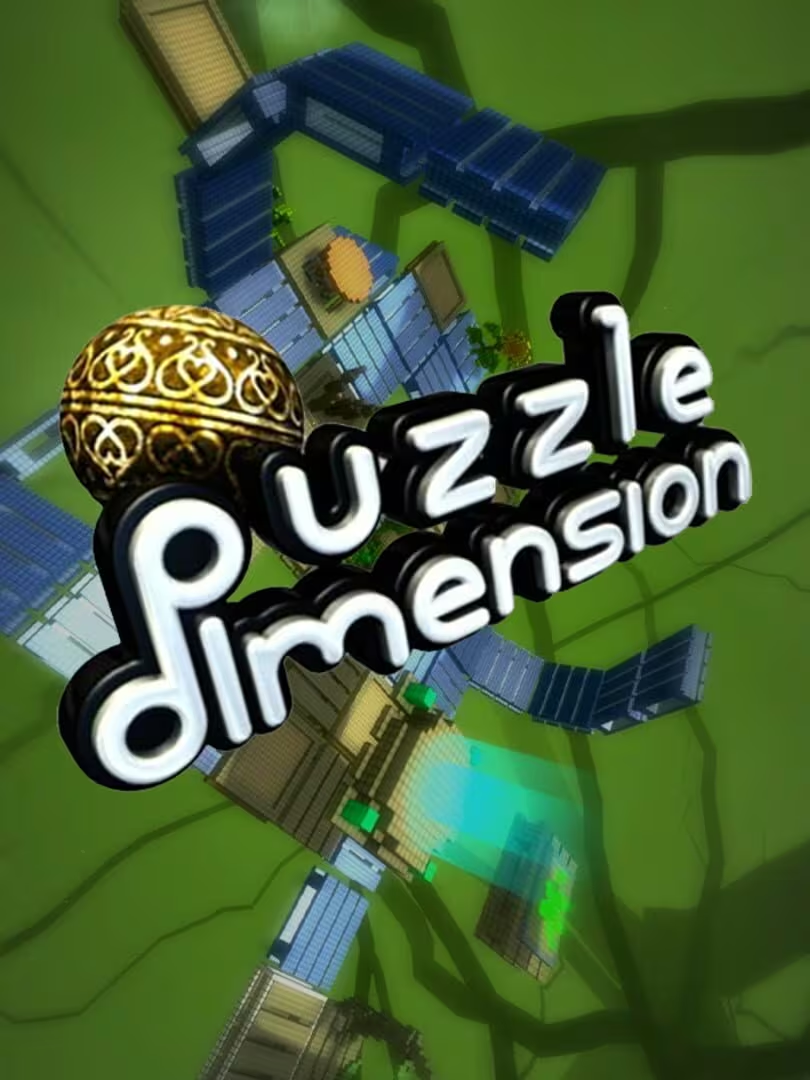 Puzzle Dimension
"Players experiment with ball shots and chain reactions but within fixed puzzle structures."
-
Domination
Game with the same Domination vibe
-5"No social dominance or power over others; purely individual puzzle solving."
Q.U.B.E. 2
"No social dominance or power over others; purely individual puzzle solving."
-
Escapism
Game with the same Escapism vibe
3"Relaxing music and simple gameplay provide a calming distraction and stress relief."
 Mind Spheres
"Many reviews mention relaxation and stress relief through gameplay and soothing music."
-
Expectation
Game with the same Expectation vibe
-4"Players engage voluntarily for enjoyment and mental challenge, not out of obligation."
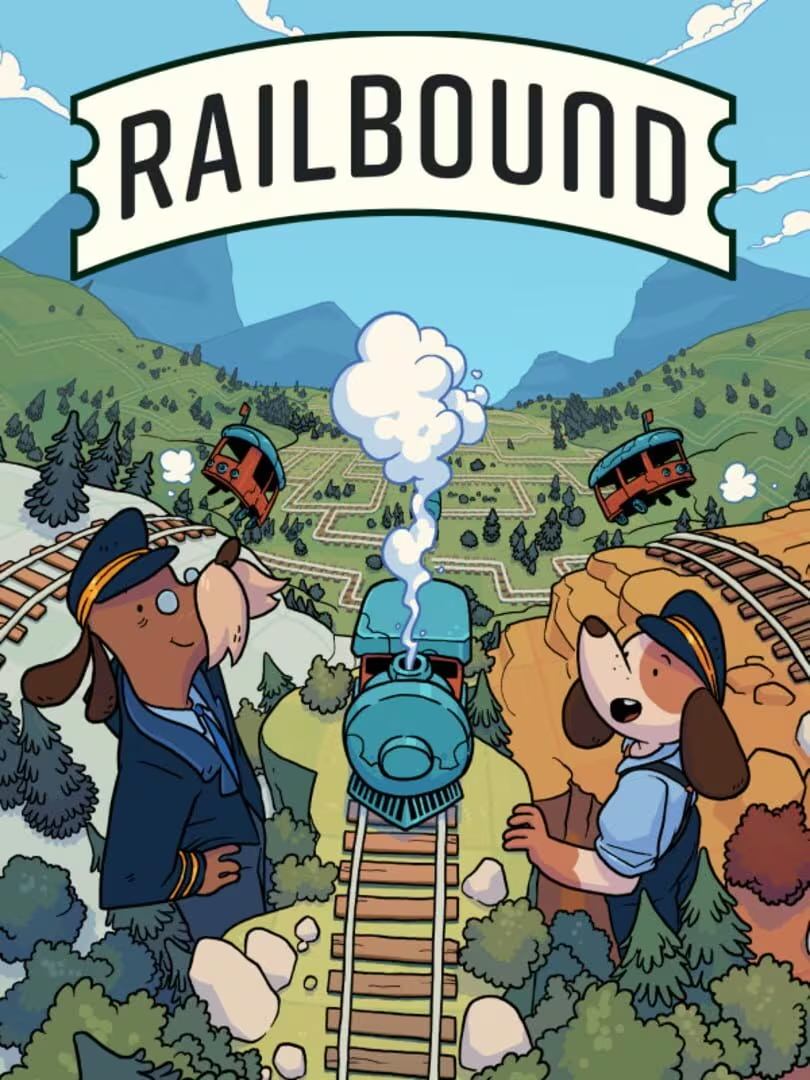 Railbound
"Players engage voluntarily for enjoyment and mental challenge, not out of obligation."
-
Experimenting
Game with the same Experimenting vibe
4"Game encourages trying new shots, spins, and strategies to improve and master gameplay."
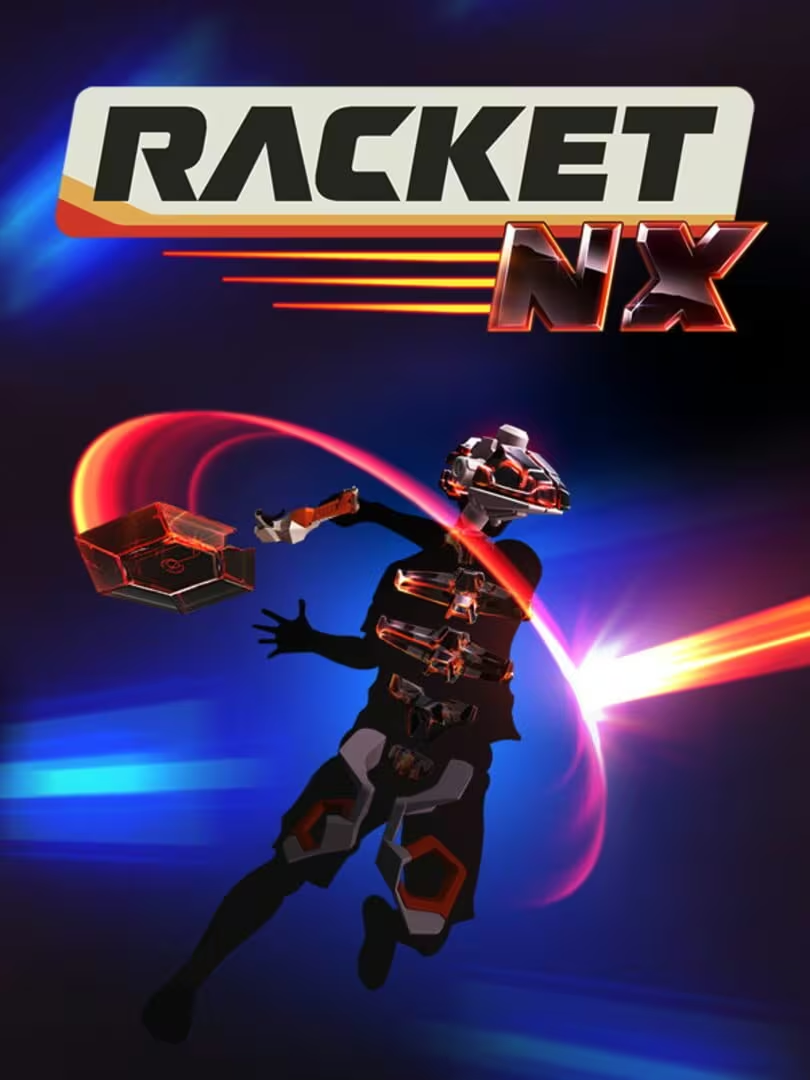 Racket: Nx
"Game encourages trying different shots and strategies to solve puzzles and discover mechanics."
-
Exploration
Game with the same Exploration vibe
-3"Puzzle levels are fixed and familiar; no open exploration or discovery of new areas."
 qop
qop
"Puzzle levels are fixed and known; no open exploration or discovery of new areas."
-
Expression
Game with the same Expression vibe
-4"No character or environment customization; players use standard presentation."
 We Were Here
"No character or environment customization; gameplay uses standardized presentation."
-
Fantasy
Game with the same Fantasy vibe
-3"Realistic physics-based puzzles with minimal fictional or imaginative narrative elements."
Mind Spheres
"Realistic physics-based puzzle gameplay without fantasy or fictional narrative elements."
-
Fellowship
Game with the same Fellowship vibe
-5"No social or community features; strictly solo play."
 Finding Frankie
"No social or community features; strictly solo play."
-
Growth
Game with the same Growth vibe
3"Players develop puzzle-solving skills and learn new mechanics progressively."
 Machinika: Museum
"Players develop puzzle-solving skills and learn new mechanics progressively."
-
Health
Game with the same Health vibe
-5"Sedentary gameplay with no physical activity or health-related features."
 DRAGON BALL Z: KAKAROT
"Sedentary gameplay with no physical activity or health-related features."
-
Idle
Game with the same Idle vibe
-3"Requires focused attention to solve puzzles; not designed for idle or background play."
 Lost in Play
"Requires focused attention to solve puzzles; not designed for idle or background play."
-
Intimacy
Game with the same Intimacy vibe
-5"No social interactions or relationship building."
 Depth Hunter 2: Deep Dive
"No social interactions or relationship building."
-
Leadership
Game with the same Leadership vibe
-5"No leadership or group management roles."
 Getting Over It with Bennett Foddy
"No leadership or group management roles."
-
Progression
Game with the same Progression vibe
2"Players progress through levels and unlock achievements, but no item collection or upgrades."
 Bridge Constructor Medieval
"Players progress through levels and unlock achievements, but no item collection or upgrades."
-
Relaxation
Game with the same Relaxation vibe
4"Many players find the game soothing and relaxing with pleasant visuals and music."
 Supipara - Chapter 1 Spring Has Come!
"Many players find the game relaxing and soothing with satisfying visuals and music."
-
Sensation
Game with the same Sensation vibe
3"Visual and auditory feedback from physics and destruction provide stimulating sensory enjoyment."
 Brick Rigs
"Visual and auditory feedback from physics and destruction effects provide sensory enjoyment."
-
Status
Game with the same Status vibe
-5"No social recognition or status systems."
 Alan Wake
"No social recognition or status systems."
-
Story
Game with the same Story vibe
-5"No narrative or story elements; pure puzzle gameplay."
 Sudoku Universe / 数独宇宙
"No narrative or story elements; pure puzzle gameplay."
-
Strategy
Game with the same Strategy vibe
3"Requires logical thinking, planning, and problem solving to complete puzzles efficiently."
 Escape Academy
"Requires logical thinking and planning shots to solve puzzles efficiently."
-
Thrill
Game with the same Thrill vibe
-3"Low suspense or risk; gameplay is calm and predictable."
 Polarity
"Low suspense or risk; gameplay is calm and predictable."
-
Value
Game with the same Value vibe
4"Highly praised for good value given low price and amount of engaging gameplay."
 pyramida
"Highly praised for good value given low price and satisfying gameplay."
-
Violence
Game with the same Violence vibe
2"Explosions and destruction of blocks are core mechanics, but cartoonish and non-graphic."
 Zup!
Zup!
"Destruction of blocks is central mechanic but non-violent and abstract."
-
Survival
Game with the same Survival vibe
-5"No survival or threat avoidance elements."
 Aim Hero
"No survival or threat avoidance elements."
Last update: 01/06/2026