[Chilla's Art] Aka Manto | 赤マント similar games & best alternatives
Should you play it?
Aka Manto (赤マント Red Cloak), aka Red Cape or Red Mantle, is a Japanese urban legend about a masked spirit who wears a red cloak, and who appears to people using public or school restrooms.
What works
- Intense horror atmosphere
- Challenging puzzles and survival mechanics
- Engaging sound design
- Retro ps1-style graphics
- Low price with good content
Things to keep in mind
- Permadeath can be frustrating
- Confusing map layout
- Limited inventory space
- Some ai and bug issues
- Lack of save points
What to play next
Similar games, hidden gems, and fresh directions from this game.
Top picks
Games that feel the closest overall

Hidden Gems
Less popular games with surprisingly high similarity
If you liked…
Recommendations by what you enjoyed most
Similarity map
Explore nearby similar games and see why they’re close.
[Chilla's Art] Aka Manto | 赤マント: Broadly representative of its motivational profile, with a few distinct shifts. Motivations that often define this kind of title include Expression, Fellowship, Cooperation, Status. Here, the score leans higher than usual among comparable games on Survival, Exploration. It leans lower than usual among comparable games on Relaxation.
Why this game works
A motivational profile of the game, with the closest similar game for each player motivation.
-
Autonomy
Game with the same Autonomy vibe
3"Players have control over puzzle solving and exploration within a narrative structure, with some time-sensitive decisions and multiple item combinations."
 The Drifter
"Players make many decisions about item management and exploration, but the game has fixed map and puzzle structure."
-
Competence
Game with the same Competence vibe
4"Game offers challenging puzzles and survival mechanics with skill-based progression and learning curve."
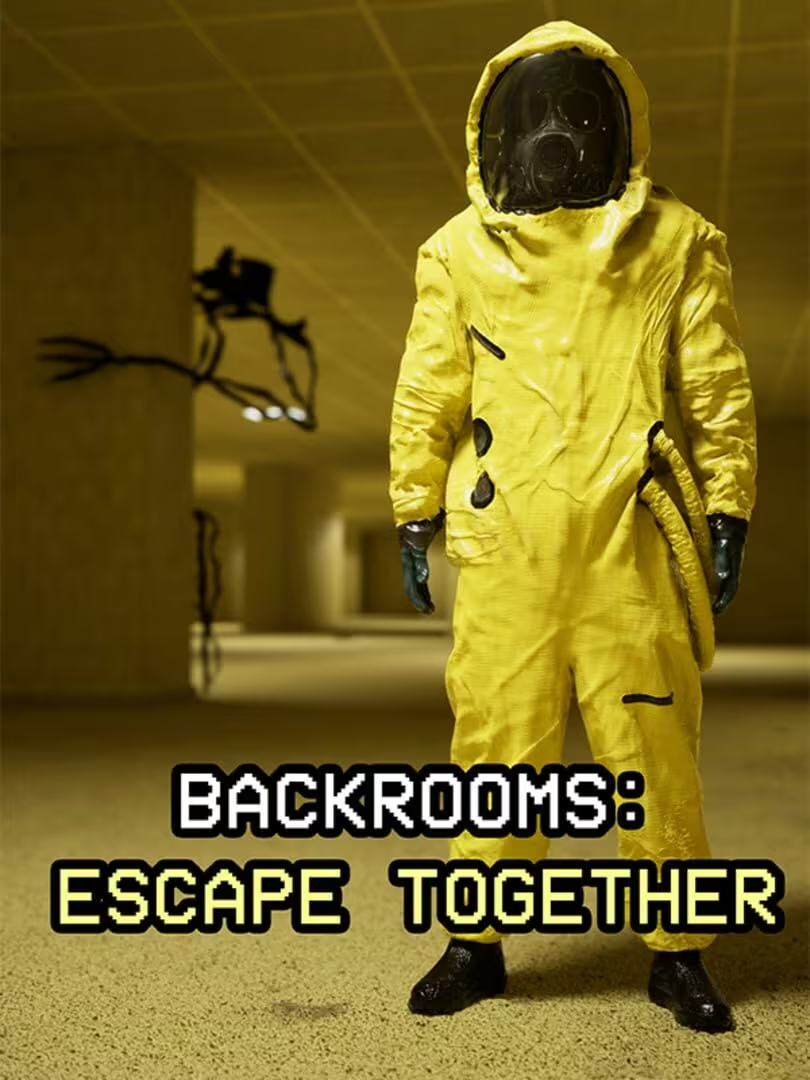 Backrooms: Escape Together
"The game is challenging with puzzles and survival mechanics requiring skill and learning."
-
Competition
Game with the same Competition vibe
-4"Focus is on personal survival and puzzle completion without direct player-vs-player competition or leaderboards."
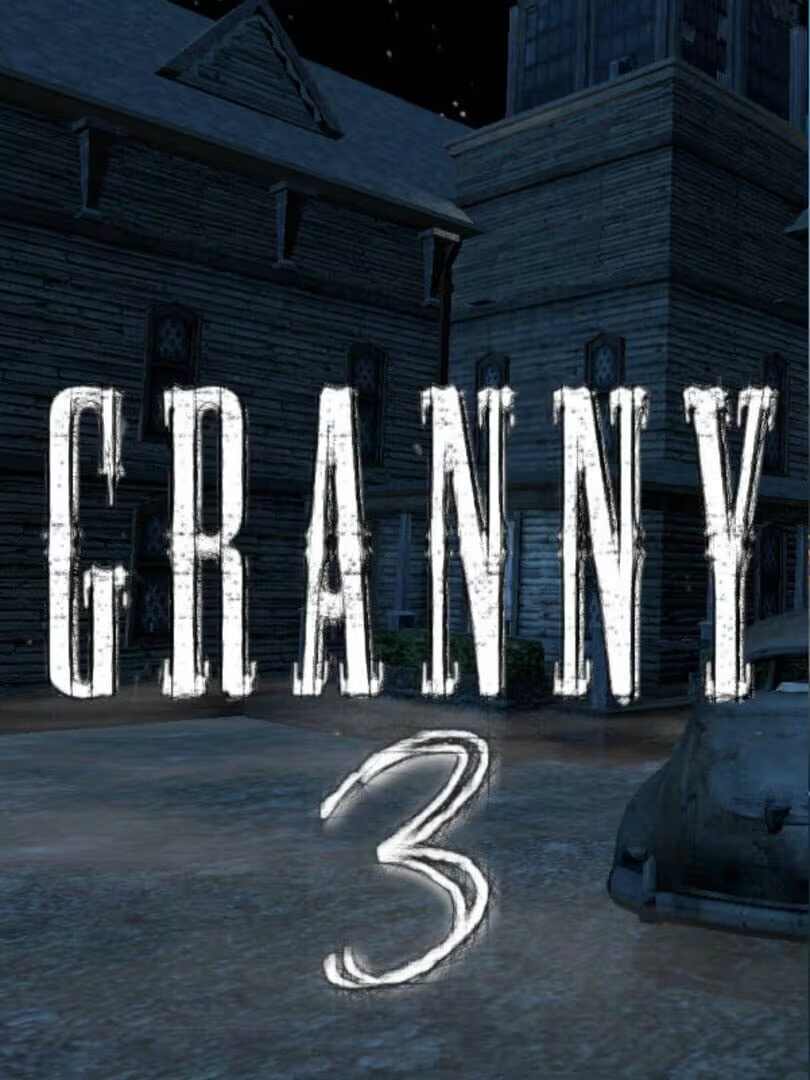 Granny 3
"Focus is on individual survival and puzzle solving without direct player-vs-player competition."
-
Continuation
Game with the same Continuation vibe
3"Players report long sessions and habitual play, with some frustration but also repeated attempts to improve."
 Rhythia
"Players report repeated attempts and long play sessions despite frustration and permadeath."
-
Cooperation
Game with the same Cooperation vibe
-5"Single-player experience with no cooperative elements."
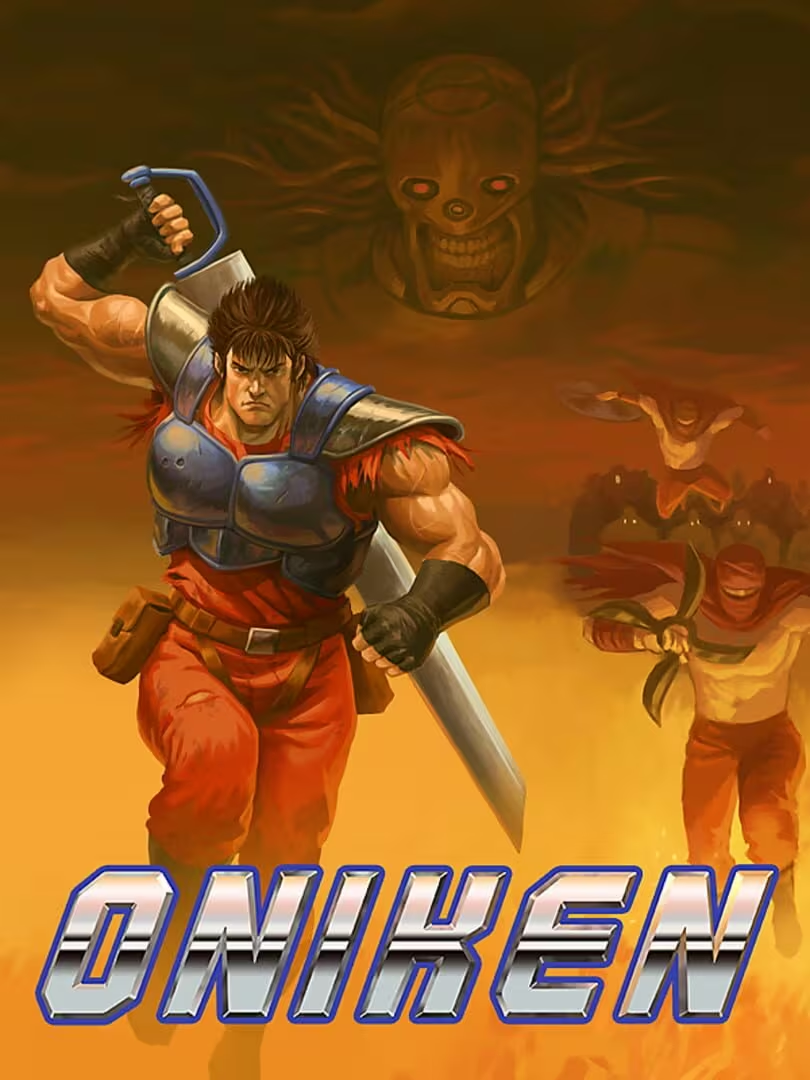 Oniken: Unstoppable Edition
"Single-player experience with no cooperative elements."
-
Creativity
Game with the same Creativity vibe
1"Limited creativity in gameplay; players can experiment with strategies but within fixed game mechanics and environments."
 Five Nights at Freddy's 3
"Limited creativity in gameplay; players follow fixed puzzles and item placements but can experiment with strategies."
-
Domination
Game with the same Domination vibe
-5"No social dominance or power over others; purely solo experience."
 SteamWorld Dig
"No social dominance or power over others; purely solo experience."
-
Escapism
Game with the same Escapism vibe
4"Strong immersion in a horror atmosphere provides escape from reality and intense emotional experience."
 Shattered Lights
"Strong immersion in horror atmosphere provides escape from reality."
-
Expectation
Game with the same Expectation vibe
-4"Players engage voluntarily for intrinsic interest and challenge, not due to obligation."
 Haydee
"Players engage voluntarily for intrinsic interest and challenge, not obligation."
-
Experimenting
Game with the same Experimenting vibe
3"Players experiment with crafting, navigation, and resource use to survive."
 Near Death
"Players explore map and experiment with item usage and strategies to survive."
-
Exploration
Game with the same Exploration vibe
4"Players explore a large, detailed school environment with hidden areas, collectibles, and secrets."
 Cosmonious High
"Exploration of a large, confusing school environment is a core gameplay element."
-
Expression
Game with the same Expression vibe
-5"No character customization or self-expression features."
 Poop Clicker
"No character customization or self-expression features."
-
Fantasy
Game with the same Fantasy vibe
4"Game is based on Japanese urban legends and supernatural themes, creating an imaginative and eerie fictional experience."
![Capsule for [Chilla's Art] The Ghost Train | 幽霊列車](https://d2eatnf6sujjgc.cloudfront.net/gameaton-data/chilla-s-art-the-ghost-train/cover/chilla-s-art-the-ghost-train.avif) [Chilla's Art] The Ghost Train | 幽霊列車
[Chilla's Art] The Ghost Train | 幽霊列車
"Engages players in supernatural horror fiction based on Japanese urban legend."
-
Fellowship
Game with the same Fellowship vibe
-5"No social or community features; solo play only."
 Bright Memory: Infinite
"No social or community features; solo play only."
-
Growth
Game with the same Growth vibe
4"Players learn map, enemy patterns, and puzzle solutions through repeated play and trial-and-error."
 Clock Tower: Rewind
"Players learn map, enemy behavior, and puzzle solutions over repeated attempts."
-
Health
Game with the same Health vibe
-5"Sedentary gameplay with no physical activity involved."
 World of Tanks Blitz
"Sedentary gameplay with no physical activity involved."
-
Idle
Game with the same Idle vibe
-4"Requires continuous attention and focus due to tense atmosphere and constant threats."
 Outlast
"Requires continuous attention and focus due to tense atmosphere and permadeath."
-
Intimacy
Game with the same Intimacy vibe
-5"No social or emotional relationship building."
 Five Nights at Freddy's 2
"No social or emotional relationship building."
-
Leadership
Game with the same Leadership vibe
-5"No leadership or group management elements."
 High On Life
"No leadership or group management elements."
-
Progression
Game with the same Progression vibe
3"Players collect items, weapons, and perks, and progress through levels and unlocks."
 BIGFOOT
"Players collect items and unlock areas, but permadeath resets progress."
-
Relaxation
Game with the same Relaxation vibe
-4"Sustained tension and stress dominate the experience; not designed for relaxation."
 Alien: Isolation
"High tension and stress dominate the experience; not relaxing."
-
Sensation
Game with the same Sensation vibe
4"Strong sensory stimulation through sound design, visuals, and jump scares."
 September 7th
"Strong sensory stimulation from sound design, jump scares, and visual effects."
-
Status
Game with the same Status vibe
-5"No social recognition or status systems."
 Alan Wake
"No social recognition or status systems."
-
Story
Game with the same Story vibe
3"Narrative delivered through environmental storytelling and notes, based on real urban legends."
![Capsule for [Chilla's Art] Inunaki Tunnel | 犬鳴トンネル](https://d2eatnf6sujjgc.cloudfront.net/gameaton-data/chilla-s-art-inunaki-tunnel/cover/chilla-s-art-inunaki-tunnel.avif) [Chilla's Art] Inunaki Tunnel | 犬鳴トンネル
[Chilla's Art] Inunaki Tunnel | 犬鳴トンネル
"Narrative based on Japanese urban legend with environmental storytelling and lore."
-
Strategy
Game with the same Strategy vibe
4"Requires tactical planning, memorization of enemy patterns, and strategic use of resources."
 Hotline Miami
"Requires planning item usage, route memorization, and timing to avoid enemy."
-
Thrill
Game with the same Thrill vibe
5"High suspense and thrill from jump scares, tension, and unpredictable threats."
 Scrutinized
"High suspense and adrenaline from constant threat and jump scares."
-
Value
Game with the same Value vibe
4"Players feel they receive good content and challenge for the price."
 Garlic
"Players feel they get good challenge and content for the low price."
-
Violence
Game with the same Violence vibe
4"Gameplay centers on violent combat, killing monsters with various weapons."
 Monument
"Gameplay centers on avoiding lethal attacks and being hunted by a violent entity."
-
Survival
Game with the same Survival vibe
5"Core gameplay revolves around avoiding death and managing resources to survive."
 Hand Simulator: Survival
"Core gameplay is about avoiding death and managing resources to survive."
Last update: 01/06/2026