Ghostlore similar games & best alternatives
Should you play it?
Ghostlore is an 'Eastpunk' Action-RPG where you fight supernatural monsters from Southeast-Asian folklore. Inspired by classic ARPGs such as Diablo 2 and Titan Quest, Ghostlore features detailed item and character customization systems, procedurally generated maps, and awesome 90's retro graphics.
What works
- Deep and creative build customization
- Unique southeast asian folklore setting
- Engaging combat and skill synergies
- Good replayability and endgame content
- Local coop and asynchronous multiplayer features
Things to keep in mind
- Limited story and content length
- Some ui and control clunkiness
- Lack of online multiplayer matchmaking
- Difficulty spikes and balance issues
- Graphics can be visually cluttered
What to play next
Similar games, hidden gems, and fresh directions from this game.
Top picks
Games that feel the closest overall

Hidden Gems
Less popular games with surprisingly high similarity
If you liked…
Recommendations by what you enjoyed most
Similarity map
Explore nearby similar games and see why they’re close.
Ghostlore: A very typical example of its motivational profile. Motivations that often define this kind of title include Cooperation, Fellowship, Intimacy, Leadership. Here, the score leans higher than usual among comparable games on Creativity. It leans lower than usual among comparable games on Leadership, Intimacy.
Why this game works
A motivational profile of the game, with the closest similar game for each player motivation.
-
Autonomy
Game with the same Autonomy vibe
4"Players have freedom to choose classes, builds, and playstyles with deep customization and respec options."
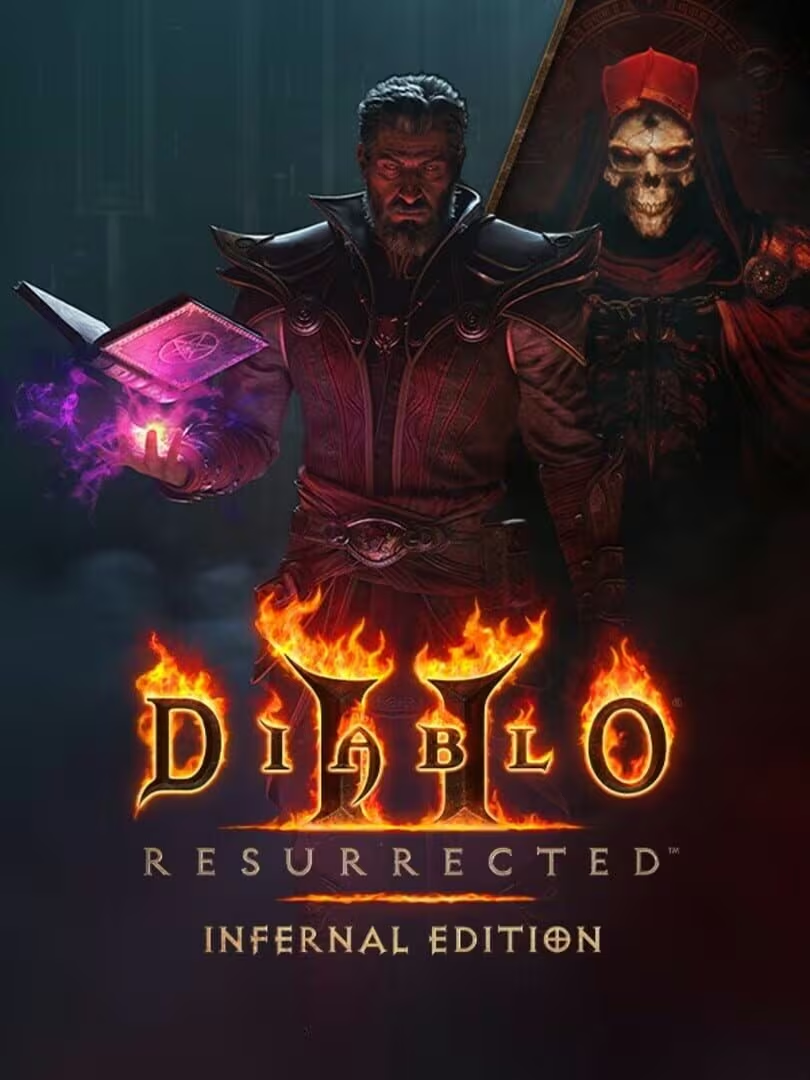 Diablo II: Resurrected – Infernal Edition
"Players have high freedom to customize builds by combining classes, skills, and glyphs, with respec options allowing experimentation."
-
Competence
Game with the same Competence vibe
3"Game involves skillful combat, build optimization, and overcoming difficulty spikes, though some later content becomes easier."
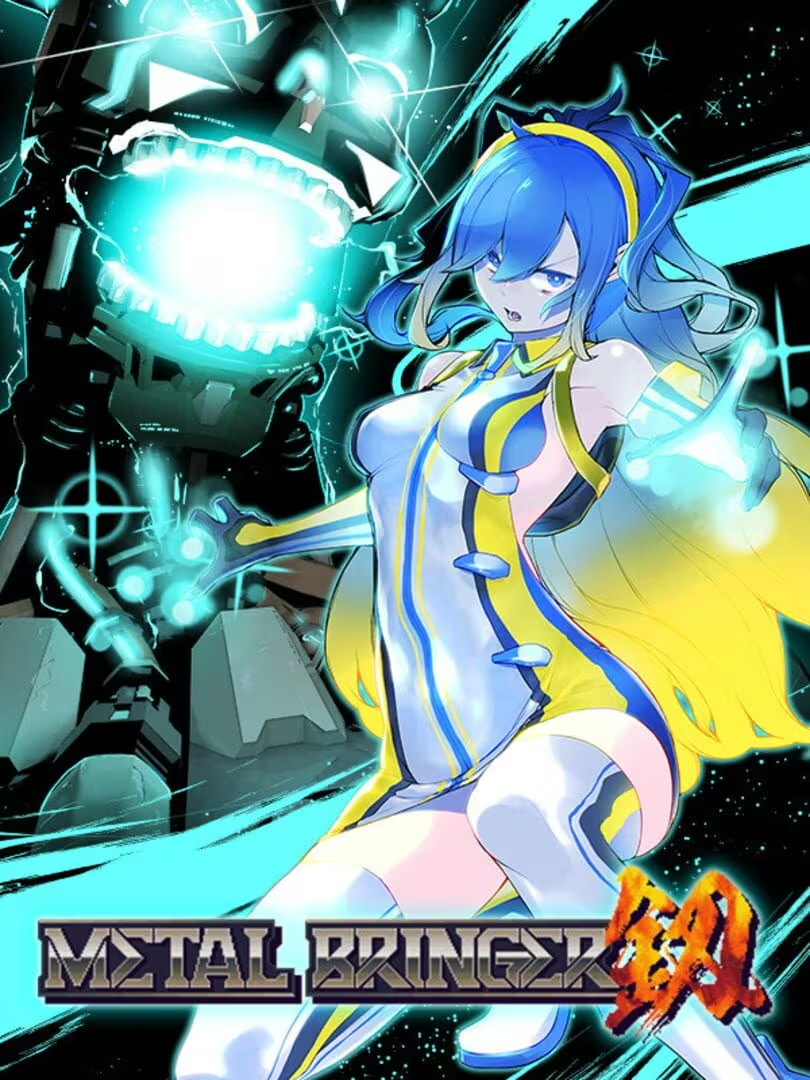 Metal Bringer
"Game involves skillful build crafting and combat, though some players find difficulty spikes uneven and some mechanics easy once optimized."
-
Competition
Game with the same Competition vibe
-3"Focus is mostly on personal survival and progression; multiplayer is cooperative rather than competitive."
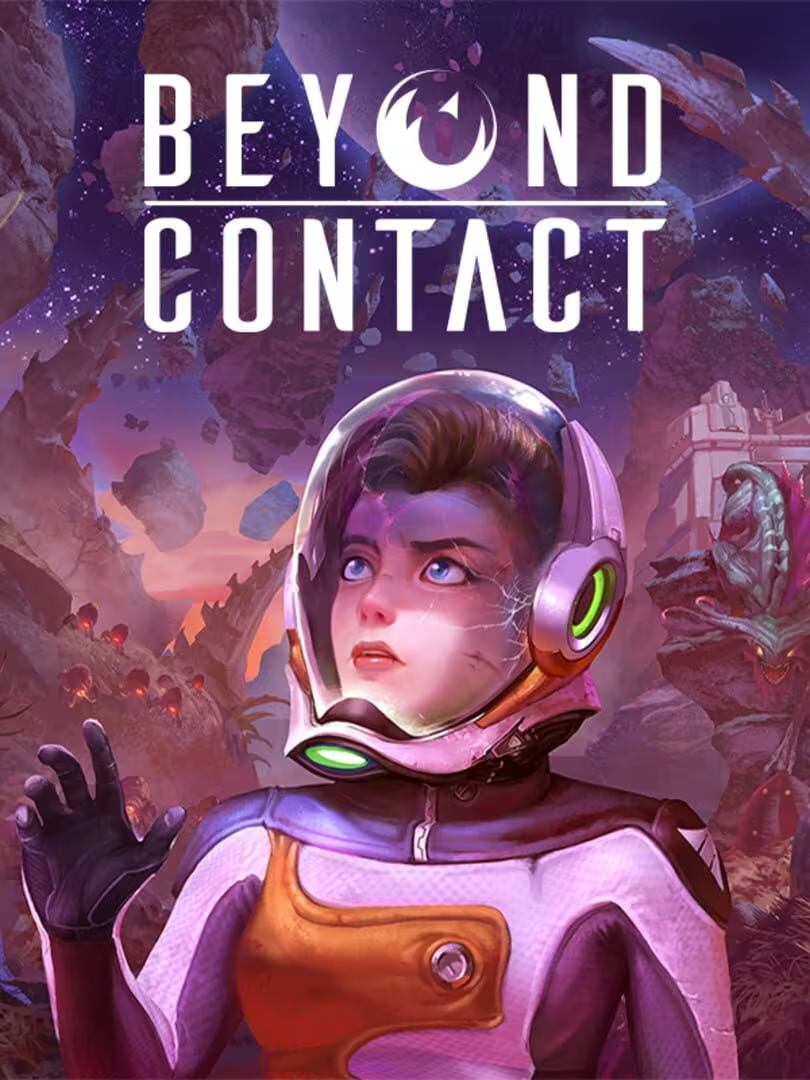 Beyond Contact
"Focus is mostly on personal progression and experimentation; multiplayer is local coop with no online matchmaking, and no strong emphasis on player-vs-player competition."
-
Continuation
Game with the same Continuation vibe
4"Players report habitual play and long sessions driven by build experimentation, replayability, and multiple game modes."
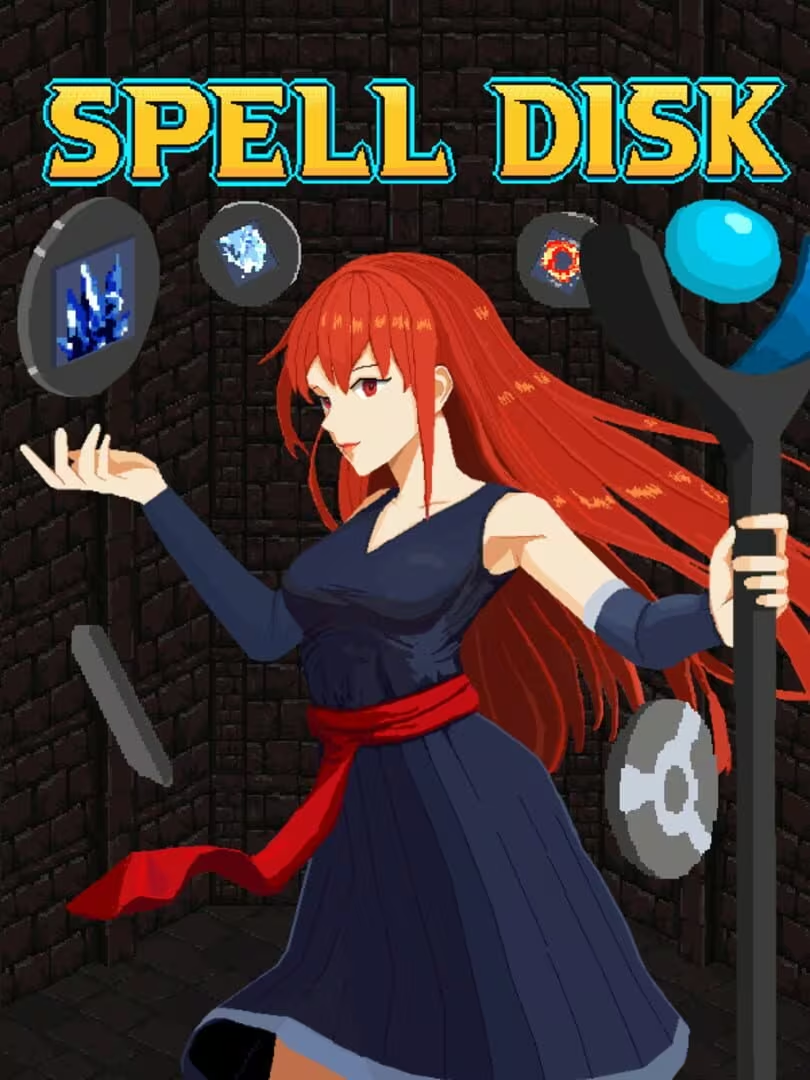 Spell Disk
"Players report long play sessions, replayability through build experimentation, and engaging endgame content encouraging habitual play."
-
Cooperation
Game with the same Cooperation vibe
2"Supports local split-screen co-op but no online multiplayer; cooperation is limited."
 Sky Rogue
"Local split-screen coop supported with some asynchronous multiplayer features, but no full online multiplayer; cooperation is present but limited."
-
Creativity
Game with the same Creativity vibe
5"Highly creative build system with unique skill trees per skill, extensive crafting options, and player-driven gear customization."
 Last Epoch
"Highly creative build system with multiclassing, skill combinations, and a unique glyph grid system requiring strategic placement and customization."
-
Domination
Game with the same Domination vibe
-4"Interactions emphasize shared experiences and cooperation; no evidence of power imposition or dominance over others."
 The Other Side
"Interactions emphasize shared experiences and cooperation; no evidence of dominance or power imposition over others."
-
Escapism
Game with the same Escapism vibe
4"Players enjoy immersive fantasy setting inspired by Chinese mythology, providing strong escape from real life."
 Jade Empire™: Special Edition
"Players enjoy immersive fantasy setting based on Southeast Asian folklore, providing a distinctive escape from real life."
-
Expectation
Game with the same Expectation vibe
-4"Players engage voluntarily for enjoyment and experimentation, no pressure or obligation noted."
 Journey to Incrementalia
"Players engage voluntarily for fun and experimentation; no indications of obligation or external pressure to play."
-
Experimenting
Game with the same Experimenting vibe
5"Strong emphasis on trying new builds, experimenting with skill trees, devotion points, and item combinations."
 Grim Dawn
"Strong emphasis on trying new builds, skill combos, and glyph arrangements; encourages tinkering and creative exploration."
-
Exploration
Game with the same Exploration vibe
2"Procedurally generated maps and multiple zones offer some exploration, though limited narrative depth."
 Urtuk: The Desolation
"Procedurally generated maps offer some novelty, but limited story content and repeated zones reduce exploration depth."
-
Expression
Game with the same Expression vibe
3"Character customization through skill trees and equipment allows personal expression, though visual customization is limited."
 Sword of Convallaria
"Customization of characters through skills, glyphs, and equipment allows personal expression, though visual customization is limited."
-
Fantasy
Game with the same Fantasy vibe
5"Strong fantasy setting inspired by Asian folklore with mystical story and magical elements."
 Atma
Atma
"Strong fantasy theme rooted in Southeast Asian folklore and mythology, with supernatural creatures and magical abilities."
-
Fellowship
Game with the same Fellowship vibe
1"Some community and multiplayer features exist, but social interaction is limited and mostly asynchronous."
 Bus Simulator 16
"Some community features like summoning other players' characters and gifting items, but social interaction is limited."
-
Growth
Game with the same Growth vibe
4"Players develop skills, knowledge, and mastery over complex systems."
 Aground
"Players develop skills and knowledge of complex systems, with meaningful character progression and build optimization."
-
Health
Game with the same Health vibe
-4"Typical sedentary ARPG gameplay; no physical activity or health-related features noted."
 Dragonkin: The Banished
"Typical sedentary ARPG gameplay with no physical activity or health-related features."
-
Idle
Game with the same Idle vibe
-3"Requires focused attention and active engagement; not designed for casual or background play."
 Assassin's Creed® Syndicate
"Requires focused attention and active engagement; not designed for casual or background play."
-
Intimacy
Game with the same Intimacy vibe
-3"Social interactions are mostly surface-level; no evidence of close relationships or emotional sharing."
 Astroflux
"Social interactions are minimal and surface-level; no evidence of close relationships or emotional sharing."
-
Leadership
Game with the same Leadership vibe
-4"No leadership or authoritative roles; cooperative play is balanced and shared."
 Megaloot
"No leadership or authoritative roles; cooperative play is balanced and shared."
-
Progression
Game with the same Progression vibe
4"Strong emphasis on character leveling, acquiring gear, and upgrading abilities."
 Warhammer 40,000: Rogue Trader
"Strong emphasis on acquiring and upgrading gear, glyphs, and skills; character power increases over time."
-
Relaxation
Game with the same Relaxation vibe
3"Game balances challenge and flow; some players find it relaxing and immersive, others note difficulty spikes."
 King's Bounty: Crossworlds
"Gameplay balances challenge and flow; some players find it relaxing and satisfying, though difficulty spikes exist."
-
Sensation
Game with the same Sensation vibe
3"Visual and auditory elements are enjoyable; combat animations and effects provide sensory stimulation."
 Dungeons of Sundaria
"Visual and auditory effects are enjoyable though sometimes cluttered; combat animations and sound provide sensory stimulation."
-
Status
Game with the same Status vibe
-3"Limited social recognition; achievements and leaderboards exist but are not a major focus."
 Mini Motorways
"Limited social recognition; achievements and leaderboards exist but are not a major focus."
-
Story
Game with the same Story vibe
1"Story is minimal and simple; focus is on gameplay experience rather than narrative immersion."
 Alien Swarm
"Story is present but minimal and straightforward; main appeal is gameplay rather than narrative immersion."
-
Strategy
Game with the same Strategy vibe
4"Players plan builds, manage upgrades, and navigate map mechanics requiring tactical thinking and problem solving."
 Time Wasters
"Players engage in strategic planning of builds, skill placement, and combat tactics; some players note inventory and map navigation challenges."
-
Thrill
Game with the same Thrill vibe
2"Some suspense from challenging encounters and boss fights, but overall difficulty is moderate and sometimes considered easy."
 Deepest Chamber: Resurrection
"Some tension and challenge in combat and endgame, but overall difficulty is moderate and not highly suspenseful."
-
Value
Game with the same Value vibe
4"Players perceive good value for price with deep gameplay, customization, and replayability."
 Pizza Express
"Players perceive good value for price, especially given depth of customization and replayability."
-
Violence
Game with the same Violence vibe
3"Combat involves defeating enemies and bosses; typical ARPG violence but not excessively emphasized."
Dragonkin: The Banished
"Combat involves defeating monsters with various weapons and skills; typical ARPG violence without excessive gore."
-
Survival
Game with the same Survival vibe
2"Players manage unit health and resources to avoid defeat, but the game is generally forgiving with limited penalties."
 Langrisser I & II
"Players manage resources and avoid death, but game is generally forgiving with limited penalties for failure."
Last update: 01/06/2026