The I of the Dragon similar games & best alternatives
Should you play it?
The world of Nimoa is as beautiful as the morning dew, but only at first glance. Under the surface of hills and fertile valleys lurks an old and eternal evil. Living as a mould, stretching threads through an infected area like deadly toadstools. The center of this "being?" deep in the under world is the giant daemon, Skarborr.
What works
- Unique dragon rpg experience
- Three distinct dragon classes with varied playstyles
- Large open maps with exploration
- Nostalgic and immersive fantasy setting
- Strong progression and spell variety
Things to keep in mind
- Outdated graphics and clunky controls
- Repetitive missions and linear story
- Technical bugs and compatibility issues
- No multiplayer or social features
- Forced segments controlling other characters
What to play next
Similar games, hidden gems, and fresh directions from this game.
Top picks
Games that feel the closest overall
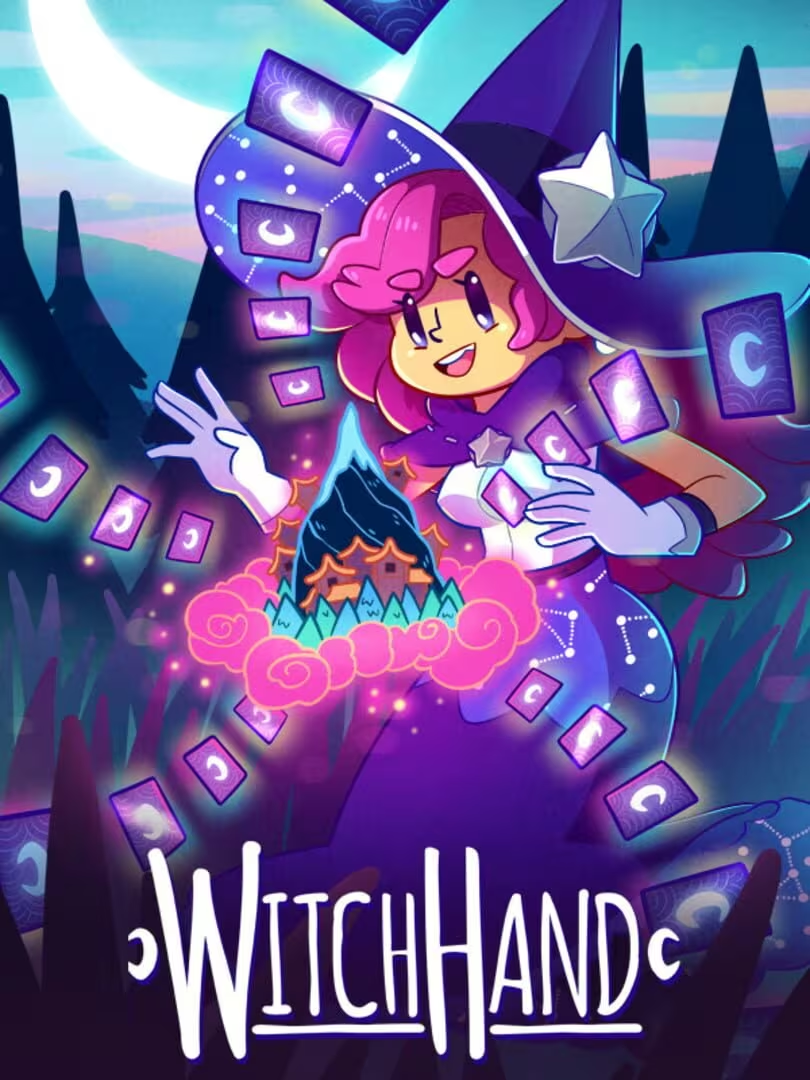
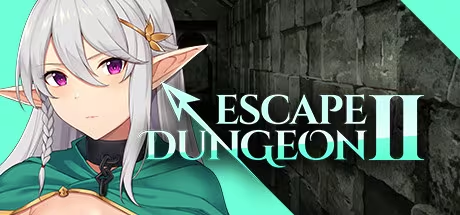
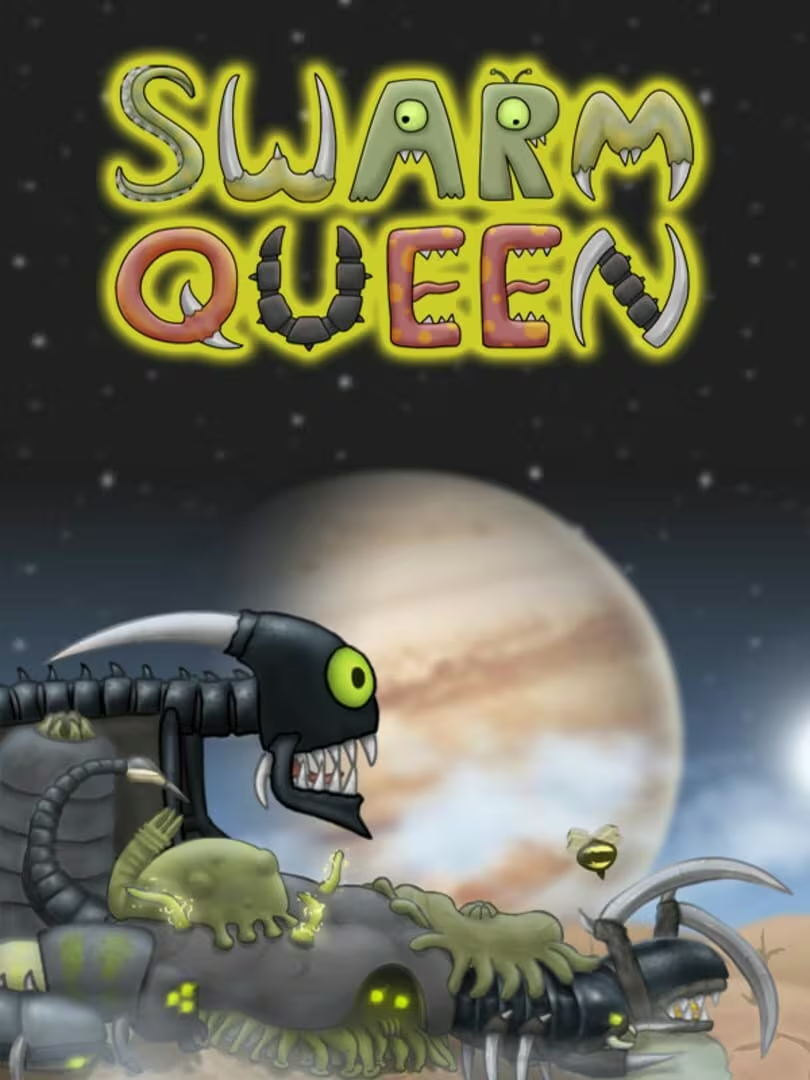



Hidden Gems
Less popular games with surprisingly high similarity
If you liked…
Recommendations by what you enjoyed most
Similarity map
Explore nearby similar games and see why they’re close.
The I of the Dragon: A very typical example of its motivational profile. Motivations that often define this kind of title include Fellowship, Violence, Survival, Cooperation. Here, the score leans higher than usual among comparable games on Violence. It leans lower than usual among comparable games on Competition, Story.
Why this game works
A motivational profile of the game, with the closest similar game for each player motivation.
-
Autonomy
Game with the same Autonomy vibe
4"Players have freedom to choose dragon types, talents, and build diverse decks with different strategies."
 None Shall Intrude
"Players have freedom to choose dragon class, allocate stats and spells, and direct their own actions in an open world."
-
Competence
Game with the same Competence vibe
3"Game offers skill-based flying, crafting, and combat mechanics with feedback, though combat is described as easy and somewhat repetitive."
 Aloft
Aloft
"Game involves skillful flying, spellcasting, and strategic leveling, though some parts are repetitive and controls clunky."
-
Competition
Game with the same Competition vibe
-5"No evidence of competitive or ranked modes; focus is on single-player experience and personal progression."
 Inquisitor’s Heart and Soul
"No evidence of competitive or ranked modes; focus is on single-player progression and personal goals."
-
Continuation
Game with the same Continuation vibe
3"Many players report nostalgia-driven repeated playthroughs and long engagement with the game despite its age and difficulty."
 Far Cry®
"Many players report long playtimes and nostalgia-driven repeated playthroughs despite dated mechanics."
-
Cooperation
Game with the same Cooperation vibe
-5"Entirely single-player experience with no multiplayer or cooperative gameplay."
 The Last of Us™ Part I
"Entirely single-player experience with no multiplayer or cooperative gameplay."
-
Creativity
Game with the same Creativity vibe
2"Players creatively terraform land and choose how to expand and attack, though within predefined mechanics and limited customization."
 Reprisal Universe
"Players customize dragons via stats and spells; terraforming spells allow creative combat tactics."
-
Domination
Game with the same Domination vibe
-5"No social or competitive dominance elements; gameplay is individual and non-confrontational with other players."
 Gun Metal
"No player-vs-player or social dominance elements; gameplay is solo and non-confrontational socially."
-
Escapism
Game with the same Escapism vibe
4"Players use the game as a thrilling escape with immersive dragon flight and combat, enjoying fantasy immersion."
 Century: Age of Ashes
"Players enjoy immersive fantasy dragon roleplay and escape into a mythical world."
-
Expectation
Game with the same Expectation vibe
-4"Players engage voluntarily out of interest and nostalgia, not obligation or external pressure."
 Max Payne
"Players engage voluntarily out of interest and nostalgia, not obligation or external pressure."
-
Experimenting
Game with the same Experimenting vibe
3"Players experiment with different classes, spells, and skill builds."
 Wild West and Wizards
"Players experiment with different dragon classes, spell combinations, and strategies."
-
Exploration
Game with the same Exploration vibe
3"Large open maps encourage exploration and discovery of new areas and secrets."
 Totally Reliable Delivery Service
"Large open maps with multiple regions encourage discovery and travel."
-
Expression
Game with the same Expression vibe
2"Some customization through upgrades and character appearance changes, but limited cosmetic options."
![Capsule for The Eternal Castle [REMASTERED]](https://d2eatnf6sujjgc.cloudfront.net/gameaton-data/the-eternal-castle-remastered/cover/the-eternal-castle-remastered.avif) The Eternal Castle [REMASTERED]
The Eternal Castle [REMASTERED]
"Dragon appearance changes with leveling; players customize builds but no deep cosmetic options."
-
Fantasy
Game with the same Fantasy vibe
5"Strong fantasy theme with magic, mythical creatures, and an epic storyline."
 PuzzleQuest: Challenge of the Warlords
"Strong fantasy theme with dragons, magic, mythical creatures, and epic battles."
-
Fellowship
Game with the same Fellowship vibe
-5"No social or community features; purely single-player experience."
 Ghostrunner
"No social or community features; purely single-player experience."
-
Growth
Game with the same Growth vibe
4"Leveling system, equipment upgrades, and skill development support player growth."
 Mitos.is: The Game
"Leveling system with stat and skill upgrades supports player growth and development."
-
Health
Game with the same Health vibe
-5"No physical activity or health-related gameplay elements."
 80 Days
"No physical activity or health-related gameplay elements."
-
Idle
Game with the same Idle vibe
-3"Requires focused attention during combat and exploration; not a casual idle game."
 Trials of Mana
"Requires focused attention due to combat and exploration; not a casual idle game."
-
Intimacy
Game with the same Intimacy vibe
-5"No social or emotional relationship building; solo gameplay only."
 Flinthook
"No social or emotional relationship building; solo gameplay only."
-
Leadership
Game with the same Leadership vibe
-3"Player controls main character and summons creatures but no leadership or group management roles."
 The Thaumaturge
"Limited indirect leadership via summoning minions, but no group management or authority roles."
-
Progression
Game with the same Progression vibe
4"Strong progression through leveling, unlocking characters, spells, and cosmetic items."
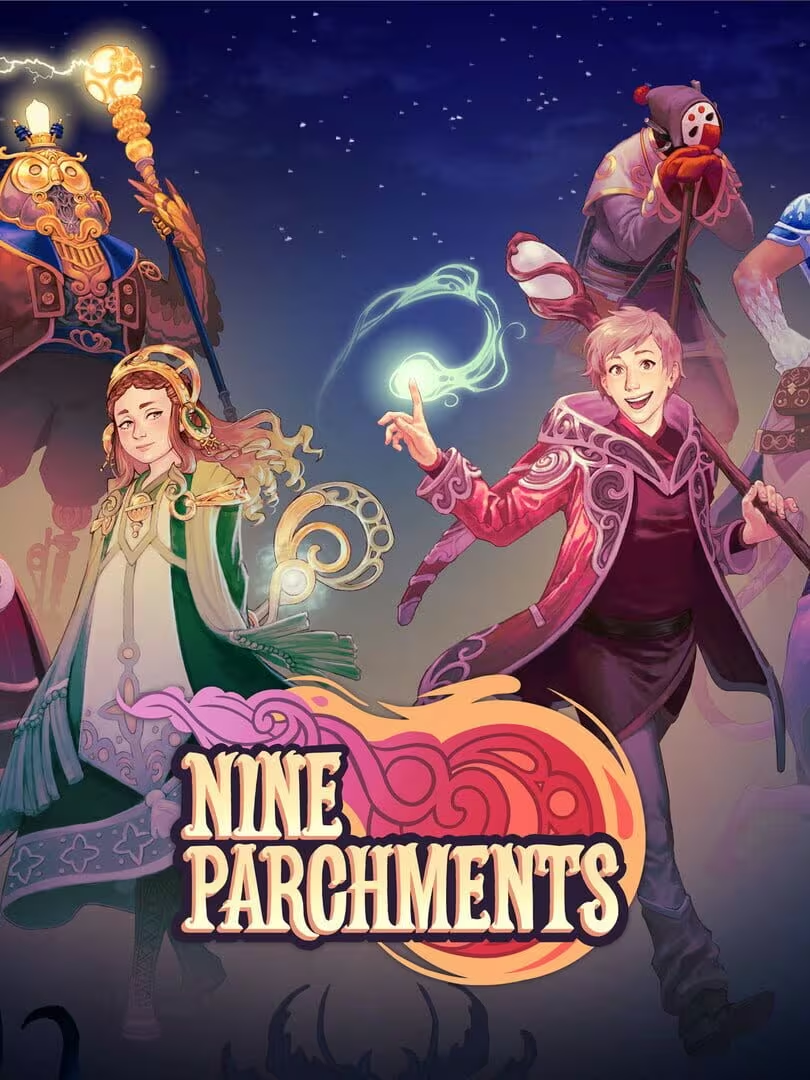 Nine Parchments
"Strong progression through leveling, unlocking spells, and upgrading dragons."
-
Relaxation
Game with the same Relaxation vibe
1"Some players find the game relaxing and nostalgic, but others report frustration due to controls and bugs."
 Indiana Jones® and the Infernal Machine™
"Some players find the game relaxing and nostalgic, though others note frustration with controls."
-
Sensation
Game with the same Sensation vibe
3"Visual and auditory effects of spells and animations provide sensory stimulation and excitement."
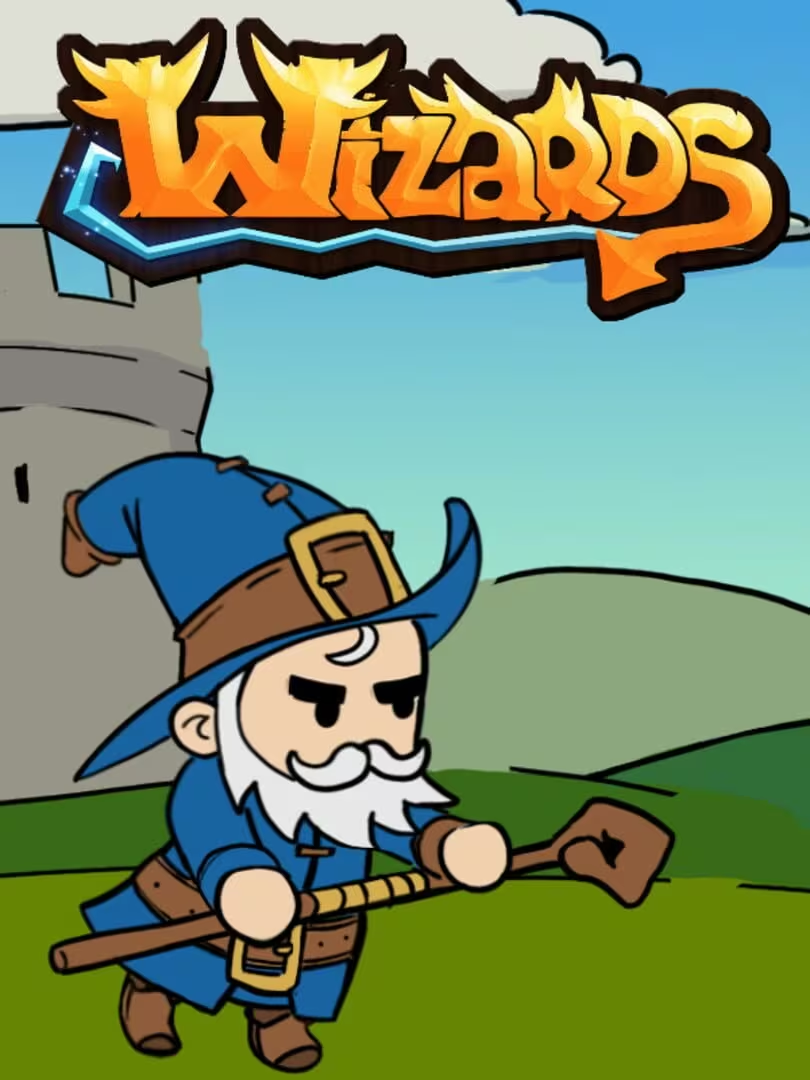 Wizards
"Visual effects of spells and dragon flight provide sensory stimulation and excitement."
-
Status
Game with the same Status vibe
-5"No social recognition or status systems present."
 Resident Evil 7 Biohazard
"No social recognition or status systems present."
-
Story
Game with the same Story vibe
1"Minimal narrative with simple story and character interactions; mostly context for gameplay."
 The Bleakest Keep
"Simple linear story with minimal narrative depth; mostly context for gameplay."
-
Strategy
Game with the same Strategy vibe
3"Players plan resource allocation, base defense, and upgrade paths strategically."
 The Spotter: Dig or Die
"Players plan spell usage, stat allocation, and city defense strategies."
-
Thrill
Game with the same Thrill vibe
2"Some suspense and challenge in combat and exploration, but overall moderate tension."
 Serin Fate
"Some challenge and tension from combat and survival elements, but not intense suspense."
-
Value
Game with the same Value vibe
3"Players find good value especially when purchased on sale; nostalgic and unique gameplay justify cost."
 Red Faction
"Many players find good value especially at low price or on sale, appreciating unique gameplay."
-
Violence
Game with the same Violence vibe
4"Combat involves defeating monsters and bosses with violent spells and attacks."
 Path of Exile 2
"Combat involves destroying monsters and lairs with fire, ice, acid, and magic."
-
Survival
Game with the same Survival vibe
2"Players manage health and injuries, avoid death, and gather resources to sustain the town."
 Regions Of Ruin
"Players manage dragon health and hunger, avoid threats, and protect cities."
Last update: 01/06/2026