Medusa's Labyrinth similar games & best alternatives
Should you play it?
Medusa’s Labyrinth is a very short mythological first-person horror game set in ancient Greece. It takes myths and legends that have stayed with us for over 2000 years and mix them together with modern gameplay. The game let's you explore murky catacombs and follow along a classic, tragic story.
What works
- Strong atmospheric horror and sound design
- Unique ancient greek mythology setting
- Free to play
- Immersive lighting and torch mechanics
- Simple and accessible gameplay
Things to keep in mind
- Very short playtime (~30-60 minutes)
- Limited enemy ai and combat mechanics
- Abrupt and incomplete ending
- Some technical issues and optimization problems
- Lack of character customization and multiplayer
What to play next
Similar games, hidden gems, and fresh directions from this game.
Top picks
Games that feel the closest overall

Hidden Gems
Less popular games with surprisingly high similarity
If you liked…
Recommendations by what you enjoyed most
Similarity map
Explore nearby similar games and see why they’re close.
Medusa's Labyrinth: Broadly representative of its motivational profile, with a few distinct shifts. Motivations that often define this kind of title include Expression, Fellowship, Cooperation, Status. It leans lower than usual among comparable games on Continuation, Violence, Relaxation.
Why this game works
A motivational profile of the game, with the closest similar game for each player motivation.
-
Autonomy
Game with the same Autonomy vibe
3"Players can explore the backrooms maze and choose when to run or hide, with some freedom in movement and decision-making."
 FURRY BACKROOMS
"Players navigate the labyrinth with freedom to explore, use torch and bow, and decide stealth or running strategies."
-
Competence
Game with the same Competence vibe
2"Requires some skill in stealth and puzzle solving; enemies can be avoided with some effort, but gameplay is not highly challenging."
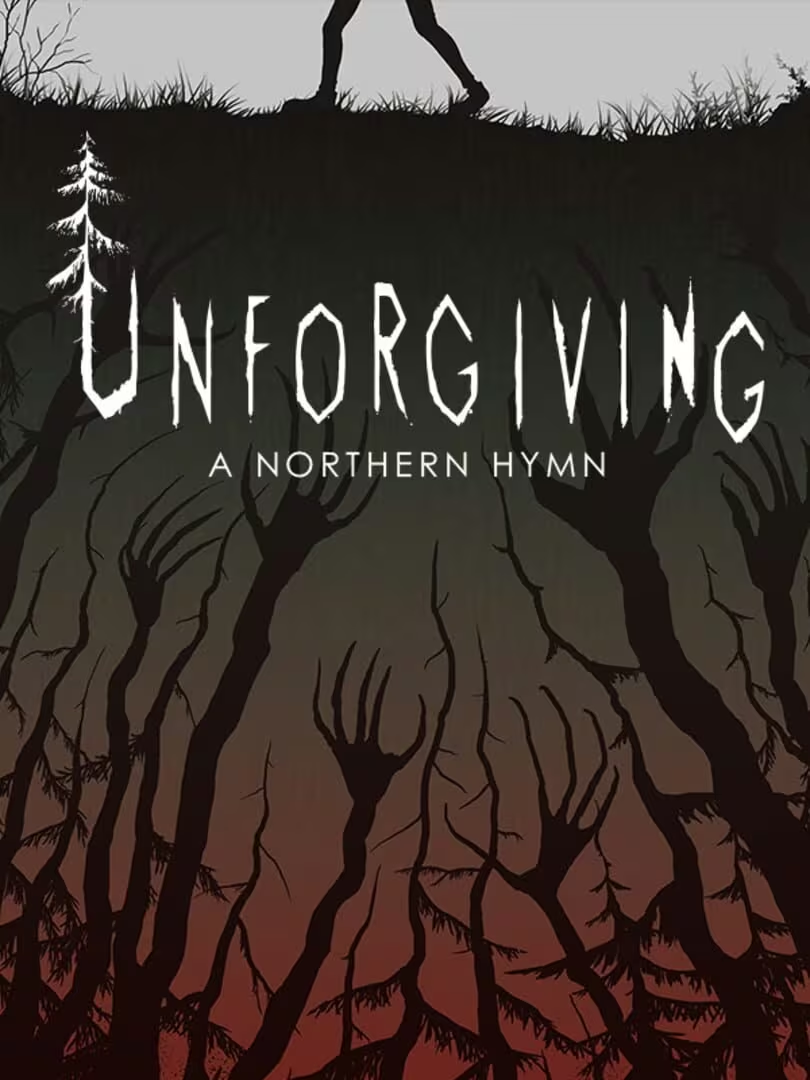 Unforgiving - A Northern Hymn
"Requires some skill in stealth, aiming bow, and puzzle solving, but overall gameplay is simple and short."
-
Competition
Game with the same Competition vibe
-5"No competitive elements or player comparison; focus is on solo exploration and personal experience."
 CONCLUSE
"No competitive elements or player comparison; focus is on solo exploration and survival."
-
Continuation
Game with the same Continuation vibe
-3"Short playtime (~15-20 minutes) and some players note abrupt ending; limited habitual or extended play."
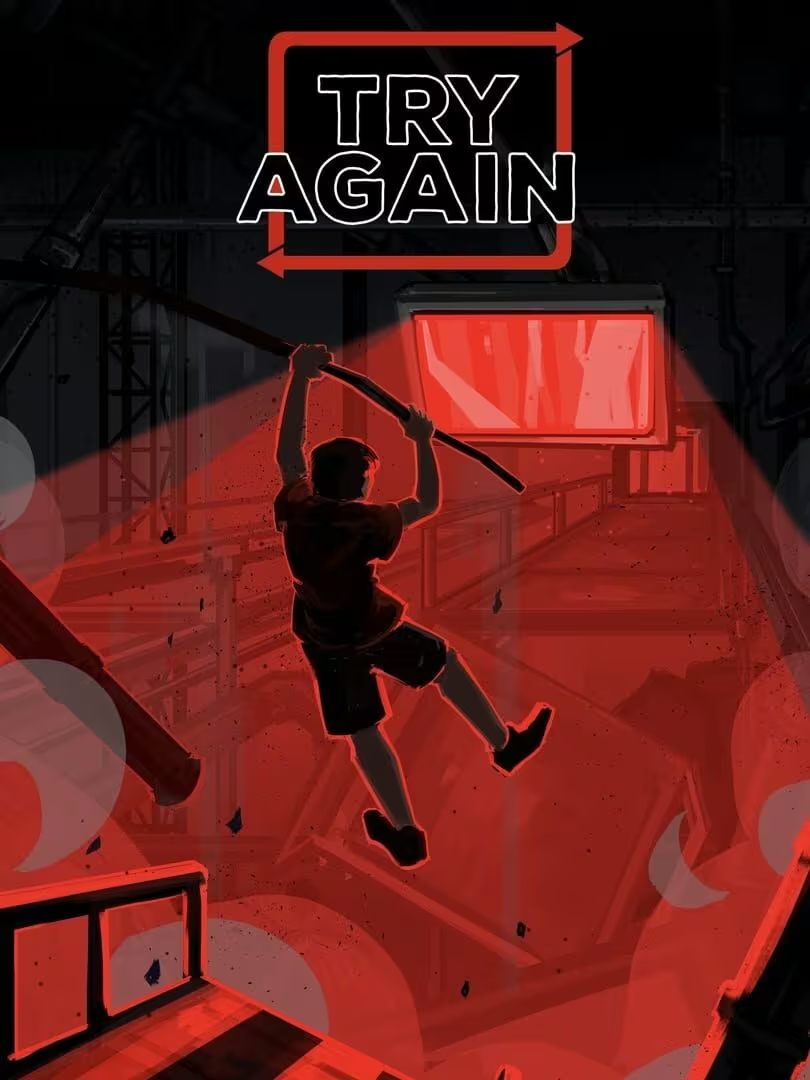 TRY AGAIN
"Short playtime (~30-60 minutes) and abrupt ending limit long-term engagement."
-
Cooperation
Game with the same Cooperation vibe
-5"Single-player experience with no multiplayer or cooperative features."
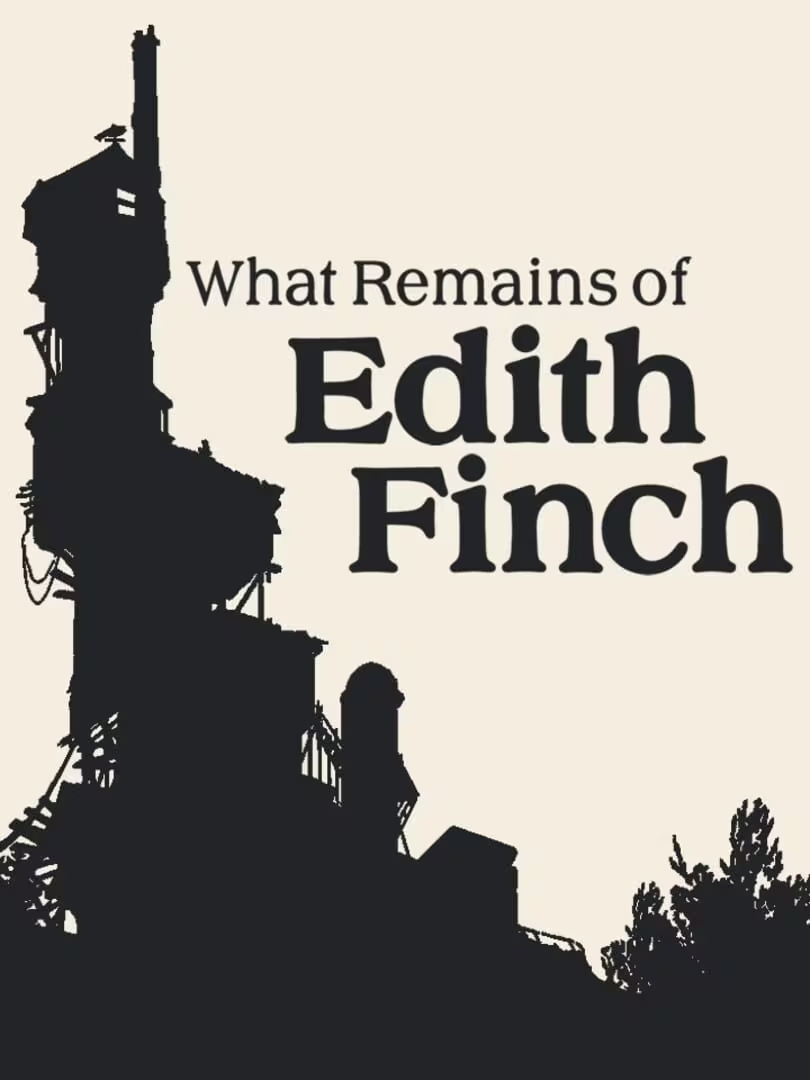 What Remains of Edith Finch
"Single-player experience with no multiplayer or cooperative features."
-
Creativity
Game with the same Creativity vibe
1"Limited player creativity; mostly follows predefined paths and uses fixed weapon and level designs."
 Quake 4
"Some creative elements like torch management and bow use, but mostly linear predefined paths."
-
Domination
Game with the same Domination vibe
-5"No social dominance or power over others; purely individual survival."
 Sophie's Curse
"No social dominance or power over others; purely individual survival."
-
Escapism
Game with the same Escapism vibe
4"Strong horror atmosphere, immersive sound and visuals provide effective escape from reality."
 Nosferatu: The Wrath of Malachi
"Strong horror atmosphere and immersive sound design provide escape from reality."
-
Expectation
Game with the same Expectation vibe
-4"Players engage voluntarily for fun and horror enjoyment without obligation or pressure."
 Massacre At The Mirage
"Players engage voluntarily for fun and horror experience without obligation."
-
Experimenting
Game with the same Experimenting vibe
2"Players try different strategies, tactics, and interactions with monsters and teammates."
 Dark Hours: Prologue
"Players try different tactics to evade monster and explore environment, though limited by linearity."
-
Exploration
Game with the same Exploration vibe
3"Exploration of 1000 rooms with hidden notes and secrets drives curiosity."
 Spooky's Jump Scare Mansion
"Exploring labyrinth, finding notes and secrets drives curiosity despite linear design."
-
Expression
Game with the same Expression vibe
-5"No character customization or self-expression features."
 Shiver
"No character customization or self-expression features."
-
Fantasy
Game with the same Fantasy vibe
4"Set in Greek mythology with a fictional narrative and fantastical traps and enemies."
 MINOS
MINOS
"Set in ancient Greek mythology with mythical creatures and supernatural elements."
-
Fellowship
Game with the same Fellowship vibe
-5"No community or social interaction; strictly solo play."
 Lucius
"No community or social interaction; strictly solo play."
-
Growth
Game with the same Growth vibe
1"Some learning of stealth mechanics and puzzle solving, but limited depth or skill development."
 Cave Story's Secret Santa
"Some learning through puzzle solving and stealth tactics, but limited depth."
-
Health
Game with the same Health vibe
-5"Standard sedentary gameplay with no physical activity."
 POLYWAR
"Standard sedentary gameplay with no physical activity."
-
Idle
Game with the same Idle vibe
-3"Requires focused attention due to tense atmosphere and stealth mechanics; not suited for casual or background play."
 The Designer's Curse
"Requires focused attention due to tense atmosphere and stealth mechanics."
-
Intimacy
Game with the same Intimacy vibe
-5"No social or emotional relationships formed; isolated experience."
 MANDAGON
"No social or emotional connections formed; isolated experience."
-
Leadership
Game with the same Leadership vibe
-5"No leadership or group management elements."
 High On Life
"No leadership or group management elements."
-
Progression
Game with the same Progression vibe
2"Progression through story and discovery of notes, but no item or skill accumulation"
 The Old City: Leviathan
"Collecting notes and managing limited resources like torches and arrows provide some progression."
-
Relaxation
Game with the same Relaxation vibe
-3"Tense and suspenseful atmosphere creates sustained tension rather than relaxation."
 Lakeview Cabin 2
"Tense and suspenseful atmosphere creates stress rather than relaxation."
-
Sensation
Game with the same Sensation vibe
4"Strong sensory stimulation through sound design, lighting, and horror atmosphere."
 Sharks and Minnows
"Strong sensory stimulation through sound design, lighting, and horror ambiance."
-
Status
Game with the same Status vibe
-5"No social recognition or status systems."
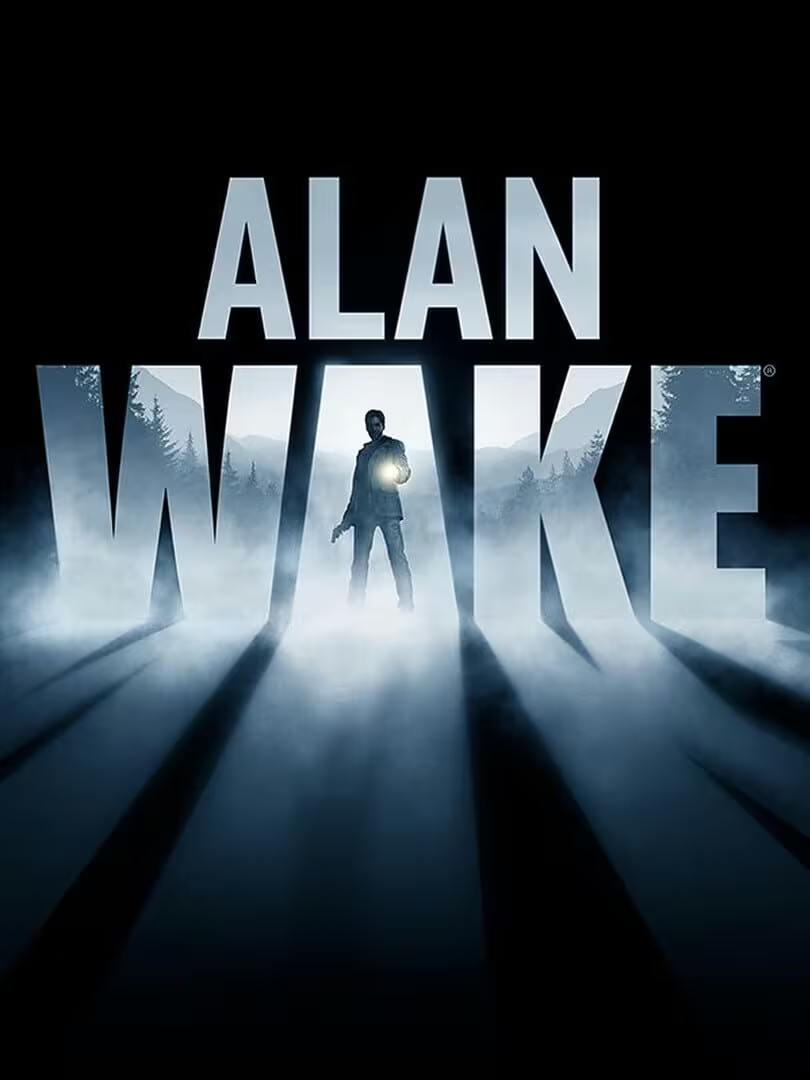 Alan Wake
"No social recognition or status systems."
-
Story
Game with the same Story vibe
3"Narrative is present through notes and environment, providing context and immersion."
 Last Will
"Narrative delivered via notes and environment, creating some immersion despite short length."
-
Strategy
Game with the same Strategy vibe
2"Requires planning stealth routes, puzzle solving, and timing to avoid enemies."
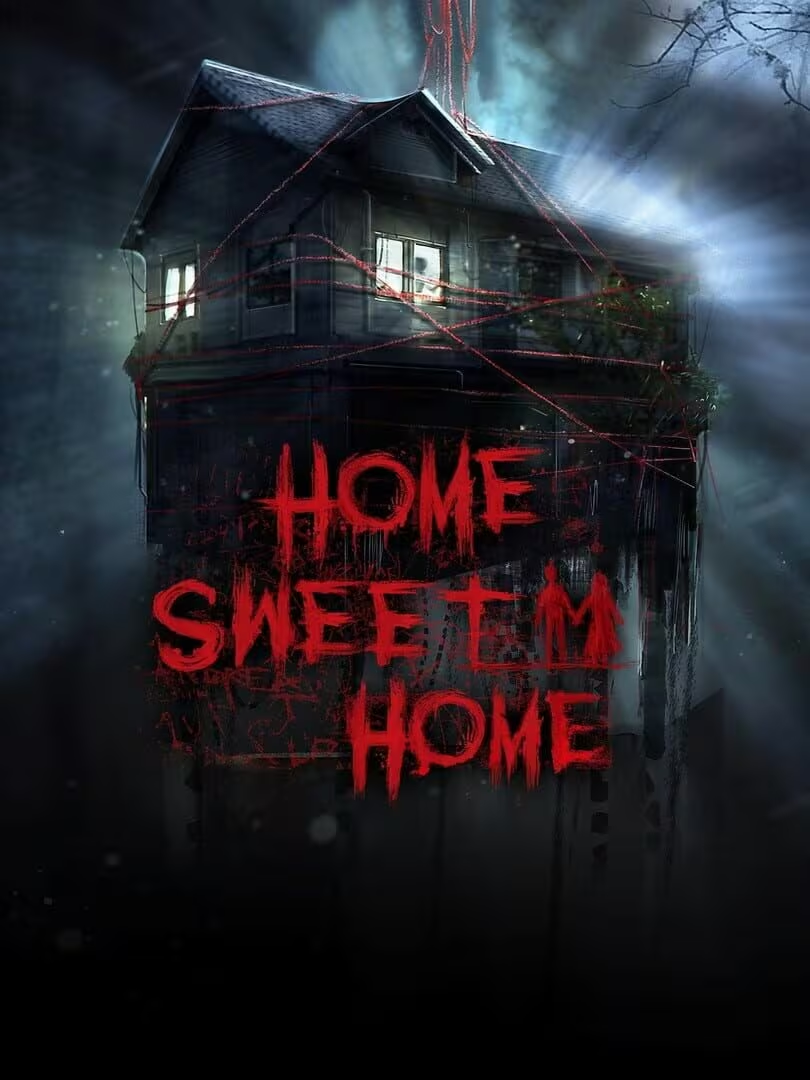 Home Sweet Home
"Requires planning stealth routes and timing to avoid monster, limited puzzle solving."
-
Thrill
Game with the same Thrill vibe
4"High suspense and tension from horror elements, monster encounters, and risk-reward gameplay."
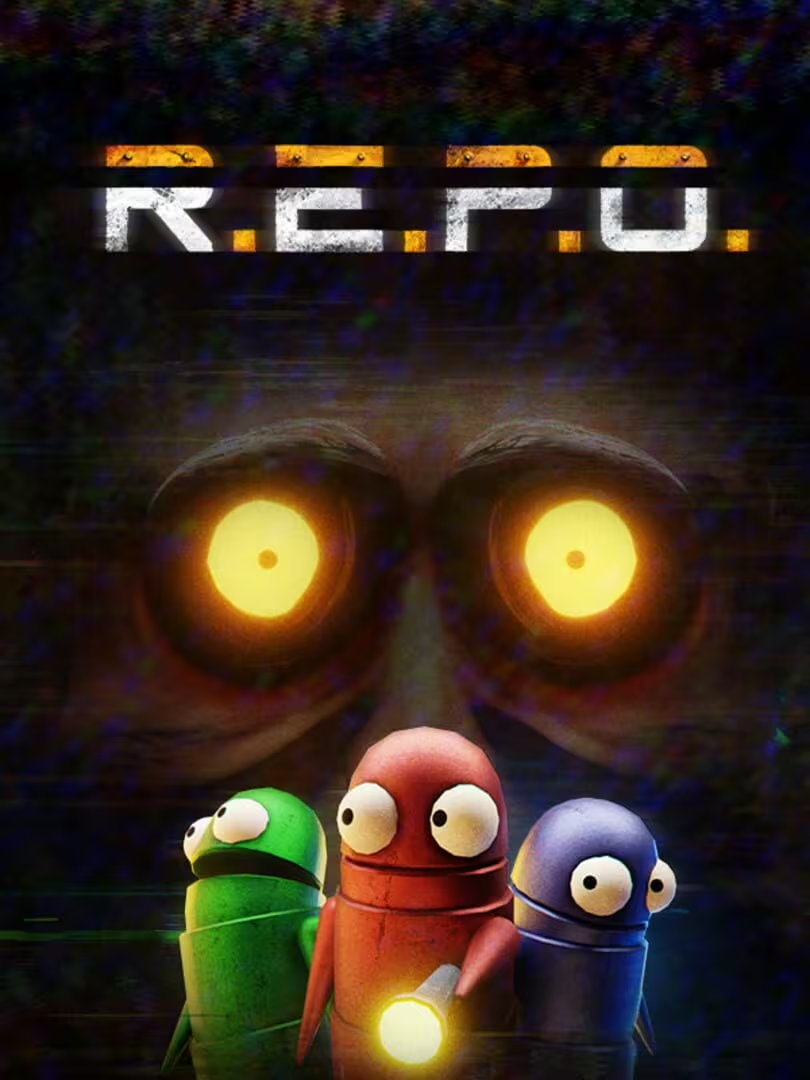 R.E.P.O.
"High suspense and tension from monster encounters and dark environments."
-
Value
Game with the same Value vibe
4"Free game with decent content and atmosphere provides good value for time invested."
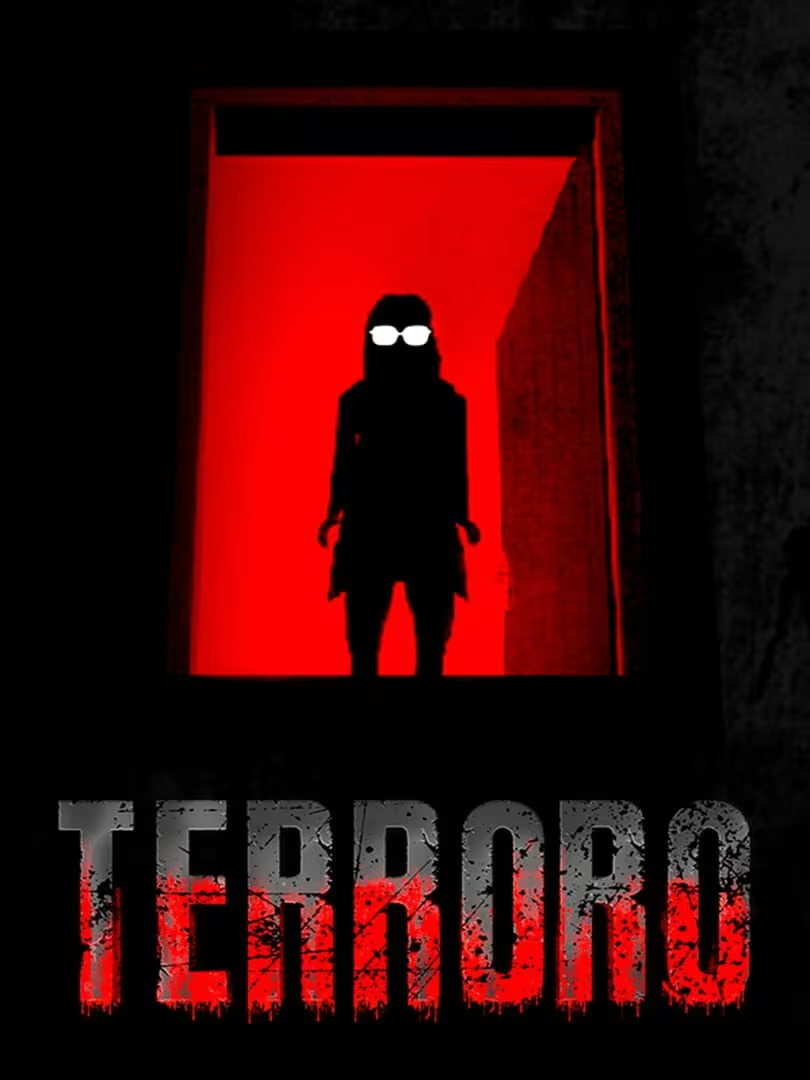 Terroro
"Free game with good atmosphere and quality offers strong value for time invested."
-
Violence
Game with the same Violence vibe
-3"Limited combat elements; enemies are obstacles in puzzles rather than focus on violence or destruction."
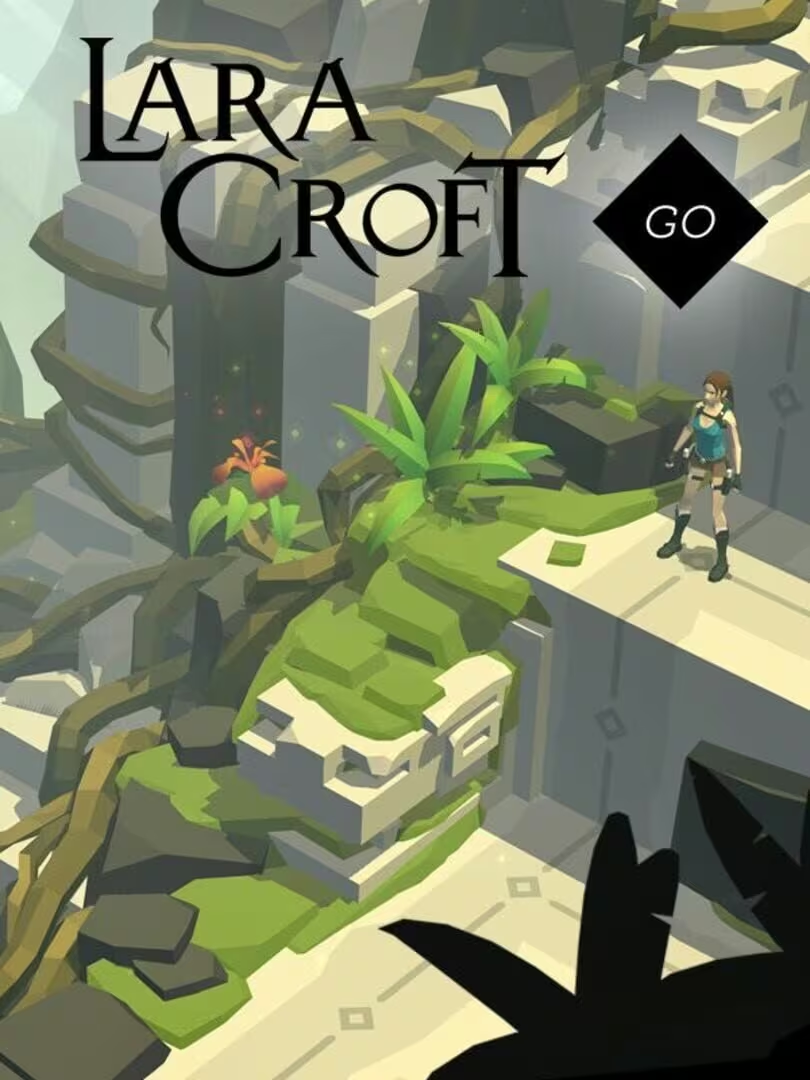 Lara Croft GO
"Limited combat; bow used mainly for puzzle, enemies cannot be killed easily."
-
Survival
Game with the same Survival vibe
3"Players must avoid the monster and survive encounters, managing resources and escape."
![Capsule for [Nightmare Files] Clap Clap](https://d2eatnf6sujjgc.cloudfront.net/gameaton-data/nightmare-files-clap-clap/cover/nightmare-files-clap-clap.avif) [Nightmare Files] Clap Clap
[Nightmare Files] Clap Clap
"Focus on avoiding monster and managing limited resources to survive the labyrinth."
Last update: 01/06/2026