Trip to Vinelands similar games & best alternatives
Should you play it?
Trip to Vinelands is an arcade retro hardcore maze wanderer minigame.
What works
- Challenging and addictive gameplay
- Unique and dynamic soundtrack
- Simple controls and concept
- Low price and good value
- Distinctive abstract art style
Things to keep in mind
- High difficulty and frustration potential
- Limited level variety and repetition
- Lack of narrative depth
- No multiplayer or social features
- Some issues with hitbox consistency
What to play next
Similar games, hidden gems, and fresh directions from this game.
Top picks
Games that feel the closest overall



Hidden Gems
Less popular games with surprisingly high similarity
If you liked…
Recommendations by what you enjoyed most
Similarity map
Explore nearby similar games and see why they’re close.
Trip to Vinelands: Less representative of its motivational profile, with noticeable differences. Motivations that often define this kind of title include Expression, Fellowship, Cooperation, Status. It leans lower than usual among comparable games on Story, Creativity, Exploration.
Why this game works
A motivational profile of the game, with the closest similar game for each player motivation.
-
Autonomy
Game with the same Autonomy vibe
3"Players control their movement left and right and make quick decisions to avoid obstacles, with some additional mechanics like shooting and following lane instructions, allowing personal control within fast-paced constraints."
 BARRIER X
"Players control movement directly and must make quick decisions to avoid obstacles and reach the screen edge."
-
Competence
Game with the same Competence vibe
4"Game requires skillful navigation, quick reflexes, and pattern recognition; players report challenge especially at higher levels."
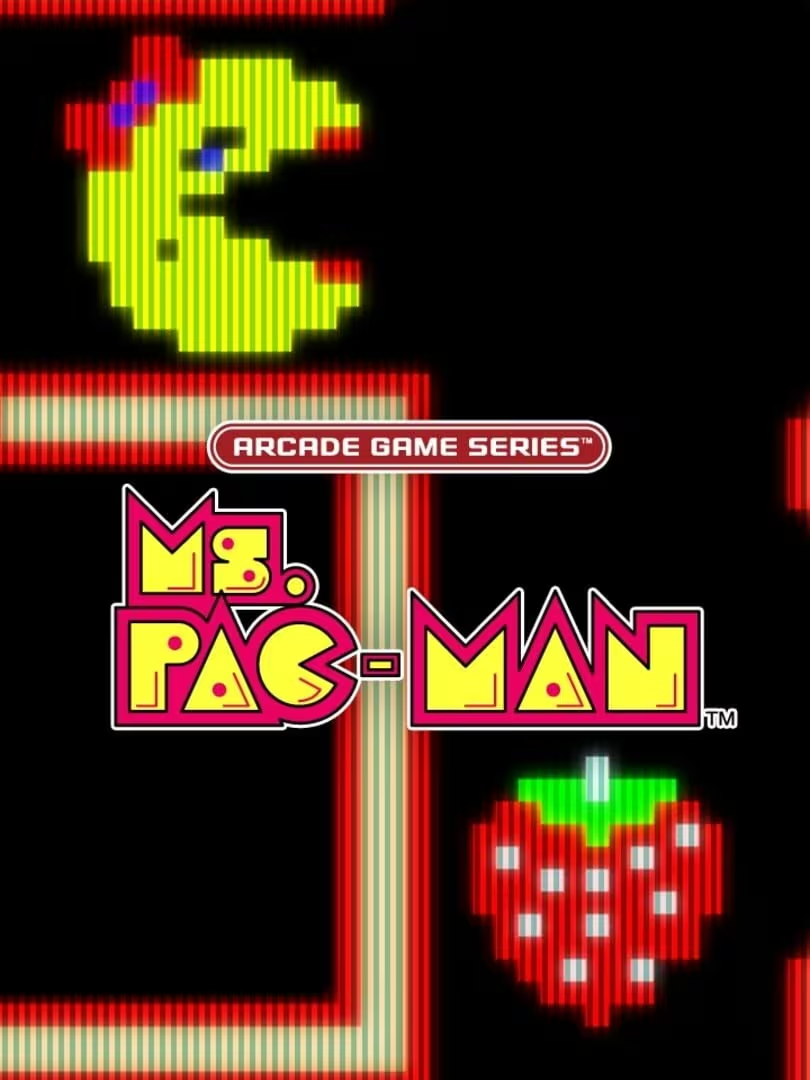 ARCADE GAME SERIES: Ms. PAC-MAN
"Game requires skillful pattern recognition, fast reflexes, and mastery of level layouts to progress."
-
Competition
Game with the same Competition vibe
-2"Focus is mostly on personal score and self-improvement rather than direct competition with others."
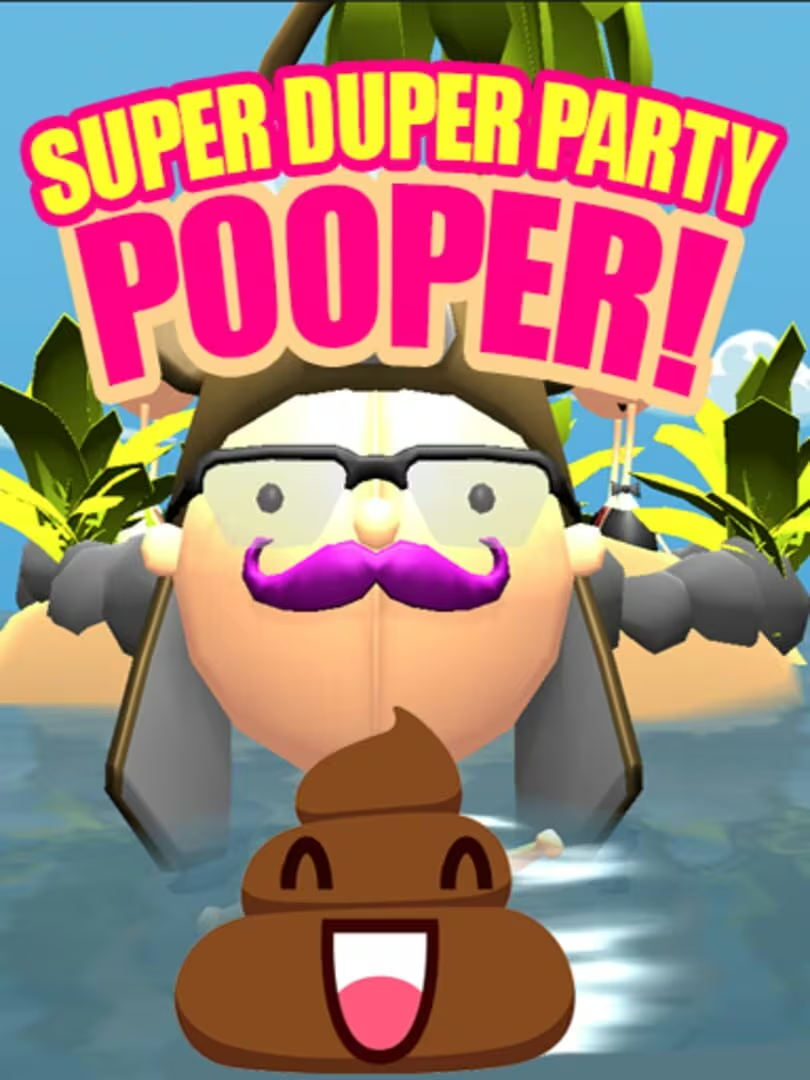 Super Duper Party Pooper
"Focus is on personal achievement and beating own high score rather than direct competition with others."
-
Continuation
Game with the same Continuation vibe
3"Addictive gameplay encourages long sessions and repeated attempts to overcome difficult sections."
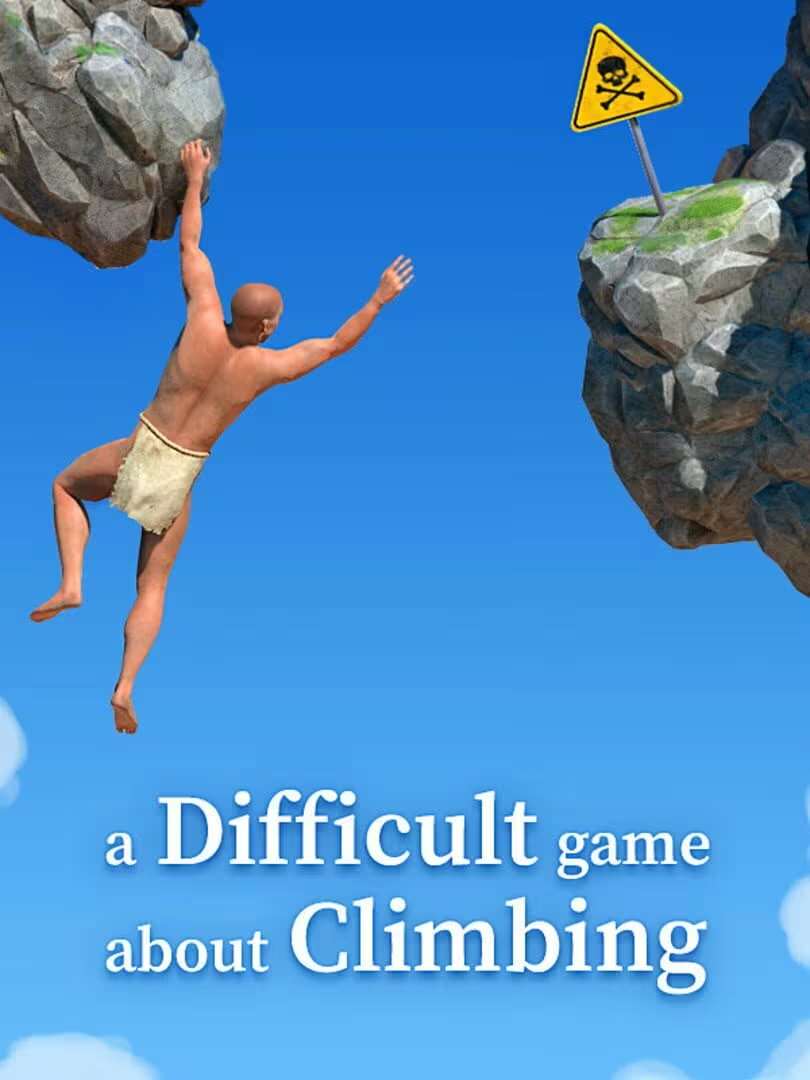 A Difficult Game About Climbing
"Addictive gameplay encourages repeated attempts to improve and complete all 100 levels."
-
Cooperation
Game with the same Cooperation vibe
-5"Single-player experience with no cooperative or multiplayer elements."
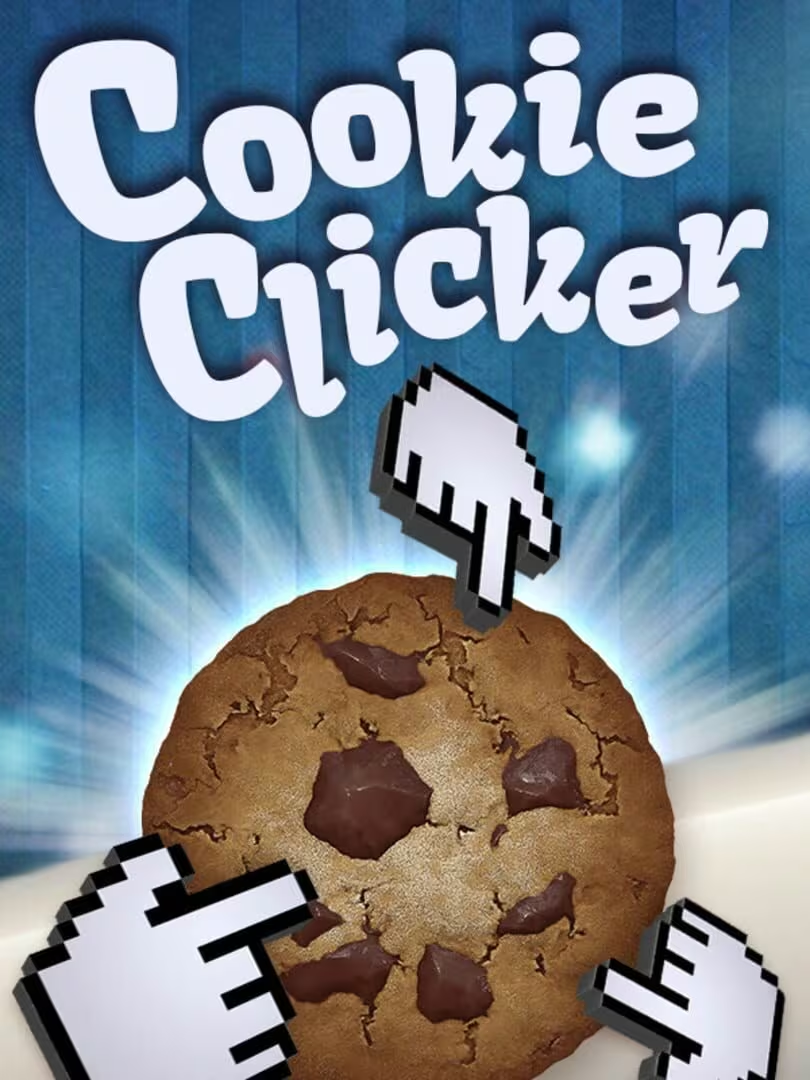 Cookie Clicker
"Single-player experience with no cooperative or multiplayer elements."
-
Creativity
Game with the same Creativity vibe
-3"Players follow preset level designs and mechanics with limited customization or creative input."
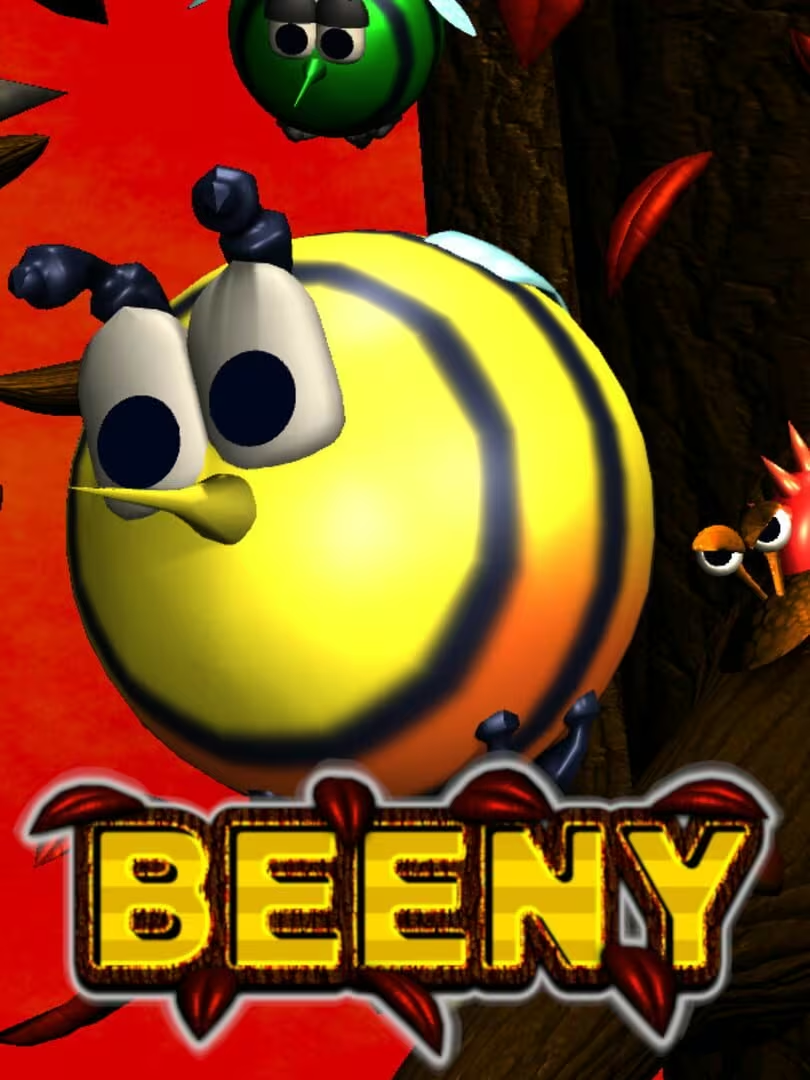 Beeny
Beeny
"Players follow preset level patterns and routes; minimal creative input or modification."
-
Domination
Game with the same Domination vibe
-5"No elements of exerting control or superiority over others; purely individual challenge."
 Jump King
"No elements of exerting control or superiority over others; purely individual challenge."
-
Escapism
Game with the same Escapism vibe
4"Players use the game as a challenging distraction and stress relief through intense focus."
 Open Hexagon
"Players use the game as a fast-paced distraction and stress relief through intense focus."
-
Expectation
Game with the same Expectation vibe
-4"Players engage voluntarily driven by intrinsic interest and enjoyment of challenge."
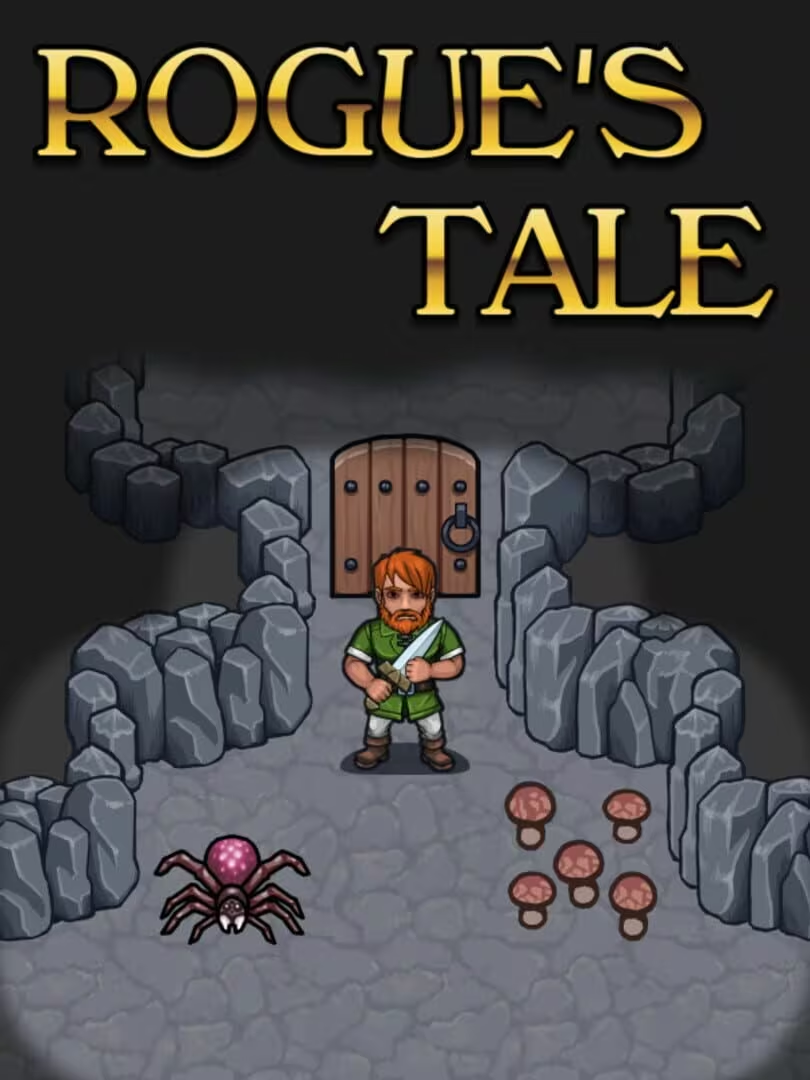 Rogue's Tale
"Players engage voluntarily out of intrinsic interest in challenge and arcade gameplay."
-
Experimenting
Game with the same Experimenting vibe
-2"Gameplay relies on memorizing established patterns rather than exploring new mechanics or experimenting."
 BIT.TRIP BEAT
"Gameplay revolves around learning and repeating known patterns rather than exploring new mechanics."
-
Exploration
Game with the same Exploration vibe
-3"Levels are fixed and limited in number; no open-world or discovery elements."
 Peggle Extreme
"Levels are randomized but limited in variety; no open-world or discovery elements."
-
Expression
Game with the same Expression vibe
-4"No character customization or personalization options."
 The Plan
"No character customization or visual personalization options."
-
Fantasy
Game with the same Fantasy vibe
1"Abstract and stylized setting with a surreal protagonist, but minimal narrative or roleplay."
 TTV2
TTV2
"Abstract and surreal setting with a stylized character, but no deep narrative or roleplaying."
-
Fellowship
Game with the same Fellowship vibe
-5"No social or community features; entirely solo experience."
 Hellblade: Senua's Sacrifice
"No social or community features; entirely solo experience."
-
Growth
Game with the same Growth vibe
3"Players develop skill in timing and pattern recognition, improving performance over time."
 Kung Fury: Street Rage - Ultimate Edition
"Players develop skills in pattern recognition, reaction time, and spatial awareness."
-
Health
Game with the same Health vibe
-5"Sedentary gameplay with no physical activity or health-related features."
 DRAGON BALL Z: KAKAROT
"Sedentary gameplay with no physical activity or health-related features."
-
Idle
Game with the same Idle vibe
-4"Requires constant attention and quick reflexes; not suitable for casual or background play."
 Bleed 2
"Requires constant attention and quick reflexes; not suitable for casual or background play."
-
Intimacy
Game with the same Intimacy vibe
-5"No social or emotional relationship-building elements."
 Terra Nil
"No social or emotional relationship-building elements."
-
Leadership
Game with the same Leadership vibe
-5"No leadership or group management mechanics."
 Outlast 2
"No leadership or group management mechanics."
-
Progression
Game with the same Progression vibe
3"Progression through levels and achievement completion provides a sense of advancement."
 Hidden Paws
"Progression through levels and achievement completion provides a sense of advancement."
-
Relaxation
Game with the same Relaxation vibe
-3"High difficulty and tension create a stressful rather than relaxing experience."
 Men of War: Red Tide
"High tension and stress due to difficulty and fast pace; not primarily relaxing."
-
Sensation
Game with the same Sensation vibe
3"Colorful visuals and dynamic music provide engaging sensory stimulation."
 Monaco: What's Yours Is Mine
"Dynamic music and intense visual feedback create stimulating sensory experience."
-
Status
Game with the same Status vibe
-3"No social recognition or ranking systems; achievements are personal milestones."
 PUMPKIN PANIC
"No social recognition or ranking systems; achievements are personal milestones."
-
Story
Game with the same Story vibe
-4"Minimal narrative or plot; gameplay is context-free and focused on mechanics."
 Max Manos
"Minimal to no narrative; gameplay is context-free and focused on mechanics."
-
Strategy
Game with the same Strategy vibe
2"Requires timing and memorization of obstacles, but limited strategic depth."
 Turbo Pug DX
"Requires quick tactical decisions and pattern memorization but limited strategic depth."
-
Thrill
Game with the same Thrill vibe
4"High adrenaline and suspense from fast-paced, chaotic gameplay and risk of instant failure."
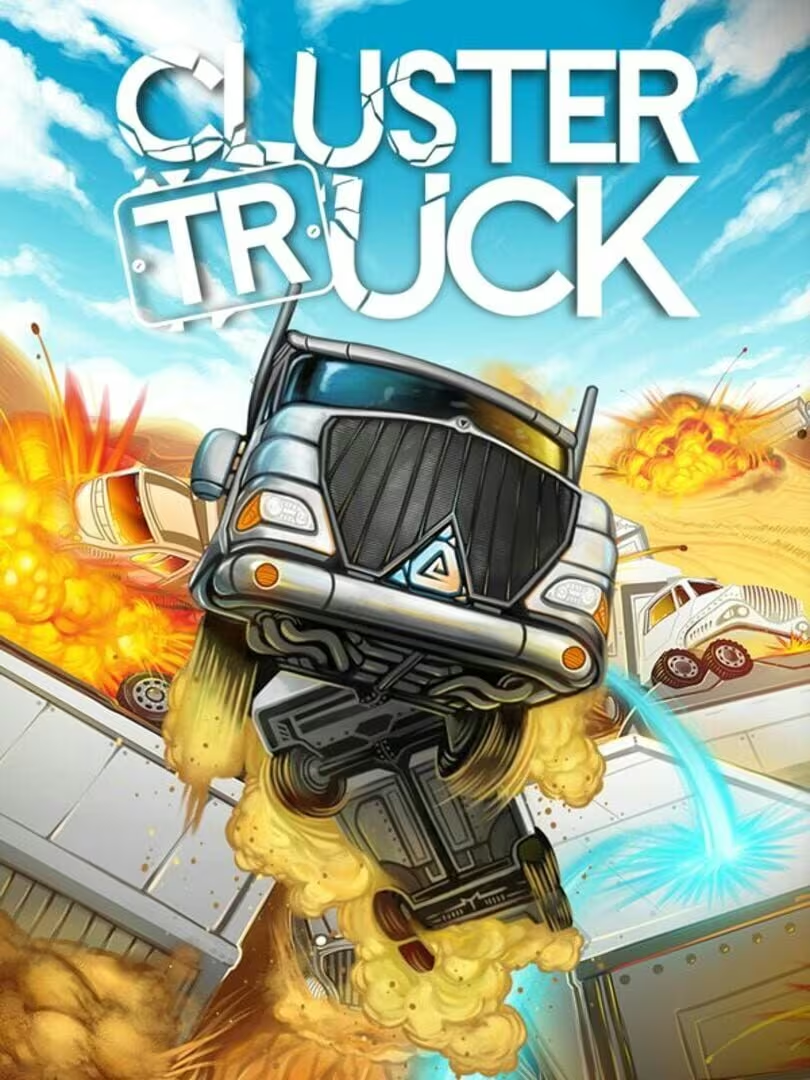 Clustertruck
"High suspense and adrenaline from fast-paced, high-risk gameplay and instant failure."
-
Value
Game with the same Value vibe
4"Low price and short length provide good value for players seeking a quick challenge."
 Death Fungeon
"Low price and short playtime provide good value for players seeking a quick challenge."
-
Violence
Game with the same Violence vibe
3"Gameplay involves combat avoidance and defeating supernatural enemies, with some violent themes."
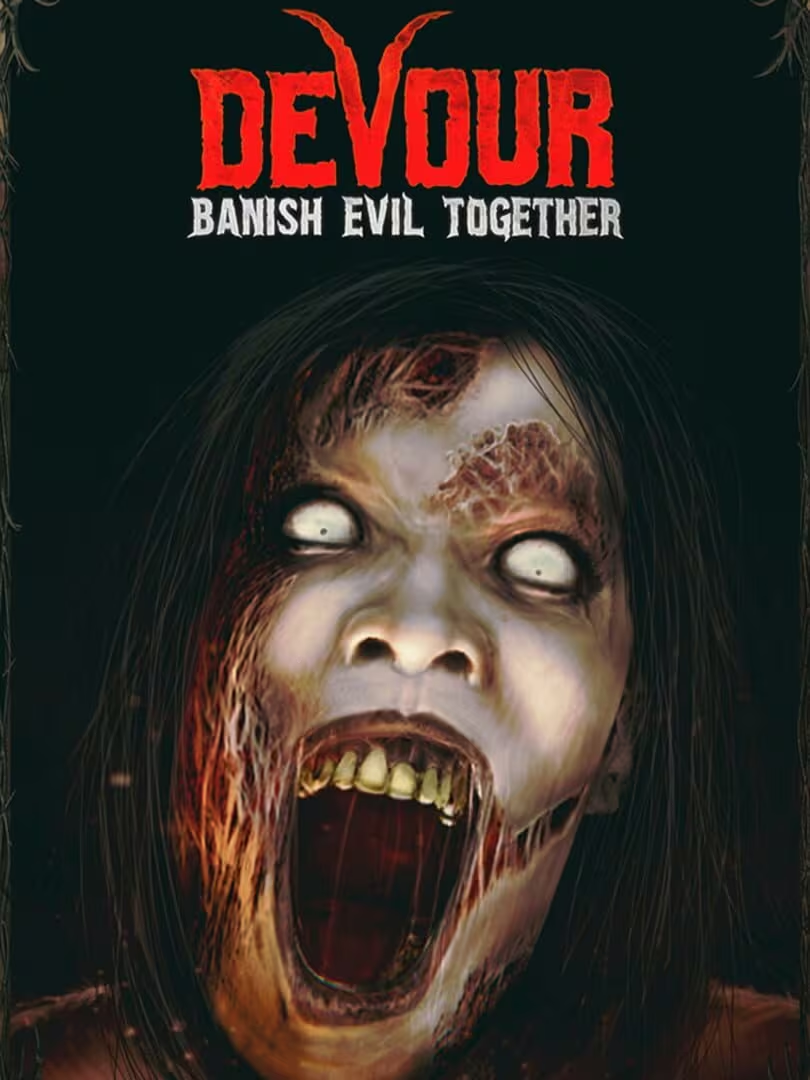 DEVOUR
"Gameplay involves avoiding deadly obstacles; thematic violence through crushing and spikes."
-
Survival
Game with the same Survival vibe
4"Core gameplay revolves around avoiding death and surviving through increasingly difficult levels."
TTV2
"Core gameplay centers on avoiding death and surviving through 100 consecutive levels."
Last update: 01/06/2026