Whispers of the Eyeless similar games & best alternatives
Should you play it?
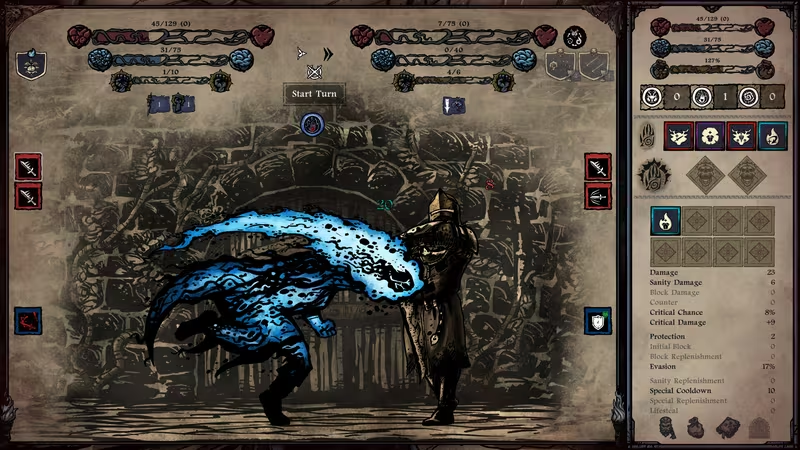
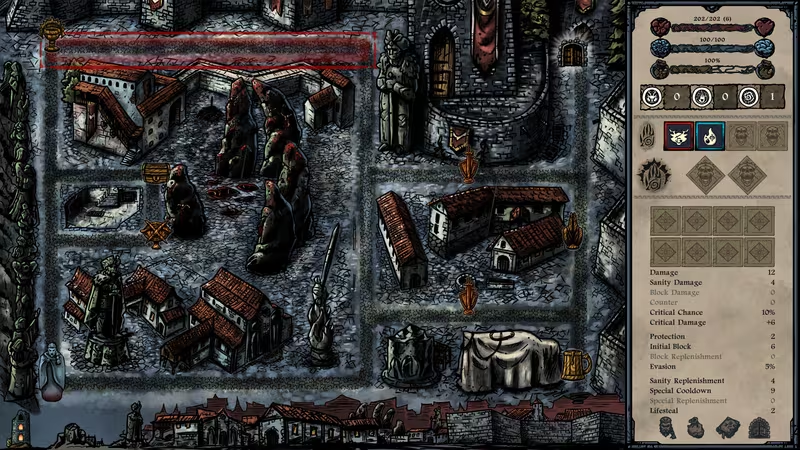
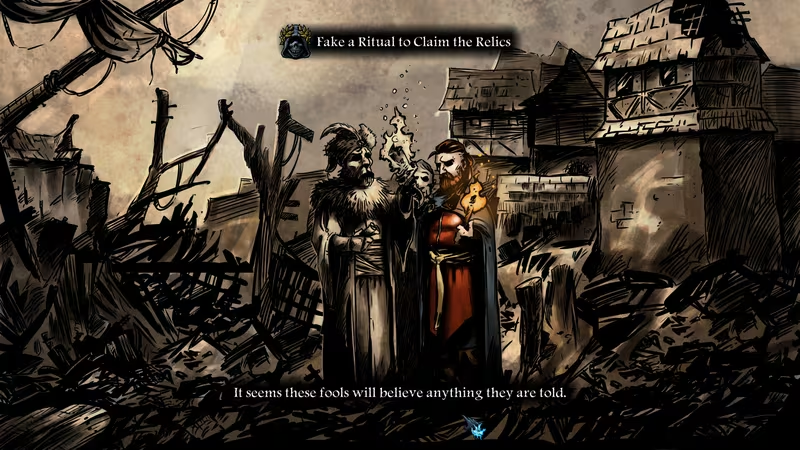
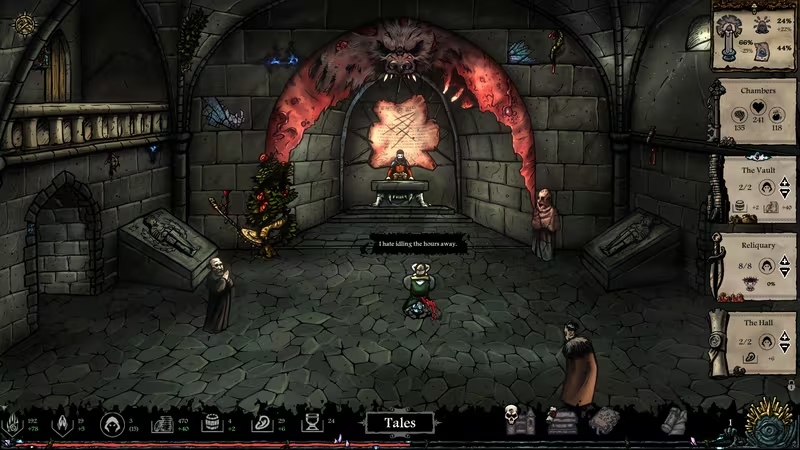
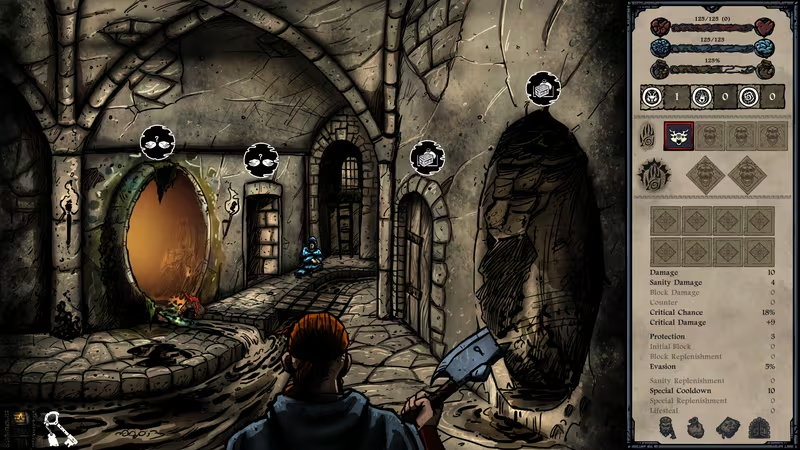
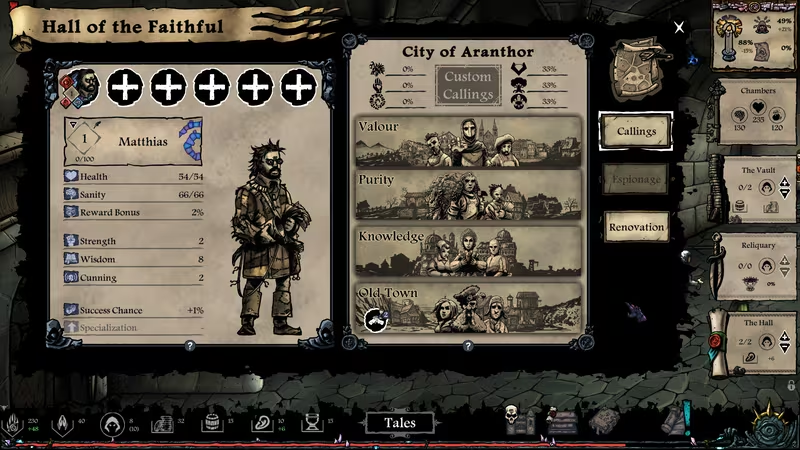
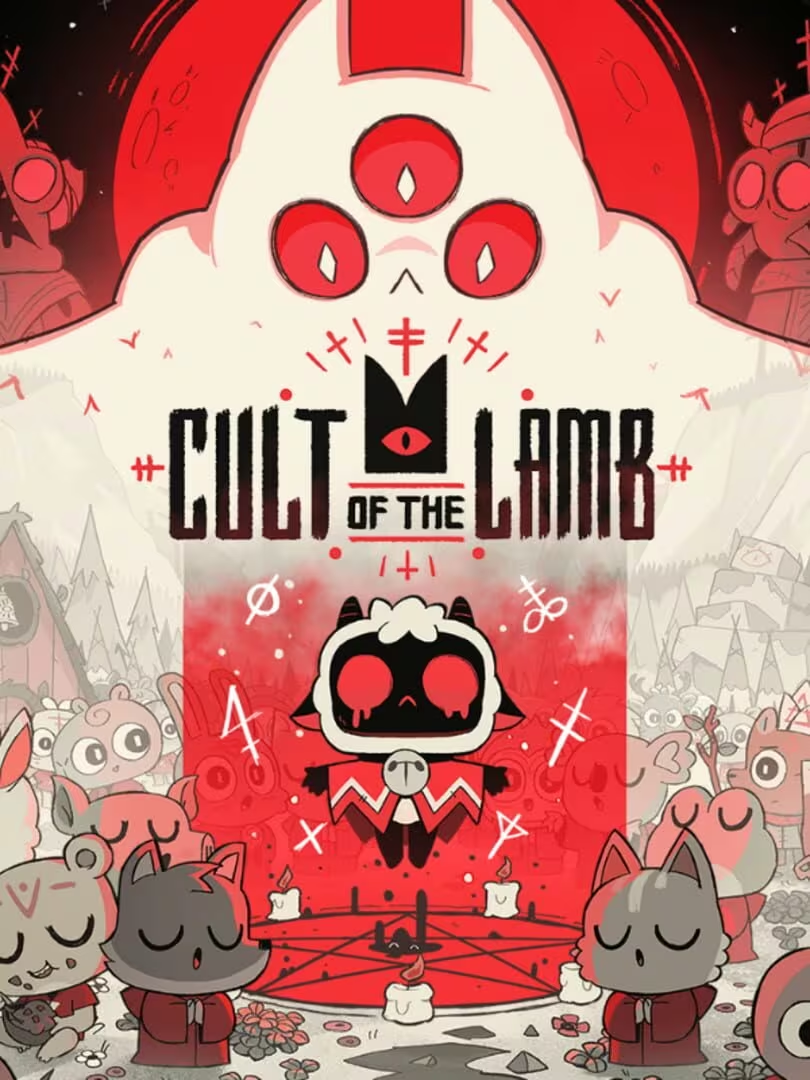
Become a cult leader and unleash divine power in this dark fantasy strategy RPG. You are the villain - you command disciples, outwit enemies in combat, and shape the fate of the fallen city as you awaken the Dead Gods — Wrath, Desire, and Madness.
What works
- Strong dark fantasy atmosphere and art style
- Engaging cult management and narrative choices
- Good voice acting and immersive storytelling
- Complex gameplay systems with strategic depth
- Replayability with multiple builds and endings
Things to keep in mind
- Steep learning curve and confusing ui
- Combat can be repetitive and simplistic
- Short campaign and slow progression
- Some bugs and translation issues
- Limited enemy variety and content at launch
What to play next
Top picks
Games that feel the closest overall
Hidden Gems
Less popular games with surprisingly high similarity
If you liked…
Recommendations by what you enjoyed most
Similarity map
Explore nearby similar games and see why they’re close.
Whispers of the Eyeless: Broadly representative of its motivational profile, with a few distinct shifts. Motivations that often define this kind of title include Survival, Violence, Fellowship, Intimacy. Here, the score leans higher than usual among comparable games on Leadership, Domination. It leans lower than usual among comparable games on Value.
Why this game works
A motivational profile of the game, with the closest similar game for each player motivation.
-
Autonomy
Game with the same Autonomy vibe
4"Players have significant control over cult management, building, scheduling, and customizing their cult and members, allowing personal freedom in decisions."
"Players have significant freedom in managing their cult, choosing upgrades, and deciding how to approach dungeon runs and story choices, though some mechanics and choices are gated or unclear."
-
Competence
Game with the same Competence vibe
3"Combat involves strategic skill point distribution and party management, though some find combat repetitive."
"Combat and management systems provide skill challenges and require strategic planning, though combat is sometimes described as simplistic or repetitive."
-
Competition
Game with the same Competition vibe
-3"Focus is on personal progression and strategy without direct player-vs-player competition or leaderboards; gameplay is mostly solo and self-paced."
"Focus is on personal progression and story; no evidence of competitive multiplayer or leaderboards; gameplay is mostly single-player and self-paced."
-
Continuation
Game with the same Continuation vibe
3"Players report engaging gameplay loops with replayability, crafting, and progression encouraging habitual play and long sessions."
"Many players report engaging gameplay loops and replayability, though some find the campaign short and progression slow, leading to mixed long-term attachment."
-
Cooperation
Game with the same Cooperation vibe
-4"Gameplay centers on individual dungeon creation and solo play; no evidence of cooperative multiplayer or teamwork features."
"Gameplay centers on individual cult management and solo dungeon runs; no mention of multiplayer or cooperative play."
-
Creativity
Game with the same Creativity vibe
3"Players customize cultists via carving symbols, choose rituals, and build unique cult structures, allowing creative expression within game systems."
"Players can customize their cult, build and upgrade sanctum, and make narrative choices shaping their experience, though some mechanics feel rigid or underdeveloped."
-
Domination
Game with the same Domination vibe
-2"Gameplay focuses on shared objectives and cooperation rather than exerting dominance or power over others."
"The game emphasizes personal cult leadership and narrative immersion rather than exerting power over other players or social dominance."
-
Escapism
Game with the same Escapism vibe
4"Dark Lovecraftian themes and challenging gameplay provide immersive escape from reality."
"Strong dark fantasy and Lovecraftian themes provide immersive escapism; players appreciate the atmospheric storytelling and mood."
-
Expectation
Game with the same Expectation vibe
-4"Players engage voluntarily out of interest and enjoyment, despite difficulty and lack of tutorials."
"Players engage voluntarily out of interest and intrinsic motivation; some frustration with tutorial and UI but overall self-directed play."
-
Experimenting
Game with the same Experimenting vibe
3"Players explore combos, character moves, and mechanics; some experimentation with different gods and strategies."
"Players explore multiple builds, different gods, and strategic options; some mechanics are complex and require experimentation."
-
Exploration
Game with the same Exploration vibe
2"Game includes exploration of towns, dungeons, and secrets, though environments can be repetitive."
"Exploration of the city and dungeons is part of gameplay, though maps and enemies are somewhat repetitive and limited in variety."
-
Expression
Game with the same Expression vibe
3"Players customize their cult’s focus and narrative path, though visual customization is minimal."
"Players can customize their cult's sanctum and character builds, and narrative choices allow personal expression within the dark theme."
-
Fantasy
Game with the same Fantasy vibe
5"Strongly rooted in Lovecraftian fantasy and eldritch horror with supernatural enemies and dark narrative."
"Strongly rooted in dark fantasy and Lovecraftian horror, with supernatural elements, cults, and eldritch gods."
-
Fellowship
Game with the same Fellowship vibe
-4"Minimal social interaction; gameplay is solo focused with no community or multiplayer features."
"Minimal social interaction; gameplay is focused on solo experience with little to no community or multiplayer features."
-
Growth
Game with the same Growth vibe
3"Players develop skills, upgrade characters, and learn strategies, reflecting personal growth and progression."
"Players develop their cult and character skills over time; some complaints about slow progression but overall growth is a key element."
-
Health
Game with the same Health vibe
-5"Sedentary gameplay typical of RPGs with no physical activity elements."
"Sedentary gameplay with no physical activity elements; typical of strategy RPGs."
-
Idle
Game with the same Idle vibe
-3"Requires focused attention during combat and exploration; some players find movement and UI clunky but engagement is continuous."
"Requires focused attention on management and combat; some players find UI cumbersome but gameplay demands active engagement."
-
Intimacy
Game with the same Intimacy vibe
-4"No evidence of forming close social relationships; interactions are narrative and solitary."
"No evidence of close social relationships or emotional sharing; interactions are mostly narrative and solitary."
-
Leadership
Game with the same Leadership vibe
4"Players lead and manage the cult, make decisions affecting followers, and guide overall cult development."
"Players lead their cult, make strategic decisions, and manage resources and followers, embodying a leadership role."
-
Progression
Game with the same Progression vibe
3"Players accumulate resources, upgrade buildings, craft and enchant gear, and level up skills; some feel progression becomes trivial mid-game."
"Players accumulate resources, upgrades, and blessings; progression is central though some find it slow or grindy."
-
Relaxation
Game with the same Relaxation vibe
2"Relaxing music and art style create a calm atmosphere, though gameplay can be challenging and tense."
"Atmosphere and art provide immersive mood; some tension in combat but overall pacing allows for relaxed play."
-
Sensation
Game with the same Sensation vibe
3"Vibrant art style, music, and voice acting provide strong sensory and emotional engagement."
"Art style, voice acting, and music provide strong sensory engagement and emotional tone."
-
Status
Game with the same Status vibe
-4"No social status or recognition systems; focus is on personal experience and narrative."
"No social status or recognition systems; focus is on personal narrative and progression."
-
Story
Game with the same Story vibe
4"Narrative immersion is central, with multiple endings, lore, and voice acting enhancing story engagement."
"Narrative immersion is a strong aspect, with voice acting, story choices, and atmospheric storytelling."
-
Strategy
Game with the same Strategy vibe
3"Requires planning in cult management, resource allocation, and combat tactics."
"Requires planning in cult management, resource allocation, and tactical combat decisions."
-
Thrill
Game with the same Thrill vibe
2"Some suspense and emotional tension in story; combat adds mild thrill but limited risk."
"Some suspense and tension in combat and story, though combat can feel repetitive and less thrilling to some."
-
Value
Game with the same Value vibe
1"Mixed opinions on value; some find it worth the price for early access content, others find content limited."
"Mixed opinions on value; some find content limited for price, others appreciate depth and early access potential."
-
Violence
Game with the same Violence vibe
3"Combat involves attacking enemies with weapons and abilities; violence is part of gameplay."
"Combat involves fighting enemies and dark rituals; violence is thematic and part of gameplay."
-
Survival
Game with the same Survival vibe
3"Players manage cult survival through resource and faith management, and avoid threats in dungeons."
"Players must manage resources and overcome threats in dungeons and cult management to survive and progress."






Last update: 13/07/2026